



kostel svatého Michaela archanděla (Horní Pěna) Church
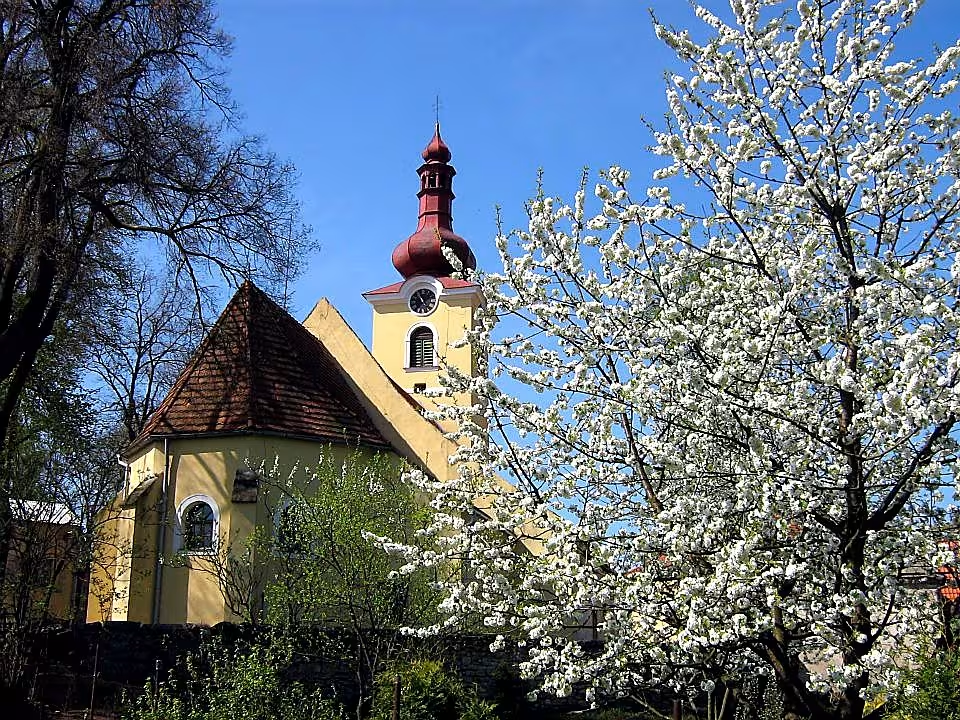
The Church of Saint Michael the Archangel in Horní Pěna is an impressive architectural treasure that combines Gothic and Baroque styles. Situated in the village of Horní Pěna within the Jihočeský kraj region, this church was built in the early 14th century and has been a cultural monument since 1958. Its importance stems from both its historical significance and its architectural development over centuries.
The origins of the Church date back to the first quarter of the 14th century, during King John of Luxembourg's reign when Bohemia was part of the Holy Roman Empire. This period saw a Gothic architecture boom across Europe, which is evident in the church’s initial design. By 1359, it had become a parish church for the local community.
Architecturally, the church features a dvojlodní (double-nave) design that merges Gothic elements with later Baroque modifications. The presbytery has a polygonal shape and includes a sacristy on its northern side. A notable feature is the late-Gothic loft with net vaulting supported by stone pillars. Over time, significant changes occurred: a loft was added at the end of the 15th century; in the 17th century, extensive Baroque renovations took place, including new vaulting and an extended nave in 1672. A tower followed nine years later, and a northern nave was added in 1709.
Throughout its history, the Church has experienced various ownership and administrative phases, reflecting broader regional historical shifts. While specific details about individual owners or administrators are scarce, it is evident that architectural changes were influenced by evolving religious and cultural priorities.
Key events include its establishment as a parish church in 1359 and significant Baroque renovations in the 17th century, which reshaped much of its structure. These modifications enhanced both its aesthetic appeal and community relevance.
Today, the Church remains an accessible cultural landmark, inviting visitors to explore its rich history and architectural beauty. Its protected status highlights its regional heritage importance. For those interested in Gothic and Baroque architecture or historical sites, visiting this church offers a tangible connection to the past and appreciation for earlier craftsmanship.
In conclusion, the Church of Saint Michael the Archangel is not just a place of worship but also a testament to the architectural and cultural evolution of its era. Its unique blend of Gothic and Baroque elements makes it a noteworthy historical monument worth visiting, offering insights into both its religious significance and artistic heritage.
Then and now
Drag the slider to compare how the landmark may have looked when it was built with the view today.
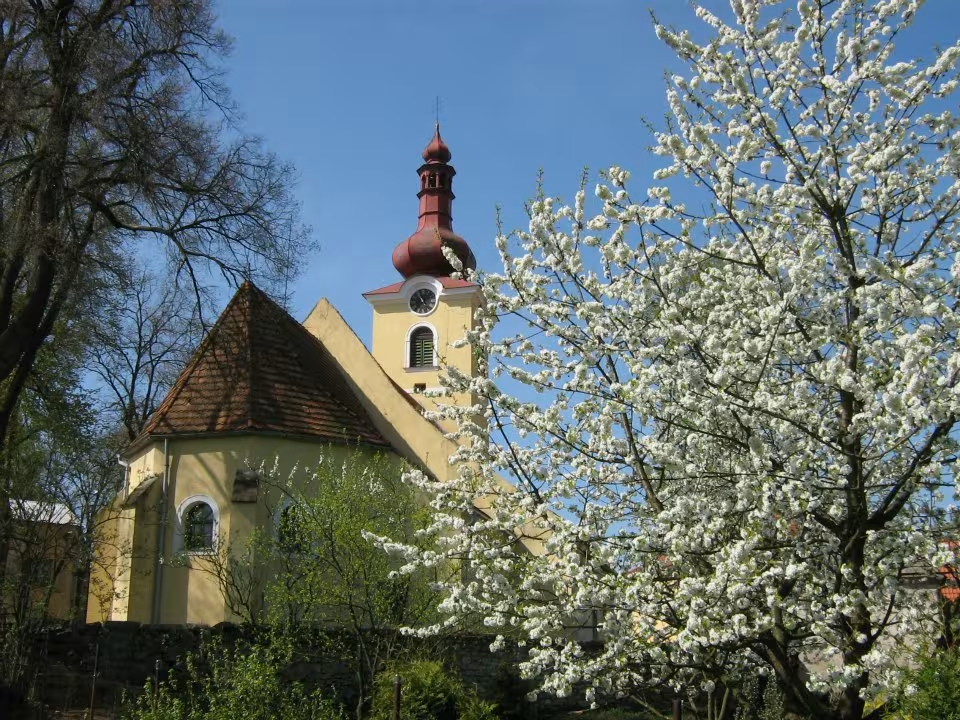

The historical appearance on the left is an AI-generated visualisation and serves as inspiration only.
Historical milestones
- 1359
- The church became a parish church.
- 1672
- The nave was vaulted and Baroquely renovated.
- 1681
- A tower was added to the church.
- 1709
- A northern nave was appended.
Architectural development
Initially built as a Gothic structure in the early 14th century, the Church of Saint Michael saw significant architectural changes over time. By the end of the 15th century, a loft was added. The 17th century brought extensive Baroque renovations, including the vaulting and extension of the nave in 1672, followed by the addition of a tower nine years later. A northern nave was appended in 1709.
Historical events
In the first quarter of the 14th century, the church was constructed.
By 1359, it became a parish church.
A loft was established at the end of the 15th century.
The church underwent extensive Baroque renovations in the 17th century.
Points of interest
- The Church of Saint Michael the Archangel was originally built during King John of Luxembourg's reign when Bohemia was part of the Holy Roman Empire, reflecting the widespread Gothic architectural influence across Europe at that time.
- Despite its early establishment as a parish church in 1359, specific details about individual owners or administrators throughout history remain scarce, indicating how broader regional historical shifts influenced its development rather than local figures.
- The church underwent significant Baroque renovations in the 17th century, which included new vaulting and an extended nave in 1672; these changes were not only aesthetic but also aligned with evolving religious priorities of that era.
- A unique architectural feature is the late-Gothic loft with net vaulting supported by stone pillars, showcasing the transition from Gothic to Baroque styles within a single structure, which is relatively rare for churches built during this period.
- The addition of a northern nave in 1709 highlights an ongoing adaptation and expansion process that reflects both changing community needs and architectural trends over several centuries.
Guide
This guide is narrated by a synthetic voice generated by artificial intelligence.
Show guide text
This text was created by artificial intelligence and has not been editorially reviewed. It may contain inaccuracies.
The Church of Saint Michael the Archangel is the dominant landmark of the village of Horní Pěna. It is a two-naved structure that combines Gothic and Baroque styles. Since nineteen fifty-eight, it has been listed among cultural monuments.
The church was created in the first quarter of the fourteenth century. In thirteen fifty-nine, it became a parish church. At the end of the fifteenth century, a gallery was added to it, which is an elevated tribune in the rear part of the nave.
The church underwent a significant transformation in the seventeenth century during an extensive Baroque reconstruction. In sixteen seventy-two, the nave was modified and given a Baroque vault. Nine years later, a tower was added. Further expansion came in seventeen oh nine, when a northern nave was built on. This created the present-day two-naved form. In seventeen seventeen, a charnel house was established here, and further modifications took place in the years seventeen twenty-six through seventeen twenty-seven.
The presbytery, which is the space around the main altar, has a polygonal termination. The sacristy stands on the northern side of the church. From the Gothic period, a Late Gothic gallery with a net vault has been preserved, supported by stone pillars.
Tips for visitors
The best time to visit the Church of Saint Michael the Archangel in Horní Pěna is during late spring or early fall when the weather is mild, making it pleasant for walking around and exploring the church's architecture. These seasons also offer beautiful natural lighting that enhances the Gothic and Baroque features of the building. Additionally, visiting outside of peak tourist season can provide a more serene experience with fewer crowds.
When visiting the church, it's recommended to bring comfortable walking shoes as there may be uneven paths leading up to the site. A camera is essential if you wish to capture the intricate details of the Gothic architecture and Baroque elements. Early morning or late afternoon visits are ideal for photography due to softer lighting conditions that highlight the textures and features of the church.
For families with children, the Church of Saint Michael the Archangel offers a calm environment for exploration. While there might not be specific attractions for young visitors within the church itself, the surrounding area provides opportunities for leisurely walks or picnics in nature. Nearby, you can visit other historical sites within a 30-minute drive that offer interactive experiences suitable for children.
In terms of nearby attractions, consider visiting the local village center of Horní Pěna and exploring its quaint streets. Within a short distance, there are also opportunities to explore natural landscapes or small museums that provide insights into the region's history and culture. These sites can make for an enriching day trip when combined with your visit to the church.
Frequently asked questions
Can the monument be visited?
Religious buildings are usually open mainly during services; at other times a visit is normally arranged with the parish or the operator. We have not verified specific times.
Where is the monument?
Location: Horní Pěna, Jihočeský kraj. The map on this page shows the exact spot.
Why is the monument protected?
It is listed in the Central List of Cultural Monuments of the Czech Republic as a cultural monument (register no. 17034/3-1909).
Businesses nearby
Do you run a restaurant, accommodation, shop, museum, rental, wellness or other visitor service near this monument? Show yourself directly to the people heading to it — this is how they will see you in the app and on the web:
Events nearby
Zdroj akcí: otevřená data měst a obcí ČR (Národní katalog otevřených dat) a kalendář akcí Národního památkového ústavu.
Accommodation nearby
Themed route
Tematická výletní trasa: Kostel svatého Michaela archanděla (Horní Pěna)
1. Kostel svatého Michaela archanděla
Typ: Historická památka
Proč stojí za návštěvu: Tento barokní kostel, postavený v 18. století, je nejvýraznější architektonickou památkou obce Horní Pěna. Jeho bohaté interiér a historie přitahují návštěvníky z celého Jihočeského kraje, kteří si užijí pohled na jeho výraznou fasádu a unikátní interiér.
2. Nádvoří kostela
Typ: Historické nádvoří
Proč stojí za návštěvu: Nádvoří před kostelem nabízí klidný prostor pro odpočinek a reflexi. Je to ideální místo, kde si můžete užít tichého okamžiku a ocenit venkovní umělecká díla, která zdobí tento historický prostor.
3. Okolní parková zeleň
Typ: Místní příroda
Proč stojí za návštěvu: Okolo kostela se rozprostírá malebné parkové prostranství, které nabízí krásné pohledy na obec a okolní krajinu. Tento zelený oáza je perfektním místem pro relaxaci nebo prozkoumání přírody v klidném prostředí.
4. Místní tradiční hostinec
Typ: Kulturní a gastronomické zážitky
Proč stojí za návštěvu: Po prozkoumání kostela si můžete v místním hospodě užít tradiční české jídlo. Hostinec nabízí autentické regionální pokrmy, které dokonale doplní váš kulturní zážitek a poskytnou příležitost seznámit se s místními tradicemi.
Tato trasa vám umožní prozkoumat nejen kostel svatého Michaela archanděla, ale i jeho okolí, což z ní činí ideální den plný historie a kultury.
Seasonal recommendations
Spring: Visiting the Church of Saint Michael Archangel during spring offers a unique experience as nature awakens around Horní Pěna. The blooming wildflowers and fresh greenery create a picturesque setting, enhancing the church's historical charm with vibrant colors. This season often features soft, natural light that beautifully illuminates the architecture, casting gentle shadows that add to its mystique. Visitors should dress in layers to accommodate variable temperatures and enjoy the outdoors without discomfort. While spring may not attract large crowds like summer, it’s a great time for photography enthusiasts looking to capture the church amidst lush landscapes. Arriving early can help avoid any unexpected rain showers typical of this season.
Summer: Summer is an ideal time to explore the Church of Saint Michael Archangel when the weather is warm and inviting. The long daylight hours provide ample opportunity for sightseeing, allowing visitors to fully appreciate the church's intricate details under bright sunlight. This period often sees increased visitor numbers due to its popularity as a travel destination in Jihočeský kraj, making it wise to arrive early or visit during weekdays to avoid crowds. Comfortable walking shoes and light clothing are recommended for exploring both indoors and outdoors. The warm atmosphere is perfect for picnicking nearby, offering a delightful way to spend an afternoon.
Autumn: Autumn brings a stunning transformation to the Church of Saint Michael Archangel with its surrounding landscape donning fiery hues of reds, oranges, and yellows. The crisp air and golden light create a serene and contemplative atmosphere, ideal for those seeking tranquility. This season often sees fewer visitors compared to summer, allowing for a more intimate experience. It's advisable to wear warm layers as temperatures can drop significantly by late afternoon. The changing leaves provide excellent opportunities for photography enthusiasts, capturing the church in harmony with nature’s palette.
Winter: Winter offers a magical setting at the Church of Saint Michael Archangel, where snow-covered landscapes and shorter days create an enchanting atmosphere. The soft, diffused light during winter enhances the church's architectural beauty, casting long shadows that add to its mystique. However, visitors should be prepared for potentially icy paths and colder temperatures by dressing warmly in layers. Winter is a quieter time for visits, offering a peaceful experience away from summer crowds, perfect for those looking to enjoy the church's historical ambiance in solitude.
Visualizations and artistic views


The visualisations are generated by artificial intelligence and serve as inspiration.
Photos from the area
Real photos taken near the monument


Zdroj a licence jsou uvedeny u každého snímku.
Tips from visitors
No tips yet. Be the first!
Log in and add your tip.
Sources and literature
Photos: Mamutrej / CC BY-SA 3.0 — Wikimedia Commons. The author and licence also appear when you hover over the image.
Faktickým podkladem tohoto textu byl článek na Wikipedii, jehož autory jsou přispěvatelé Wikipedie. Článek je dostupný pod licencí CC BY-SA 4.0.
Location on the map




Příběhy a pověsti
Legendy, pověsti a příběhy spjaté s touto památkou
Fotografie návštěvníků
Zatím žádné fotografie. Buďte první, kdo přidá fotografii z návštěvy!
Log in a přidejte svou fotografii nebo hodnoťte.
Za ověřenou návštěvu v aplikaci získáte víc bodů — poznáme podle GPS, že jste na místě.
Reviews and comments