



fara Řevnice Parish house
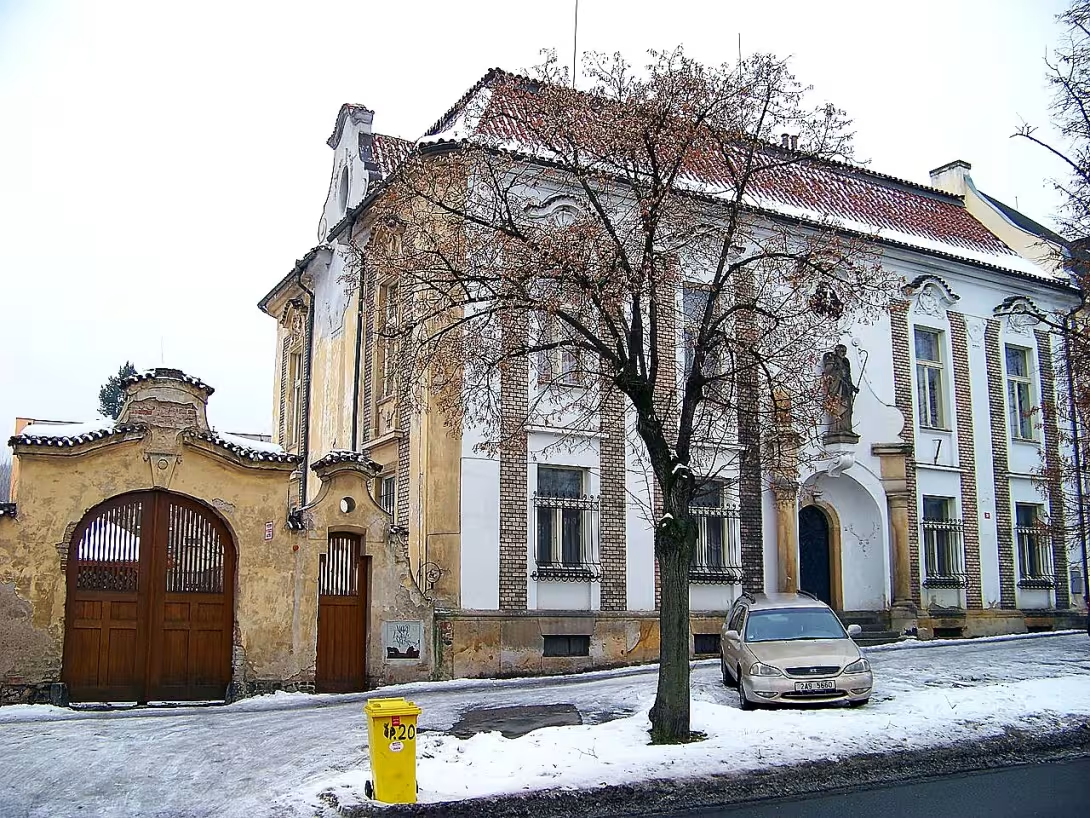
Fara Řevnice, located on the square of Jiří z Poděbrad no. 20, is a cultural monument of the Czech Republic. It represents a unique architectural object of Art Nouveau style with neo-Baroque elements. The building was built in 1904-1905 according to the plans of architect Eduard Sochor, who lived and worked here for several years. Its history dates back to the beginning of the 20th century, when the Art Nouveau as an architectural direction in Europe found a broad application. Fara is remarkable not only by its architecture, but also by rich history and changes in ownership.
The history of the building dates back to the 17th century, when the original rectory was already in a state of emergency. The parishioners at that time lived in the castle in Dobřichovice and managed an extensive parish including Řevnice, Dobřichovice, Lety, Karlík, Vonoklasy, Nový Třeboň and Zadní Třeboň. After the construction of the new building, the parish was divided and only Rear Třeboň remained part of the Greek parish. The new structure, which the Order of Cruisers with the Red Star had built at its own expense, was inaugurated on July 30, 1905.
The architecture of the building is characteristic of Art Nouveau with Neo-Baroque elements. It is a single-storey building of a trapezoidal floor plan with a mansard roof, located in front of a smaller courtyard enclosed by a wall. The facade is decorated with neo-Baroque ornaments and a statue of Christ a good shepherd above the entrance, which gives the building a unique character. Above the entrance there is also a sign of the order of cruisers with a red star.
The ownership and administration of the building have undergone some dramatic changes. After its opening in 1905, it served church purposes until 1966 when the Local National Committee was confiscated and converted into a seat. As part of the restitution, the Roman Catholic Church regained the object in 1991, allowing it to be reused as a parish residence.
Key events include the ceremonial opening in 1905, the seizure of the Local National Committee in 1966 and the restitution of the Roman Catholic Church in 1991. These moments reflect not only the architectural but also the social and political development of the region.
Today fara Řevnice is accessible to visitors and is worth a tour thanks to its unique style and rich history. Its location in the square of Jiří z Poděbrad, near the church of St. Morice, gives further importance to the place. The building is not only a monument to architecture, but also to the changes that have taken place in the region over the last centuries.
Visiting the rectory means traveling through time and discovering not only beautiful Art Nouveau architecture, but also understanding the historical context in which the building was built. It is an opportunity to appreciate the work of architect Eduard Sochor while also realizing the importance of these monuments for the preservation of the cultural heritage of the Czech Republic.
Historical milestones
- 1905
- festive opening of the parish on july 30
- 1966
- seizure of the building by the Local National Committee for the needs of its headquarters
- 1991
- restitution of the roman catholic church building
Architectural development
The building was built in 1904-1905 in Art Nouveau style with neo-Baroque elements. It has a trapezoid plan and a mansard roof. The area is closed by a wall with a gate and a gate.
Historical events
July 30, 1905: festive opening of the parish; 1966: seizure of the building by the Local National Committee; 1991: restitution of the building to the Roman Catholic Church.
Owners
Order of Cruisers with Red Star (until 1966), Local National Committee (1966- 1991), Roman Catholic Church (from 1991)
Points of interest
- Fara Řevnice is a cultural monument of the Czech Republic. - The building was built in 1904-1905 according to the plans of architect Eduard Sochor, who lived and worked here for several years. - They opened a new building on July 30, 1905. - After its opening in 1905, it served religious purposes until 1966, when it was confiscated and converted into a seat by the Local National Committee. - As part of the restitution, the Roman Catholic Church regained the object in 1991.
Guide
Show guide text
This text was created by artificial intelligence and has not been editorially reviewed. It may contain inaccuracies.
Welcome to the Rivnice to a unique historical monument - a rectory that stands here as a testament to the past and architectural art. You're standing in front of a building whose elegant lines attract the attention of every visitor. Its Art Nouveau style with Neo-Baroque elements creates a harmonious image that you can enjoy throughout your tour.
Let's dive into the history of this rectory. It was created between 1904 and 1905 under the auspices of the Order of Cruisers with a red star, which put it on the expense of its new residence. Architect Eduard Sochor, known for his master hand, designed this building and not only created it, but also lived and worked here for several years. This architectural house opened festively on July 30, 1905 and has since become the center of church and community life.
Look up at the facade of the rectory where the Neo-Baroque ornaments enchant you with their details. Note the statue of Christ as a good shepherd and a sign of order which gives the building further depth and spiritual meaning. A single-storey object with a trapezoidal plan and a Mansard roof is really a visual treasure that deserves attention.
Fara Řevnice was seized in 1966 by the Local National Committee for the needs of its headquarters, but after the fall of communism in 1991, the restitution building was returned to the Roman Catholic Church. This historical story reflects not only the architectural value of the rectory, but also its importance in the cultural and social context.
The interesting thing is that the parish is protected as a cultural monument of the Czech Republic. This means that every detail of this building has its own history and value that you can enjoy during the tour.
We recommend immersing ourselves in the atmosphere of this place, exploring its surroundings and enjoying a quiet moment in the presence of this architectural pearl. We hope that your visiting trip to Rivnice was inspiring and full of new knowledge. Thank you for your attention and have a good day.
Tips for visitors
The best time to visit the rectory in Řevice is autumn or spring, when nature is particularly charming and the light is ideal for photography. These seasons offer quiet moments without a large number of tourists.
Access to the rectory can be facilitated by car or public transport. The current connection can be verified in the online search engine.
When visiting, it is advisable to take the camera with you, especially for shots of the facade of the rectory and the surrounding church of St. Morice. Photography will be the most successful in sunny weather in the early morning or late afternoon when light is softer.
In the vicinity of the parish there is a church of St. Morice, which can be visited for further information about the history and architecture of the area. It is advisable for families with children to plan a short walk around the church where children can enjoy the natural environment.
Frequently asked questions
Can the monument be visited?
This is a residential or farm building, not a museum with opening hours. Please view it from public space and respect the owners' privacy. We have no information about access to the interior.
Where is the monument?
Location: Řevnice. The map on this page shows the exact spot.
Why is the monument protected?
It is listed in the Central List of Cultural Monuments of the Czech Republic as a cultural monument (register no. 1000123752).
Businesses nearby
Do you run a restaurant, accommodation, shop, museum, rental, wellness or other visitor service near this monument? Show yourself directly to the people heading to it — this is how they will see you in the app and on the web:
Events nearby
Zdroj akcí: otevřená data měst a obcí ČR (Národní katalog otevřených dat) a kalendář akcí Národního památkového ústavu.
Nearby
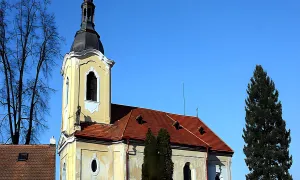
Kostel svatého Mořice.
Accommodation nearby
Trips and activities nearby
Guided tours, tickets and activities nearby from GetYourGuide
Affiliate link: if you buy from the partner, we may receive a commission. The price for you does not change.
Search tours and activities →Themed route
Thematic cruise route from the village Řevnice
1. Fara Řevnice (Church of St. Morice)
Type: Church
Why is it worth a visit: This Baroque church is not only the spiritual centre of the village, but also architectural pearls. Its richly decorated interior and history interfering in the 18th century offer a view of the past and artistic craftsmanship of the time.
2. Chapel at fara Řevnice
Type: Chapel
Why is it worth visiting: This chapel, located near the church of St. Morice, is a place of peace and shelter. Its simplicity contrasts with the Baroque style of the main church and offers a gentle view of spiritual life in the village.
3. Tanks at fara Řevnice
Type: Tanks
Why is it worth a visit: The courtyard in front of the church is an ideal place to relax and reflect. Here you can enjoy a quiet moment while looking at the surrounding green spaces and the architectural beauty of the church.
4. Tower fara Řevnice
Type: Tower
Why is worth a visit: The tower view offers a view of the village and surrounding landscape. It is an ideal place for those who wish to see the Rivers from a different angle and enjoy the panoramic view.
5. Park at fara Řevnice
Type: Park
Why is worth a visit: Park in front of the church is a place for relaxation and well-being. Its green spaces are ideal for a short walk or sitting on a bench where you can enjoy a quiet moment in nature.
This route offers a view of the spiritual and cultural wealth of the village Řevnice through its main monuments.
Seasonal recommendations
In spring nature wakes up around the old building. The trees start to green and the sun shines smoother, which beautifully highlights the details of the outside of the house. It's good to wear layered clothes because the wounds are still cold. The best time to walk is in the morning when the air is fresh and the light is bright.
In the summer months the area is full of thick green and the days are very long. The sun shines strongly, so the building looks very bright and distinctive. I recommend wearing a headgear and plenty of water. For the best view of the building, it is advisable to visit a place in the late afternoon when you avoid the greatest heat.
Autumn brings gold and orange to the surroundings. Leaves fall to the ground and create a calm, slightly sad atmosphere. The light is low and creates long shadows on the walls of the house. It is necessary to have fixed shoes due to wet soil and warmer coat. The ideal time is around sunset for beautiful colors.
The winter makes the building very quiet in the landscape. If snow falls, the white color contrasts beautifully with the shapes of the house. Days are short, so the lights are low. You must dress well in winter layers, including gloves and hats. The best is to come around noon when the lights are the most.
Visualizations and artistic views

The visualisations are generated by artificial intelligence and serve as inspiration.
Photos from the area
Real photos taken near the monument


Zdroj a licence jsou uvedeny u každého snímku.
Tips from visitors
No tips yet. Be the first!
Log in and add your tip.
Sources and literature
Photos: ŠJů (cs:ŠJů) / CC BY-SA 3.0 — Wikimedia Commons. The author and licence also appear when you hover over the image.
Faktickým podkladem tohoto textu byl článek na Wikipedii, jehož autory jsou přispěvatelé Wikipedie. Článek je dostupný pod licencí CC BY-SA 4.0.
Location on the map




Příběhy a pověsti
Legendy, pověsti a příběhy spjaté s touto památkou
Fotografie návštěvníků
Zatím žádné fotografie. Buďte první, kdo přidá fotografii z návštěvy!
Log in a přidejte svou fotografii nebo hodnoťte.
Za ověřenou návštěvu v aplikaci získáte víc bodů — poznáme podle GPS, že jste na místě.
Reviews and comments