






Kostel svatého Mořice (Řevnice) Church
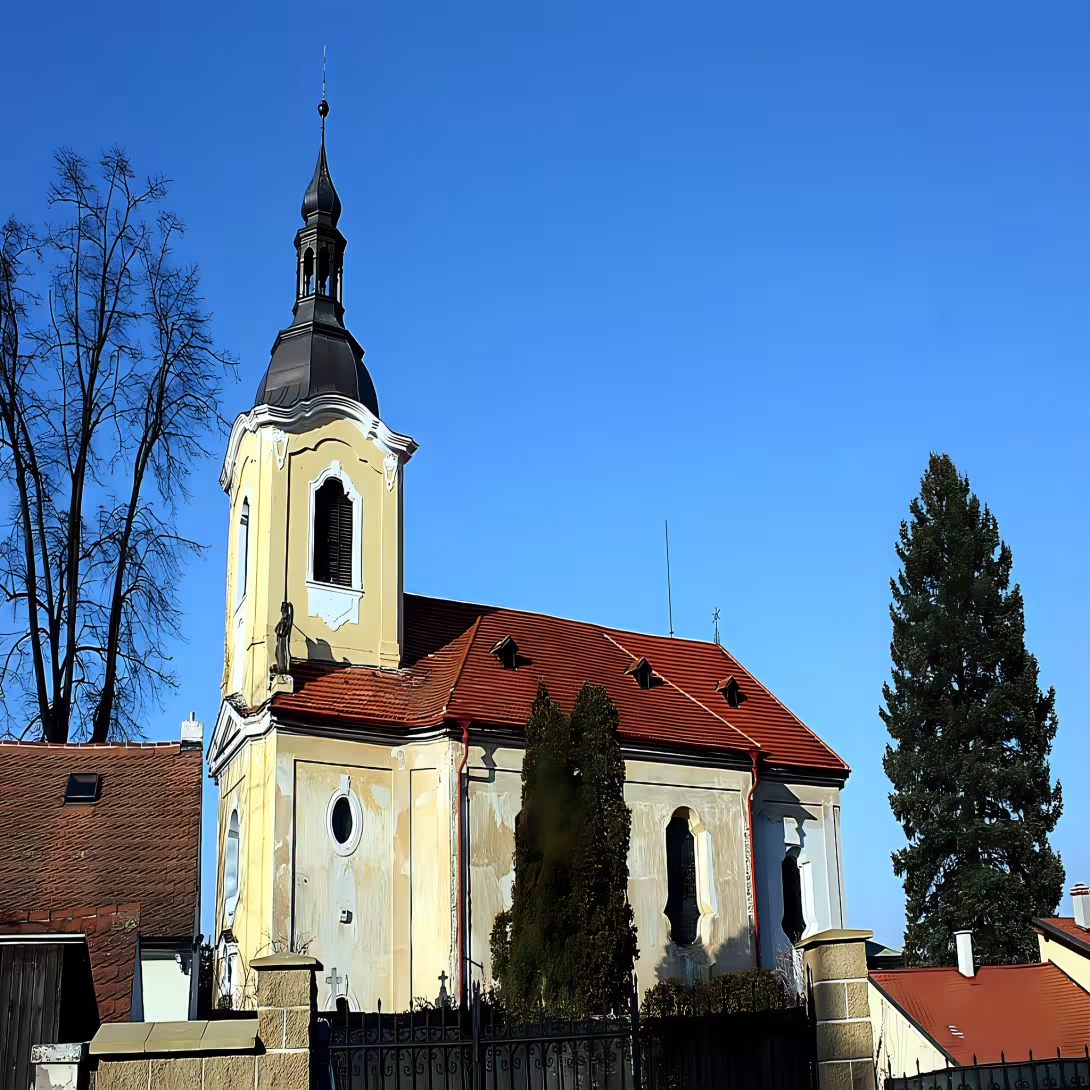
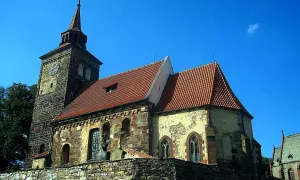
The Church of Saint Maurice in Řevnice is an 18th-century baroque church, notable for its historical significance and architectural beauty. Located in the village of Řevnice within the Středočeský kraj region, it stands as a testament to the area's rich cultural heritage. Built on the site of an earlier Romanesque structure first mentioned in 1253, it has been central to religious activities since its consecration in 1752. The church is surrounded by a small cemetery and holds historical value due to its association with the Knights Hospitaller.
The origins of the Church of Saint Maurice trace back to a Romanesque predecessor documented in 1253 when King Václav I granted it to the Knights Hospitaller. By the late 13th century, another smaller chapel was constructed nearby after King Václav II donated Řevnice to the Cistercian monastery in Zbraslav. These earlier structures stood until the mid-18th century when they were deemed too dilapidated and subsequently demolished. The construction of the current baroque church began in 1749, reflecting architectural trends influenced by the Habsburg Monarchy's cultural development.
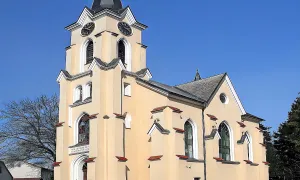
Architecturally, the Church of Saint Maurice is a single-nave baroque structure with a tower. Its interior boasts original 18th-century decorations, including frescoes depicting biblical scenes such as the Holy Trinity and Empress Helena discovering the True Cross. Allegorical representations of virtues adorn its arches. Notable elements include a main altar adorned with sculptures of Saint Florian and Saint Sebastian, and a pulpit decorated with a relief of Christ protecting his sheep from wolves.
Throughout its history, the church has undergone several significant changes. After its consecration by Julius František Waha in 1752, it served as a filial parish until becoming a parish church again following renovations between 1904 and 1905 under architect Eduard Sochor. The Knights Hospitaller have remained patrons of the church since its inception.
The church's bell tower houses an embedded stone with the emblem of the Knights Hospitaller, a relic from the original medieval structure. Additionally, the church contains two baroque bells; one survived both World Wars and was restored in 1945, while new bells were added in 2023 after fundraising efforts by local residents.
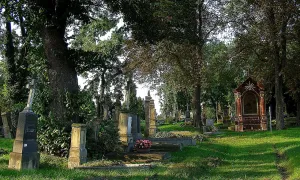
Today, the Church of Saint Maurice stands at the center of an unused cemetery, now referred to as the old cemetery. The site also includes a protected rural house nearby, adding to its historical ambiance. Visitors can explore this monument to appreciate its architectural beauty and rich history, making it a worthwhile destination for those interested in cultural heritage.
The Church of Saint Maurice offers a unique glimpse into the past, blending religious significance with baroque artistry. Its preservation as a cultural monument ensures that future generations can continue to learn from and enjoy its historical legacy. Visitors are invited to explore this remarkable site and experience the enduring charm of Řevnice's architectural heritage.
Then and now
Drag the slider to compare how the landmark may have looked when it was built with the view today.
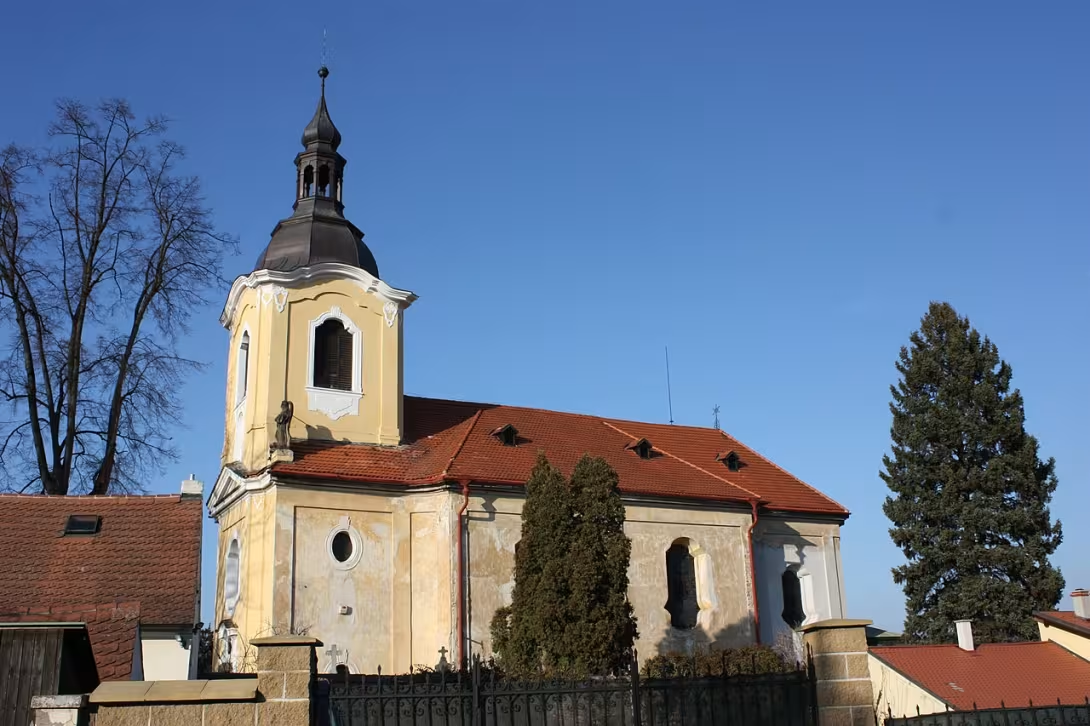

The historical appearance on the left is an AI-generated visualisation and serves as inspiration only.
Historical milestones
- 1253
- King Václav I granted the site to the Knights Hospitaller.
- 1749
- Construction of the current baroque church began.
- 1752
- The church was consecrated by Julius František Waha.
- 1904-1905
- Renovations turned it back into a parish church under Eduard Sochor.
- 1945
- One of the baroque bells was restored after World War II.
- 2023
- New bells were added following local fundraising efforts.
Architectural development
Construction of the new baroque church began in 1749, with consecration following in 1752. The church required significant repairs in 1842 and a general renovation from 1904-1905 under architect Eduard Sochor's direction. It regained its status as a parish church after these renovations.
Historical events
- 1749
- Construction of the new church began.
- 1752
- The church was consecrated by Julius František Waha, who also celebrated the first mass there.
- 1842
- The church underwent repairs due to cracks appearing in its structure.
Points of interest
- The Church of Saint Maurice was originally built on the site of a Romanesque church first mentioned in 1253, highlighting its deep historical roots that extend back to medieval times.
- A stone embedded in the bell tower bears the emblem of the Knights Hospitaller, serving as a tangible link to the church's medieval past and its longstanding association with this chivalric order.
- The interior frescoes include depictions of Empress Helena discovering the True Cross, offering insight into how historical and religious narratives were artistically represented in 18th-century baroque churches.
- Despite being damaged during both World Wars, one of the church's original baroque bells was restored in 1945, symbolizing resilience and continuity through turbulent times.
- The church underwent a significant transformation between 1904 and 1905 under architect Eduard Sochor, marking its evolution from a filial parish to a fully-fledged parish church, reflecting changes in community status and needs.
Guide
This guide is narrated by a synthetic voice generated by artificial intelligence.
Show guide text
This text was created by artificial intelligence and has not been editorially reviewed. It may contain inaccuracies.
The Church of Saint Maurice in Řevnice is a Baroque building from the 18th century. It stands in the middle of a small cemetery and together with a mortuary, two cemetery crosses and a statue of Saint John of Nepomuk in front of the enclosure wall, it is protected as a cultural monument. In historical sources it also appears as the Church of Saint Mauritius, or with a double dedication to the Virgin Mary Assumed into Heaven and Saint Mauritius.
On the site of today's church there most likely stood a Romanesque church, first mentioned in 1253. At that time King Václav I granted it to the Order of the Red Star Crusaders, who have been the patrons of the church ever since. Nearby stood another smaller church of the Assumption of the Virgin Mary, probably built after Václav II donated Řevnice to the Zbraslavský monastery in 1292. Both churches had deteriorated so much by the mid-18th century that they had to be demolished.
The new church began construction in 1749. It was consecrated on November 12th, 1752 by the Grand Master of the Crusaders Julius Francis Waha, who also celebrated the first mass there. In 1842 cracks appeared in the walls and the church had to be repaired. A general renovation took place in 1904 and 1905 according to a design by architect Eduard Sochor. After that, the church became a parish church again after approximately 250 years.
It is a single-nave building with a tower and the interior decoration is mostly original. A fresco above the presbytery depicts the Holy Trinity being adored by representatives of secular and spiritual power. Frescoes above the nave show the finding of the Holy Cross by Empress Helena and the death of Saint Maurice. The high altar is decorated with a statue of the Virgin Mary on a throne and on either side statues of Saint Florian and Saint Sebastian. The altarpiece by painter Wenzel from 1881 depicts Christ handing a banner to Saint Maurice. On the pulpit is a relief of Christ protecting his sheep from wild beasts. The carved oak pews from 1753 bear marks of the Crusaders, medallions of saints and guild marks.
Set into the south wall of the tower is a stone of red sandstone with the mark of the Crusaders, a six-pointed star and a cross. It most likely comes from the original medieval church.
Of the three bells from the 18th century, only the bell of Saint Maurice has survived. The smaller bell of Saint John survived World War Two at the assembly point Na Maninách and in 1945 returned to the tower. When both bells were in poor condition in 2023, the inhabitants of Řevnice organized a collection. From it they paid for the repair and bell founder Manoušek cast two new bells.
Frequently asked questions
Can the monument be visited?
Religious buildings are usually open mainly during services; at other times a visit is normally arranged with the parish or the operator. We have not verified specific times.
Where is the monument?
Location: Řevnice, Středočeský kraj. The map on this page shows the exact spot.
Why is the monument protected?
It is listed in the Central List of Cultural Monuments of the Czech Republic as a cultural monument (register no. 33454/2-2297).
Businesses nearby
Do you run a restaurant, accommodation, shop, museum, rental, wellness or other visitor service near this monument? Show yourself directly to the people heading to it — this is how they will see you in the app and on the web:
Events nearby


Zdroj akcí: otevřená data měst a obcí ČR (Národní katalog otevřených dat) a kalendář akcí Národního památkového ústavu.
Nearby
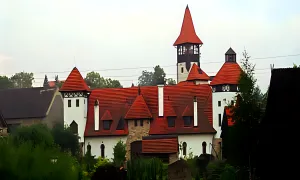
The church stands in the center of an unused cemetery, now referred to as the old cemetery. Nearby is a protected rural house and a statue of Saint John Nepomuk.
Accommodation nearby
Trips and activities nearby
Guided tours, tickets and activities nearby from GetYourGuide
Affiliate link: if you buy from the partner, we may receive a commission. The price for you does not change.
Search tours and activities →Themed route
Tematická výletní trasa: Kostel svatého Mořice (Řevnice)
1. Kostel svatého Mořice
- Typ: Historická památka, kostel
- Proč stojí za návštěvu: Tento barokní kostel je centrem historie a kultury obce Řevnice. Jeho architektura a duchovní význam přitahují návštěvníky, kteří chtějí prozkoumat bohaté kulturní dědictví regionu Středočeského kraje.
2. Starý hřbitov
- Typ: Historický areál
- Proč stojí za návštěvu: Nacházející se přímo u kostela, starý hřbitov poskytuje klidnou atmosféru pro odpočinek a reflexi. Jeho historie je úzce spjata s místními obyvateli a jejich životem v minulosti.
3. Chráněné venkovské domy
- Typ: Historická budova
- Proč stojí za návštěvu: Tyto domy jsou příkladem tradičního venkovského života v oblasti. Jsou chráněny kvůli své architektonické a historické hodnotě, což je činí zajímavým místem pro návštěvníky zájemce o regionální kulturní dědictví.
4. Socha svatého Jana Nepomuckého
- Typ: Socha, umělecká památka
- Proč stojí za návštěvu: Tato socha představuje významnou historickou postavu a je symbolem místní víry. Její umístění poblíž kostela svatého Mořice dodává trase duchovní hloubku a kulturní kontext.
Tato tematická trasa nabízí návštěvníkům možnost prozkoumat historický a kulturní bohatství obce Řevnice, zaměřením na klíčové památky a jejich okolí.
Seasonal recommendations
Spring: Visiting the Church of Saint Maurice during spring offers a unique experience as nature begins to awaken around Řevnice. The blooming flowers and fresh greenery create a picturesque backdrop for the church, enhancing its historical charm with vibrant colors. The soft light filtering through budding leaves casts gentle shadows, adding an ethereal quality to the atmosphere. This time of year often sees fewer visitors, allowing for a more serene exploration of the site. It's advisable to wear comfortable walking shoes and layers, as temperatures can vary. Arriving in the late morning or early afternoon is ideal when the weather is milder and the landscape is at its most lively.
Summer: Summer brings an abundance of light and warmth to the Church of Saint Maurice, making it a perfect time for those who enjoy exploring historical sites under clear skies. The lush greenery surrounding the church is in full bloom, offering a vibrant contrast against the stone architecture. This season attracts more visitors due to its pleasant weather, so planning ahead is recommended. Arriving early in the morning can help avoid crowds and ensure a peaceful experience. Lightweight clothing and sun protection are essential, as the days are longer and sunnier. The church grounds provide an excellent opportunity for picnics or leisurely walks amidst nature.
Autumn: Autumn transforms the Church of Saint Maurice into a stunning canvas of reds, oranges, and yellows. The falling leaves create a golden carpet around the church, offering a warm and inviting atmosphere that is perfect for photography enthusiasts. This season tends to have fewer tourists compared to summer, allowing visitors to appreciate the site's beauty in tranquility. Cooler temperatures mean dressing warmly is important, with layers recommended to adapt to changing conditions throughout the day. Late afternoon visits are particularly enchanting as the setting sun casts a golden glow over the landscape.
Winter: The Church of Saint Maurice takes on a quiet and mystical ambiance during winter, when snow may blanket the surrounding area in a serene white cover. The stark contrast between the church's stone structure and the snowy landscape creates a magical atmosphere, especially under the soft light of the shorter days. Winter is generally quieter, with fewer visitors, offering an intimate experience for those who appreciate the beauty of historical sites in colder weather. It’s crucial to dress warmly, wearing thermal layers, hats, gloves, and waterproof boots.
Visualizations and artistic views


The visualisations are generated by artificial intelligence and serve as inspiration.
Photos from the area
Real photos taken near the monument


Zdroj a licence jsou uvedeny u každého snímku.
Tips from visitors
No tips yet. Be the first!
Log in and add your tip.
Sources and literature
Photos: Krokodyl / CC BY-SA 3.0, rozlišení zvýšeno umělou inteligencí — Wikimedia Commons. The author and licence also appear when you hover over the image.
Faktickým podkladem tohoto textu byl článek na Wikipedii, jehož autory jsou přispěvatelé Wikipedie. Článek je dostupný pod licencí CC BY-SA 4.0.
Location on the map
Příběhy a pověsti
Legendy, pověsti a příběhy spjaté s touto památkou
Příběh: Kostel svatého Mořice (Řevnice)
Bylo to v pondělí ráno, kdy Jakub Kříž zjistil, že jeho život se rozplynul jako deštivý sníh na třesoucím se dvoře svého chalupy. Náhlé selhání jeho nejlepší…
Číst příběh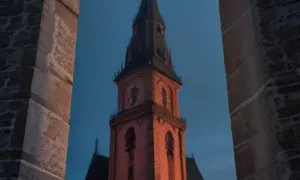
Pověst: Kostel svatého Mořice (Řevnice)
Staří obyvatelé Řevnic vyprávějí, že kámen zapuštěný do zvonice kostela svatého Mořice není jen pouhou ozdobou ani náhodným nálezem. Traduje se, že tento kám…
Číst příběhFotografie návštěvníků
Zatím žádné fotografie. Buďte první, kdo přidá fotografii z návštěvy!
Log in a přidejte svou fotografii nebo hodnoťte.
Za ověřenou návštěvu v aplikaci získáte víc bodů — poznáme podle GPS, že jste na místě.
Reviews and comments