






fara u kostela Nejsvětější Trojice, Praha, Trojická Parish house
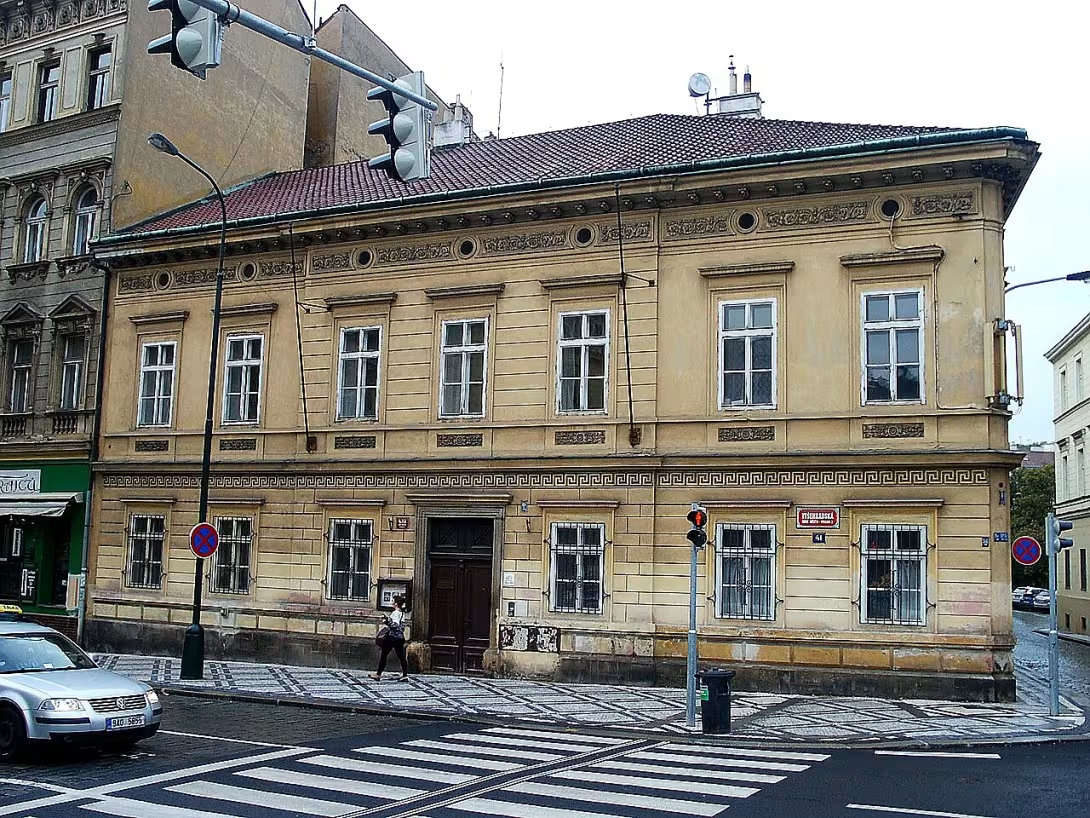
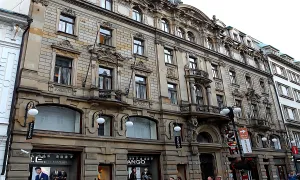
The Fara u Nejsvětější Trojice in Prague's Nové Město is a notable historical monument located at the corner of Vyšehradská and Trojická streets. Constructed between 1863 and 1867, this single-story building exemplifies late classicism architecture. It replaced an older parish house during a period of urban development in Prague. The Fara is recognized for its cultural significance and is protected as a national cultural monument.
During the mid-19th century, Prague experienced significant architectural renewal, reflecting broader historicism trends that incorporated various historical styles into new constructions. This context influenced the design and construction of the Fara u Nejsvětější Trojice, which replaced an older structure on its site. The building's completion in 1867 marked a period when urban development was reshaping Prague's architectural landscape.
The architecture of the Fara is characterized by late classicism style, evident in its symmetrical layout and detailed façade elements. Designed with an 'L'-shaped ground plan, the building features a façade divided by pilasters. The ground floor hallway boasts barrel vaults, while other rooms are adorned with mirror vaulting. A notable interior feature is the three-wing staircase, which includes cast-iron balustrades. Original elements such as doors and parquet flooring from the time of construction have been preserved, adding to its historical authenticity.
The Fara's location near the church of Nejsvětější Trojice enhances its significance within the community. Adjacent to the building is a garden and an old cemetery, separated by a boundary wall. The site offers a glimpse into the past with remnants like a single tombstone integrated into the southern wall of a chapel and parts of another tombstone incorporated into the boundary wall near a small mausoleum.
Today, the Fara u Nejsvětější Trojice stands as a testament to Prague's architectural evolution during the 19th century. Its preservation allows visitors to appreciate the intricate details of late classicism architecture and its historical context within the city. The building's proximity to significant landmarks like the church and its well-preserved interior features make it a worthwhile destination for those interested in exploring Prague's rich cultural heritage.
Visiting the Fara u Nejsvětější Trojice offers an opportunity to delve into the architectural history of Prague during a transformative period. Its protected status as a national cultural monument underscores its importance, inviting visitors to explore and appreciate this remarkable piece of history.
Then and now
Drag the slider to compare how the landmark may have looked when it was built with the view today.
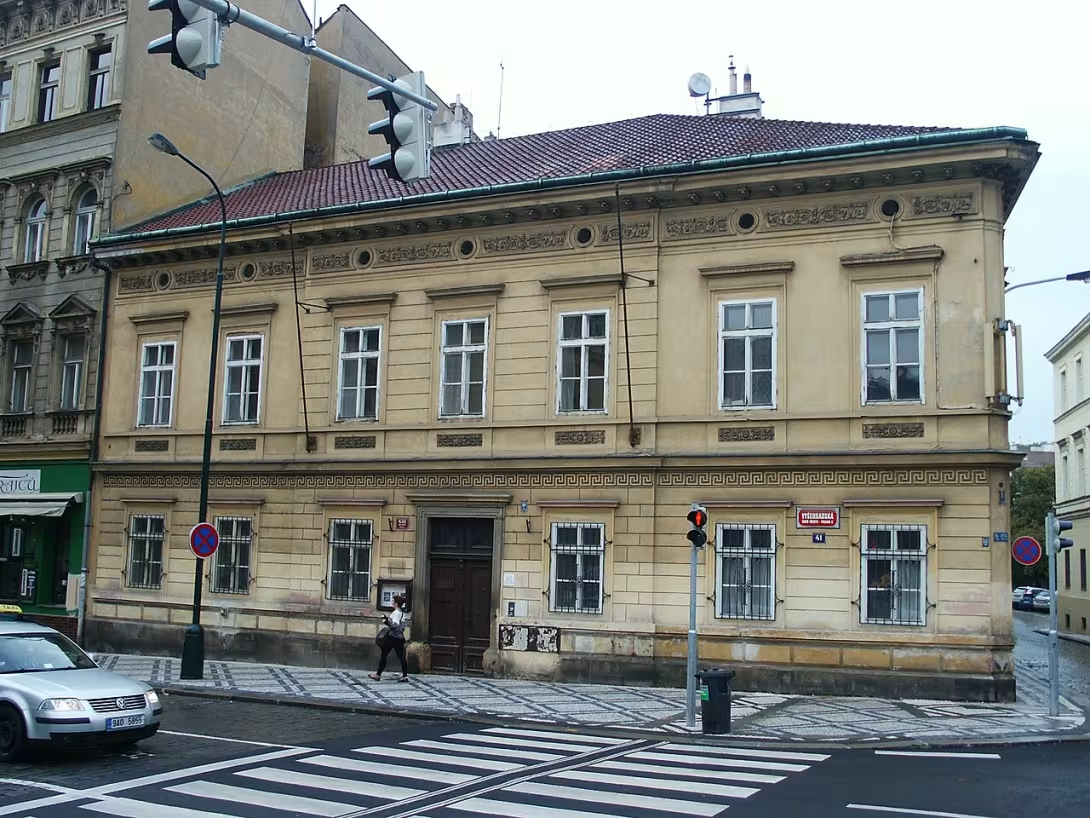
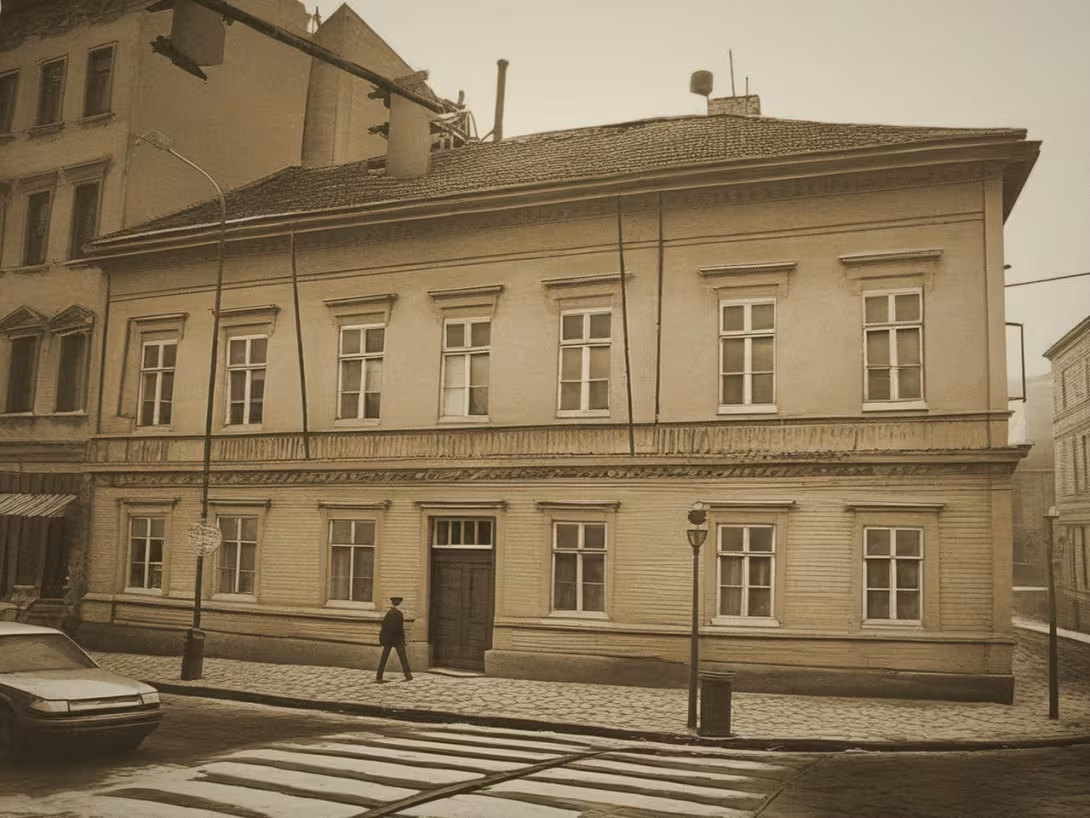
The historical appearance on the left is an AI-generated visualisation and serves as inspiration only.
Historical milestones
- 1863
- Začátek stavby Fary u Nejsvětější Trojice
- 1867
- Dokončení a otevření Fary u Nejsvětější Trojice
Architectural development
The Fara was built between 1863 and 1867, replacing an older structure on the same site. It features a layout shaped like the letter 'L' with a façade divided by pilasters. The ground floor has barrel vaults in the hallway, while other rooms have mirror vaulting. A three-wing staircase is adorned with cast-iron balustrades.
Historical events
1863-1867: Construction of the new parish house in late classicism style.
Points of interest
- The Fara u Nejsvětější Trojice replaced an older parish house during a period of urban development in Prague, reflecting the broader historicism trends that were reshaping the city's architectural landscape in the mid-19th century.
- Despite its relatively modest size as a single-story building, the Fara is distinguished by its 'L'-shaped ground plan and detailed façade elements, which include pilasters and mirror vaulting inside, showcasing the intricacies of late classicism architecture.
- The three-wing staircase within the Fara features cast-iron balustrades, a unique element that highlights both the craftsmanship and architectural style prevalent during its construction period in 1867.
- Adjacent to the Fara is an old cemetery with remnants like a single tombstone integrated into the southern wall of a chapel, offering visitors a tangible connection to Prague's past and the historical context of the site.
- The preservation of original elements such as doors and parquet flooring from the time of construction adds to the building’s authenticity, making it a valuable resource for understanding 19th-century architectural practices in Prague.
Guide
This guide is narrated by a synthetic voice generated by artificial intelligence.
Show guide text
This text was created by artificial intelligence and has not been editorially reviewed. It may contain inaccuracies.
Welcome to the Church of the Most Holy Trinity in Prague. You are standing before a single-story building constructed between 1863 and 1867. Here you have an example of late classicism, characterized by symmetrical arrangement and façade details such as columns and flat pediments with cornices.
Let's delve into history. The church replaced an older one that was demolished at the time. This was a period of urbanization in Prague when the city rapidly developed and changed. The Church of the Most Holy Trinity symbolizes this era, during which architecture evolved and adapted to new trends.
Now pay attention to the façade. Notice the columns supporting the roof and the flat pediments with cornices. These are details that give the building its character.
The Church of the Most Holy Trinity has its secrets. Although it is a simple single-story building, it holds deep history and connects with many interesting personalities. Even if they are unknown to you, their presence is still evident here.
What's interesting about this parish church? You can notice that it replaced an older church that was demolished at the time. This was a period of urbanization in Prague when the city rapidly developed and changed. The Church of the Most Holy Trinity symbolizes this era, during which architecture evolved and adapted to new trends.
Whether you are here for the first time or have long known the Church of the Most Holy Trinity, it will surely be important for you to enjoy your visit. Take a look at the façade and soak in the atmosphere. The Church of the Most Holy Trinity is truly a unique place worth exploring.
Businesses nearby
Do you run a restaurant, accommodation, shop, museum, rental, wellness or other visitor service near this monument? Show yourself directly to the people heading to it — this is how they will see you in the app and on the web:
Events nearby

Zdroj akcí: otevřená data měst a obcí ČR (Národní katalog otevřených dat) a kalendář akcí Národního památkového ústavu.
Nearby
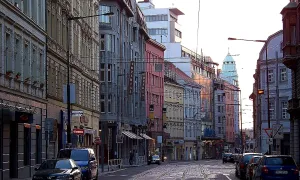
The Fara is located near the church of Nejsvětější Trojice, at the corner of Vyšehradská and Trojická streets. The site includes a garden and an old cemetery, separated by a boundary wall.
Accommodation nearby
Trips and activities nearby
Guided tours, tickets and activities nearby from GetYourGuide
Affiliate link: if you buy from the partner, we may receive a commission. The price for you does not change.
Search tours and activities →Themed route
This 3-hour walking tour takes you to the historic center of Nové Město, where you can explore the charming streets and discover the unique architecture of the area. The tour starts at the Fara u kostela Nejsvětější Trojice, a beautiful Baroque church and its adjacent fara, which serves as a museum and a cultural center.
First, visit the Fara u kostela Nejsvětější Trojice, a stunning example of Baroque architecture. The fara is located near the church of the Holy Trinity, at the corner of Vyšehradská and Trojická streets. The site includes a garden and an old cemetery, separated by a boundary wall.
Next, head to the nearby Vyšehradská Street, a charming pedestrian street lined with beautiful Baroque houses and quaint shops. Take a stroll along the street and admire the unique architecture of the buildings, which date back to the 17th and 18th centuries.
After exploring the street, visit the Trojická Street, a quiet and picturesque street that leads to the church of the Holy Trinity. The street is lined with beautiful Baroque houses and offers a glimpse into the history and culture of the area.
Finally, end your tour at the Old Cemetery, a peaceful and historic cemetery that dates back to the 17th century. The cemetery is a beautiful example of a traditional Czech cemetery, with intricate stone monuments and ornate tombstones.
Seasonal recommendations
Jaro
In the spring, the parish near the Church of the Holy Trinity is surrounded by flowers and greenery, creating a pleasant atmosphere. The lighting is mild, and nature awakens from its winter slumber. The best time to visit the parish is in April or May when the weather is moderate and there aren't too many tourists. We recommend avoiding visits on Saturdays or Sundays when crowds of visitors are common.
Summer
The main summer season is an ideal time to visit the parish near the Church of the Holy Trinity. The lighting is stronger, and nature is in full bloom. We suggest going early in the morning or late afternoon to avoid crowds of tourists. During the peak summer season, opening hours are extended, so you can also visit the parish later in the afternoon.
Autumn
In autumn, the parish near the Church of the Holy Trinity is surrounded by beautiful fall colors. The lighting is mild, and the atmosphere is calm. The best time to visit the parish is in September or October when the weather is pleasant and there aren't too many tourists. We recommend avoiding visits on Saturdays or Sundays when crowds are common.
Winter
In winter, the parish near the Church of the Holy Trinity is surrounded by snow and tranquility. The lighting is mild, and the atmosphere is quiet. The best time to visit the parish is in December or January when the weather is cold and there are fewer tourists. We recommend dressing warmly and avoiding visits at night when opening hours are extended.
Visualizations and artistic views


The visualisations are generated by artificial intelligence and serve as inspiration.
Photos from the area
Real photos taken near the monument


Zdroj a licence jsou uvedeny u každého snímku.
Tips from visitors
No tips yet. Be the first!
Log in and add your tip.
Sources and literature
Photos: JiriMatejicek / CC BY-SA 3.0 — Wikimedia Commons. The author and licence also appear when you hover over the image.
Faktickým podkladem tohoto textu byl článek na Wikipedii, jehož autory jsou přispěvatelé Wikipedie. Článek je dostupný pod licencí CC BY-SA 4.0.
Location on the map
More monuments – Nové Město
Show all in the municipality



Příběhy a pověsti
Legendy, pověsti a příběhy spjaté s touto památkou
Fotografie návštěvníků
Zatím žádné fotografie. Buďte první, kdo přidá fotografii z návštěvy!
Log in a přidejte svou fotografii nebo hodnoťte.
Za ověřenou návštěvu v aplikaci získáte víc bodů — poznáme podle GPS, že jste na místě.
Reviews and comments