






fara v Boršově nad Vltavou Parish house
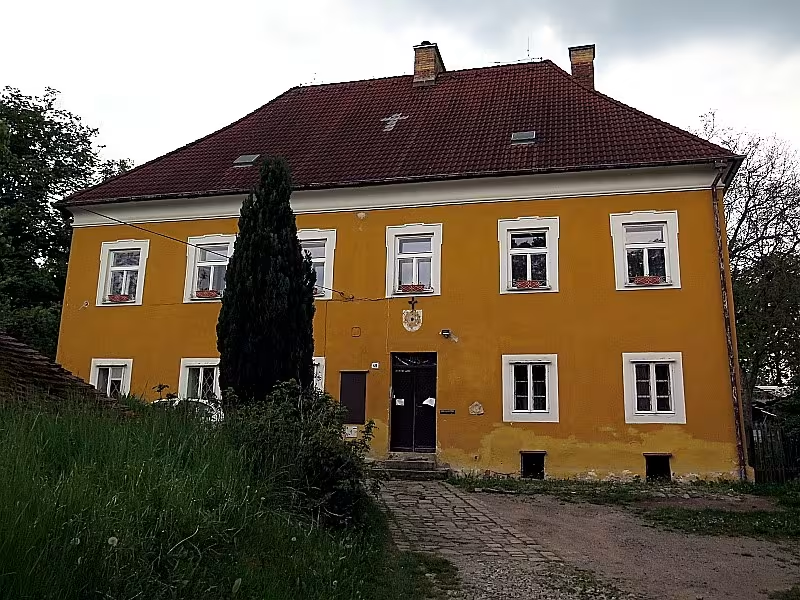
Fara in Boršov nad Vltavou in the district of České Budějovice is a protected Baroque area no. 49, located in Farní Street. This storey rectangular building was built in the 18th century on the site of an older building from the 15th century. Since 2003, the building has been maintained as a state-protected cultural monument.
The history of the place dates back to the 15th century, when the original farm building stood here. In the period of the high baroque in the 18th century it was replaced by a new construction, which corresponded to the architectural requirements at the time. The Czech countries were then under the rule of the Habsburgs and in Europe the Enlightenment accompanied by social and administrative reforms came to an end.
Architecturally, it is a storey rectangular house with a facade divided by windows lined with shambles with handles. A significant element is the main entrance in the central part of the facade, above which is the historical Rožmberk character. It refers to the previous ties to this important breeding family. Until today, the area has maintained its economic character. In addition to the main building it is also made up of stables, stables, colna, outdoor cellar, courtyard, gardens and front garden.
The building was historically owned by the Schebrod monastery. It is currently managed by the Roman Catholic parish Boršov nad Vltavou, which falls under the vicariate České Budějovice - rural.
The rectory lies in the immediate vicinity of the Gothic church of St. James the Greater, which underlines the historical importance of this place in the village. The whole complex is a comprehensive set of Baroque architecture with preserved economic background. The visit offers the opportunity to look at a monument that documents the development of the administration of the parish and rural economy over the centuries.
Historical milestones
- 15th century
- The origin of the original rectory building.
- 18th century
- Construction of the present Baroque building.
- 2003
- The area of the rectory was declared a monument protected.
Architectural development
The original building from the 15th century was replaced by a Baroque new building in the 18th century. The facade of the building is decorated with champagne with ears that frame windows. The area has retained its historical economic character thanks to preserved stables and stables.
Historical events
In the 18th century the construction of the present Baroque building took place on the site of the older building. Since 2003, the entire area has been protected in the sights.
Owners
Originally the High Brod monastery, today the Roman Catholic parish Boršov nad Vltavou.
Points of interest
- The parish building was built in the eighteenth century on the site of an older building from the fifteenth century. - Above the main entrance to the building is a historical sign of the noble family Rožmberk. - The area has preserved its economic character until today, and in addition to the main building, it is also composed of stables, stables, stables, korna, outdoor cellar, courtyard, gardens and front garden. The building was in the past owned by a monastery in Vyší Broda. - Fara is located in the immediate vicinity of the Gothic church of St. James the Greater.
Guide
Show guide text
This text was created by artificial intelligence and has not been editorially reviewed. It may contain inaccuracies.
Welcome to Borsov over Vltava. You're standing in a place that just happens to be connected to the deep history and peace of local life. In front of your eyes is the rectory building, which in this place acts as a fixed point, as a witness to the many centuries that have passed here. Feel the atmosphere that surrounds you now. It is a space where religious tradition meets everyday work and history is not only reflected in stone, but also in the whole arrangement of this place.
Let's go back to the past together so we can understand what you're seeing. This building you see now is not just the result of one time, but it's a layered story. In the fifteenth century there was an older building that served as a seat for the spiritual administrators of this area. The world was different then, slower and the buildings were built with a different regard to the durability and needs of the time. But time has brought about changes. In the eighteenth century, it was decided that older, probably already obsolete or disproportionate to today's needs, the construction had to retreat. It was at that time that this contemporary building was built, which bears the features of baroque style. Baroque, as you know, is a style that carries some dignity and balance, which in this case is manifested in the form of this one-storey, rectangular object.
Now pay attention to the architecture itself and to what you see right in front of you. The parish building is impressive in its form and its presence in this space. It is a storey object with a clear rectangular plan, which is very stable and firm. But if you look further, you realize that the rectory is not just this one house. It's an entire complex that makes up one whole. If you look around, you'll see that the area includes various economic buildings. You can see the stables, the stables, and a different column. All this gives you a clear idea that this place was not just a simple residence, but a living, working economy. The priest here was not only a spiritual leader, but he also had to be a competent administrator who cared for his background and the economy that was necessary for the functioning of the parish. In addition, the whole area is complemented by large gardens that provide the whole area with peace and a sense of privacy.
Note also how this building is situated. It is located in the immediate vicinity of the Gothic Church of St. Jacob the Greater. This proximity is not random. In the traditional arrangement of the village or town was the parish and the church always closely connected, forming the heart of local community life. This closeness between the Gothic architecture of the church and the Baroque style of the rectory creates an interesting contrast between the various epochies that must live together in harmony.
And now I want to ask you to do one important thing. Look directly above the main entrance to the rectory building. You see that detail that's been there for a long time? There is a historical sign of the noble family of the Rožmberks. That's a fascinating element. The presence of this sign on the facade of the rectory reminds us of the power structures and influential pedigree, which in these parts of the country have worked uncontrollably but very strongly in the past. This symbol is not just an ornament, it is a symbol that, at some point, clearly said to whom it is subject to this territory and what ties there existed. It is a small, but very significant, trace of the great history that is anchored here right above the threshold that people have been going through every day.
This whole area, which you now admire, also has its modern history of protection. In order for these valuable traces of the past not to be lost in the tilt of the modern world, the entire complex was declared to be protected in the year two thousand and three. This means that every wall, every economic building and every detail of this place is now protected so that it can serve future generations as well as serve us today.
In your next walk, try to perceive this space not as a collection of individual buildings, but as one living unit. Feel the relationship between the main building, economic objects and gardens. Feel how spiritual life is intertwined here with work in the field and how different centuries come together. Boršov nad Vltavou offers you this piece of history that you can experience right now, in silence and quiet.
Thank you for your time and for choosing to explore this area. We hope that this view of the Baroque parish and its surroundings has brought you a new perception of history. We wish you a beautiful rest of the day and invite you to further discover the beauty of this place. We'll say goodbye and wish you a pleasant journey.
Tips for visitors
The best time to visit is during the sunny days in the late afternoon, when the setting sun illuminates the baroque facade of the rectory and the neighbouring Gothic church of St. James the Greater, creating ideal conditions for photography.
You can easily reach the village by car or public transport; parking is possible in the vicinity of the parish area, precise connection and standing options we recommend to verify in the current traffic search engines.
When visiting, take with you comfortable shoes for walking around and the camera, as the connection of Baroque architecture of the rectory with the Gothic elements of the church offers unique composition for lovers of history.
In the immediate surroundings, you can admire the Gothic church of St. James the Greater and enjoy the quiet atmosphere of the village located by the river Vltava, which is a great starting point for short walks in nature.
For families with children, the location is suitable thanks to a quiet environment and close to the river, where water flow can be observed; We recommend planning a trip to include visiting nearby Czech Budejovice for further cultural activities.
Businesses nearby
Do you run a restaurant, accommodation, shop, museum, rental, wellness or other visitor service near this monument? Show yourself directly to the people heading to it — this is how they will see you in the app and on the web:
Events nearby
Zdroj akcí: otevřená data měst a obcí ČR (Národní katalog otevřených dat) a kalendář akcí Národního památkového ústavu.
Nearby
V bezprostřední blízkosti se nachází gotický kostel svatého Jakuba Většího. Obec leží v blízkosti řeky Vltavy a nedaleko Českých Budějovic.
Accommodation nearby
Trips and activities nearby
Guided tours, tickets and activities nearby from GetYourGuide
Affiliate link: if you buy from the partner, we may receive a commission. The price for you does not change.
Search tours and activities →Themed route
Thematic cruise route from Boršov nad Vltavou
1. Fara in Boršov nad Vltavou - Type: Historical building - Why is it worth visiting: Fara is an architectural proof of baroque art and home to rich history. Its interior also offers beautiful frescos and ancient instruments that attract lovers of history and art.
2. Church of St. Jacob the Greater - Type: Gothic Church - Why is it worth visiting: This church is an example of Gothic architecture with excellent preservation of original elements. Its high tower and rich interior decoration are a necessary experience for every passenger who is interested in historical buildings.
3. River Vltava - Type: Natural water flow - Why is it worth a visit: The proximity to the river offers opportunities for relaxation and views of the stupid landscape. It is an ideal place for short walks or quiet moments by the water, especially during summer weather.
4. Around České Budějovice - Type: City circuit - Why is it worth a visit: The nearby city is known for its history and cultural heritage. Its centre offers various entertainment options, including business streets and restaurants, where you can enjoy local beers or other gastronomic specialties.
This route offers a combination of history, nature and cultural entertainment in one region.
Seasonal recommendations
Life wakes up around the building in the spring. The gardens are starting to bloom and the air is fresh. The light is very fine in this period, which is ideal for observing the details of architecture. We recommend to come in the morning when peace and nature are most alive. Dress well, because morning cold can still smell.
Summer months bring the greatest heat and dense green vegetation. The sun shines high and the colors are very rich. Due to the increased interest of visitors, it is best to arrive first thing in the morning to avoid the largest groups of people. Prepare light substances, sunscreen and plenty of fluid.
Autumn time offers the most impressive view thanks to the golden and brown shades of leaves. The morning mist gives the place mystery and a calm mood. It is advisable to carry an umbrella or waterproof jacket. It is best to visit the memory in the afternoon when the sun shines low and highlights the structure of the walls.
In winter there is very quiet and the surrounding area often covers snow. The light is cold and the days are short, which creates a rough but beautiful look. The necessity is very warm clothes and solid shoes. At this time, it must be assumed that due to the short day, the time for inspection is limited.
Visualizations and artistic views


The visualisations are generated by artificial intelligence and serve as inspiration.
Photos from the area
Real photos taken near the monument


Zdroj a licence jsou uvedeny u každého snímku.
Tips from visitors
No tips yet. Be the first!
Log in and add your tip.
Sources and literature
Photos: Sovicka169 / CC BY-SA 4.0 — Wikimedia Commons. The author and licence also appear when you hover over the image.
Faktickým podkladem tohoto textu byl článek na Wikipedii, jehož autory jsou přispěvatelé Wikipedie. Článek je dostupný pod licencí CC BY-SA 4.0.
Location on the map
More monuments – Boršov nad Vltavou
Show all in the municipality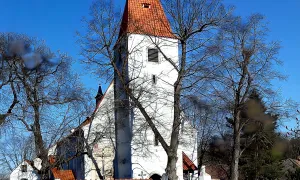
Příběhy a pověsti
Legendy, pověsti a příběhy spjaté s touto památkou
Fotografie návštěvníků
Zatím žádné fotografie. Buďte první, kdo přidá fotografii z návštěvy!
Log in a přidejte svou fotografii nebo hodnoťte.
Za ověřenou návštěvu v aplikaci získáte víc bodů — poznáme podle GPS, že jste na místě.
Reviews and comments