






Kostel svatého Jakuba Většího (Boršov nad Vltavou) Church
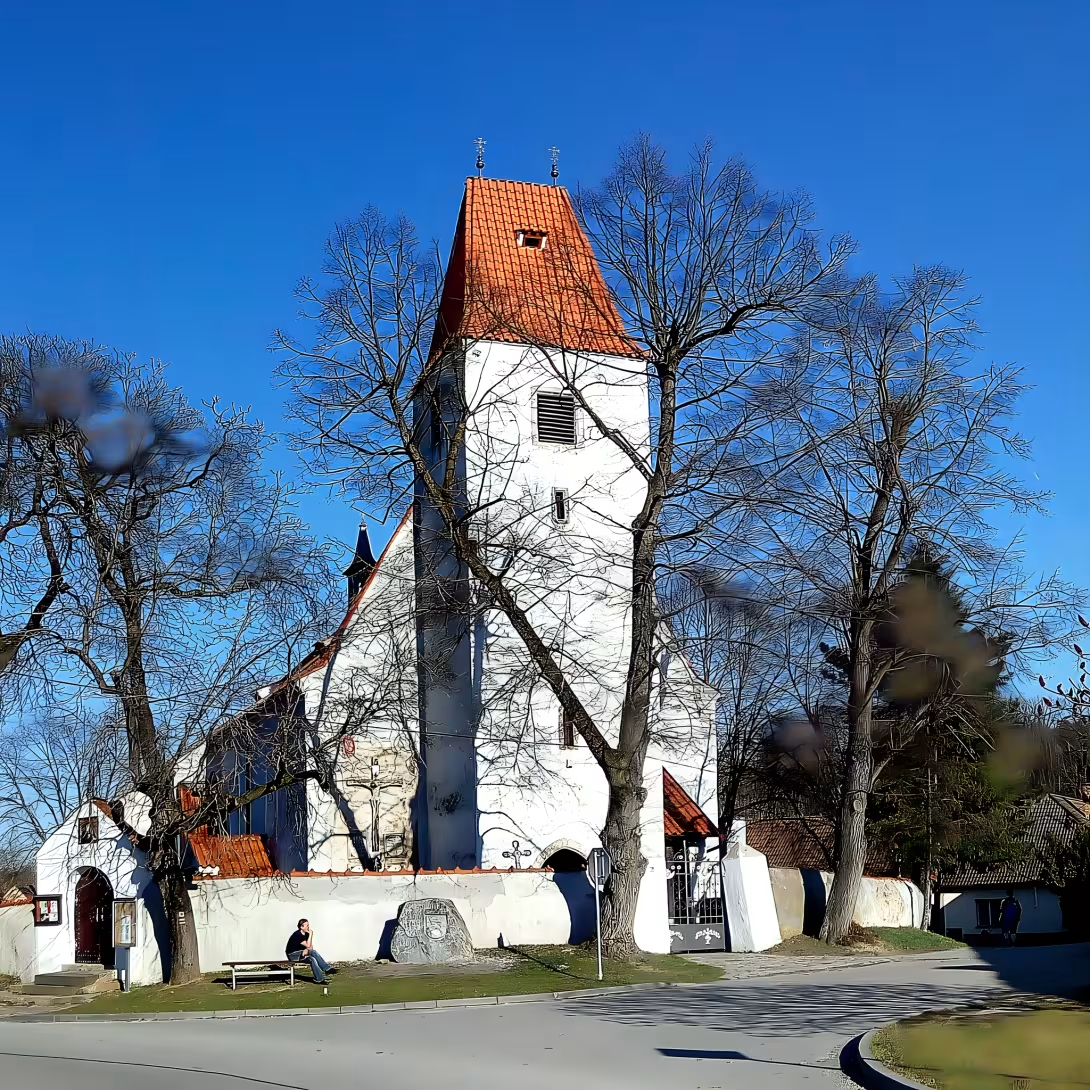
The church represents a typical Gothic building of the late 15th century, which was built by Mikuláš z Pelhřimova, the chief scribe of the Rožberg family. The construction, carried out in 1496 by the builder Linhарt of Altenberg, replaced the older wooden temple. The church was dedicated to St. Jacob the Elder and served the parish, which had written references since 1403.
The architecture of the building consists in a rectangular presbytery characteristic Gothic window oriented towards the south-east, which survived in a nice state. However, the original arch of the church boat was seized, and was replaced by a flat ceiling during the reconstruction in 1703. The interior of the church has undergone considerable changes over the centuries. All of his original equipment was destroyed during the tragic события of June 18, 1620, when the Hungarian army dragged through Borshov and his soldiers stormed into the temples during mass, killing believers and destroying almost all equipment. The only thing left intact was the stone baptist.
Today's equipment is much younger. The main altar comes from the church of St. Vitus in Habří, which was abolished in 1787 as part of the Josephine reforms. The painting on the altar depicting St. James was painted by František Bohumil Doubek in 1914. The Baroque frescoes on the walls dates back to 1845, except for the rare freshah of St. Christopher on the southeast wall, which is from the 15th century - the church was founded. All frescoes were reexposed during the last major repair in 1944. The organ was installed in 1942.
The only original equipment next to the baptiser remained the main bell cast in 1498 only two years after the church was built. It weighs 365 kilograms, its diameter is 86 centimeters and its height is 59 centimeters. It belongs to the oldest preserved bells in Czech territory. The bell is decorated with three wedding reliefs - the Virgin Mary, Saint James the Elder and Saint Bernard - and a Latin inscription asking for protection from enemies. It was created by Master from České Budějovice and his craftsmanship preserved him for over five centuries.
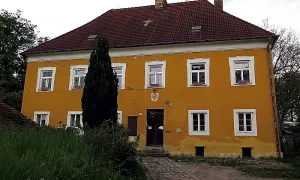
The parish area includes a Baroque two-storey rectory with characteristic windows lined with shamrans. Together with economic buildings, an outdoor cellar and a garden gazebo, it is a rarely preserved example of rural parish architecture. The whole parish area was declared a cultural monument in August 2003.
Then and now
Drag the slider to compare how the landmark may have looked when it was built with the view today.
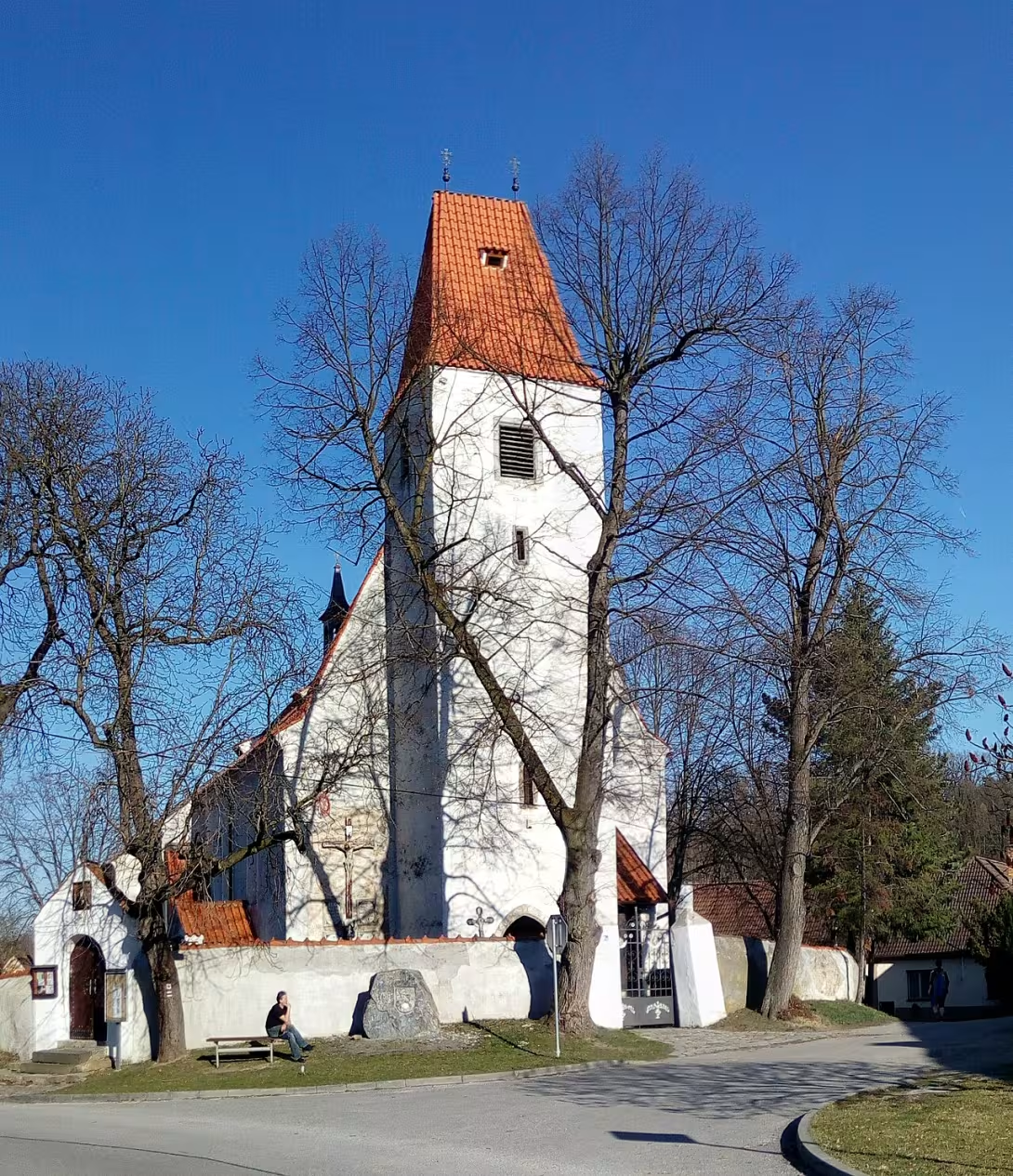
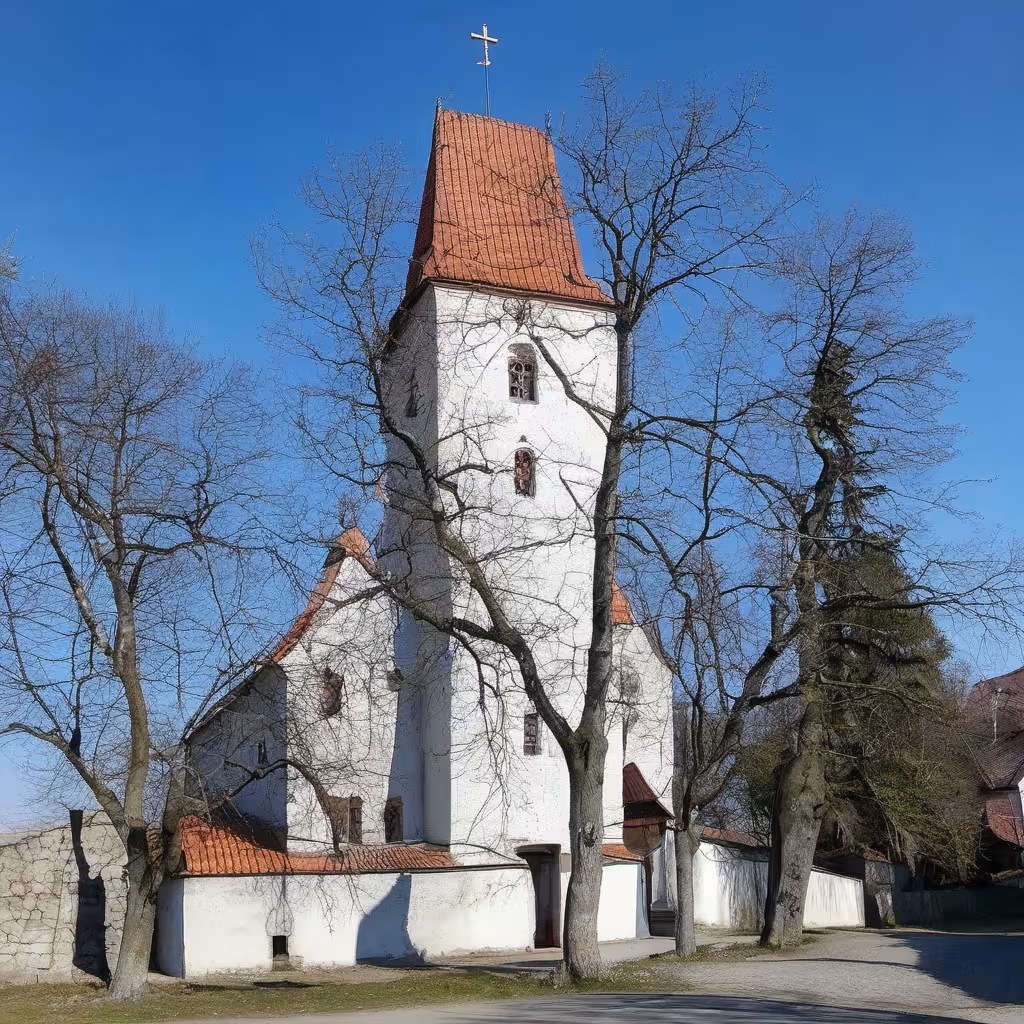
The historical appearance on the left is an AI-generated visualisation and serves as inspiration only.
Historical milestones
- 1403
- The first written mention of the parish in Boršov nad Vltava, which was donated to Henry III of Rožmberk by Pope Bonifác IX.
- 1496
- Construction of the church of St. James the Elder, dedicated to Nicholas of Pelhrimov.
- 1498
- The rain of the original bell, which was preserved until today.
- 1620
- The destruction of the church interior by Hungarian troops during the Thirty Years' War.
- 1787
- Importation of the Baroque altar from the abolished church of St. Vitus in Habri.
- 1944
- Restoring and uncovering the original fresco during the last major repair of the interior.
- 2003
- Declaration of the parish area (rectory + economic building) for a cultural monument.
Architectural development
The church was built at the end of the 15th century as a single-boat Gothic building with a rectangular presbytery and a preserved vault. In 1703, the original Gothic vault was replaced by a flat ceiling. In the 18th century there was a Baroque reconstruction of the interior, including the altar. In the 19th century, frescoes were restored and a new organ was installed in 1942. The tower is late Gothic with a chute roof, as stated by the Central List of Cultural Monuments.
Historical events
- 1496
- Construction of the church after the demise of the original wooden church, dedicated to St. Jacob the Elder.
- 1620
- Tragic event during the Thirty Years War: Hungarian troops invaded the church during mass, murdered priests and a part of believers and destroyed the interior (except for the stone baptizer).
- 1787
- The Baroque main altar was imported from the abolished church of St. Vitus in Habra as part of the Josephine reforms.
Owners
Farnost Boršov nad Vltavou, municipality Boršov nad Vltavou
Points of interest
- The church was built in 1496 as a Gothic building in the place of the older wooden temple, had it built by Mikuláš z Pelhřimova, the chief scribe of the Rožberg family.
- The only preserved original equipment from the time the church was founded is a stone baptist who survived a devastating event in 1620.
- The bell from 1498, cast only two years after the completion of the church, is one of the oldest preserved bells in Czech territory and weighs 365 kilograms.
- A rare original fresco of St. Christopher from the 15th century, which is from the beginning of the church, was preserved on the southeast wall.
- The parish grounds, including Baroque farms and farm buildings, were declared a cultural monument in 2003.
Guide
This guide is narrated by a synthetic voice generated by artificial intelligence.
Show guide text
This text was created by artificial intelligence and has not been editorially reviewed. It may contain inaccuracies.
Welcome to Borsov over Vltava. You are standing in front of one of the most important historical points in this place, in front of the church of St. Jacob the Greater. Before you go any further, stop for a moment and perceive the atmosphere of this space. In front of you is a building that is not just a wall and a roof, but a living witness to the centuries that have been going on here, and events that have shaped the fate of the people of the region. Can you feel the weight of history floating in the surrounding air? This monument will now guide you through times, from medieval power to modern renewal.
Let's go back deep into the past first to understand why this place is so special. The roots of this place go much further than they might seem. Already in 1403 the first written mention of the local parish appears in our chronicles. At that time, this church was donated to the mighty noble family of the Rožmberks through Pope Boniphas the ninth. This must give you an idea of how important Borshov was for the then political and religious map of South Bohemia. But the church you see is not the original wooden temple that stood here before. He had to give in to a new, ambitious vision.
In 1496, a building that we admire today was completed. This process was not a work of chance. Mikuláš z Pelhřimova, a character who carried great seriousness in the company at the time, was behind the whole realization. He wasn't just an ordinary builder, he was a chief scribe of a powerful Rozberg family, a man with huge contacts and influence. Thanks to his efforts and under the supervision of architect Linhart of Altenberk, this Gothic building could have acquired its unique form. The church was dedicated to Saint Jacob the Elder and became a symbol of stability and faith at a time when the world around him began to change quickly.
Now pay attention to the architecture itself, which is right before your eyes. If you look at the overall structure of the building, notice its unusual geometry. The church has a rectangular presbytery, which is a very rare element in the Czech environment of the time. This gothic property gives the building a specific character and distinguishes it from many other churches you might encounter in the vicinity. It's proof of precise planning and efforts to create something that's out of line.
Although the foundation of the church is goth, when looking at its interior or certain details you will notice other influences. The church didn't just go through one period. In the seventeenth century he went through a baroque reconstruction that gave him a new, richer look. This layer of history is still visible in architecture. One of the most significant elements you can see here is the Baroque altar. However, it does not come from Boršov, but it was brought to the church in 1787 from another place, from the no longer existing church of St. Vitus in Habri. This part thus carries a piece of history from other extinct places, creating a fascinating connection between different parts of the landscape.
But the history of this place wasn't always about building and decorating. We must remember 1620, when the darkness of the 30-year war spread over the whole countries. In this tragic year, the church interior was destroyed by an attack by the Hungarian army. It was a test that this building had to test under. Many things have been destroyed, many rare objects have died, but some things have remained in place. One of these survivors is the stone baptizer. It is the only original kit from the time the church was founded that resisted all devastating events and remained a silent witness to this time.
If you focus now on what is happening inside, you may be interested in the fact that treasures that have almost been lost are hidden beneath the layers of later modifications. In 1944, during one of the last major interior repairs, there was an incredible discovery. Under layers of painting and plaster, the original gothic frescos have been shown, among them especially a highly valued painting of St. Christopher from the 15th century. This moment of restoration and rediscovery of beauty shows that even after the greatest destruction history can flourish again.
And now I want to invite you to listen to something that may be the greatest treasure in this place. Even if you don't see him right now, you see his presence in every corner of the church. It's a sound. In 1498 there was cast the original bell. This piece of metal is one of the oldest preserved bells in the whole territory of Czech countries. Imagine the sound of it spreading around these fields and forests over 500 years ago. That sound was during joyful festivities, but also during funerals or during danger, a constant companion to the life of the people of Borsov. It's the voice of history that's never completely released.
In your next passage around the church, try to perceive every detail, every inequality of stone and every trace of time that has been written on these walls. The Church of St. Jacob the Greater is not only a monument, it is a story about human faith, about the art of architects like Linhart of Altenberk, about the ambitions of Nicholas of Pelhrimov and about the ability to survive even the darkest times, such as the war in the seventeenth century.
Thank you for sharing this story with us. Now we will no longer hold you back and let you walk quietly and discover the beauty of this place with our own eyes. We wish you pleasant further tours and hope that the atmosphere of this Gothic temple will remain in your memories for a long time. Rest in peace and look forward to what the next steps in this historic environment will bring. Goodbye.
Tips for visitors
The best time to visit the church of St. Jacob the Greater is in the summer months when the weather is pleasant and sunlight can best draw the Gothic details of the building. The morning hours, when the church is less visited, are ideal for a peaceful tour without crowds. In winter, the church offers a unique atmosphere where the interior reflects the light of candles and creates a magical atmosphere.
The church is available by car, for which there are plenty of parking places nearby. It is recommended to use public transport that comes from nearby cities. The current connection should be checked in the traffic search engine. If you arrive by car, you can use the parking lot near the rectory located right next to the church.
When visiting take on comfortable shoes because the church has stone floors and some parts are slightly uneven. It is also convenient to take a small laptop or mobile phone for records, but remember to keep your phone in silent mode. In the winter months bring warmer clothes because the interior of the church can be cold.
Photography is allowed, but care must be taken to respect other visitors. The best places for photos are the entrance portal with gothic arches, the interior with original bell from 1498 and windows with stained windows that capture light best in the morning or afternoon sun. Avoid photography during services.
In the vicinity of Boršov nad Vltavou you can see the Baroque rectory, which is located right by the church. Also interesting is the abolished church of St. Vitus in Habří, from which comes the Baroque altar, which is located in Boršov. Both of these places are only a few kilometres away, so you can visit them during one trip.
For families with children, a visit to St. Jacob's Church is a great opportunity to get acquainted with history and architecture. Children can explore Gothic details such as vaults and portals, and learn more about the original bell from 1498. There is also the possibility of walking around the picturesque edges of Boršov, where children can play and discover nature.
Frequently asked questions
Is Kostel svatého Jakuba Většího (Boršov nad Vltavou) open to the public?
Yes, the church is open to the public all year round from Monday to Sunday at 9:00 - 17:00.
How do I get to the place by car / public transport?
Parking is possible in the parking lot near the church or nearby. Transport of public transport can be used by line number 1 from České Budějovice to Boršov nad Vltavou.
How much is the entrance fee and is it paid on the spot?
Admission is free, but you can donate funds for the maintenance of the church.
Is the tour suitable for children and seniors?
Yes, the church of St. Jacob the Greater is suitable for families with children and seniors. The tour can be adapted to the needs of each visitor.
How long does the tour take?
The church tour takes approximately 30 minutes, but you can spend more time here as you wish.
What are the opening times and booking is required?
St. Jacob the Greater Church is open to the public all year round from Monday to Sunday at 9:00 - 17:00. Reservation is not necessary, but we recommend to contact the church administrator in advance.
What's interesting in the immediate vicinity?
In the vicinity of Boršov nad Vltavou there are many natural attractions such as Lipno water tank or the Šumava National Park. We recommend visiting these locations during a 30-minute drive from the church.
For kids
Imagine going back to the past to the Middle Ages, exactly Boršov nad Vltavou. How would that look? The Church of St. Jacob the Greater stands where you stand today. And it was like a big fortified city because the temple was surrounded by a wall.
At that time, there were people who were involved in agriculture and animal husbandry. The church was their sanctuary. After all, Saint James is the protector of passengers and merchants. And it was when people went on long trips abroad.
Businesses nearby
Do you run a restaurant, accommodation, shop, museum, rental, wellness or other visitor service near this monument? Show yourself directly to the people heading to it — this is how they will see you in the app and on the web:
Events nearby
Zdroj akcí: otevřená data měst a obcí ČR (Národní katalog otevřených dat) a kalendář akcí Národního památkového ústavu.
Accommodation nearby
Trips and activities nearby
Guided tours, tickets and activities nearby from GetYourGuide
Affiliate link: if you buy from the partner, we may receive a commission. The price for you does not change.
Search tours and activities →Themed route
Thematic cruise route Boršov nad Vltavou
1. Church of St. Jacob the Greater Baroque church from the 18th century with rich decoration and historical significance. Its interior attracts visitors with beautiful frescoes and artistic details that reflect the spiritual life of the region.
2. Fara in Boršov nad Vltavou The Baroque rectory with economic buildings is directly attached to the church, which maintains the original rural atmosphere. It is a great opportunity to look at historical architecture and learn more about the life of local priests.
3. Natural Reserve Black Mountain Only about three kilometers west of the village is a beech forest with rich biodiversity. Ideal for a short walk or picnic in nature that contrasts with cultural monuments.
4. Church of St. Vitus in Habri A broken church whose Baroque altar is today located in Boršov. The trip here (about ten kilometres east) offers the opportunity to explore another example of Baroque sacral architecture and the history of the region.
Seasonal recommendations
Spring Spring in Boršov nad Vltavou offers the church of St. Jacob's Greater Magical Lighting, where the sun lights up the windows and creates playful shadows on the stone walls. Nature is awakening to life - meadows are blooming, Vltavan forests are green and the air smells of rain and young leaves. The atmosphere is calm, but constantly changing, as if the church was surrounded by a living image of transformation. It is convenient to visit a memory in April, when the crowds are not yet too large and avoid rainy days. Dress light but protective clothing - the sun can be direct while the morning and evening are cold. The best time is early in the morning or after lunch when the church is lit with mild light and the surrounding area is quiet.
Summer In the summer months the church of St. James the Greater September under the bright sky, when the sun's rays reflect off white plaster and highlight detailed carvings on portals. The surrounding area is green and full of life - the Vltava shores attract for walks, and the surrounding areas are filled with sunflowers and corn. The atmosphere is warm and warm, but in the main summer season the church is often visited, so prepare to visit. It is recommended to arrive before 10 o'clock to enjoy your peace and avoid crowds. Dress light, airy clothes, but don't forget your hat or sunglasses. The evenings are pleasant, so a visit after sunset can be very romantic.
Autumn Autumn Boršov nad Vltavou surrounds the church with golden and red shades of leaves, which are reflected in Vltava forests and create fine, variable shadows on the stones of the church. The atmosphere is calm and introspective, as if time has slowed down. The air is cold, but pleasant, and every step of green grass or forest roads emits a fine rustling of falling leaves. In November, when advent time approaches, the church is visited less, which is the perfect time for silent meditation. Put on warmer clothes, but light layers to adapt to changing weather. The best time to visit is in the morning when the light is soft and the surroundings are still quiet.
Winter Winter Boršov nad Vltavou surrounds the church of St. James the Greater Mysterious Fog, which rolls over the Vltava and creates silver sparks on the stones of the church. The atmosphere is calm and mysterious, as if time stood still. Nature is covered with snow, which gives the landscape peaceful beauty. In December, when Christmas holidays are coming up, the church is often visited less, but in advent time there are often religious services and concerts. Put on warm, but comfortable clothes so you can enjoy walking around the snow area. The best time to visit is early morning or after lunch, when the church is lit with mild light and the surrounding area is quiet. The opening hours are shorter in winter, so prepare to visit.
Visualizations and artistic views


The visualisations are generated by artificial intelligence and serve as inspiration.
Photos from the area
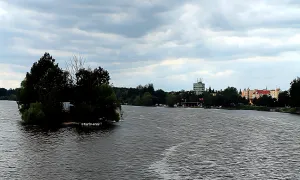
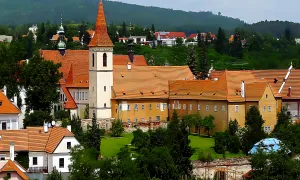
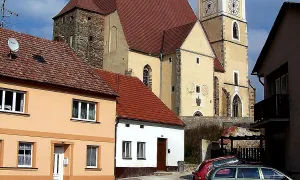
Real photos taken near the monument


Zdroj a licence jsou uvedeny u každého snímku.
Atmosphere of the place
This atmospheric visualisation of the place and period was generated by artificial intelligence. It is not real footage of the location.
Tips from visitors
No tips yet. Be the first!
Log in and add your tip.
Sources and literature
Photos: Czeva / CC BY-SA 4.0, rozlišení zvýšeno umělou inteligencí — Wikimedia Commons. The author and licence also appear when you hover over the image.
Faktickým podkladem tohoto textu byl článek na Wikipedii, jehož autory jsou přispěvatelé Wikipedie. Článek je dostupný pod licencí CC BY-SA 4.0.
Location on the map
Příběhy a pověsti
Legendy, pověsti a příběhy spjaté s touto památkou
Fotografie návštěvníků
Zatím žádné fotografie. Buďte první, kdo přidá fotografii z návštěvy!
Log in a přidejte svou fotografii nebo hodnoťte.
Za ověřenou návštěvu v aplikaci získáte víc bodů — poznáme podle GPS, že jste na místě.
Reviews and comments