






Františkánský klášter v Plzni Monastery
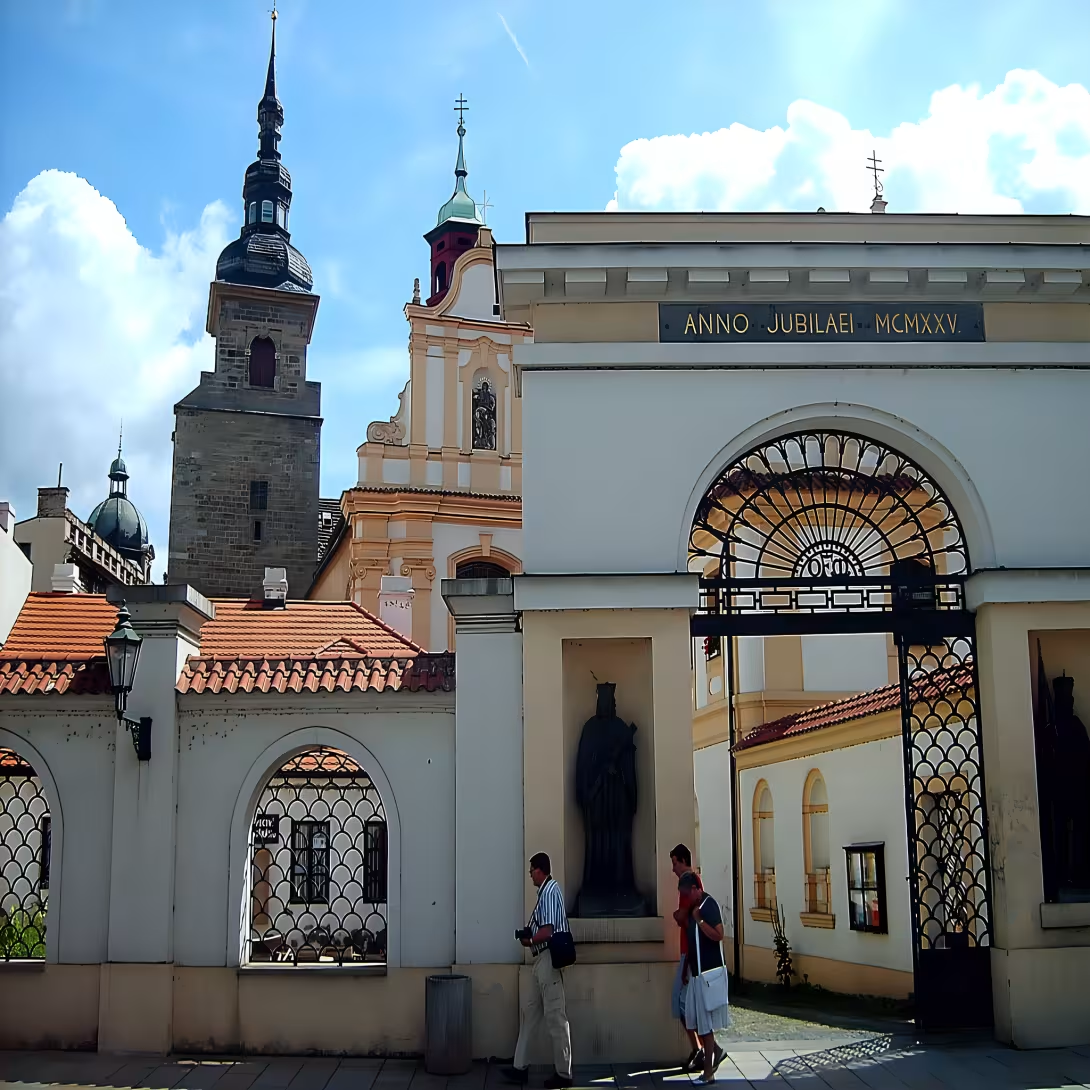
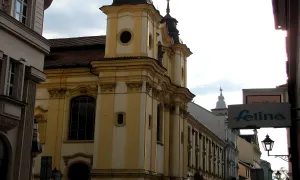
The Františkánský Klášter v Plzni is a historic monument located in the Vnitřní Město district of Plzeň, Czech Republic. Originally established as a Minorite monastery at the end of the 13th century, it became a Franciscan monastery by Pope Pius II's command. This site stands out for its preserved early Gothic architecture despite enduring significant historical upheavals, including the Hussite Wars and the Thirty Years' War.
The foundation dates back to around 1295, coinciding with King Wenceslaus II's establishment of Plzeň. Initially belonging to the Minorites, the monastery expanded southeast from its original location near city ramparts. The oldest parts, dating to 1300, include the walls of the pentagonal presbytery and the eastern part of the triple nave. Over time, additional sections such as the rest of the triple nave and intermediate arcade were constructed, with vaulting completed by 1380.
Throughout its history, the monastery experienced significant changes in ownership and purpose. The Minorites faced expulsion in 1419 due to Václav Koranda's influence but returned shortly after in 1420. In 1460, Pope Pius II directed that the Franciscans take over the monastery. Despite suffering damage during the Hussite siege of Plzeň between 1433 and 1444, it was restored through donations over the following decades. The monastery faced further challenges during the Siege of Plzeň in 1618 by Prince Mansfeld's forces.
Architecturally, the Františkánský Klášter v Plzni showcases a blend of Gothic and Baroque styles. Its Church of the Assumption of the Virgin Mary features small double windows with late Gothic traceries and groin vaults ending in triumphal arches supported by semi-pillars. The cloister, like the church, is cross-vaulted and surrounds a central garden visible through Gothic windows. Notable Baroque modifications were made by Jakub Auguston Sr., who designed the Chapel of St. Anthony and a new wing for novices, while his nephew Jakub Auguston Jr. worked on the western facade of the monastery church between 1722 and 1724.
The monastery's fortunes fluctuated over time. During the Josephine reforms, its population declined without being disbanded. In the 19th century and into the 1930s, it underwent various remodelings. The socialist government forcibly disbanded the monastic community in May 1950 as part of Action K, repurposing the buildings for a children's home and later as the Museum of West Bohemia. Following political changes in 1989, the monastery was returned to the Roman Catholic Church, which began renovations based on Jan Soukup's architectural concepts.
Today, the Františkánský Klášter v Plzni serves multiple purposes. It houses the Museum of Christian Art of the Plzeň Diocese and provides service apartments for diocesan staff and nuns. Unoccupied parts are utilized by the Parish of Cathedral of St. Bartholomew and the Plzeň Bishopric. The Franciscans returned to Plzeň in 1996, establishing a pastoral center in a former kindergarten building.
Visitors can appreciate its rich history and architectural evolution from Gothic to Baroque styles. Its resilience through centuries of conflict and change makes it a significant cultural landmark. The monastery offers insights into medieval religious life and artistic heritage, making it a worthwhile destination for those interested in exploring the historical tapestry of Central Bohemia.
Then and now
Drag the slider to compare how the landmark may have looked when it was built with the view today.
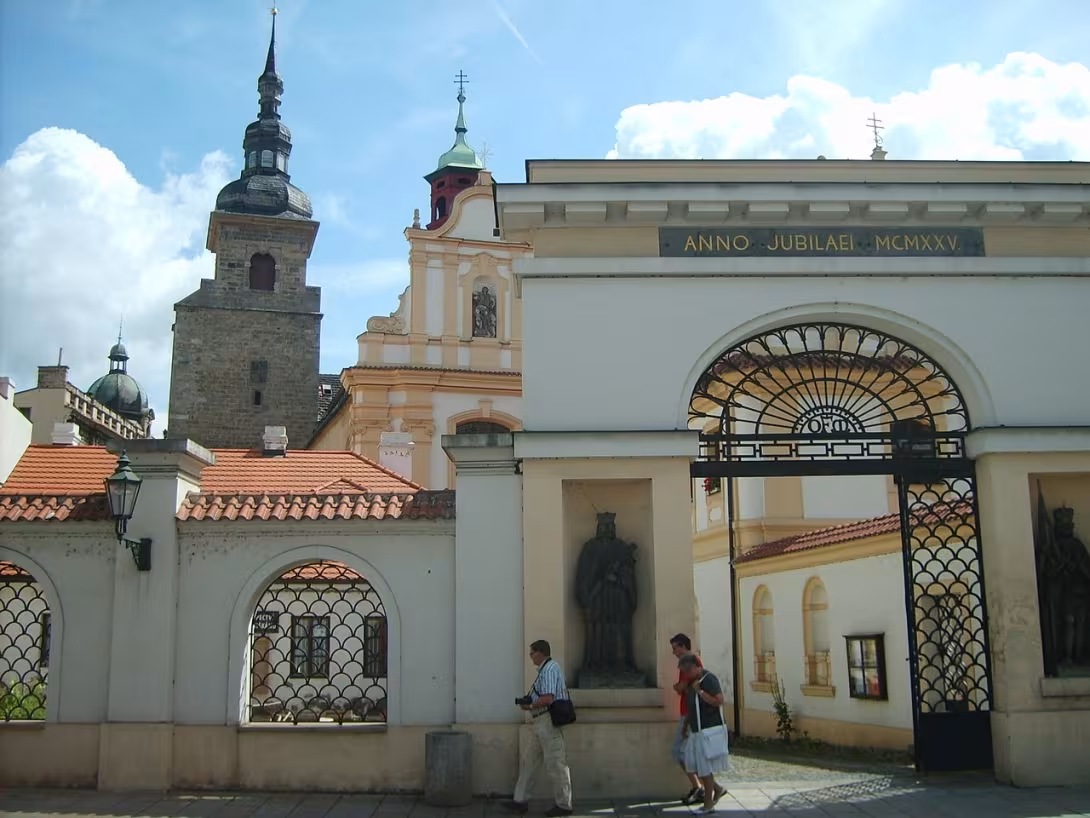
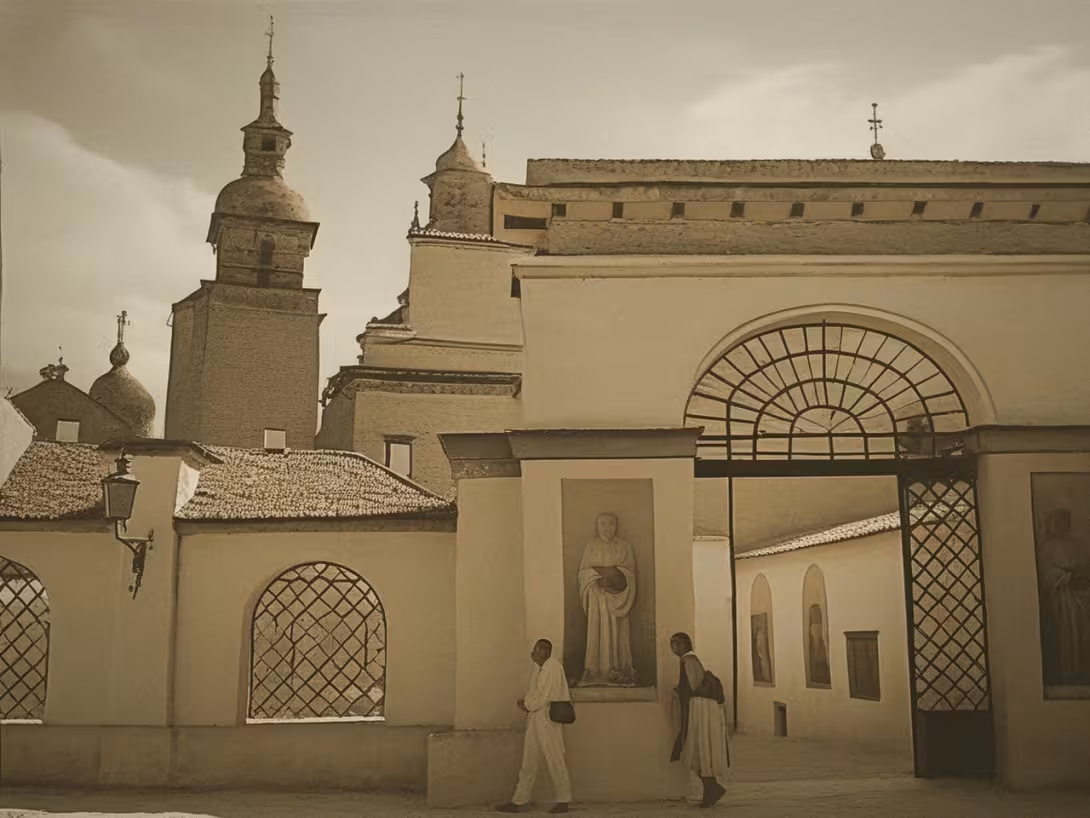
The historical appearance on the left is an AI-generated visualisation and serves as inspiration only.
Historical milestones
- 1300
- Foundation of the Minorite monastery.
- 1350
- Completion of the church's presbytery and nave.
- 1433
- Damage during the Hussite siege.
- 1618
- Damage during the Siege of Plzeň by Prince Mansfeld's forces.
Architectural development
The Františkánský klášter v Plzni underwent significant architectural changes from its initial Gothic construction to Baroque renovations. The church tower was built in the late 16th century, and a chapel dedicated to the Holy Trinity was added in 1611. Notable Baroque modifications were made by Jakub Auguston between 1722 and 1744.
Historical events
The Minorites were expelled from the monastery in 1419 due to Václav Koranda's influence but returned in 1420.
The monastery was severely damaged during the Hussite siege of Plzeň between 1433 and 1434, leading to nearly fifty years of reconstruction.
In 1618, the monastery suffered damage again during the Siege of Plzeň by the forces of Prince Mansfeld.
Owners
Initially owned by the Minorites until 1419 when they were expelled due to Václav Koranda's influence but returned in 1420. In 1460, it was taken over by the Franciscans under Pope Pius II's directive. The monastery was secularized during the Josephinian reforms and later used as a home for youth and museum space before being returned to the Roman Catholic Church in 1989.
Points of interest
- Despite its turbulent history, the Františkánský Klášter v Plzni is one of the few sites in Europe that has maintained its early Gothic architectural integrity from as far back as 1300.
- The monastery's Church of the Assumption of the Virgin Mary features unique small double windows with late Gothic traceries, a rare design element not commonly found in other European Gothic structures.
- During the Hussite Wars, the monastery was damaged but remarkably restored through donations, highlighting its resilience and the community's dedication to preserving their spiritual home.
- The Baroque modifications by Jakub Auguston Sr. and his nephew introduced elements like the Chapel of St. Anthony, blending seamlessly with the existing Gothic architecture—a testament to adaptive architectural practices in historical preservation.
- In a twist of fate during the socialist era, parts of the monastery were repurposed as a children's home before eventually becoming the Museum of West Bohemia, showcasing its versatility and cultural significance beyond religious functions.
Guide
This guide is narrated by a synthetic voice generated by artificial intelligence.
Show guide text
This text was created by artificial intelligence and has not been editorially reviewed. It may contain inaccuracies.
Welcome to the Františkánský klášter v Plzni, a remarkable testament to the architectural evolution of Gothic and Baroque styles in Central Bohemia. As you stand before this historic site, take a moment to absorb its grandeur and significance. Imagine yourself stepping back into medieval Europe, where religious fervor and cultural shifts shaped the world around us.
The monastery was founded around 1300 as a Minorite monastery, reflecting the growing influence of Franciscan ideals during that era. Its construction marked an important phase in the spiritual landscape of Plzeň. Over time, this sacred site has witnessed significant historical events, including damage during the Hussite Wars and later destruction by Prince Mansfeld's forces in 1618.
As you gaze upon its structure, notice the Church of the Assumption of the Virgin Mary with its unique small double windows—a rare feature that speaks to the late Gothic architectural style. These elements are a testament to the craftsmanship of architects Jakub Auguston starší and Jakub Auguston mladší, whose contributions have left an indelible mark on this historic site.
Let's delve into some intriguing stories tied to this place. The monastery endured tumultuous times, notably during the Hussite siege in 1433 when it faced significant damage. Yet, despite these challenges, it stands as one of Europe’s few sites that has maintained its early Gothic architectural integrity from as far back as 1300.
An interesting historical figure associated with this site is Václav Koranda, a prominent reformer whose life and work were intertwined with the monastery's history. His presence here adds depth to our understanding of the religious and cultural transformations during his time.
As you explore further, take in the atmosphere of resilience and renewal that permeates this place. The Františkánský klášter v Plzni is not just a monument but a living narrative of history's ebb and flow.
I invite you to continue your journey through this historic site, discovering more about its past and present. Thank you for joining me on this exploration; may it inspire further curiosity and appreciation for the rich tapestry of our shared heritage.
Frequently asked questions
Can the monument be visited?
Religious buildings are usually open mainly during services; at other times a visit is normally arranged with the parish or the operator. We have not verified specific times. According to the heritage register restoration is under way, so access may be restricted.
Where is the monument?
Location: Františkánská 121/11, Vnitřní Město, Plzeň, Plzeňský kraj. The map on this page shows the exact spot.
Why is the monument protected?
It is listed in the Central List of Cultural Monuments of the Czech Republic as a cultural monument (register no. 31219/4-187).
Businesses nearby
Do you run a restaurant, accommodation, shop, museum, rental, wellness or other visitor service near this monument? Show yourself directly to the people heading to it — this is how they will see you in the app and on the web:
Events nearby


Zdroj akcí: otevřená data měst a obcí ČR (Národní katalog otevřených dat) a kalendář akcí Národního památkového ústavu.
Nearby
Located in the Vnitřní Město district of Plzeň, the monastery is near historical city walls and features a rich cultural landscape with other significant monuments.
Accommodation nearby
Trips and activities nearby
Guided tours, tickets and activities nearby from GetYourGuide
Affiliate link: if you buy from the partner, we may receive a commission. The price for you does not change.
Search tours and activities →Themed route
Tematická výletní trasa: Františkánský klášter a historické okolí Vnitřního Města Plzně
1. Františkánský klášter
- Typ: Historický klášterní komplex
- Proč stojí za návštěvu: Františkánský klášter v Plzni je jedním z nejstarších a nejznámějších kulturních památek města. Jeho architektura odráží bohatou historii františkánů ve středověku, přičemž kostel s výraznou gotickou fasádou a interiéry plné uměleckých děl zaujme každého návštěvníka. Klášter je také domovem proslulého Plzeňského varu, což přidává k jeho historickému významu.
2. Historické městské hradby
- Typ: Historická památka
- Proč stojí za návštěvu: Přibližně 5 minut chůze od Františkánského kláštera se nachází zbytky historických městských hradbách. Tyto struktury svědčí o obranné funkci, kterou Plzeň plnila v minulosti. Procházka po jejich úseku nabídne pohled na starobylý urbanismus a připomene důležitost městských hradb jako ochranného mechanismu ve středověkém období.
3. Kostel svatého Bartoloměje
- Typ: Historický kostel
- Proč stojí za návštěvu: Tento kostel, nacházející se v blízkosti kláštera a hradb, je další důležitou historickou památkou Vnitřního Města. Jeho gotický interiér a architektonické prvky jsou příkladem bohaté duchovní a kulturní tradice Plzně. Kostel svatého Bartoloměje je nejen místem modlitby, ale také centrem místních historických událostí.
4. Náměstí Republiky
- Typ: Historické náměstí
- Proč stojí za návštěvu: Náměstí Republiky, které lze dosáhnout pěšky z kostela svatého Bartoloměje v průběhu 10 minut chůze, je srdcem Vnitřního Města. Toto náměstí představuje klíčový bod pro pochopení historického a kulturního rozvoje Plzně. Jeho architektonická krajina a umístění v centru města nabízejí pohled na proměny, kterým se Plzeň podrobila po staletí.
Tato trasa nabídne návštěvníkům komplexní pohled na historickou a kulturní bohatost Vnitřního Města v Plzni, s důrazem na klíčové památky, které tvoří jeho identitu.
Seasonal recommendations
Spring: The Františkánský klášter v Plzni offers a unique charm during spring, as the blooming flowers and fresh greenery create an enchanting atmosphere around the historic site. This season provides softer lighting that beautifully highlights the architectural details of the monastery under construction. Visitors should be prepared for occasional rain showers; therefore, carrying a light waterproof jacket is advisable. The weather can vary significantly throughout the day, so layering clothing is recommended to adjust comfortably as temperatures shift from cool mornings to warmer afternoons. While spring tends to attract fewer visitors than summer, it's still wise to arrive early to enjoy a more tranquil experience.
Summer: Summer at Františkánský klášter v Plzni brings vibrant energy and longer daylight hours, enhancing the visibility of ongoing construction details and surrounding landscapes. The warm weather encourages outdoor exploration, making this an ideal time for photography enthusiasts to capture the interplay between natural light and architectural elements. However, summer also attracts larger crowds, especially during peak tourist season, so it's best to arrive early in the morning or later in the afternoon to avoid the midday rush. Comfortable walking shoes and sun protection, such as hats and sunscreen, are essential due to the increased exposure to sunlight.
Autumn: Autumn transforms Františkánský klášter v Plzni into a picturesque setting with its rich tapestry of fall colors. The changing leaves provide a stunning backdrop that complements the monastery's historical architecture. This season offers a more relaxed atmosphere as tourist numbers dwindle, allowing visitors to appreciate the site without the hustle and bustle of peak seasons. Cooler temperatures make it an ideal time for leisurely strolls around the area, but layering clothing is advisable to accommodate fluctuating weather conditions. Carrying a light jacket or sweater can ensure comfort during cooler evenings.
Winter: Winter at Františkánský klášter v Plzni presents a serene and quiet experience as snow blankets the surroundings, adding a magical touch to the historic site's ambiance. The shorter days mean that activities are best enjoyed in daylight hours; thus, planning your visit during midday maximizes exposure time for exploring both indoor and outdoor areas. Winter conditions necessitate warm clothing, including thermal layers, hats, gloves, and insulated footwear, to stay comfortable while navigating potentially icy paths. While the site may be less crowded, it's important to check opening times as they can vary due to weather-related closures or reduced hours during this season.
Visualizations and artistic views


The visualisations are generated by artificial intelligence and serve as inspiration.
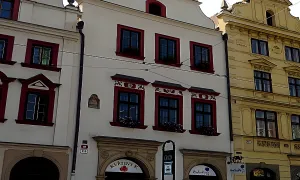
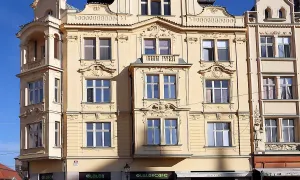
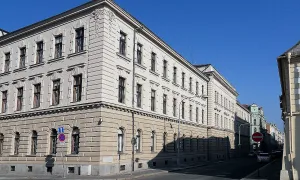
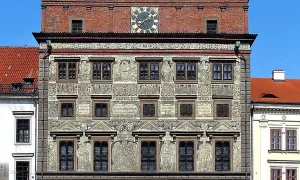
Photos from the area
Real photos taken near the monument


Zdroj a licence jsou uvedeny u každého snímku.
Tips from visitors
No tips yet. Be the first!
Log in and add your tip.
Sources and literature
Photos: Ondrej.konicek / CC BY-SA 3.0, rozlišení zvýšeno umělou inteligencí — Wikimedia Commons. The author and licence also appear when you hover over the image.
Faktickým podkladem tohoto textu byl článek na Wikipedii, jehož autory jsou přispěvatelé Wikipedie. Článek je dostupný pod licencí CC BY-SA 4.0.
Location on the map
Příběhy a pověsti
Legendy, pověsti a příběhy spjaté s touto památkou

Příběh: Františkánský klášter v Plzni
Bylo to v pondělí ráno, kdy Martin zjistil, že ve svém posteli leží na hlavě starý pergamenový list. Tento list byl pro něj zakázanou pokladnicí; legendy klá…
Číst příběh
Pověst: Františkánský klášter v Plzni
Traduje se, že v noci před svátkem sv. Františka roku 1419 zahlédl vrátný kláštera starého bratra Benedikta, jak klečí uprostřed ambitu a sepjatýma rukama pr…
Číst příběhFotografie návštěvníků
Zatím žádné fotografie. Buďte první, kdo přidá fotografii z návštěvy!
Log in a přidejte svou fotografii nebo hodnoťte.
Za ověřenou návštěvu v aplikaci získáte víc bodů — poznáme podle GPS, že jste na místě.
Reviews and comments