






Gutmannova vila Tenement house
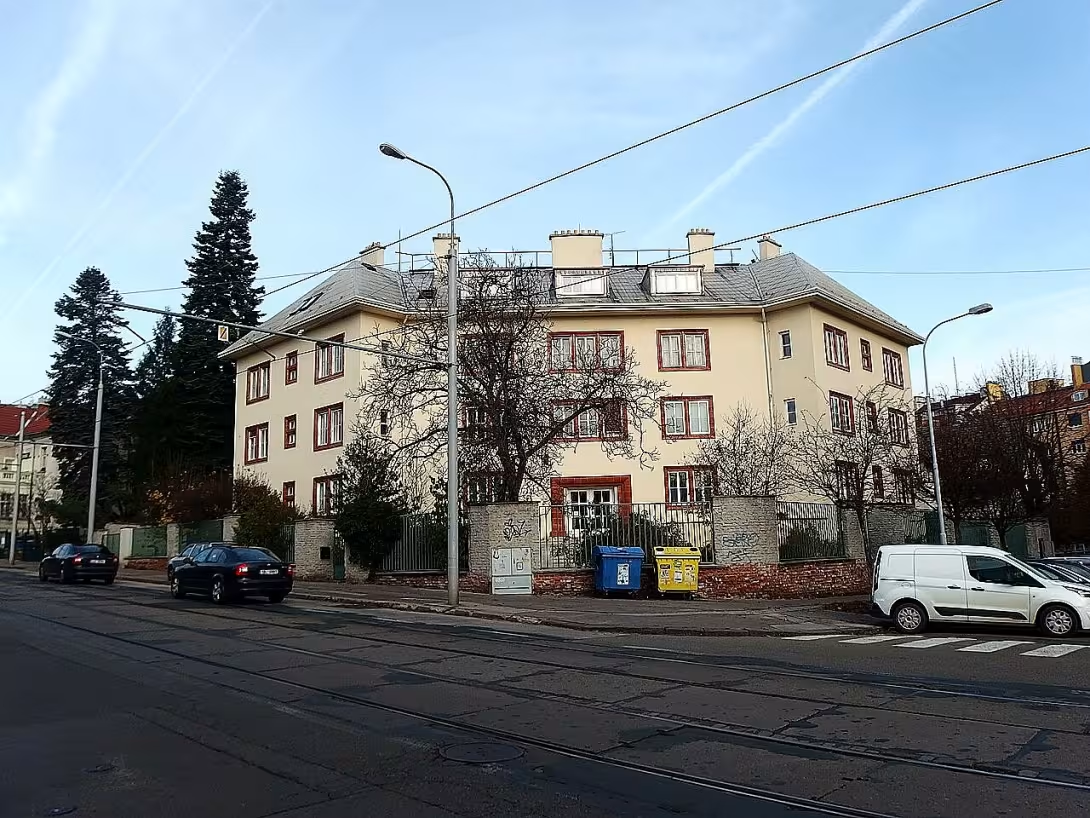
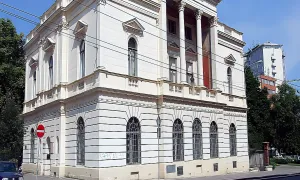
Gutmannova vila, also known as Gutmannův obytný dům, is a residential building located in Veveří district, Brno. Designed by architect Ernst Wiesner between 1919 and 1922, it stands out for its purist architectural style, marking one of his earliest works. The villa is notable for its smooth facade devoid of decorative elements typical of secession or historicizing styles prevalent at that time in the city. It also emphasizes functional interior layouts with an innovative focus on natural lighting.
The construction took place during a period when Czechoslovakia experienced significant cultural and architectural developments following World War I. This era saw a shift towards modernist styles like functionalism, reflecting broader European trends. Wiesner's design exemplifies this transition, showcasing simplicity and functionality over ornate decoration.
Architecturally, Gutmannova vila is distinguished by its smooth facade, which was novel in Brno where decorative elements were more common at the time. The building features ceramic window and door surrounds as its only decorative elements, emphasizing Wiesner's preference for functional interiors. Each floor contains either four or five rooms, with an innovative design prioritizing natural lighting through large glazed staircases and dual-sided illumination in the entrance hall. This allows southern light to enter main living spaces while orienting service areas and stairwells to the north.
The original owner was Wilhelm Gutmann, a wholesale coal merchant who commissioned Wiesner for its construction. In 1926, Felix Redlich, a sugar refinery entrepreneur, purchased the villa and added garages and storage facilities in the garden area. During World War II, it was confiscated due to Jewish ownership and later nationalized in 1946 under Beneš Decrees. By 1953, Brno's municipal housing company took over management before transitioning into private ownership.
Throughout its history, Gutmannova vila has witnessed significant events, including confiscation during World War II and subsequent nationalization. These changes reflect broader historical shifts in Czechoslovakia concerning property rights and restitution following the war.
Today, it is privately owned by residents who occupy its apartments. The building remains a testament to early 20th-century modernist architecture in Brno, offering insights into the city's architectural evolution during that period. Its location on Kraví hora provides a unique blend of urban and suburban housing environments.
Visiting Gutmannova vila offers a glimpse into Ernst Wiesner's innovative architectural practices and the historical context of early 20th-century Czechoslovakia. It stands as an important cultural landmark, reflecting both the artistic vision of its architect and the complex history of its ownership. This makes it a worthwhile destination for those interested in architecture and history alike.
Then and now
Drag the slider to compare how the landmark may have looked when it was built with the view today.
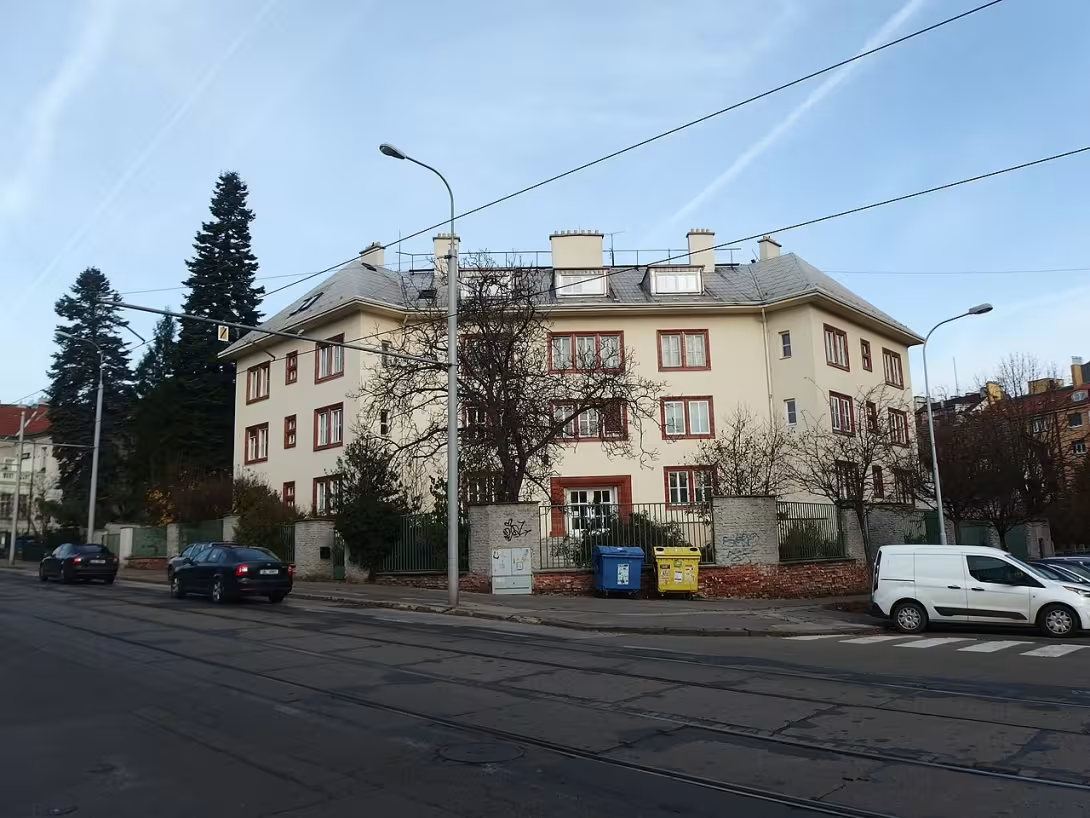
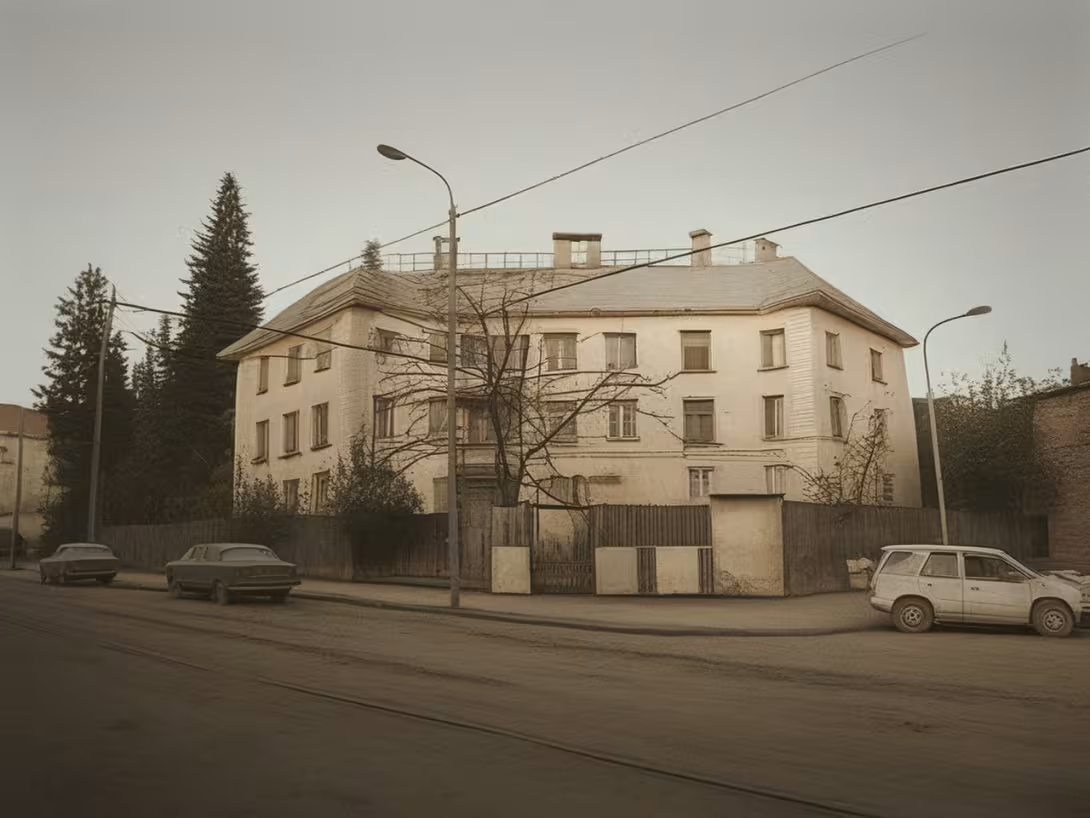
The historical appearance on the left is an AI-generated visualisation and serves as inspiration only.
Historical milestones
- 1919
- Construction began.
- 1922
- Construction completed.
Architectural development
The villa was designed with a purist approach, featuring a smooth facade and innovative use of natural lighting. In 1926, Felix Redlich added garages and storage facilities to the garden area. The building's design includes large glazed staircases and dual-sided illumination in the entrance hall.
Historical events
Construction completed between 1919-1922 by architect Ernst Wiesner.
Nationalized in 1946 following the Beneš Decrees.
Owners
The original owner was Wilhelm Gutmann, who sold it to Felix Redlich in 1926. During World War II, the villa was confiscated due to its Jewish ownership and later nationalized in 1946 under Beneš Decrees. In 1953, Brno's municipal housing company took over management before eventually transitioning to private ownership.
Points of interest
- Gutmannova vila is one of the earliest examples in Brno where a smooth facade devoid of decorative elements was used, reflecting Ernst Wiesner's departure from the prevalent secession and historicizing styles of the time.
- The building features ceramic window and door surrounds as its only decorative elements, highlighting Wiesner’s innovative approach to maintaining functionality while incorporating subtle aesthetic touches.
- During World War II, Gutmannova vila was confiscated due to its Jewish ownership under Wilhelm Gutmann, illustrating the impact of wartime policies on property rights in Czechoslovakia.
- After being nationalized post-war under the Beneš Decrees, the villa transitioned through various ownerships before becoming privately owned by residents, showcasing the complex history of restitution and management changes in post-war Czechoslovakia.
- The innovative design prioritizes natural lighting with large glazed staircases and dual-sided illumination in the entrance hall, allowing southern light to enter main living spaces while orienting service areas and stairwells to the north, a feature that was quite advanced for its time.
Guide
This guide is narrated by a synthetic voice generated by artificial intelligence.
Show guide text
This text was created by artificial intelligence and has not been editorially reviewed. It may contain inaccuracies.
The Gutmann Villa, sometimes also called the Gutmann residential building, stands in Brno in the Veveří district. It was designed by architect Ernst Wiesner and ranks among his very first realized projects. The rental villa was built between 1919 and 1922. The construction was commissioned by coal wholesale merchant Wilhelm Gutmann, who was also its owner.
In Brno, this was the first building conceived in the spirit of purism. The city had previously known mainly Art Nouveau and historicizing decoration, so the smooth façade appeared as a complete novelty. It is divided only by ceramic window frames around the windows and entrance. Wiesner was not concerned with an impressive façade. He was more interested in how the spaces inside would be arranged and how well they would serve their purpose. On each floor there is one apartment with four or five rooms.
The emphasis on daylight was also new. The building's shape adapted to it, which was meant to prevent dark rooms from being created on the courtyard side. For the first time in Brno, a large-scale glazed staircase appeared, and an entrance hall lit from both sides. The entrance façade is turned toward the corner of two streets, so southern light penetrates into the main living rooms. To the north, the architect placed mainly the staircase and service rooms.
The house forms a transition between urban development and the villa development of Kraví hora. Although it is a residential building, its first tenants were exclusively members of the Gutmann family.
Wilhelm Gutmann later sold the building to sugar factory entrepreneur Felix Redlich. In 1926, he added garages and storage facilities to the garden. During the occupation, the villa was confiscated from Redlich because of his Jewish origin. In 1946, the state nationalized it based on the Beneš Decrees. From 1953 onwards, the building was managed by Brno's Housing Company. Today, the apartments are in private ownership of their residents.
Tips for visitors
The best time to visit Gutmannova vila is during the late spring or early fall when the weather is pleasant, and the natural surroundings are particularly beautiful. This period offers a comfortable climate for exploring both the villa and its nearby areas without the summer crowds. Additionally, visiting in these months allows you to enjoy the lush greenery of Kraví hora and the transition between urban and suburban landscapes.
Always verify current routes and schedules through a local transit app or website.
When planning your visit, consider bringing comfortable walking shoes as you'll likely explore both the villa and its surrounding areas on foot. A camera or smartphone for photography is recommended, especially if you're interested in capturing the architectural details of the building or the scenic views from Kraví hora. Additionally, a light jacket might be useful due to variable weather conditions.
For photography enthusiasts, Gutmannova vila offers several appealing spots. The best lighting for photographs is typically during the golden hours—shortly after sunrise and before sunset—when the natural light enhances the architectural features of the building. The surrounding landscape also provides a picturesque backdrop, making it ideal for capturing both the villa and its environment.
In terms of nearby attractions within a 30-minute radius, visitors can explore more of Brno's historical sites or enjoy the natural beauty of Kraví hora. This area offers a mix of residential zones and green spaces, perfect for a leisurely walk or bike ride. Families with children might also appreciate visiting local parks or playgrounds in the vicinity, providing an opportunity to relax after exploring the villa.
Frequently asked questions
Can the monument be visited?
This is a residential or farm building, not a museum with opening hours. Please view it from public space and respect the owners' privacy. We have no information about access to the interior.
Where is the monument?
Location: Veveří, Jihomoravský kraj. The map on this page shows the exact spot.
Why is the monument protected?
It is listed in the Central List of Cultural Monuments of the Czech Republic as a cultural monument (register no. 1907025547).
Businesses nearby
Do you run a restaurant, accommodation, shop, museum, rental, wellness or other visitor service near this monument? Show yourself directly to the people heading to it — this is how they will see you in the app and on the web:
Events nearby


Zdroj akcí: otevřená data měst a obcí ČR (Národní katalog otevřených dat) a kalendář akcí Národního památkového ústavu.
Nearby
Located on Kraví hora, the area transitions between urban and suburban housing. The surrounding landscape includes residential areas and natural features typical of the region.
Accommodation nearby
Trips and activities nearby
Guided tours, tickets and activities nearby from GetYourGuide
Affiliate link: if you buy from the partner, we may receive a commission. The price for you does not change.
Search tours and activities →Themed route
Gutmannova vila (nájemní dům) This Art Nouveau building is a rare example of a residential house designed by the architect Jan Kotěra. The building's unique design and history make it a significant cultural and architectural landmark.
Kraví hora This hill offers a panoramic view of the surrounding area and is a popular spot for relaxation and recreation. Visitors can enjoy a leisurely walk or a picnic while taking in the views.
Pražská ulice This street is a charming example of a historic urban street, lined with old buildings and offering a glimpse into the past. Visitors can walk along the street and admire the architecture and atmosphere.
Veveří This village is a charming and historic area with a mix of old and new buildings. Visitors can explore the village and get a feel for the local culture and way of life.
Seasonal recommendations
Jaro
In the spring, Gutmannova vila is surrounded by greenery and flowers, creating a wonderful atmosphere. The lighting is gentle, allowing you to observe architectural details and gardens. If you wish to visit during this time, we recommend coming early in the morning or late afternoon to avoid crowds. Don't forget to bring comfortable shoes for walking around the garden.
Summer
In the main summer season, Gutmannova vila is very popular, so we recommend arriving early in the morning or in the late afternoon to avoid crowds. The garden is in full bloom and the lighting is sunny. Don't forget to bring scarves or sun protection to avoid overheating.
Autumn
In autumn, Gutmannova vila is surrounded by beautiful leaf colors and trees. The atmosphere is calm and quiet, ideal for a peaceful tour. If you wish to visit during this time, we recommend coming in the late afternoon to avoid cold weather. Don't forget to bring warm clothing.
Winter
In winter, Gutmannova vila is surrounded by snow and tranquility. The lighting is gentle and the atmosphere is calm. If you wish to visit during this time, we recommend arriving early in the morning or late afternoon to avoid cold weather. Don't forget to bring warm clothing and shoes with good grip for wet surfaces.
Visualizations and artistic views


The visualisations are generated by artificial intelligence and serve as inspiration.
Photos from the area
Real photos taken near the monument


Zdroj a licence jsou uvedeny u každého snímku.
Tips from visitors
No tips yet. Be the first!
Log in and add your tip.
Sources and literature
Photos: Palickap / CC BY-SA 4.0 — Wikimedia Commons. The author and licence also appear when you hover over the image.
Faktickým podkladem tohoto textu byl článek na Wikipedii, jehož autory jsou přispěvatelé Wikipedie. Článek je dostupný pod licencí CC BY-SA 4.0.
Location on the map


Příběhy a pověsti
Legendy, pověsti a příběhy spjaté s touto památkou
Fotografie návštěvníků
Zatím žádné fotografie. Buďte první, kdo přidá fotografii z návštěvy!
Log in a přidejte svou fotografii nebo hodnoťte.
Za ověřenou návštěvu v aplikaci získáte víc bodů — poznáme podle GPS, že jste na místě.
Reviews and comments