



kostel svaté Rodiny (Veveří) Church
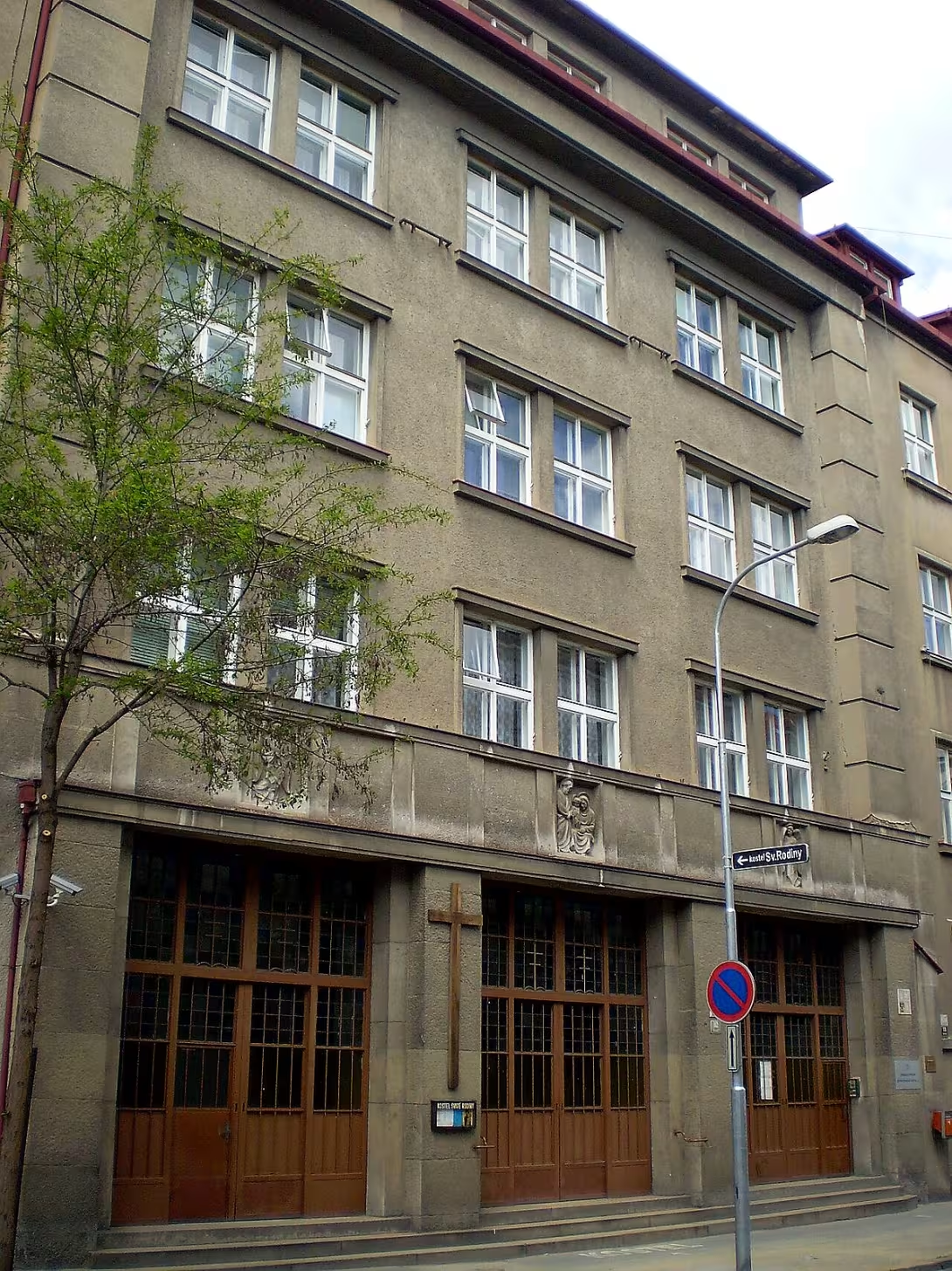
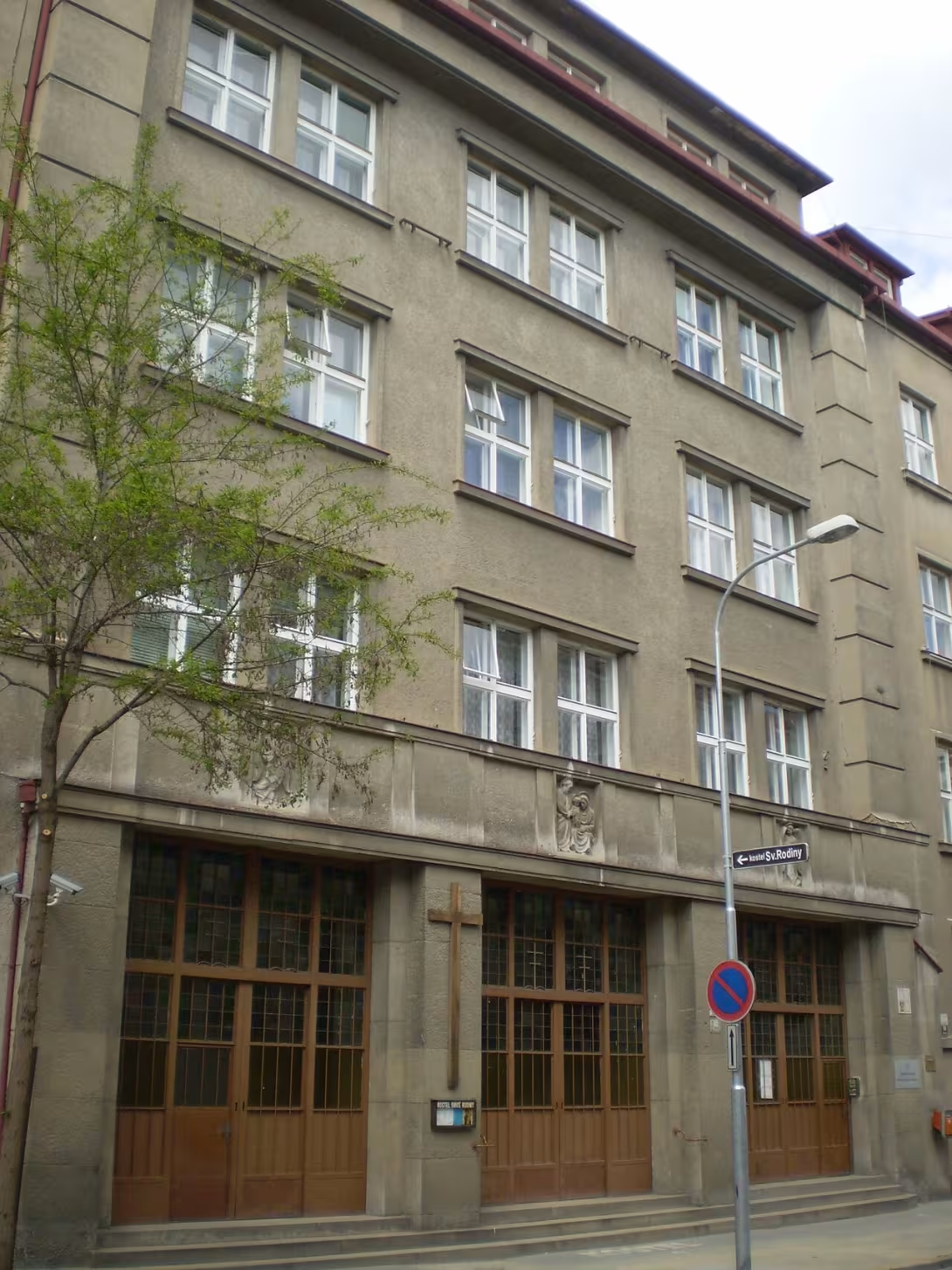
The Church of the Holy Family is located in the Grohova Street of the Brno district Veveří and belongs to the Congress of Merciful Sisters of the III Order of St. Francis, which settled in Brno in 1886. He served as a monastery temple for more than a hundred years as sisters and became the heart of their life and service.
The initiator of the church was of unexpected origin. In 1891, the Congregation purchased land from the Perkov family where the pear grew. In her crown, Mrs Perk imagined the vision of the Mother of God with Jesus and wished for a church to be built here. Bishop František Saleský Bauer of Brno decided to fulfill her wishes and build a new temple instead of a small chapel. He chose architect Karl Welzl, who designed a neo-Renaissance construction. Welzl's inspiration came from the Roman Basilica of St. Paul behind the walls. General Superior Bernardina Hošková has decided that the church will be dedicated to the Holy Family of Nazareth. The cornerstone was sanctified by Bishop Bauer on September 16, 1900. The church was consecrated on 11 May 1902. During this ceremony, the bishop gave a medal - The Order of Saint Gregory the Great was awarded to the architect Welzl directly from Pope Leo XIII, builder František Příkryl received an award for Ecclesia et Pontifica.
The church passed a severe test during World War II. In the American bombing of Brno on 20 November 1944, the neighboring home of the Order Nursing School was hit. His falling shield broke through the church ceiling, disrupted the tower and destroyed the organ. Even though school was being taught, no one was hurt. A long reconstruction started in August 1947. The original tower was torn down and architect Zdeněk Paložant created a new facade, which harmoniously vписs into the surrounding row building. Over the three entrances was placed reliefs academic sculptor Julius Pelikan. New organ from Rieger-Kloss of Krnova was acquired. The reconstructed church was consecrated by Bishop Karel Skoupý of Brno on 29 April 1950. The following day, Josef Koukl had its first mass (primitive), which later became a lithomeric bishop and in this church he was a minister in childhood. In 1952, on the 50th anniversary of the consecration, he was erected in the monastery garden of the Marian pillar from the same sculptor Pelican.
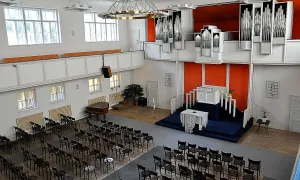
In recent decades, the role of the church has changed. Since 1959, after leaving for the monastery in Lechovice, he served as a space for cultural events, training and organ concerts. The interior has been adapted to a new function - the pulpit has been removed, the marble floor has been covered with asphalt and parquet, the side boats have served as dressing rooms. In June 1990, new repairs started under architect Viktor Dohnal, and in February 1992, the Bishop of Brno, Vojtěch Cikrle, reconsecrated the altar.
Then and now
Drag the slider to compare how the landmark may have looked when it was built with the view today.

The historical appearance on the left is an AI-generated visualisation and serves as inspiration only.
Historical milestones
- 1900
- The initiation of the church's foundation stone.
- 1944
- Bombing Brno during World War II.
- 1950
- The ordination of a reconstructed church.
Architectural development
The church was designed by Karl Welzl in a neo-Renaissance style and built in a place where a small monastery chapel had previously stood. After the bombing during World War II, a reconstruction was carried out under the direction of architect Zdeněk Bažanto, who added new facade and relief from Julius Pelikan.
Historical events
- 1900
- 1944
- 1950
Owners
Congregation of the Merciful Sisters of the Third Order of St. Francis
Points of interest
- The initiator of the church was Mrs. Perk, who imagined the vision of the Mother of God and Jesus in the place of the pear tree. - The church was designed by architect Karl Welzl and was inspired by the Roman basilica of St. Paul behind the walls. - General Superior Bernardina Hošková has decided that the church will be dedicated to the Holy Family of Nazareth. - During World War II, the church was damaged by American bombing, which disrupted the tower and damaged the organ. - The reconstructed church was consecrated by Bishop Karel Skoupý of Brno on April 29, 1950, where he had his first mass Josef Koukl.
Guide
This guide is narrated by a synthetic voice generated by artificial intelligence.
Show guide text
This text was created by artificial intelligence and has not been editorially reviewed. It may contain inaccuracies.
The Church of the Holy Family is a Roman Catholic conventual church located on Grohova Street in the Veveří district of Brno. It stands near the convent of the Sisters of Mercy and belongs to the Congregation of the Sisters of Mercy of the Third Order of Saint Francis, which was founded in Brno on March 15, 1886.
The Congregation purchased the land in 1891 from the Perka family. Where the main altar stands today, there was allegedly a pear tree. Mrs. Perková saw the Virgin Mary with the Baby Jesus in its crown and wished for a church to be built on the site of their house.
The Brno bishop Francis Salesky Bauer selected architect Karel Welzl for the construction. He designed a Neo-Renaissance church and drew inspiration from the Roman Basilica of Saint Paul Outside the Walls. The new church was to replace the original small convent chapel. The decision to dedicate it to the Holy Family of Nazareth was made by the general superior of the congregation, Bernardina Hošková.
Bishop Bauer blessed the foundation stone on September 16, 1900, and it was lowered into the foundations of the crypt beneath the chancel. The bishop wished to be buried there. However, in 1904 he became archbishop of Olomouc and ultimately rested in the Cathedral of Saint Wenceslas. The church was consecrated on May 11, 1902. At that time, Bishop Bauer presented architect Welzl with the Order of Saint Gregory the Great from Pope Leo Thirteen, and builder František Přikryl received the decoration Pro Ecclesia et Pontifice.
During the American air raid on November 20, 1944, the most devastating in Brno's history, 578 people died. Bombs hit the neighboring building of the Order's nursing school. Its falling gable pierced the church ceiling, damaged the tower, and destroyed the organ. Classes were just taking place in the school, but no one was injured.
Repairs began in August 1947. The tower was demolished and architect Zdeněk Bažant built a new façade that blends with the surrounding row buildings. Above the three entrances are reliefs by academic sculptor Julius Pelikan. The church received a new organ from the Rieger-Kloss company from Krnov. Bishop Karel Skoupý of Brno consecrated it again on April 29, 1950. The next day, Josef Koukl, who would later become bishop of Litoměřice and had served as an altar boy here in childhood, had his first Mass there.
For the fiftieth anniversary of the consecration, a Marian column by Julius Pelikan was erected in the convent garden in 1952. At the end of 1958, the sisters had to move to the convent in Lechovice. From 1959 onwards, the church served as a hall for cultural events, training sessions, and organ concerts. The pulpit was removed, marble floors were covered with asphalt and parquet, and the side aisles were converted into changing rooms for a youth hostel.
Repairs according to architect Viktor Dohnal began in June 1990. The altar was consecrated on February 1, 1992 by Brno bishop Vojtěch Cikrle.
Tips for visitors
The best time to visit the Church of the Holy Family in Veveřím is an early afternoon when there are fewer people and the sun illuminates the interior of the temple pleasantly. This time period offers peaceful viewing and ideal conditions for photography.
The current connection should be checked in the search engine.
When visiting the church, take your purse or camera with you if you are interested in capturing architectural details. Thanks to the Neo-Renaissance style, the temple is a suitable topic for photography.
Photography at the Church of the Holy Families offers the best conditions during the day when the sun rays penetrate through the windows and illuminate the interior. The best places for photography are the main ship and presbytery.
In the vicinity of the church there are many attractions that can be visited during a one-day visit. We recommend to explore the historical centre of Brno, where you will find other architectural pearls and cultural institutions.
Frequently asked questions
Can the monument be visited?
Religious buildings are usually open mainly during services; at other times a visit is normally arranged with the parish or the operator. We have not verified specific times.
Where is the monument?
Location: Veveří, Jihomoravský kraj. The map on this page shows the exact spot.
For kids
Imagine going back to the past, when Brno was a small town. And now you'll find yourself in the heart of the city, in the Veveří district, outside the Holy Family Church. Church this beautiful and large, with a high tower that seems like the devil's refuge.
How did it look here? There lived many people who practiced various crafts and shops. The city was full of life, music and dance. And it was in this church of the Holy Families that important religious and social events took place.
Businesses nearby
Do you run a restaurant, accommodation, shop, museum, rental, wellness or other visitor service near this monument? Show yourself directly to the people heading to it — this is how they will see you in the app and on the web:
Events nearby


Zdroj akcí: otevřená data měst a obcí ČR (Národní katalog otevřených dat) a kalendář akcí Národního památkového ústavu.
Nearby
Ambient landscape: Brno- centre
Accommodation nearby
Trips and activities nearby
Guided tours, tickets and activities nearby from GetYourGuide
Affiliate link: if you buy from the partner, we may receive a commission. The price for you does not change.
Search tours and activities →Themed route
Thematic cruise route "Church of the Holy Family in Veveřím"
1. Church of the Holy Family (Veveří) - * Church * The main objective of our route is the Church of the Holy Family, located in the picturesque village Veveří. This Baroque temple was built in the first half of the 18th century and is among the most important sacral monuments of the region. Its architecture and historical heritage make the visit very interesting, especially for those interested in the spiritual and cultural aspects of the area.
2. Tanks of the Church of the Holy Family - * Historical area * After visiting the interior of the temple, we will look at its courtyard, which is not only a forward stop for rest, but also a place of historical importance. The reservoir offers the opportunity to enjoy a quiet moment and look at the church from outside, where its architectural beauty is evident.
3. Church Tower of the Holy Family - * Architectural element * The rise to the church tower offers a unique opportunity to explore the surrounding landscape. Here you can enjoy a view from a higher perspective, which includes not only Veveří but also other parts of the South Moravian Region. The tower is also an interesting example of Baroque architecture.
4. Park by the Church of the Holy Family - * Natural space * The surrounding area of the church includes a picturesque park, which is an ideal place for relaxing and walking after the end of the visit. The park offers quiet pavements and places to relax, allowing you to enjoy the natural beauty of the area.
This route will give you a comprehensive view of the Church of the Holy Family and its surroundings, whether you look here in terms of history, architecture or nature.
Seasonal recommendations
Spring: In the spring season, the Church of the Holy Families in Veveřím offers a unique impression due to the sunny lighting that brings live color and temperature. This time is ideal for visitors looking for a peaceful experience without excessive crowds that are typical of summer months. Visit the church in the early afternoon or late morning, when the temperature is pleasant and the sun rays illuminate the architecture into golden shades. It is recommended to wear clothes suitable for mild weather, with the possibility of adding top ingredients in case of colder morning or evening.
Summer: In the main summer season the Church of the Holy Families in Veveřím is a popular destination for tourists and locals, which is reflected in the number of visitors. The sun illuminates the roofs and facades of the church with its full strength, adding to its historic veil modern color and life. Visit him as soon as possible on the day to avoid long fronts, especially on the middle of the day when the sun is on top of its run. The important thing is to bring protective clothes and plenty of drinking water, because the temperature can be very high.
Autumn: Autumn visit to the Church of the Holy Families offers a view of the surroundings coloured with yellow and red leaves, adding an atmosphere of calm and cosy to the historic environment. The sunny days are still warm, but the evenings are rapidly getting cold, so it is advisable to plan a visit at noon when light is best for photography and exploring architectural details. This season the crowds may be a little smaller compared to the winter months, so this is the perfect time for a quiet tour.
Winter: Winter visit to the Church of the Holy Families offers unique views, when the sun appears over the sky later and breaks early in the evening. Freezing air can add a mystical atmosphere, especially in advent time or during the Christmas period. Visit the church with open doors and warm clothes because winter months bring cold temperatures and shorter days. This season it is advisable to plan a visit in the noon, when sunlight is best for photography and exploring the church.
Visualizations and artistic views


The visualisations are generated by artificial intelligence and serve as inspiration.
Photos from the area
Real photos taken near the monument


Zdroj a licence jsou uvedeny u každého snímku.
Atmosphere of the place
This atmospheric visualisation of the place and period was generated by artificial intelligence. It is not real footage of the location.
Tips from visitors
No tips yet. Be the first!
Log in and add your tip.
Sources and literature
Photos: Michal Klajban / CC BY-SA 4.0 — Wikimedia Commons. The author and licence also appear when you hover over the image.
Faktickým podkladem tohoto textu byl článek na Wikipedii, jehož autory jsou přispěvatelé Wikipedie. Článek je dostupný pod licencí CC BY-SA 4.0.
Location on the map

Příběhy a pověsti
Legendy, pověsti a příběhy spjaté s touto památkou
Fotografie návštěvníků
Zatím žádné fotografie. Buďte první, kdo přidá fotografii z návštěvy!
Log in a přidejte svou fotografii nebo hodnoťte.
Za ověřenou návštěvu v aplikaci získáte víc bodů — poznáme podle GPS, že jste na místě.
Reviews and comments