






Klášter milosrdných sester brněnských (Veveří) Monastery
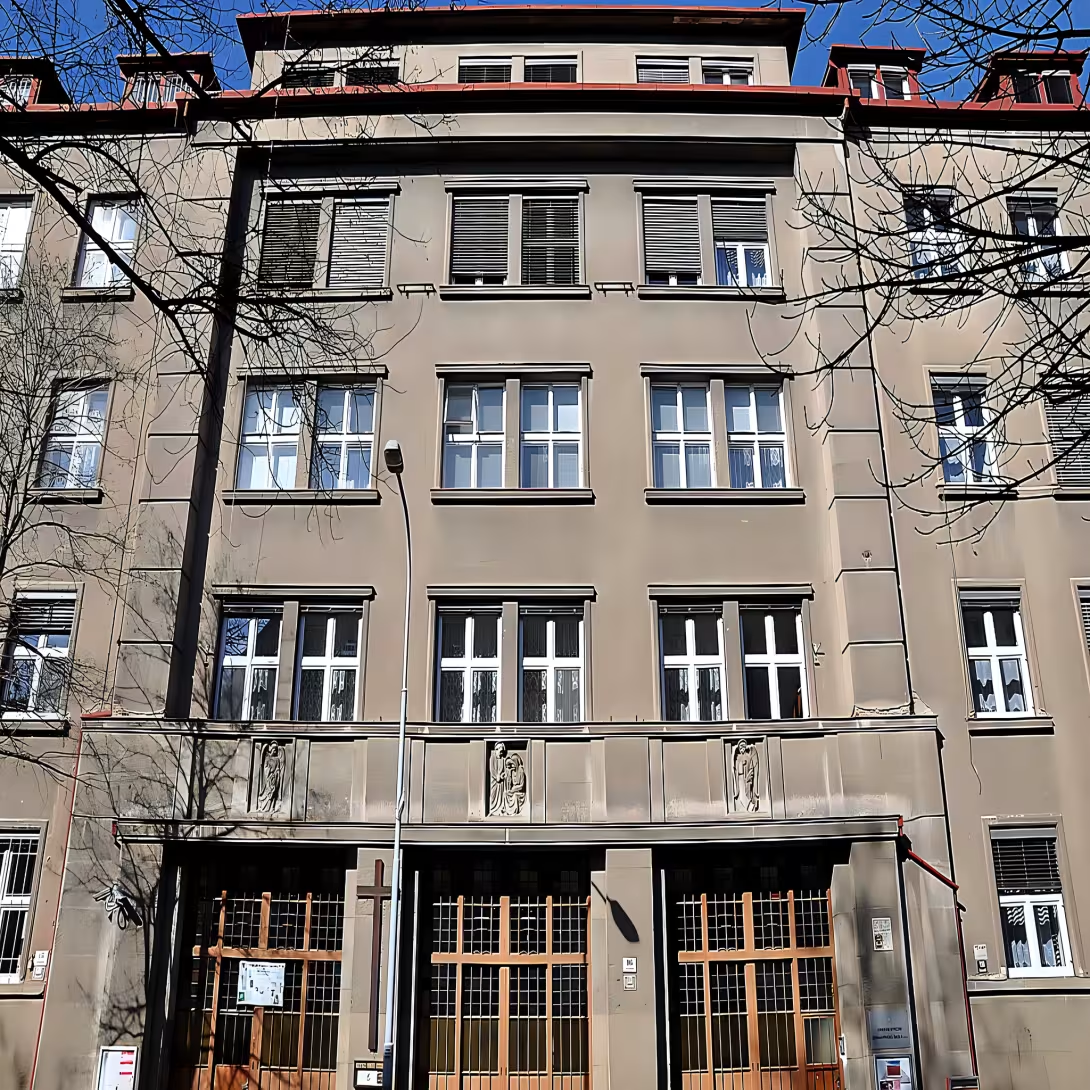
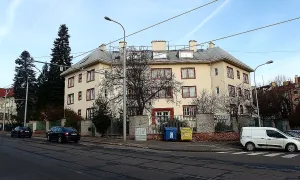
The monastery of the merciful sisters of Brno is located in Grohova Street in Brno - the centre next to the Church of the Holy Family. It is a complex complex which has grown gradually over a century and is linked to the work of the Congregation of the Merciful Sisters of the Order of St. Francis under the protection of the Holy Family in Brno.
The congregation was founded in today's Grohova Street No. 18 between 1889 and 1890. A three-story building with a chapel on the ground floor was originally built by the Red Cross Association as a shelter for sick nurses. The congregation bought it back in 1906 and made it its seat. Ten years later, in 1897, the nurses bought the rental house No. 14, where they opened the nursing school in 1936, which meant a significant expansion of their activities in social and health services.
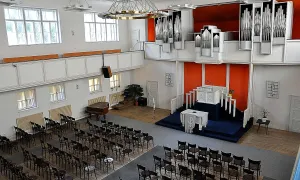
The centre of the complex consists of the Church of the Holy Family. The ground for its construction was created by the purchase and demolition of the house No. 16 in 1891. The temple was built between 1900 and 1902 and became the centre of the monastery complex. In 1908 the congregation purchased additional land on which it had built the House of the Holy Family in 1927 (No.10 and 12), thereby further expanding capacity for its activities.
World War II left a deep mark on the monastery grounds. During the bombing in 1944, the complex was destroyed - the house No. 14 was not saved and had to be torn down. In the next few years, namely from 1947 to 1951, a new building was built in its place. The Church of the Holy Family was also repaired, and it was given a new facade, which was united with the architecture of the surrounding houses to create a more harmonious look blokPre.
The late '50s meant a major break. The nurses worked here continuously until 1958, when they were terminated. The area was then converted into a boarding school for pupils of health schools and the monastery stopped being a place of monastery life. This period lasted three decades.
1990 brought a major turn. The congregation regained the site and started its re-use. The same year, the high school of health was opened. In 1992, the rectified Church of the Holy Family was made available to the public. A year later, in 1993, a boarding school was set up for high school pupils. Finally, in 1994, the sisters themselves returned to the repaired monastery, which closed a long cycle and the monastery returned to its original mission.
Today, the monastery of the merciful sisters of Brno is a live centre of the sister community, which continues the tradition of health and social care in the heart of Brno. The area with its church and adjacent buildings bears witness to long history, full of commitment and suffering.
Then and now
Drag the slider to compare how the landmark may have looked when it was built with the view today.
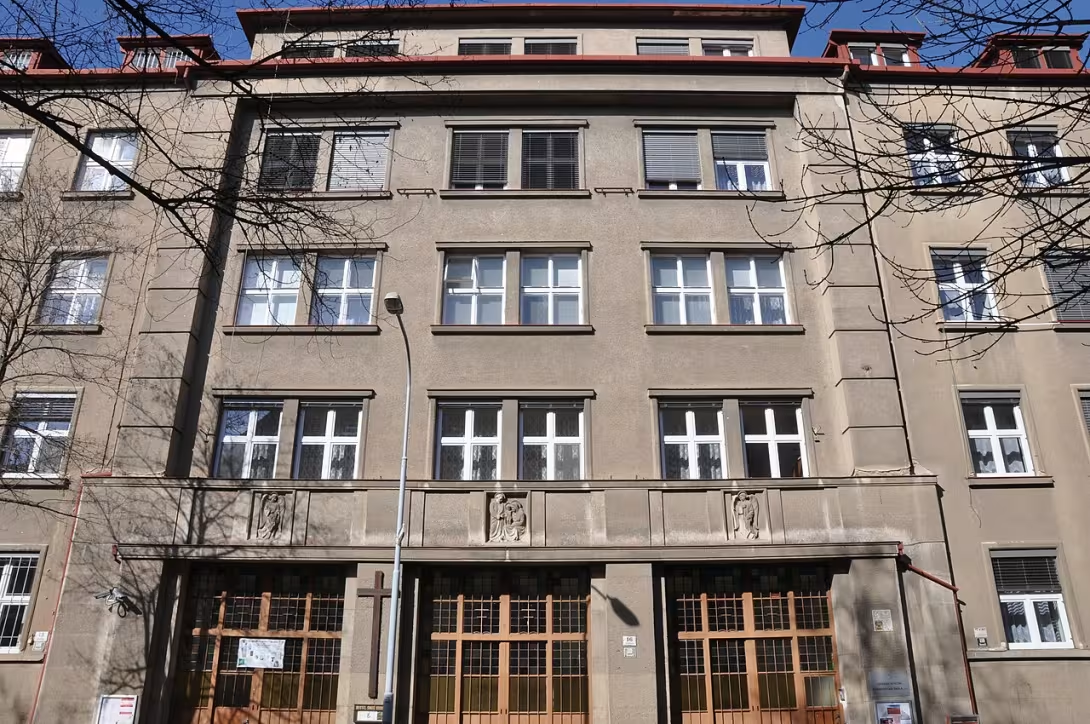

The historical appearance on the left is an AI-generated visualisation and serves as inspiration only.
Historical milestones
- 1889
- The founding of the Mother of the Merciful Sisters of Brno.
- 1944
- The compound was damaged during the bombing of World War II.
- 1958
- Cancellation of the monastery and conversion to boarding school for pupils of health schools.
- 1994
- Return the sisters to the repaired monastery.
Architectural development
The original three-storey building with chapel was built in 1889 / 1890. In 1902 the Church of the Holy Family was built, then in 1927 the House of the Holy Family. After the damage during the war there was reconstruction and new buildings such as the new building on the site of the house No. 14.
Historical events
- 1889
- The founding of the Mother of the Merciful Sisters of Brno.
- 1944
- The compound was damaged during the bombing of World War II.
- 1958
- The nurses worked here until 1958 when they were evicted.
- 1994
- Return the sisters to the repaired monastery.
Owners
Beginning as the Covenant of Nurses of the People of the Red Cross, he was purchased in 1906 by the Congress of the Merciful Sisters of the Third Order of St. Francis under the protection of the Holy Family in Brno. After the abrogation of the monastery in 1958, the campus was used as a boarding school for pupils of health schools before the congregation restored its property in 1990.
Points of interest
- The Monastery of the Merciful Sisters of Brno is located in Grohova Street next to the Church of the Holy Family. - Maternity of the congregation was built as the Shelter of Sick Nurses and later transferred to the seat of the Congregation of Merciful Sisters of the Third Order of St. Francis. - The nurses bought the rental house No.
Guide
This guide is narrated by a synthetic voice generated by artificial intelligence.
Show guide text
This text was created by artificial intelligence and has not been editorially reviewed. It may contain inaccuracies.
Welcome to the heart of the historical part of Veveří. Right now, you're standing in front of a building that carries the incredible depth of human stories, patience and relentless upheaval of fate. Before you go any further, I suggest you stop for a moment and perceive the atmosphere of this place. Take a look around you and notice how this monastery has become part of the town building on Grohova Street. Right next to you is the Church of the Holy Family, which with the monastery forms one complete spiritual and historical whole. Feel the calm that radiates here, even if you are in the busier part of town. This building is not just a wall and a roof, it is a testimony of service to others, which has lasted over a century.
Let us now return to time together to understand why this place is so special. This entire chapter of history began to write its first lines in the years eighteen-ninety-nine and eighteen-ninety. At that time, the birthplace of the merciful sisters of Brno was founded here. But it wasn't just an ordinary house for sisters. The original idea was deeply human and had a clear goal: to create a safe shelter for sick nurses. Imagine the women who in the context of the late nineteenth century devoted their time and strength to the most needy, and how this place served as their home and base for their sacred work. The sisters weren't looking for fame at the time, they were looking for ways to be useful to society.
With time, the need and strength of this community grew. In the year eighteen-ninety-seven, there was a major milestone where the nurses bought a nearby rental house number fourteen. By doing so, the site expanded and gained stability. This building gradually became the heart of the entire congregation and the official seat of the Congregation of the Merciful Sisters of the Third Order of St. Francis. You can only imagine how these spaces gradually filled with life, prayer and the constant movement of people who came here looking for help or service.
However, history is not always a way of rising and flourishing. We need to prepare for a chapter that is much darker. In the year one thousand nine hundred forty-four, the shadow of World War II swung over this place. The bombing, which hit the city, has also hit this area and the building is capable of significant damage. Here in these areas, the nurses and residents of the area had to face uncertainty, fear and material shortages. These walls had to withstand not only the difficulty of everyday life, but also the echoes of the cruelest years of human history. It's important to remember that every mistake or damage you see here can come from these difficult moments.
After the war came an era that completely changed the character of this place. In the year one thousand nine hundred fifty-eight there was a fundamental decision that ended the monastic life in this form. The campus was converted into a boarding school for pupils of medical schools. Imagine the transformation: instead of the silent prayers and the calm of the sisters here, the voices of the young girls who were preparing for their future profession began to sound. The monastery became an educational center, a place where the future generation of health care workers formed. Although religious life has stopped here for several decades, the spirit of service and care for others in these walls remained present through students who spent their days here studying and preparing for their role in life.
And then came the moment that brought new hope to this place. A year of a thousand and nine, ninety-four meant the return of sisters to their home. After a long period when the monastery was used for other purposes, the sisters decided to return to the repaired and restored space. This return was not only about the return of people, but about restoring the identity of this place. The building needed to be repaired, renovated and restored to its original sanctified character. This process of recovery was a symbol of endurance and belief that even after a long time of absence, old life could redevelop.
Now pay attention to the architecture and overall effect of the building you are currently observing. Although we do not know the names of the particular architects who designed these structures, you can feel a combination of practical and spiritual peace in their lines. Looking at the facade and how the building is being integrated into Grohova Street, you can perceive its firm but welcoming presence. Notice how the monastery organically connects to the neighboring Church of the Holy Family. This closeness is not random, it is a visual expression of the relationship between prayer and service, between spiritual life and practical care of the neighbor. Take a look at the details of the surrounding building and see how this monastery area forms a specific micro world within the urban environment.
There is one interesting thing that may interest you. You may be asking how a simple nursing home has become such an important mansion for the congregation. The key was the constant ability of nurses to adapt to the needs of time while remaining faithful to their mission. From the purchase of a rental house in eighteen-ninety-seven to the return of the 1990s, this monastery was constantly changing its shape, but never lost its essence. It's a fascinating story about how a place can change, even though its soul remains the same.
Now I beg you to continue your walk and let the atmosphere of this place drift. Explore the surrounding alleys, stop by the church and try to imagine all the generations of women - nurses, students and nurses - that have passed through here. Every step on these streets is a step in time. Thank you for taking the time to explore this historic monument and for sharing these moments with us. We wish you a beautiful and inspiring next part of your journey.
Tips for visitors
The best time to visit the Monastery of the Merciful Sisters of Brno is autumn or spring, when the weather is pleasant and quieter. This time of the season offers a beautiful light for photography of the architecture of the monastery and surrounding monuments.
Parking in the centre of Brno can be difficult, therefore we recommend the use of public transport. The monastery is well accessible by bus and tram network, which makes it easier to access without the need to search for parking.
When visiting the monastery, you can bring a camera for photography and a note tab if you want to record historical information or your own impressions. It is also advisable to wear a comfortable suit because walking through the monastery complex and surrounding monuments can be long.
Photography in the monastery offers several interesting places. The best light you can usually find in the prehistoric hours when the sun is on the side of the Church of the Holy Family and illuminates the interior of the monastery. External footage can also be beautiful from the side of Grohova Street.
In the vicinity of the Monastery of the Merciful Sisters there are several other historical monuments that are worth visiting. The Church of the Holy Family is just a few minutes' walk from the monastery and offers beautiful interiors and an elevated tower. For families with children it can be interesting to visit the Brno City Museum, which is also close.
For kids
Imagine going back 137 years to a time when Brno looked completely different than today. It was different cities, different people, and even other buildings. And one of these buildings will be our way.
The monastery of the merciful sisters of Brno, or better known as the monastery on Veveří, stood on the hill above the river Svratka. He was still young and freshly built at the time. It was a time when Brno developed, became an important city and people came here to work.
Businesses nearby
Do you run a restaurant, accommodation, shop, museum, rental, wellness or other visitor service near this monument? Show yourself directly to the people heading to it — this is how they will see you in the app and on the web:
Events nearby


Zdroj akcí: otevřená data měst a obcí ČR (Národní katalog otevřených dat) a kalendář akcí Národního památkového ústavu.
Nearby
The monastery is located in the centre of Brno, close to the Church of the Holy Family and is surrounded by urban architecture. There are other historical monuments and cultural institutions nearby.
Accommodation nearby
Trips and activities nearby
Guided tours, tickets and activities nearby from GetYourGuide
Affiliate link: if you buy from the partner, we may receive a commission. The price for you does not change.
Search tours and activities →Themed route
Thematic cruise route: Monastery of the merciful sisters of Brno and its surroundings
1.Klášter milosrdných sester brněnských (Veveří) * Type: * Historical monastery complex The monastery is one of the oldest and most important religious buildings in Brno. Its architecture reflects an important period of Baroque art and provides a view of the history of local Catholicism. Visit the monastery to learn about its rich past and see the beautiful interior.
2. Church of the Holy Family * Type: * Church This church is located near the monastery and represents another important religious object in Brno. Its architecture and interior are the embodiment of baroque art, which is well suited to the nearby monastery. Church of the Holy Family is an ideal place for those who want to understand the religious and cultural history of Brno.
3. Urban architecture of the surrounding district * Type: * Cultural area Around the monastery there are characteristic urban buildings that represent the history and development of Brno. The walk through this area offers a view of the diverse architecture from Baroque to modern style. This part of the route is suitable for those interested in urban space and its changes over the years.
4. Monastic Park * Type: * Green area The monastery is surrounded by a picturesque park that offers quiet moments and a beautiful opportunity for relaxation. The park is an ideal place for walking, picnics or simply for relaxing in the green in the middle of the city. Here you can enjoy views of the monastery and surrounding architecture.
This route offers a comprehensive view of the historical and cultural aspects of Brno, focused mainly on the Temple of Merciful Sisters.
Seasonal recommendations
Spring: The Monastery of the Merciful Sisters of Brno in Veveřím offers a unique feeling of reviving nature in the spring, where blooming gardens and the smell of new grass provide a peaceful atmosphere. The sun illuminates ancient architectural elements, making them an ideal time for photography. Visitors should accept light clothes and perhaps I'm parading due to sudden spring rains. The best time to visit is usually at noon when the crowd can avoid it.
Summer: During the summer season, the Temple of the Merciful Sisters of Brno offers pleasant moments in the open air, when viewing sunny gardens becomes a real joy. The atmosphere is full of life and celebration of summer days, making this time ideal for family trips. Visitors should accept light clothes and enough drinking connection, especially if they visit the monastery during the main summer season. It is recommended to come earlier on the day to avoid pressurised times.
Autumn: A calm and finely coloured autumn offers a monastery of merciful sisters of Brno atmosphere full of melancholy and beauty. The colours of leaves create a charming contrast to ancient architecture, making this time ideal for peaceful walks and reflective visits. Visitors should accept warmer clothes due to colder temperatures today, especially in the afternoon. The best time to visit is usually an early afternoon when the crowd can avoid it.
Winter: Winter visit to the Monastery of the Merciful Sisters of Brno offers a unique atmosphere where peace and quiet are complemented by cold and possible snow cover. The monastery in this period emits a mild light that illuminates its ancient walls, making them ideal for romantic walks or peaceful moments. Visitors should accept warm clothes and shoes suitable for snow, especially in advent time. The monastery is open for a shorter period of time during winter, offering visitors a more intense and peaceful experience.
Visualizations and artistic views


The visualisations are generated by artificial intelligence and serve as inspiration.
Photos from the area
Real photos taken near the monument


Zdroj a licence jsou uvedeny u každého snímku.
Atmosphere of the place
This atmospheric visualisation of the place and period was generated by artificial intelligence. It is not real footage of the location.
Tips from visitors
No tips yet. Be the first!
Log in and add your tip.
Sources and literature
Fotografie: Ben Skála, Benfoto / CC BY-SA 3.0, rozlišení zvýšeno umělou inteligencí — Wikimedia Commons. The author and licence also appear when you hover over the image.
Faktickým podkladem tohoto textu byl článek na Wikipedii, jehož autory jsou přispěvatelé Wikipedie. Článek je dostupný pod licencí CC BY-SA 4.0.
Location on the map


Příběhy a pověsti
Legendy, pověsti a příběhy spjaté s touto památkou

Fotografie návštěvníků
Zatím žádné fotografie. Buďte první, kdo přidá fotografii z návštěvy!
Přihlaste se a přidejte svou fotografii nebo hodnoťte.
Za ověřenou návštěvu v aplikaci získáte víc bodů — poznáme podle GPS, že jste na místě.
Reviews and comments