






Hergetova cihelna Brick
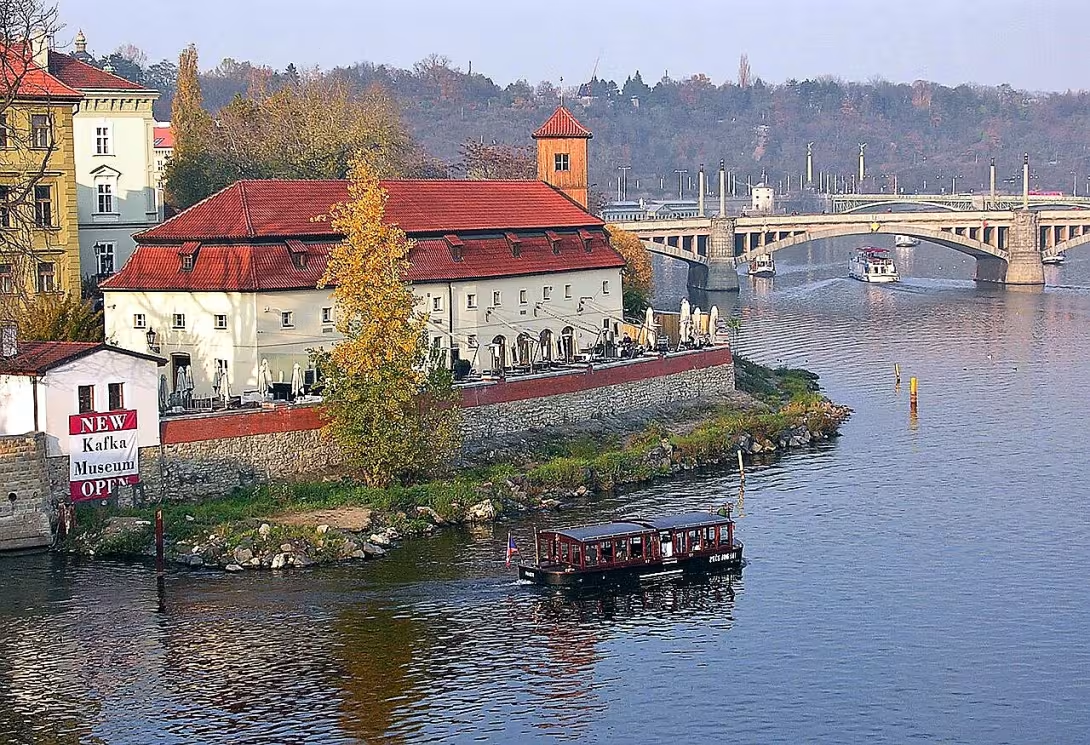
Hergetova cihelna, located on the Malá Strana in Prague 1, is a historical building from 1781, which originally served as a brick factory and is hosting the Franz Kafka Museum. This monument is remarkable by its architectural transformation from Baroque to classical style, reflecting the historical development and cultural heritage of the region of the Vltava Bank. It is protected as a cultural monument and represents a characteristic part of the panorama of Prague.
The origin of Herget's brick dates back to the 14th to 16th century, when separate houses stood there. The oldest image documentation dates back to 1678 by Samuel Globice from Bučín. In 1781, the engineer František Antonín Linhart Herget purchased land with inappropriate construction and built a brick in the Baroque style, which was finished in the same year. This building consisted of two limestone furnaces, a lime warehouse and a storehouse with a wooden tower.
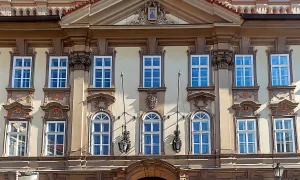
In 1796, Josef Zobel and F. Schmidt bought the brick, which according to Josef Zobel's plans, the building was radically converted into a classical style. At that time, a western wing with a stroller was formed. Other classical modifications took place in the years 1857- 1858 according to the design of architects Alexander Hellmich and Kaspar Přídak, which also concerned the neighbouring residential house with frescoes from Pompeii. In 1894 the windows were replaced with Neo-Renaissance windows.
During its history Hergetova cihelna has undergone some dramatic changes. In 1840 the operation had to be interrupted because of the fire hazard but was restored after modifications. At the beginning of the 20th century, the building served as a warehouse and garage of historic carriages. In 1936, the northern part of the building was demolished, but in the following year the original plan was replaced by a new entrance pillar.
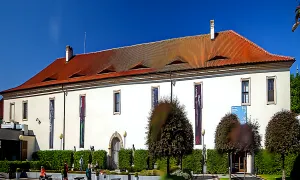
In 1995, he burned down and destroyed an object. Prague 1, which is the current owner of the building, decided to restore it as a rare historical monument. In 2003, the building was opened after reconstruction and a beautiful exhibition space was created under the exposed roofs of the Mansard roof.
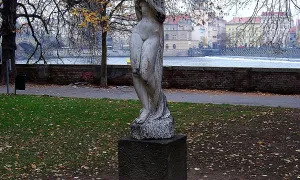
Today Hergetova cihelna is a place with rich history and cultural heritage. In front of the building is installed peeing fountain by David Černý from 2004, which adds to its visual appeal. In the neighbouring residential house preserved frescoes with motifs from Pompeii and allegory of Day and Night. Under the pillar gazebo are visible remains of round furnace.
Hergetova cihelna is now accessible to the public as a museum, restaurant and exhibition space. Its historical value and architectural beauty make it an essential destination for anyone interested in the heritage of Prague and the life of Franz Kafka. Visiting this monument is a journey to the past that offers a view of the industrial development and cultural transformation of the city.
Historical milestones
- 1781
- completion of baroque building of the brick
- 1796
- radical reconstruction in classical style according to plans by Josef Zobel
- 1857
- classicist reconstruction by project Alexander Hellmich and Kaspar Predák
- 1995
- burning down the object
- 2003
- installation of the building after reconstruction
Architectural development
The building was created in the Baroque style and was radically rebuilt into classicism in 1796, including the addition of a western wing with a carriage. In 1857- 1858, another classical adjustment took place and in 1894 the windows were replaced with neo-Renaissance windows. The current state includes modern exhibition rooms under the Mansard roof.
Historical events
1796: radical reconstruction in classical style, 1995: burning and decaying of the building, 2003: building operation after reconstruction
Owners
František Antonín Linhart Herget (founder), Josef Zobel and F. Schmidt (from 1787), City district of Prague 1 (current owner)
Points of interest
- The building from 1781 was originally used as a brick factory and today the Franz Kafka Museum is based there. - The monument has undergone an architectural change from Baroque to classical style. - At the beginning of the 20th century, the building served as a warehouse and garage for historic carriages. - There's a 2004 David Black peeing fountain outside the building. - Under the pillar gazebo, you can see the remains of the circular furnace.
Guide
Show guide text
This text was created by artificial intelligence and has not been editorially reviewed. It may contain inaccuracies.
Welcome to one of the most atmospheric parts of Prague, in the heart of the Little Party. Stop for a moment, take a deep breath, and look at the building right in front of you. The first impression can be deceptive, because today it acts as an elegant cultural space, but this building carries echoes of hard work, fire and clay. You're standing in front of Herget's brick house, a place that has undergone an incredible transformation over more than two centuries. Feel its shapes and imagine that at the time this building was built, it was not the silence of museums, but the noise of production and the heat of furnaces.
Let us now return in time deep into the past, namely to 1781. It was this year that the first operating buildings that served as bricks were completed. The entire company was founded by František Antonín Linhart Herget. At that time Malá Strana was a different place than today and the need for building material was huge. The brick house was not just a common workshop, it was a strategic part of the city, where the building blocks of Prague houses were formed from the local clay. Imagine those cars that were coming out of here to help build the city that we admire today.
Now pay attention to the appearance of the building itself. If you look closely at her, you will notice that her face has changed over the years. Originally, the building was built in a Baroque style, which was a style full of dynamics and decoration, typical of Prague at the time. However, the first major change came in 1796. According to Josef Zobel's plans, the building underwent a radical reconstruction. The Baroque elements gave way to Classicism, which brought more order, purity and nobility. Classicism was trying to return to the ideals of the ancient, which gave the building the calm and balanced look you feel today.
This process of improvement did not end. In 1857 there was another significant classical reconstruction. This time, architects Alexander Hellmich and Kašpar Předák are responsible for the project. It is thanks to their work that the building has acquired its final form, which defines it as a characteristic part of the panorama of this neighborhood. Take a look at the facade and see how it combines the practicality of the original brick with the ambitions of later owners who wanted the building to look representative and modern. It is a fascinating example of how architecture adapted to new times and needs.
But when we look at the present, we find that Hergetova cihelna no longer produces construction material. Today, this place is linked to one of the most important names of world literature. The Franz Kafka Museum is in the building today. There is a kind of poetic contrast that the place where the hard bricks were formed before now hosts a space dedicated to the fragility of human being and the complex inner worlds of the writer who lived and formed in Prague. In addition to the museum, you will find a restaurant and exhibition facilities that breathe new life into the building and make it a living centre of culture.
If you look around now, perhaps something very unusual will attract your attention. There is a provocative statue in front of the building known as the peeing fountain. Its author is famous artist David Černý. This installation is a typical example of its style, which combines humor, irony and criticism. It's a sharp contrast to the seriousness of classical architecture behind your back. This fountain recalls that Prague is a city where history and modern provocations are constantly met and supplemented.
But this space also hides less familiar stories. At the beginning of the twentieth century, when the brick shop no longer fulfilled its original function, the building served as a warehouse. What's interesting, however, is that there was a garage for historic carriages in the premises. Imagine the cars being knocked out that were resting in silence while outside the world was changing and the carriages began to replace the first cars. The building thus served as a silent witness to the transition from one century to another.
But the history of this place was not only about flourishing and changing functions, but also about testing. A tragic fire hit the building in 1995. This time, the fire that used to be produced in the brick kilns turned against the building itself and the object burned down. It may seem to be the end, but thanks to great effort and precise reconstruction, the building has risen from the ashes again. In 2003, the building was finally operational and opened to the public in the form you see it now. This rebirth is a symbol of the resilience and value that this cultural monument represents for the city.
Now that you know the story of Herget's brick, from the baroque beginnings to the classicist shapes to the carriage season and the tragic fire to the present museum, look at it again. Do you only see the old house in it, or do you already feel the layers of time that it carries? It's where the industrial past meets the intellectual presence.
I ask you now to enter or explore the surrounding alleys of the Little Party. Let yourself be inspired by the atmosphere of this place and perhaps in your mind think about what other stories these walls still hold. I hope this short trip to history has helped you better perceive the beauty and significance of Herget's brick. I wish you a pleasant continuation in discovering the secrets of Prague. Goodbye.
Tips for visitors
The best time to visit is late afternoon to evening time, when soft, warm light appears on the historic building and surrounding houses of Mala Strana. This lighting highlights the red colour of bricks and creates an atmosphere ideal for photography without large crowds, which are common in the centre of Prague during the day.
Transport availability is ensured both by car and public transport. However, due to the location in the center of Mala Strana, parking is difficult and expensive, so it is recommended to use public transport. Please check the current connection of buses and trams in the search engine or on the website of the transport company as the lines can change.
When you visit, wear comfortable shoes because the pavements in this part of Prague can be uneven and lengthy walks on the Little Side require firm shoes. We also recommend taking a drink with us, whether it be water or coffee, because in the immediate vicinity of the monument there may not always be an easy restaurant to sit and relax.
For photography it is best to use the natural light that falls on the facade of the building. The most beautiful pictures can be obtained if you stand up so that the brick can be seen in the context of the surrounding building of the Small Party and overlooking the Vltava shore. Watch out for shielding from surrounding trees and buildings that may affect exposure, especially in the noon hours.
Families with children will appreciate that the area is safe and peaceful compared to the main centre. Children can enjoy a view of the river and historical houses. However, it is necessary to ensure that children do not wander by themselves, because the Alleys of the Little Party are narrow and full of tourists. We recommend to plan a short route in advance, which includes only the most important points so that children don't get tired.
Businesses nearby
Do you run a restaurant, accommodation, shop, museum, rental, wellness or other visitor service near this monument? Show yourself directly to the people heading to it — this is how they will see you in the app and on the web:
Events nearby

Zdroj akcí: otevřená data měst a obcí ČR (Národní katalog otevřených dat) a kalendář akcí Národního památkového ústavu.
Nearby
Vltavský břeh, Malá Strana, centrum Prahy
Accommodation nearby
Trips and activities nearby
Guided tours, tickets and activities nearby from GetYourGuide
Affiliate link: if you buy from the partner, we may receive a commission. The price for you does not change.
Search tours and activities →Themed route
Thematic cruise route: Hergetova cihelna and surroundings
1. Hergetova cihelna (museum) Type: Historical Museum Why it is worth a visit: This monument is a unique reminder of the industrial heritage of Prague. Here you can see the history of brick production and see how this craft developed on the Lesser Side.
2. Vltava Bank Type: Natural and cultural space Why is it worth a visit: Beautiful views of the Vltava and Prague walls. This shore offers a quiet time to relax after a tour of the museum, with a short walk along the river.
3. Church of St. Nicholas Type: Historical church Why is worth a visit: This Baroque church is one of the oldest sacral buildings on the Lesser Side. Its interior and architecture are attractive to anyone interested in spiritual and historical monuments.
4. Malá Strana - Alleys and Gardens Type: Cultural area Why is it worth a visit: Beautiful view of Prague with the possibility to walk through narrow, characteristic streets. Here you can find gardens and picturesque houses that provide a unique atmosphere.
5. Prague Center - Old Town Square Type: Historical city center Why is it worth a visit: This is the heart of the history and culture of Prague, where there are important monuments such as the Old Town Hall. It is an ideal place to close the route where you can enjoy the atmosphere of the old town and refresh yourself in one of the restaurants.
This route offers a view of history and nature and allows you to explore the most significant parts of the Small Party and surrounding areas.
Seasonal recommendations
Spring brings freshness to the Little Party and awakening greenery in the surrounding gardens. The soft spring light pleasantly illuminates the space of the former brick and creates an optimistic mood. We recommend visiting the museum in the morning when it is calmer in the streets. Put on a light jacket, because it can get colder in the stone areas of the monument than outside.
The summer season is characterized by intense sun and hot air, which contrasts with the pleasant cold of crowded space museum. Expect a large number of visitors from all over the world in the high season. The best time for arrival is right after opening to avoid the biggest crowds. Choose light and airy clothes and remember drinking mode.
Autumn covers the surroundings with golden leaves and a foggy atmosphere that underlines the historical nature of the site. The light is finer in this period and creates a cozy feeling in the interior. Layer clothing is suitable to protect you from changing weather. We recommend a visit in the afternoon, when the surrounding streets act most poetic.
In winter the monument is very mysterious, especially if snow or frost cover the surroundings. The inner spaces offer a pleasant shelter from the freezing wind and winter cools. Don't forget to wear very warm clothes and solid, warm shoes. The opening hours are often shorter in this period, so we recommend planning a visit earlier in the day.
Visualizations and artistic views


The visualisations are generated by artificial intelligence and serve as inspiration.
Photos from the area
Real photos taken near the monument

Zdroj a licence jsou uvedeny u každého snímku.
Tips from visitors
No tips yet. Be the first!
Log in and add your tip.
Sources and literature
Photos: cs:ŠJů / CC BY-SA 3.0 — Wikimedia Commons. The author and licence also appear when you hover over the image.
Faktickým podkladem tohoto textu byl článek na Wikipedii, jehož autory jsou přispěvatelé Wikipedie. Článek je dostupný pod licencí CC BY-SA 4.0.
Location on the map

Příběhy a pověsti
Legendy, pověsti a příběhy spjaté s touto památkou
Fotografie návštěvníků
Zatím žádné fotografie. Buďte první, kdo přidá fotografii z návštěvy!
Log in a přidejte svou fotografii nebo hodnoťte.
Za ověřenou návštěvu v aplikaci získáte víc bodů — poznáme podle GPS, že jste na místě.
Reviews and comments