



Historica Třeboň Archive collection
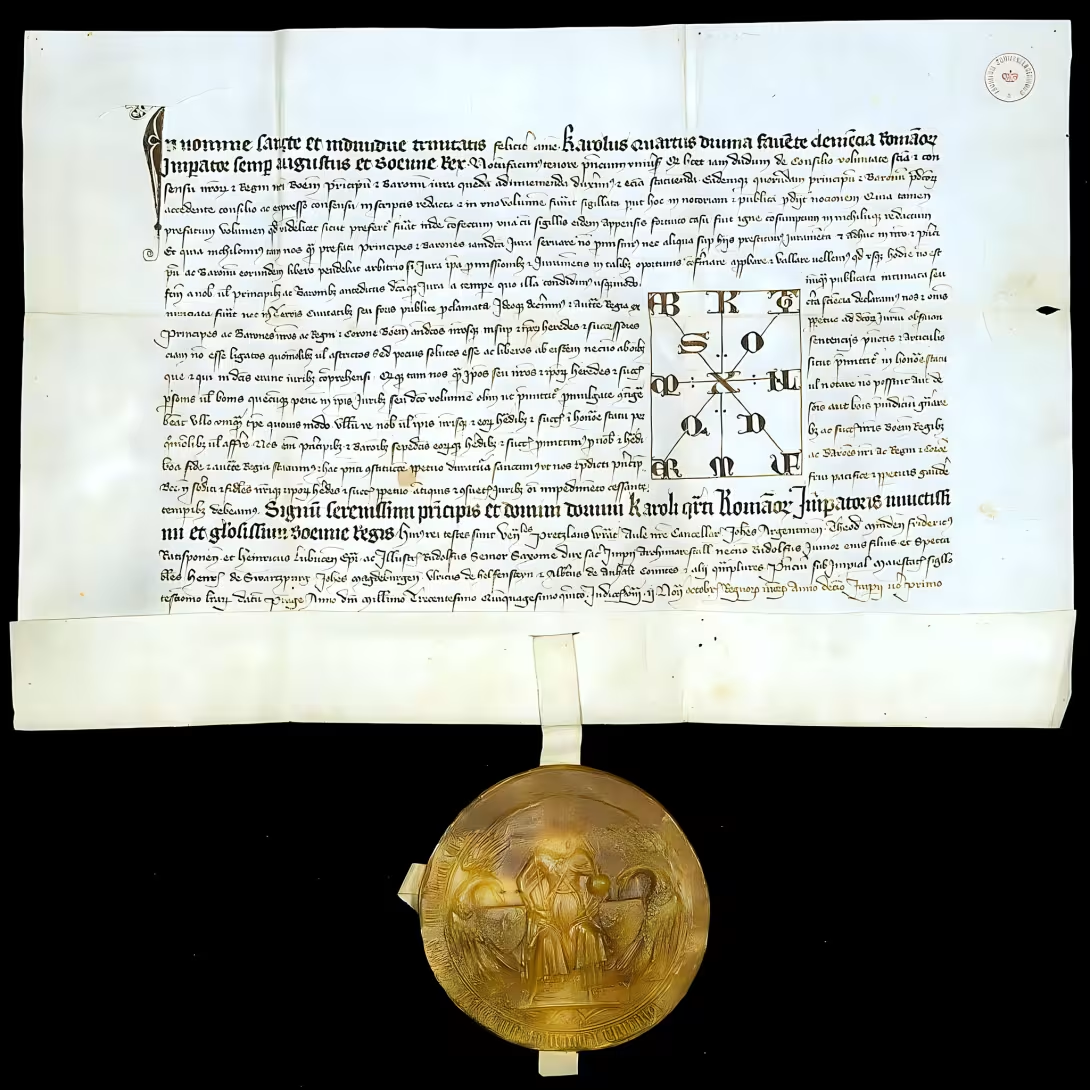
Historica Třeboň is an archive collection managed by the State Regional Archive in Třeboň and physically stored in the castle in Třeboň. On 7 July 1977 it was declared an archive cultural monument and its status increased to a national cultural monument on 1 July 2000. The collection comes from funds related to the Schwarzenberg family archive and восходит until the time when Třeboň and its surroundings belonged to the important noble families of Rožmberk and Švamberk.
The time span of the collection is remarkably long - from 1216 to 1659, in some parts up to 1696. It contains 8,020 archive units with a total range of 12,86 common meters. The biggest historical prize is the documents from the period when the Wilhelm and Petr Vok z Rožmberka brothers ruled the region. At the same time, the collection provides irreplaceable information about the Hussite and pre-Hussite times, making it important for understanding the most dramatic period of Czech history.
The most valuable archive is the Latin written list on parchment issued by Pope Inocenc III on 26 January 1216 - the oldest dos hunting here preserved. The collection contains the original peace treaty concluded on 3 April 1254 between the Czech King Prehrym Otakar II and Hungarian King Belou IV, which is one of the documents of European historical significance. From later on comes the first Czech written royal charter from 1394, which shows the gradual promotion of Czech in official office practice.
The scientific and research community has respected the historica Třeboň since the 19th century, when it was used intensively by the great Czech historian František Palacký. The collection remains still a source for historical research, not only for Czech but also for the European history of the Middle Ages.
Then and now
Drag the slider to compare how the landmark may have looked when it was built with the view today.
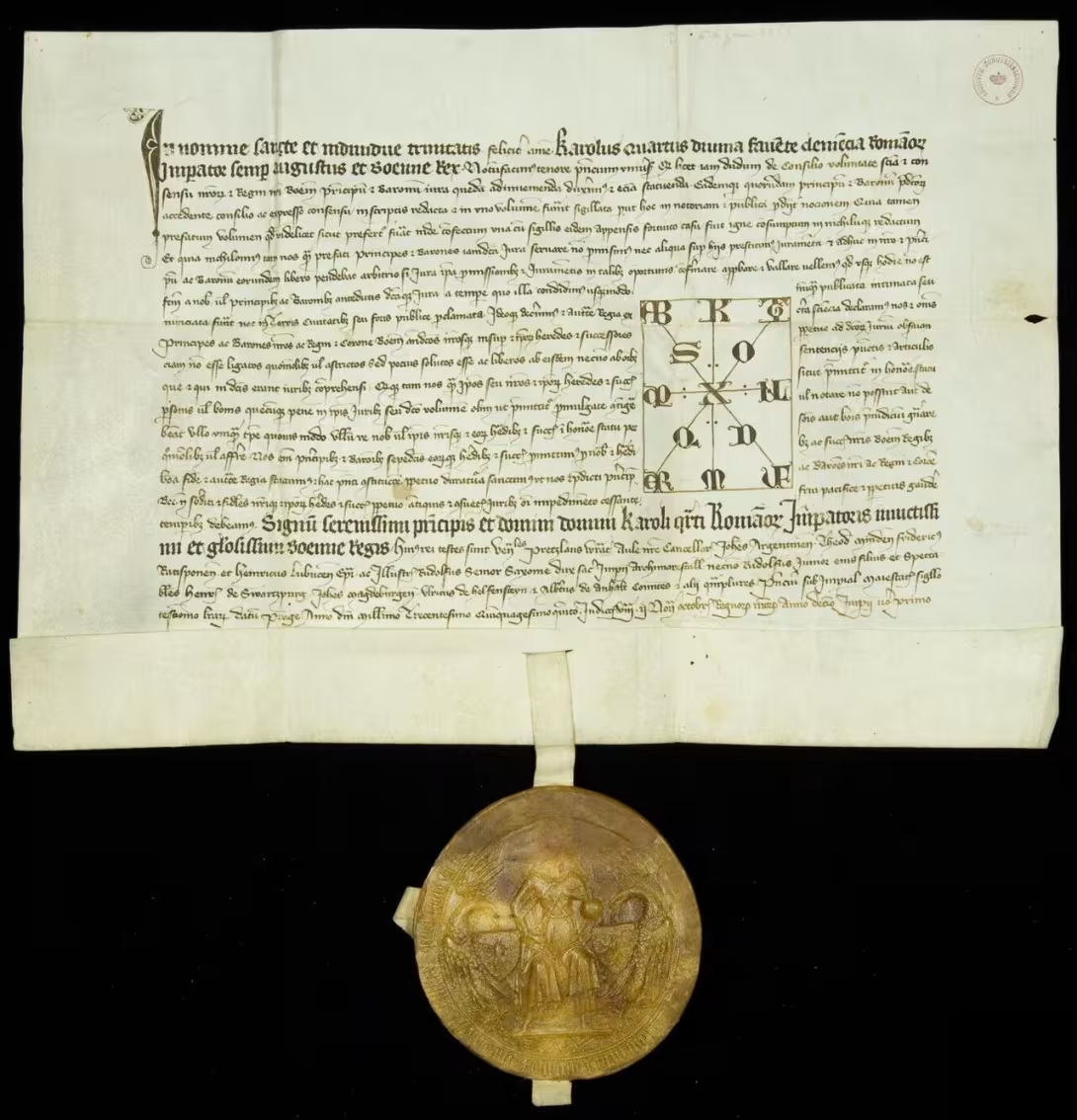
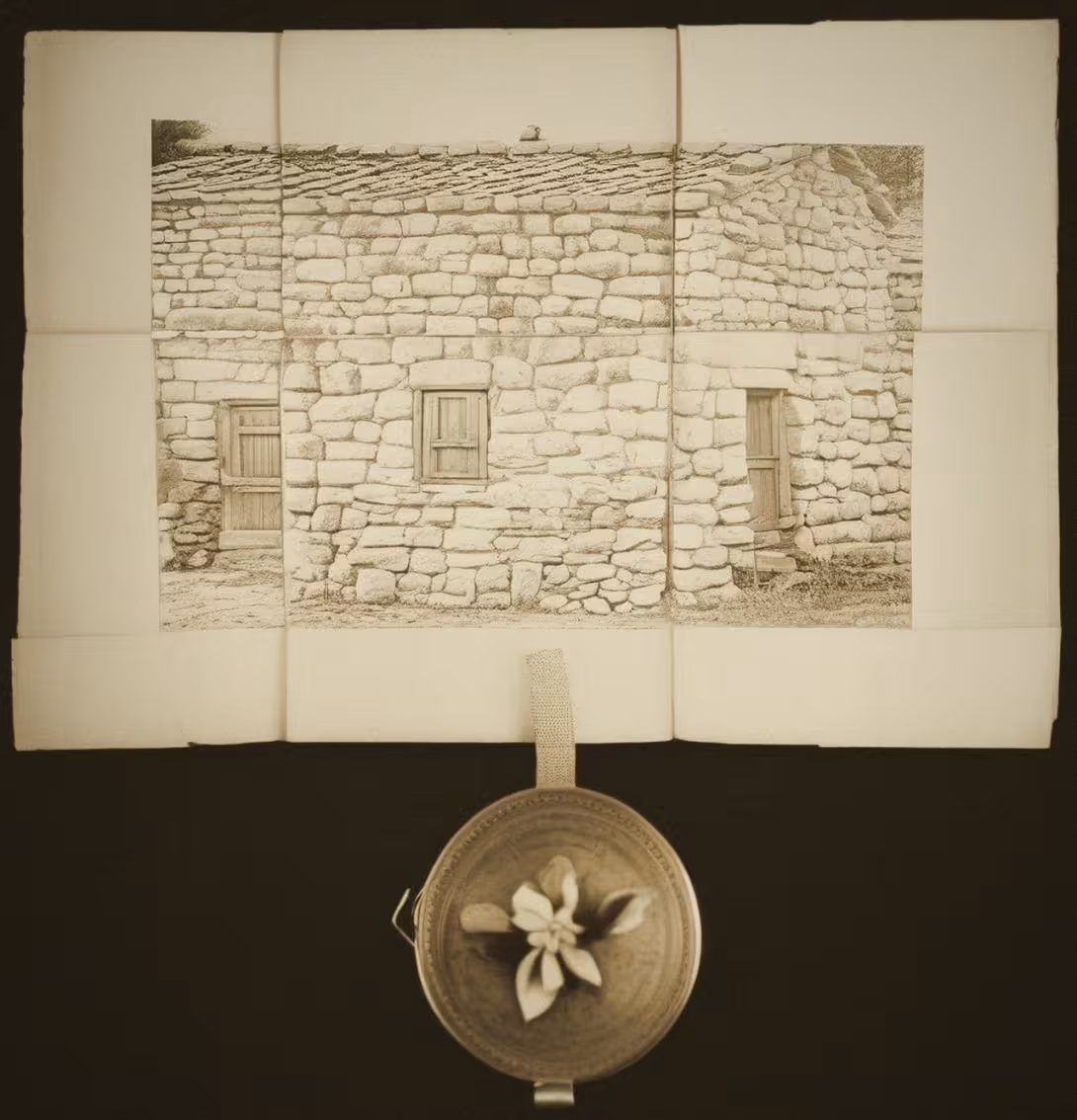
The historical appearance on the left is an AI-generated visualisation and serves as inspiration only.
Historical milestones
- 1216
- Issue of the oldest document of the collection by Pope Innocent III.
- 1254
- The conclusion of a peace treaty between the Overmind Otakar II and Bela IV.
- 1394
- The creation of the first Czech written royal charter contained in the fund.
- 2000
- Declaration of the collection of the national cultural monument.
Architectural development
Historica Třeboň is stored in the existing premises of the Třeboňská castle, which itself has a rich history. The castle was built in different stages and its architecture reflects different styles. The collection has been placed in suitable archive areas to ensure safe storage.
Historical events
In 1977 the collection was declared an archive cultural monument. In 2000 she acquired the status of a national cultural monument.
Owners
Originally a family archive of Rožmberks and Švamberk, later Schwarzenberk, now a state administration.
Points of interest
- Historica Třeboň is an archive collection that is physically stored in the castle in Třeboň. - The collection was declared an archive cultural monument on 7 July 1977 and since 1 July 2000 it has the status of a national cultural monument. - The collection's time span dates from 1216 to 1659, in some parts up to 1696. - The oldest archive kept here is a Latin written letter on parchment issued by Pope Inocenc III. on 26 January 1216. - The collection contains the original peace treaty between the Overmind Otakar II and Bela IV of 1254, which is of historical importance throughout Europe.
Guide
Show guide text
This text was created by artificial intelligence and has not been editorially reviewed. It may contain inaccuracies.
Welcome to Trebon, in the heart of South Bohemia, where history is not only read in books, but breathes from every stone and document that has been stored here for centuries. You are standing right in front of a castle whose walls and spaces hide one of the most precious treasures of the Czech national heritage. In front of you is a building that is not only the residence of the nobles, but above all the temple of memory. Although at first glance you seem to be looking at the classic castle architecture, know that within its walls lies thousands of documents that map the history of our nation from the time of the Rožmberks to the late Middle Ages and the early New Ages. This collection, known as Historica Třeboň, is not just a bunch of old papers. It is a living organism that captures the pulse of European history in one particular place.
Let us now take a step back in time and understand why this set of documents is so extraordinary. Historica Třeboň was created by a gradual separation from the family archive of the famous Schwarzenberk family who ruled here for centuries. But the roots of this collection go even further into the era when the Třeboň belonged to the Rožmberks and the Švamberks. Most importantly, this collection covers a huge time span. It starts in 1216, when Pope Inocenc III. published the oldest charter that is now part of this fund. Imagine you're holding a document over 800 years old. The collection continues without interruption until the end of the seventeenth century, namely until 1659, while some parts date back to later years. It's a total of over 8,000 archival units, which is a number that in itself gives respect. These documents are not just a local matter. Historica Třeboň is of European importance because it captures diplomatic, economic and social relations that have influenced events throughout Central Europe.
Now pay attention to the atmosphere where these documents rest. The castle in Trebon is a historical monument in itself, but its true beauty for researchers and history lovers lies in what it hides. We are not here to admire statues or paintings that could be in the halls, but to perceive the weight of history that has been stored here. The architectural details of the castle served as a protection for these valuables. The walls you see now have protected against moisture, fire and ripening of unique parchments and papers. It is important to remember that Historica Třeboň was physically stored here, in the castle in Třeboňská, which makes it one of the most important archive sites in the Czech Republic.
In the history of this collection, the fates of famous personalities, whose names you know from history textbooks, intersect. Among them is the most significant Vilém z Rožmberka, which turned Třeboň into one of the richest cities in Bohemia. Under his government and the government of his successors, such as Petr Vok z Rožmberka, there was a gathering of documents that demonstrated the power and influence of this family. But the collection doesn't just contain local history. In 1254, a peace treaty was concluded between the Czech King Prehrym Otakar II and the Hungarian King Belou IV, and evidence of this important event is also part of this fund. This treaty shows how closely the fates of Trebon were linked to the fates of Central Europe.
Another milestone in the history of the collection is 1394. This year, the first Czech written royal charter was established, which is now included in this fund. This fact is extremely important for Czech history, as it shows that Czech was already a full official and diplomatic language at this time. This is proof of the cultural and political development of the Czech state in the late Middle Ages. When you imagine how carefully these texts were formulated by the then scribes, how they voted for the words to express precisely the will of the king, you gain a new view of how the administration worked at that time.
Among the personalities involved in the fate of this collection is also František Palacký, founder of the Czech national revival. Although he lived many years later, his interest in Czech history and his efforts to document them contributed to the correct award and protection of Historica Třeboň. Palacký understood that without preserved papers, our history would only be a collection of legends and myths. Thanks to his and other efforts researchers, this collection has become a key source for understanding the Czech past.
The interesting thing that may interest you is the official status of this collection. Historica Třeboň has not always been considered as significant as it is today. Until July 7, 1977, it was declared an archive cultural monument. This move was an important milestone that recognised its value for national memory. And then came the year 2000, when on July 1st the collection acquired the status of national cultural monument. This title is awarded only to the most valuable and precious works in the Czech Republic, both tangible and intangible. Historica Třeboň's declaration as a national cultural monument confirmed that this collection belongs to the best that our country can offer the world.
Imagine if you could see into one of these archive boxes. You would see old parchments whose texts are written in Latin, German or Czech. Each document is witnessed by an event, contract, gift or dispute. Some documents may be provided with seals which are no longer readable today, but which used to serve as a guarantee of authenticity. These seals, often of wax, were an important part of diplomatic intercourse. When you look at date 1216, which is the oldest record in the collection, you realize that you are witnessing the beginning of a long tradition of writing that survived wars, revolutions and regime changes.
One of the greatest mysteries and beauty of this collection is its continuity. Over 8,000 archive units form a relentless chain that allows no major gaps in our knowledge. This means that historians can monitor the development of Trebon and the wider region almost without interruption. It's like having a complete journal of the city that's been written for four centuries. This continuity is rare and makes Historica Třeboň a unique source for researchers from around the world.
Now, if you look at the lock in front of you, try to imagine how the people who created these documents were moving in its interior. Emperors, kings, nobles, scribes, archivist. They all left their tracks in these
Tips for visitors
To visit the Historica Třeboň archive we recommend to choose weekdays away from the main tourist season, where there is a quieter atmosphere for study and tour in the castle premises. Take only the necessary personal items with you, as strict rules of entry and handling of documents apply to the archives. Photography in the interior of the archive is subject to internal regulations, so always check the possibility of taking pictures in advance with the staff. In the immediate surroundings, do not miss a tour of the castle Třeboň, a walk through the historic city centre and relaxation at the World pond, which are available within a few minutes' walk.
Frequently asked questions
Can the monument be visited?
We have not verified whether this monument is accessible. Please ask the owner or operator, or the local municipal office.
Where is the monument?
Location: Třeboň, Jihočeský kraj. The map on this page shows the exact spot.
Why is the monument protected?
It is listed in the Central List of Cultural Monuments of the Czech Republic as a national cultural monument.
Businesses nearby
Do you run a restaurant, accommodation, shop, museum, rental, wellness or other visitor service near this monument? Show yourself directly to the people heading to it — this is how they will see you in the app and on the web:
Nearby
Castle Třeboň, historical center of the city Třeboň, pond World.
Accommodation nearby
Themed route
1. Historical center of Třeboň (urban space) - A walk through the city centre will allow you to feel the atmosphere of this picturesque place. 2. Historica Třeboň (interactive centre) - The main stop, which in a modern way represents the history of the region and the pond. 3. Castle Třeboň (monument building) - An impressive mansion with a rich history that complements the picture of local architecture. 4. Pond World (water area) - Walk by the bank of one of the largest ponds in the Czech Republic offers peace and beautiful views.
Seasonal recommendations
Spring in Třeboň brings with it awakening nature and fresh green color around historical objects. The light is fine and does not shine in this period, which creates a pleasant atmosphere for walks. We recommend to prepare layered clothes because the morning cold can quickly rotate with warm noon. It's the perfect time to visit if you want to escape the biggest crowds.
The summer months offer the most intense sunlight and live tourism that accompanies visitors. Nature is in full bloom and the surrounding landscape is very varied. Due to the main summer season get ready for bigger crowds, therefore it is best to arrive right after opening or in late afternoon. Don't forget light summer clothes and sun protection.
Autumn season is characterized by golden shades of leaves and is often accompanied by morning fog over local ponds, which gives a monument to melancholy tones. The atmosphere is calmer and very suitable for photography thanks to the soft rays of the sun. For comfortable movement, it is advisable to carry a windbreaker or warmer sweater because temperatures are beginning to drop.
In winter, the historic place is a very quiet and thoughtful impression, especially if snow covers the surroundings. The day is short, which requires planning visits by light and shorter opening times. It is necessary to choose very warm clothes and quality shoes in case of frost or moisture. In Advent time there is a special calm and cosy.
Visualizations and artistic views


The visualisations are generated by artificial intelligence and serve as inspiration.
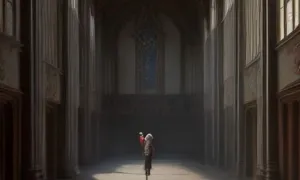
Atmosphere of the place
This atmospheric visualisation of the place and period was generated by artificial intelligence. It is not real footage of the location.
Tips from visitors
No tips yet. Be the first!
Log in and add your tip.
Sources and literature
Photos: autor neuveden / Public domain, rozlišení zvýšeno umělou inteligencí — Wikimedia Commons. The author and licence also appear when you hover over the image.
Faktickým podkladem tohoto textu byl článek na Wikipedii, jehož autory jsou přispěvatelé Wikipedie. Článek je dostupný pod licencí CC BY-SA 4.0.

Příběhy a pověsti
Legendy, pověsti a příběhy spjaté s touto památkou
Fotografie návštěvníků
Zatím žádné fotografie. Buďte první, kdo přidá fotografii z návštěvy!
Log in a přidejte svou fotografii nebo hodnoťte.
Za ověřenou návštěvu v aplikaci získáte víc bodů — poznáme podle GPS, že jste na místě.
Reviews and comments