



Hněvín Castle
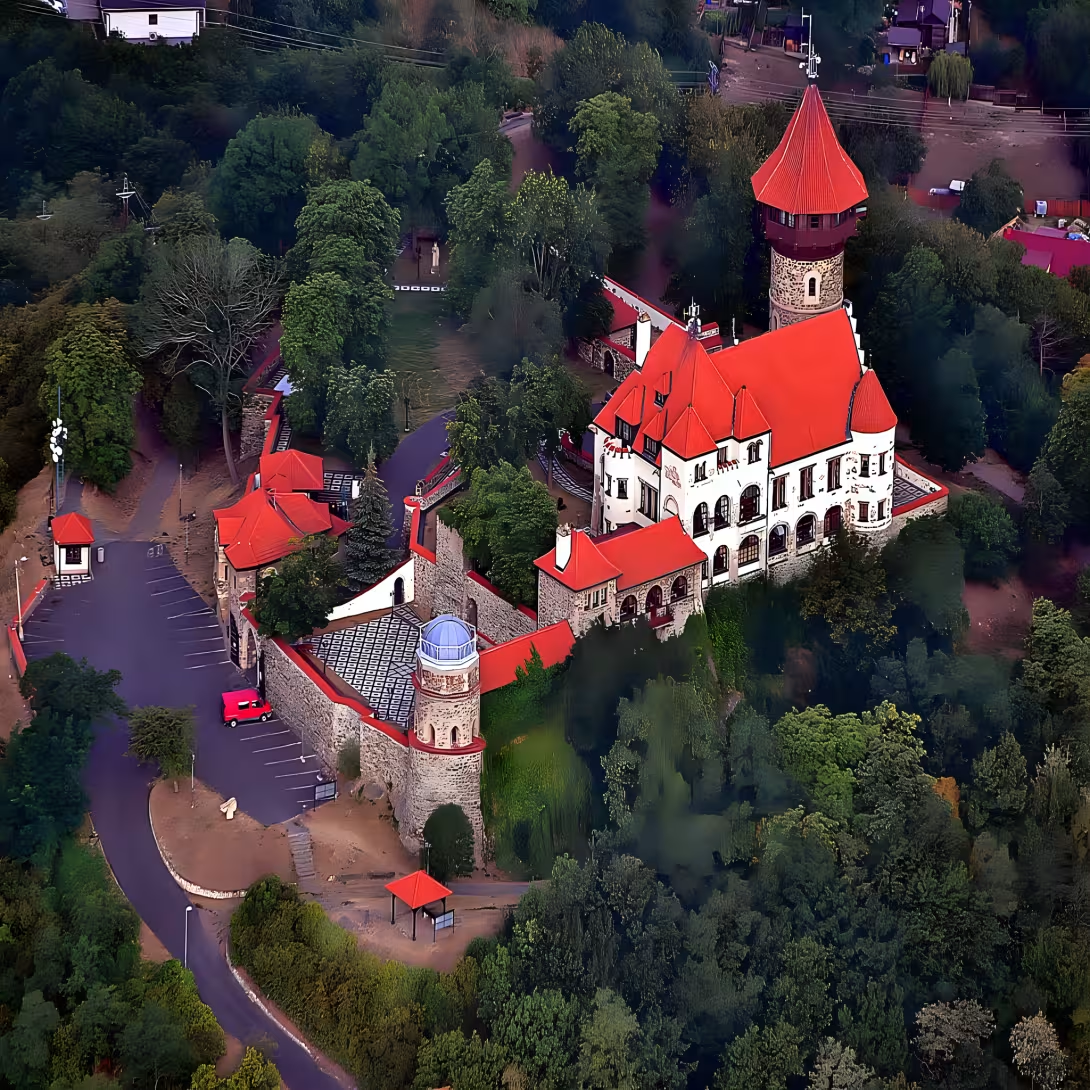
Hněvín (Landeswarte, the Earth Guard) is a neo-gothic castle located on the same-name hill in Most. His German name points to the historical function of guarding the Earth's borders. The original medieval castle was demolished during the Thirty Years' War; The construction we see today has shaped the historic reconstruction from the turn of the nineteenth and twentieth centuries.
Archaeological research from the 1960s revealed that the hill had already been inhabited in the earliest times. About 50 metres below the peak is located on the southwest side of the damaged platform with the remains of the park modifications. Here were found the remnants of the wall from the late age of the Halshtats; However, it is not clear whether it only surrounded the platform or included the summit. A small number of findings come from the eneolithic and older Bronze Age - there was a settlement of the Ukrainian culture. Ceramic fragments and structural remains are evidenced by the presence of the Knoviz culture and settlement in the eighth to ninth century. It is assumed that the perimeter wall could have been established during the period of the Knoviski culture and was later repaired in the period of the Halštat and the Hradištání.
At the beginning of the 13th century, the Hrabisice family controlled the region. In 1207, Kojata donated the vineyard to the Osaka monastery; 20 years later, he referred the remaining property to the Darraz Crusaders, to whom in 1238 Kojat's brother, Výbor, also left his property. Soon after, the land around Most was acquired in a vague way by King Václav I., who probably founded the bridge castle and the city in the late 1930s.
The castle is mentioned for the first time in 1248, when Přemysl Otakar II. besieged it during the mutiny but failed to conquer it. Václav II later stopped it for the Braniboros. In 1331, his name Landeswarte first appeared. In 1373, Emperor Karel IV. pawned him to the Mein Margrave in connection with his daughter's marriage; When the marriage did not take place, the castle remained in the possession of the Mishenians. He only returned to the royal hands in 1406. During the Hussite wars, the castle remained unconquered. In 1455 it was besieged by Jiří z Poděbrad and in 1459 it was acquired by the Cheb peace treaty which he entered into with his sons. Over time, the castle was given to various noble owners until Ladislav Popel ml. from Lobkovic in 1585. After his conviction for suspicion of treason, he was sold to the city of Most in 1595, along with a large estate.
During the reign of Emperor Rudolf II, alchemists - English Edward Kelley and Greek Marek Mamugny - lived here. Kelley was initially Emperor's favorite, but later he was arrested and imprisoned.
Then and now
Drag the slider to compare how the landmark may have looked when it was built with the view today.
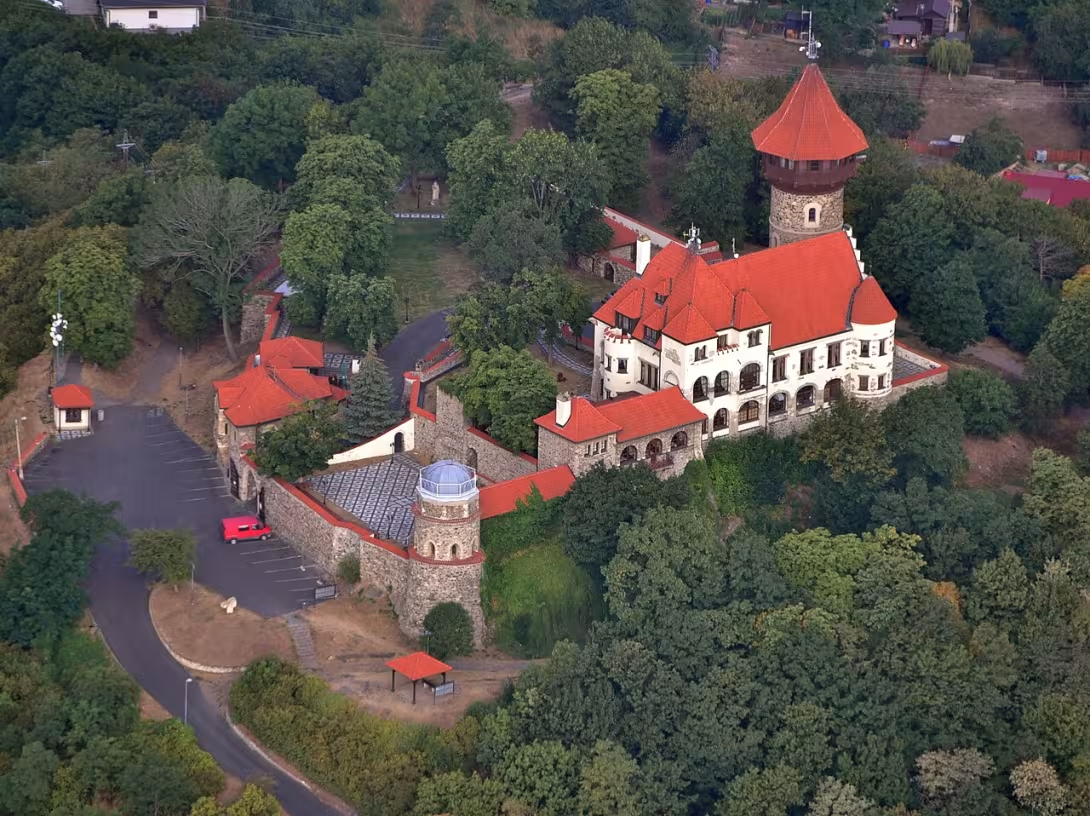

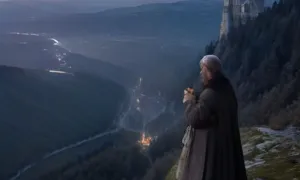
The historical appearance on the left is an AI-generated visualisation and serves as inspiration only.
Historical milestones
- 1248
- The besieging of Otakar II.
- 1373
- Castle arrest for the Mishenian Margrave Friedrich.
Architectural development
The original castle was built in ancient times and later expanded during the Middle Ages. After the destruction in the 30-year war, the reconstruction was carried out in a neo-gothic style at the turn of the 19th and 20th centuries, giving the castle its present form.
Historical events
- 1248
- Přemysl Otakar II. surrounded the castle of Most.
- 1373
- The castle and the city of Most were stopped by Míšín Margrave Fridrich.
- 1459
- The castle got into royal property under the Cheb peace treaty.
Owners
13th century: House Hrabisice, Václav I., Brandenburg; 14th century: the Mishenians the Margrave; 15th century: King Jiří z Poděbrad; 16th century: Beneš and Louis of Veitmile; 1585: Ladislav Popel mladší z Lobkovic; 1594: City of Most
Points of interest
- Hněvín was demolished during the Thirty Years' War; today's construction is a historic reconstruction from the turn of the nineteenth and twentieth centuries. - Archaeological research revealed that the hill was already inhabited in the earliest times; the remains of the wall from the late period of the Hallatites were found. - At the beginning of the 13th century he dominated the landscape of the Hrabisice family, who in 1207 donated the vineyard to the Osci monastery. - For the first time, the castle is mentioned in 1248 during the Rebellion Mohysl Otakar II rebellion, which failed to conquer it. - During the reign of Emperor Rudolf II, alchemists Edward Kelley and Marek Mamugny lived here, where Kelley was later arrested and imprisoned.
Guide
This guide is narrated by a synthetic voice generated by artificial intelligence.
Show guide text
This text was created by artificial intelligence and has not been editorially reviewed. It may contain inaccuracies.
Hněvín is a Neo-Gothic castle situated on a hill of the same name in the city of Most. The original medieval castle was demolished after the Thirty Years' War. Its present appearance comes from a historicizing reconstruction from the turn of the nineteenth and twentieth centuries. In German, the castle is called Landeswarte, meaning Land Guard, which referred to the guarding of the territorial border.
The castle hill was inhabited already in prehistoric times. This was demonstrated by archaeological research in the nineteen sixties. On the southwestern slope, about fifty meters below the summit, lies a plain damaged by a quarry. On its edge, remains of an earthwork from the Late Hallstatt period were found. Other finds document a settlement of the Unetice culture from the Early Bronze Age, the presence of the Knovíz culture people, and also structures from the eighth and ninth centuries.
At the beginning of the thirteenth century, the area around Most was controlled by the Hrabiš family. In twelve hundred and seven, Kojata the Fourth donated a vineyard on Hněvín hill to the Osek monastery. Shortly after, King Václav the First acquired the local lands and probably at the end of the thirteen thirties founded the Most castle and city.
The first written mention of the castle dates from twelve forty-eight. At that time, Přemysl Otakar the Second besieged it during a rebellion against his father, but was unable to capture it. The castle then repeatedly passed into pledge. In thirteen seventy-three, Charles the Fourth, together with the city, pledged it to the Margrave of Meissen Frederick, to whom he betrothed his daughter Anna. The marriage ultimately did not take place, so the castle returned to royal hands only in fourteen hundred and six after a buyout payment was made.
During the Hussite Wars, the castle remained unconquered. In fourteen fifty-five, Jiří of Poděbrady besieged it, but it became royal property only in fourteen fifty-nine based on the Cheb peace treaty. In fourteen eighty, it was purchased by the brothers Beneš and Ludvík of Veitmile.
In fifteen eighty-five, the castle was acquired by Ladislav Popel the Younger of Lobkowicz. He was however accused of rebellion against Emperor Rudolf the Second, fled, and the castle was confiscated from him. The following year, the emperor sold it to the city of Most for sixty-nine thousand four hundred and eighty Meissen groschen. The estate included a number of villages, mills, and Lake Komořany. However, the ruler reserved the right of first refusal and the city had to maintain the castle garrison at its own expense.
During the reign of Rudolf the Second, alchemists stayed at the castle at his command, the Englishman Edward Kelley and the Greek Marek Mamugny. Kelley was initially the emperor's favorite, but later was arrested and imprisoned.
Tips for visitors
The best time to visit Hněvína is in the spring or autumn season when there is quiet and pleasant weather. During these months there is also a beautiful view of the surrounding landscape and the possibility of seeing flowering shrubs or leafy trees in full splendour.
Parking is available near the castle, but it may be more appropriate to use public transport when visiting. The place can also be reached by foot or by bike. The current possibilities of parking and routes recommended for cyclists can be found online.
When visiting, make sure you have sun protection clothes, water and food or luggage. Thanks to this you can enjoy a full day tour without worry. In addition, it is a good idea to take a map of the castle area with you in order to discover all the attractions.
For photography are the best places on top of the castle and around its castle towers. The best lighting conditions offer morning or afternoon hours when the sun is lower above the sky and less intense. This reduces contrast and highlights the details of architecture.
In the vicinity of Hněvína you can visit Comorian Lake, which offers beautiful water areas for relaxation or swimming. They are also close to other small villages and historical monuments, which can be an interesting addition to visiting the castle.
For families with children, Hněvín is an ideal place for beautiful walks. Children can enjoy the natural environment while parents can enjoy views and historical information. It is suitable for young children to visit a park or playground nearby.
Frequently asked questions
Can the monument be visited?
Yes. We verified the opening hours or admission on the official website (18. 9. 2026); you will find them in the visitor information on this page. Please double-check with the operator before you travel.
What are the opening hours and admission?
Details verified on the official website (18. 9. 2026) are listed in the visitor information on this page. Official website: https://hradhnevin.cz/
Where is the monument?
Location: č.p. 577, Most, Ústecký kraj. The map on this page shows the exact spot.
Why is the monument protected?
It is listed in the Central List of Cultural Monuments of the Czech Republic as a cultural monument (register no. 43475/5-406).
For kids
Imagine going back to the past, when the Czech countries were full of castles and castles. And one of them is Hněvín, which lies in Most. In his place today stands a modern castle, but 800 years ago there was a fortress that had its secrets and stories.
How did it look here? Who lived here? What happened here? Imagine you're a young knight who came to Hněvína to hunt. You should see a forest full of wild animals, a river of heat that flows through the city and is full of fish. And then you would see the castle itself, which stood as a label above this landscape.
Businesses nearby
Do you run a restaurant, accommodation, shop, museum, rental, wellness or other visitor service near this monument? Show yourself directly to the people heading to it — this is how they will see you in the app and on the web:
Events nearby


Zdroj akcí: otevřená data měst a obcí ČR (Národní katalog otevřených dat) a kalendář akcí Národního památkového ústavu.
Nearby
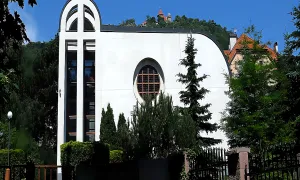
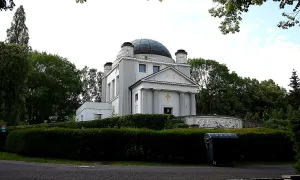
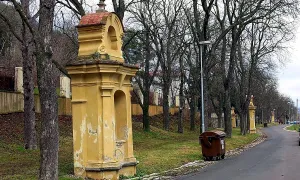
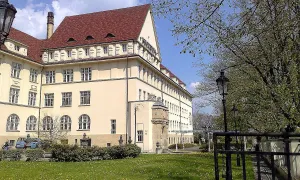
Hněvín is located in an area of rich historical and natural value, including the Comorian Lake and other villages nearby.
Accommodation nearby
Themed route
Route: Hněvín and surroundings
1. Comorian Lake (type: natural monument, why it is worth visiting: the lake is located near the castle Hněvín and offers a quiet atmosphere and nice view of the surrounding countryside) 2. Church of the Assumption of the Virgin Mary (type: church, why it is worth a visit: is an old and historically important church that stands near castle Hněvín) 3. Most (type: city, why it is worth visiting: is the centre of the region and offers a wide range of cultural and historical attractions)
Seasonal recommendations
Spring: Spring is an ideal time to visit Hněvín Castle because nature is in full flower bloom and the sun shines beautifully on the castle. The atmosphere is relaxed and relaxed, ideal for walking on castle walls and an interior tour. We recommend visiting the castle in the first half of April or May, when it is open until 17:00 to avoid large crowds of tourists.
Summer: The castle is most visited during the summer, so it is best to visit it in the morning to avoid crowds. The summer is open until 18:00, so try to arrive early. In summer is also an ideal time to walk through castle gardens and surroundings where you can see flowering flowers and trees.
Autumn: Autumn season is great for visiting Hněvína because it is open until 16:00 and there are fewer tourists than in summer. The atmosphere is calm and quiet, ideal for a tour of the castle and its surroundings. We recommend visiting the castle in September or October when nature is in full autumn coloring.
Winter: Winter is the best time to visit Hněvín Castle if you like peace and quiet. The castle is open until 14:00, so try to arrive earlier. We recommend visiting the castle in February or March, when it is only 5 days a week to avoid large crowds of tourists.
Visualizations and artistic views


The visualisations are generated by artificial intelligence and serve as inspiration.
Photos from the area
Real photos taken near the monument


Zdroj a licence jsou uvedeny u každého snímku.
Tips from visitors
No tips yet. Be the first!
Log in and add your tip.
Sources and literature
Photos: Wolkenkratzer / CC BY-SA 4.0, rozlišení zvýšeno umělou inteligencí — Wikimedia Commons. The author and licence also appear when you hover over the image.
Faktickým podkladem tohoto textu byl článek na Wikipedii, jehož autory jsou přispěvatelé Wikipedie. Článek je dostupný pod licencí CC BY-SA 4.0.
Location on the map
Příběhy a pověsti
Legendy, pověsti a příběhy spjaté s touto památkou
Fotografie návštěvníků
Zatím žádné fotografie. Buďte první, kdo přidá fotografii z návštěvy!
Log in a přidejte svou fotografii nebo hodnoťte.
Za ověřenou návštěvu v aplikaci získáte víc bodů — poznáme podle GPS, že jste na místě.
Reviews and comments