






Stará budova Městského divadla Theatre
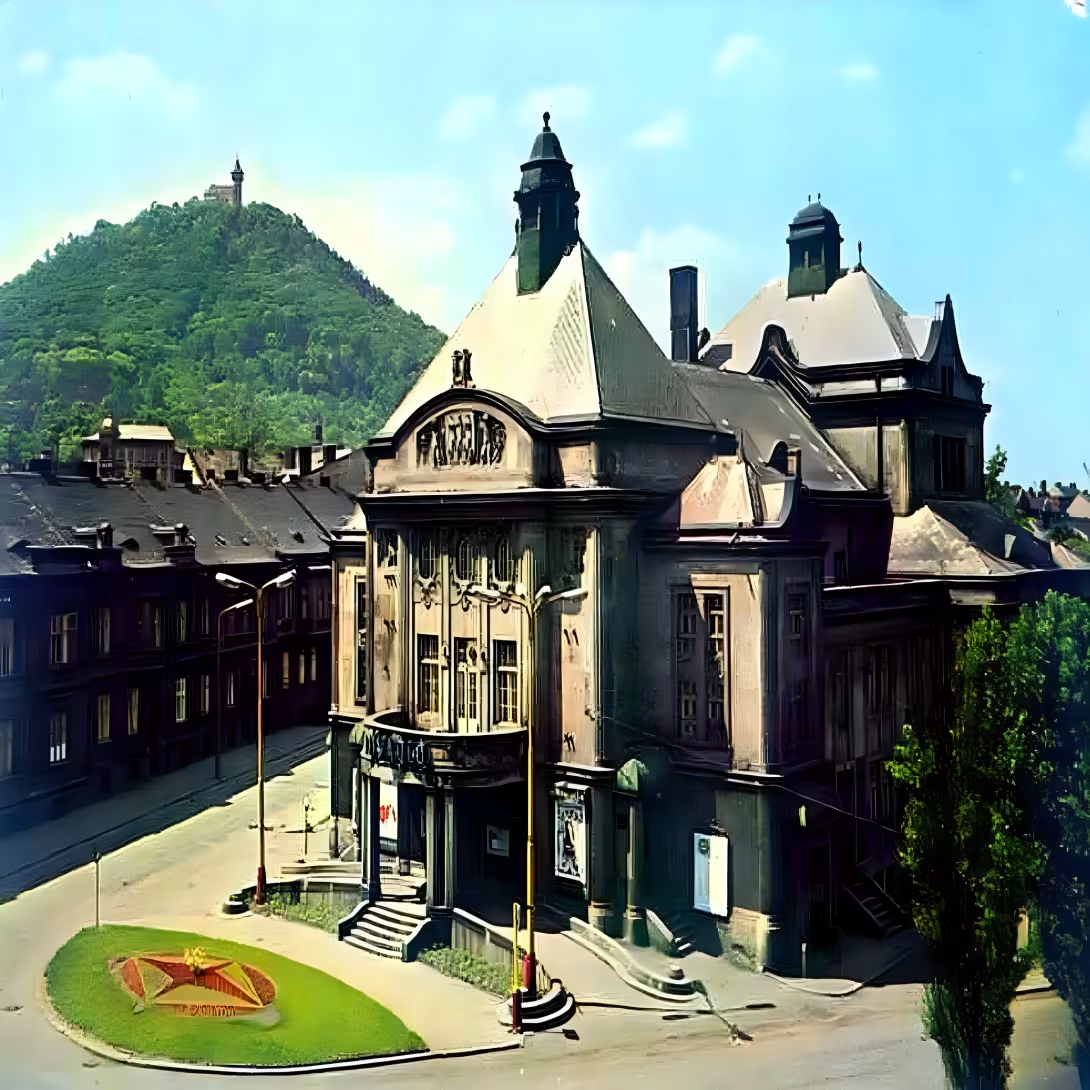
Objekt se nedochoval — na místě dnes nestojí. Následující text popisuje jeho historii, ne současnou návštěvu.
The Stará budova Městského divadla in Most was a secessionist theater building constructed between 1910 and 1911. Designed by Viennese architect Alexander Graf, it served as the city’s first original theater structure, accommodating around 500 seats. This architectural gem marked an important cultural development for Most, reflecting early 20th-century trends in modernism and secessionist architecture. Its demolition in 1982 was part of a larger urban redevelopment plan to expand coal mining operations.
The origins of theatrical activity in Most trace back to the 17th century, with records indicating payments made to a theater-juggling troupe as early as 1681. By the second half of the 19th century, several amateur groups emerged, performing both German and Czech plays despite frequent official obstructions due to lack of suitable venues. The turn of the 20th century saw increased demand from bilingual citizens for a dedicated theater space, leading to the construction of this secessionist building.
Architecturally, the Stará budova Městského divadla was designed in the secession style, characterized by its elegant and modern aesthetic. The building's design aimed to meet cultural demands with a capacity of approximately 500 seats, providing a venue for local theatrical productions. Its construction reflected broader European architectural trends during that period.
Ownership and administration of the theater evolved significantly over time. Initially serving as a hub for German amateur performances, it hosted its first Czech-language amateur performance on April 4, 1919. The post-World War II era saw the engagement of professional theater and opera troupes, with the building being renamed Divadlo pracujících under the communist regime in February 1948.
Key events at the Stará budova Městského divadla include its official opening on September 30, 1911. The theater's activity was disrupted during World War I and further constrained by Nazi occupation following the Munich Agreement. However, post-World War II marked a revival with professional performances resuming in June 1945.
Today, the original Stará budova Městského divadla no longer stands, having been demolished in October 1982 to make way for coal mining expansion. The theater troupe relocated to new premises on První náměstí, which was inaugurated on November 7, 1985. While the original building is gone, its historical significance remains a testament to Most's cultural evolution and architectural heritage.
Visiting the site of the former Stará budova Městského divadla offers insight into the rich cultural history of Most and its role in early 20th-century European theater. Although the physical structure no longer exists, its legacy continues through ongoing performances at the new Divadlo pracujících, inviting visitors to explore a pivotal chapter in the city's artistic journey.
Then and now
Drag the slider to compare how the landmark may have looked when it was built with the view today.
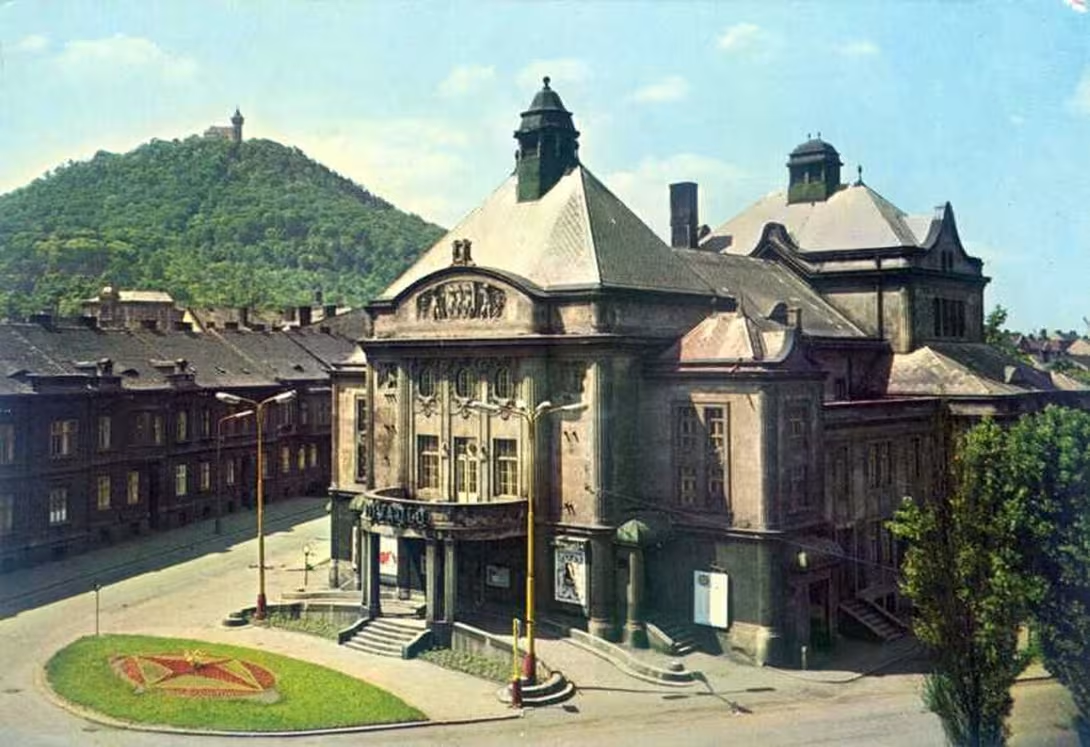
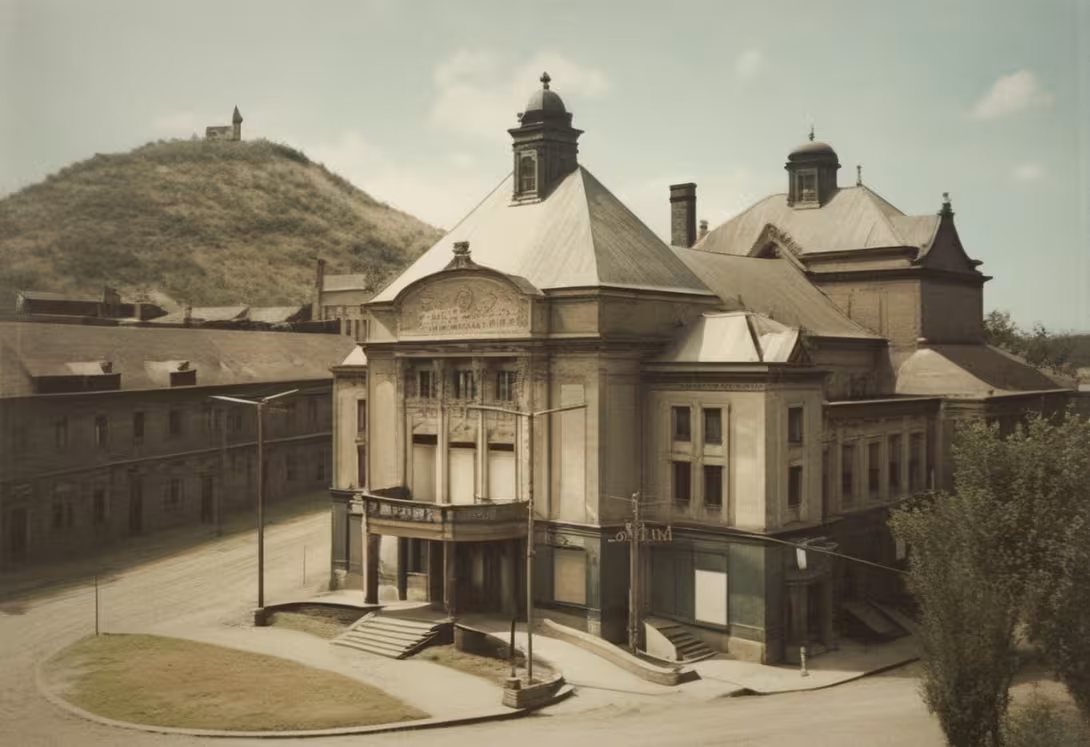
The historical appearance on the left is an AI-generated visualisation and serves as inspiration only.
Historical milestones
- 1911
- The official opening of the theater on September 30.
- 1945
- Engagement of professional theater and opera troupes post-WWII.
Architectural development
The Stará budova Městského divadla was designed in the secessionist style, reflecting early 20th-century architectural trends. It featured a capacity of approximately 500 seats and was constructed to meet cultural demands for a dedicated theater space. The building's demolition in 1982 marked the end of its historical presence.
Historical events
1911: Official opening on September 30, with performances by German amateur groups.
1945-1948: Post-WWII period saw the engagement of professional theater and opera troupes; renamed to Divadlo pracujících under communist regime.
Points of interest
- The Stará budova Městského divadla was designed by Viennese architect Alexander Graf, reflecting the cross-cultural influences that characterized early 20th-century European architecture.
- Despite its prominence as a cultural hub, the theater's operations were frequently disrupted by political upheavals, including interruptions during World War I and further constraints under Nazi occupation following the Munich Agreement.
- The theater hosted its first Czech-language amateur performance on April 4, 1919, marking an important moment in Most's cultural history by embracing bilingual performances amidst a predominantly German-speaking environment.
- After being renamed Divadlo pracujících in February 1948, under the communist regime, the building became known for hosting professional theater and opera troupes, illustrating its evolution from amateur to professional artistic endeavors.
- The demolition of the Stará budova Městského divadla in October 1982 was a controversial decision driven by urban redevelopment plans prioritizing coal mining expansion over cultural heritage preservation.
Guide
This guide is narrated by a synthetic voice generated by artificial intelligence.
Show guide text
This text was created by artificial intelligence and has not been editorially reviewed. It may contain inaccuracies.
The old building of the Municipal Theatre in Most was an Art Nouveau structure from 1910 to 1911 and at the same time the first original theatre building in the city. Today it no longer stands. In 1982 it was demolished, just like the vast majority of old Most, which had to give way to the expansion of the brown coal mine.
Theatre has a long tradition in the city. The oldest evidence dates from 1681 and is a record of payment to a theatre and acrobatic troupe. From the second half of the 19th century at the latest, a number of amateur societies, both German and Czech, emerged in the Most area. They often faced official obstruction and lacked a suitable venue where they could perform.
At the beginning of the 20th century, the Czech and German inhabitants of the city therefore demanded a new theatre building. It was designed by Viennese architect Alexander Graf in the Art Nouveau style. The theatre could hold approximately 500 spectators and was officially opened on 30 September 1911.
The first performances were given by German amateur groups. Theatre life was then dampened by the First World War. After the establishment of Czechoslovakia, on 4 April 1919, Czech was performed on these boards for the first time, again by amateurs. The economic crisis from 1929 to 1933 brought a shortage of funds and there was even talk of closing the theatre. However, from the 1930s onwards, Czech was mostly performed here.
After the Munich Agreement, Most was occupied by Nazi Germany. During the following six years of the Second World War, theatre activity was severely limited. Shortly after the war, from June 1945, a professional dramatic and musical theatre company operated here. After February 1948, the communist regime renamed the theatre the Theatre of Workers and subordinated its programme to its demands.
In the 1970s, a decision was made to demolish most of the city's buildings so that coal hidden beneath the city could be extracted. Operations in the old building ended in 1979. The theatre itself was demolished in October 1982 as one of the last buildings of old Most. The company meanwhile performed in the Máj cultural centre. The new building of the Theatre of Workers on the First Square of new Most was officially opened on 7 November 1985.
Businesses nearby
Do you run a restaurant, accommodation, shop, museum, rental, wellness or other visitor service near this monument? Show yourself directly to the people heading to it — this is how they will see you in the app and on the web:
Events nearby
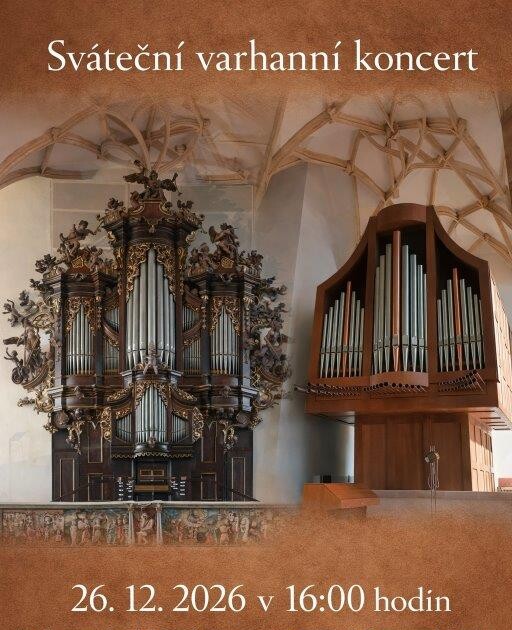
Zdroj akcí: otevřená data měst a obcí ČR (Národní katalog otevřených dat) a kalendář akcí Národního památkového ústavu.
Visualizations and artistic views


The visualisations are generated by artificial intelligence and serve as inspiration.
Photos from the area
Real photos taken near the monument


Zdroj a licence jsou uvedeny u každého snímku.
Tips from visitors
No tips yet. Be the first!
Log in and add your tip.
Sources and literature
Photos: Unknown authorUnknown author / Public domain, rozlišení zvýšeno umělou inteligencí — Wikimedia Commons. The author and licence also appear when you hover over the image.
Faktickým podkladem tohoto textu byl článek na Wikipedii, jehož autory jsou přispěvatelé Wikipedie. Článek je dostupný pod licencí CC BY-SA 4.0.
Location on the map

Příběhy a pověsti
Legendy, pověsti a příběhy spjaté s touto památkou
Příběh: Stará budova Městského divadla
Bylo to v pondělí ráno, kdy Martin zjistil, že dveře divadla už nemohly poskytnout žádné tajemství. Slunce se probouzelo, jeho paprsky pronikaly skrz rozbitý…
Číst příběh
Pověst: Stará budova Městského divadla
Staří obyvatelé Mostu vyprávějí, že když v sedmdesátých letech začaly jeden po druhém mizet domy starého města, divadlo stálo jako poslední strážce. Říká se,…
Číst příběhFotografie návštěvníků
Zatím žádné fotografie. Buďte první, kdo přidá fotografii z návštěvy!
Log in a přidejte svou fotografii nebo hodnoťte.
Za ověřenou návštěvu v aplikaci získáte víc bodů — poznáme podle GPS, že jste na místě.
Reviews and comments