



Památník obětem II. světové války v Mostě Museum building
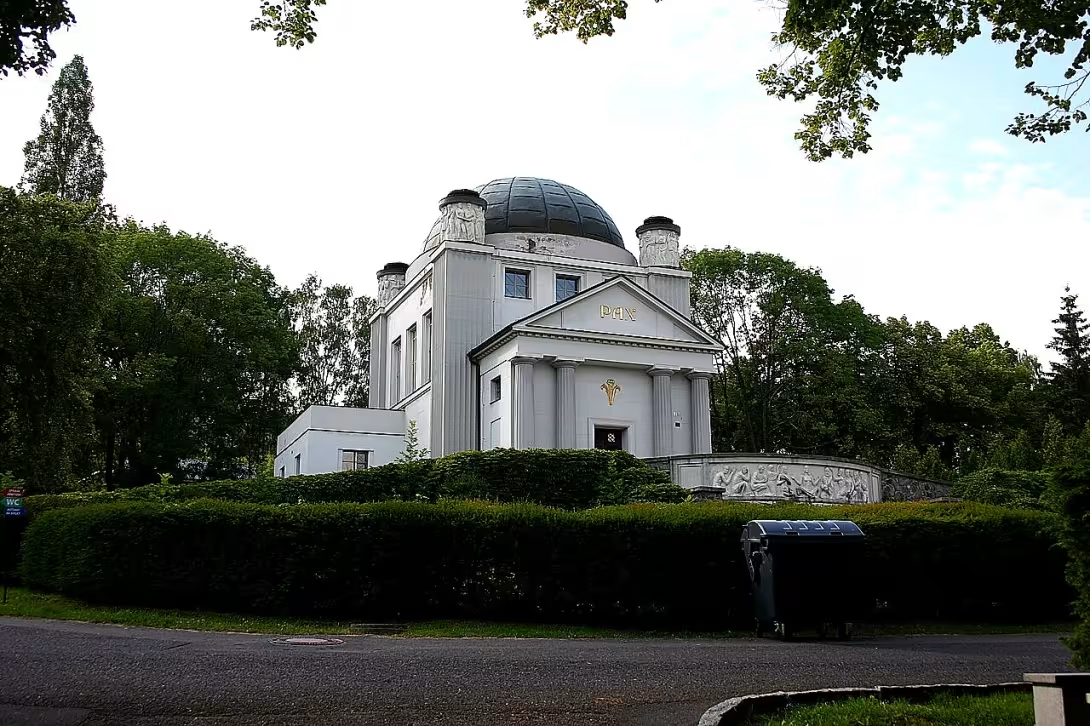
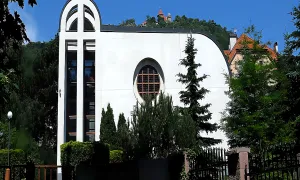
Památník obětem II. světové války v Mostě is a museum located in the town cemetery in the street Pod Konský vrchem no. 1433, which reminds the fate of the people of Mostecka and the surroundings during World War II. This monument is managed by the Regional Museum in Most and is located in the building of a former crematorium built between 1923 and 1924, which has been registered since 1987 as a real-estate cultural monument. The memorial is important by reminding the 12,000 war victims of the 14 nations who died here on forced labor and other thousands of people who went to prison and labour camps here.
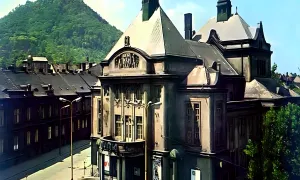
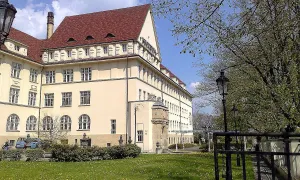
The building of the former crematorium was built in 1923-1924 by the bridge architect Ing. Anton Svitil according to the plans of Viennese architect August Kirstein. Its external form is conceived in the style of classical temple with copper dome and ancient elements, which illustrates the period of Czech individualistic modern. The main part of the building consists of a square ceremonial hall with half-circle ending with apside and adjacent rooms on the sides, ending with dome. In the front of the building there are two massive pylons with embossed decoration and entrance space with four Dorian columns, in tympanon is the inscription PAX.
After reconstruction in the years 1998- 2000, problems with the penetration of the lower waters occurred, which requires further repairs. The town of Most is therefore reluctant to take over the monument without charge from the Ústí Region until it is clear who will pay for the necessary reconstruction. The county has put the memorial on the list of useless property.
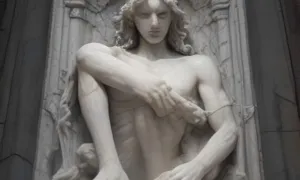
The exhibition exhibition of the memorial was opened in 2000 and also contributed to its construction by war veterans from the Netherlands, Russia and Italy. Part of the memorial is an exhibition dedicated to World War II at Mostecka. The interior apsid of the interior consists of a sacral space with a wooden statue Crucified by the carver Pavel Špelda in 1998.
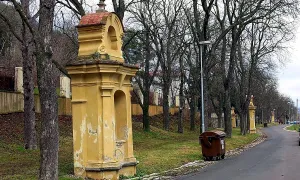
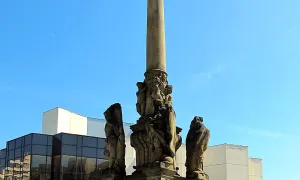
In the town cemetery there are also other monuments such as the statues of St. Prokop of Sabenice and St. John Nepomuk of the Jews, the sculpture of St. Anne of Chanov and the so-called resting stone of Libkovic with carved year 1672. The cemetery administration takes care of the new Church cemetery at the moved dean's church and the cemetery in Vna, while the old Jewish cemetery in Sousi is owned by the Jewish village in Teplice.
Památník obětem II. světové války v Mostě is worth visiting not only for its historical and architectural value, but also as a place of memory of the tragedy of the past. Visiting him, you can better understand the impact of World War II on the Mostecka region and appreciate efforts to preserve the monuments for future generations.
Then and now
Drag the slider to compare how the landmark may have looked when it was built with the view today.
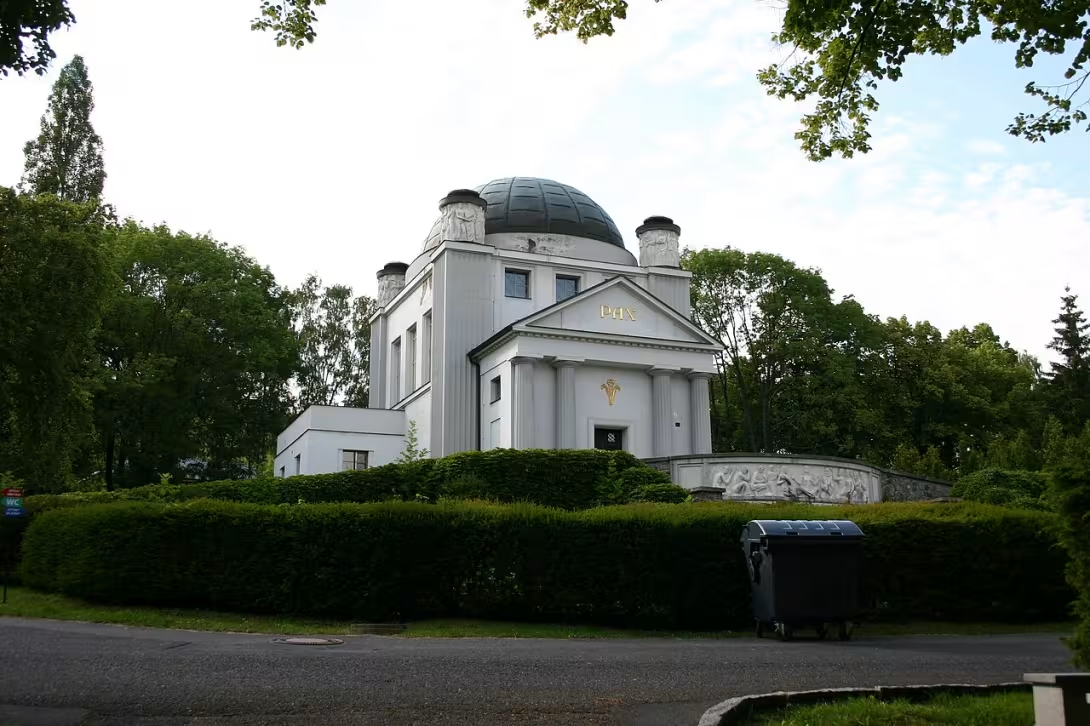

The historical appearance on the left is an AI-generated visualisation and serves as inspiration only.
Historical milestones
- 1923-1924
- Construction of the former crematorium building
- 1987
- Registration of the building as a real cultural monument
- 1998
- Creation of a wooden statue crucified by Pavel Spelda
- 1998-2000
- Reconstruction of the object
- 2000
- Opening of the exhibition exhibition monument
Architectural development
The building of the crematorium was built in the style of a classical temple with copper dome and ancient elements. After reconstruction in the years 1998- 2000, problems with the penetration of the lower waters occurred, which requires further repairs.
Historical events
- 1938
- The beginning of World War II affected the Mostecka region.
- 1945
- The end of World War II and the end of forced labor.
- 2000
- Opening exhibition exhibition of the memorial to the victims of World War II.
Points of interest
- Památník obětem II. světové války v Mostě is located in the city cemetery in the street Pod Konský vrchem no. 1433 and reminds the fate of the people of Mostecka during World War II.
- The building of the memorial is a former crematorium built between 1923 and 1924 by the bridge architect Ing. Anton Svitil according to the plans of Viennese architect August Kirstein.
The memorial is significant by reminding the 12,000 war victims of 14 nations who died here on forced labor.
- The inner apside of the interior of the monument consists of a sacral space with a wooden statue Crucified by the carver Pavel Špelda in 1998.
Guide
Show guide text
This text was created by artificial intelligence and has not been editorially reviewed. It may contain inaccuracies.
Welcome. You are standing in a place that requires silence, humility and a moment of deep thought. You are located in the city cemetery on the street Pod Horské vrchem, in a space where the fragility of human life meets with the relentless passage of time. There's a building in front of you that looks very serious and dignified. Feel this atmosphere surrounding you. It's a place where history stops looking into the past and starts talking to us about values that define us as humans. This building you're looking at right now is not just an ordinary object. It's a container for memories, a place to preserve names and fates that might otherwise be forgotten in the dust of time.
Now let's look together at how this space came into being and what path it had to travel before it became what it is today. This building has a very long and difficult history. It arose in a period when the world and our countries were in a period of great change. Between 1923 and 1924, this building was built as a crematorium. At that time it was a modern and functional object that was meant to serve the needs of the local community. It was in these years, in the first third of the twentieth century, that architecture was formed here to reflect the needs and aesthetic ideals at the time. The building was designed by experts who put not only technical skill in it, but also an understanding of its specific, serious function.
Now pay attention to the architecture itself that you see in front of you. The project was developed by two men whose names must not be forgotten: engineer Anton Svitil and August Kirstein. The light was an important bridge architect and it is here that you can perceive his handwriting. Although the building was changing over the decades, its basic nature remains. Looking at her body, you can see how the building is integrated into this peaceful environment of the cemetery. Feel its shapes and how it acts in accordance with the surrounding space. It is a work which was recognised as very important in 1987 as it was included in the list of real cultural monuments. This was the first big step to stop seeing this place as just a functional building and to be seen as a valuable historical legacy.
Now, if you look at the building in a wider context, you realize it's been through a major transformation. A comprehensive reconstruction took place around the end of the 1990s, namely between 1998 and 2000. This reconstruction was crucial for making the former crematorium a modern and dignified exhibition. Thanks to this effort, in 2000, what stands before you today could be opened - a monument to the victims of World War II. This area is now managed by the Regional Museum in Most and its mission is something much bigger than simply exhibiting objects.
In this place, not just architecture, but above all human destinies. Although you will not find in the historical records of the construction itself the names of particular architects as heroes that would be told in each chapter, the true meaning of this place lies in the thousands of names that are remembered here. This monument is dedicated to the people of Mostecka and its surroundings who were victims of World War II. It's a place that reminds us of the tragedy our entire territory has gone through. You are standing in front of a place that bears witness to suffering, but also witness to human dignity, which seeks to survive even in the darkest times of history.
Now pay attention to one of the most important elements in this space. In 1998, in the period just prior to the completion of the major reconstruction, there was a very strong work of art. It is a wooden statue called Crucified, its author is artist Pavel Špěla. This statue gives the whole place a deep spiritual dimension. Her presence here is not random. Wood as material carries organic fragility and at the same time a force that resembles human existence. This statue serves as a silent companion of visitors and helps them to better perceive the seriousness of the whole monument.
You might find one interesting thing that links the past of the building to its current role. It is fascinating how the place that was originally intended for the final parting with the body turned into a place that serves to preserve the memory of life and the tragic events that suddenly interrupted human lives. This transformation from a functional crematorium to a cultural monument and subsequently to a monument to the victims of war is a symbol of how society learns to work with its history. The building no longer solves physical death, but solves eternal memory. It's where death becomes part of history and history becomes part of our identity.
Now I want to invite you to further explore. There's a door in front of you that will guide you into the inner areas of the exposure. I suggest you step inside and take your time. Let yourself lead those stories that are told in the exhibition. Focus on the details, the personal effects, the documents that tell us what everyday life was like at the time of the biggest trial in our region. Every object in this museum has its weight and every photograph has its voice.
Thank you for your time and for stopping here to connect with Mostecka's history. We hope that this moment of silence and consideration will give you a deeper understanding of the fate of the people who lived here and who were sacrificed here. We wish you a peaceful and inspiring tour of the monument.
Tips for visitors
The best time to visit the Memorial to the victims of World War II in Most is autumn or spring when the weather is mild and pleasant. This time of year offers a peaceful atmosphere to reflect on historical events and the fate of the people we learn about.
For the best availability and up-to-date information about connections, we recommend you look up options before visiting.
When designing your trip, remember that the memorial is located inside the former crematorium. It is therefore advisable to carry clothes suitable for cooler interiors as well as water or some sweetener if you plan to spend more time here.
Photography is possible in many places within the exposure. The best lighting conditions offer a period from morning to noon when the sun is located above and illuminates the interior. Photography outside the monument is also possible, but can be influenced by shadow from surrounding buildings.
In the area of the Monuments is located Old town cemetery with other historical monuments such as the statues of St. Prokop and St. John Nepomucký. Visiting them will give you a deeper understanding of the cultural heritage Mostecka. The new crematorium opened in 1973 also represents an interesting destination for visiting.
Frequently asked questions
Can the monument be visited?
Some buildings of this kind are open for guided tours, others serve another purpose or are privately owned. We have not verified whether and when this monument is open – please ask the operator.
What are the opening hours and admission?
We have not verified the opening hours or admission. Current information is published by the operator.
Where is the monument?
Location: Most, Ústecký kraj. The map on this page shows the exact spot.
Why is the monument protected?
It is listed in the Central List of Cultural Monuments of the Czech Republic as a cultural monument (register no. 1000154794).
Businesses nearby
Do you run a restaurant, accommodation, shop, museum, rental, wellness or other visitor service near this monument? Show yourself directly to the people heading to it — this is how they will see you in the app and on the web:
Events nearby
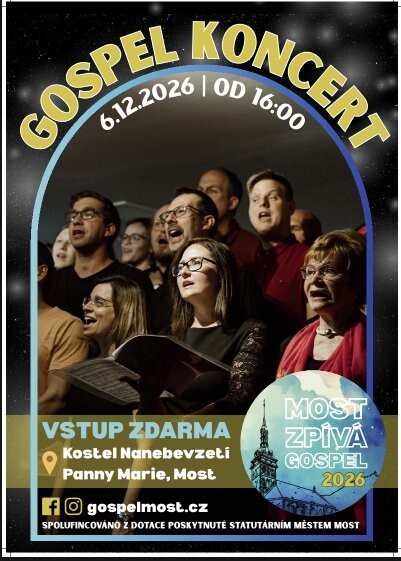
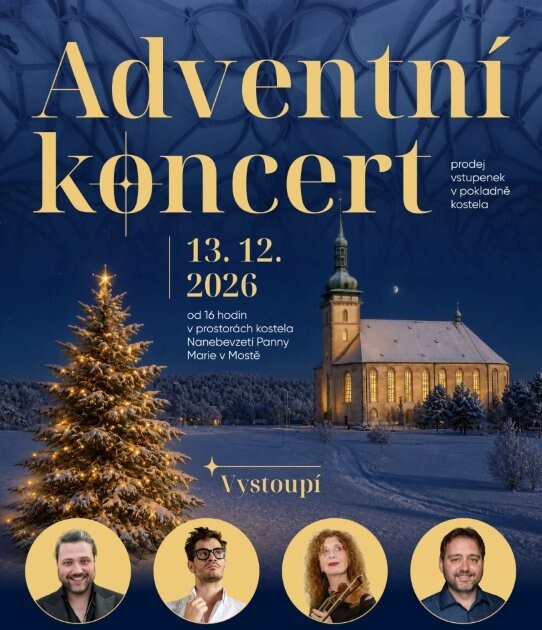
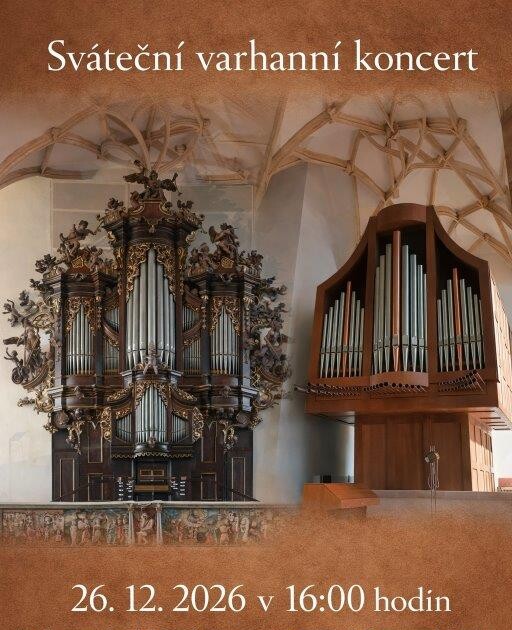
Zdroj akcí: otevřená data měst a obcí ČR (Národní katalog otevřených dat) a kalendář akcí Národního památkového ústavu.
Nearby
Old town cemetery with other monuments such as statues of St. Prokop and St. John Nepomucký.
New crematorium opened in 1973.
Accommodation nearby
Themed route
1.Památník obětem II. světové války v Mostě Type: Museum Why: The main destination of the road, which offers a deep insight into the tragic events of World War II.
2. Old City Cemetery Type: Historical cemetery Why: Place of peace with valuable monuments, among which stands out statues of St. Prokop and St. John Nepomuk.
3. New Crematorium Type: Funeral building Why: An architectural object opened in 1973 that closes the thematic route.
Seasonal recommendations
In spring, the surrounding greenery awaken, creating a strong contrast to drunken facades and visible traces of time on the building. The light is delicate and pleasant, which helps to respect the context of history. We recommend to dress in layers because spring weather is very variable. Visiting is medium in this period, therefore it is ideal to choose the morning hours.
The summer sun illuminates the details of the memorial and highlights the places where urgent repairs are needed. The atmosphere is hot and intense, accompanied by a full bloom of surrounding trees. For the main summer season and high temperatures, come first thing in the morning to avoid the biggest crowds. Don't forget light, breathable clothes and plenty of fluids.
Autumn brings a melancholy mood, underlined by falling leaves and frequent grey skies. This atmosphere matches the tragic theme of the museum and its current, neglected state. Due to frequent collisions, waterproof cloaks and suitable footwear are necessary. The number of visitors is falling significantly, so it is advisable to schedule the arrival for late afternoon.
In winter, the monument is very steep and cold, with snow often covering up parts of the building requiring expensive repairs. There is a silence and a deep calm that calls for reflection on the fate of the victims. It is necessary to wear very warm clothes and tight shoes.
Visualizations and artistic views


The visualisations are generated by artificial intelligence and serve as inspiration.
Photos from the area
Real photos taken near the monument


Zdroj a licence jsou uvedeny u každého snímku.
Tips from visitors
No tips yet. Be the first!
Log in and add your tip.
Sources and literature
Photos: Hadonos / Public domain — Wikimedia Commons. The author and licence also appear when you hover over the image.
Faktickým podkladem tohoto textu byl článek na Wikipedii, jehož autory jsou přispěvatelé Wikipedie. Článek je dostupný pod licencí CC BY-SA 4.0.
Location on the map

Příběhy a pověsti
Legendy, pověsti a příběhy spjaté s touto památkou
Fotografie návštěvníků
Zatím žádné fotografie. Buďte první, kdo přidá fotografii z návštěvy!
Log in a přidejte svou fotografii nebo hodnoťte.
Za ověřenou návštěvu v aplikaci získáte víc bodů — poznáme podle GPS, že jste na místě.
Reviews and comments