






Oblastní muzeum v Mostě Museum building
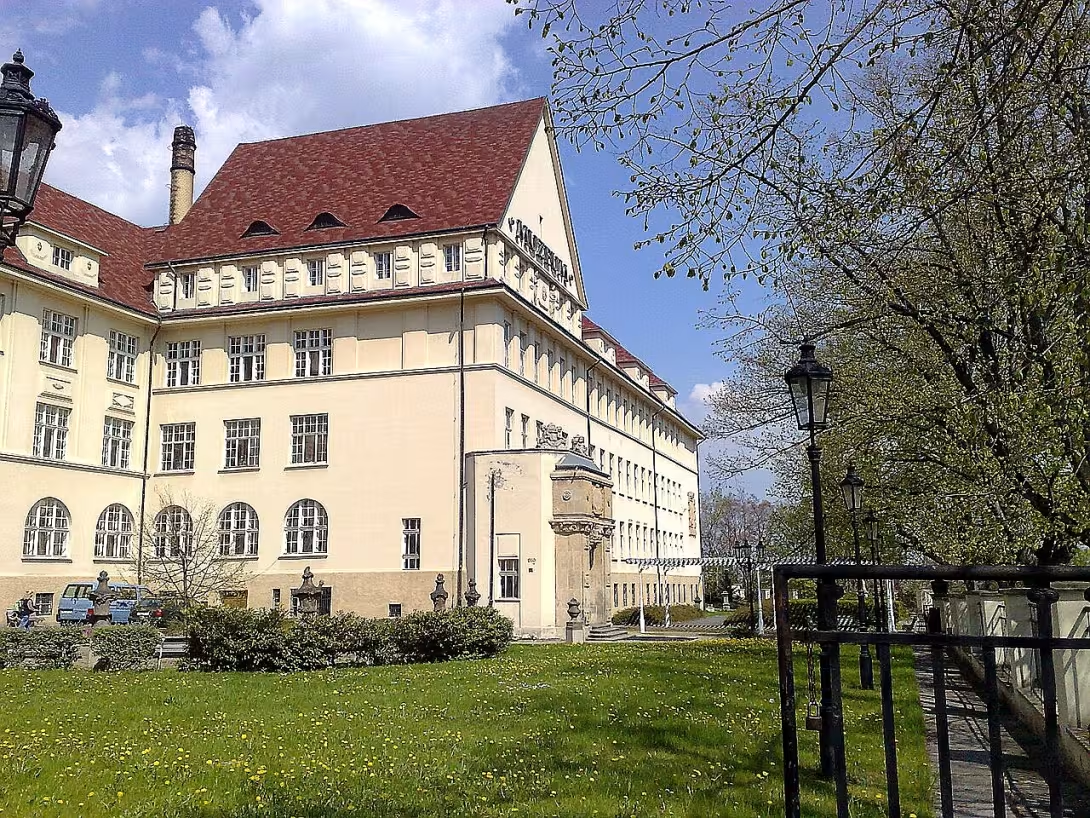
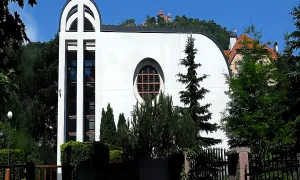
The Regional Museum and Gallery in Most is a cultural institution established by the Ústí Region. It is based in the former State Real Gymnasium building and focuses on the protection and presentation of history, nature and art Mostecka.
The museum was founded in 1888 thanks to the initiative of the then mayor Karl Pohnert, who called on the people to collect collections. The first premises were located in a former piarist dorm and later in a military educational institution in U Masné Stones Street. In 1891 the first employee of Willibald Göpfert joined and a permanent exhibition was built until 1893. Originally, the institution focused on science, folklore and the history of the German part of the population. For better coordination, the Association of Friends of the Museum in Most was founded on 2 January 1894, which together with the city bought exhibits. Josef Konstantin Beer provided significant support; it referred to a collection of paintings and funding for a foundation to support young artists.
From 1924 to 1938 the museum was led by Kurt Oberdorffer. After the Munich Agreement, the Czech Podkrušnomountain Museum was abolished and its collections were merged with the bridge. In 1944, exhibits were moved to the cellar of the castle in Milesov for security reasons due to intense bombing of chemical plants in Záluží.
After 1945, the administration went under the leadership of Josef Boroviček's teacher. With effect from 1 January 1954, the institution was divided into City Museum in Most and District Archive. Since 1960, it's been a county museum. This connected the Lithuanian branch in 1964 and in 1966 the collections of the cancelled Museum in Mount Saint Catherine. Natural sciences were housed in the castle of Litvinov. In 1969, the institution was again divided into separate museums and galleries, but they continued to carry out joint activities in limited areas.
The liquidation of the Old Most has forced the removal of brown coal. In 1978 the museum moved to the Street of Victory February and since 1982 it has been housed in a building of the former German Real Gymnasium in the street of the Czechoslovak Army. The gallery was located in the house Sputnik in 1978 and since 1993 in the premises of the Dean's Church of the Assumption of the Virgin Mary. Between 2000 and 2013, the institution also managed the Memorial to the victims of World War II in the building of the former crematorium.
The museum's current headquarters, the former State Real Gymnasium building, was completed in 1913. After World War II, there was a secondary industrial school until 1981. The building was subsequently extensively renovated, which was completed in 1996.
Following the administrative reform of 2002, the Ústí Region became the founder. Between 2007 and 2013, the museum left the Litvinov Castle and the Bridge Crematorium; all the collections were united in the main building in Most. On 1 January 2019 Oblastní muzeum v Mostě and the Art Gallery in Most were officially merged. This created an institution covering the areas of history, culture, nature and art. The gallery used the basement hall of the dean's church, but it definitely left during the CoVid-19 pandemic.
The focus of the museum is regional and includes the territory of the former Most district with an overlap to the surrounding area. From a geomorphological point of view, it focuses on the Krány Mountains, the western part of the Czech Mediterranean and Mostecka pelvis. The most historically important exposition is the personal estate of Baroness Ulrice von Levetzow.
The Regional Museum and Gallery in MostA is a key place for understanding the native and historical identities of the region. It offers a comprehensive view of the development of Mostecka, from nature to art. We recommend a visit to anyone looking for a factual overview of the history of this area.
Then and now
Drag the slider to compare how the landmark may have looked when it was built with the view today.
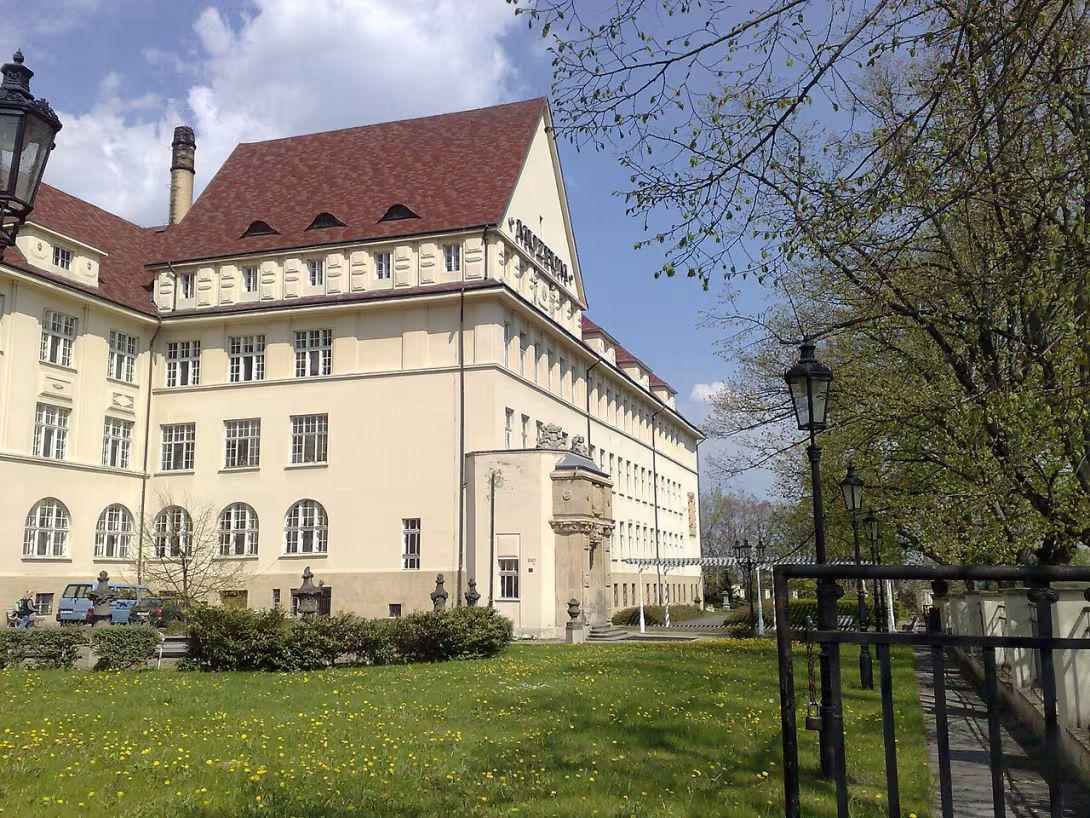
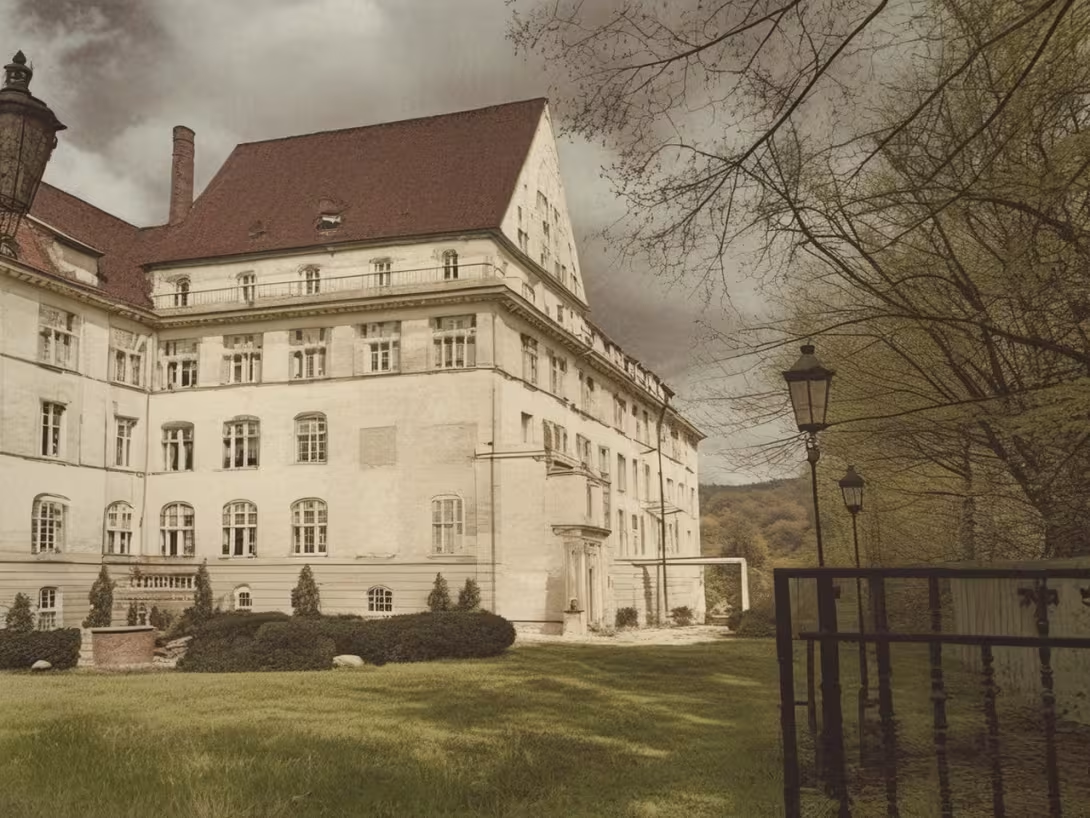
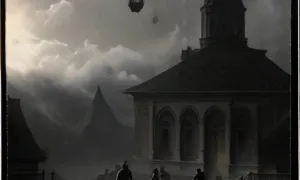
The historical appearance on the left is an AI-generated visualisation and serves as inspiration only.
Historical milestones
- 1888
- Announcement of the intention to start the museum by Mayor Karl Pohnert.
- 1891
- First employee of the Willibald Göpfert.
- 1894
- Established Association of Friends of the Museum in Most.
- 1944
- Transfer of exhibits to the cellar of the castle in Milesov for security reasons.
- 1969
- The division of the institution into a separate museum and gallery.
Historical events
1888: Innicating the foundation of the museum by Mayor Karl Pohnert. 1944: Transfer of collections to the cellar of the castle in Milesov. 1969: The division of the institution into a separate museum and gallery.
Owners
Region of Ústí
Points of interest
- The museum was created in 1888 thanks to Mayor Karl Pohnert's initiative. - In 1944, exhibits were moved to the basement of the castle in Milesov for bombing chemical plants in Záluží. - The disposal of Old Most has forced the museum to move. - The current residence in the former State Real Gymnasium building was completed in 1913. - On 1 January 2019 Oblastní muzeum v Mostě and the Art Gallery in Most were officially merged.
Guide
Show guide text
This text was created by artificial intelligence and has not been editorially reviewed. It may contain inaccuracies.
Welcome to the Regional Museum and Gallery in Most, one of the most important cultural institutions of the region. You're standing in front of an elegant building that was once home to many historical exhibits. This building, the former seat of the State District Office, is now the centre of the cultural life and memory of our region.
Oblastní muzeum v Mostě has its roots in 1888, when the local mayor Karl Pohnert was inspired by the idea of establishing a cultural institution. His efforts to preserve and present local history meant the start of a long passenger museum. Already in 1891, the first member of staff, Willibald Göpfert, was employed, indicating the rapid gradual establishment of the institution.
Let's move closer to the building and look up. Although authentic architects are not known, her elegant facade bears traces of the past. Note the meticulous design that represents the connection between the historical function and modern use.
Key personalities, such as Karl Pohnert, Willibald Göpfert or later Josef Konstantin Beer, Kurt Oberdorffer and Josef Borovička, played a crucial role in forming the museum. Their efforts manifested themselves over the centuries, when the institution faced many challenges.
One of the most prominent chapters was 1944, when due to the bombing of chemical plants in Záluží, exhibits had to be moved to the safety of the cellar of the castle in Milesov. This act saved many valuable historical artifacts.
The interesting thing is that the destruction of Old Most due to the mining of brown coal forced the museum to move. This dramatic turn in its history shows a constant adaptation and resilience of the institution.
Now that you're walking through the museum, you can feel the spirit of these personalities and events. It's a place full of stories and memories waiting to be discovered.
By inviting you to further explore, we encourage you to immerse yourselves in the rich layers of history and art offered by this institution. We hope your visiting day will be full of discoveries and inspiration. Thank you for your attention and wish you a nice stay in Most.
Tips for visitors
The best time to visit the Regional Museum in Most is spring and autumn, when the weather is pleasant and less visitors. This time of year offers ideal conditions for exploring without overloading and with moderate temperatures.
Parking can be found near the museum, but due to limited capacity we recommend using public transport. The city meeting Most offers comfortable connections by bus and tram, which will bring you near the museum.
When visiting the museum, it is advisable to bring a handbag or laptop to record the information. It is also important to wear a comfortable suit, because the exposition often includes a corridor and other spaces.
Photography in the museum is allowed, but without using middle lighting. The best light appears in the hours of morning or afternoon when natural light provides ideal conditions for capturing the details of the exposures.
In the vicinity of the museum you can visit the Castle in Milesov, which is located about 30 minutes on the way. This historic building offers a beautiful medieval experience and is an ideal addition for museum visitors.
For families with children, the museum is a suitable place to enjoy interactive exhibitions. Children are particularly looking forward to the parts focused on history and science.
Businesses nearby
Do you run a restaurant, accommodation, shop, museum, rental, wellness or other visitor service near this monument? Show yourself directly to the people heading to it — this is how they will see you in the app and on the web:
Events nearby
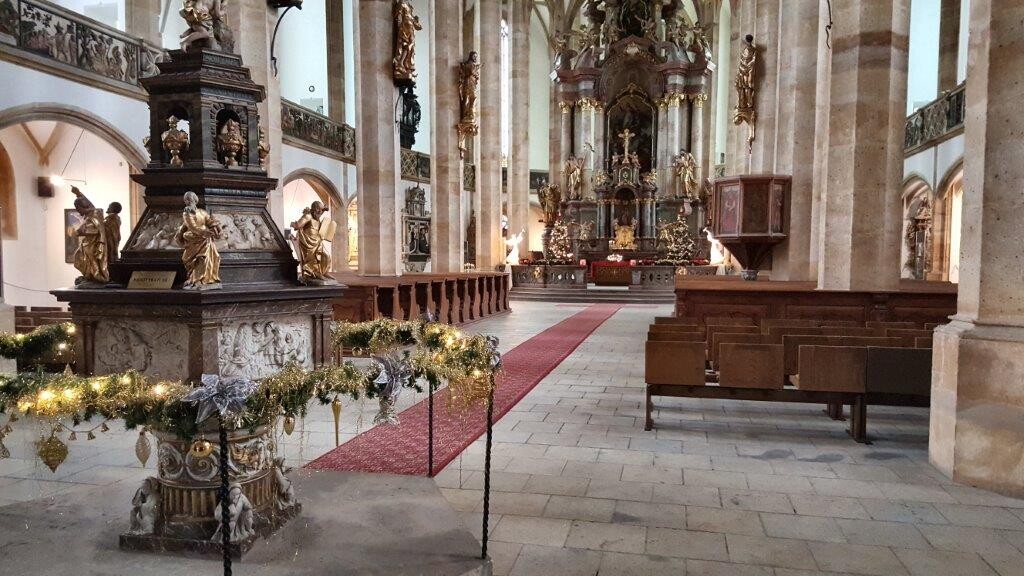
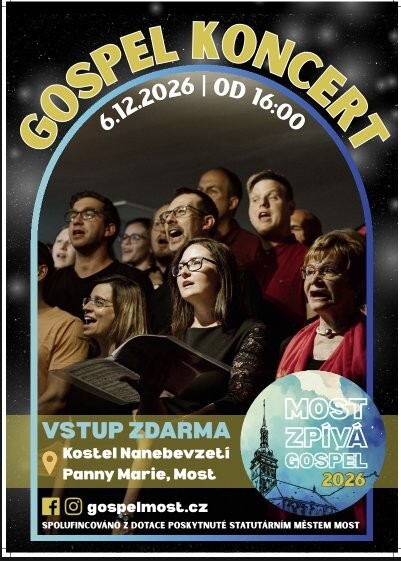
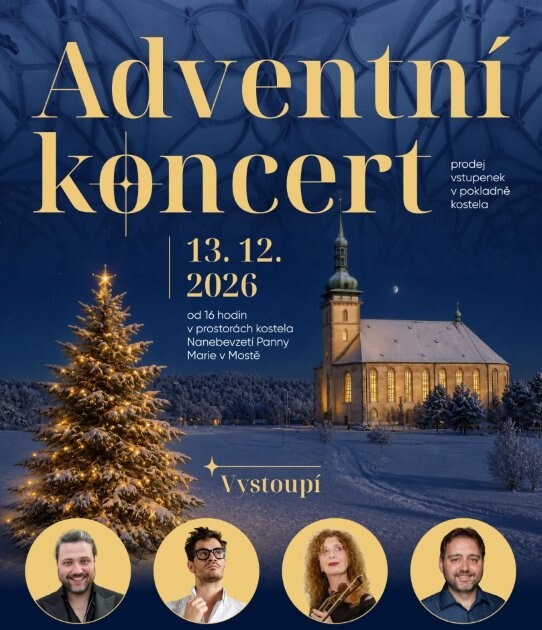
Zdroj akcí: otevřená data měst a obcí ČR (Národní katalog otevřených dat) a kalendář akcí Národního památkového ústavu.
Nearby
Castle in Milesov, town of Litvinov.
Accommodation nearby
Themed route
Thematic cruise route from Most
1. Oblastní muzeum v Mostě (museum) Start your trip at the Regional Museum itself in Most, which is not only the cultural centre of the city, but also a great source of information about the history and culture of the region. The museum offers a variety of exhibitions from archaeological findings to modern art, an ideal place for those who want to understand the history and tradition of the area more deeply.
2. Castle in Milesov (Castle) Continue west to Louny County to visit the Castle in Milesov. This historic castle is famous for its architectural beauty and rich history. It's a place full of stories about past residents that even children can notice. The castle offers visitors not only a beautiful space to visit, but also an opportunity to become acquainted with the history and culture of Czech countries.
3. City of Litvinov (historical centre) After visiting Milesov, head south to the town of Litvinov, which is known for its historical centre and rich industrial history. A walk on the streets of this city will offer a view of the architecturally interesting construction sites, such as the church of St. Jilje and other historical monuments. Litvinov also offers the opportunity to explore local cultural heritage and to learn more about its importance in the regional context.
This route combines historical, cultural and architectural experiences that are ideal for those who want to know more about the Czech Central Underground.
Seasonal recommendations
Spring awakening in Most brings fresh air and blooming greenery around the museum. The atmosphere is full of optimism and fine light pleasantly accompanies the path to the building. We recommend light spring clothes and a visit in the morning when there are quiet areas and fewer visitors.
Summer season offers intense sun and hot days that flood the city with bright light. The inner spaces of the museum serve as a pleasant shelter from the heat. Expect bigger crowds because of the season, which is why it is best to come at the opening. Dress light and airy materials.
Autumn Most is characterized by golden leaves and frequent fog, which give the surroundings a mysterious mood. The lighting is muffled and nostalgic, which is consistent with the historical character of the exhibits. Due to unstable weather, don't forget the waterproof coat and plan to visit until late afternoon.
In winter, the air is freezing and in Advent, the city is lit with lights. The atmosphere is quieter and more focused on the inner experience. It is necessary to select warm laminated clothing and to verify in advance, where appropriate, the shortened opening times that are normal during this period.
Visualizations and artistic views


The visualisations are generated by artificial intelligence and serve as inspiration.
Photos from the area
Real photos taken near the monument


Zdroj a licence jsou uvedeny u každého snímku.
Tips from visitors
No tips yet. Be the first!
Log in and add your tip.
Sources and literature
Fotografie: Zrsch3 / Public domain — Wikimedia Commons. The author and licence also appear when you hover over the image.
Faktickým podkladem tohoto textu byl článek na Wikipedii, jehož autory jsou přispěvatelé Wikipedie. Článek je dostupný pod licencí CC BY-SA 4.0.
Location on the map

Příběhy a pověsti
Legendy, pověsti a příběhy spjaté s touto památkou
Fotografie návštěvníků
Zatím žádné fotografie. Buďte první, kdo přidá fotografii z návštěvy!
Přihlaste se a přidejte svou fotografii nebo hodnoťte.
Za ověřenou návštěvu v aplikaci získáte víc bodů — poznáme podle GPS, že jste na místě.
Reviews and comments