



Morový sloup se sousoším svaté Anny Marian column
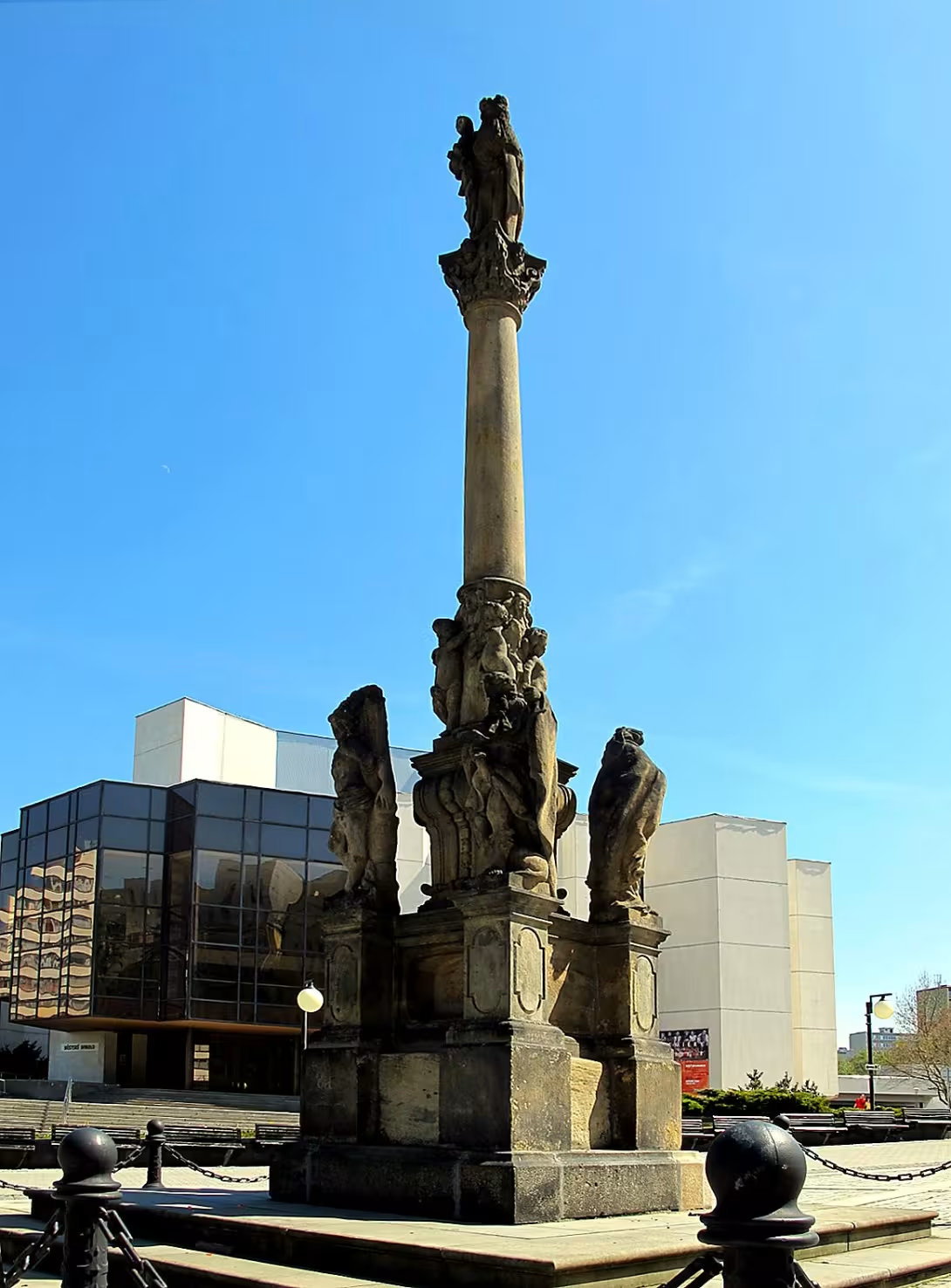
Morový sloup se sousoším svaté Anny is a Baroque monument built in the city of Most, which resembles a plague epidemic from 1680. This historical object, located in the middle of the 1st square in Most, is protected as a cultural monument of the Czech Republic and attracts attention with its architectural beauty and historical significance.
The memorial was built after the plague epidemic that hit the city of Most in 1680. The sculpture of Giovanni Pietro Tencally served as a monument to a tragic event and as a place of prayer for the people. Originally, the column was located on Peace Square in the old Most, but with time it was moved to various locations including the parish garden in České Zlatníky and the churches of St. George and the Assumption of the Virgin Mary in the old Most. Finally, it was moved to the current location on the 1st square in Most, which was carried out by decision of the Ministry of Culture.
Architecturally, the Platoon is characteristic of Baroque style, which was promoted in Bohemia in the 17th century. The monument has a complex plinth with prismatic pillars on which are placed statues of Saint Rocha, Shebestian, Anežka and Rosalie. On the top of the column stands the statue of Saint Anna Samothird, which is depicted with Jesus on the right hand and the Virgin Mary on the left. The statue of Saint Anne has a frontal position, a long mascara and a cloak, her head covered with a mask. The pillar is decorated with a pair of putts, while the middle and upper sections are without decoration. Composite warheads on top end the monument.
The memorial has undergone several transfers which were carried out on the basis of a decision of the ONV Culture Department in Most. These changes of sites could be motivated by various reasons such as the protection of the monument or its better accessibility for visitors.
Today the Morový sloup se sousoším svaté Anny stands in the middle of the 1st square in Most, where it is protected by a fence consisting of 16 metal columns connected by a massive chain. This monument draws attention not only to its historical value, but also to the artistic representation of the Baroque style. For visitors it is a place full of history and culture, which offers an opportunity to see the unique sculptures from the 17th century.
Morový sloup se sousoším svaté Anny is not only a monument to a tragic event, but also a reminder of the strong faith and resilience of people during the epidemic. It's a place worth visiting for every person interested in history and art.
Historical milestones
- 1680
- The plague has hit the city of Most
- around 1680
- Pestilence status as a monument to the epidemic
- 17th century
- The period of the flowering Baroque style in Bohemia
Architectural development
The plague column is a Baroque sculpture work with a complex plinth and head. Sokl has prismatic pillars on which are statues of saints and saints. On top is the statue of Saint Anne with her offspring. The memorial is undecorated in the middle and upper section.
Historical events
- 1680
- The status of the memorial after the plague epidemic.
- Moving the column to different locations in Most.
Points of interest
- Morový sloup se sousoším svaté Anny is a Baroque monument built in the city of Most. - This historical object resembles a plague epidemic from 1680 and is protected as a cultural monument of the Czech Republic. - The monument was a sculpture work by Giovanni Pietro Tencally, who served as a monument to a tragic event and a place of prayer for the people. - Architecturally, the Pillar is characteristic of the Baroque style of the 17th century with statues of Saint Rocha, Shebestian, Anežka and Rosalie. - The memorial was moved several times based on the decision of the ONV Culture Department in Most.
Guide
Show guide text
This text was created by artificial intelligence and has not been editorially reviewed. It may contain inaccuracies.
Welcome to the beautiful city of Most. You just stopped in front of one of the most important and most important symbols of this place. You are standing right in front of a pestilence that is decorated with the statue of Saint Anne. You may think it's just a stone object at first glance, but believe me, this monument is much more than just a sculpture piece. He is a silent but very powerful witness to events that once deeply affected human lives and this entire city. Feel the atmosphere of this place and try to imagine how the people who built this column must have felt.
Let's go back deep into the past together, to a time when the world was a much more uncertain place. Imagine 1680. A dark and terrifying shadow of the plague epidemic spread over the city of Most. It was a time of great fear, uncertainty and relentless loss. People faced an invisible enemy at the time, destroying their families and communities. It is this tragic event that has become the direct reason why this pestilence column was constructed. It wasn't just a memorial. It was expressed in stone a claim to survival, an expression of deep faith and the way people wanted to recall the hardest period in their history. The position of this pillar was an act of hope and a profound memory of those who left at the time.
Now pay attention to the very work you're watching. This whole object is deeply rooted in Baroque style. The Baroque is an era that loves movement, emotion and dramatic expression in architecture and art. Feel the dynamic this work brings to the space around you. The Baroque style does not seek a calm balance, but rather to reach out to the audience, to induce a strong feeling in it. Look at the statue of Saint Anne. Feel how sculpture works with the form and how the character of St. Anne dominates the whole structure of the column. This work is the result of the artistic search and championship of a man named Giovanni Pietro Tencalla. He was the one who put his vision and his ability to capture the spirit of his time into this stone. His work here left a permanent trail that resists both time and city changes.
The interesting thing that might surprise you is that this historical object wasn't always here where you're looking at it right now. His journey through history was very long and full of changes. Originally, this pestilence was standing on Peace Square in the old Most. Over the centuries, as the city was changing, as its face was changing, and as the needs of its inhabitants changed, the monument was moved several times. He had to go through various locations before finally settled in his current place in the middle of the first square in Most. This journey of his mirrors and the history of the city itself, which has been transformed many times but still preserved its important monuments. This column is therefore not only a monument to the plague, but also to the transformation of Most.
Do you perceive the weight of history that radiates from this place? This building is not only part of the urban landscape, it is a protected cultural monument of the Czech Republic. This means that its value is recognised by the whole state and is given to us all as a precious treasure that we have a duty to preserve for future generations. When you look at it, you look at the connection between the 17th century and today.
Look at him from another angle for a while. Try to realize how many people have stood before you in this place and watched the same shapes, the same lines and the same face of St. Anne. Even though the world around us is constantly changing, this monument remains a fixed point that connects us to our ancestors and their efforts to overcome tragedy through art and faith.
We hope that this brief view of the past has brought you new insights and that you have breathed and perceived the importance of this monument. Remember that Most is full of other stories that await your discovery. Continue to walk and explore other parts of our city. Thank you for your visit and we will wait you out in the next survey of history. Goodbye.
Tips for visitors
For the best experience we recommend a visit during bright days, ideally in the morning or shortly before sunset. In these times, the light is most suitable for observing the details of the Baroque work and avoiding the greatest heat.
The site is easily accessible by foot from the historical core as well as through urban transport or by own vehicle.
For comfortable passage through the city we recommend taking our own drinking water and putting on shoes suitable for walking on an uneven surface.
The best places for pictures are from a low angle, which highlights the sculpture work and the monumentality of the work. Soft light at sunrise or sunset ensures best results without hard shadows.
For families with children, the tour is suitable as a short stop during a city walk, but there are no other specific places to visit.
Frequently asked questions
Can the monument be visited?
This is a structure in a public space that can usually be seen from outside free of charge. We have not verified that this particular one is freely accessible.
Where is the monument?
Location: Most, Ústecký kraj. The map on this page shows the exact spot.
Why is the monument protected?
It is listed in the Central List of Cultural Monuments of the Czech Republic as a cultural monument (register no. 1678167002).
Businesses nearby
Do you run a restaurant, accommodation, shop, museum, rental, wellness or other visitor service near this monument? Show yourself directly to the people heading to it — this is how they will see you in the app and on the web:
Events nearby
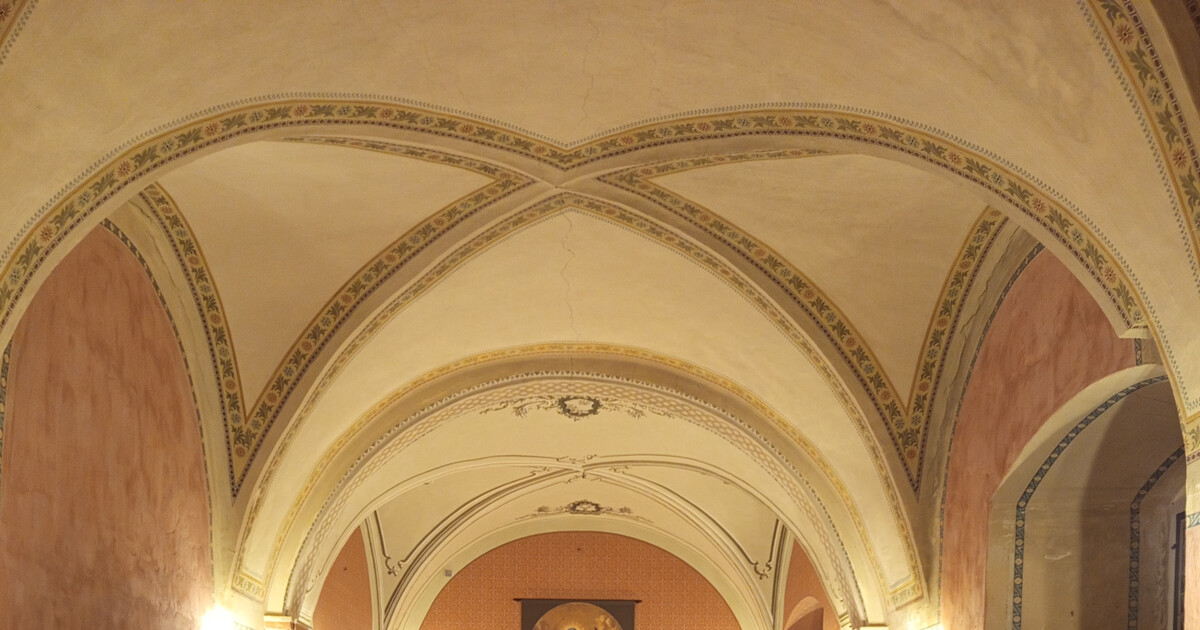
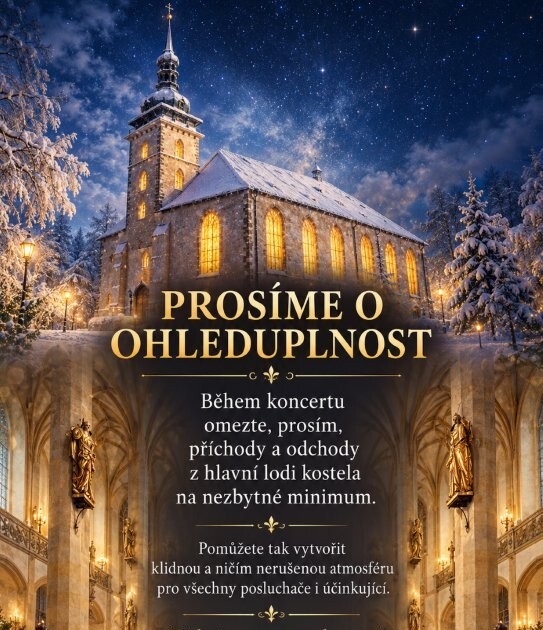
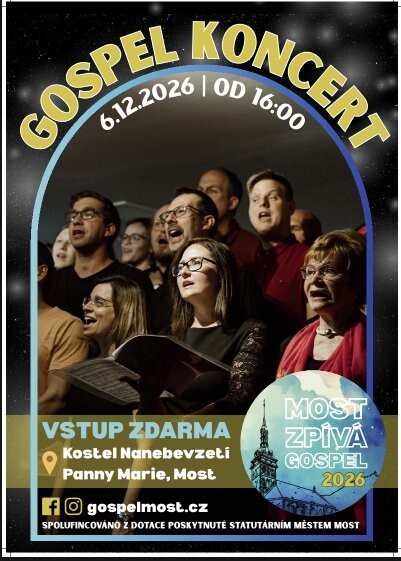
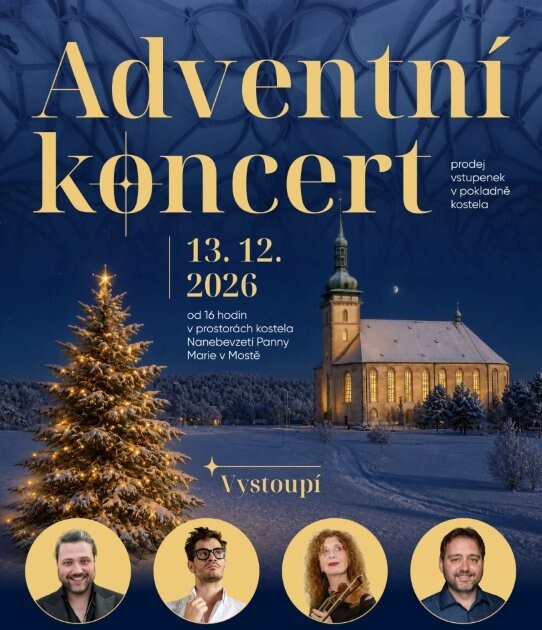
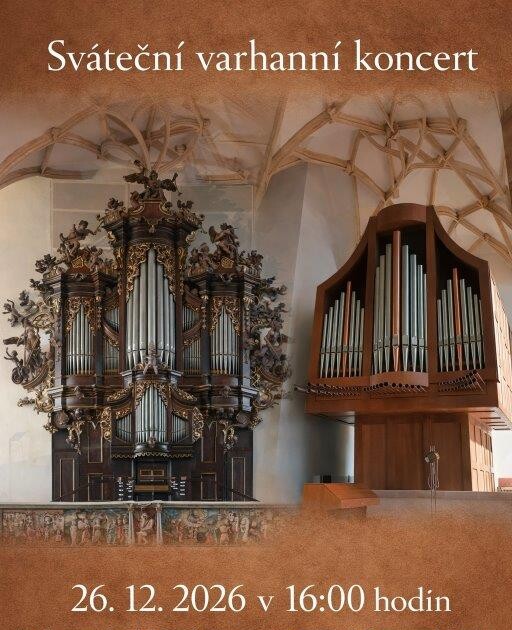
Zdroj akcí: otevřená data měst a obcí ČR (Národní katalog otevřených dat) a kalendář akcí Národního památkového ústavu.
Nearby
🏰 Historic sites (58)
- Morový sloup se sousoším svaté Anny 0.0 km
- Busta Floriana Leopolda Gassmanna 0.1 km
- Památník hornických tradic a důlních neštěstí 0.2 km
- FLAK 40 0.7 km web
- Památník obětem II. světové války 0.9 km
- Pomník obětem důlního neštěstí na dole Jupiter 1.0 km
- Památník obětem generální stávky 1920 1.4 km
- Společný hrob obyvatel Mostu a jeho okolí 1.4 km
- Na Památku vojenským obětem komunistického bezpráví 1.7 km
- Oblastní muzeum a galerie 1.7 km Čsl. armády 1360/35 web
- 1914-1918/1938-1945 2.0 km
- Hněvín 2.2 km Hradní 577/2
- Původní umístění Děkanského kostela 2.4 km
- Podkrušnohorské technické muzeum 6.2 km web
- Zámek Korozluky 6.5 km web
- 1938-1945 6.7 km
- svatého Vavřince 7.2 km
- Pohřebiště u dolu Bílina 8.1 km
- Památník Reussů 9.4 km
- Mirošovický zámek 10.0 km
🍽️ Restaurants and dining (141)
- Divadelní Kavárna 0.1 km
- Cafe Coffee Day 0.1 km
- McDonald's 0.1 km
- Restaurace Cascade 0.2 km
- Lagarto Deli 0.2 km tř. Budovatelů 3067
- Good Gate 0.2 km Jaroslava Průchy 1915/24 web
- Dillí 0.2 km
- Turbo Pizza 0.4 km tř. Budovatelů 2957/108 +420 773 771 770 web
- Budvarka 0.4 km tř. Budovatelů 2957 web
- Kaštan 0.4 km
- Bristol 0.4 km
- Dublin 0.5 km
- Music Pub 0.5 km
- Pizzeria Trattoria 0.5 km
- Factory bar 0.5 km
- Exit 99 0.5 km
- Pivovarská restaurace Mostecký Kahan 0.6 km Obránců míru 2629/5 web
- Restaurace Severka 0.7 km
- Minipivovar Most 0.7 km Pod Koňským vrchem 3450 +420 725 755 866 web
- Motorest Výšina 0.8 km
🏨 Accommodation (23)
- Cascade 0.1 km Radniční 3
- Rezidence Bělehradská 0.8 km Bělehradská 531/36
- Domino 1.0 km tř. Budovatelů 2831/54
- Kemp - tábořiště Matylda 3.0 km +420 725 958 011 web
- Joker 3.6 km
- ubytování a jídelna DTS Vrbenský 4.4 km
- Selský dvůr, s.r.o. 6.3 km Bílinská 16
- Kemp Kyselka 9.4 km +420-417 823 254 web
- Autokemp 9.5 km
- Kemp Kyselka 9.5 km
- Karolína 10.0 km
- Hotel Nádraží 10.3 km Černická 25/20 +420 602 673 279 web
- Hotel u Lva 10.8 km
- The North 11.7 km
- Hotel Loučky 12.6 km Máchova 1727
- Lázně Meziboří 13.6 km
- Autocamp Osek 13.6 km +420-603 523 489 web
- Hotel Casanova 13.7 km web
- Sklenik 14.3 km
- Sklenik 14.4 km
🚲 Rentals and sport (35)
- 3D bludiště 0.7 km web
- Aquadrom Most 0.8 km Topolová 801 +420 476 127 842 web
- Sportovní hala 0.9 km
- Zimni stadion Most 1.4 km
- Bicykl 1.5 km
- Carbonia Racing Arena 1.7 km Hřbitovní web
- Tornádo sport 1.8 km
- Sportisimo 1.9 km Velebudická 1247 web
- Cyklo Point 1.9 km Velebudická 1247 734 311 816 web
- Střelnice 3.1 km
- Přírodní Koupaliště 3.1 km
- Autodrom Most 3.3 km
- Tenisové kurty Bílina 9.6 km Kyselská 410 775 547 956 web
- Atletický stadion Bílina 9.8 km
- Fotbalový stadion Bílina 9.9 km
- Sportisimo 10.3 km
- Volleyball 10.7 km
- Sport center (hockeyball, florball, football) 10.7 km
- Zelená hala 10.7 km Tyršova 374
- Plavecká hala 10.8 km Žižkovo údolí 276/6 web
🥾 Hiking and nature (109)
- Radniční park 0.1 km
- Šibeník 0.8 km
- Ressl 1.8 km
- Široký vrch 2.1 km
- Hněvín 2.1 km
- rozhledna Hněvín 2.2 km
- Špičák 2.8 km
- Větrník 4.2 km
- PP Kopistská výsypka 4.8 km web
- Křemencový vrch 4.9 km
- Na skalce 5.2 km
- Zlatník 5.5 km
- Zaječická hořká 5.5 km web
- Červený vrch 6.0 km
- Chloumek 6.6 km
- Polerady - obnovená studánka 6.7 km
- Želenický vrch 6.7 km
- Vývěr důlní vody 7.0 km
- Ovčí vrch 7.2 km
- Výsypka Malé Březno 7.5 km
Accommodation nearby
Themed route
1. Morový sloup se sousoším svaté Anny, memorial: Main destination of the tour. Admire the artistic processing of the statue and its historical significance. 2. Stone base, part of the monument: Detailed view of the work. Here you can watch closely engraved inscriptions and sculpture details. 3. The immediate park, area: A place to relax. Enjoy the peace near the sights and observe its location in the space.
Seasonal recommendations
Spring: In spring, the Pillar with Saint Anne celebrates the arrival of new leaves and flowers that give the surrounding environment a living color. The sun begins to radiate warmer, which creates a pleasant atmosphere for walking around the monument. Visitors are advised to wear a little warmer clothing due to morning cold and possible breeze, which may still be present. The best time to visit is in the afternoon when the temperature rises and the crowd is usually less.
Summer: Summer on the Pestilence Column and around Mostecka suburb offers long days with uncloudy sky, which allows you to see the memory in light of long summer days. This season it is recommended to visit in the morning or late afternoon to avoid the highest temperatures and crowds that can be particularly large in the middle of the day. Don't forget sun protection, such as a hat and cream with high SPF.
Autumn: Autumn brings beautiful leaf colours to the Plague Pillar that vary from green to yellow, orange and red. The atmosphere is calm and slightly cold, which creates ideal conditions for a relaxed visit to the monument. Visitors are advised to wear multiple layers of clothing due to falling temperatures and possible breeze. The best time for a tour is this afternoon, which allows you to remake beautiful autumn light.
Winter: Winter on the Pest Column offers a unique view of a monument covered with snow or with icy branches of trees. The atmosphere is calm and quiet, which allows you to enjoy the memory without large crowds. We recommend to visitors to wear warm clothes, including fur coats and shoes suitable for freezing soil. The monument is often open for a shorter period of time during winter, so make sure you have the current times before the visit. The best time for a tour is usually afternoon when the sun starts to drown the freezing air a little.
Visualizations and artistic views


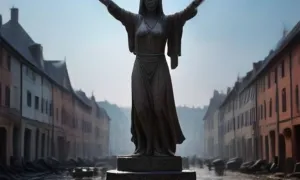
The visualisations are generated by artificial intelligence and serve as inspiration.
Photos from the area
Real photos taken near the monument


Zdroj a licence jsou uvedeny u každého snímku.
Tips from visitors
No tips yet. Be the first!
Log in and add your tip.
Sources and literature
Photos: Hadonos / CC BY-SA 3.0 — Wikimedia Commons. The author and licence also appear when you hover over the image.
Faktickým podkladem tohoto textu byl článek na Wikipedii, jehož autory jsou přispěvatelé Wikipedie. Článek je dostupný pod licencí CC BY-SA 4.0.
Location on the map

Příběhy a pověsti
Legendy, pověsti a příběhy spjaté s touto památkou
Fotografie návštěvníků
Zatím žádné fotografie. Buďte první, kdo přidá fotografii z návštěvy!
Log in a přidejte svou fotografii nebo hodnoťte.
Za ověřenou návštěvu v aplikaci získáte víc bodů — poznáme podle GPS, že jste na místě.
Reviews and comments