






Horní Palata Homestead
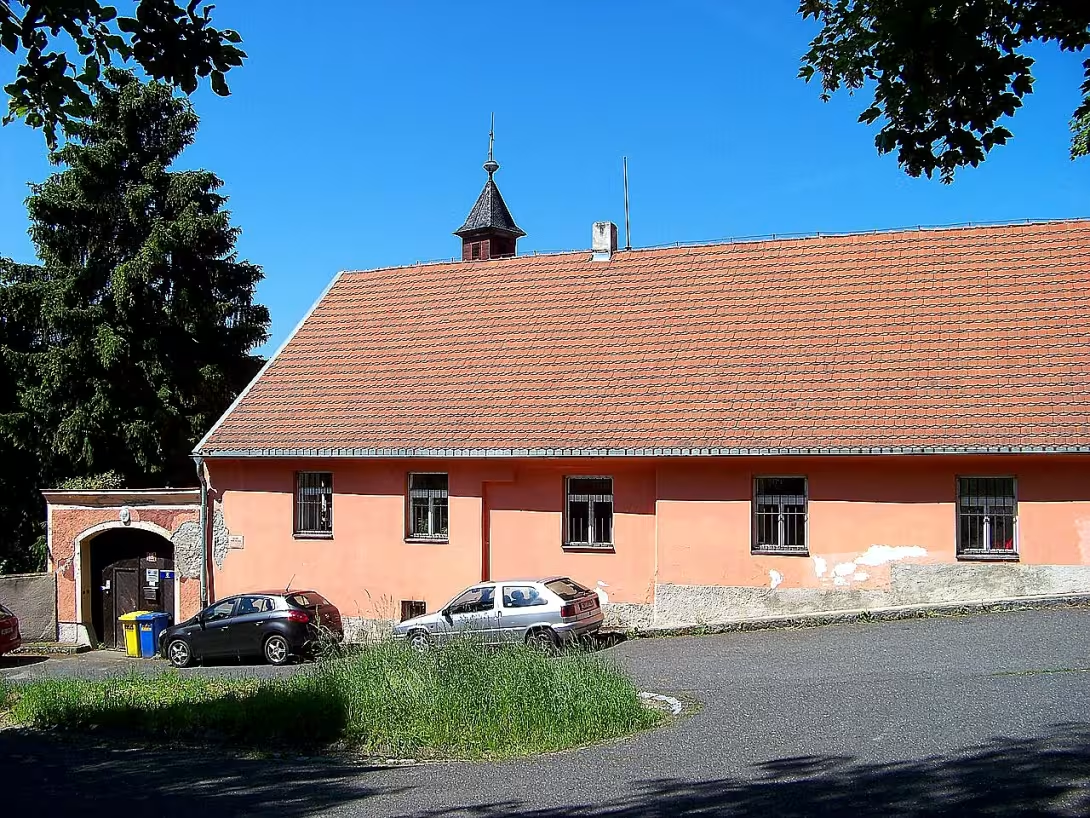
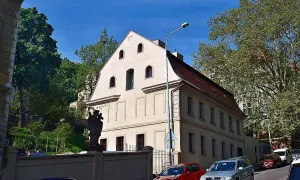
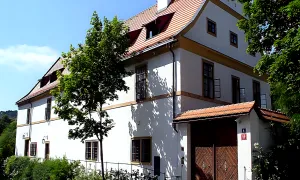
Horní Palata is a former vineyard estate at U Nessypka 110 / 28 on Smíchov in Prague 5. Its foundations go back to the Middle Ages and today it serves as a daily psychotherapeutic stationary. This monument-protected building consists of a storey residential building and economic buildings that surround an irregular courtyard. The whole estate is supplemented by a large garden enclosed by a massive wall.
Originally in these places in Smíchov there were four separate vineyards. It was the Chváterubská vineyard, the vineyard of Melichar Steynhart of Kynfeld, Mydlářka Jan Theodor Sixt of Ottendorf and Třebouškov vineyard. The beginnings of the unification of these lands and the subsequent development of the estate in the 17th century fall into the period of post-white mountain confiscation and the advent of Baroque culture in the Czech countries. The name Palata was derived for Myslářka according to the Sixt House in Podskalí. In 1624 all these vineyards were purchased by Jakub Baševi z Treuenburka and unified under the common name Palata. In 1638, its heirs sold this territory to the New Town Jesuits from St. Ignatius.
The building design of the building has been through several stages over the centuries. The original wine house from the Middle Ages was rebuilt in the Baroque style around 1725, at the peak of Baroque construction in Bohemia. The Jesuits have magnified the estate. They built the press as well as the economic buildings and set up summer rooms on the floor of the residential area. At the end of the 19th century, the house was rebuilt for a second time. In the ground floor of the residential building, some of the old vaults and Renaissance walls were preserved. The living building itself is storey and covered by a saddle roof with a prism tower. Her facade carries a horizontal division of the ledge. The complex is complemented by a massive wall enclosing a large garden, in which a large entrance gate was preserved on the east side.
The list of owners and managers of the estate reflects historical changes in the property situation in this area. After the mentioned Renaissance and early baroque owners of Melichar Steynhart of Kynfeld, Jan Theodor Sixt of Ottendorf and Jakub Bashevi of Treuenburk held the vineyard since 1638. They operated economically here until the abolition of their order in 1773. Then the estate found itself in private hands. In 1889 the Czech Savings Bank bought the Upper Palatu on Smíchov. In modern history, the buildings and associated land became the property of the Czech Republic. The right to manage them is for the General University Hospital.
The key events in the history of the building are the year 1624, when Jakub Baševi z Treuenburka united the vineyards under the name Palata, and the year 1638 when the Jesuits acquired them. The year 1725 was also an important milestone connected to the Baroque reconstruction and the year 1889, when the estate was bought by the Czech Savings Bank. In the next two years, it built a Neo-Renaissance building on the grounds under the estate of Francisco-Josephine. The Institute was intended for adults with a blind incapacitated education and livelihood, while its headquarters was located in an older estate building. At the turn of the 18th and 19th centuries, the estate was divided into the upper part and lower part called Malá Palata. Small Palata's residential building was demolished in December 2016. Before World War II, the northern lands were partied for communication. Since the 1970s, there are family houses.
Currently, the Upper Palata complex serves as a daily psychotherapeutic stationary. Its buildings were renovated in the 1960s. The buildings and land are located in a residential area in U Nesypka Street in the immediate vicinity of the land of the former blind and modern residential buildings.
This historic vineyard estate represents a valuable demonstration of the transformation of Prague's economic and residential buildings from the Middle Ages to the Baroque. Visiting this Smíchov location offers an extraordinary view of the layered history of Prague suburb. It will bring valuable knowledge to any interested in architecture and ancient monuments.
Historical milestones
- 1624
- Jakub Baševi z Treuenburka bought vineyards and united them under the name Palata.
- 1638
- The heir was sold to a vineyard to the New Town Jesuits by St. Ignatius.
- 1725
- The wine house was rebuilt baroque.
- 1889
- The estate was purchased by the Czech Savings Bank on Smíchov.
Architectural development
The original wine house from the Middle Ages was rebuilt baroque around 1725 under the influence of Jesuits, who added the press and economic buildings. At the end of the 19th century, the house underwent a second reconstruction. In the ground floor, the old vaults and Renaissance masonry were partially preserved, while the facade bears horizontal division of the mantelpiece.
Historical events
In 1624 he bought the vineyards Jakub Baševi z Treuenburka and unified them under the name Palata. In 1638, the New Town Jesuits acquired the vineyard, which ran it until 1773. In 1889 the estate was bought by the Czech savings bank, which built a blind house on its land.
Owners
Melichar Steynhart from Kynfeld, Jan Theodor Sixt z Ottendorfu, Jakub Baševi z Treuenburka (since 1624), New Town Jesuits from St. Ignatius (1638-1773), private owners, Czech savings bank on Smíchov (since 1889), Czech Republic
Points of interest
The foundation of the estate dates back to the Middle Ages and today serves as a daily psychotherapeutic stationary. - The name Palata was derived for the former Myslářka by house in Podskalí. - In 1624 he bought four separate vineyards Jakub Baševi z Treuenburka and united them under the common name Palata. - The original wine house was rebuilt in the Baroque style around 1725 and the second reconstruction of the house took place at the end of the nineteenth century. - Česká spořitelna bought the estate in 1889 and built a Neo-Renaissance building under it for the blind.
Guide
Show guide text
This text was created by artificial intelligence and has not been editorially reviewed. It may contain inaccuracies.
Welcome to the historical part of Smíchova. You are standing in front of just one of the most interesting monuments of this place called Horní Palata. Before we take a deeper look at her past, let me first invite you to take a good look at her. In front of your eyes is a storey residential building, which with its presence brings to today's urban development a sense of peace and stability. Notice the characteristic saddle roof and the tiny, prismatic turret that rises above the roof and gives the whole whole thing a noble touch. This whole area is not just one house, but it forms a complex. There are also economic buildings around the irregular court that used to operate the whole estate. If you raise your sight even higher, you can see how this building floats over the surrounding area, as if it still holds its original role as guardian of vineyards.
Now let's move further into time together to understand why this place looks just like this and how history formed here. To understand the essence of Upper Palata, we must return to the first half of the seventeenth century. There was no unified area at the time, as you see it today. Instead, there were several separate vineyards scattered in this part of Smíchova. But everything fundamentally changed in 16-24. That's when a man named Jakub Baševi z Treuenburka came in. This man had great imagination and ambition. He bought four of these separate vineyards and decided to unite them under one common name. He's the one who created Palata. However, this name is not random. It is derived from the former designation Myslářka, which was the name for the house in Podskalí, and thus the name was transferred here.
Now pay close attention to how the fate of this place changed in the years to come. After James Bashevi came a time of spiritual influence. In 16,000, the heirs decided to sell the vineyard to the New Town Jesuits from St. Ignatius. This meant that the estate became part of a wider religious and educational world. Over time, the building continued to change and expand. If you look at her present appearance, you need to know that in the year seven-twenty-five, this vineyard house went through a significant redevelopment. It was adapted to the Baroque style at the time, which probably gave the building the elegance and balance that you can perceive today. This era brought a new dimension to the building and made it a place that seemed much more noble than a simple farmhouse.
In the next centuries, the roles of the owners changed again. In the year one thousand eight hundred and eighty-nine the estate was bought by the Czech savings bank on Smíchov. This is a fascinating transition from farming and a religious monastery to the modern world of finance and banking. This change shows how Smíchov gradually changed from the vineyard area in a densely populated and economically significant part of Prague. Even though wine is no longer produced, the spirit of the old vineyards is still felt in how this area is organized.
Now I want to invite you to take another look at the details surrounding you. Notice the massive wall that borders the big garden. This wall is not just an ordinary interface, but a powerful element that defines the privacy and peace of this place. Notice also the large entrance gate that leads you to this space. The whole complex, with its irregular courtyard and the spacing of buildings, creates an atmosphere that is rare in today's city. Although we do not know the names of the particular architects who designed these buildings, their work is evident in every detail - from the shape of the roof to the way the main residential building is surrounded by economic buildings.
If you want to look for any deeper secrets or unexpected information in history, I have to tell you one thing. Although this building may seem to you as a relatively young building from the eighteenth or nineteenth century, its roots go much deeper. The foundations of this estate go back to the Middle Ages. That means there's a history much older than what you see on the surface under your feet. This building is in a place where people have lived and worked for centuries.
It's also very interesting how this place transformed in modern times. The place where people used to grow grapes and where bankers later moved, now serves a completely different purpose. The entire area is now a daily psychotherapeutic stationary. It is a fascinating contrast - a place that was once full of work on a vineyard or busy banking operation, is now a place that serves to treat, calm and inner understanding of man. This change from the outside invisible but deeply affecting the character of the site is one of the biggest stories Horní Palata tells.
In your next look at the building, try to imagine all the people who were here. Imagine James Bashevi planning to unite his vineyards. Imagine the Jesuits doing their duty in these areas. Imagine a bank employee in the late century walking through that door. Each of these era has left its mark in this place, although it may not appear at first sight.
I hope you are interested in this brief insight into the past and that it has helped you better understand what you are seeing in front of you. Horní Palata is not just a building, it is a living chronicler Smíchova. Please continue your walk and pay attention to other details in the area. Maybe the next time you look at that massive wall or that turret, you'll see something you missed in this recording. Thank you for your time and I wish you a pleasant continuation in discovering the beauty of this city. Goodbye.
Tips for visitors
The best time to visit Upper Palata is early afternoon during the spring and autumn months, when the light is soft and the surrounding green is blooming, which creates a pleasant atmosphere for walking on vineyards.
Parking is possible in a nearby residential area; we recommend using public transport and replenishing the journey on foot to maintain the quiet space.
Take comfortable shoes, umbrella or raincoat and a bottle of water; If you're planning a photo shoot, bring a tripod, because the best light is in the late afternoon when the sun shines at an angle.
Photography is most interesting for old wine buildings and sightseeing points overlooking the city; here you can capture both historical walls and modern residential buildings in the background.
For families with children it is advisable to plan a short walk around the area, where you can visit the former blind house and a new residential building, both places are within 30 minutes' walk and offer an interesting environment for small explorers.
Businesses nearby
Do you run a restaurant, accommodation, shop, museum, rental, wellness or other visitor service near this monument? Show yourself directly to the people heading to it — this is how they will see you in the app and on the web:
Events nearby

Zdroj akcí: otevřená data měst a obcí ČR (Národní katalog otevřených dat) a kalendář akcí Národního památkového ústavu.
Nearby
Usedlost se nachází v rezidenční čtvrti na Smíchově v Praze v ulici U Nesypky. V nejbližším okolí se nacházejí pozemky bývalého ústavu slepců a novodobá vilová zástavba.
Accommodation nearby
Trips and activities nearby
Guided tours, tickets and activities nearby from GetYourGuide
Affiliate link: if you buy from the partner, we may receive a commission. The price for you does not change.
Search tours and activities →Themed route
I propose a cruise route around the settlement Horní Palata on the Prague Smíchov.
1.Horní Palata Type: Residence Why is it worth a visit: This historic monument is located in a quiet residential neighborhood in U Nessypka Street and forms the main destination of our putowania. It offers a view of the old architecture in the pleasant surroundings of Prague Smíchova.
2. Land of the former blind Type: Historical land Why is it worth a visit: In the vicinity of the estate, these historical areas are spread out, reminiscent of the former social purpose of this place. Walk around them offers an interesting insight into the past of the entire location.
3. Modern residential building Type: Living area Why is it worth a visit: Modern houses and villas in the immediate surroundings form an interesting building contrast to the historical core of the estate. They show how this part of Smíchova gradually changed over time.
Seasonal recommendations
Spring on Smíchov brings the surrounding nature to a new life, which gives this place a unique charm. The trees in the surrounding gardens begin to bloom and the morning sun pleasantly illuminates the historical walls of the building. The atmosphere is calm, as the main wave of visitors is yet to come. During this period, you will appreciate fixed shoes on wet trails on the tights and lighter windbreaker, because spring weather is usually variable. The best time for a quiet walk without crowds is in the morning when the fog rises over the valley of the Vltava.
Summer brings lush greenery full of leaves that provide a pleasant shade on hot days. Sunlight is the most intense around noon, creating sharp shadows and interesting lighting conditions for shooting details of the building. Due to the main tourist season, you will meet the most people here, so you must count on more curiosity. As a practical advice, I suggest you get up and arrive right after the morning opening to escape the noon heat, and don't forget to wear a headgear and a bottle of drinking water.
Autumn turns the surrounding slopes into a colorful palette of shades of yellow, orange and red. The low sun creates long shadows and soft, golden light, which gives the whole arrangement a melancholy and romantic mood. In colder days the wind blows from the river, so it is necessary to wear a warm sweater, scarf and waterproof jacket. The number of tourists falls significantly, allowing uninterrupted contemplation and discovery of details in the afternoon before it gets dark quickly.
Winter covers the entire area in silence, which sometimes only breaks the snow's crunch under its feet if it attacks snow. Early dimming and early morning shadow lend the place a mysterious character that underlines the good building condition of the monument. As temperatures fall far below freezing, it is necessary to wear a winter coat, hat, gloves and warm shoes with anti-slip soles. The best time to visit is around noon, when it is the hottest outside and daylight allows safe movement in the snowy terrain.
Visualizations and artistic views


The visualisations are generated by artificial intelligence and serve as inspiration.
Photos from the area
Real photos taken near the monument


Zdroj a licence jsou uvedeny u každého snímku.
Tips from visitors
No tips yet. Be the first!
Log in and add your tip.
Sources and literature
Photos: ŠJů (cs:ŠJů) / CC BY-SA 3.0 — Wikimedia Commons. The author and licence also appear when you hover over the image.
Faktickým podkladem tohoto textu byl článek na Wikipedii, jehož autory jsou přispěvatelé Wikipedie. Článek je dostupný pod licencí CC BY-SA 4.0.
Location on the map
Příběhy a pověsti
Legendy, pověsti a příběhy spjaté s touto památkou

Fotografie návštěvníků
Zatím žádné fotografie. Buďte první, kdo přidá fotografii z návštěvy!
Log in a přidejte svou fotografii nebo hodnoťte.
Za ověřenou návštěvu v aplikaci získáte víc bodů — poznáme podle GPS, že jste na místě.
Reviews and comments