



hrad Sobín Castle
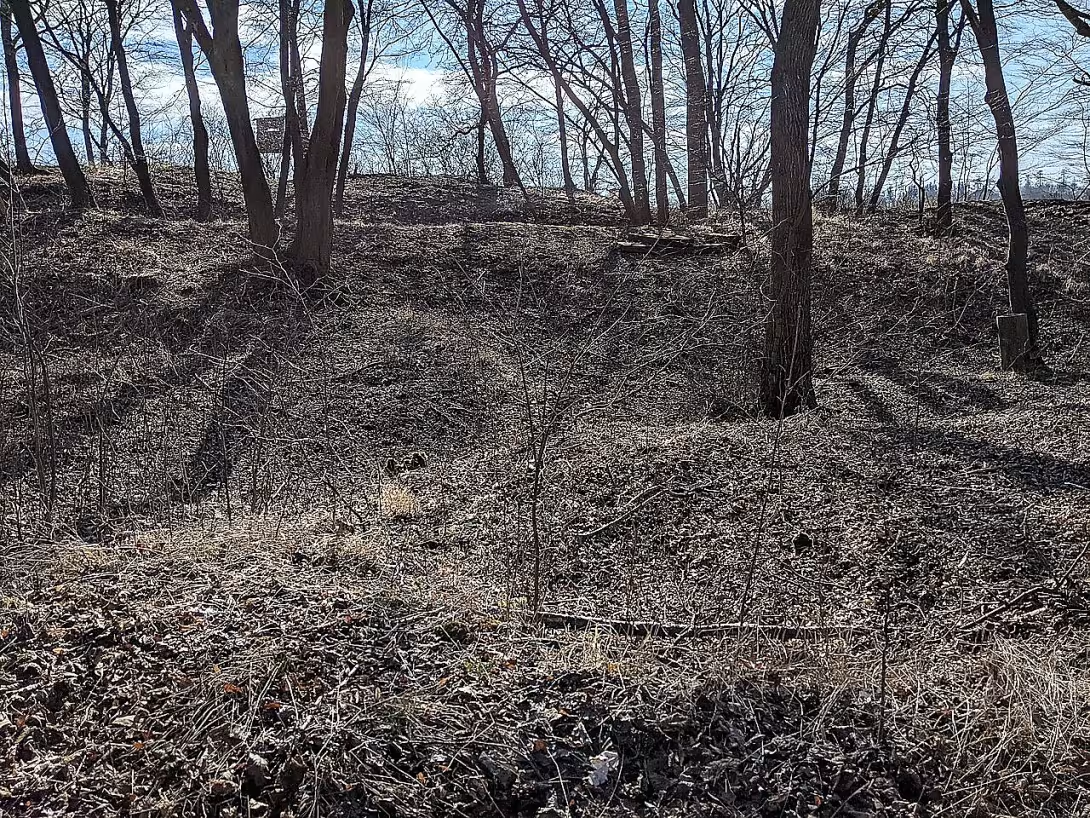
Sobén, also known as the Old Castle near Rynčka or Sovín, is a extinct castle on a wooded slope at an altitude of 470 metres. Located in the district of Rakovník between Rynholc, Rynholec Court and Lány, on an important journey from Rakovníka to Prague. Since 1965, it has been protected as a cultural monument.
The time of creation of the castle remains uncertain. Older historical sources attribute it to the 13th century, but no written reports linking the castle to this period have been preserved. Archeologically, the existence of the castle is only documented in the 15th century. The creation can be linked to the settlement of Křivoclátsko by emphyteutic settlements in the 14th century, although it creates a contradiction with archaeological findings. Other possibilities are built during Hussite wars, during the war of Vladislav Jagellonský with Hungary around 1478, or the function of the guard building near the Erfurta trail in the section Tuchlovice-Rynholec.
The building design of the castle was detailed by Ferdinand Velc in the list of monuments of the Slanský district. In the 1980s, the complex was surface-examined and targeted. The castle had a rectangular plan, probably enclosed by a moat - it was completely lost in the west. There was a wall outside the ditch. Within the fortified area, only the terrain remains of three buildings built without mortar. Two buildings stood in the southwest and northeast of Nарoji, third free. The site was damaged by younger quarry.
He was known under the original name of Sovín, and rich legends surround him. Local traditions tell of underground corridors - one led to the village of Seběnek, another to the neighbouring Holubin fortress. The corridor was probably partially passable to the staircase falling under the castle, but it was also dangerously damaged. It is said that the fort served the witches and contained a valuable library, from which the Stochov church had a gift - a millennium valued at 200 kicks of grossly. The locals also talk about treasures in buried cellars. Another legend speaks of the daughters of the Tuchlovický flag, married to a cruel knight from Sobén and a gentle one from Holubín. In their feud, they both killed each other in a duel, and they were supposedly dropped off two lipes, which tradition still resembles.
Only terrain remains and walls are visible today. But the place has kept its atmosphere on a wooded slope and attracts those who seek in the landscape traces of the forgotten Middle Ages and legends that have grown around them for ages.
Then and now
Drag the slider to compare how the landmark may have looked when it was built with the view today.
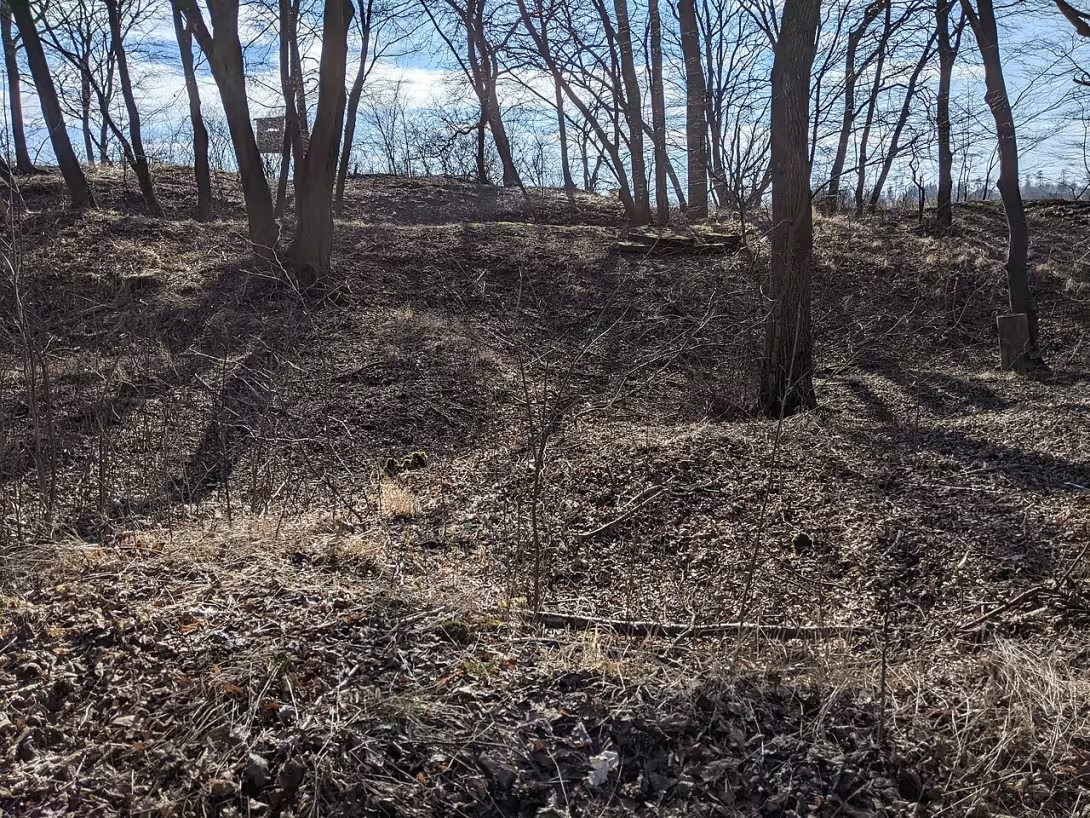

The historical appearance on the left is an AI-generated visualisation and serves as inspiration only.
Historical milestones
- 1965
- The castle was declared a cultural monument.
Architectural development
The castle had a rectangular plan and was bounded by a moat with a wall. Inside were three buildings built without the use of mortar. The site was damaged by quarry at a later time.
Historical events
- 1965
- The castle was declared a cultural monument.
- 15th Century
- Archeological evidence of the existence of the castle.
Points of interest
- Sobán is a extinct castle located on a wooded slope at an altitude of 470 metres. - He's been protected as a cultural monument since 1965. - The existence of the castle is only archaeologically documented in the 15th century, although older sources attribute it to the 13th century. - Ferdinand Velc detailed the building design of the castle in the list of monuments of the Slanský district. - Local traditions tell us about underground corridors that led to the neighboring Holubin fort and the Vashiro village of Sebánek.
Guide
This guide is narrated by a synthetic voice generated by artificial intelligence.
Show guide text
This text was created by artificial intelligence and has not been editorially reviewed. It may contain inaccuracies.
The ruined castle of Sobín, also called the Old Manor near Rynholec or Sovín, lies on the edge of a forested slope at an elevation of 470 meters. It is located in the Rakovnicko region between Rynholec, Rynholecký Dvůr and Lány, above an important road from Rakovník to Prague. Since 1965 it has been protected as a cultural monument.
We know little about its origins. Older sources date the castle's foundation to the thirteenth century. However, no written records have survived that could be reliably connected to it. The castle is only archaeologically documented from the fifteenth century. The castle may have been related to the settlement of the Křivoklátsko region in the fourteenth century, but archaeological findings do not support this. It could also have been built as a strongpoint during the Hussite Wars. Another possibility is the wars of Vladislav Jagiello with Hungary, when Hungarian forces won near Plzeň around 1478. Another hypothesis sees it as a guard post on the Erfurt Road in the section between Tuchlovice and Rynholec.
Ferdinand Velc drew the castle's appearance in detail in his survey of monuments of Slaný district. In the 1980s the site was surveyed by surface examination and geodetically measured. The castle grounds, damaged by more recent quarries, had a rectangular floor plan. It was probably surrounded by a ditch, which completely disappeared on the western side, and there was an embankment in front of it. Inside, only terrain remains of three buildings built without mortar were preserved. Two stood in the southwestern and northeastern corners, the third stood freely.
The local legends are far richer. According to them, the fortress was originally called Sovín and on the opposite hill above Stochovský Dvůr stood the fortress of Holubín. From Sobín a supposedly underground passage led to Vašírov to a fortification called Sobínek and another all the way to Holubín. Local residents told that the passage was partially passable as far as a staircase, which descended steeply down the slope beneath the castle. Further on it was dangerously dilapidated.
According to a legend recorded by both Heber and August Sedláček, sorcerers with a great library lived here. From it supposedly came a precious missal donated to the church in Stochov and valued at 200 kopeks of groschen. Country people from the surroundings also told each other about hoards of treasure in filled-in cellars.
The legend of Two Lindens tells of two daughters of a nobleman from Tuchlovice. One married a cruel knight from Sobín, the other a kind knight from Holubín. After one quarrel both knights killed each other in combat. Two small lime trees were planted at the site of the combat and they stand there to this day.
Tips for visitors
The best time to visit Soběn Castle is in the summer months, especially in summer and autumn. These periods offer ideal weather for exploring the lost castle, when the forests are the most beautiful and the light is suitable for photography. Moreover, in these months, the area is less temperature-intensive.
For precise connections and times we recommend using online route search engines. Transport to the castle is more suitable by car as local roads are not all accessible for public transport.
When you visit, you better bring your shoes for grass and a suitable suit because the terrain is stony and can be cold in the winter months. Also remember the sun's protective equipment and enough drinking, especially during the summer.
The best place for photography is in the castle itself, where you can enjoy a panoramic view of the surrounding forests and the valley. The best way to avoid weather with direct sunlight, which can cause strong shadows; instead, try shooting in the early morning or evening.
In the vicinity of Sobén Castle visit the RynholecKý courtyard where you can explore historical buildings and enjoy a quiet moment. Stochov Court is another interesting area nearby that offers beautiful green spaces. It is also suitable for families with children to visit the village of Vashírov where children can play in the open space.
Frequently asked questions
Can the monument be visited?
This is a ruin. Such sites are often freely accessible, but some can only be visited with a guide or are closed for safety reasons. We have not verified the current situation – take care and respect any restrictions.
Where is the monument?
Location: Rynholec, Středočeský kraj. The map on this page shows the exact spot.
Why is the monument protected?
It is listed in the Central List of Cultural Monuments of the Czech Republic as a cultural monument (register no. 37773/2-2778).
For kids
Imagine going back to the past and standing on a vast plot of secrets and adventure. Where the forest slopes are now thawed, he used to turn off his face hrad Sobín, also called the Old Castle at Rynčka or Sovín. This extinct castle on the top of 470 meters above sea level was like a magical world from witch stories, from where it was seen far to far from Prague. And best of all, secrets could be hidden everywhere!
Businesses nearby
Do you run a restaurant, accommodation, shop, museum, rental, wellness or other visitor service near this monument? Show yourself directly to the people heading to it — this is how they will see you in the app and on the web:
Events nearby
Zdroj akcí: otevřená data měst a obcí ČR (Národní katalog otevřených dat) a kalendář akcí Národního památkového ústavu.
Nearby
The municipalities of Rynholec and Lány, the municipalities of RynholecKý dvěr, Stochov courtyard and the municipality of Vasírov.
Accommodation nearby
Themed route
Thematic cruise route around the castle Sobén
1. Castle Sobén - Type: Castle - Why is it worth a visit: Sobén Castle is one of the oldest forts in the Czech Republic, built in the 10th century. Its historic walls and original buildings offer visitors a unique view of the past.
2. Rynholec Court - Type: Court - Why it is worth a visit: RynholecKý court is a beautiful representation of rural architecture and history. Its strength characteristics and location in a picturesque environment attract visitors who are interested in regional heritage.
3. Municipality of Lána - Type: Village - Why is it worth a visit: Lány is famous for its beautiful garden park and historical building, which was once the seat of famous personalities. Visiting this village offers a view of the rich culture and natural beauty of the surroundings.
4. Stochov Court - Type: Court - Why is it worth a visit: Stochov Court is an important historical monument with a rich architectural history. Its strength elements and location in the picturesque landscape attract visitors who want to explore the regional heritage.
5. Municipality of Vashírov - Type: Village - Why it is worth a visit: Vasírov is a small but characteristic village that offers a peaceful and authentic view of rural life. It is an ideal place for those who want to relax and enjoy the natural beauty of the surrounding forests.
This route offers visitors the opportunity to immerse themselves in the history and culture of the region around Sobén Castle, while exploring the diverse architectural monuments and natural beauty of surrounding villages.
Seasonal recommendations
Spring brings awakening nature and fresh greenery, which slowly covers the remains of castle walls. The atmosphere is full of hope and fine spring light that highlights the details of the ruins. We recommend moisture-resistant shoes because the terrain around the monument can be muddy after melting snow. An ideal visit in the morning is when the air is the cleanest.
The summer season offers a thick shade of foliage and intense colors surrounding the countryside. The sun hits the stones of the castle with full force, creating sharp contrasts and dynamic shadows. It is advisable to come first thing in the morning to avoid the biggest groups of visitors and heat. Don't forget light clothes and plenty of fluids.
Autumn is the most atmospheric for this ruin thanks to colorful leaves and frequent fog, which gives the place a mystery. Soft evening light is ideal for capturing melancholy beauty of a broken castle. It is practical to dress in several layers so that you do not freeze during a sudden chill. The best time for a walk is late afternoon.
In winter, silence and cold calm rule the monument, with snow often covering the contours of the castle foundations. The landscape acts in a dense and clean way, allowing you to perceive the very geometry of the ruins. It is necessary to have warm and waterproof clothing and fixed footwear with anti-slip sole. Due to the short day we recommend planning the trip by noon.
Visualizations and artistic views


The visualisations are generated by artificial intelligence and serve as inspiration.
Photos from the area
Real photos taken near the monument


Zdroj a licence jsou uvedeny u každého snímku.
Tips from visitors
No tips yet. Be the first!
Log in and add your tip.
Sources and literature
Photos: MartinVeselka / CC BY-SA 4.0 — Wikimedia Commons. The author and licence also appear when you hover over the image.
Faktickým podkladem tohoto textu byl článek na Wikipedii, jehož autory jsou přispěvatelé Wikipedie. Článek je dostupný pod licencí CC BY-SA 4.0.
Location on the map





Příběhy a pověsti
Legendy, pověsti a příběhy spjaté s touto památkou
Fotografie návštěvníků
Zatím žádné fotografie. Buďte první, kdo přidá fotografii z návštěvy!
Log in a přidejte svou fotografii nebo hodnoťte.
Za ověřenou návštěvu v aplikaci získáte víc bodů — poznáme podle GPS, že jste na místě.
Reviews and comments