






Hrobka Lichtenštejnů ve Vranově Tomb
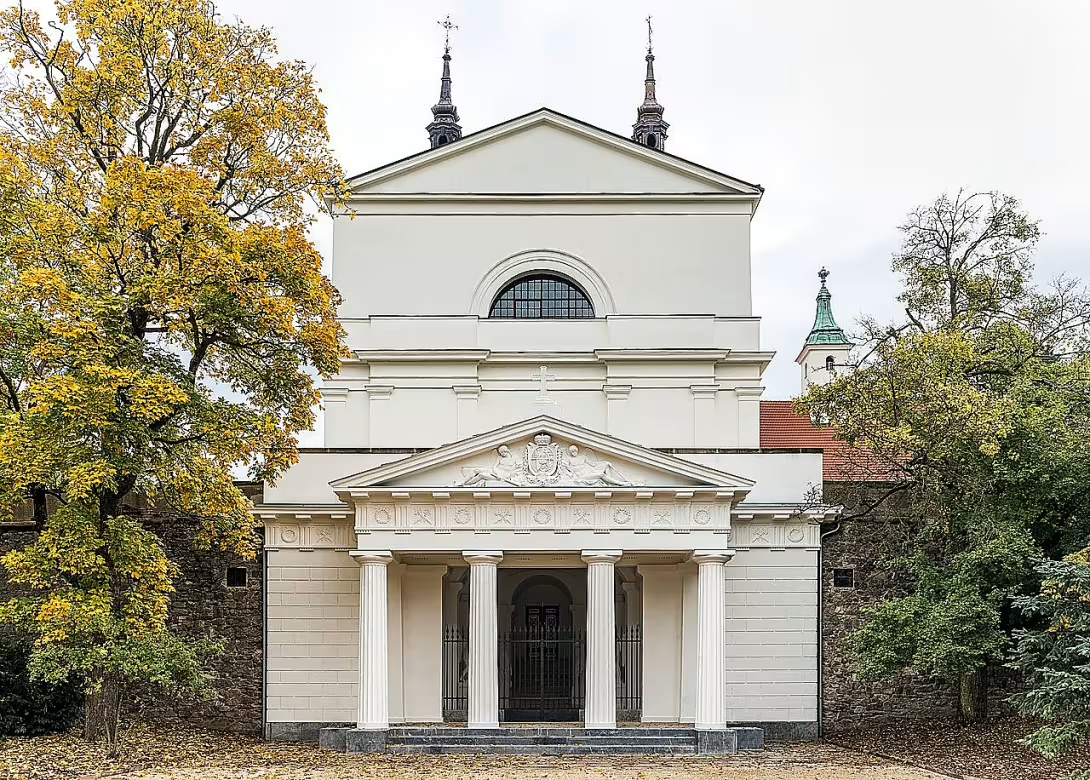
The Lichtenstein family crypt in Vranov is a remarkable cultural monument located within the Church of the Nativity of the Virgin Mary, part of the Pauline convent 'Aula Virginis'. It holds unique significance as Europe's only burial ground for rulers of one state situated on foreign territory. Since its establishment, it has been an important Marian pilgrimage destination in Moravia and houses all 14 reigning princes of Liechtenstein, along with other family members.
The monument dates back to 1617 when Maxmilián z Lichtenštejna and his wife Kateřina Černohorská z Boskovic founded the pilgrimage church. The initial construction was influenced by miraculous healings reported among pilgrims, leading to one of Moravia's first Baroque buildings. Italian architect Giovanni Maria Filippi designed it, while Ondřej Erna executed the construction. Over time, the crypt expanded to accommodate more burials, notably between 1818 and 1821 under Prince Jan I. z Lichtenštejna, who commissioned a new section with an advanced drainage system by Josef František Engel.
Architecturally, the church is one of Moravia's earliest Baroque structures. The crypt features sophisticated elements such as a Doric portal and a grand tympanum adorned with the Lichtenstein coat of arms, flanked by two angels holding extinguished torches, symbolizing the end of earthly life. Inside, the burial chapel is supported by four pairs of Doric columns and includes benches and an iron grille-enclosed altar.
Ownership of the crypt changed dramatically in 1945 when it was confiscated. Despite this, reigning Prince Hans Adam II of Liechtenstein has maintained its upkeep since then, investing over 54 million korun for restoration between 2012 and 2015. This effort included installing heating to preserve the necessary climate within the crypt, which is not accessible to the public due to preservation concerns.
Today, the Lichtenstein family crypt stands as a testament to both architectural ingenuity and historical significance. While it remains closed to visitors, its restoration has ensured that this unique site continues to be preserved for future generations. The crypt's rich history and cultural importance make it an intriguing destination for those interested in European nobility and Baroque architecture.
Then and now
Drag the slider to compare how the landmark may have looked when it was built with the view today.
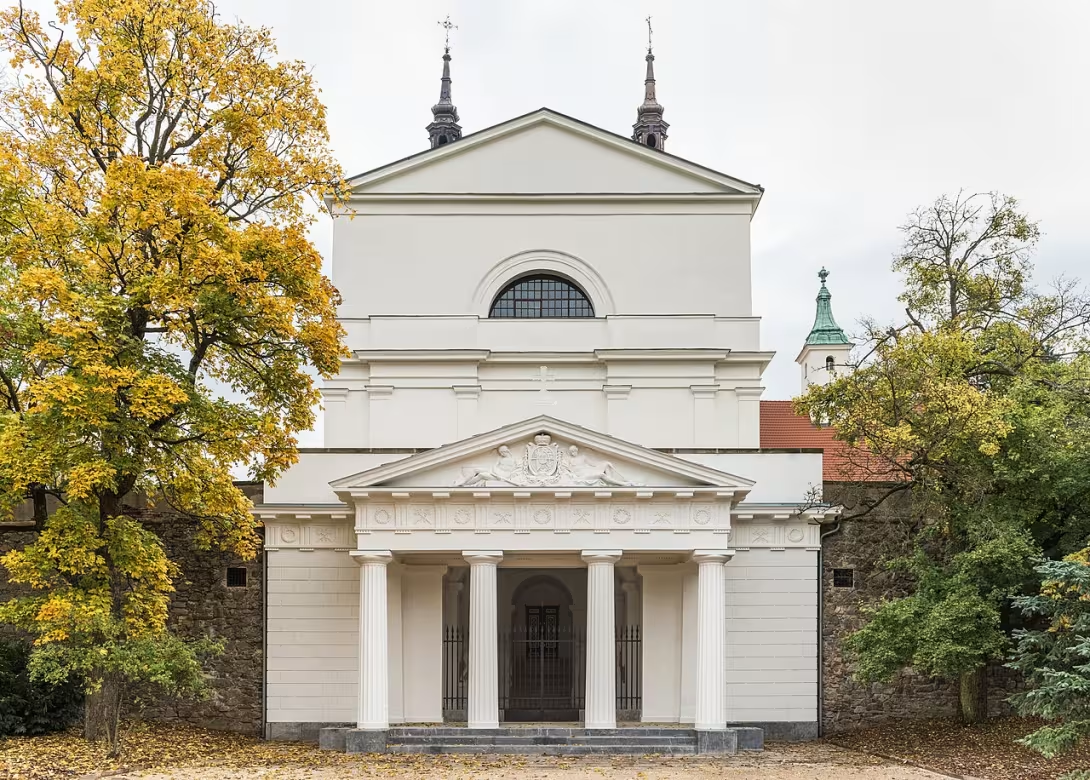

The historical appearance on the left is an AI-generated visualisation and serves as inspiration only.
Historical milestones
- 1617
- Foundation of the pilgrimage church and initial construction of the crypt.
- 1818
- Expansion of the family crypt during Prince Jan I.'s reign.
- 2015
Architectural development
Initially designed by Italian architect Giovanni Maria Filippi and constructed by Ondřej Erna, the church is one of the first Baroque buildings on Moravia. The crypt underwent expansion in 1818-1821 to accommodate more burials, featuring a sophisticated drainage system designed by Josef František Engel.
Historical events
The church and crypt were founded in 1617 by Maxmilián z Lichtenštejna and his wife Kateřina Černohorská z Boskovic.
In 1818-1821, a new section of the family crypt was constructed during the reign of Prince Jan I. z Lichtenštejna.
The last burial in the crypt took place in 1992 for Princess Marie Benedikta z Lichtenštejna.
Owners
Originally owned by the Lichtenstein family until it was confiscated in 1945, the crypt is now maintained by the reigning Prince Hans Adam II of Liechtenstein.
Points of interest
- The Lichtenstein family crypt in Vranov is Europe's only burial ground for rulers of one state situated on foreign territory. - It was established in 1617 by Maxmilián z Lichtenštejna and his wife Kateřina Černohorská z Boskovic, marking it as one of Moravia's first Baroque buildings. - The crypt features a Doric portal with the Lichtenstein coat of arms flanked by two angels holding extinguished torches, symbolizing the end of earthly life. - Between 1818 and 1821, Prince Jan I. z Lichtenštejna expanded the crypt, commissioning a new section with an advanced drainage system designed by Josef František Engel. - Reigning Prince Hans Adam II of Liechtenstein has maintained its upkeep since 1945, investing over 54 million korun for restoration between 2012 and 2015.
Guide
This guide is narrated by a synthetic voice generated by artificial intelligence.
Show guide text
This text was created by artificial intelligence and has not been editorially reviewed. It may contain inaccuracies.
The Liechtenstein mausoleum is located in the crypt of the Church of the Birth of the Virgin Mary in Vranov u Brna. The church belongs to the Pauline convent Aula Virginis and is a significant Marian pilgrimage site in Moravia. The mausoleum is the only European burial place of the rulers of one state that lies on the territory of another state. All fourteen reigning princes from Liechtenstein rest here, from Charles the First to Francis the First, as well as another forty-eight members of their immediate family.
The church was founded in sixteen seventeen by Maximilian of Liechtenstein and his wife Catherine of Černá Hora z Boskovic. The inspiration came from a series of miraculous healings of pilgrims. It was one of the first Baroque structures in Moravia. The Italian architect Giovanni Maria Filippi developed the design and the Brno builder Ondřej Erna carried out the construction. The crypt served as the family burial vault from the beginning. Also buried here is Maximilian's brother Charles the First, the first prince of Liechtenstein. However, the original crypt soon proved insufficient. At the burial of John Adam the First, the founder of the Liechtenstein Principality, it also became apparent that water was seeping into it.
The new part of the mausoleum was created between eighteen eighteen and eighteen twenty-one under Prince John the First, a field marshal from the time of the Napoleonic Wars. The project was developed by the prince's chief building inspector Josef František Engel. He had the foundations of the entire church deepened and built a drainage system and a network of ventilation ducts. The entrance portal with Doric columns bears a tympanum with the princely coat of arms. It is guarded by two seated angels with lowered extinguished torches, a sign of the end of earthly pilgrimage. In front of the staircase stands a sculptural group of Farewell and Reunion. The sculptural decoration was created by the Viennese sculptor Josef Klieber. Fourteen steps lead to an iron grille, beyond which opens a three-aisled burial chapel with cross vaults on Doric columns. Behind the altar lies the original mausoleum. In the side aisles are sarcophagi and coffins and the space is lit by six windows above the level of the square.
In nineteen forty-five the mausoleum was confiscated. Inappropriate concrete work around the church later damaged the ventilation and insulation. Moisture destroyed the masonry, the catafalques and the wooden coffins. Prince Hans Adam the Second therefore decided to have the mausoleum repaired at his family's expense, at a cost of more than fifty-four million crowns. The reconstruction took place between twenty twelve and twenty fifteen and heating was built into the columns. Due to the sensitive climate the mausoleum is not open to the public. The last burial here took place in nineteen ninety-two. At her own request Princess Marie Benedikta, the aunt of Prince Francis Joseph the Second, rests here.
Frequently asked questions
Can the monument be visited?
Cemeteries and graves are usually accessible; please respect the dignity of the place. We have not verified the opening hours of this cemetery.
Where is the monument?
Location: Vranov, Jihomoravský kraj. The map on this page shows the exact spot.
Why is the monument protected?
It is listed in the Central List of Cultural Monuments of the Czech Republic as a cultural monument (register no. 1000157314_0003). It is protected as part of a larger listed ensemble.
Businesses nearby
Do you run a restaurant, accommodation, shop, museum, rental, wellness or other visitor service near this monument? Show yourself directly to the people heading to it — this is how they will see you in the app and on the web:
Events nearby


Zdroj akcí: otevřená data měst a obcí ČR (Národní katalog otevřených dat) a kalendář akcí Národního památkového ústavu.
Nearby
Located near Brno, the area around Vranov features other cultural and natural attractions within a 5 km radius, including the Church of Our Lady of Sorrows in Sloup.
Accommodation nearby
Trips and activities nearby
Guided tours, tickets and activities nearby from GetYourGuide
Affiliate link: if you buy from the partner, we may receive a commission. The price for you does not change.
Search tours and activities →Themed route
Vranov Loop
1. Hrobka Lichtenštejnů ve Vranově (main attraction) The Lichtenštejn family mausoleum is a unique example of a family tomb and a must-see for history enthusiasts. The mausoleum is a striking example of neo-Renaissance architecture and offers a glimpse into the lives of the Lichtenštejn family.
2. Church of Our Lady of Sorrows in Sloup (5 km) This beautiful church is a short drive from Vranov and features stunning architecture and a peaceful atmosphere. The church is a great place to learn about the history and culture of the region.
3. Sloup village (0 km) The village of Sloup is a charming place to explore, with its picturesque streets and historic buildings. Visitors can get a feel for traditional Czech village life and enjoy the local cuisine.
Seasonal recommendations
Jaro
In the spring season, the Lichtenstein Mausoleum in Vranov is surrounded by blooming trees and flowers, creating a pleasant atmosphere. The specific lighting is soft and warm, providing an enjoyable environment for visiting. Practical tips: the best time to visit is in May or June when tourist crowds are smaller. We recommend bringing an umbrella and comfortable shoes for walking around the garden.
Summer
In the summer season, the Lichtenstein Mausoleum in Vranov is very popular with tourists, so it's a good idea to arrive early. The specific warmth and sunshine create a pleasant atmosphere for visiting. Practical tips: the best time to visit is in July or August when the weather is warmest. We recommend bringing sunglasses and comfortable shoes for walking around the garden.
Autumn
In the autumn season, the Lichtenstein Mausoleum in Vranov is surrounded by beautiful fall foliage colors. The specific lighting is soft and warm, creating a pleasant environment for visiting. Practical tips: the best time to visit is in September or October when tourist crowds are smaller. We recommend bringing an umbrella and comfortable shoes for walking around the garden.
Winter
In the winter season, the Lichtenstein Mausoleum in Vranov is closed, but visits may be possible on a limited basis. The specific quiet and calm create a pleasant atmosphere for visiting. We recommend bringing warm clothing and shoes for walking around the garden.
Visualizations and artistic views


The visualisations are generated by artificial intelligence and serve as inspiration.
Photos from the area
Real photos taken near the monument


Zdroj a licence jsou uvedeny u každého snímku.
Atmosphere of the place
This atmospheric visualisation of the place and period was generated by artificial intelligence. It is not real footage of the location.
Tips from visitors
No tips yet. Be the first!
Log in and add your tip.
Sources and literature
Photos: LPC / CC BY-SA 4.0 — Wikimedia Commons. The author and licence also appear when you hover over the image.
Faktickým podkladem tohoto textu byl článek na Wikipedii, jehož autory jsou přispěvatelé Wikipedie. Článek je dostupný pod licencí CC BY-SA 4.0.
Location on the map




Příběhy a pověsti
Legendy, pověsti a příběhy spjaté s touto památkou

Fotografie návštěvníků
Zatím žádné fotografie. Buďte první, kdo přidá fotografii z návštěvy!
Log in a přidejte svou fotografii nebo hodnoťte.
Za ověřenou návštěvu v aplikaci získáte víc bodů — poznáme podle GPS, že jste na místě.
Reviews and comments