



Humlův dům House
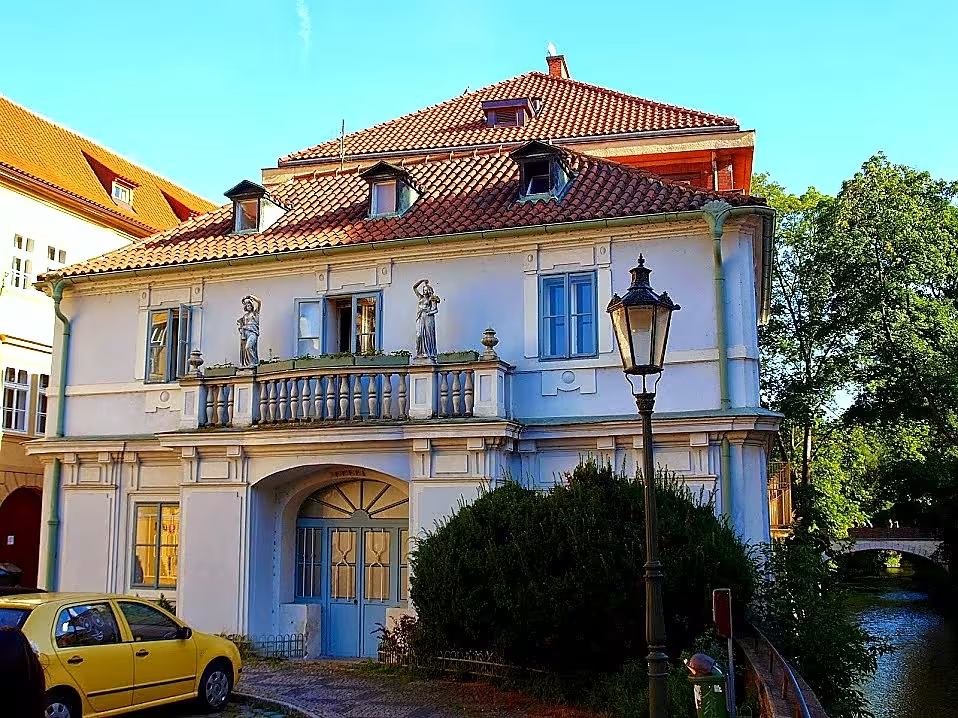
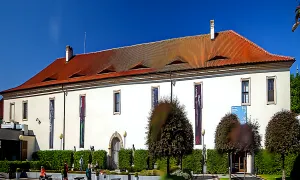
Humlův dům, also known as Trnka's house, is a late Baroque to Classicist building from 1769-1774. It is located on Kampa in the Prague part Malá Strana at the address Grape 500 / 1. The object is a remarkable architectural transition between two styles. In the past he was also the seat of important personalities in the field of culture and art.
The plot on which the house is today was originally an unbuilt area on the shore of the Devil. It was sold as a building plot in 1629, but the construction was delayed until the end of the 17th century. Until then, this area was connected to the next house with the number 490 / III.
In 1761, the Prague builder Matyah Hummel purchased the empty space. The exact start date of the construction is not known. However, it is assumed that the house was built in 1769-1774, since in 1774 it was already mentioned as Hummler's property. The existence of the building has certainly been documented since 1786 from the documents of Josef Jäger and Ignác Jan Nepomuk Palliardi.
From the point of view of architecture it is an object in late Baroque to classical style. This combination of elements reflects the period European trend of retreat from baroque pomp to more rational forms. This change was accompanied by an era of Habsburg absolutism in Czech countries.
Throughout history, other important people owned the house. In 1865 the object was modified for the needs of actor Pavel Švanda of Semčice. The name of the builder at the time cannot be determined with certainty, but it was probably František Václavík. Another fundamental change in ownership occurred in 1959 when the house was purchased by artist Jiří Trnka, who also had it modified.
Humlův dům stands in the immediate vicinity of many other Prague monuments. In its surroundings are the Buquoy Palace, the Little Buquoy Palace, the Grand Prior Palace, the Lennon Wall, the Metych Palace from Chečov and Stephen's Mill.
The building represents a typical construction of the historical core of the Small Party. In particular, the connection with the important creators of Czech culture gains its value. It's a place worth a visit to in the Campaign architecture survey.
Then and now
Drag the slider to compare how the landmark may have looked when it was built with the view today.
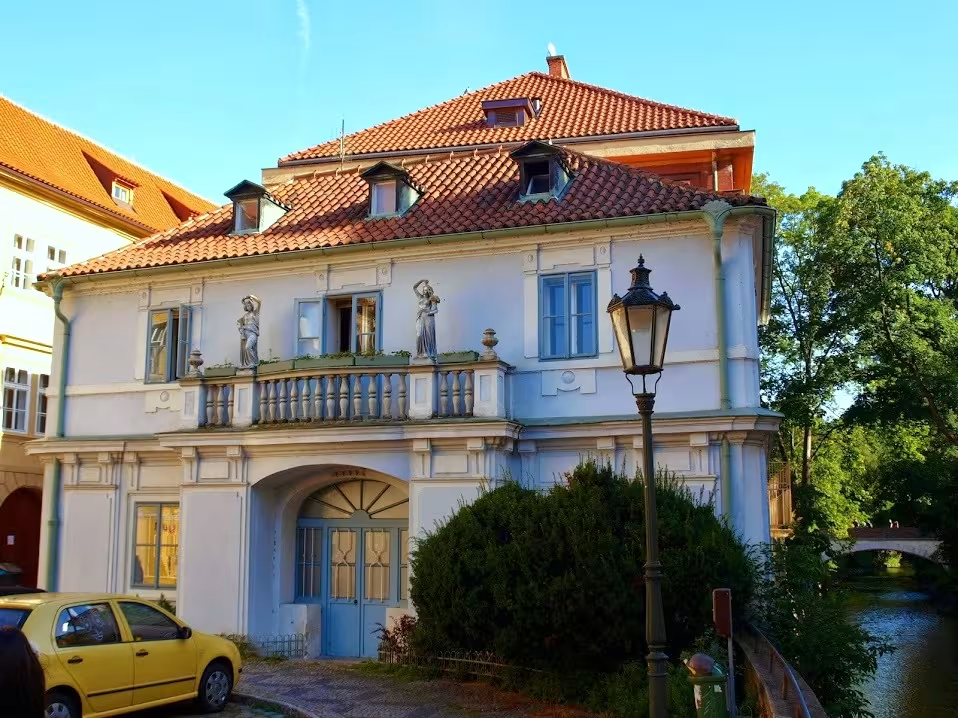
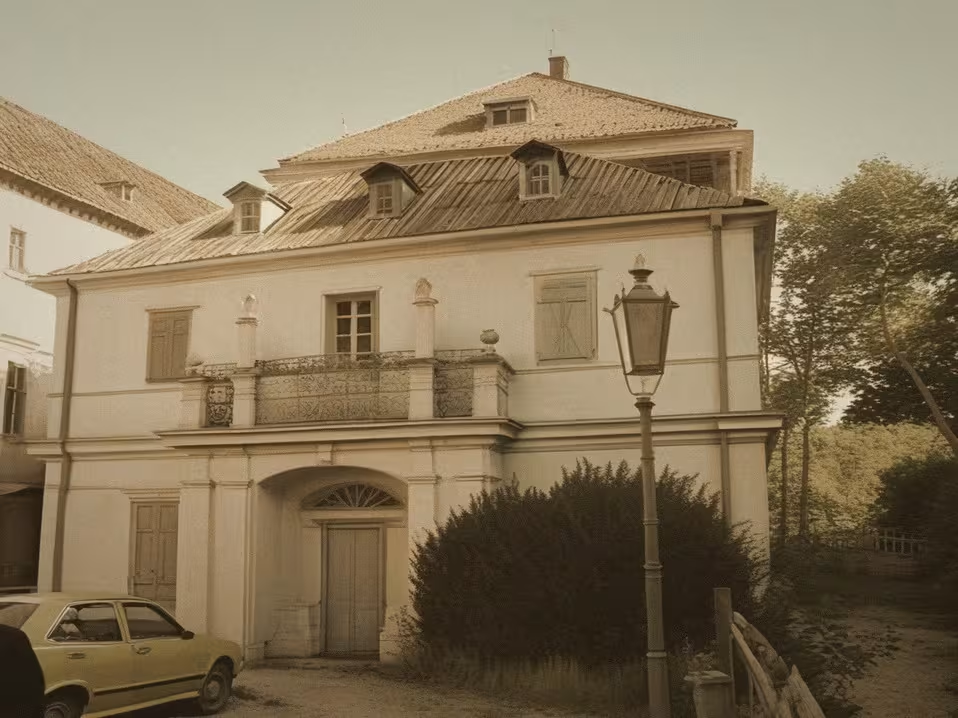
The historical appearance on the left is an AI-generated visualisation and serves as inspiration only.
Historical milestones
- 1629
- Selling the area as a building plot
- 1761
- Purchase of building site by builder Matyáš Hummel
- 1774
- First mention of the house as Hummla property
- 1865
- Adjustment of the house for the actors Pavel Švanda from Semčice
- 1959
- House sale by artist Jiří Trnou
Architectural development
The house was built in a late Baroque to classical style probably between 1769 and 1774. In 1865 he underwent an adjustment for the needs of actor Pavel Švanda of Semčice. Later, the house was further renovated in 1959 by the new owner Jiří Trnou.
Historical events
1761: purchase of the building plot by Matyas Hummel; 1959: purchase of house by artist Jiří Trnou.
Owners
Matyas Hummel (from 1761), Pavel Švanda ze Semčic (19th century), Jiří Trnka (from 1959)
Points of interest
- Construction from 1769-1774 is a remarkable architectural transition between late Baroque and classical style. - In the past, there were important cultural and art personalities. - In 1865 the house was adapted for the needs of actor Pavel Švanda of Semčice. - In 1959 he purchased the building and had it modified by artist Jiří Trnka. - The house is also known as Trnka's house.
Guide
Show guide text
This text was created by artificial intelligence and has not been editorially reviewed. It may contain inaccuracies.
Welcome to Kampa, one of the most poetic corners of Prague's Little Party. You're standing in front of a building called Humlův dům, although many of you may know it under the name of Trnka's house. Stop for a moment, take a breath and feel the atmosphere of this place where the silent flow of the Devil meets the history of the old town. In front of you, you see a structure that fits perfectly into the historical core of this neighborhood and tells the story of changes in time, style and people who have found their home here.
Now let's go back in time to understand how this house came into being. More than two styles ago, this parcel, a piece of land you're standing on, was unbuilt. In the year of the six ministers of the twenty-ninth, this space was sold as a building plot, but the house was not standing right away. The first real impulse to build came only in the year of tyre seven hundred sixty-one, when a man named Matyah Hummel bought the construction site. He was the one who decided that there would be a building on the side of the Devil's Bank that would stand here for centuries. The construction itself took place in the years of seven hundred sixty-nine to seven hundred seventy-four. The first mention of the house as Hummle's property dates back to the year of the seven hundred and seventy-four, which means the completion of this ambitious project.
Now pay attention to the architecture itself. If you look at the front of the house, pay attention to its balance. Although the particular names of architects remained in oblivion, the result of their work is very interesting. The building represents a fascinating transition between two great styles. Notice the elements of the late Baroque, which is so typical of Prague by its dynamics and certain sense of grandeur, but at the same time you can see here the first signs of classicism. Classicism has brought with it more serenity, cleanliness and a stricter line. This transition from one style to another makes the house an architecturally remarkable object. Look at the facade line and see the older, richer expression intertwined here with a newer, more moderate approach. It's like watching a moment change in the course of history, written right in stone and plaster.
Now that you know the look of the house, let's explore who lived and formed in these walls. This house was not just an ordinary residence, it became a home for people who left a deep trail of culture and art in Prague. One of them was the famous actor Pavel Švanda ze Semčic. In a thousand and eight hundred and sixty-five, the house was specially adapted to suit its needs. Imagine how the voice of one of the most important theatrical subjects of his time sounded in these spaces, how discussions about art took place and how the atmosphere of Prague's cultural life was formed here.
But time went on and the house welcomed another important person. In the year nine hundred fifty-nine the artist Jiří Trnka purchased the building. For many of you, this connection with Trnka is the most important aspect of this place. Imagine the quiet peace of the studio, the focus of the creator and the magic of the puppets that were created here. The fact that such respected artists were based here gives the house special energy. It's not just a building made of stone and bricks, it's a place where creativity and talent have been humanized.
You might find one interesting thing that makes this house special. It's the combination of location and fate. Standing by the banks of the Devil, in the heart of Campa, means being in a place that has always been perceived as a little mysterious and turned away from the main urban rush. It was probably this calm that attracted those people who needed space for their creation and thought. It is fascinating to think that one and the mesma building could serve as a representative residence in the Baroque era, as a home for a theatre star in the deviant century, and finally as a refuge for a master of puppetry in the modern age.
Now, if you look at the house as a whole again, remember that you see the mirror of Prague history. From the original empty parcel to Matthias Hummle to Jiří Trnka. Each layer of time left its mark. Although the house does not act monumentally as a Prague castle, its value lies in this human dimension and in the stories of the people who inhabited it.
Now you can say goodbye to him and slowly move on to the back alleys of Little Party. I suggest you take a walk along the banks of the Chertovas and try to imagine what this place looked like when it was just beginning its Jiří Trnka or when Pavel Švanda ze Semčic went through it. Let the sounds of the river and the noise of the leaves guide you and discover other hidden corners of this beautiful city. Thank you for your attention and I wish you a wonderful rest of the trip to Prague.
Tips for visitors
The best time to visit is early in the morning or shortly before sunset, when light gently hits the façade of the building and surrounding water. Transport to the Small Party is possible by car and public connections; Check the specific routes and connections in the maps.
To visit we recommend to take comfortable shoes suitable for walking on old streets and stone paths. Since this is a residential building, we ask for respect for the privacy of citizens and quiet behavior.
For the best photos we recommend you search for an angle near the bank of Certovka, where the Baroque elements of the house are beautifully mirrored in water. It is ideal to use natural daylight to capture the facade details.
As part of a short walk around you can visit Lennon's wall, Stephen's Mill or nearby palaces such as Buquoys, Little Buquoys, Grand Priory and Methov Palace.
Families with children appreciate walking along the water and exploring old houses. Children can observe differences between Baroque and Classicist style directly on the appearance of buildings.
Frequently asked questions
Can the monument be visited?
This is a residential or farm building, not a museum with opening hours. Please view it from public space and respect the owners' privacy. We have no information about access to the interior.
Where is the monument?
Location: Malá Strana. The map on this page shows the exact spot.
Why is the monument protected?
It is listed in the Central List of Cultural Monuments of the Czech Republic as a cultural monument (register no. 1000151576).
Businesses nearby
Do you run a restaurant, accommodation, shop, museum, rental, wellness or other visitor service near this monument? Show yourself directly to the people heading to it — this is how they will see you in the app and on the web:
Events nearby

Zdroj akcí: otevřená data měst a obcí ČR (Národní katalog otevřených dat) a kalendář akcí Národního památkového ústavu.
Nearby
Buquoyský palác, Malý Buquoyský palác, Velkopřevorský palác, Lennonova zeď, Palác Metychů z Čečova, Štěpánský mlýn.
Accommodation nearby
Trips and activities nearby
Guided tours, tickets and activities nearby from GetYourGuide
Affiliate link: if you buy from the partner, we may receive a commission. The price for you does not change.
Search tours and activities →Themed route
Here is the design of the thematic route:
1. Lennon's Wall (memorial) - A place full of colorful inscriptions and pictures that express the desire for freedom. 2. Humlův dům (main objective) - Significant construction in the centre of the village, which serves as the main point of the whole trip. 3. The palace of Metych from Chečov (historical building) - an impressive mansion with rich history and beautiful architecture. 4. Grand Prior Palace (historical building) - Another representative building in the surroundings, which complements the image of the old building. 5. Štěpánské mlýn (technical monument) - An interesting object which shows the ancient craft operation in this area.
Seasonal recommendations
In the spring, the surrounding area of the house awakens into colours and the first trees begin to bloom in the narrow streets of the Little Party. The light is soft and pleasant, which from SLCilises details the facade. We recommend light spring coats and walks in the morning when the air is the cleanest and the street still relatively empty.
In the summer months it dominates areas of intense sun and hot air. The building in bright light is very distinctive, but there are the most people around. The best is to visit the place early in the morning or late in the evening when it is more pleasant cold and can be used light, airy clothes.
Autumn brings golden colors to the district with leaves and a foggy atmosphere that underlines old buildings. The lighting is golden and less sharp, which creates a nostalgic mood. It is advisable to choose layered clothes and visit the memory in the afternoon when the sun falls at a special angle.
Zimą works in contrast with freezing air and possible snow on the ledge. The atmosphere is calmer, especially in advent time, when the surroundings are brightened by lights. Hot clothes, gloves and tight shoes are essential for the drawings from the outside, while short visits are best during bright winter days.
Visualizations and artistic views


The visualisations are generated by artificial intelligence and serve as inspiration.
Photos from the area
Real photos taken near the monument


Zdroj a licence jsou uvedeny u každého snímku.
Tips from visitors
No tips yet. Be the first!
Log in and add your tip.
Sources and literature
Photos: VitVit / CC BY-SA 4.0 — Wikimedia Commons. The author and licence also appear when you hover over the image.
Faktickým podkladem tohoto textu byl článek na Wikipedii, jehož autory jsou přispěvatelé Wikipedie. Článek je dostupný pod licencí CC BY-SA 4.0.
Location on the map

Příběhy a pověsti
Legendy, pověsti a příběhy spjaté s touto památkou
Fotografie návštěvníků
Zatím žádné fotografie. Buďte první, kdo přidá fotografii z návštěvy!
Log in a přidejte svou fotografii nebo hodnoťte.
Za ověřenou návštěvu v aplikaci získáte víc bodů — poznáme podle GPS, že jste na místě.
Reviews and comments