






Park Kampa Park
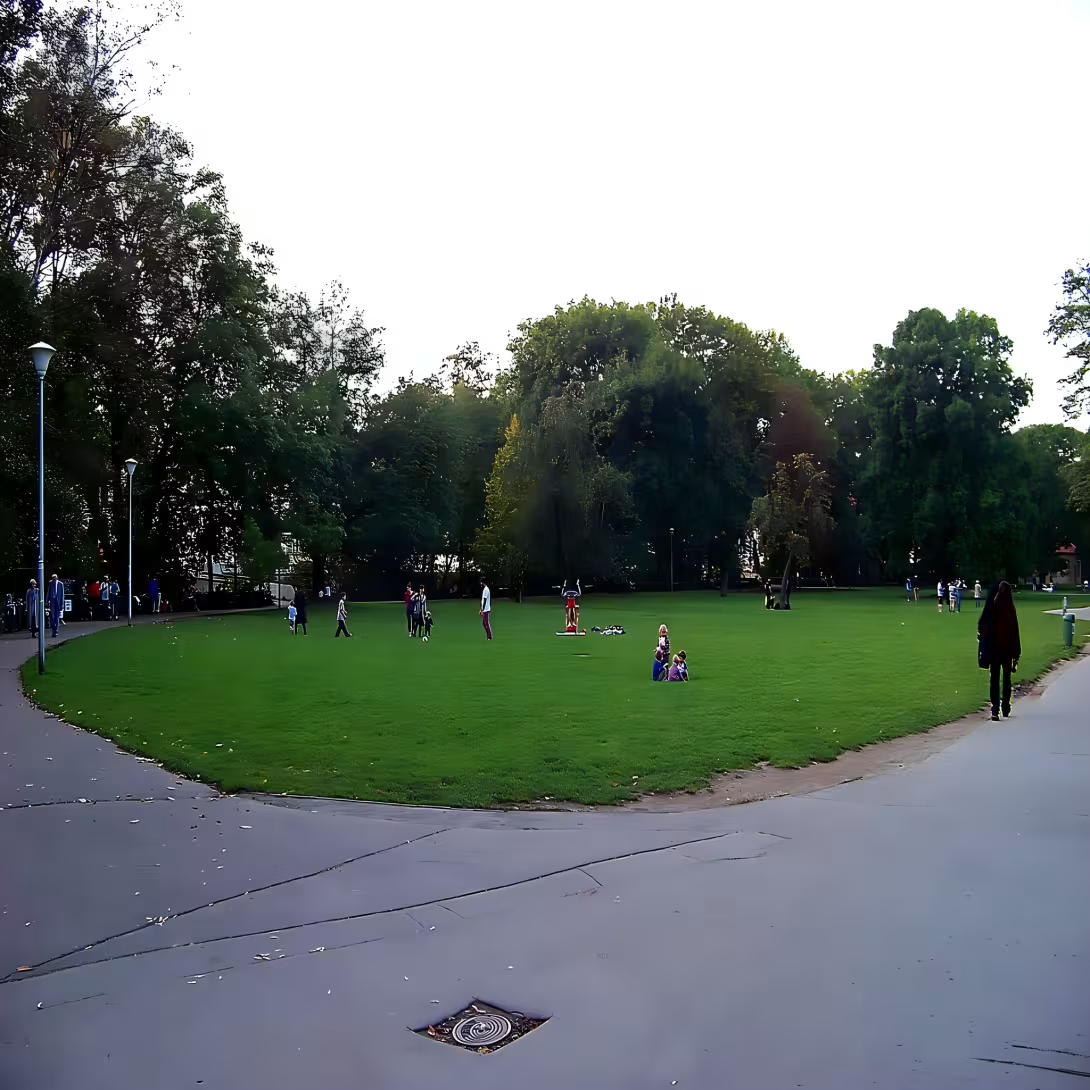
Park Kampa is situated in the southern part of the island of Kampa in Malá Strana in Prague 1, between the main flow of Vltava and its artificially created arm - Certovka. His story goes deep into the Middle Ages. The oldest mention of Kampa dates back to 1169 from the founding charter of the Church of the Maltese Order published by King Vladislav II. The island gradually grew with natural patches and rugs, especially after the Great Fire of the Little Party and Hradčan in 1541. The solid shape of the shores stabilized after 1600.
Economic activity has been developing on the island since the end of the 13th century. There were mills - the Hute Mill is already documented before 1293, the Grand Prior Mill before 1400. Gradually, gardens were established, first connected to mills, later also representative gardens of noble families. The most famous one was the Baroque Michnovská Garden, which was supplemented by the Odkolková Garden near the Owl Mill and the Kaiserštejn Garden.
A substantial transformation took place in the first half of the 20th century. Historic gardens have merged into one whole - the partitioning walls and fences have been removed, the terrain has levelled and new trees have been planted. Between 1947 and 1948 today's form of the park was created, which bears the characteristics of a free English landscape style.
The park occupies an area of 2.65 hectares and extends from Werich Villa and Liechtenstein Palace to the south to Jechental houses. In the west it is bounded by the Devil, in the east by the River Vltava. The two main roads - along Certovka and formed by the U Owl Mill street - are planted by the grown cutters and maple trees. The dominant feature of the park is the commemorative tree of the maple tree.
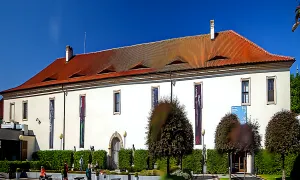
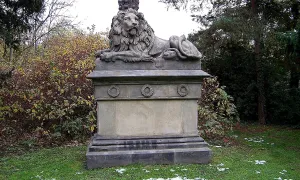
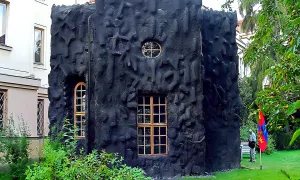
In the park there are valuable cultural-historical objects. The former Owl Mill building has been hosting its centre since 2002 Museum Kampa. South of it stands Michnovský summer castle, which has the status of cultural monument, as well as the former garden house over Certovka on the west side. The park is decorated with children's playground and a series of sculptures - bust of Josef Dobrovský by Tomáš Seidan, statue of Rév (girl with grapes) by Karla Vobišová, figure Jarmili by Jan Hana, sculpture of Babies by David Černý or sculpture of Franol - stone block on glass cube in metal frame by Marian Karl.
Although the fencing of the park was considered in the years 1997 to 1998 in the context of its overall reconstruction, this step did not take place in the 2005 modifications. The park remains publicly accessible. Occasionally there are cultural and social events that confirm it as a living place to meet in the middle of historical Prague.
Then and now
Drag the slider to compare how the landmark may have looked when it was built with the view today.
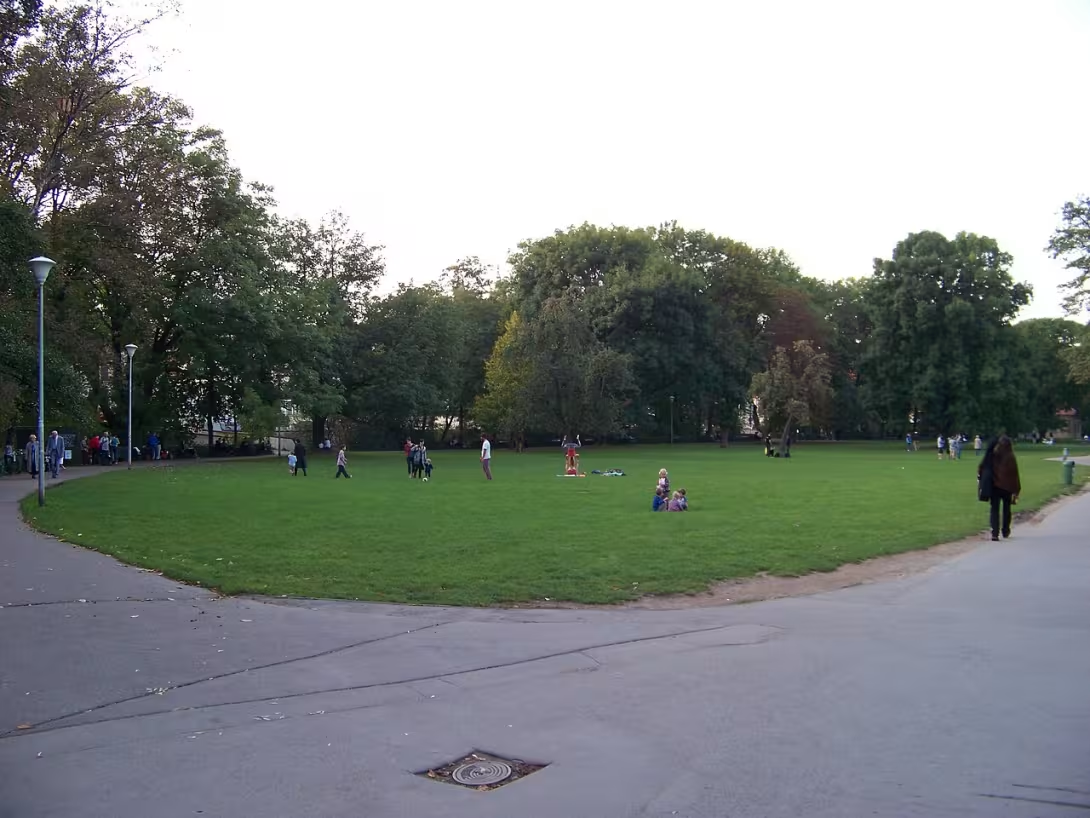

The historical appearance on the left is an AI-generated visualisation and serves as inspiration only.
Historical milestones
- 1169
- The first written mention of the island of Kampa in connection with the charter of the Church of Maltese Order.
- 13th Century
- Beginning of the production of mills and gardens on the island of Kampa, including the Hute Mill and the Grand Prior Mill.
- 1947-1948
- The creation of contemporary park design in free English landscape style.
Architectural development
The park was created by the combination and modification of historical gardens which were gradually joined and compared in the first half of the 20th century. The main adjustment took place in 1947- 1948. The park consists of lots with various historical buildings such as former mills, summer castles and garden houses which are part of its character. The terrain was naturally increased by patches and drags, especially after the fire in 1541.
Historical events
- 1169
- First mention of the island of Kampa in the charter of the Church of the Maltese Order as King Vladislav II.
- 1541
- The Great Fire of the Little Party and Hradman, which influenced the landscaping of Kampa Island.
- 1947-1948
- The creation of contemporary park design in free English landscape style.
Owners
City area Praha 1
Points of interest
- Park Kampa has been established gradually since the Middle Ages, the first written mention of the island dates back to 1169 from King Vladislav II.
- After the Great Fire of the Little Party and Hradman in 1541, the island grew with natural patches and rags.
- In the park there are several cultural monuments such as the Michnovský summer castle and the former garden house near Certovka.
- The dominant of the park is the commemorative tree of the maple tree.
- In the park there is the Museum Kampa, which is located in the building of former Owl mills since 2002.
Guide
This guide is narrated by a synthetic voice generated by artificial intelligence.
Show guide text
This text was created by artificial intelligence and has not been editorially reviewed. It may contain inaccuracies.
Welcome to one of the most beautiful and peaceful corners of Prague. You just entered Kampa Park. Stop for a moment, take a breath and feel the atmosphere of this unique place. You are standing in the heart of the Little Party, on an island that will immediately separate you from the streets of Prague. Look around you. In front of you is a space that is not just an ordinary green area, but a living book of history, where natural beauty is linked to human history.
Today, when you look at these diverse trees and loosely phospholated roads, you might feel that this park has been here since. The truth, however, is much more layered. To understand where you are, we have to go back to the past in our minds. The first written mention of Kampa Island dates back to 1169. At that time, it was a charter of King Vladislav's second, which was linked to the founding of the Church of the Maltese Order. So imagine that this country under your feet was a part of Prague space already in the early Middle Ages.
However, the character of this place gradually changed. In the thirtieth century, Kampa became the centre of craftsmanship and economy. It was at this time that mills and private gardens began to emerge. If you look around now, remember that there were once rhythmically rumbling mill wheels in these areas. The most important ones were, for example, the Hute Mill or the Grand Prior Mill. The island was then densely built by mill trees and noble settlements, which used the power of flowing water. It was a place of hard work, but also a private refuge for the Prague aristocracy, which created its garden paradise.
But now let's focus on what you see right in front of you. The current form of the park you admire today was much later, from 1947 to 1948. At that time there was a great modification and a combination of historical gardens into one whole. Notice the style of the park. It's a free English landscape style. This means that you will not find strict geometric shapes, straight lines or symmetrical beds that are typical of French gardens. Instead, perceive natural curves, smooth transitions and the feeling of nature growing freely, even if it is in fact carefully planned.
Look at the vegetation around you. Notice the diversity of trees and plants. The park is characterized by its memorable trees, which stand here as silent witnesses of time. Pay attention also to sculptures which are interwoven into the park space. These works of art complement the landscape and encourage us to stop and think. It is this combination of wildlife and human art that creates the special sense of harmony that radiates from Campa.
Now let's move on to some of the stories that relate to this place. Kampa was not always as stable a country as we see it today. History tells us that the island has been physically changing over the centuries. A very interesting moment was 1541, when a devastating fire hit the Little Party and the Hradmans. You may be surprised that this tragic event has paradoxically contributed to the island's growth. After the fire, natural patches of the river and the deliberate weighing of the material began to gradually increase the island. In some sense, the camp grew from ashes and sediments of time.
If you continue to walk, I suggest you pay attention to the cultural monuments that are located in the park. One such element is the Michnov flight, for example. Go slowly, perceive the texture of the bark of the memorable trees and listen to the murmur of the water surrounding the island. It is this closeness of the river that defines the whole identity of this place.
Kampa is where the city meets the natural one. It is a space that has been shaped since the Middle Ages, passed through the era of mills and nobles and eventually turned into a public park for everyone in the mid-twentieth century. It is fascinating to think that beneath the layers of grass and dirt you walk on lies the history of hundreds of years, from the royal documents to the craft tradition of mills.
Now that you know the story of this place, I suggest you let your own feelings guide you. Park Kampa is no place for rush. It's a contextual space. Go through the remaining paths, find a shadow under one of the big trees, and let yourself be filled with the calm that rules here. Watch as the light moves through the tree leaves and reflects in the surrounding water.
Notice how the sound of the neighborhood changes around here. The noise of the city gradually retreats and is replaced by the roar of leaves and the quiet movement of water. That's the real Kampa magic. It's a small island of peace in the heart of one of the most beautiful metropolis in the world.
Imagine all the people that came through here before you. The millers who welcomed the morning mist at their bikes, the nobles who sought relief from duty in these gardens, and thousands of visitors who, like you today, discover the beauty of the Little Party. Each of them has added its own clue to the history of this place.
Finally, I'd like to invite you to explore the park to the very last corner. Let yourself be surprised at the details you may have overlooked at first sight. Stop at the sculptures' works, think about the fate of old mills and enjoy the freedom offered by the English landscape style. Kampa offers you space for relaxation and inspiration.
Thank you for coming through the history and beauty of Kampa Park. I hope this short trip over time has helped you understand more the place you're standing on. Now it's time to turn off the headphones and dive fully into the present moment. I wish you a pleasant continued walk in Prague and many other beautiful experiences in our capital. Goodbye.
Tips for visitors
{'paragraph': 'The best time to visit Kampa Park is in spring or autumn when the weather is pleasant and the park is full of green. In summer it is often busy and in winter some parts of the park can be frozen or difficult to access. It is recommended to visit the park early in the morning or in the afternoon when there are fewer tourists and you can enjoy a quiet walk.' {'paragraph': 'Park Kampa is available by car and public transport. If you arrive by car, it is recommended to find a parking lot in the nearby area, for example in Malá Strana. By public transport you can get here for example from the centre of Prague, where you can switch to trams or buses. You can find the current connection in the traffic search engine.'} {'paragraph': 'When visiting the park take on comfortable shoes and clothes because the park offers various terrain - from asphalt trails to lawns. It is also appropriate to take sunglasses, hat or handkerchief because some parts of the park are illuminated by the sun. If you are planning a longer stay, you can also bring a light snack and drink.'} {'paragraph': 'Park Kampa is the perfect place for shooting, especially in sunny weather. The best places for pictures are historic bridges that border the park, and old trees with massive crowns. The best light for photography is in the morning or in the evening when the light is softer and creates pleasant shadows. It is also recommended to visit the park during the flowering season of trees or bushes for colour contrasts.'} {'paragraph': 'In the vicinity of Kampa Park is worth visiting the Liechtenstein Palace, located in the immediate vicinity of the northern edge of the park. Another interesting feature is the complex of Jechental houses on the southern edge of the park. If you like water activities or just walking along the river, you can visit the Vltava and the Devil that surround the park. Near is the Church of St. Nicholas, which is another historical monument in this area. '} {' paragraph ':' For families with children, Kampa Park is a great choice thanks to its vast space and quiet atmosphere. Children can play in the open area or see old trees and historical elements of the park. In the vicinity of the park it is also possible to visit the Liechtenstein Palace, where there are often cultural events or exhibitions that can also interest children. It is also recommended to visit Vltava where children can observe boats and water activities. '}
Frequently asked questions
Is Park Kampa open to the public?
Yes, Park Kampa is open to the public. For more information about specific conditions or events, please contact the official park website.
How do I get to the place by car / public transport?
Park Kampa is accessible both by car and public transport. For the latest information about parking possibilities and public transport connections, consult local sources or route search points.
How much is the entrance fee and is it paid on the spot?
Admission to Kampa Park is usually paid on site. Current prices can be found on the official park website.
Is the tour suitable for children and seniors?
Yes, Park Kampa is friendly for children and seniors. Its quiet environment and large green areas offer ideal conditions for a family visit.
How long does the tour take?
The time spent in Kampa Park depends on your interests. For nice walks and a visit to art collections it is recommended to allocate from 1 to 3 hours.
What are the opening times and booking is required?
The opening times of Park Kampa may vary depending on the season. For up-to-date information on opening times and booking options visit the official park website.
What's interesting in the immediate vicinity?
In the vicinity of Kampa Park there are Liechtenstein Palace, Werich Villa and Jechental Houses. These historical monuments are an ideal addition for visitors who want to explore the rich architecture of Mala Strana.
For kids
About 128 years ago, a wonderful room appeared in Prague, where romance, art and fairytale gardens merged into a park full of secrets. I'm talking about Kampa Park, which was created around 1898, around the same time the first film projection was made. This park is like a great work of art built for all, where every step welcomes a new mystery and a beautiful view.
Businesses nearby
Events nearby

Zdroj akcí: otevřená data měst a obcí ČR (Národní katalog otevřených dat) a kalendář akcí Národního památkového ústavu.
Nearby
Liechtenstein Palace
Werich's villa
Jechental houses
Accommodation nearby
Trips and activities nearby
Guided tours, tickets and activities nearby from GetYourGuide
Affiliate link: if you buy from the partner, we may receive a commission. The price for you does not change.
Search tours and activities →Themed route
1.Park Kampa Start by walking through this picturesque park complex that connects nature and modern architecture. There are many statues, garden paths and picturesque views of Vltava and Certovka, which form its edge.
2. Liechtenstein Palace Then visit this Baroque palace in the immediate vicinity of the park. Its rich history and representative interiors are fascinating and also offers beautiful views of the surrounding sights.
3. Jechental houses Continue towards the southern edge of the park where these unique houses with typical Prague architecture stand. Their historical significance and picturesque details are worth paying attention to.
4. Church of St. Nicholas on the Little Side Close the route by visiting this Baroque church, located about 500 metres from the park. Its impressive facade and historical significance are a reason to visit.
Seasonal recommendations
Spring Park Kampa offers a unique atmosphere in spring months when nature wakes up after winter sleep. Golden sun reflections on the water surface of Campa and blooming trees, especially ash and maple, create picturesque scenery that are still underlined by historical statues and architecture. The air is fresh and light, ideal for walking on the roads between artistic parts. Specific is also changing lighting - the morning sun lights the park from the south, while the afternoon reflects from the water level and creates a game of light. It is practically advisable to visit Campa early in the morning or in the afternoon when there are fewer visitors. It is recommended to dress suitable for variable weather - light jackets, sunglasses and comfortable shoes. The best time is April to May, when nature reaches its peak, but there is still no summer heat.
Summer In the summer months Park Kampa will turn into a live scene full of sunshine and relaxation. The warm days and long hours of daylight allow the park to be used until the evening, when the sun lights on the water become almost magical. There is plenty of greenery - tall trees provide shade, while water surfaces reflect the blue sky. In the main summer season, however, it is necessary to count on a higher number of visitors, especially in the afternoon. It is recommended to arrive early in the morning or late in the afternoon to avoid crowds. Clothes should be light, but with the possibility of covering with sunlight - hat, light scarf and shoes suitable for walking on uneven terrain are necessary. The best season is June to August, when the park is the most vital, but also the hottest.
Autumn Autumn brings a unique colour to Kampa Park, when tree leaves turn color into shades of orange, red and brown. The atmosphere is quiet and nostalgic, supplemented with splashing leaves and cooler air, which gives the place a mysterious atmosphere. The lighting is also specific - morning and afternoon sun creates dramatic shadows and reflections on the water, while in advent time the park becomes even more charming thanks to its historical elements lit by artificial light. It is practically advisable to visit Kampa in the morning when there are fewer people and the weather is more pleasant. Clothes should be warm but not too massive - sweaters, jackets and comfortable shoes are ideal. The best period is September to October, when nature reaches its autumn peak, but there is still no winter cold.
Winter Winter Park Kampa is a magical place where snow surfaces and frozen water connect with historical statues and architecture. There is a quiet environment where visitors can concentrate on a detailed tour of works of art without disturbing crowds. In the winter months the park is often covered with thin snow, which gives the place a fabulous look, while the afternoon sun creates long shadows and reflections on the water. It is practically convenient to visit Kampa in the afternoon, when the light is more pleasant and the opening time of the monuments still allows a tour. Clothes should be warm and suitable for cold weather - warm jackets, gloves and shoes with anti-slip soles are essential. The best season is November to February, when the park is the quietest and offers a unique winter atmosphere.
Visualizations and artistic views


The visualisations are generated by artificial intelligence and serve as inspiration.
Photos from the area
Real photos taken near the monument

Zdroj a licence jsou uvedeny u každého snímku.
Atmosphere of the place
This atmospheric visualisation of the place and period was generated by artificial intelligence. It is not real footage of the location.
Tips from visitors
No tips yet. Be the first!
Log in and add your tip.
Sources and literature
Fotografie: ŠJů / CC BY 4.0, rozlišení zvýšeno umělou inteligencí — Wikimedia Commons. The author and licence also appear when you hover over the image.
Faktickým podkladem tohoto textu byl článek na Wikipedii, jehož autory jsou přispěvatelé Wikipedie. Článek je dostupný pod licencí CC BY-SA 4.0.
Location on the map

Příběhy a pověsti
Legendy, pověsti a příběhy spjaté s touto památkou

Fotografie návštěvníků
Zatím žádné fotografie. Buďte první, kdo přidá fotografii z návštěvy!
Přihlaste se a přidejte svou fotografii nebo hodnoťte.
Za ověřenou návštěvu v aplikaci získáte víc bodů — poznáme podle GPS, že jste na místě.
Reviews and comments