






Janečkův mlýn Mill
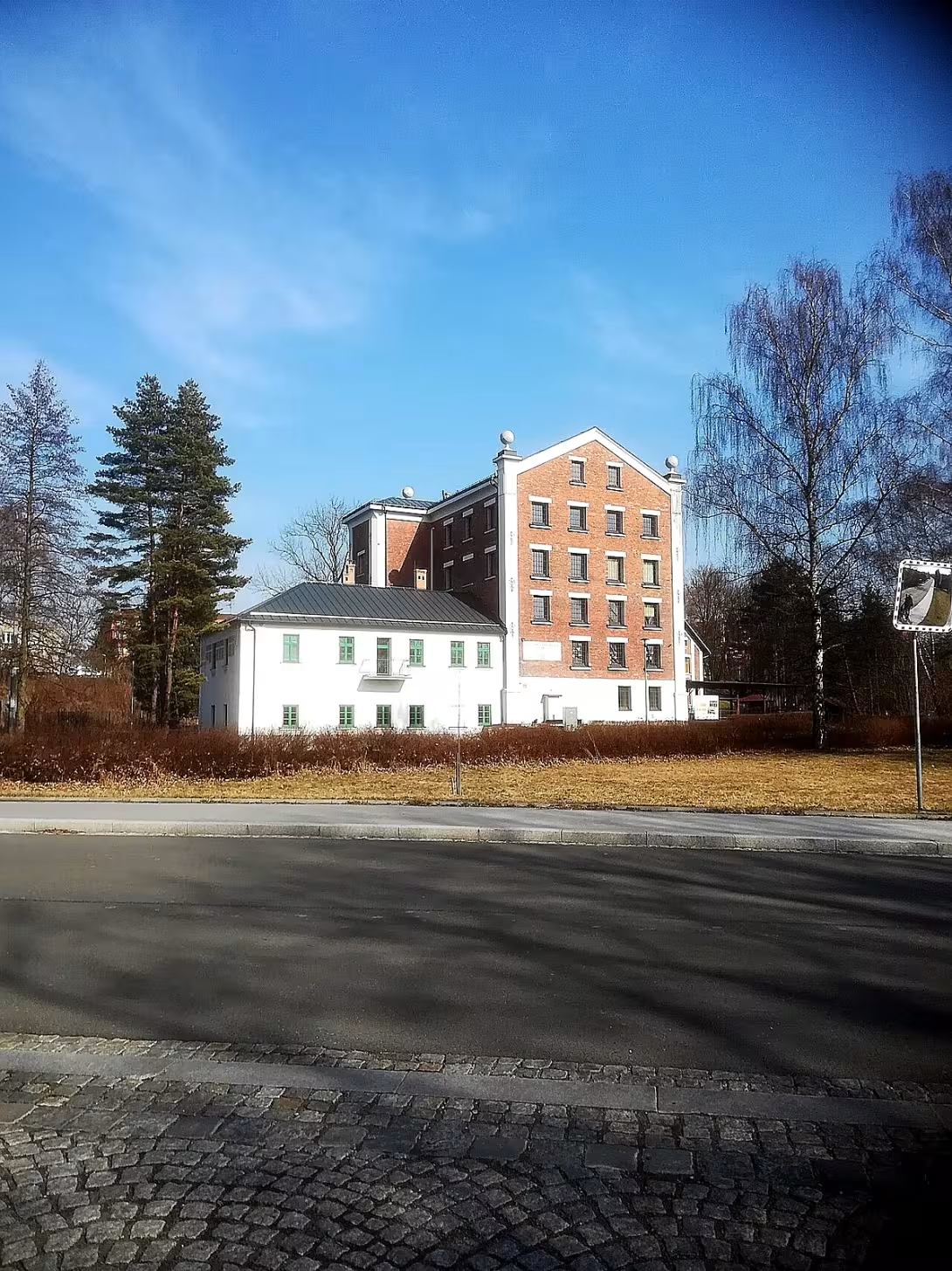
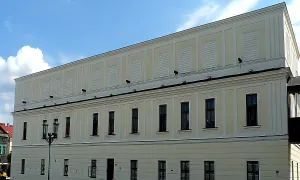
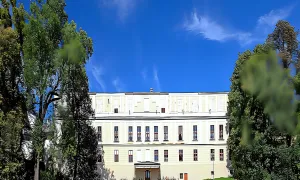
Janečkův mlýn, located on the right bank of the Mlýnka stream in Fryštát, is a historical monument with a rich past and contemporary function as the headquarters of the Silesian Education Centre. This object, reconstructed in 2014- 2018, represents an important part of local culture and history. It is located in Fryštát, a municipality belonging to the cadastral territory of Karviná- town, which makes it an important part of the protection zone of the Karviná-Fryštát.
Originally built as a water mill for grinding grain, it has its roots in the 19th century, when Silesia was intensively industrialized and the mechanisation of milling became significant. In 1849 the mill was bought by Karel Fiedler, who rebuilt it in 1859-1860. This period was characterised by the development of water management and the modernisation of milling plants.
Architecturally, the mill is a representative example of history. In 1859-1860 Fiedler was rebuilt, giving him a new form. After the fire in 1919 it was restored in 1923-1924 according to the plans of architect Alois Golasowski. The mill complex included a mill building built in 1866, an economic building and workshops. In 1935 a water turbine was installed in the mill, which was scrapped in the 1980s.
The mill ownership has undergone several changes. In the middle of the 19th century it belonged to the mills Karviná, then it was transferred to the Card Fiedler and in 1932 it was purchased by the spouses Janek. After World War II, the mill was nationalized and served various purposes, such as a feed mill or a civil defence warehouse. In 1992, he was returned to his husband Janek in restitution.
The mill has undergone several key events that have shaped its current form. The combustion in 1919 and the requirements for reconstruction led to reconstruction according to the plans of Alois Golasowski. In 1950, a technological device was removed, which affected its functionality. After the devastation in the 1980s and the subsequent demolition of the hydropower plant in 2015, a major reconstruction was carried out which ended in 2018.
Today Janečkův mlýn is not only a cultural monument, but also a functional centre. After reconstruction it serves as the headquarters of the Silesian Education Centre and offers space for various educational activities. Although it was rejected by the Ministry of Culture of the Czech Republic in 2006 as a cultural monument due to extensive devastation, its historical and architectural significance remains unquestionable.
Visit to Janek Mill is a valuable opportunity to explore the rich history of Fryštát and understand how the region evolved over the years. Its architecture and history offer a view of past lifestyle and technological progress. This monument is not only an important part of local culture, but also an inspiration for those interested in history and architecture.
Then and now
Drag the slider to compare how the landmark may have looked when it was built with the view today.
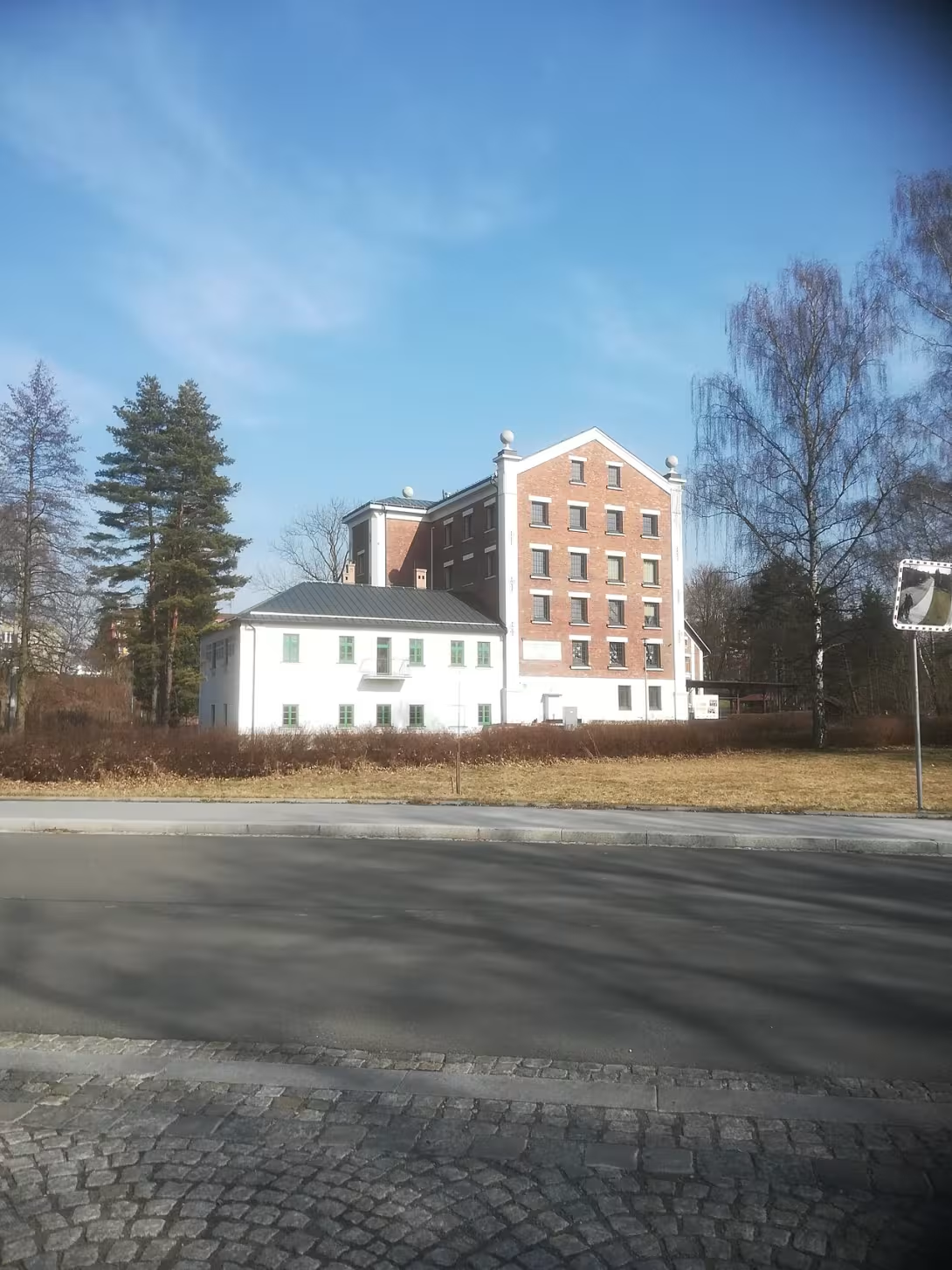
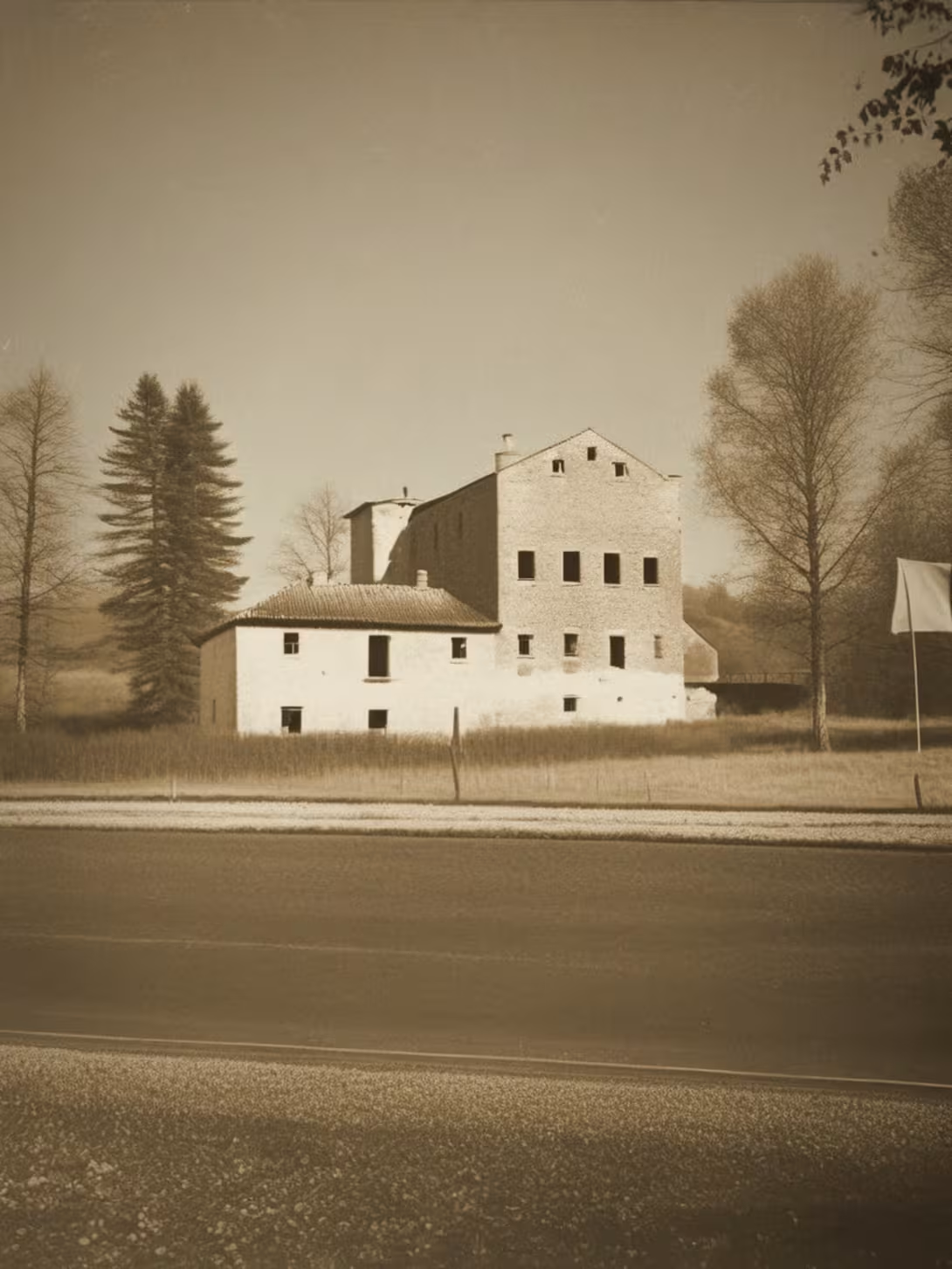
The historical appearance on the left is an AI-generated visualisation and serves as inspiration only.
Historical milestones
- 1849
- Purchase of the mill by Karel Fiedler
- 1866
- Construction of saws
- 1919
- Mill fire
- 1932
- Purchase of the mill of husband and wife Janek
- 1992
- Restitution of the mill family Janek
- 2018
- Completion of reconstruction and establishment of the Silesian educational centre
Architectural development
In 1859-1860 the mill was rebuilt by Karel Fiedler and in 1866 the buildings of the saw were added. After the fire in 1919, it was rebuilt in 1923-1924 according to the plans of Alois Golasowski. In 2015, the hydroelectric power plant was demolished and a total reconstruction took place between 2014- 2018.
Historical events
1919: mill burning; 1950: removal of technological equipment; 2006: rejection of the declaration for cultural heritage.
Owners
City of Karviná (until 1849), Karel Fiedler (since 1849), married to Janek (1932-1954, then from 1992).
Points of interest
- The mill is a representative example of historical architecture. - After the fire in 1919 it was restored in 1923-1924 according to the plans of architect Alois Golasowski. - The mill complex included a mill building built in 1866, an economic building and workshops. - In 1935 a water turbine was installed in the mill, which was scrapped in the 1980s. The building serves as the headquarters of the Silesian Education Centre.
Guide
Show guide text
This text was created by artificial intelligence and has not been editorially reviewed. It may contain inaccuracies.
Welcome to Janek's Mill. Right now, you're standing in a place where history meets the calm of flowing water and where every stone and facade tells the story of human workmanship, the overcoming of obstacles, and constant renewal. You are located on the right bank of the Mýnka river, in part Fryštát, in an environment that immediately engulfs you with its authentic atmosphere. Before your eyes, there is a set of structures that in the past formed the heart of the local economy. Do you feel a strange combination of the power of the industrial past and today's peace? This complex was not just an ordinary house, but a living organism that was changing along with people's needs and technological progress.
Let's go back to the past together now to understand how everything started. The whole story of this place began to be written in 1849 when the mill was purchased by Karel Fiedler. At that time it was a functional water mill, whose main task was grinding grain for nearby farmers. It was a place where people met, where newspapers were exchanged, and the community was formed. But with the advancing time and growing demands of the time, the mill had to adapt. Already in 1866 the saw joined the original operation, making the complex much more significant and extensive. The mill became not only about grinding, but also about wood processing, making it a key point for the local economy.
Now pay attention to the architecture that is surrounding you. If you look at the buildings around you, you might notice that they're not just simple construction. Janečkův mlýn is a representative example of historical architecture. This style seeks nobility and to make the buildings look dignified. Even though you're here today, you have to realize that today's appearance of buildings is the result of a great life test. In 1919, the mill was the victim of a devastating fire. Imagine the immediate loss and uncertainty of whether this important knot will ever be preserved for future generations. Yet a new beginning was born from the ashes. Restoration took place between 1923 and 1924 and behind its creation was a competent architect Alois Golasowski. It was his planning and visions that gave the mill the distinctive look you see today. Looking at the facade and the overall structure of the complex, you can feel the effort for harmony between functionality and aesthetic beauty that Golasowski put into the buildings.
If we keep moving through time, we'll find names that left an indelible mark in this place. In 1932 the mill became the property of Janek's husbands. It is their family that is now associated with this place so closely that the mill has become known just under their name. It was the people who found their home and their home in this place. Although the subsequent era of nationalization brought a period when the mill became state property and its condition gradually deteriorated to devastation, the story did not end. Thanks to the restitution in 1992, the mill returned to the hands of the Janek family, which was a crucial step in preserving its identity. After years of neglect, the extensive and thorough reconstruction between 2014 and 2018 followed, which brought this historic gem back to its former glory.
You might find one interesting thing that shows how advanced this complex was for its time. The mill wasn't just about grain or sawdust. It was a complex that included a hydropower plant. Imagine the sound of water that didn't just serve grinding stones, but also energy-generating machines. In 1935, a hydroelectric power plant was installed in the mill, making it a modern technological hub. This transition from traditional craft to modern electricity generation is a fascinating witness to the industrial revolution that changed the world around us. The whole complex included other important buildings such as the mill building built in 1866, the economic building and various workshops which together formed one functional unit.
Today you will not hear the noise of grinding machines or drinking, but the place has gained a whole new meaning. After completing the reconstruction in 2018, Janečkův mlýn became the headquarters of the Silesian Education Centre. A place that once served for hard work and production is now used to spread knowledge, education and culture. It's a wonderful cycle - from body work to technical progress to mind work.
Now, I urge you to continue your search and walk through these historic spaces. Feel the atmosphere that is still hanging here and look at the details that the architecture of history offers. Let yourself be inspired by how this place was born again after a fire and years of decline. Thank you for choosing to visit Janečkův mlýn, and we wish you a pleasant and rewarding encounter with the history of this place.
Tips for visitors
The best time to visit Janek Mill is in the spring or autumn season, when vegetation in the castle park Fryštát is the most beautiful and weather usually favourable. This time of year offers a quiet atmosphere and beautiful lighting conditions for photography.
Parking can be found near the castle park Fryštát, where public transport can be used. For accurate information on the availability of parking lots and current connections, we recommend checking the possibilities of using an online search engine or contacting the local tourist information service.
When visiting, it is advisable to bring protective clothing as it can be cold and wet in the castle park. Photographers can bring a pipe or a mono to better capture panoramic views of the mill and surrounding landscape.
For photography is the best time of the afternoon when the sun lights up the buildings and castle park Fryštát in warm light. The most beautiful views offer in particular the area around the Milenka stream, where it is possible to capture harmony of nature and architecture.
The castle park Fryštát is located in the vicinity of Janek Mill, which offers beautiful walks and views of historical buildings. It is also suitable for families with children to visit the village of Darkov, where children can enjoy leisure time in nature.
Businesses nearby
Nearby
Castle park Fryštát, stream Mlýnka, village Darkov.
Accommodation nearby
Themed route
Thematic cruise route Fryštát
1. Janečkův mlýn (mill) This historic mill is one of the oldest in Moravia and is worth a visit to its architecture and technology. We find it in Fryštát, where you can see the ancient machines and learn the history of the mill activity.
2. Castle Park Fryštát From Janek's Mill just a few minutes walk to Castle Park, which is beautifully wooded and offers quiet walks. The park is an ideal place to relax after visiting the mill and serves as a foreplay to other attractions.
3. Potato Milk The Mýlka stream flows through Fryštát and is part of its stupid style. This stream was an important waterway for mills, including Janek's mill. Exploring the surroundings of the creek offers a view of natural beauty and historical connections with local industries.
4. Municipality of Darkov Visiting the village of Darkov is a suitable conclusion of your route, where you can enjoy a quiet walk and get acquainted with the local spirit. Although there are no great sights around, the village offers a view of rural life and an opportunity to relax.
This route allows you to explore Fryštát and its surroundings with an emphasis on the historic and natural attractions that this place offers.
Seasonal recommendations
Spring: In the spring period Janečkův mlýn is surrounded by flowers and trees in full Cyprus, which adds a colorful atmosphere to the surroundings. Sun rays illuminate green meadows around the mill and create ideal conditions for photography. This season may happen that visitors are still rare, allowing a calmer exploration of the sights. We recommend arriving at the beginning of the day to avoid a possible increase in the crowd during the day. Due to the variable spring weather, it is advisable to carry a garment that allows the temperature changes to be adapted quickly.
Summer: The Janečkův mlýn summer offers the best conditions for visiting with long, sunny days. The natural green is in full strength and the surrounding landscape can be explored on feet or along roads around the mill. In the main summer season more visitors may appear, especially on Sundays and evenings, so it is good to arrive earlier. Today we recommend starting early in the morning or after lunch break to avoid the apex of crowds. Don't forget the sun protection and the drinking water.
Autumn: In autumn Janečkův mlýn is surrounded by colorful tree leaves, which adds a romantic atmosphere to the visit. The sunny days are warm and ideal for walking along the surrounding valley. This season, there may be considerable crowd growth, especially on Sunday and mid-day, so it is advisable to arrive at the beginning or end of the day. Due to the colder weather, we recommend wearing a top garment that allows fast adaptation of temperature changes.
Winter: Winter visit to Janek Mill offers a unique atmosphere with covered snow mountains and calm, which brings a cold season. Natural light is finer and illuminates the landscape in a softer way. The mill is open for a shorter time, so it is important to know about the current times before the visit. Due to the cold weather we recommend wearing warm clothes and shoes suitable for cold surfaces such as boots with tips. Today is the perfect time to visit, because you will meet a much smaller number of people here than in other seasons.
Visualizations and artistic views


The visualisations are generated by artificial intelligence and serve as inspiration.
Photos from the area
Real photos taken near the monument

Zdroj a licence jsou uvedeny u každého snímku.
Tips from visitors
No tips yet. Be the first!
Log in and add your tip.
Sources and literature
Fotografie: Ikcur / CC BY-SA 4.0 — Wikimedia Commons. The author and licence also appear when you hover over the image.
Faktickým podkladem tohoto textu byl článek na Wikipedii, jehož autory jsou přispěvatelé Wikipedie. Článek je dostupný pod licencí CC BY-SA 4.0.
Location on the map
Příběhy a pověsti
Legendy, pověsti a příběhy spjaté s touto památkou

Fotografie návštěvníků
Zatím žádné fotografie. Buďte první, kdo přidá fotografii z návštěvy!
Přihlaste se a přidejte svou fotografii nebo hodnoťte.
Za ověřenou návštěvu v aplikaci získáte víc bodů — poznáme podle GPS, že jste na místě.
Reviews and comments