






Lottyhaus House
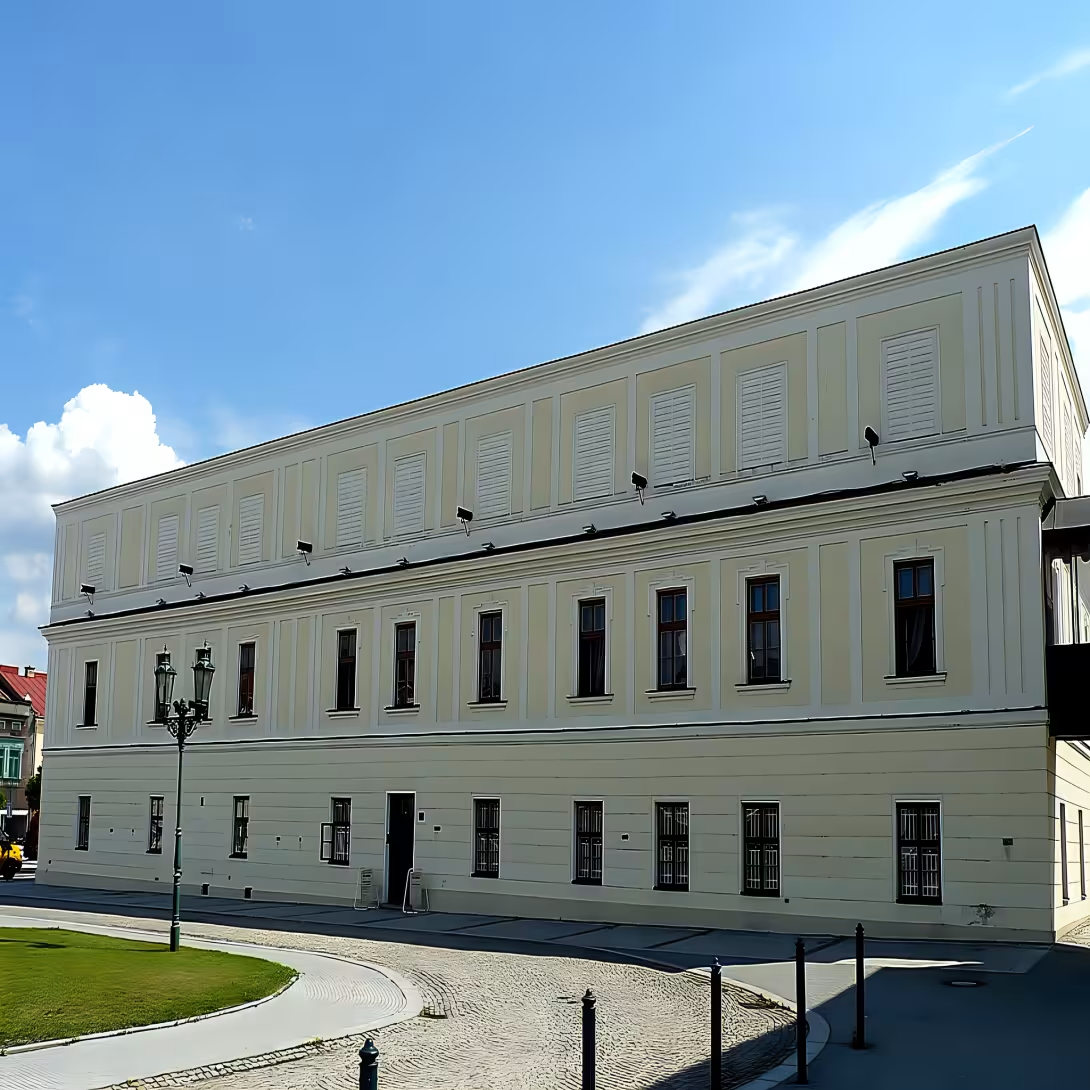
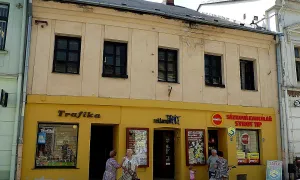
Lottyhaus, a classic building located on Masaryk Square in Fryštát, is an important historical monument and contemporary gallery. This corner double-storey walled structure consists of a separate wing of the castle with which it is connected by the above-ground corridor. It was built in 1800 as the seat of the Supreme Office and is now used for gallery purposes with period furniture.
The history of Lottyhaus probably refers to the Gothic or Renaissance foundations on which it was built. In 1800 it was created by Anton Endl as a seat of the superintendent's office with a horticulture in the ground floor. During its existence, the building went through several stages of reconstruction and changes of ownership. At the end of the 19th century, an above-ground corridor was added, which connected it to the castle. In 1910 she received a pilot roof with a skylight and in 1936 a repair took place. After World War II, the building was the property of the Ostrava-Karvinsky coal mines in the years 1945-1951, followed by the surveying office and later by the Local National Committee Karviná. In 1990 the town of Karviná was the owner, which reconstructed it between 1999 and 2003. It was first made available to the public in 2003.
Architecturally Lottyhaus is characterized by its classical and empirical structure. The building has a ground plan of a rectangle with a saw roof and a skylight, divided by a facade corresponding to the castle. The main facade is divided by five window axes with the entry in the middle axis, while the side facade has eleven window axes. The windows are rectangular with six glass panes and lined with a rail and a gem. The interior of the building is organized by a longitudinal three-track structure with a compressed vaulting above the corridor, which leads to the floor by a wooden staircase with carved railing. The interior includes fifteen rooms with period furniture and copies of textile wallpaper.
The building has undergone a number of ownership changes that reflect its historical context. After Anton Endle, various institutions used it in the second half of the 20th century before becoming the property of Karviná. This change led to reconstruction and reconstruction of the building for its current function as a gallery.
Today Lottyhaus is an important cultural monument that offers visitors a view of period interiors and artistic exposition. Its historical value lies not only in its architectural heritage but also in its contribution to the cultural life of Fryštát.
Lottyhaus is therefore not only a monument to the past, but also a living place of culture and art. Its history and architecture make it an important destination for anyone interested in the heritage of Fryštát and its surroundings. The visit to Lottyhaus offers a unique view of the past and present of this area.
Historical milestones
- 1800
- The position of the building by the builder Anton Endle as the seat of the superintendent's office.
- 1910
- A roof with a skylight.
- 1999
- The beginning of the reconstruction led by Karviná.
- 2003
- First opening of the building to the public.
Architectural development
The construction is probably based on Gothic or Renaissance foundations. In 1800 it was built in classical style and later it was supplemented with empirical elements. In the end of the 19th century an above-ground corridor was added and in 1910 a pilot roof with a skylight was added.
Historical events
1800: Position of the building as the seat of the office; 1910: Roof roof with skylight; 1999- 2003: Reconstruction of the building by Karviná; 2003: First public access.
Owners
1800: Anton Endl; 1945-1951: Ostrava-Karvin coal mines; the following: the geographical office; Later: Local National Committee Karviná; 1990: Karvina City.
Points of interest
- Lottyhaus is a classic building located on Masaryk Square in Fryštát and serves as a gallery. - It was built in 1800 by Anton Endlem as the seat of the superintendent's office with a horseman on the ground floor. - At the end of the 19th century, an above-ground corridor was added that connected it to the lock. - After World War II, the building was the property of Ostrava-Karvin coal mines and later the town of Karviná, which reconstructed it between 1999 and 2003. - Architecturally it is characterized by its classical and empirical structure with ground plan of rectangle, saw roof and skylight.
Guide
Show guide text
This text was created by artificial intelligence and has not been editorially reviewed. It may contain inaccuracies.
Welcome to Masaryk Square in Fryštát. You just stopped in front of one of the most important building units in this place. You're standing right in front of Lottyhaus. Look around you as this building dominates the corner of the square. Her presence here is not random, her position at this very central point tells the story of the importance this place had in the past. Feel the atmosphere of peace and history that radiates from this two-story building. Although Lottyhaus now appears to be an elegant part of the urban environment, its face is the result of the long history and transformations that have passed through this entire area.
Let's go back together to when everything started. More than 200 years ago, exactly in the year of a thousand eight hundred, this building was built. Imagine then Fryštát, a period when power structures and land management took place in a completely different rhythm. Lottyhaus was never just an ordinary house. It was designed as the headquarters of the Supreme Council. This means that there was a decision on important things, there was a management and there was a seat of power that was controlling the surrounding landscape at the time. On the ground floor of the building, it did not only serve officials, but it also had a very practical, until agricultural function - there was a horticulture. Imagine the contrast: on the one hand, the seriousness of official documents and decisions, on the other hand, the sound of hoof and the smell of horses, which were at that time an absolutely necessary means of transport and a working tool.
Now pay attention to the architecture itself, which is right before your eyes. Lottyhaus is an excellent example of classical and Empire architecture. These styles, which you can perceive in its form, place emphasis on order, symmetry and dignity. Notice how balanced the building is. It's a sturdy, walled-up building that seems stable and unwavering with its massiveness. Her corner location gives her a specific character as if she were trying to embrace the entire square. If you look towards the lock now, you can see one of the most original and interesting properties of this whole. The building is not completely separate, because it is connected to the lock above the hall. This corridor is not just an architectural element, it is a symbolic connection - a physical bridge between the official residence and the heart of the supreme rule itself.
If you decide to look at the roof later, please note that its current appearance is not entirely original. In the year one thousand nine hundred and ten there was a significant change when the building was added a pilot roof with a skylight. This element, which is used in architecture to provide natural light to the inner spaces, gave the building a new, more modern feel for the time being and made its internal use even greater.
Behind this whole architectural plan is a man named Anton Endl. It was he who built this building in a thousand eight hundred years. Endl was not just a builder, he was the creator of space to express status and authority. His vision of creating a seat that combines administrative function with the practical needs of the horticulture plant shows a deep understanding of the needs and aesthetic ideals at the time. So this whole space that you see today is his work, his trace in time that has endured centuries.
But there is also a fascinating transformation in the history of this place that may surprise you. Lottyhaus has gone an incredible way from where the interests of monarchs were managed and where horses were fed, to today's role as a cultural centre. This transformation is not only a matter of changing use, but also of changing the social sense of the whole place. The place of administration and management has become a place for art and culture. However, this path to today's form was not without obstacles. In order for the building to be reborn and become what it is today, it had to undergo a difficult reconstruction that began under the leadership of Karviná in the year one thousand nine hundred ninety-nine. It is thanks to this effort that two hundred and three Lottyhaus reopened itself to people and became accessible to anyone who wants to enjoy the beauty of history.
Today you will find a gallery that offers space for artistic expression and can also transfer you to the past thanks to the period furniture that is exposed in its premises. It is a fascinating connection between old and new, where historical spaces serve as a vessel for contemporary and historical culture.
Now I want to invite you to further explore. Get carried away by the atmosphere of the interior, which has been so carefully restored. Take a look at the details that allow you to better understand life in a thousand eight hundred even during the Empire. Enter these spaces and let Lottyhaus tell you his story through the colors, shapes and pieces of furniture you find here. Thank you for spending this moment with us at this historic monument. We wish you a pleasant stay in Fryštát and many experiences during the next tour.
Tips for visitors
For the best experience, we recommend a visit during clear days when the classical and empirical details of the building stand out. The best light for watching architecture and shooting the facade is in the morning.
Transport is possible by car and public transport. Please check the current traffic connections in the search engine and plan your parking in the vicinity of Masaryk Square in advance.
Bring comfortable shoes for walking around and possibly a camera to capture the details of the building. If you're interested in an exhibition in the gallery, you could use a notebook for notes.
For photography are ideal angles that capture the corner of the building and its connection to the lock. You can visit the Masaryk Square and the castle itself, with which Lottyhaus is connected.
Families with children will appreciate walking around the square and the proximity of the castle, which allows you to combine a visit to the gallery with a survey of the historical centre.
Businesses nearby
Nearby
The Masaryk Square in Fryštát and the castle with which the building is connected.
Accommodation nearby
Themed route
Lottyhaus (gallery) Type: Cultural monument, gallery Why is it worth a visit: This place is the heart of the route and offers a unique connection of the historical environment with modern art. The building is architecturally connected to the lock, creating a fascinating contrast between the past and the present.
Castle in FryštátÉ Type: Historical building, area Why is worth a visit: As a direct neighbour and architectural part of Lottyhaus offers insight into the noble life of the region. Its walls and interiors complement the picture of the place and provide context for understanding the history of the gallery.
Masaryk Square in FryštátÉ Type: City square, public space Why is it worth a visit: This square serves as an ideal entry point or a relaxing place after sightseeing. Its atmosphere and surrounding buildings create a pleasant environment for a short pause or admiration of urban architecture.
Lottyhaus (gallery) - interior visit Type: Exposure, indoor space Why is worth a visit: The focus of attention on the gallery's inner premises allows for a detailed study of exhibition halls and architectural elements. Visitors can appreciate the spatial relationship between historical development and modern artistic installations.
Castle in Fryštát - courtyard and surroundings Type: Area, outdoor areas Why is worth a visit: Walk through the courtyard of the castle allows you to enjoy the peace and historic atmosphere without rush. This space provides a view of architectural details that are less visible from the street and thus closes the thematic circuit.
This route is designed so that the visitor gradually discovers the connection between the gallery, castle and city space. The beginning of Lottyhaus will draw attention to the main topic, the subsequent transition to the castle will deepen the historical context and the visit to Masaryk Square will offer relief and orientation in the urban environment. Repeating the interior of the gallery and the courtyard of the castle allows for a deeper experience of the place without leaving the immediate surroundings. The distances between the points are minimal as it is a compact area in the centre of the village Fryštát. The whole trip can be managed within one afternoon, each point offering a different perspective on the same cultural and historical value. The emphasis is on interconnecting architecture and art, which is unique here. Visitors will appreciate that the route does not require long movements and focus exclusively on selected places in the immediate vicinity of the main monument.
Seasonal recommendations
Spring: In spring, Lottyhaus wakes up with the surrounding nature, which begins to bloom and creates fresh sets for the tour. The light is soft in this period and very pleasant for the perception of art works in the gallery. We recommend taking layered clothes because morning cold can be present even in bright sun. It is ideal to visit the morning when the temperatures are most pleasant and the traffic is still mild.
Summer: Summer months bring to Fryštát the most solar clock and intense brightness that highlights the details of historical architecture. The atmosphere is vibrant and full of energy, making the monument a popular destination of trips in the main summer season. Because of the higher number of people and the heat, it is best to arrive immediately after opening to ensure a calmer tour in a colder environment. Don't forget light summer clothes and sun protection.
Autumn: Autumn season offers a nostalgic atmosphere accompanied by golden leaves and morning fog, which provide a mysterious place. The lighting is deep at this time and the colors in the gallery are very rich. It is advisable to choose a coat or windbreaker for a visit because the air is usually wet and colder. The best time to visit is in the afternoon when the sun creates beautiful shadows and colors are the most striking.
Winter: In winter Lottyhaus is very cozy and peaceful, which is ideal for deep perception of art in silence. The outside area is often shaded and the light is weaker, so focus on the inner areas of the gallery. It is necessary to take very warm clothes because the outside movement can be unpleasant. In advent time or during freezing days, count on shorter opening times and we recommend visiting around noon.
Visualizations and artistic views

The visualisations are generated by artificial intelligence and serve as inspiration.
Photos from the area
Real photos taken near the monument


Zdroj a licence jsou uvedeny u každého snímku.
Tips from visitors
No tips yet. Be the first!
Log in and add your tip.
Sources and literature
Fotografie: Michal Klajban / CC BY-SA 3.0, rozlišení zvýšeno umělou inteligencí — Wikimedia Commons. The author and licence also appear when you hover over the image.
Faktickým podkladem tohoto textu byl článek na Wikipedii, jehož autory jsou přispěvatelé Wikipedie. Článek je dostupný pod licencí CC BY-SA 4.0.
Location on the map
Příběhy a pověsti
Legendy, pověsti a příběhy spjaté s touto památkou
Fotografie návštěvníků
Zatím žádné fotografie. Buďte první, kdo přidá fotografii z návštěvy!
Přihlaste se a přidejte svou fotografii nebo hodnoťte.
Za ověřenou návštěvu v aplikaci získáte víc bodů — poznáme podle GPS, že jste na místě.
Reviews and comments