



Dva Herkulové Statue
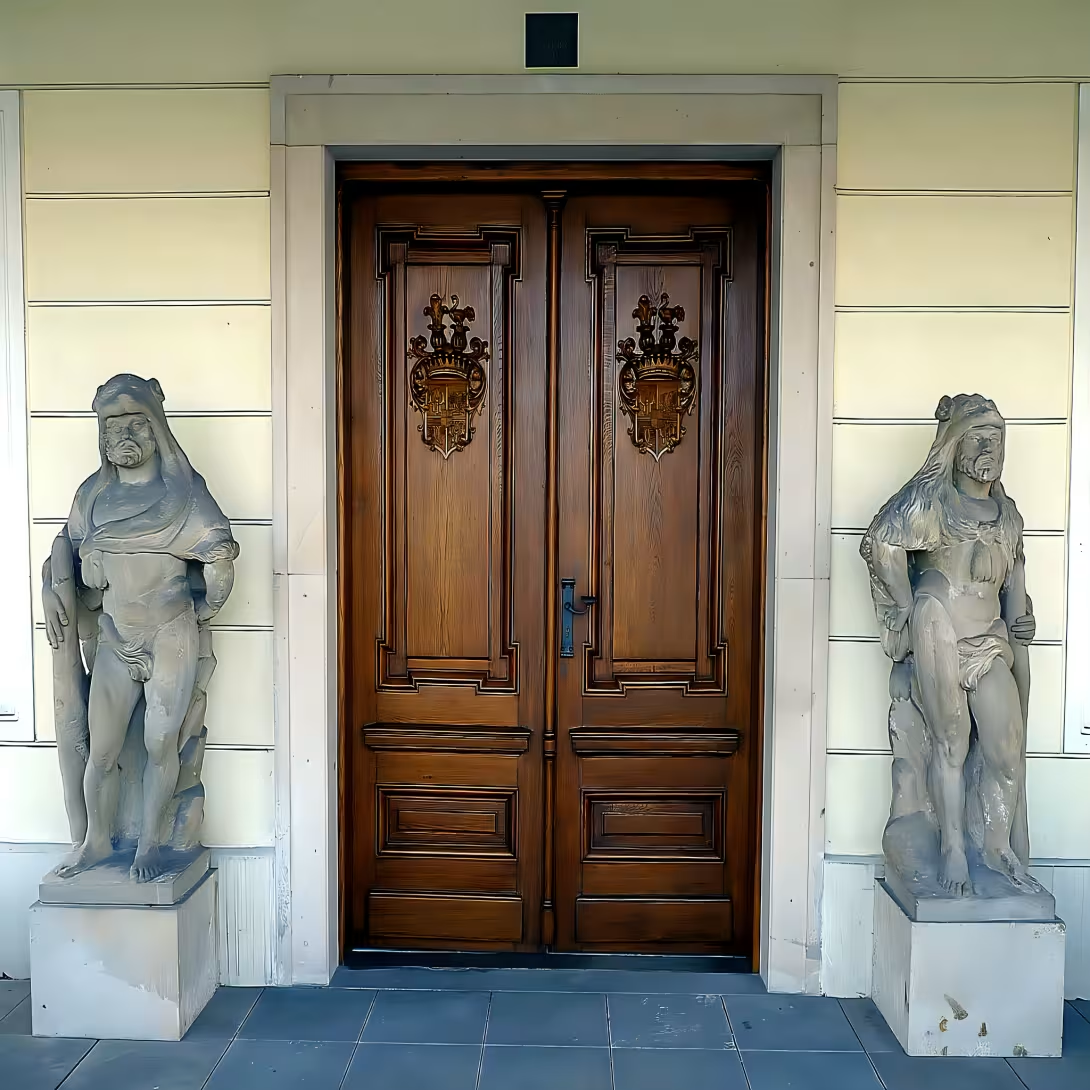
Two early Baroque sandstone sculptures dating back to 1682 represent a remarkable example of sculpture from the beginning of the second half of the 17th century. Today they are part of the castle Fryštát in Karviná, where they stand on the sides of its main entrance and appear in the list of protected cultural monuments of the Czech Republic.
The origin of these statues lies elsewhere - they stood at the castle portal in Paradise, later placed at the gate to the castle park. When the first transfer took place, the background does not determine. The fate of the statue is accompanied by tragic events related to the castle itself. In 1980 the castle burned down and was then completely torn down. This gave a start to the restoration of these works. In 1971 - before the demise of the construction - the statues were restored and moved to the safety of the castle Fryštát, where they remain so far.
Each statue stands on a sandstone four-sided plinth. They are created in contrast - an ancient composite process where the figure lies on one leg in a natural and elegant position. The characters are portrayed as naked men with lion fur on their heads and over their shoulders, which is the classic attribute of the god Hercules. With one hand, they're leaning on the skirt stick, the other on the side. From the background of their character grows from the base of stylized rock, which complements композиci and gives an impression of the natural environment.
On one of the sculptures is carved the inscription "Juráš 1682," which currently serves as dating and reference to reputation. Both characters are faced with a lot of folk stories that link them to the figures of the outlaws Juráš and Ondráš, the famous outlaws operating in the Tyšín Duchy. The specific content of these legends does not indicate the background, but their presence indicates how deep these statues were anchored in local culture and tradition.
Visiting the Two Hercules can be recommended for those interested in Baroque sculpture, the history of Teschen or the fate of cultural heritage in the region. The sculptures represent not only artistic value, but also testimonies about the turbulent history of the place where they originally stood and the care they deserved to save.
Then and now
Drag the slider to compare how the landmark may have looked when it was built with the view today.
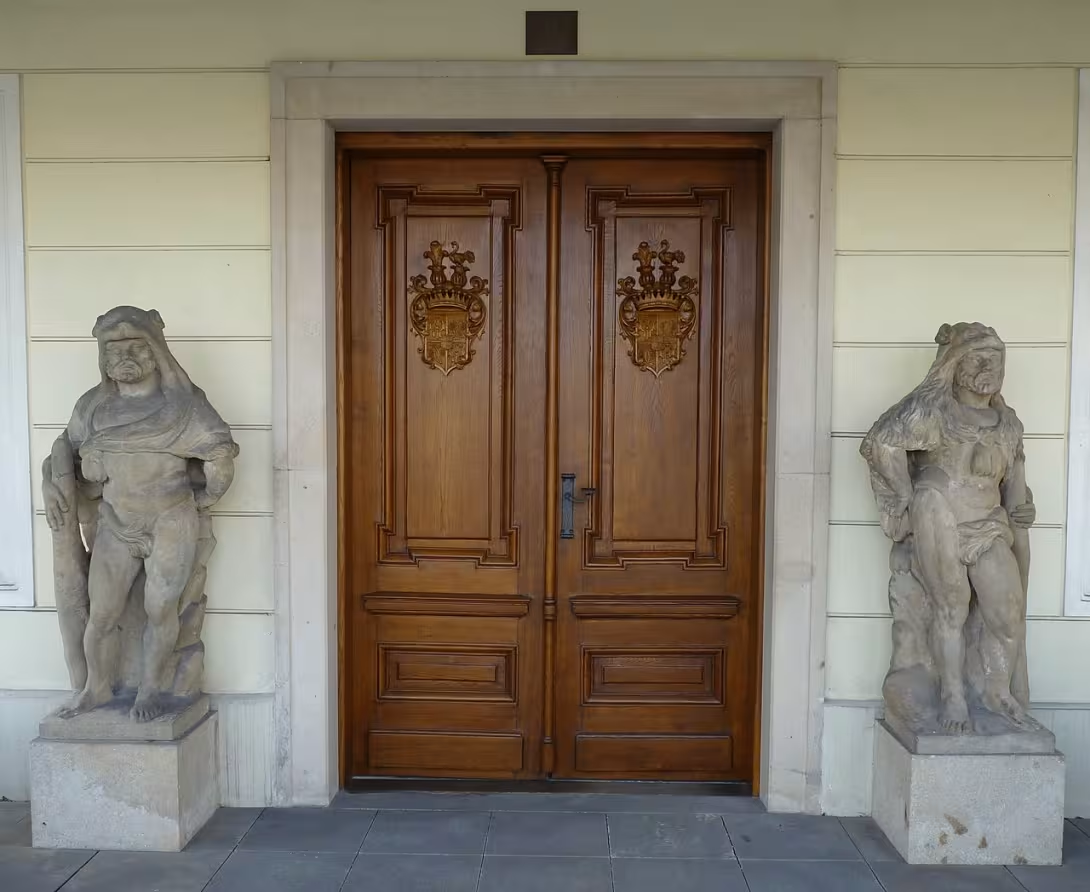

The historical appearance on the left is an AI-generated visualisation and serves as inspiration only.
Historical milestones
- 1682
- The creation of statues.
- 1971
- Restaurant and transfer to castle Fryštát.
Architectural development
Statues are early Baroque pieces of sandstone. Originally they served as decorations at the portal in Paradise, later they were moved and restored for Fryštát.
Historical events
- 1682
- The creation of statues.
- 1971
- Restaurant and transfer to castle Fryštát.
- 1980
- The castle park in paradise burned down and was torn down.
Owners
Gentlemen of Kunštát
The Lords of Pernštejn
Points of interest
- Two early Baroque sandstone sculptures dating back to 1682 represent a remarkable example of sculpture from the beginning of the second half of the 17th century.
- The statues were originally located at the castle portal in Paradise and then moved to Fryštát, where they stand on the sides of the main castle entrance.
- In 1971, the sculptures were restored and moved to the safety of the Fryštát Castle in order to preserve them from burning down in Paradise in 1980.
- Sculpture contains the inscription "Juráš 1682," which is associated with the rumours of the figures of the firemen Juráše and Ondráše, which signals their deep attachment to local culture.
- Statues are part of the list of protected cultural monuments of the Czech Republic.
Guide
This guide is narrated by a synthetic voice generated by artificial intelligence.
Show guide text
This text was created by artificial intelligence and has not been editorially reviewed. It may contain inaccuracies.
Two Herculeses are early Baroque sandstone sculptures from 1682. They stand on either side of the main entrance of Fryštát castle in Karviné and are cultural monuments of the Czech Republic.
Originally, however, they belonged to another castle. They stood by the portal of the castle in Rája and later by the gate to the castle park. The castle in Rája gradually fell into disrepair, it caught fire in 1980 and was subsequently demolished. The sculptures escaped this fate. As early as 1971 they were restored and moved to Fryštát.
Both sculptures are almost identical. Naked male figures in contrapposto stand on four-sided sandstone bases, meaning with their body weight shifted to one leg. They have a lion skin on their heads and shoulders. They lean on a knotty staff with one hand and hold the other hand on their hip. Behind each of them rises a rocky outcrop from the base.
On one of the bases is carved the inscription Juráš 1682. The figures are connected to many folk legends related to outlaws Juráš and Ondrášem, who operated in the Těšín duchy.
Tips for visitors
The best time to visit the Two Hercules is early in the morning or in the evening when the place is less visited and the light allows you to capture beautiful colors of statues. This time also offers a peaceful atmosphere for the knowledge of history and the reputation associated with these characters.
Parking is possible near the castle Fryštát, where parking is available. For those travelling by public transport, Fryštát is well connected to the surrounding municipalities and cities; the current connection can be easily found in the online search engine. It is recommended to take a car or bus for comfortable travel.
When visiting, bring a warm suit, especially if you plan to visit during the winter months. It is also important to have a camera or smart phone with you to capture beautiful details of statues, and perhaps a map or tourist guide with historical information about Fryštát.
Two Hercules photography offers some interesting perspectives. The best light for photography is usually in the early morning or evening when the sun illuminates the statues of the side and highlights their details. Try shooting from different angles to capture the contrast and wealth of sandstone color.
There are several interesting places to explore around Fryštát. A trip to castle Fryštát is necessary where you can enjoy beautiful interiors and historical exhibitions. It is also suitable for families with children to visit the surrounding forest paths, offering opportunities for nature and relaxation.
Frequently asked questions
Can the monument be visited?
Yes. We verified the opening hours or admission on the official website (13. 10. 2026); you will find them in the visitor information on this page. Please double-check with the operator before you travel.
What are the opening hours and admission?
Details verified on the official website (13. 10. 2026) are listed in the visitor information on this page. Official website: https://www.zamek-frystat.cz/
Where is the monument?
Location: Fryštát, Moravskoslezský kraj. The map on this page shows the exact spot.
Why is the monument protected?
It is listed in the Central List of Cultural Monuments of the Czech Republic as a cultural monument (register no. 26229/8-2216).
For kids
Imagine going back to the past, the time when castle Dva Herkulové was still young and full of life. You had a chance to see how the locals lived in his walls, how the famous feasts were held and how the games were played.
It was like a game where heroes fought for their manor. Castle Dva Herkulové was the seat of the masters of Kunštát who ruled over this beautiful country. And later, when the lords of Pernstejn came to power, the castle became their largest residence.
Businesses nearby
Do you run a restaurant, accommodation, shop, museum, rental, wellness or other visitor service near this monument? Show yourself directly to the people heading to it — this is how they will see you in the app and on the web:
Nearby
Fertilisation
Accommodation nearby
Themed route
Thematic cruise route "Dva Herkulové"
1. Main objective: Dva Herkulové (statue) - Type: Historical statue - Why is it worth a visit: This iconic statue, located in the centre of Fryštát, represents two hercules holding the jewels of the city. It is a symbol of the courage and history of the village and offers beautiful photographic possibilities.
2. Historical Square Fryštát - Type: Square - Why is it worth a visit: The historical square is the heart of Fryštát and surrounding buildings such as Baroque houses and the church of St. Gilji. It is a place full of history and culture that offers a view of the architectural development of the village.
3. Church of St. Gilji - Type: Church - Why is it worth a visit: This Baroque church is one of the oldest and most famous monuments of Fryštát. Its decoration and history attract visitors who like architecture and spiritual space.
4. Municipal Office Fryštát - Type: Historical buildings - Why is it worth a visit: Originally this building was part of a castle which became a municipal office. It is an example of Baroque architecture and offers insight into the history of Fryštát administration.
5. Memorial of the First Czechoslovak State - Type: Memorial - Why is it worth visiting: This monument was created in Fryštát as a symbol of determination and pride on Czechoslovak history. It's a place where you can remember important moments of national development.
This route offers a view of Fryštát from different angles and allows you to understand its historical and cultural value.
Seasonal recommendations
Spring: In the spring season Dva Herkulové in Fryštata appears in the light of golden rays of the sun, which illuminates the statues and adds magic to them. Nature is awakening, trees are beginning to sprout, and flowering shrubs form a living background for photography. The atmosphere is full of renewal and new beginnings. It is recommended to visit early in the morning or in the afternoon when the dazzling sun is less intense. Since spring is often a period of visitors due to pleasant weather, it is recommended to come soon to avoid larger crowds.
Summer: Summer brings long days and warm sunshine, which illuminates the statues Dva Herkulové in Fryštát. Nature is in full force with dense trees providing shade, making the visit comfortable even in warm weather. The atmosphere is lively and full of energy, ideal for family trips or picnics near the sights. In the main summer season, higher attendance is expected, so it is recommended to come early in the morning or later in the evening when there are fewer people and temperatures are milder. Don't forget to wear protective sun clothes and plenty of drinking water.
Autumn: Autumn brings colder weather, but also extremely beautiful leaf colours around the Dva Herkulové monument. The sun lights up statues in softer light, creating a romantic atmosphere. The atmosphere is calm and friendly, with mild crowds, which makes autumn an ideal time to visit. It is recommended to visit in the middle hours of the day when the temperature is pleasant and the sunlight is the most beautiful. Don't forget to wear warmer clothes and maybe even an umbrella in case of sudden rain.
Winter: Winter brings cold but often bright sunny days, when the statues Dva Herkulové in Fryštát stand illuminated softening by a shining sunset. Nature is dressed in snow and glaciers, which adds a calm and quiet atmosphere. The monuments during this period may be more distant due to winter conditions, but for those who want to experience a peaceful and slightly dazzling visit, it is ideal time. It is recommended to visit at noon when the sun is at its highest level. Remember to wear warm clothes and suitable shoes for cold soil.
Visualizations and artistic views


The visualisations are generated by artificial intelligence and serve as inspiration.
Photos from the area
Real photos taken near the monument


Zdroj a licence jsou uvedeny u každého snímku.
Atmosphere of the place
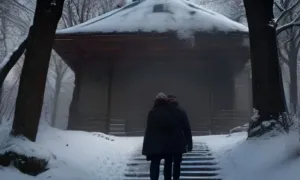
This atmospheric visualisation of the place and period was generated by artificial intelligence. It is not real footage of the location.
Tips from visitors
No tips yet. Be the first!
Log in and add your tip.
Sources and literature
Photos: Michal Klajban / CC BY-SA 3.0, rozlišení zvýšeno umělou inteligencí — Wikimedia Commons. The author and licence also appear when you hover over the image.
Faktickým podkladem tohoto textu byl článek na Wikipedii, jehož autory jsou přispěvatelé Wikipedie. Článek je dostupný pod licencí CC BY-SA 4.0.
Location on the map
Příběhy a pověsti
Legendy, pověsti a příběhy spjaté s touto památkou
Fotografie návštěvníků
Zatím žádné fotografie. Buďte první, kdo přidá fotografii z návštěvy!
Log in a přidejte svou fotografii nebo hodnoťte.
Za ověřenou návštěvu v aplikaci získáte víc bodů — poznáme podle GPS, že jste na místě.
Reviews and comments