

Jízdárna Pražského hradu Horseman
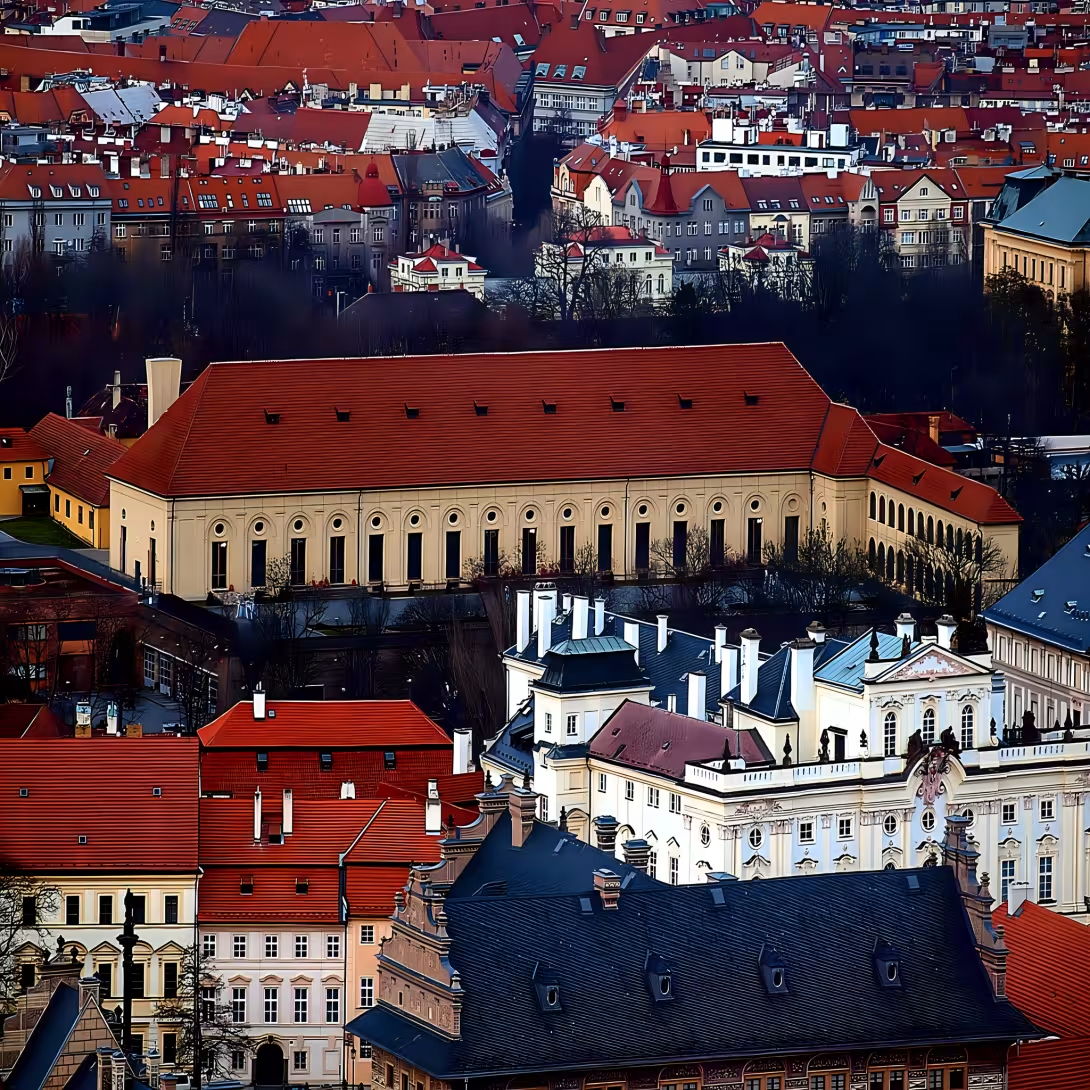
Jízdárna Pražského hradu is a large Baroque building from 1694. It is located in the city area Hradčany in Prague. The building is located in the Prague Castle area by the road to the Dust Bridge, opposite the entrance to the Royal Garden above the Deer Trench. Today it serves as an important exhibition hall.
The current building replaced the original small horseman from 1572. It was created in 1694 on the instruction of Emperor Leopold I. and on the initiative of the President of the Czech Chamber of Franz Joseph Šlik. The project was taken up by Prague architect Jan Baptista Mathey and the builder was Marco Canevalle. The building was primarily designed for riding training and entertainment of nobles.
From the point of view of architecture it is a massive object in a regular rectangular plan with dimensions of 92 × 40 meters. The construction has a wide arched wooden valb roof with small circular windows. The facade is decorated with two sculptures referring to the original destination of the building. It also includes an economic court with stables and Rudolph's pheasant, established before 1600.
In the history of the building is the crucial year 1760 when the building burned down. The first reconstruction followed by the installation of a new ceiling, which was preserved in the premises until today. Later, after the riding hall stopped fulfilling its original purpose, it was used as a warehouse. The change of the facade occurred in the time of President Masaryk, who had the imperial imperial eagle removed.
Since 1949, the building serves as an exhibition hall for important artists. There are currently curated exhibitions that link Czech cultural history, craft and contemporary design. For example, the works of more than twenty Czech creators and brands within the High Craft exhibition are presented on the premises, while on the first floor there are presentations of Czech publishers.
The exhibition Design for Václav Havel in the O + M studio architecture is an important part of the current use. This exhibition documents the impact of the first post-1989 Polish President on the transformation of Prague Castle. Visitors can see specific items here, such as presidential service, authorial carpets, lamps, castle guards uniforms by Theodor Pishník or the president's office by Bořka Zápek and chair Olga.
This monument represents a unique combination of Baroque architecture and modern approach to Czech design presentation. Her visit offers insight into the history of castle spaces and into contemporary Czech creative activities.
Then and now
Drag the slider to compare how the landmark may have looked when it was built with the view today.
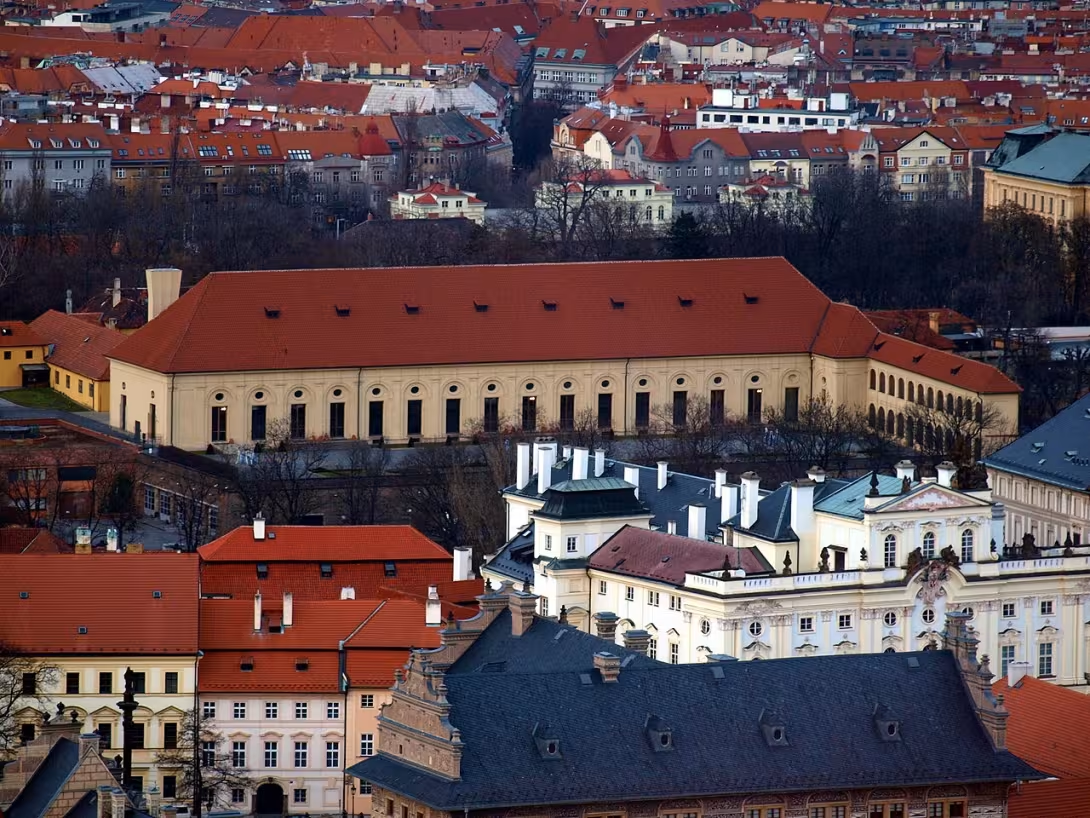

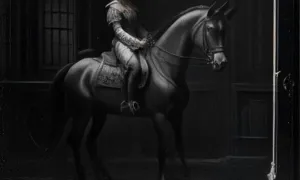
The historical appearance on the left is an AI-generated visualisation and serves as inspiration only.
Historical milestones
- 1572
- the formation of the original older smaller horseman
- 1694
- building a contemporary baroque horseman
- 1760
- fire building and subsequent reconstruction of ceiling
- 1949
- start using the building as an exhibition hall
Architectural development
The construction was designed by Jan Baptiste Mathey and built by Marc Canevall. After the fire in 1760, she got a new ceiling, which has been preserved until today. The building measures 92 meters in length and 40 meters in width.
Historical events
In 1760 the building burned down, which led to the first reconstruction. Since 1949, it serves as an exhibition space for important artists.
Owners
Jízdárna Pražského hradu is part of a large area which belongs to the administration of the President's Office. Since its inception in 1694 it has always been associated with Prague Castle and its history. As part of the Castle, it has undergone various periods and changes in ruling dynasties.
Points of interest
- The station is a large Baroque building from 1694, which replaced a smaller building from 1572. - Originally used for riding training and entertainment of nobles, later used as a warehouse. - In 1760 the building burned down, a ceiling was installed in the subsequent repair, which was preserved to this day. - In the time of President Masaryk, the Imperial Eagle was removed from the front facade. - Since 1949, the object serves as an exhibition hall for important artists.
Guide
This guide is narrated by a synthetic voice generated by artificial intelligence.
Show guide text
This text was created by artificial intelligence and has not been editorially reviewed. It may contain inaccuracies.
Welcome, distinguished visitors. Please stop for a moment and take a breath. You are standing in front of one of the very interesting and powerful buildings of the castle, which we know as the Prague Castle Riding House. If you look at it now, you will see a large, rectangular object in front of you, which, both in size and in view, dominates the surrounding space. It is a building that emits strength and stability, and yet it carries a trace of the elegance of the time when Baroque architecture was in fashion. Feel its total power and imagine the excitement that must have been here centuries ago when the Prague nobles were gathered here and there were sounds of hooves falling into the ground.
Now let's look together at how this building came into being and why it actually stands here. The history of this place dates back to the sixteenth century. The first, much smaller building for horse riding, was built here already in the year one thousand five hundred seventy-two. However, with the advancing time and rising demands, it has proved that the original space is no longer sufficient. That is why in the year one thousand six hundred ninety-four a building was created, which you see before you today. It was built on the direct instruction of Emperor Leopold first. At the time, it was not only a practical space for exercise, but, above all, a representative space. The emperor wanted a space where riding training could take place at the highest level and where the nobility could meet in common entertainment. It was a place where the discipline of equestrian art was linked to the social life of the most powerful families of the time.
Now pay attention to the architecture itself. Please look up on the roof. Notice its specific shape. It is a arched wooden valb roof that covers the entire huge rectangular space. It is this roof and the total composition of the building that are typical of their time and correspond to the intention to create a spacious hall without unnecessary obstacles inside. The author of this project was Jan Baptista Mathey, which was able to combine functionality with modern style. When you examine the facade and the overall availability of the building, you realize how strongly the building was designed to contain a large number of horses and people while at the same time acting nobly.
When we think about the people who were connected to this place, we must mention not only the Emperor Leopold first, who had the building built, but also the other personalities who left their mark. These included František Josef Šlik or Marco Canevalle. The names of these men are linked to the history of this space and the way in which the riding place was used over the centuries. It's fascinating to think that the same walls that surround us today have heard people talking from completely different editions. Later, Tomáš Garrigue Masaryk met with this place, which shows us how the functions of the building changed together with the changes of the whole Czech state and castle.
And here we come to the part that may interest you. The history of this building was not just about festivities and exercises. The station went through some dramatic turns. In the year one thousand seven hundred sixty there was a great tragedy when the building was hit by a fire. The heat of fire destroyed a significant part of the structure, but it was this disaster that led to an important change. A new ceiling was installed in the subsequent reconstruction. And what's interesting now is that this very ceiling, which was created after the fire, has survived to this day. He's a silent witness to survival and recovery.
Another interesting thing is the transformation of the purpose of this building. After centuries of fame as the center of riding art came the time when the building lost its original function. At certain times, it was used much less nobly, specifically as a warehouse. Imagine the contrast, when ordinary things and supplies began to be stored in the rooms for imperial horses and aristocratic balls. However, this decline did not last forever. Since the year one thousand nine hundred forty-nine, the building has started to function as an important exhibition hall. That brought her dignity back and opened herself up to the public in a whole new role. Instead of the hooves of horses, here are the footsteps of visitors who come to admire art and culture.
When you stand before this baroque building today, see it as a symbol of transformation. From a small horseman from the sixteenth century to a magnificent Baroque palace, to flames of fire and silence of warehouses, to today's space for culture and exhibitions. It's a building that survived changes in regimes, war and oblivion. It's proof of how architecture can survive its original functions and still be useful and beautiful.
Now imagine for a moment what this space would look like if you were in a thousand six hundred and ninety-four. Do you hear that noise? You see these people in period clothes and proud horses? It is precisely this ability to bring together images of the past in the imagination, which makes the Prague Castle visit so special. The horseman is not just a pile of stone and wood, it is the memory of the castle inscribed in space.
Now, we invite you to take a closer look at the building, go around it, and maybe try to find traces of all the stories we talked about in the detail of the roof or in the power of the walls. Explore the surroundings and perceive the atmosphere of this place, which combines military discipline, noble playfulness and modern culture.
This concludes our short trip to the history of Prague Castle Equestrian. We hope that this view has helped you better understand the importance of the construction that you are facing. Now it is up to you to discover the next corner of this beautiful castle. We wish you a pleasant continued journey and many other fascinating discoveries in the heart of Prague. Goodbye.
Tips for visitors
The best time to visit is late spring or autumn, when the colors of the surrounding nature are the most distinctive and the streets of the castle are less crowded. A building from the late seventeenth century is very noble in this period.
Transport to the Hradčan area is possible by car and public connections; Check specific routes and stopping options in the current connection search engine. We recommend you choose a path on foot to enjoy the atmosphere of the historical core.
We recommend that you wear comfortable shoes suitable for walking on historic tiles and camera. Due to the location in the castle area, it is advisable to carry laminated clothing, because it is often colder in this part of Prague.
For the best photos we recommend to use the morning or late afternoon light to highlight the baroque details of the facade. The most interesting views offer the surrounding space, from where you can see the size of the building.
During a short walk around you can visit the Royal Garden, Dust Bridge or Deer Trench. For families with children, these rooms are ideal for exploring and relaxing in nature next to historical architecture.
Frequently asked questions
Can the monument be visited?
We have not verified whether this monument is accessible. Please ask the owner or operator, or the local municipal office.
Where is the monument?
Location: Hradčany, Hlavní město Praha. The map on this page shows the exact spot.
Why is the monument protected?
It is listed in the Central List of Cultural Monuments of the Czech Republic as a national cultural monument. It is protected as part of a larger listed ensemble.
For kids
Imagine going back 332 years until Prague Castle was still young and famous as King Charles II. That was 1694. There was a beautiful riding hall with white walls and a slim tower.
Where would you like to go first? The big hall where the knights held their tournaments? Yes or no? But watch out, because those knights were real! They were the most skilled warriors of their time, and they had to be good riders.
Businesses nearby
Do you run a restaurant, accommodation, shop, museum, rental, wellness or other visitor service near this monument? Show yourself directly to the people heading to it — this is how they will see you in the app and on the web:
Events nearby

Zdroj akcí: otevřená data měst a obcí ČR (Národní katalog otevřených dat) a kalendář akcí Národního památkového ústavu.
Nearby
Královská zahrada, Jelení příkop, Prašný most, Pražský hrad.
Accommodation nearby
Trips and activities nearby
Guided tours, tickets and activities nearby from GetYourGuide
Affiliate link: if you buy from the partner, we may receive a commission. The price for you does not change.
Search tours and activities →Themed route
Here is the design of the thematic route:
1. Royal Garden (park) - Ideal place to start the trip and walk in nature before entering the castle space. 2. Dust bridge (bridge) - A historical link that will guide you towards the main compound. 3. Deer Trench (valley) - Malleable path with views leading to the gates of the castle. 4. Prague Castle Area (Castle Complex) - A space with many historical buildings and courtyards. 5. Jízdárna Pražského hradu (others) (monument) - The main destination of the journey where one can admire the architecture and tradition of riding art.
Seasonal recommendations
In spring, the surrounding gardens awaken to life and the fresh greenery accompanies a walk to the building. The light is soft and pleasant, which creates a fresh atmosphere. We recommend shoes suitable for colder morning walks and a light sweater which can be easily postponed when the sun begins to warm.
In the summer months it dominates areas of intense sun and hot air. The environment is clear and dynamic, while the surrounding trees provide the desired shade. It is advisable to start early in the morning to avoid the greatest heat and the greatest number of visitors. Don't forget the hat and light, breathable clothes.
Autumn brings golden leaves to the surroundings and a misty wound that gives the place a mysterious touch. Lighting is golden and soft, which is ideal for viewing architecture. It is practical to choose layered clothes and waterproof shoes because the weather in this period is very variable.
In winter, the atmosphere is quiet and calm, often accompanied by a bag crash or freeze. The building in winter seems sober and noble. It is necessary to wear warm winter clothes, gloves and scarf so that a visit in the cold air remains a pleasant experience.
Visualizations and artistic views


The visualisations are generated by artificial intelligence and serve as inspiration.
Photos from the area
Real photos taken near the monument

Zdroj a licence jsou uvedeny u každého snímku.
View from the area
This animation was generated by artificial intelligence from a real photograph of the surroundings. The motion and details are not real footage of the location.
Tips from visitors
No tips yet. Be the first!
Log in and add your tip.
Sources and literature
Photos: VitVit / CC BY-SA 3.0, rozlišení zvýšeno umělou inteligencí — Wikimedia Commons. The author and licence also appear when you hover over the image.
Faktickým podkladem tohoto textu byl článek na Wikipedii, jehož autory jsou přispěvatelé Wikipedie. Článek je dostupný pod licencí CC BY-SA 4.0.
Location on the map
More monuments – Hradčany
Show all in the municipality


Příběhy a pověsti
Legendy, pověsti a příběhy spjaté s touto památkou
Fotografie návštěvníků
Přidat fotografiiZatím žádné fotografie. Buďte první, kdo přidá fotografii z návštěvy!
Máte k místu vzpomínku nebo zajímavý příběh?
Log in a přidejte svou fotografii nebo hodnoťte.
Za ověřenou návštěvu v aplikaci získáte víc bodů — poznáme podle GPS, že jste na místě.
Reviews and comments