



Kamenný most v Písku Bridge
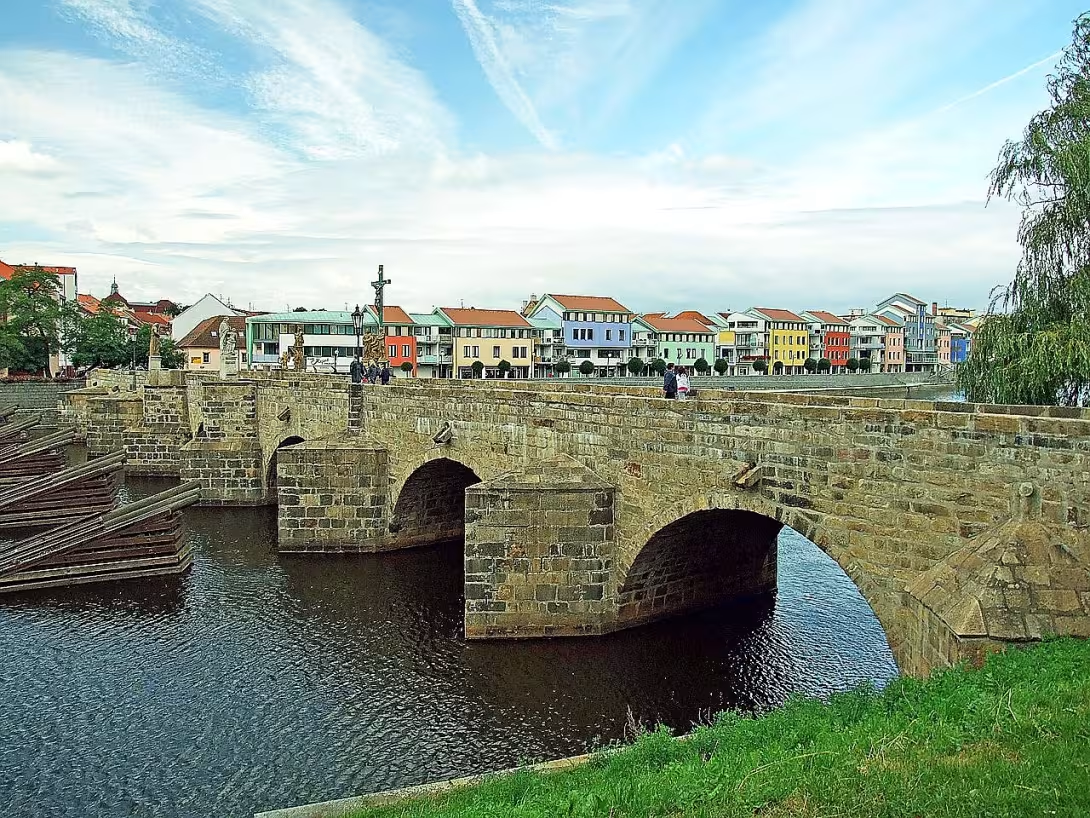
Today, when a tourist walks on the sandy Stone Bridge, he walks on one of the oldest Czech buildings. The bridge, which is unofficially called Jeleni - according to the reputation she named it - was probably built in the third quarter of the 13th century, i.e. under the rule of Přemysl Otakar II. It is the oldest preserved stone bridge in the Czech Republic and historically the second after Prague's extinct Juditina Bridge. For a long time, however, he had no official name; It was only in 2007 that the dispute was brought to an end by a decision to call it Kamenný most v Písku. But the locals still call it the Old Bridge.
The construction itself is an imaginative sign of the time: the bridge was built on dry land and only after its completion was the Otava River artificially transferred to a new trough passing beneath it. Although the construction dates back to the 13th century, the first written references appear only in 1348, when Karel IV. mentioned it by decree, which ordered the fines collected in the city to be used to maintain the bridge.
The bridge became the key point of the Golden Trail, which linked Baltic to the Mediterranean. After the bridge, the salt was transported from Bavaria to a sand salt warehouse; it disappeared after 1707, when the Habsburg patent ordered the sale of salt in the Czech Republic exclusively from the Habsburg Solivary. Since 1797, there has been an Iraqi road along the bridge from Vodňan to Blatná and Nepomuk. The bridge was so important that the State took it over in 1825 and two years later into its administration.
The construction is a Gothic construction 109,75 metres long and 6,25 metres wide, with a ground of 4,5 metres. It stands on six pillars and is formed by seven arches. Up to now, six original arches have been preserved with a range of 7,0- 8,2 metres; from 1768 comes a segment arch of 13 metres, designed to pass through the raft. The bridge originally had two bridge towers at both ends - the first one collapsed in 1768 during the flood, the second one deliberately demolished in 1825 because of traffic. Their fragments can be seen on the left bank, where they went during the bridge repairs.
Today on the bridge there are picco replicas of Baroque statues. The most famous is Calvary from the 18th century by the chimelic artist Jan Hammer; shows the Virgin Mary, Mary Magdalene and the apostle John with Christ measuring six meters. Replication of these statues dates back to 1997. The other statues are Jan Nepomucký with two angels and Saint Anna Samothird with Saint Anthony of Padua; they have been restored and have been exhibited since May 2010 at the Laundry Museum.
The general reconstruction of 1994-1996 ensured the anchoring of the foundations into the rock, which proved to be effective - the bridge also survived the catastrophic floods in August 2002. The water took the Baroque statue of the angel and most of the stone railing and the level reached up to two metres above the road. Today the bridge is a national cultural monument that should be visited by anyone interested in Czech history and construction.
Then and now
Drag the slider to compare how the landmark may have looked when it was built with the view today.
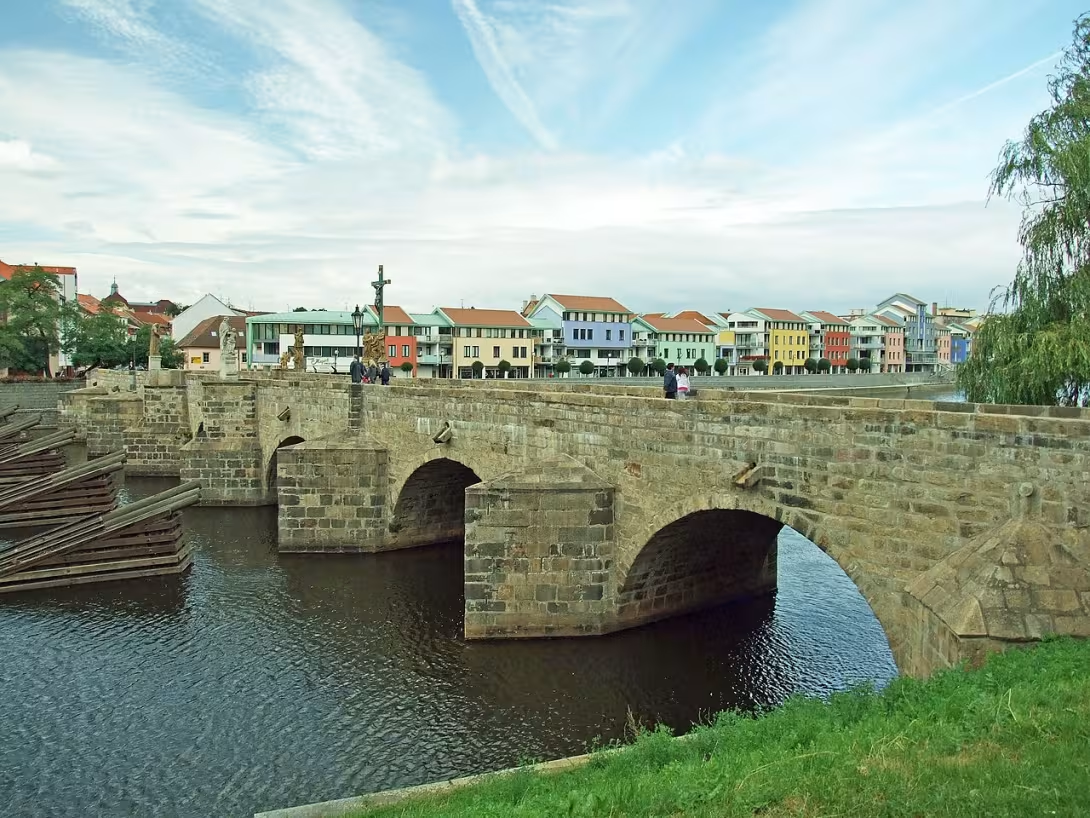
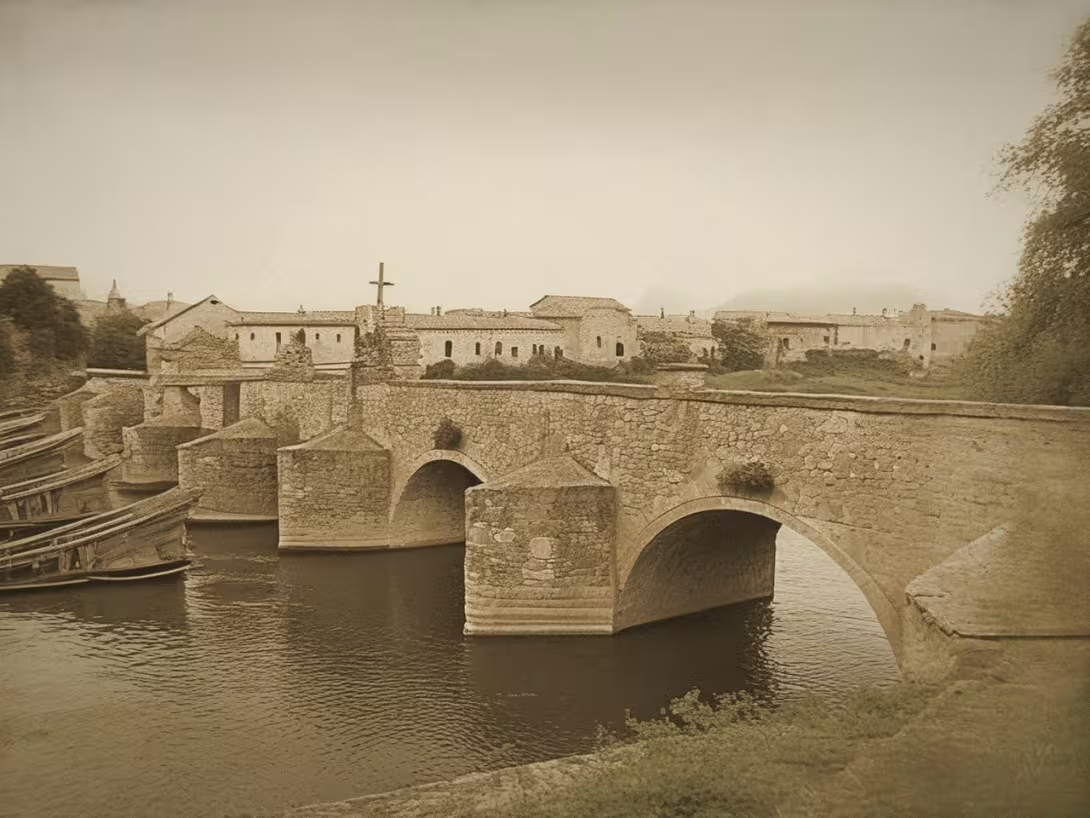
The historical appearance on the left is an AI-generated visualisation and serves as inspiration only.
Historical milestones
- 1348
- The first written mention of the bridge in Charles IV's maintenance order.
- 1768
- The collapse of the first bridge tower during the flood and construction of a new segment arch.
- 1825
- Taking the bridge to state direction and tearing down the second bridge tower.
- 1997
- Installation of replicas of Baroque statues on the bridge.
Architectural development
The bridge was built as a seven-arc Gothic structure on six pillars. Originally, it was equipped with bridge towers at both ends, which were not preserved. In 1768 a segment arch was added for the voroway. The construction uses sandstone and in the framework of modern repairs, the foundations were anchored into the rock.
Historical events
1348: First written mention of the bridge in the list of Charles IV. 1768: The collapse of the first bridge tower in the flood. 1994- 1996: General reconstruction of the bridge. 2002: Catastrophic flood damaged railings and statues.
Owners
Originally the city of Písek, since 1825 the state administration.
Points of interest
- The bridge was built on drought and the Otava River was transferred to a new trough below it only after its completion. - It is the oldest preserved stone bridge in the Czech Republic and historically the second one after the old Prague bridge of Judith. - Originally had a bridge at both ends of two towers; one collapsed during the flood in 1768 and the other was demolished in 1825 due to transport. - The bridge consists of seven arches, one of which dates back to 1768 and was designed to sail through the raft. - During the floods in August 2002 the water level reached up to two metres above the ground, but thanks to the anchoring of the foundations to the rock, the bridge lasted.
Guide
Show guide text
This text was created by artificial intelligence and has not been editorially reviewed. It may contain inaccuracies.
Welcome to the Stone Bridge in Sand, one of the oldest and most important monuments of our beautiful South Bohemia region. You are standing in front of a historic building that is proud to be the oldest preserved stone bridge in the Czech Republic. In front of you is the Otava River, beneath which water flows like a living spring of history. The bridge with its robust architecture and massive arches is proof of the masterful art of construction from the third quarter of the 13th century.
Let us immerse ourselves in its origin and historical context. The bridge was built as an important link on the Golden Path, which used to import salt from Bavaria. This strategic route was of key importance for the commercial and economic development of the region. Přemysl Otakar II. was one of the historical personalities involved in its creation, although specific architects were not known. In 1348 there was the first written mention of the bridge in the order of Charles IV, who took care of its maintenance.
Look up and notice the power of the arches that attest to the masterful art of building that time. The bridge was built on drought, which means that the river Otava was seduced after the construction was completed. This indicates the planning and technical capabilities of the builders at the time. Today you can see replicas of Baroque statues that decorate the bridge and give him a wonderful look.
Now let's look at the key stories and personalities associated with this monument. In 1768, the first bridge tower was collapsed during the flood, resulting in the reconstruction and construction of a new segment arch. After taking the bridge to the state direction in 1825, the second bridge tower was torn down. These events show how important it was to maintain the bridge in the construction and to try to adapt its maintenance to the needs of its time.
The interesting thing is that he originally had a bridge at both ends of the tower. One of them collapsed in the flood in 1768, which changed his face. Even though we are witnessing another bridge today, the original structure and its history tell us a lot about the past.
Let's move closer and look at the details. Notice how arches and stones tell stories about period techniques and art. The atmosphere here is full of peace and history that can reach you for centuries.
We recommend exploring the surroundings of the bridge where there are many other attractions such as parks or ancient streets of Sand. The stone bridge opened the door to your past; Now it is up to you to look at this beautiful city and its other hidden treasures.
Thank you for your visit to the Stone Bridge. We hope you will find yourself here in a well-known space full of history and beauty. When you come back to us, we're preparing more stories about our rich inheritance.
Tips for visitors
The best time to visit is early morning or at sunset when the bridge is less busy by tourists and light creates beautiful reflections on the surface of the Otava river. You avoid crowds and enjoy the historic atmosphere in peace.
You can easily reach the Sand by car and public transport.
For photography, we recommend choosing a position on the river bank under the bridge where its Gothic architecture and arches stand out. The best lighting conditions for the images are obtained during the so-called gold watch, when the sun illuminates the stone wall.
In the vicinity of the bridge you can visit the Sandy Castle, which is just a few minutes' walk away. The walk along the Otava River offers a pleasant rest and the historic center of Písek attracts you to discover other sights.
The location is ideal for families with children due to flat terrain and close proximity to the river. We recommend you take with you comfortable shoes for walking on historic tiles and possibly small snacks that you can enjoy on the river bank while watching running water.
Frequently asked questions
Can the monument be visited?
This is a structure in a public space that can usually be seen from outside free of charge. We have not verified that this particular one is freely accessible.
Where is the monument?
Location: Písek, Jihočeský kraj. The map on this page shows the exact spot.
Why is the monument protected?
It is listed in the Central List of Cultural Monuments of the Czech Republic as a national cultural monument (register no. 167).
Businesses nearby
Do you run a restaurant, accommodation, shop, museum, rental, wellness or other visitor service near this monument? Show yourself directly to the people heading to it — this is how they will see you in the app and on the web:
Events nearby
Zdroj akcí: otevřená data měst a obcí ČR (Národní katalog otevřených dat) a kalendář akcí Národního památkového ústavu.
Nearby
Sandy Castle, Otava River, historical center of Písek.
Accommodation nearby
Themed route
Thematic cruise route around the Stone Bridge in Sand
1. Stone bridge * Type: * Historical bridge * Why is it worth visiting: * Stone bridge is one of the oldest and most beautiful monuments in the Sand, built in the 13th century. It's a key place to understand the history of the city and its architectural heritage.
2. Sandy Castle * Type: * Historical Fortress * Why is it worth visiting: * Sand Castle, built in the 13th century, is one of the oldest walls in the Czech Republic. It offers views of the city and river Otava and is an important part of the historical context of the area.
3. Historical Center of Písek * Type: * Urban landmark * Why is it worth a visit: * Walk on the streets of the historical centre allows you to see Renaissance and Baroque architecture, including the church of St. Vavranice. The centre is full of the atmosphere of past times and offers many attractions for historically inclined visitors.
4. Otava River * Type: * Natural environment * Why is it worth a visit: * Otava River is a living element of the city and contributes to its beautiful view. Walk on its shore offers a peaceful way to enjoy the natural environment and relax.
5. Square of the Republic * Type: * City Square * Why is it worth a visit: * The square of the Republic is the heart of the city where there are various historical and cultural monuments. It is an ideal place for relaxing and admiring architecture in the centre of Sand.
This route offers a comprehensive view of the history and culture of the city Písek, with an emphasis on its most important monuments.
Seasonal recommendations
Spring in Sand brings to the valley The swelling of the awakening nature, when the surrounding grassy areas and trees, after a winter's sleep, take a fresh green colour. Light is often soft and scattered in this period, which creates a calm atmosphere ideal for photographic images of stone structure without sharp shadows. Practically this period is suitable for those who prefer peace because the main tourist wave has not yet occurred. It is recommended to dress layered because spring weather is usually variable and can bring unexpected rain. The best time to visit is in the morning, when the temperature is already pleasant, but a large number of people have not yet arrived.
Summer is the most intense season for visiting the Stone Bridge, when the weather is the hottest and the longest days. The specific element is the strong sunlight, which can illuminate stone blocks very contrastingly in the morning, and also the presence of summer flower treatments in the surroundings if they are organized. The atmosphere is more lively, but this is also related to higher attendance, especially on weekends and holidays. The practical advice is to arrive as early as possible in the morning to avoid crowds and heat, or rather late in the afternoon. Clothes should be light, breathable and sun-protected, including hat and sunglasses. The water is necessary because in the summer heat we quickly dehydrate.
Autumn in Sand offers a unique color game where the leaves of the surrounding trees turn shades into yellow, orange and red tones, creating a wonderful contrast to the grey stone bridge. Light is usually lower and warmer, often golden, which gives the scene a romantic and nostalgic character. The atmosphere is colder and often cloudy, which may be less tempting for some visitors, but ideal for lovers of peace and melancholy. Practically, this period is less crowded, allowing for a more private experience. Clothes should be warm, with emphasis on the waterproof layer, because autumn rains are common. The best time is the late afternoon when the sun falls low and lights the bridge from the side.
Winter brings the Stone Bridge a specific, often dramatic look, when frost and possible snow emphasize the texture of stone and historical patina. The light is short and pale, often drawn, which creates a cold but majestic atmosphere. Nature around the bridge is in resting mode, without leaves and flowers, allowing you to better see the design itself and its relation to the river. Practically a visit in winter is possible, but requires preparation for cold and short days. Clothes must be very warm, including gloves, scarf and winter shoes with good heel, because the sidewalks can be slippery. The best time is the late morning when the temperature is highest and the light is already sufficient for orientation and photography.
Visualizations and artistic views


The visualisations are generated by artificial intelligence and serve as inspiration.
Photos from the area
Real photos taken near the monument

Zdroj a licence jsou uvedeny u každého snímku.
Tips from visitors
No tips yet. Be the first!
Log in and add your tip.
Sources and literature
Photos: I would appreciate being notified if you use my work outside Wikimedia. More of my work can be found in my personal gall / CC BY-SA 3.0 — Wikimedia Commons. The author and licence also appear when you hover over the image.
Faktickým podkladem tohoto textu byl článek na Wikipedii, jehož autory jsou přispěvatelé Wikipedie. Článek je dostupný pod licencí CC BY-SA 4.0.
Location on the map





Příběhy a pověsti
Legendy, pověsti a příběhy spjaté s touto památkou
Fotografie návštěvníků
Zatím žádné fotografie. Buďte první, kdo přidá fotografii z návštěvy!
Log in a přidejte svou fotografii nebo hodnoťte.
Za ověřenou návštěvu v aplikaci získáte víc bodů — poznáme podle GPS, že jste na místě.
Reviews and comments