






kaple v Křešicích Chapel
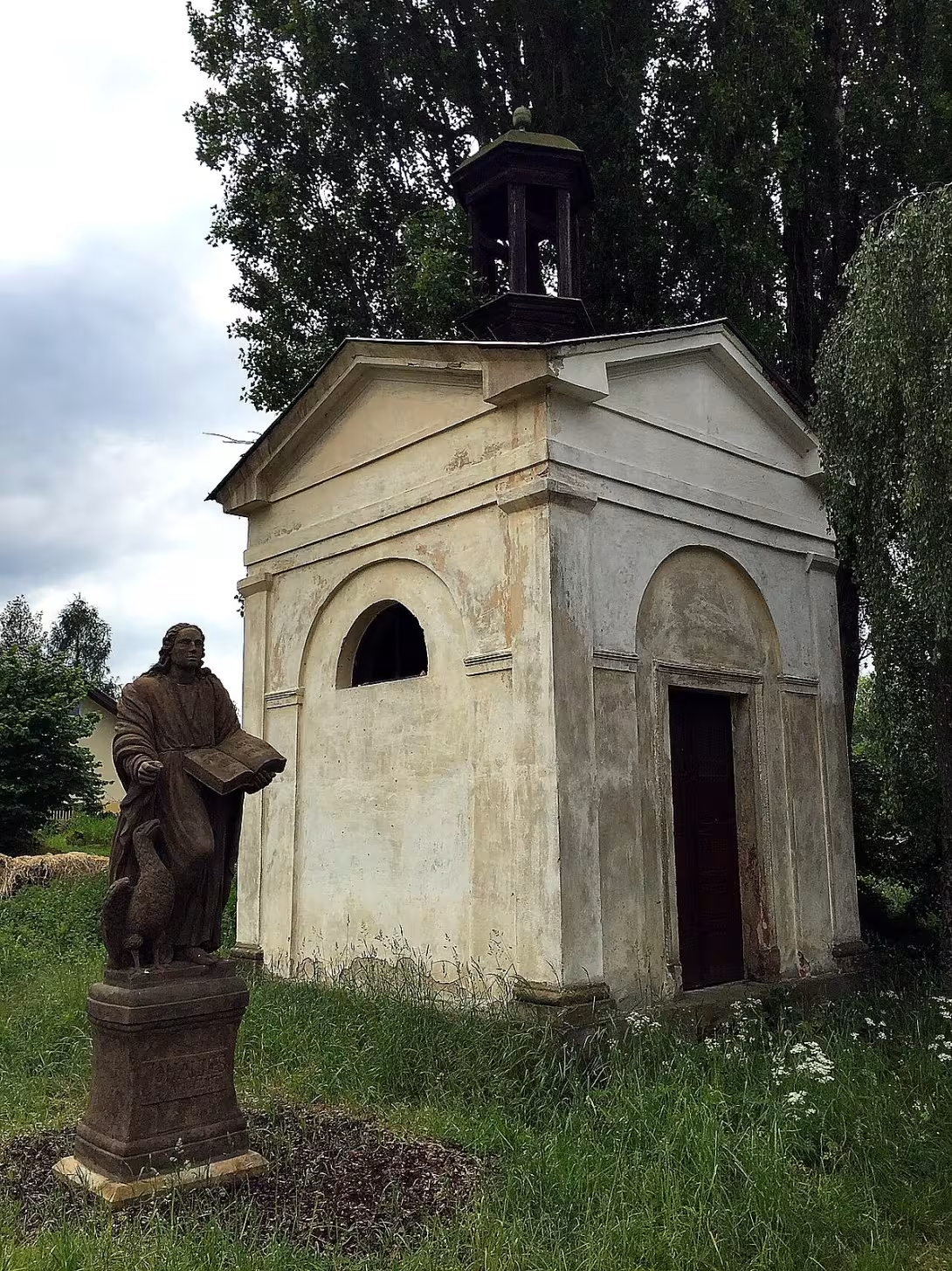
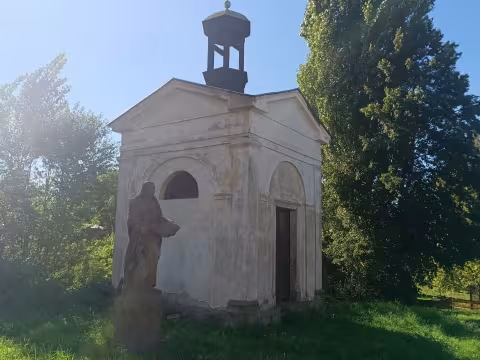
The Cholera Chapel in Křešice is a small yet historically significant sacred building located within the Děčín-Křešice community, part of the Ústecký kraj region. Constructed in 1830 by local farmer J.G. Preidl, this chapel was built as a response to the devastating cholera epidemic that swept through Bohemia during that period. Its historical and architectural significance lies not only in its origin but also in its journey through time, reflecting both community resilience and changing cultural landscapes.
The origins of the Cholera Chapel are deeply rooted in the social and health challenges faced by Europe in the early 19th century, particularly the widespread cholera epidemics that prompted communities to seek spiritual solace. Constructed as a votive offering for divine intervention against this deadly disease, it embodies the community's hope and faith during a time of crisis. Built by J.G. Preidl, a local farmer, in 1830, it stands as a testament to the communal response to such health emergencies.
Architecturally, the Cholera Chapel is characterized by its simple yet distinct design. It features a square floor plan with pilasters and blind arcades, topped by a triangular gable roof. The entrance is marked by a rectangular portal that leads into an interior with a flat ceiling. This straightforward architectural style reflects both the functional needs of the time and the spiritual intent behind the chapel's construction.
Throughout its history, the Cholera Chapel has experienced various phases of ownership and administration. Initially serving as a place for masses on St. John the Evangelist’s feast day in the early 19th century—possibly due to a nearby statue of the saint—the chapel was closely tied to local religious practices. After World War II, following the expulsion of its German-speaking inhabitants, the chapel fell into disrepair. However, it was saved from demolition by the local volunteer fire brigade in the 1980s, who restored and repurposed it as a storage facility.
The chapel's journey through time is marked by several key events and curiosities that highlight its historical significance. Known sometimes as "cholera" due to its origin during the cholera epidemic, the chapel has been associated with local religious traditions, particularly those linked to St. John the Evangelist. This connection suggests a possible dedication of the chapel to this saint, further emphasizing its spiritual importance.
Today, the Cholera Chapel is maintained by Děčín's Nativity Christian Primary School, which aims to restore and preserve its original sacred purpose. The school’s efforts have revitalized interest in the chapel, allowing visitors to explore its interior during events like Noci kostelů (Nights of Churches). This restoration work underscores the community's ongoing commitment to preserving their cultural heritage.
Visiting the Cholera Chapel offers a unique glimpse into the historical and spiritual life of 19th-century Bohemia. Its story is one of resilience, faith, and communal effort, making it a noteworthy site for those interested in history and architecture. The chapel stands as a reminder of how communities have historically sought solace and strength through sacred spaces during times of crisis.
Then and now
Drag the slider to compare how the landmark may have looked when it was built with the view today.
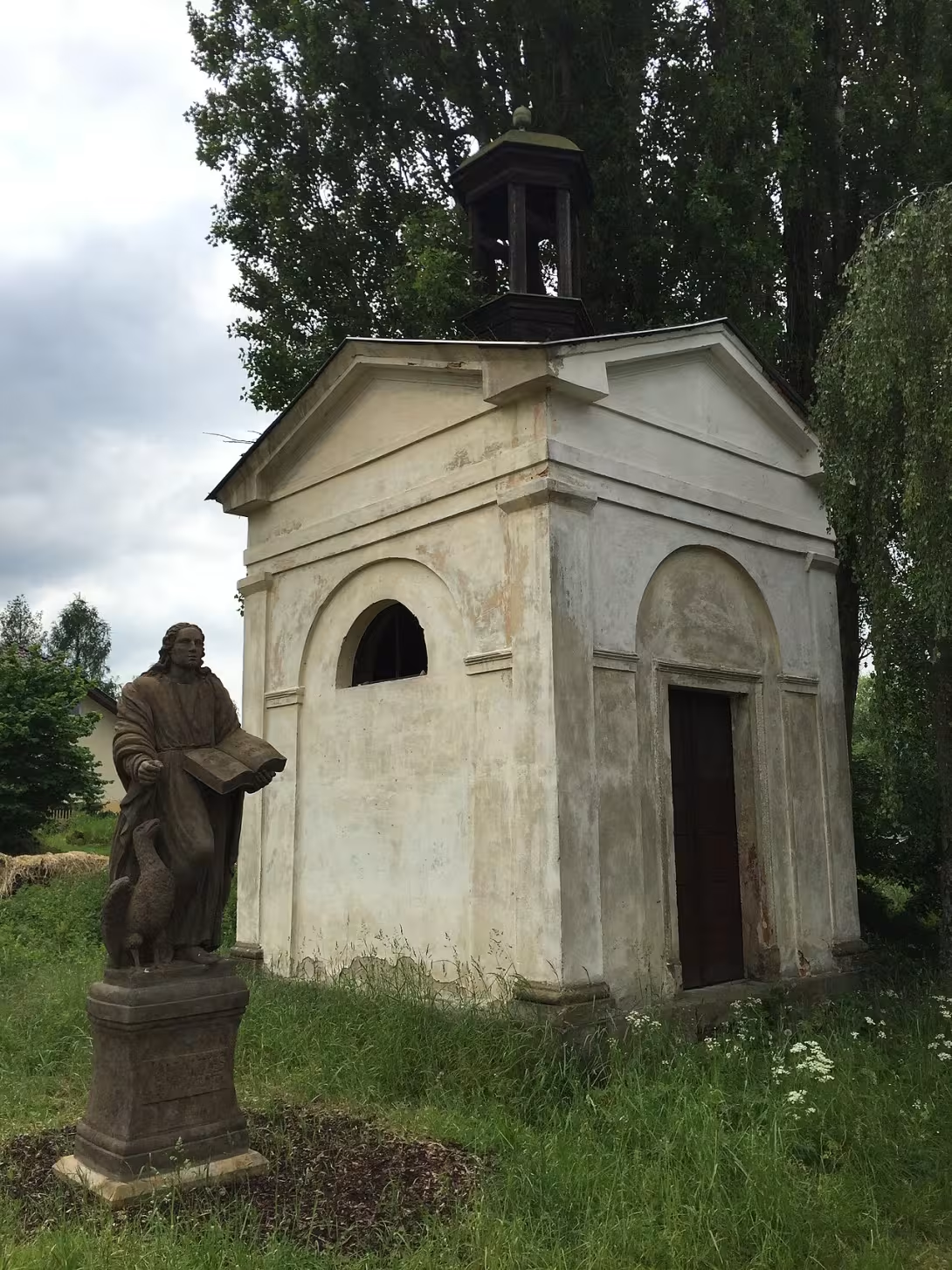
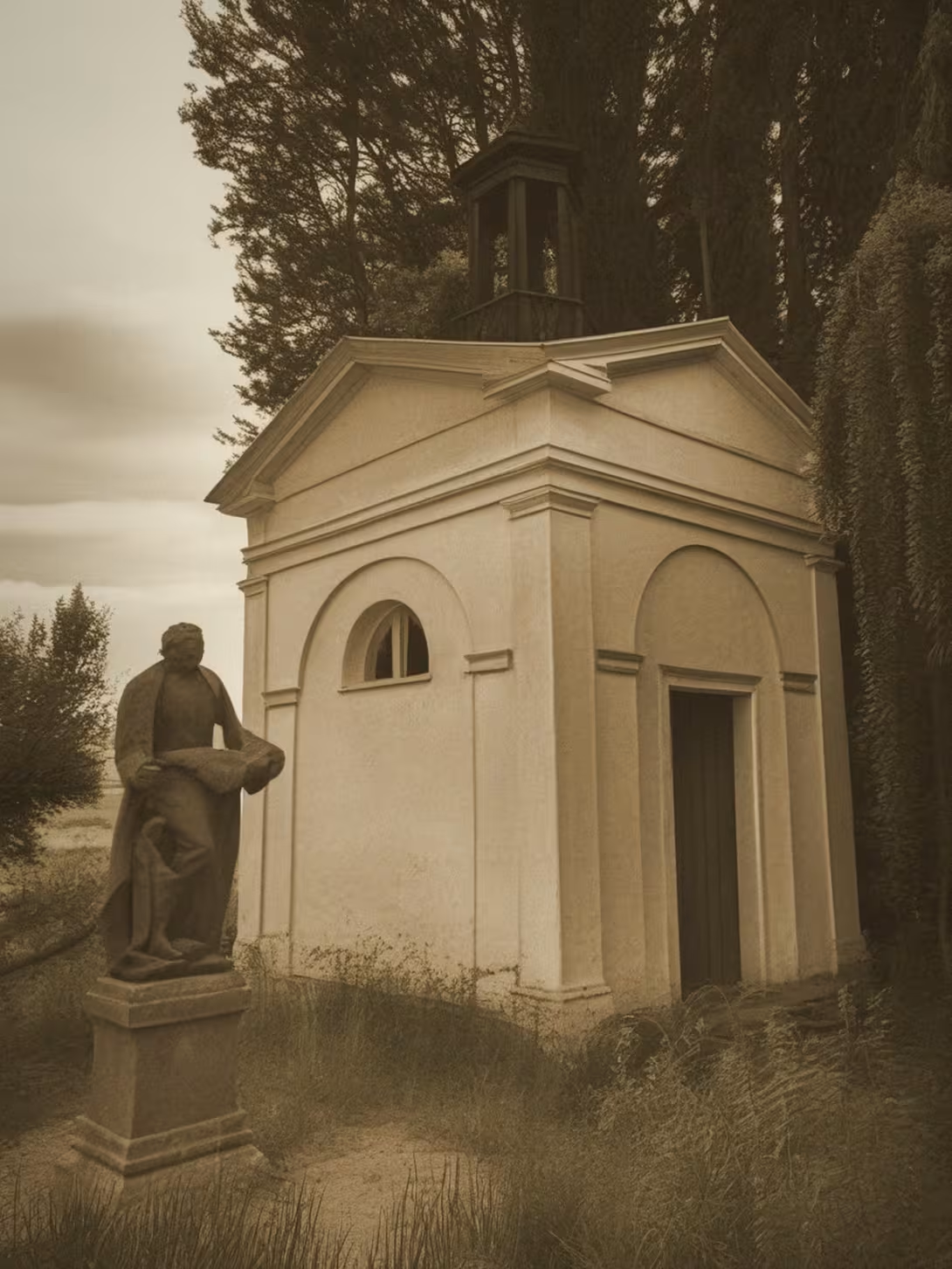
The historical appearance on the left is an AI-generated visualisation and serves as inspiration only.
Historical milestones
- 1830
- The chapel was built as a response to the cholera epidemic.
- c. 1830
- First mention of Mass on the feast day of St. John the Evangelist.
- after 1945
- The chapel fell into disrepair after the expulsion of German-speaking inhabitants.
- 1980
- Restoration of the chapel and its conversion into storage spaces.
- 21st century
- Care for the chapel taken over by a primary school in Děčín on Christmas Day.
Architectural development
The Cholera Chapel was constructed in 1830 with a simple architectural design featuring pilasters, blind arcades, and a triangular gable roof. Over time, the chapel fell into disrepair but was restored by local volunteers in the 1980s to prevent its demolition. In recent years, it has been maintained by Děčín's Nativity Christian Primary School with efforts to restore its original sacred purpose.
Historical events
1830: The chapel was built by J.G. Preidl in response to a cholera epidemic.
19th century: Initially served for masses on St. John the Evangelist's feast day, possibly due to a nearby statue of the saint.
Post-1945: After World War II, the chapel fell into disrepair following the expulsion of its German-speaking inhabitants.
1980s: Local volunteer fire brigade restored and repurposed it as a storage facility.
Points of interest
- The Cholera Chapel was built as a votive offering by J.G. Preidl in 1830 during the cholera epidemic, highlighting how communities sought spiritual solace and divine intervention against health crises.
- Initially tied to local religious practices, the chapel held masses on St. John the Evangelist’s feast day, suggesting it may have been dedicated to this saint due to a nearby statue, reflecting its deep-rooted spiritual significance in the community.
- After World War II, following the expulsion of its German-speaking inhabitants, the Cholera Chapel fell into disrepair but was saved from demolition by the local volunteer fire brigade in the 1980s, who repurposed it as a storage facility, demonstrating community resilience and commitment to preservation.
- Known colloquially as "cholera" due to its origin during the cholera epidemic, the chapel's name underscores its historical connection to one of Europe’s significant health challenges in the early 19th century, linking it directly to this period of crisis.
- Today, Děčín's Nativity Christian Primary School maintains the Cholera Chapel and organizes events like Noci kostelů (Nights of Churches) to restore its sacred purpose, illustrating ongoing efforts to preserve and celebrate local cultural heritage.
Guide
This guide is narrated by a synthetic voice generated by artificial intelligence.
Show guide text
This text was created by artificial intelligence and has not been editorially reviewed. It may contain inaccuracies.
The Cholera Chapel is a small sacred building in Děčín-Křešice. A local farmer named Preidl had it built in eighteen thirty as a parish chapel with a small bell tower.
The reason for building it was apparently an epidemic of cholera, which at that time affected and decimated all of Bohemia. Chapels that were created as a gift to God with a request to avert this disease are sometimes called cholera chapels.
Who the chapel was dedicated to is not known. In the first half of the nineteenth century, however, the parish held masses there on the feast day of Saint John the Evangelist, that is, on December twenty-seventh. This was connected to a parish statue of this saint, which stood in the vicinity of the chapel and was erected as early as eighteen twenty-two. It is therefore possible that the chapel was also dedicated to Saint John the Evangelist.
From the second half of the nineteenth century, the parish of Křešice took care of the chapel. After nineteen forty-five, when the original German-speaking population was expelled, the building gradually began to fall into ruin. In the nineteen eighties, it was saved from demolition by the local volunteer fire brigade. The brigade renovated the chapel and used it as a storage facility.
From the beginning of the second decade of the twenty-first century, the Děčín Christian Primary School Nativity has looked after the chapel. They are trying to restore the building to its original spiritual purpose. Since twenty fourteen, people have been able to look inside the chapel during the Night of Churches.
The chapel has a square floor plan. Its walls are divided by pilasters and a blind arcade, and the front façade is topped with a triangular gable. The entrance portal is rectangular and the interior has a flat ceiling.
Frequently asked questions
Can the monument be visited?
Religious buildings are usually open mainly during services; at other times a visit is normally arranged with the parish or the operator. We have not verified specific times.
Where is the monument?
Location: Děčín XXXI-Křešice, Ústecký kraj. The map on this page shows the exact spot.
Businesses nearby
Do you run a restaurant, accommodation, shop, museum, rental, wellness or other visitor service near this monument? Show yourself directly to the people heading to it — this is how they will see you in the app and on the web:
Events nearby
Zdroj akcí: otevřená data měst a obcí ČR (Národní katalog otevřených dat) a kalendář akcí Národního památkového ústavu.
Accommodation nearby
Trips and activities nearby
Guided tours, tickets and activities nearby from GetYourGuide
Affiliate link: if you buy from the partner, we may receive a commission. The price for you does not change.
Search tours and activities →Themed route
Tematická výletní trasa: Kaple v Křešicích a okolí
1. Kaple v Křešicích (kaple)
Typ: Historická památka
Proč stojí za návštěvu: Tato malá, ale působivá barokní kaple je symbolem bohaté historie a architektonického umění oblasti. Její jednoduchost a elegantní detaily zaujmou každého návštěvníka, který se zajímá o kulturní dědictví.
2. Místní tradiční kavárna v Křešicích
Typ: Kulturní zastávka
Proč stojí za návštěvu: Po prohlídce kaple si odpočiňte a užijte si místní kavárnu, která nabízí tradiční české sladkosti. Je to skvělý způsob, jak se ponořit do místního života a vyzkoušet autentické jídlo.
3. Křešická obecní škola
Typ: Historický objekt
Proč stojí za návštěvu: Tato budova, která byla kdysi srdcem místního vzdělávacího systému, je připomínkou důležitosti vzdělání v regionu. Její historie a architektura jsou fascinujícím svědectvím minulých generací.
4. Místní sportovní hala
Typ: Kulturní místo
Proč stojí za návštěvu: Pokud váš výlet spadne do časného odpoledne, můžete navštívit sportovní halu a pozorovat místní sportovní akce. Je to skvělý způsob, jak se setkat s aktivitami komunity a podpořit místní talenty.
5. Křešická obecní knihovna
Typ: Kulturní instituce
Proč stojí za návštěvu: Zavolejte si čas na klidnou chvilku a prozkoumejte místní knihovnu. Nabídka knih, včetně těch o historii obce, poskytne hlubší vhled do kulturního kontextu Křešic.
Tato trasa nabízí kombinaci historických a kulturologických zážitků, které umožňují návštěvníkům poznat Křešice pod různými úhly.
Seasonal recommendations
Spring: Visiting the chapel in Křešice during spring offers a serene experience as nature awakens with vibrant colors and fresh blooms. The soft light of early morning or late afternoon enhances the beauty of the surrounding landscape, creating an ethereal atmosphere perfect for reflection. As the weather is generally mild, it's advisable to dress in layers to accommodate fluctuating temperatures throughout the day. Spring tends to attract fewer visitors than summer, allowing for a more peaceful exploration of this historic site.
Summer: The chapel in Křešice during summer provides an opportunity to enjoy its historical charm amidst lush greenery and warm sunshine. Long daylight hours mean extended visiting times, but it's best to arrive early or later in the day to avoid crowds that peak during midday. Comfortable walking shoes and light clothing are recommended due to the warmer weather. The vibrant atmosphere of summer makes this an ideal time for those looking to experience both history and nature.
Autumn: Autumn is a spectacular season to visit the chapel, as the surrounding landscape transforms into a tapestry of reds, oranges, and yellows. The cooler temperatures make it comfortable to wander around without the heat of summer, while the soft autumn light adds a cozy ambiance to the historic setting. This time of year sees moderate visitor numbers, allowing for a more intimate experience. Layered clothing is advisable to adapt to changing weather conditions throughout the day.
Winter: Winter visits to the chapel in Křešice offer a unique and tranquil experience as snow blankets the landscape, creating a picturesque scene that enhances its historic allure. The shorter days mean visiting hours are limited, so planning your visit for daylight times is essential. Due to colder temperatures, warm clothing, including hats and gloves, is necessary. Winter tends to draw fewer visitors, providing a quiet atmosphere perfect for contemplation amidst the serene winter setting.
Visualizations and artistic views


The visualisations are generated by artificial intelligence and serve as inspiration.
Photos from the area
Real photos taken near the monument


Zdroj a licence jsou uvedeny u každého snímku.
Tips from visitors
No tips yet. Be the first!
Log in and add your tip.
Sources and literature
Photos: Martin Davídek / CC BY-SA 4.0 — Wikimedia Commons. The author and licence also appear when you hover over the image.
Faktickým podkladem tohoto textu byl článek na Wikipedii, jehož autory jsou přispěvatelé Wikipedie. Článek je dostupný pod licencí CC BY-SA 4.0.
Location on the map
More monuments – Děčín XXXI-Křešice
Show all in the municipality
Příběhy a pověsti
Legendy, pověsti a příběhy spjaté s touto památkou
Za ověřenou návštěvu v aplikaci získáte víc bodů — poznáme podle GPS, že jste na místě.
Reviews and comments