






Kaplička poutní cesty České Budějovice – Dobrá Voda Way of the cross
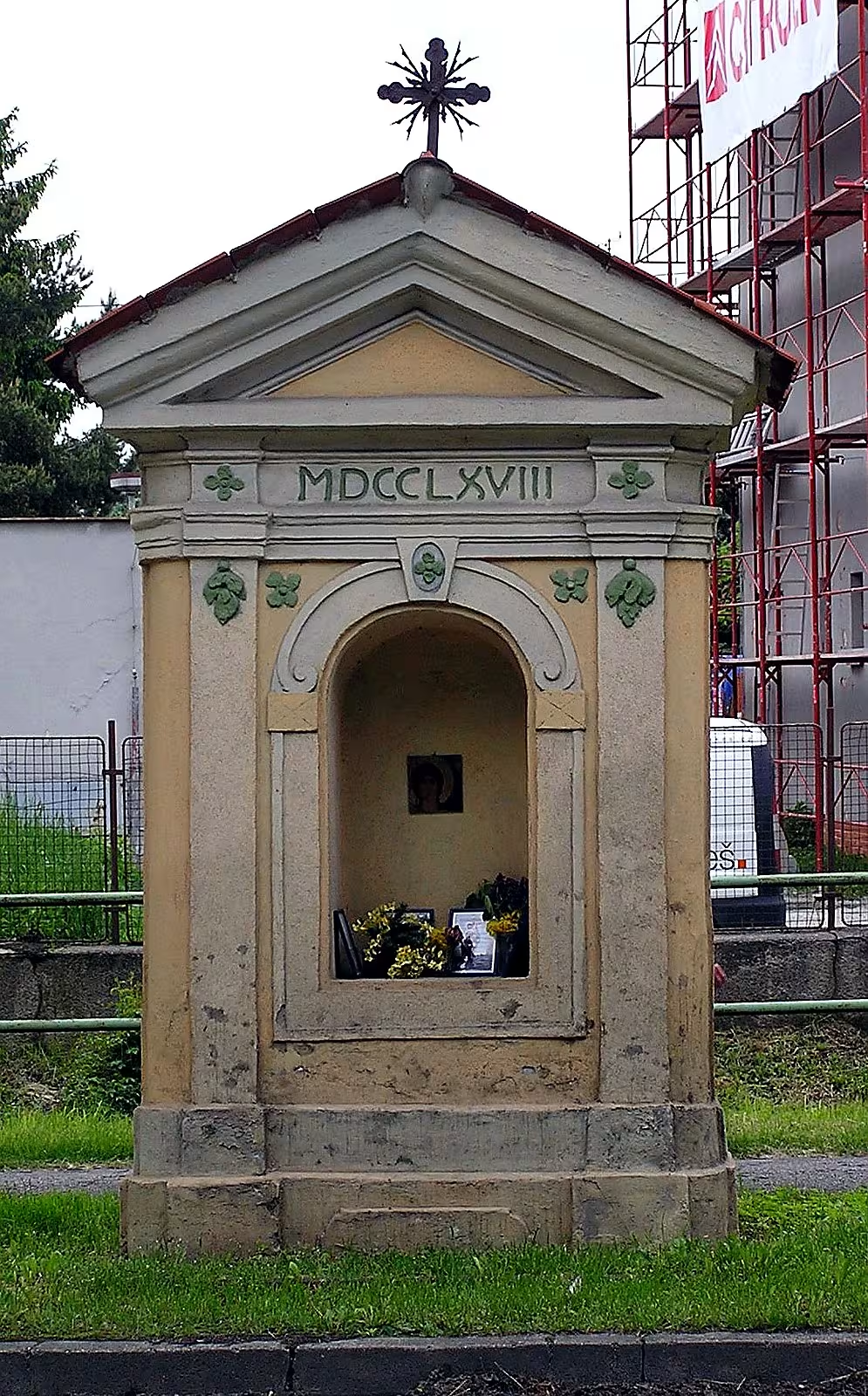
Chaplka on the pilgrimage route České Budějovice - Dobrá Voda is the only preserved element of the extinct baroque cross road that connected the city with the pilgrimage point in Dobrá Voda. Located in the village of Suché Vrné on Dobrovodská Street and is protected as a real cultural monument. This chapel is an important historical element that shows religious sense and pilgrimage movement in the region.
The cross-path consisted of a series of baroque walled niche chapels built in 1768. The road led from České Budějovice via Dry Vrbná to Dobrá Voda, where there was a pilgrimage place with Mariánské spring. The chapel in the village of Suché Vrbná is the only one of these chapels that survived until today. The historical importance of this chapel lies in its original purpose as part of a cross-road that served as a spiritual route for believers.
The chapel is an example of baroque style. It was built as a walled niche and belonged to a series of sacral structures which were part of a wider pilgrimage route. The Baroque architecture of the time was characterized by rich decoration and dynamic forms, which was also reflected in these chapels.
The history of the chapel is linked to several key events. In 1853, one of the other chapels on the route was rebuilt into a chapel with a bell tower, but in 1955, the other chapel on the route was demolished due to the modification of the square and the provision of an operational passage. This chapel in Dry Vrbné has thus become the only preserved element of the original four-kilometer path.
Today, the chapel in the village of Suché Vrbé is available for visitors and represents an interesting cultural monument. Its preservation allows you to understand the historical context of baroque architecture and spiritual life in the Czech countries of the 18th century. Visit this chapel offers an opportunity to explore the rich cultural heritage of the region and appreciate the historical importance of pilgrimage routes.
The chapel is not only a monument to architectural art, but also a witness to the past that reflects the spiritual desires and cultural traditions of the area. Her visit brings understanding of the history and importance of pilgrimage routes in Czech countries.
Then and now
Drag the slider to compare how the landmark may have looked when it was built with the view today.
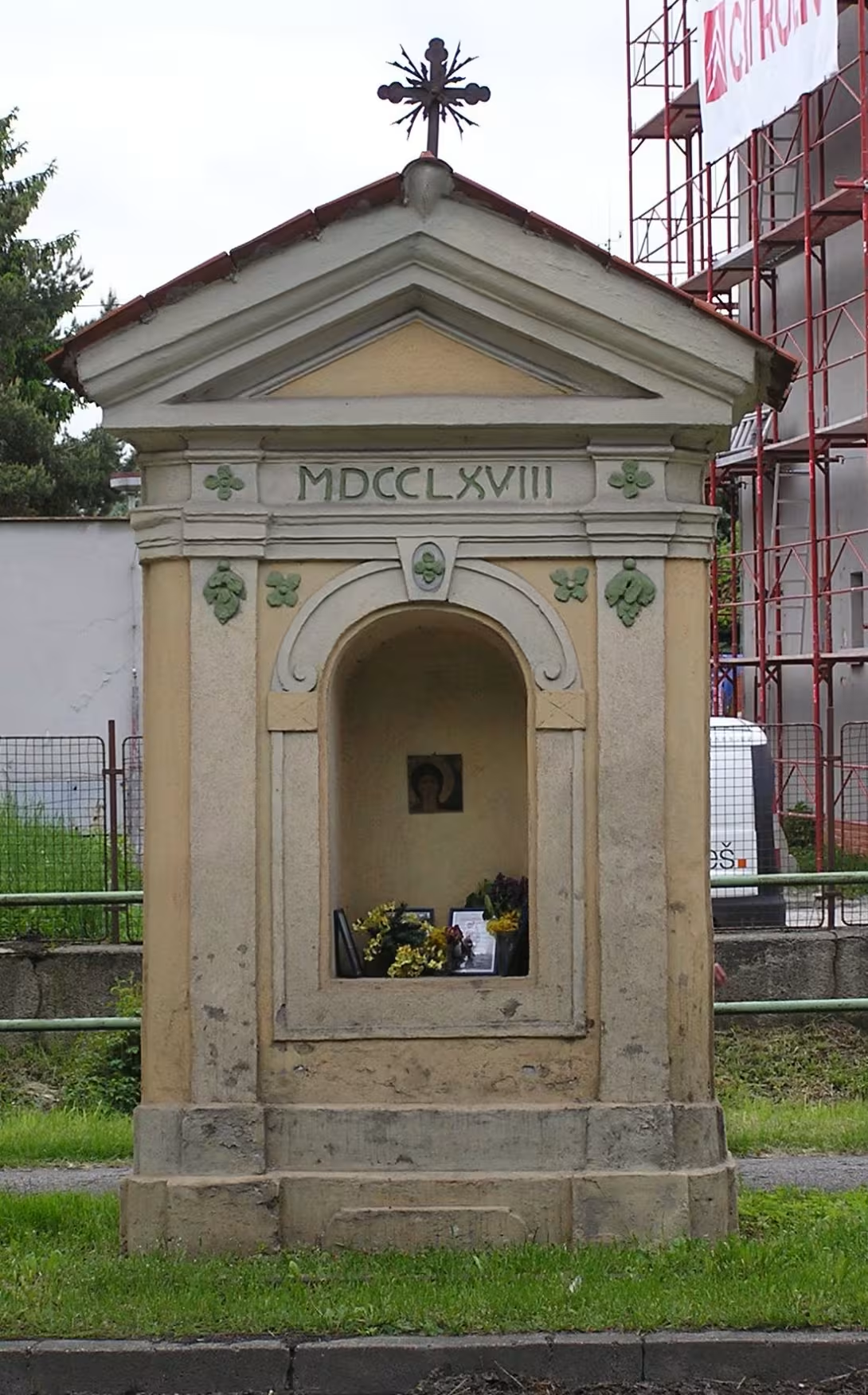
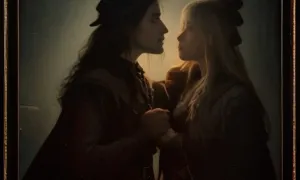
The historical appearance on the left is an AI-generated visualisation and serves as inspiration only.
Historical milestones
- 1768
- The position of baroque walled niche chapels forming a cross path.
Architectural development
It is a baroque wall niche chapel. It was built as part of a larger collection of sacral structures in 1768.
Historical events
In 1768, a number of baroque chapels were built to form the crossroads. In 1853 one of the other chapels on the route was rebuilt into a chapel with a bell tower. In 1955, the second chapel on the route was demolished to adjust the square and ensure clarity of operation.
Points of interest
- It is the only preserved element of the extinct Baroque cross-roads connecting České Budějovice with Dobrá Voda. - This chapel is the only one of a series of baroque walled ornaments built in 1768 that survived. - The original cross road was four kilometers long. - Architecturally, the chapel is an example of baroque style and was built as a walled niche. - In 1955, the second chapel on the route was demolished due to the modification of the square and the provision of an operating passage.
Guide
Show guide text
This text was created by artificial intelligence and has not been editorially reviewed. It may contain inaccuracies.
Welcome. You are standing in front of one of the most precious and silent witnesses of the ancient era, which today shows you in all its humble but immense importance. In front of your eyes is a chapel that is much more than a small building made of stone and bricks. He is the lone guardian of history, the last remnant of something that once formed the living and constantly moving heartbeat of this landscape. Feel now the atmosphere of this place in the village of Dry Vrné. It may seem to you that you're standing by the ordinary little chapel, but try looking at it through the veil of time. This building is the only preserved element left behind by the extinct Baroque cross road that once connected České Budějovice with Dobrá Voda.
Let us now return together to a time when not only random bystanders were walking around, but people with deep faith and a clear goal. Imagine the year 77,60. The world around you was quite different. In this period, at the time of baroque flourishing, faith was a solid part of everyday life, and pilgrimage paths were a natural way to express devotion and seek spiritual peace. Then the landscape was interwoven with paths that were not just links between villages, but sacred paths. This chapel was built just as part of such a journey. The original route was relatively long, measured approximately four kilometres and was not only made up of this one point. The whole journey was decorated with a series of walled niche chapels that made every part of the route sacred. Each was a stop for prayer, a place to stop and a symbol of the connection between the earthly world and the celestial world.
Now pay attention to the very form of this object. Even though the chapel is lonely today, its architecture tells us a story about the craft art of the day. It's a baroque niche chapel. Notice how her form is designed to create a protective space, a niche designed to preserve sanctity. Although we do not know the names of the particular architects who designed this project, their vision is felt in every detail of the wall. The Baroque style is not only reflected in the edges, but especially in how the building works in space, how it attracts attention and how it creates a sense of dignity even on such a small scale. Look at its facade and see the weight of history stored in these walls. This chapel was not built to be just an ornament, but to serve as a fixed point for pilgrims who walked the dusty roads towards Good Water.
You may now be asking who were the people who came here two days ago. Even though historical records didn't tell us the names of the specific personalities who financed this trip or built it, we can imagine them. They were people from nearby villages, probably peasants, artisans and nobler citizens from České Budějovice, who sought redemption or thanks in the pilgrimage for a favorable fate. Imagine their steps along this path, their silent whisper of prayers, which at that time carried the air along with the scent of the surrounding countryside. This chapel was an important stop for them, a place where they could breathe for a moment and connect with something higher. Each kilometer of the four kilometres of the route had its meaning and this chapel was one of the key points of this spiritual journey.
But here we come to one of the greatest mysteries and at the same time the most amazing attractions of this place. Think about what's missing today. This chapel is the only preserved element of the entire vast network. Where are the others? Where are the other brick chapels that made up the entire four kilometers of baroque cross-country? There's something sad about it, but also fascinating. This chapel has endured centuries, endured changes in political regimes, war and the gradual decay of the old way of life, and yet it is still standing here. He's like a lone witness who's the only one who remembers the whole lost route. It is the only residue that allows us to understand today at all how great and important the original pilgrimage movement in this area was. Without this chapel, we probably wouldn't even know about the whole baroque crusade.
You're facing something special. Not just from a historical object, but from a symbol of endurance. This chapel reminds us that even though things change, even though the whole journey gets lost in oblivion and even if the landscape transforms, some traces remain. It is a call for us to stop and perceive what surrounds us.
I hope this short journey spent at this chapel has brought you a slightly different view of this place. Before you go on your journey, I suggest you observe the beauty in silence for a while. You may be able to hear the echo of those ancient pilgrims' footsteps in silence. Thank you for joining us for this survey, and we are resigning you a beautiful and inspiring journey along our beautiful region. Goodbye.
Tips for visitors
The best time to visit is spring or autumn, when the weather is mild and the landscape around the Dobrovod creek takes on beautiful colors. In these seasons there are also fewer people, which allows a peaceful admiration of this only preserved chapel from the original Baroque cross road. The morning clock offers soft light, which highlights architectural details of the wall construction.
Traffic to the monument is ensured by car and public transport, but due to its location on the pilgrimage route between České Budějovice and Dobne Voda it is advisable to check the current connection in the search engine in advance. Parking in the immediate vicinity of the chapel may be limited, so we recommend to use the available area around the village of Dry Vrbé or to transport on foot along the route, which is part of the original purpose of the place.
Take your comfortable shoes with you, because the path to and around the monument requires walking on uneven terrain. We also recommend taking drinking water and light refreshments with us, as refreshments may not be provided in the immediate vicinity of the chapel. If you are planning a longer walk along the pilgrimage route, pack an umbrella or a light jacket for possible weather changes.
It is ideal to approach the chapel from different angles to capture its isolation in the landscape. The best light for shooting the wall structure is in the late afternoon when the sun falls sideways and creates interesting shadows. Focus on the details of the stone and on the contrast between historical construction and surrounding nature, especially near the Dobrovody creek.
In the surrounding area, at a distance of about 30 minutes walk or short drive, there is a village of Dry Vrbná and pilgrimage place in Dobrá Voda. These locations are a natural part of the pilgrimage route and offer the opportunity to explore other cultural and natural values of the region. For families with children, this journey is suitable as a short walk that combines history with nature. Children can observe nature around the creek and learn about the importance of pilgrimage paths, while the chapel itself serves as an interesting point for a short stop and an explanation of history.
Businesses nearby
Do you run a restaurant, accommodation, shop, museum, rental, wellness or other visitor service near this monument? Show yourself directly to the people heading to it — this is how they will see you in the app and on the web:
Events nearby
Zdroj akcí: otevřená data měst a obcí ČR (Národní katalog otevřených dat) a kalendář akcí Národního památkového ústavu.
Nearby
Dobrovodský brook, village Dry Vrbné and pilgrimage place in Good Water.
Accommodation nearby
Trips and activities nearby
Guided tours, tickets and activities nearby from GetYourGuide
Affiliate link: if you buy from the partner, we may receive a commission. The price for you does not change.
Search tours and activities →Themed route
1. the municipality of Dry Vrné (Type: Municipality) - A quiet place to start a trip in the country atmosphere. 2. Goodwater stream (Type: Water flow) - A natural element along which the road leads to the main monument. 3. Kaplička poutní cesty České Budějovice – Dobrá Voda (Type: Chapel) - The main destination of the trip, which serves as a symbolic point of the pilgrimage route. 4. pilgrimage place in Good Water (Type: Pilgrimage place) - Spiritual end of the journey for contemplation.
Seasonal recommendations
In the spring the area of the chapel awakens into life and offers a fresh green color and the smell of blooming meadow flowers. The soft morning sun creates a delicate atmosphere that is ideal for peaceful contemplation. We recommend wearing layered clothes because morning temperatures can still be cold. There are no big crowds on the road during this period, so you can enjoy the quiet and quiet in solitude.
The summer season is characterized by intense sun and rich vegetation that completely surrounds the chapel. The atmosphere is lively and full of colours, but we recommend planning a visit for early morning hours to avoid the greatest heat and possible groups of visitors. Don't forget the headgear and plenty of fluids because the journey along the pilgrimage path can be difficult on summer days.
Autumn brings to the landscape around the chapel tones of gold and brown, which together with the morning mist create a very nostalgic and deep atmosphere. The light is lower and softer in this period, which is great for observing the details of the construction. It is advisable to prepare waterproof shoes and warmer layers of clothing as the moisture in the field may be increased. The number of people is falling significantly, which guarantees privacy.
In winter time the chapel is very lonely and majestic in the landscape, especially if the surrounding area is covered with snow or frost. The atmosphere is quiet and meditative, while the short day limits the time for an outdoor tour. For a visit it is necessary to have quality winter clothes and solid shoes to move in a more challenging terrain. It is best to arrive during bright, sunny days, when frost combined with light creates a fascinating experience.
Visualizations and artistic views


The visualisations are generated by artificial intelligence and serve as inspiration.
Photos from the area
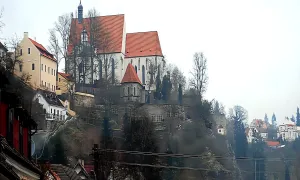
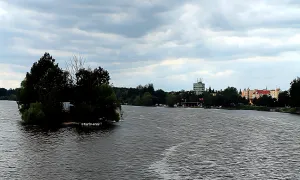
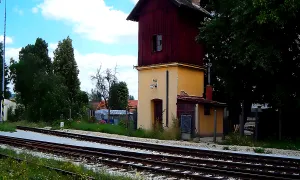
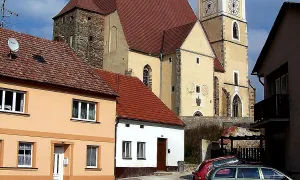
Real photos taken near the monument


Zdroj a licence jsou uvedeny u každého snímku.
Tips from visitors
No tips yet. Be the first!
Log in and add your tip.
Sources and literature
Photos: JAn Dudík / CC BY-SA 3.0 — Wikimedia Commons. The author and licence also appear when you hover over the image.
Faktickým podkladem tohoto textu byl článek na Wikipedii, jehož autory jsou přispěvatelé Wikipedie. Článek je dostupný pod licencí CC BY-SA 4.0.
Location on the map

Příběhy a pověsti
Legendy, pověsti a příběhy spjaté s touto památkou
Fotografie návštěvníků
Zatím žádné fotografie. Buďte první, kdo přidá fotografii z návštěvy!
Log in a přidejte svou fotografii nebo hodnoťte.
Za ověřenou návštěvu v aplikaci získáte víc bodů — poznáme podle GPS, že jste na místě.
Reviews and comments