






Kellnerův mlýn Water mill
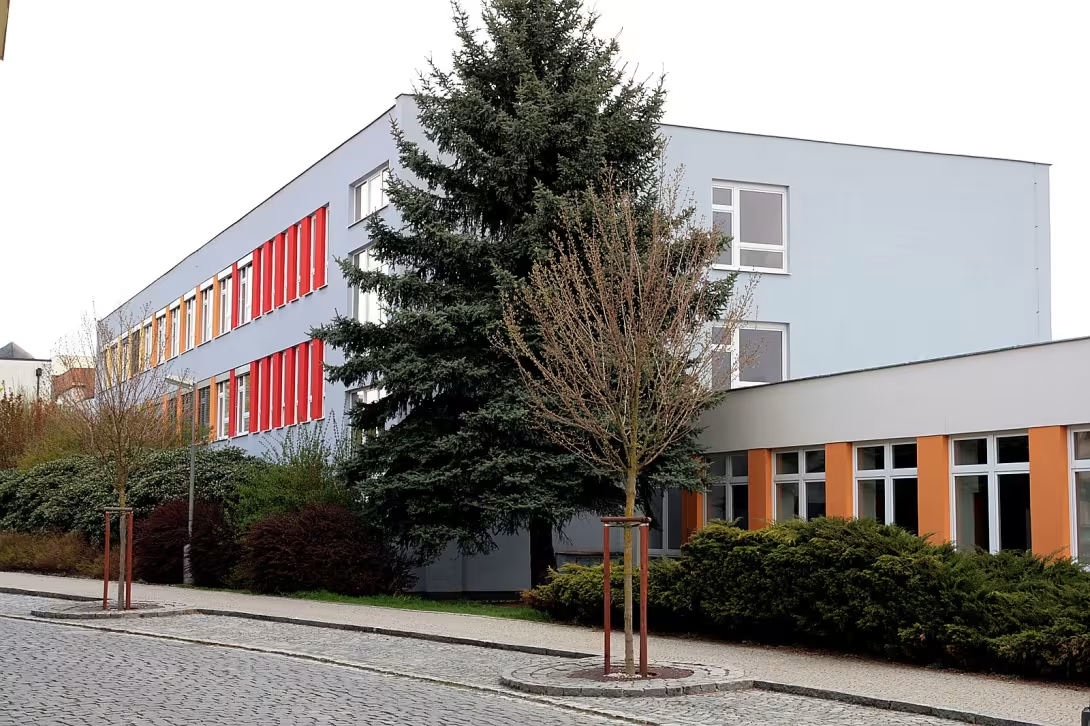
Objekt se nedochoval — na místě dnes nestojí. Následující text popisuje jeho historii, ne současnou návštěvu.
Kellnerův mlýn, also known as Jindrovský or Monastery Mill, was a extinct water mill in the center of Domažlic. It stood west of Peace Square, where today lies the park near the elementary school. Its existence dates from the beginning of the sixteenth century until 1980 when it was demolished for school construction.
The first written mention of the mill dates back to the beginning of the 16th century. The owner was Jindra the miller who died in 1520. The mill was located at the point of the extinct drive leading from the river Zubrina, a typical source of energy for the water mills of that time.
In 1609 Adam Voprcha of Uračov, the Domazlik Mayor and the initiator of the Habsburg uprising became owner of the mill. After his defeat and confiscation of the property, the mill won the Augustinian Order, which had leased it to the miller for centuries. This stage reflects political and religious changes in the region.
Architecturally, the mill was a walled building with a layout connecting the mill and a residential house under one roof. In the direction of the yard it was storey, while to the ground road. The water was powered by a water wheel, which in 1930 was powered by a machine carpenter's workshop. The mill was originally used for grinding grain, but after 1903 when they bought it to Kellner, it was converted into a carpenter's workshop.
The ownership fate of the mill was dramatic. After 1902, Kellner bought it from Augustinian and in 1903 it was converted into a machine shop. The Kellner family tried to expand the construction after the end of World War I, which they were not allowed to do. In 1979 it was decided to demolish the mill for the construction of a new primary school.
Kellnerův mlýn was linked to the anti-Habsburg uprising in Domazlice. Adam Voprcha of Uračov, whose confiscation mill won the Augustinian order, was mayor of the city and chief organizer of resistance against the Habsburg government. Another interesting feature is the modernization of the mill to the American cylindrical composition in the nineteenth century, which enabled more efficient wood processing.
Today there is a primary school built in 1979- 1980. Although the object has disappeared, its memory is stored in local sources and names of nearby streets or parks. The river Zubrona, from which it led the drive to the water wheel, can be an interesting point of interest for visitors.
Kellnerův mlýn is a rare example of urban architecture and economic life of the past. His story reflects changes from the medieval mill to the industrial workshop to the modern school building. Despite the demise, his history remains part of the local memory.
Historical milestones
- beginning of the 16th century
- First mentioned as a mill with owner Jindra.
- 1609
- Confiscation of the Augustinian mill after the anti-Habsburg uprising.
- 1902
- Sale of the mill to the Kellner family and subsequent conversion to the carpentry workshop.
- 1979
- Decision to demolish the mill for the construction of the primary school.
Architectural development
The mill was originally a water mill with a drive from the river Zubrona. In the 19th century it was modernized to a mill with American cylindrical composition. In 1903 it was converted into a machine carpenter's workshop while maintaining the original layout with the mill and house under one roof. The construction was walled, with a storey part towards the yard and ground floor to the road. In 1930, the workshop was powered by one water wheel on top of water with an output of 4.2 HP.
Historical events
- beginning of the 16th century
- The first mention of the mill owned by the miller Jindra.
- 1609
- The mill won the Augustinian order after confiscation by Adam Voprchy of Uračov, who was linked to the anti-Habsburg uprising.
- 1902
- The mill was sold to the Kellner family, who converted it into a machine shop a year later.
- 1979- 1980
- The mill was demolished to build a new elementary school.
Points of interest
- The mill was also known as the Jindrovský or Monastery Mill, according to its first owner the miller Jindra and later the Augustinian order.
- The water was powered by a water wheel, which in 1930 was powered by a machine carpenter's workshop instead of the original milling crop.
- The owner of the mill was Adam Voprcha of Uračov in 1609, who was the mayor of Domažlic and led the anti-Habsburg uprising.
- The mill was modernized to an American cylindrical composition in the nineteenth century for better wood processing.
- The construction was demolished in 1980 for the construction of a primary school.
Guide
Show guide text
This text was created by artificial intelligence and has not been editorially reviewed. It may contain inaccuracies.
Audio Guide - Kellnerův mlýn
---
Welcome, dear visitors! You stand before one of the oldest and most interesting watermills in our regions. You immediately perceive its characteristic shape - a walled house with a storey part that stretches towards the courtyard, and ground floors that are ceasefire to the road. Look up - to the roof where it appears that two functions are alternating: the mill and the apartment. This is typical of mills from the past when people lived here besides working with water.
Let's move on to the past. Kellnerův mlýn, also known as Jindrovský or Monasterský, was built in a place where the extinct water path that led from the river Zubrona flowed. The first mention of it dates back to the beginning of the 16th century, when it was owned by the miller Jindra. At that time the mill was an important economic facility - there was a grit of grain, but there could also be many people working here. In 1609, the mill was confiscated by the order of Augustinian people who had their monastic tasks after the insurgency against the Habsburgs.
Now pay attention to the architecture you can see before you. A brick building with a storey part that stretches into the yard is typical of mills from that time. The ground floor that is closer to the road was probably a place for business or housing. The water from the river Zubrina was powered by a water wheel that originally served to grind the grain. But in the year ninety thirty came change - instead of the mill grinding grain, there was a machine carpenter's workshop. This means that the mill adapted to new needs and people here no longer only worked with water but also with wood.
The interesting thing is that the mill was known under several names. According to the first owner of Jindra, he was called Jindrovský, while after the confiscation of the Augustinian order he was called the Monasterians. In 1609 Adam Voprcha of Urachov was the owner of the mill, which had economic interests.
Look at the details you can see here. Feel the atmosphere of an old mill that carried hundreds of years of history. The mill was an important part of life in Domazlice, and its existence reflected the needs of local residents. Although it is no longer fully operational today, its remains remind us of how people used to feed and adapt to natural conditions centuries ago.
Now I'd like to tell you something about what happened here in the past. In '92, the mill was sold to the Kellner family, who converted it into a carpenter's workshop. This means that this was no longer about grinding grain, but about the production of furniture and other wooden objects. This was the next step in the life of the mill, which adapted to new needs and economic conditions.
In seventy-nine it was decided to tear down the mill to build a primary school. This was the end for this old mill, which was an important part of local history. Yet his remains stand before us, reminding us of how people fed and adapted to their surroundings centuries ago.
Look at the way the mill turned. You can only see the remains of his original appearance today, but that's nothing to disappoint you. Instead, look at what this mill is still telling us. It's a place where history and nature meet, and you can feel the soul of the old Domazlice.
If you want to learn more, I recommend you visit the local museum or read books about the history of Domazlic. There you will find a lot of interesting information about Kellner Mill and other monuments that stand here. Enjoy your visit to this place - whether you look at its history here or just enjoy the atmosphere of the old mill.
Thank you for your attention and we wish you a pleasant walk along our regions. Enjoy everything here and come back to see what these places offer us.
Businesses nearby
Do you run a restaurant, accommodation, shop, museum, rental, wellness or other visitor service near this monument? Show yourself directly to the people heading to it — this is how they will see you in the app and on the web:
Events nearby

Zdroj akcí: otevřená data měst a obcí ČR (Národní katalog otevřených dat) a kalendář akcí Národního památkového ústavu.
Nearby
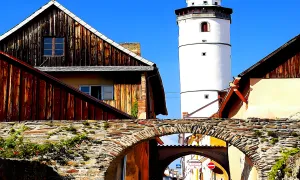
- Hlavní náměstí města s historickými budovami a památkami.
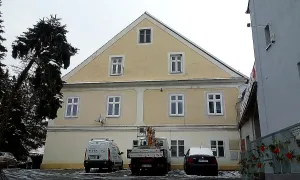
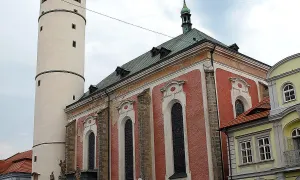
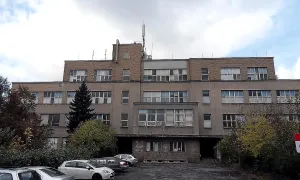
- Současná škola postavená na místě bývalého Kellnerova mlýna.
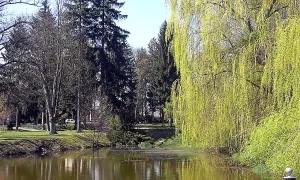
- Řeka, od které vedl náhon k vodnímu kolu mlýna.
Visualizations and artistic views

The visualisations are generated by artificial intelligence and serve as inspiration.
Photos from the area
Real photos taken near the monument


Zdroj a licence jsou uvedeny u každého snímku.
Tips from visitors
No tips yet. Be the first!
Log in and add your tip.
Sources and literature
Faktickým podkladem tohoto textu byl článek na Wikipedii, jehož autory jsou přispěvatelé Wikipedie. Článek je dostupný pod licencí CC BY-SA 4.0.
Location on the map
Příběhy a pověsti
Legendy, pověsti a příběhy spjaté s touto památkou
Fotografie návštěvníků
Zatím žádné fotografie. Buďte první, kdo přidá fotografii z návštěvy!
Log in a přidejte svou fotografii nebo hodnoťte.
Za ověřenou návštěvu v aplikaci získáte víc bodů — poznáme podle GPS, že jste na místě.
Reviews and comments