






Kleisslova vila / lusthaus Villa
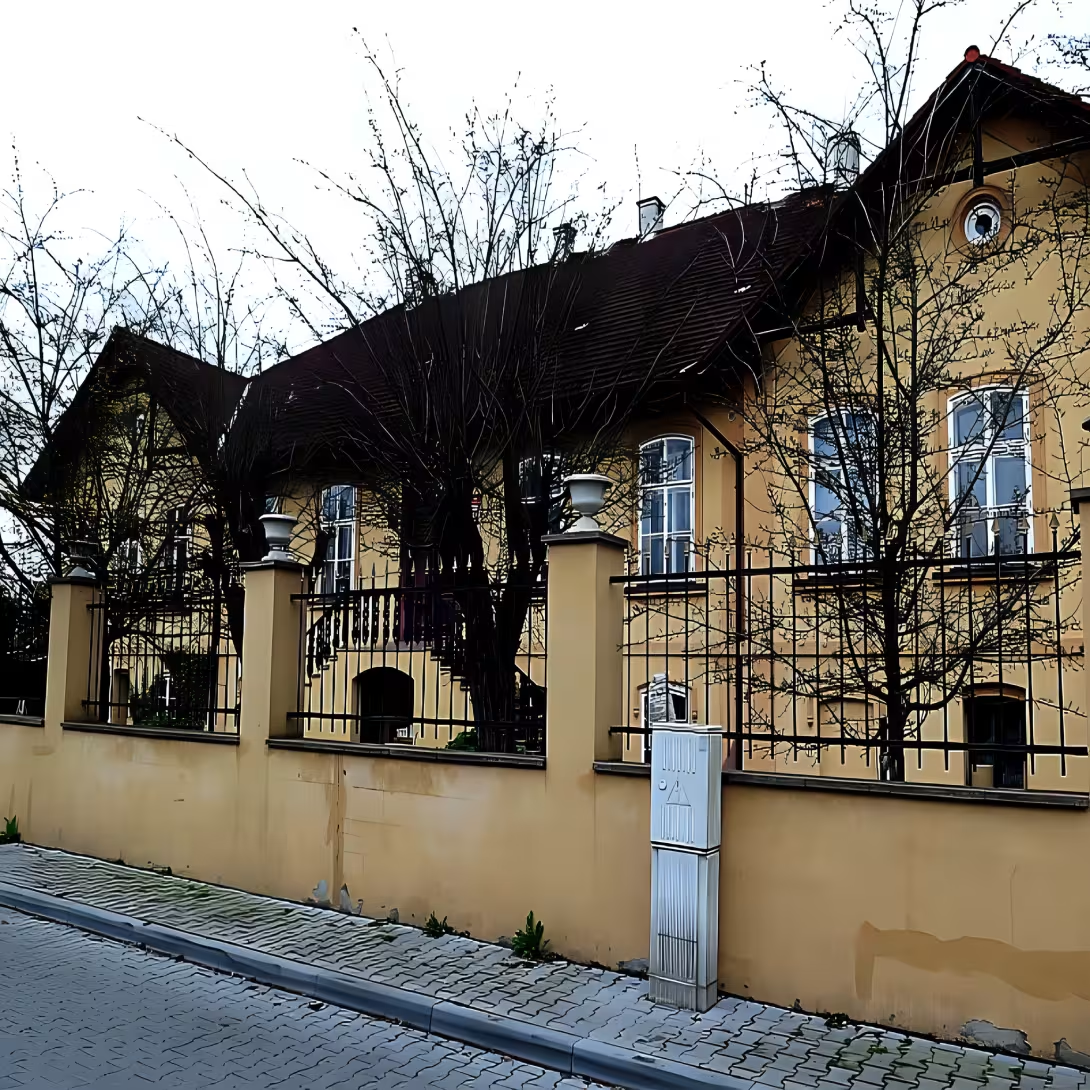
Kleissla villa, also known as Lusthaus, is a romantic resort in the Pilsen district of Severní Předměstí, built between 1870 and 1880. This private residential unit was designed by the builder Tomáš Kilián. The building is remarkable in its similarity with the railway buildings and represents a proof of history during the period of rapid urbanisation of Czech countries.
The complex was built by a Pilsen merchant Jan Kleissl as his headquarters. The construction took ten years and was part of a larger complex, including a colony of ordinary workers' houses. The name of the local district Na Jansky is the subject of expert discussions. Historical sources suggest that it can be derived either directly from the name of the founder of John Kleissel or from the statue of St. John Nepomuk, which in the past was placed on one of the houses in the colony.
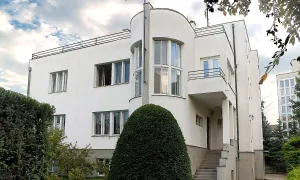
The architectural solution of the villa shows classical influences and elements of Swiss style. The building stands on an irregular rectangular plan. On all sides the risalts with triangular shields are closed, in which the circular windows are mounted. The main entrance to the elevated ground floor consists of a two-arm staircase connecting the interior with the courtyard. The rear part of the villa is connected with the garden by a wooden terrace and one-arm staircase. The whole complex is supplemented by two symmetrical economic buildings and a two-storey gazebo situated in the western tip of the garden. The fact that the builder Tomáš Kilián was professionally engaged in the design of transport structures was strongly reflected in the appearance of the objects. Their composition resembles the then station architecture.
Over time, the area has undergone a number of changes. The original workers' colony was partly demolished and partly modified, thereby losing its style unity. The villa itself and the left economic building maintained their original use in 2009. A significant intervention in the form of the complex was the flood in 2002, which required a subsequent reconstruction of the real economic building into the residential building. The gazebo is currently being repaired.
Kleissla Villa presents an interesting example of the private architecture of the 19th century, which does not deny the professional manuscript of its creator. For visitors to the Pilsen North Suburb, this complex is a reminder of the historical development of the city and its industrial era. The location offers an opportunity to look into the context of the construction at the time and appreciate the preserved elements of romantic historism.
Then and now
Drag the slider to compare how the landmark may have looked when it was built with the view today.
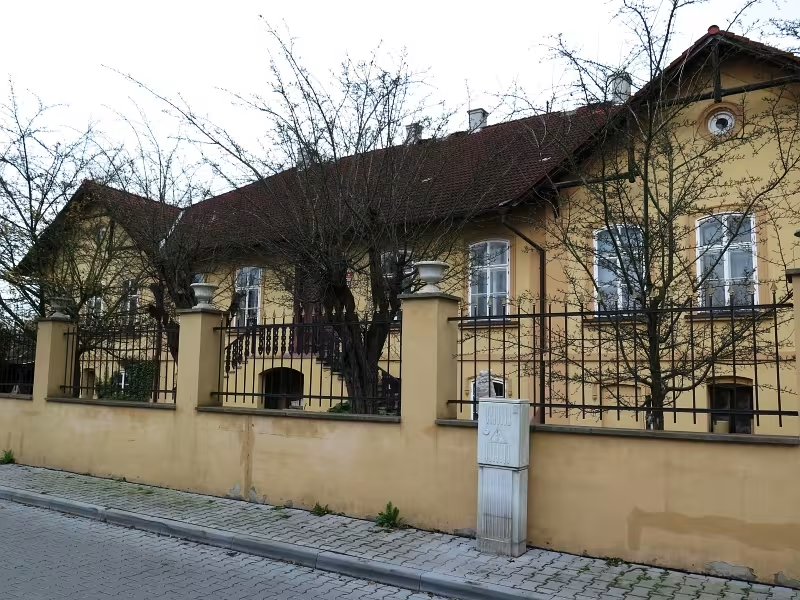
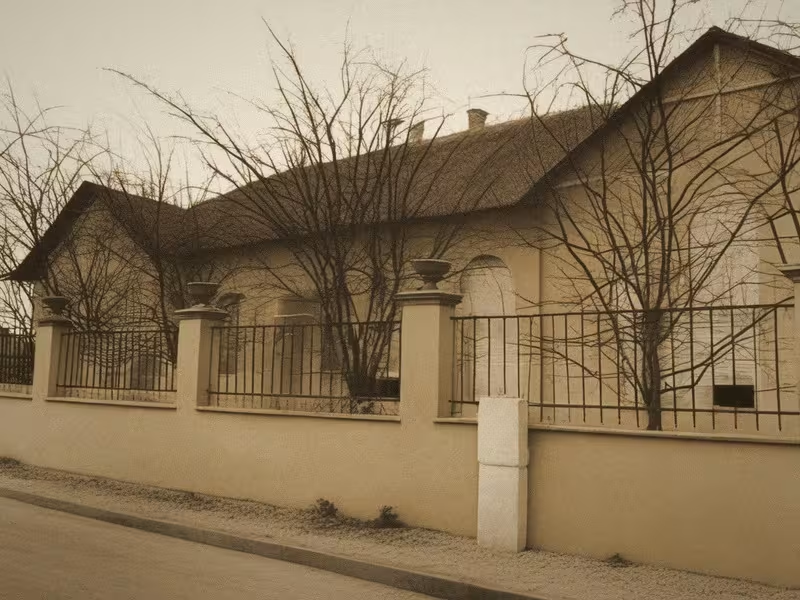
The historical appearance on the left is an AI-generated visualisation and serves as inspiration only.
Historical milestones
- 1870
- The construction of the complex according to the design by Tomáš Kilián.
- 1880
- Complete construction of the entire complex.
- 2002
- The flood after which the real economic building was reconstructed into a residential building.
Architectural development
The villa stands on an irregular rectangular floor plan with distinctive rites and shields. The builder Tomáš Kilián used his experience in the design of transport structures, which was reflected in the overall appearance of the buildings. Over time, the complex has undergone modifications, including reconstruction of farm buildings and repairs of the gazebo.
Historical events
1870: Construction of the premises started. 1880: Completion of complex construction. 2002: Flood which subsequently led to the reconstruction of the real economic building.
Owners
Jan Kleissl (founder)
Points of interest
- The area was built between 1870 and 1880 as a private residence of trader Jan Kleissl. - The appearance of the objects resembles the railway architecture, because the builder Tomáš Kilián was professionally engaged in the design of transport structures. The original part of the complex was a colony of terraced workers' houses. - The architecture of the villa combines classical influences and elements of Swiss style. - The flood in 2002 required the reconstruction of the real economic building into a residential building.
Guide
Show guide text
This text was created by artificial intelligence and has not been editorially reviewed. It may contain inaccuracies.
Welcome to the northern part of our city, the quiet and quiet district of Na Jansky. There is now a place in front of you that carries a deep atmosphere of calm and romance of the nineteenth century. You are standing in front of Kleissel's villa, which many know under the poetic name Lusthaus. Just stop for a second, take a breath and feel the space around you. You can see not only the villa itself, but the whole premeditated area, which was designed to provide refuge from the hustle and bustle of the city at the time, and to offer space for rest and quiet contemplation.
Let us now look together at how this place was created and what its original meaning was. It all started in a thousand eight hundred seventy. It was this year that the Pilsen merchant Jan Kleissl decided to build his private residence. So imagine the time when Pilsen grew rapidly, the city was changing, and successful traders were looking for a place where they could find a balance between their hardworking everyday and the need for privacy. The construction of this complex was not fast or hasty, it lasted for ten years, until the year one thousand eight hundred and eighty, when the entire complex was finally completed. Jan Kleissl created his own world here, a safe port where he could spend time with his family and receive his close friends.
Now pay attention to the architecture itself that you see before you. If you look at the buildings, notice how different influences are mixed in and how they form a harmonious whole. The whole complex is built in a romantic spirit, which means that it should have produced certain feelings and feelings, reminiscent of the beauty of nature and idyll. In the details of the facade and the overall layout of the buildings you can see the effects of classicism. This direction placed great emphasis on balance, purity of lines and a certain grandeur. At the same time, there are also elements of the so-called Swiss style, which was very popular at the time for summer villas and holiday homes. This style brings to the building some lightness, airiness and nature, which makes buildings not hard, but rather as a natural part of the surrounding landscape.
In addition to the main villa, please note the other parts of the complex that make up this unique whole. You see here two economic buildings, which in the past served practical purposes and provided the operation of the entire premises. Also note the gazebo which was at that time an ideal place for afternoon coffee, reading a book or just ordinary garden observation. And it's the garden that connects everything. It's a space where architecture meets nature, where the shadows of trees intersect with the lines of buildings.
Now let's think about who designed these buildings and what their influence on the appearance of this place was. The architect Tomáš Kilián was the author of the whole project. And this is where we get to one of the most interesting things that has to do with this place. If you look at the buildings very carefully, you may see something in them that reminds you of the architecture of the railway station or other transport structures of that time. It's not a coincidence or your mistake. Tomáš Kilián specializes in the design of transport structures in his professional career. It is fascinating to see how an experienced architect transmits his knowledge from railway and railway buildings to a private residence. This unusual combination gives Kleissla's villa its unique character, which distinguishes it significantly from other villas in the surroundings and gives it some structural strength and originality.
However, time is changing and this place has had to face various tests over the years. If you look at the real economic building now, you might not just see an old warehouse or a workshop. In the year two thousand and two, Pilsen was struck by a devastating flood that left deep traces and many destroyed properties throughout the city. It was this building that was hit by water at the time and then had to be thoroughly renovated. The result of this correction is that the original economic building became a residential building. It is a silent reminder of how monuments adapt to new times and new needs so that they can continue to serve people and remain preserved for future generations, instead of dying.
Before I say good-bye, I'll tell you one more interesting thing that is no longer visible today, but in the past it was a very important part of this place. Originally it was not only a luxury villa, farm buildings and garden, but there was also a whole colony of ordinary working houses. So imagine the sharp contrast that existed here in the nineteenth century. On the one hand was the representative residence of the merchant Jan Kleissl with his gazebo and a nurturing garden, and next to that were the modest homes of people who worked here or lived in the immediate vicinity. This detail shows us what the social structure of the time looked like and how the worlds of rich owners and their employees were closely linked.
Now all you have to do is leave room for your own exploration and personal experience. Go through the rest of the complex at your own pace, feel the silence of the garden and explore the details that Tomáš Kilián inserted into the villa. Let yourself be carried away by the idea of Jan Kleissl walking through his garden in summer evenings and what plans he made for his future in this house. Try to imagine what the sounds here sounded like over a century ago and how the view of the surrounding district changed to the Yansky.
I hope you're interested in visiting this romantic corner of Pilsen North Suburb and that you found some peace in Kleissla's villa. It's a place that reminds us that architecture is not just about walls and roofs, but especially about people, their dreams, and the history these walls keep inside. I wish you a pleasant continuation in discovering the beauty and secrets of our city. Thank you for your attention and goodbye.
Tips for visitors
The best time to visit is in the morning during the working week or on the weekend when the surrounding atmosphere is quieter. The light in these hours beautifully depicts the romantic elements of the facade of the villa and surrounding greenery.
The location is available by car and by public transport. Search in adjacent streets around the Na Janská district. For public transport, use the local search engine to guide you to the nearest stop within walking distance.
For photography we recommend using the morning or late afternoon sun, which highlights the details of historical architecture. You get the best shots from a street view that captures a villa in the context of its romantic complex.
In the immediate vicinity you can visit the banks of the Berounka River, which offer a pleasant nature walk. If you have more time, head towards the historical centre of Pilsen, where you will find other cultural and architectural attractions.
For families with children, the location is suitable thanks to the proximity of the Berounka River, where easy walk can be made. We recommend taking a snack and a drink with us because refreshments may not always be provided in the immediate area of the villa.
Businesses nearby
Do you run a restaurant, accommodation, shop, museum, rental, wellness or other visitor service near this monument? Show yourself directly to the people heading to it — this is how they will see you in the app and on the web:
Events nearby



Zdroj akcí: otevřená data měst a obcí ČR (Národní katalog otevřených dat) a kalendář akcí Národního památkového ústavu.
Nearby
Plzeňské Severní Předměstí, řeka Berounka, historické centrum města Plzně.
Accommodation nearby
Trips and activities nearby
Guided tours, tickets and activities nearby from GetYourGuide
Affiliate link: if you buy from the partner, we may receive a commission. The price for you does not change.
Search tours and activities →Themed route
Thematic cruise route around Kleisslov's villa
1.Kleisslova vila / lusthaus - Type: historical villa - Why is it worth a visit: This beautiful Baroque building is a unique example of 18th century architecture, located on the banks of the Berounka River. It is an ideal place for those who enjoy the peace and beauty of historical monuments.
2. Historical Center of Pilsen - Type: cultural and historical area - Why is it worth a visit: After a tour of the villa you will look into the heart of the city where you will find a number of ancient buildings and monuments. It's a great way to remember Pilsen's history and enjoy its atmosphere.
3. Berounka River - Type: natural element - Why is it worth a visit: After walking through the city you will return to the water stream that runs next to Kleisslovo's villa. It is an ideal place to relax and admire the natural beauty of the surroundings.
4. Plzeňská Severní Předměstí - Type: urban zone - Why is it worth visiting: This place offers a wider view of Pilsen and its surroundings. It is an opportunity to explore the modern part of the city that harmoniously intersects with historical elements.
This route allows you to discover the beauty and history of the Pilsen North Suburb with its most distinctive elements.
Seasonal recommendations
Spring: In the spring period Kleissla Villa offers visitors an unforgettable impression of blooming nature. Different types of flowers light up the park, giving the atmosphere a gentle and lively touch. While walking, a sweet fragrant odour may appear, which creates a comfortable environment for relaxation. It is advisable to visit the memory in the early hours of the morning when the park is even quieter and fewer visitors. Thanks to warm weather, it is recommended to wear light clothes, but remember to bring an umbrella, because spring times can be suddenly and surprisingly rainy.
Summer: Summer is the perfect time for a visit to Kleisslovky villa when the park turns into a green paradise with full flowers. The sunny days provide the perfect opportunity to photograph and explore historical details of the villa. However, in the main summer season the number of visitors may increase, which may affect the comfort of walking through the park. It is advisable to come early in the morning or later in the evening to avoid the main doses of crowds and warm noon hours. Don't forget the protective sunglasses, UV cream and plenty of drinking water.
Autumn: In autumn months, Kleissla Villa offers a unique atmosphere with a wonderful colour of leaves. The park is transformed into a golden and red paradise, which gives room for beautiful photos. In colder weather, a slight rainy or foggy air may appear, adding a romantic touch to the whole environment. Visit the memory during the afternoon hours when there are fewer people and the temperature becomes more pleasant. When wearing clothes, choose a layered style with a mild leather or plaid to protect against cold air.
Winter: The winter visit to Kleissla Villa offers a calm and quiet atmosphere where the park is covered with snow. The villa rises like a faded image of the past, which gives a sense of peace and introspection. Opening hours may be shorter due to cold conditions, so it is good to know about the current opening time. Do not forget to wear warm clothes and protective shoes with high soles to ensure safety while walking on the snow surface. If you visit the memory in advent time, the surrounding area can be lit by candlesticks and other decorations, giving room for a comfortable walk in a quiet environment.
Visualizations and artistic views


The visualisations are generated by artificial intelligence and serve as inspiration.
Photos from the area
Real photos taken near the monument


Zdroj a licence jsou uvedeny u každého snímku.
Tips from visitors
No tips yet. Be the first!
Log in and add your tip.
Sources and literature
Photos: Sovicka169 / CC BY-SA 4.0, rozlišení zvýšeno umělou inteligencí — Wikimedia Commons. The author and licence also appear when you hover over the image.
Faktickým podkladem tohoto textu byl článek na Wikipedii, jehož autory jsou přispěvatelé Wikipedie. Článek je dostupný pod licencí CC BY-SA 4.0.
Location on the map
Příběhy a pověsti
Legendy, pověsti a příběhy spjaté s touto památkou
Fotografie návštěvníků
Zatím žádné fotografie. Buďte první, kdo přidá fotografii z návštěvy!
Log in a přidejte svou fotografii nebo hodnoťte.
Za ověřenou návštěvu v aplikaci získáte víc bodů — poznáme podle GPS, že jste na místě.
Reviews and comments