



Kobyliská střelnice Memorial
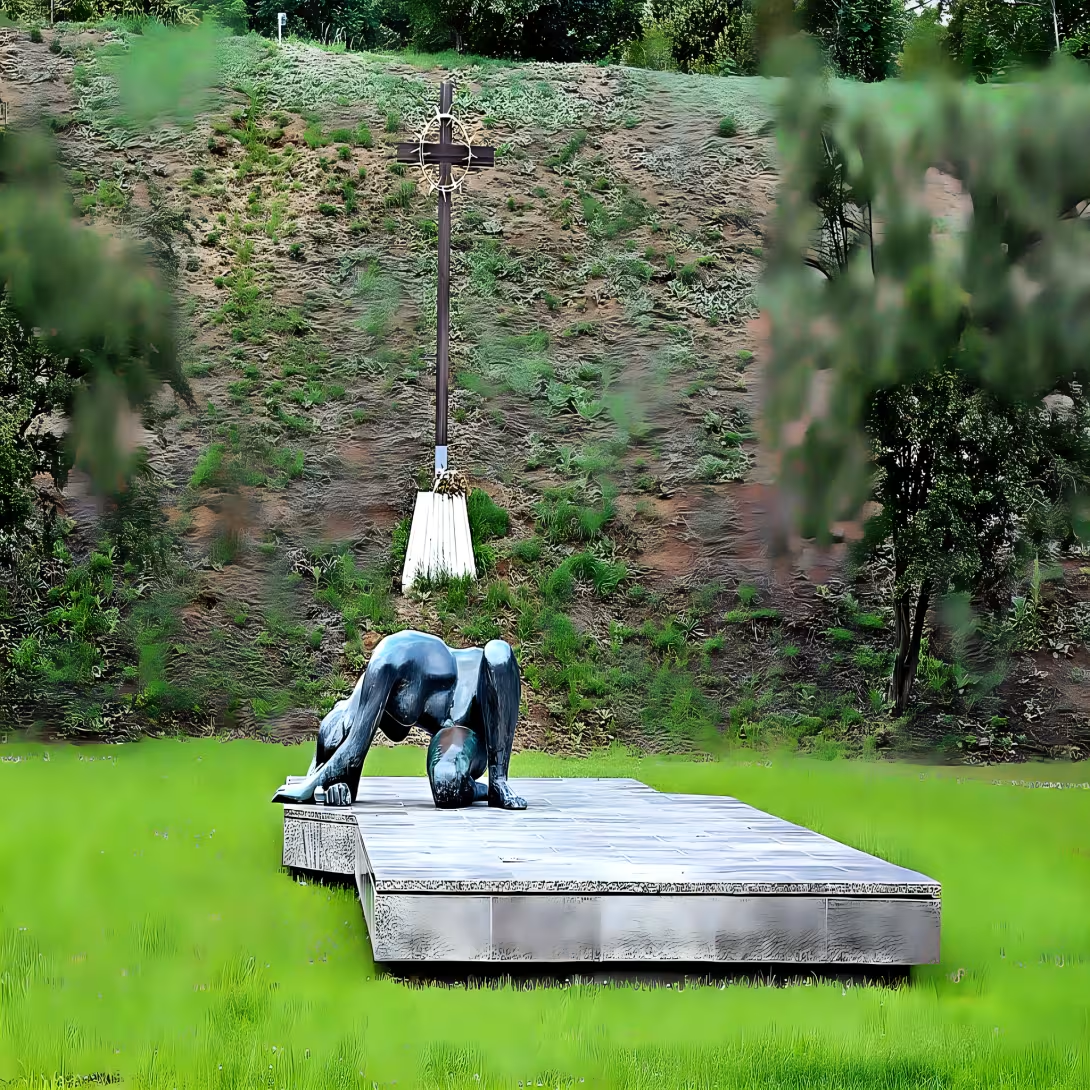
Kobyliská střelnice is a former military training area and execution site from the time of the Protectorate of Bohemia and Moravia in Prague-Kobylisi. Since 1945, he's been serving as a piety post. Since 1975 he has been a monument to the anti-fascist resistance and since 1978 he has been registered as a national cultural monument.
The building was built in 1890 on the edge of the then village Kobylisy north of Prague. Originally, he was used to train infantry, but gradually he became a destination where military bands held concerts. There was a horse show and there was a training trip. After the First World War, local choirs, Falcon and other associations were rehearsing here. According to this place, in 1938 the street was named Shotgun Street, which leads from Kobylis towards Prosek.
During World War II, the German administration of Prague set up an execution site in the back of the area. Jewish workers, for example, were deployed to build it. The former horse farm was transformed into the last prison of the convicted. The most repressive executions took place during the second martial law period following the assassination of Reinhard Heydrich. Between May 30 and July 3, 1942, 539 people, 463 of whom were men and 76 women, were demonstrably executed here. The perpetrators deliberately overheard the sounds of shots fired by car and bus engines.
Among the victims were prominent figures such as the politician Alois Eliáš, feminist Františka Plamínková, writer Vladislav Vančura, Evžen Rošický, Jan Auerhan or zoologist Jaroslav Štorkán. Here was also executed a group of Lidice citizens and on 24 June 1942 almost the entire Vosmíková family, who helped Czechoslovak skydivers. On September 4, 1942 Bishop Gorazd, Václav Čikl and Jan Sonnevend from the Czech Orthodox Church were executed here and September 5, Vladimír Petřek for providing asylum to skydivers in the church of St. Cyril and Methodius.
The current appearance of the complex was created in 1975-1978 according to the design of architects J. Poláka and L. Todla. There is a mosaic from Martin Sladky at the site of the former horse shops. Next to it is a sculpture of a crying woman by Milos Zet and a wooden cross, which was replaced by a new one in December 2007. Memory plates with personal victim data, including exact execution time and age, are placed against the execution site. It stands in places where there used to be wooden sheds to store coffins. The verses Miroslav Florian are carved into the board at the entrance to the complex.
After the war, the Pražansky modified the site, and a part of the complex was subsequently used by the Army Film and Swaziland. In 2015- 2016 the building underwent extensive reconstruction worth approximately CZK 13 million. It replaced trachy tiles with material from the same refraction, removed flight wood and reconstructed target shooting pits including mechanisms. In the back of the complex there is still a view of the renovated metal construction of the original technical device for target control.
The monument represents tangible evidence of Nazi terror and the tragic fate of hundreds of people. Her visit allows the victims of the resistance to be honored in a place where some of the darkest events of Czech history took place.
Then and now
Drag the slider to compare how the landmark may have looked when it was built with the view today.
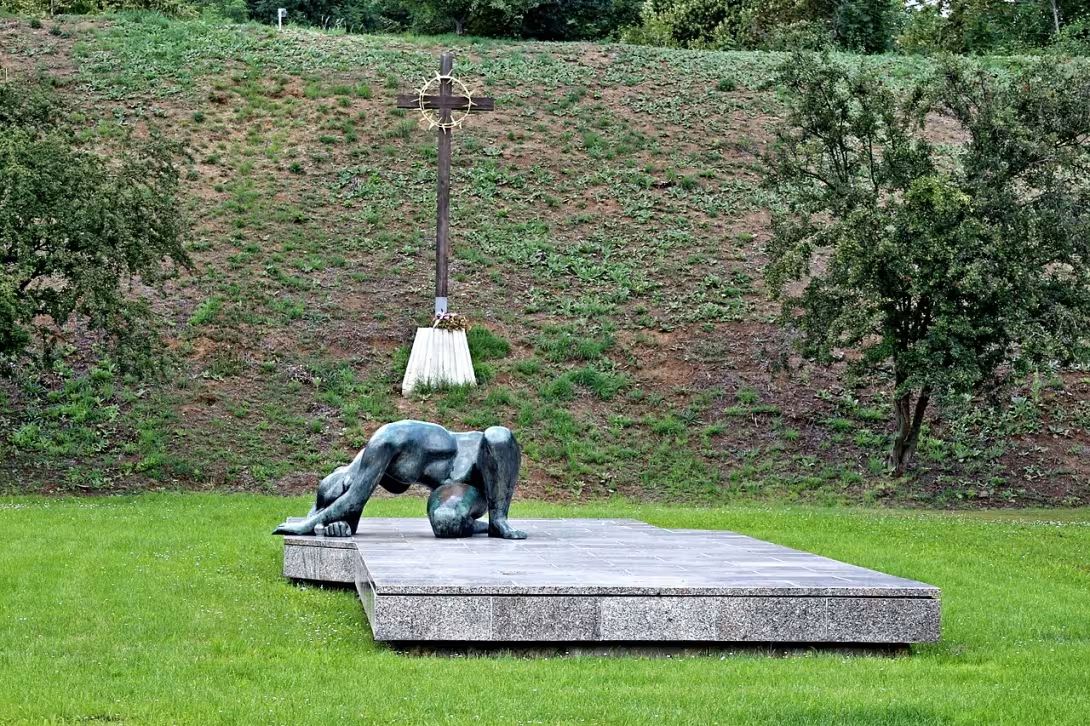
The historical appearance on the left is an AI-generated visualisation and serves as inspiration only.
Historical milestones
- 1890
- creating a range for infantry training
- 1942
- execution of 539 people between 30 may and 3 july
- 1975
- completion of today's piety decoration of the complex
- 1978
- declaration for national cultural monument
- 2016
- festive reopening after reconstruction
Architectural development
Originally there were horsemen and shooting pits. In the years 1975-1978 the complex was pietfully modified, there was created an entrance gate, a wall with a mosaic of Martin Sladky and a sculpture of Miloš Zet. In the years 2015- 2016, the area was renovated and trachy tiles and target pits were restored.
Historical events
1942: Mass executions in the period II of martial law following the assassination of Reinhard Heydrich. 1975: Transformation to the Memorial of the anti-fascist Resistance. 1978: Declaration for a national cultural monument.
Owners
The Kobylis shooting range is probably owned by the city Praha, which ensures its maintenance and maintenance. Accurate information about ownership changes over the years is not available, but it can be assumed that after 1945, when the shooting range was converted into a memorial, the administration took over this place.
Points of interest
- The building was founded in 1890 and originally used to train infantry, later it was also a destination with concerts of military bands. - During World War II, the German administration set up an execution site where the sounds of gunshots deliberately overslept the engines of cars and buses. - Between May 30 and July 3, 1942, 539 people, 463 of whom were male and 76 women, were demonstrably executed here. - There is a mosaic from Martin Sladky and a sculpture of a crying woman from Milos Zet. - Memorial plates with victim data are located in places where wooden sheds used to stand for the storage of coffins.
Guide
This guide is narrated by a synthetic voice generated by artificial intelligence.
Show guide text
This text was created by artificial intelligence and has not been editorially reviewed. It may contain inaccuracies.
Welcome to Prague, part Kobylisy. You're standing right in front of a place that carries a very hard history, but it also serves as an important symbol of memory. In front of you is the space of the former Kobylis shooting range. When you look at this place today, you may perceive peace and quiet, but in every stone and in every piece of this land, there is a story of courage, suffering and immense loss. It's a place that forces us to stop, to keep quiet and to think about the price of freedom.
Let us now look together at how this place was created and how its significance changed over the decades. It all started in a thousand eight hundred and ninety. At that time, there was a military compound designed to train infantry. So imagine this place in its beginnings as a space full of motion, marchars and military drills. It was the center of military training where young men learned the craft of a soldier. What is interesting, however, is that this shooting range was not only seen as a restricted military area in people around it. On the contrary, cultural events took place at certain times, concerts of military bands took place and the site became a real destination for the residents of the area. People used to come here for fun and music without knowing what a dark chapter would be written here.
Now pay attention to the site itself and its current form. Notice how the space is arranged today. What you see is the result of a long process of turning a military training ground into a piety place. The total decoration you are surrounding today was completed in the year one thousand nine hundred seventy-five. The architectural intervention here carried the signature of names like Jan Polák and Ladislav Todla. When looking at space, do not try to look for pomp, but rather perceive the atmosphere of respect and humility. The entire complex was declared a national cultural monument in the year one thousand nine hundred seventy eight, underlining its immense value to the entire community. A few years ago, namely in the year two thousand and sixteen, the grand reopening took place after extensive repairs to keep this place in a dignified state for all generations.
When you stand like this and perceive silence, it is time to move on to the most tragic part of the history of this place. During World War II, at a time when the country was under violent administration under the protectorate regime, the function of the site changed drastically. The German administration has established an execution site here. The darkest period was in the year one thousand nine hundred forty-two, in the period of the second martial law. Between May 30 and July 3 of that year, a total of five hundred thirty-nine people were executed here.
Stop for a second and imagine these people. They weren't just soldiers or strangers. Among the victims were major politicians, respected scientists, artists and clerics. Among the names that have always linked their fates to this place, for example, Alois Elias, who was the main representative of the Resistance at the time. There is also the courage of Františka Flamínek, a woman who was not afraid to fight for the truth. Here we remember the writer Vladislav Vančur, Evžena Rošický, Jan Auerhan and Jaroslav Štorkán. The name of Bishop Gorazda, who stood by his principles to the end, is written here. We also remember Václav Chikl, Jan Sonnevend or Vladimir Petřek. Each of these names represents one lost life, one broken story and one deep blow to the heart of our culture and statehood.
Now, I want to draw your attention to one freezing detail that reveals the cruelty of the system at that time. You may have rewritten that the executions took place in an open area where shots should be heard. However, the German administration has done everything it can to keep these sounds from the outside. So that neighbors and people in the neighborhood don't hear about what's going on here, they deliberately overhear the sounds of shots fired by loud cars and buses. Imagine the contrast: on one side the noise of the engines, which was supposed to create the appearance of normality, and on the other side the silent death of hundreds of innocent people. It's a terrifying example of how reality was manipulated at the time and how humanity threw up.
So this shooting range is not just a set of buildings or enclosed property. It's a place where the worst hate with the ultimate victim has been met. Since the year one thousand nine hundred forty-five serves as a piety place where we can quietly pay respect to those who paid the highest possible price for their faith in a better world.
Now, when you look around you, consider this space an open book of history. It records everything from military training and musical concerts to the darkest twists of the twentieth century. It is important that we visit such places, that we talk about them and that their stories are remembered.
I now ask you to go through the area at a slow pace. Pay attention to every detail, stop by the victims' names and let your own feelings guide you. Let this place make you wonder how important peace coexistence and respect for human life are.
Thank you for your journey to this important monument. I hope this brief interpretation has helped you better understand the importance of the Kobylis range. I wish you a peaceful walk and a profound experience of further discovering the history of our city. Goodbye.
Tips for visitors
The best time to visit is morning or late afternoon time, when the light is softer and the atmosphere of this tragic place seems quieter. For people with a camera, we recommend monitoring the impact of the sun on the monument so that the writing details stand out in the natural shadow.
The place can be reached by car or public transport; We recommend to verify the specific connection and stop options in the current path search engine.
Due to the history of the site we recommend to maintain a quiet and respectful approach.
From the point of view of the surrounding area we recommend you to go through the street which leads towards Prosek. It's a peaceful path that allows you to see the context of a former military compound.
For families with children, it is advisable to prepare a short interpretation of the history of the place in advance so that children understand the importance of this monument and the importance of commemorating past events.
Frequently asked questions
Can the monument be visited?
This is a structure in a public space that can usually be seen from outside free of charge. We have not verified that this particular one is freely accessible.
Where is the monument?
Location: Kobylisy, Praha, Hlavní město Praha. The map on this page shows the exact spot.
Why is the monument protected?
It is listed in the Central List of Cultural Monuments of the Czech Republic as a national cultural monument (register no. 139).
For kids
Imagine coming back 137 years. The place where Kobyliská střelnice stands today was a small village. The villagers lived in complete silence and peace, their day was full of work in fields and barns.
But one day something changed. The leaders decided to build our village's first shooting school in Bohemia! People were excited and immediately started preparing a place for a new construction. The shooting gallery was built and its name Kobyliská ties to the nearby stream of Kobylska.
Businesses nearby
Do you run a restaurant, accommodation, shop, museum, rental, wellness or other visitor service near this monument? Show yourself directly to the people heading to it — this is how they will see you in the app and on the web:
Events nearby


Zdroj akcí: otevřená data měst a obcí ČR (Národní katalog otevřených dat) a kalendář akcí Národního památkového ústavu.
Nearby
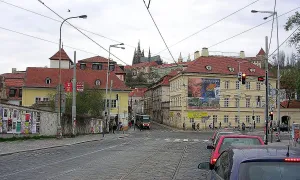
Střelničná ulice vedoucí směrem k Proseku.
Accommodation nearby
Trips and activities nearby
Guided tours, tickets and activities nearby from GetYourGuide
Affiliate link: if you buy from the partner, we may receive a commission. The price for you does not change.
Search tours and activities →Themed route
1. Kobyliská střelnice (memorial), a monument, this building is the main destination of your journey and reminds you of the history of this place. 2. The surrounding area of the monument, the outdoor area, here you can see the details of the monument and its nearby background. 3. Gunnery street, city road, this route will guide you towards Prosek and allow you to walk this street.
Seasonal recommendations
In spring the surroundings of the monument awaken to life and green grass gives the place a fresh look. We recommend a visit in the morning when the light is fine and pleasant. Due to the variable weather, it is advisable to choose layered clothes and moisture resistant shoes.
In the summer months it dominates the bright sun and intense lighting, which highlights the details of the monument. The best time for arrival is early morning or late evening to avoid heat. Remember light fabrics and protection from direct sunlight.
Autumn brings a nostalgic atmosphere and colourful leaves of trees to the quarter, which form an attractive contrast with the material of the monument. An ideal visit is during the golden hour before sunset. We recommend you bring a lighter jacket or a wind coat.
In winter, the place is a tree and quiet, especially if the landscape is covered with snow. The lighting is short and cold at this time, which underlines the seriousness of the monument. A warm jacket, hat and solid winter shoes are essential for comfortable public space exploration.
Visualizations and artistic views


The visualisations are generated by artificial intelligence and serve as inspiration.
Photos from the area
Real photos taken near the monument

Zdroj a licence jsou uvedeny u každého snímku.
Atmosphere of the place
This atmospheric visualisation of the place and period was generated by artificial intelligence. It is not real footage of the location.
Tips from visitors
No tips yet. Be the first!
Log in and add your tip.
Sources and literature
Photos: VitVit / CC BY-SA 4.0, rozlišení zvýšeno umělou inteligencí — Wikimedia Commons. The author and licence also appear when you hover over the image.
Faktickým podkladem tohoto textu byl článek na Wikipedii, jehož autory jsou přispěvatelé Wikipedie. Článek je dostupný pod licencí CC BY-SA 4.0.
Location on the map

Příběhy a pověsti
Legendy, pověsti a příběhy spjaté s touto památkou
Fotografie návštěvníků
Zatím žádné fotografie. Buďte první, kdo přidá fotografii z návštěvy!
Log in a přidejte svou fotografii nebo hodnoťte.
Za ověřenou návštěvu v aplikaci získáte víc bodů — poznáme podle GPS, že jste na místě.
Reviews and comments