






Kolowratský palác ve Sněmovní Palace
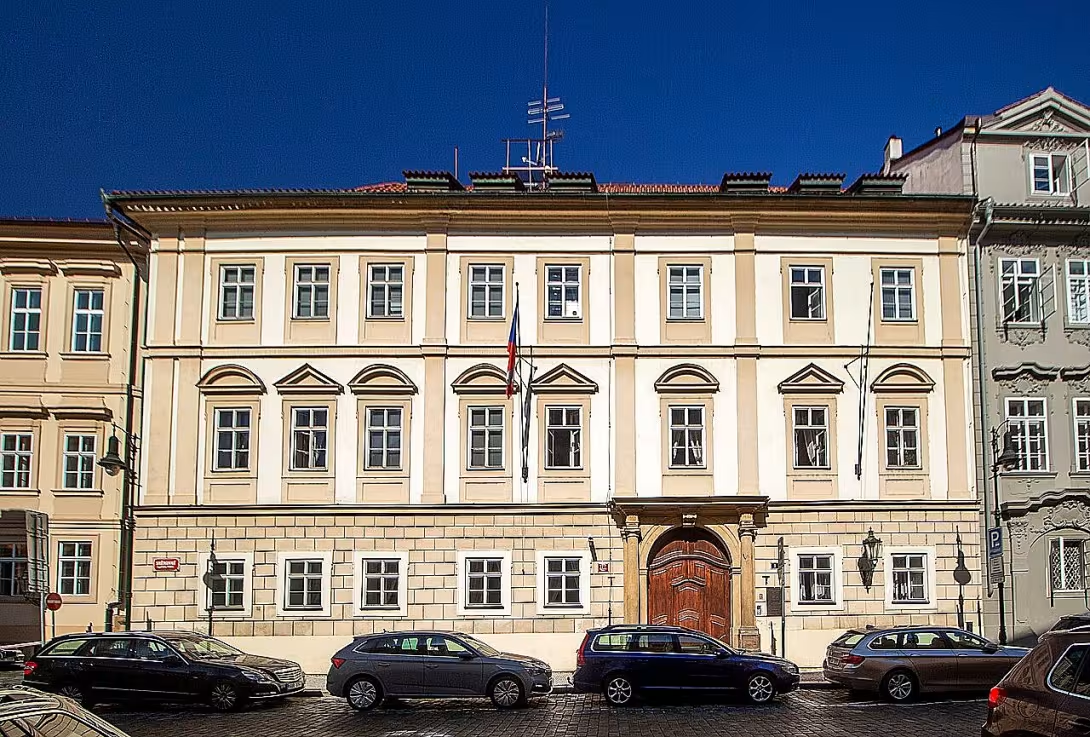
Kolowratský Palace, located at the intersection of Thunovská and Sněmovní streets in Prague's Malá Strana district, is a remarkable Baroque palace with a rich historical tapestry. Originally built as a Gothic house, it underwent several transformations before acquiring its current form around 1690. The building stands out for its architectural features, including an edicule portal on the main facade facing Sněmovní Street and an archway on the side facade facing Thunovská Street. Today, it serves as the home of the Parliamentary Institute of the Chamber of Deputies, making it significant in both historical and contemporary contexts.
The origins of Kolowratský Palace trace back to at least 1466 when tanner Jan Sekyra became its first known owner. Over time, the building underwent numerous transformations, reflecting broader architectural trends from Gothic through Renaissance to Baroque styles. By the early 17th century, it was associated with the Kolowrat family and served as a parish church linked to St. Wenceslas Church after 1626. Following the dissolution of the Jesuit college in 1772, it became known as the parish of St. Nicholas.
Architecturally, the palace is notable for its Baroque style, established around 1690. Giovanni Antonio Lurago contributed to its development with modifications made in 1707. Further changes occurred in 1884, adjusting the building's layout. The edicule portal and archway are key architectural elements that highlight its transformation during this period.
Ownership of Kolowratský Palace has seen several significant shifts. Initially owned by Jan Sekyra, it later became associated with the Kolowrat family. After serving as a parish church, ownership transitioned to the Prague Archdiocese following the dissolution of the Jesuit college in 1772. Today, the archdiocese remains its owner.
Throughout its history, Kolowratský Palace has witnessed various key events and changes. Its transformation into a Baroque palace around 1690 marked a significant architectural shift. The interior decoration was updated in 1992 to accommodate the needs of the Chamber of Deputies, with the exception of the original Baroque frescoes on the ceiling from that period.
Currently, Kolowratský Palace is an integral part of Prague's cultural heritage, serving as the site for the Parliamentary Institute. Its historical significance and architectural beauty make it a worthwhile visit for those interested in exploring the rich history of Prague. Visitors can appreciate its unique blend of Gothic origins and Baroque elegance while reflecting on its role in contemporary political life.
Then and now
Drag the slider to compare how the landmark may have looked when it was built with the view today.
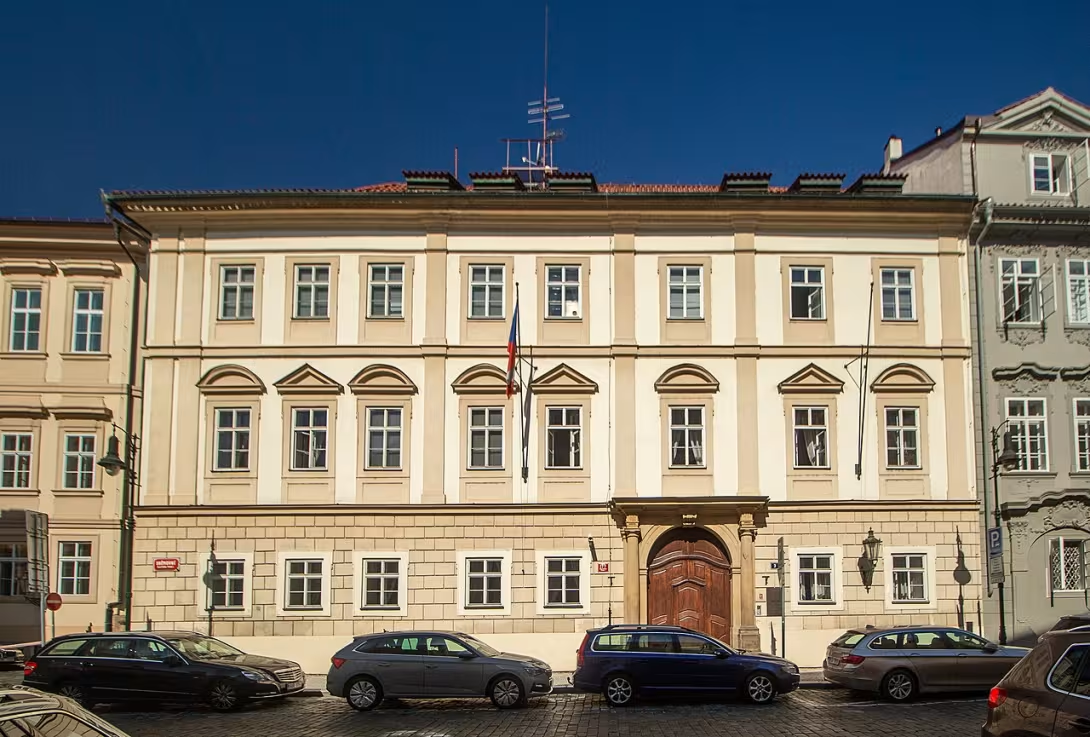

The historical appearance on the left is an AI-generated visualisation and serves as inspiration only.
Historical milestones
- 1466
- Jan Sekyra became the first known owner.
- 1690
- The building was transformed into its current Baroque style.
- 1707
- Giovanni Antonio Lurago made modifications to the palace.
- 1884
- Changes were made to the layout of the building.
Architectural development
The original Gothic house underwent several transformations over time. It was significantly altered around 1690 into its current Baroque style, with Giovanni Antonio Lurago making some modifications in 1707. Further changes to the layout occurred in 1884.
Historical events
In 1466, tanner Jan Sekyra became the first known owner.
By the early 17th century, the palace was associated with the Kolowrat family.
After 1626, it served as a parish church linked to St. Wenceslas Church.
Following the dissolution of the Jesuit college in 1772, it became the parish of St. Nicholas.
Owners
The first known owner in 1466 was tanner Jan Sekyra; later, it became known as Bělehrad. In the early 17th century, it belonged to the Kolowrat family and subsequently served as a parish church after 1626. Following the dissolution of the Jesuit college in 1772, it became known as the parish of St. Nicholas. The building is currently owned by the Prague Archdiocese.
Guide
This guide is narrated by a synthetic voice generated by artificial intelligence.
Show guide text
This text was created by artificial intelligence and has not been editorially reviewed. It may contain inaccuracies.
Welcome to the heart of Prague's Malá Strana district, where you now stand before the majestic Kolowratský palác. This stunning Baroque palace, with its rich history and architectural elegance, invites you on a journey through time.
As you gaze upon the grand edifice, notice how it seamlessly blends into the historical tapestry of this charming area. The Kolowratský Palace was not always as we see it today; originally constructed as a Gothic house, it has undergone significant transformations over the centuries. Imagine yourself in 1466 when Jan Sekyra became its first known owner. Over time, the building evolved, acquiring its current Baroque style around 1690—a testament to Prague's architectural evolution.
Now, let your eyes wander across the main facade facing Sněmovní Street. The architecturally interesting edicule portal is a highlight you shouldn't miss. It's a feature that reflects the care and detail invested in this transformation. On the side facade facing Thunovská Street, an archway beckons—another element of its architectural allure.
Giovanni Antonio Lurago played a pivotal role in shaping what we see today. In 1707, he made modifications to the palace, refining its Baroque elegance. Later, in 1884, further changes were made to the layout, ensuring the building continued to meet the needs and tastes of its time.
The history of this place is intertwined with significant events and figures. Although many historical personalities remain unnamed, we know that by 1626, the palace became associated with St. Wenceslas Church and later served as a parish—a role that highlights its importance in the community's spiritual life.
Here's an intriguing aspect: the transformation from a Gothic house to this Baroque masterpiece reflects not just architectural change but also societal shifts over time. This evolution mirrors Prague’s broader historical narrative, making the palace more than just a building—it's a living storybook of the city's past.
As you continue your exploration, remember that each corner and detail of Kolowratský Palace holds whispers of history waiting to be discovered. We invite you to delve deeper into its stories and let yourself be inspired by its enduring beauty. Thank you for joining us on this journey through time. Enjoy uncovering the secrets hidden within these walls.
Tips for visitors
The best time to visit Kolowratský Palác is during the late spring or early fall when the weather is pleasant, allowing you to comfortably explore both the interior of the palace and its surrounding areas. These seasons offer mild temperatures perfect for walking around Malá Strana and enjoying outdoor cafes nearby. Additionally, visiting outside peak tourist season means fewer crowds, giving you a more intimate experience with Prague’s rich history.
Transportation to Kolowratský Palác is convenient by both public transport and car. The palace is accessible via several tram lines that stop near the area, making it easy for visitors arriving from different parts of Prague. It's advisable to check current traffic conditions or consider using a park-and-ride service if you're coming from further away.
When planning your visit, remember to bring comfortable walking shoes as the area around Kolowratský Palác is best explored on foot. A camera is also recommended to capture the stunning architecture and vibrant atmosphere of Malá Strana. For those interested in photography, early morning or late afternoon provides the best natural lighting for capturing the palace’s façade and surrounding streets.
For families with children, Kolowratský Palác offers a fascinating glimpse into Prague's history that can be both educational and entertaining. The nearby Charles Bridge is an excellent spot for kids to explore, offering numerous street performers and vendors. Additionally, the area around Malá Strana has several parks where families can relax or enjoy a picnic.
In terms of what to see nearby within 30 minutes, visitors should not miss the opportunity to visit Prague Castle, which offers breathtaking views over the city and houses several museums and historical sites. Another must-see is St. Nicholas Church, located just across from Kolowratský Palác on Sněmovní Street, known for its stunning Baroque architecture and beautiful interior.
Frequently asked questions
Can the monument be visited?
Some buildings of this kind are open for guided tours, others serve another purpose or are privately owned. We have not verified whether and when this monument is open – please ask the operator.
What are the opening hours and admission?
We have not verified the opening hours or admission. Current information is published by the operator.
Where is the monument?
Location: Sněmovní 177/3, Malá Strana, Praha, Hlavní město Praha. The map on this page shows the exact spot.
Why is the monument protected?
It is listed in the Central List of Cultural Monuments of the Czech Republic as a cultural monument (register no. 86865/1-632).
Businesses nearby
Do you run a restaurant, accommodation, shop, museum, rental, wellness or other visitor service near this monument? Show yourself directly to the people heading to it — this is how they will see you in the app and on the web:
Events nearby

Zdroj akcí: otevřená data měst a obcí ČR (Národní katalog otevřených dat) a kalendář akcí Národního památkového ústavu.
Nearby
Kolowratský palác is situated in Prague's Malá Strana district, near significant landmarks such as Thunovská and Sněmovní streets. The area is rich with historical architecture and cultural heritage.
Accommodation nearby
Trips and activities nearby
Guided tours, tickets and activities nearby from GetYourGuide
Affiliate link: if you buy from the partner, we may receive a commission. The price for you does not change.
Search tours and activities →Themed route
Thematic Walking Tour: The Kolowratský Palace and Its Environs
1. Kolowratský Palác (Palace)
Type: Historical Building
Why Visit: Begin your journey at the heart of Prague's Malá Strana district with a visit to the Kolowratský Palác, an exquisite example of Baroque architecture. This palace is renowned for its stunning interiors and historical significance as it once served as the seat of the Czech parliament. The building offers insights into the political history of the region and provides visitors with an opportunity to explore beautifully preserved rooms and art collections.
2. Thunovská Street
Type: Historic Street
Why Visit: Just a short walk from Kolowratský Palác, Thunovská Street is lined with elegant Baroque and Renaissance buildings that showcase the architectural splendor of Malá Strana. This street offers a glimpse into the everyday life of 17th-century Prague, featuring charming facades and historic details that reflect the area's rich cultural heritage.
3. Sněmovní Street
Type: Historic Street
Why Visit: Continue your exploration along Sněmovní Street, which connects to Thunovská Street and leads directly to the Kolowratský Palác. This street is significant for its historical importance as it has been a central hub in Prague's political landscape. Walking down Sněmovní Street provides an opportunity to appreciate the architectural continuity of Malá Strana and to reflect on the area’s role in Czech history.
4. Church of St. Nicholas
Type: Religious Site
Why Visit: Located nearby, the Church of St. Nicholas is a remarkable example of Baroque architecture with its iconic dome that dominates the skyline of Malá Strana. This church holds historical importance as it was built on the site where Jan Hus was burned at the stake in 1415. Visitors can admire the stunning frescoes inside and enjoy panoramic views of Prague from the top of the dome.
This thematic walking tour offers a comprehensive experience of the Kolowratský Palác and its immediate surroundings, highlighting the historical and architectural significance of Malá Strana.
Seasonal recommendations
Spring: Visiting Kolowratský palác during springtime offers a unique experience as the city of Prague awakens with vibrant blooms and gentle breezes that bring life to its historic streets. The palace grounds are adorned with blossoming flowers, creating a picturesque setting against the backdrop of Malá Strana's charming architecture. Spring light casts a soft glow on the façades, enhancing their intricate details. Visitors should dress in layers to accommodate fluctuating temperatures, and it’s wise to arrive early as the season attracts many tourists eager to witness Prague's renewal.
Summer: The summer months at Kolowratský palác are characterized by long daylight hours that illuminate the palace with a warm, golden hue, perfect for capturing its architectural beauty. The lush greenery of Malá Strana provides a refreshing contrast to the sunlit stone structures. This is peak tourist season, so expect larger crowds and plan accordingly; arriving early in the morning can help avoid the midday rush. Comfortable walking shoes and light clothing are recommended to stay cool as you explore.
Autumn: Autumn brings a magical transformation to Kolowratský palác with hues of amber, orange, and red painting the landscape around Malá Strana. The cooler temperatures make for pleasant strolls along the cobblestone streets, while the soft autumn light creates a cozy atmosphere ideal for photography. As the leaves fall, they add an enchanting touch to the historic setting. Visitors should wear warm layers and consider visiting in the late afternoon when the lighting is particularly stunning.
Winter: In winter, Kolowratský palác exudes a serene beauty with snow-dusted rooftops and twinkling lights that line the streets of Malá Strana, creating a festive atmosphere. The shorter days mean that daylight hours are precious for exploring the palace's details, so plan to arrive early. Winter often brings fewer tourists, allowing for a more intimate experience. Dress warmly in layers and consider bringing gloves and a hat to comfortably enjoy the winter wonderland ambiance of Prague.
Visualizations and artistic views


The visualisations are generated by artificial intelligence and serve as inspiration.
Photos from the area
Real photos taken near the monument

Zdroj a licence jsou uvedeny u každého snímku.
Tips from visitors
No tips yet. Be the first!
Log in and add your tip.
Sources and literature
Photos: VitVit / CC BY-SA 4.0 — Wikimedia Commons. The author and licence also appear when you hover over the image.
Faktickým podkladem tohoto textu byl článek na Wikipedii, jehož autory jsou přispěvatelé Wikipedie. Článek je dostupný pod licencí CC BY-SA 4.0.
Location on the map

Příběhy a pověsti
Legendy, pověsti a příběhy spjaté s touto památkou
Fotografie návštěvníků
Zatím žádné fotografie. Buďte první, kdo přidá fotografii z návštěvy!
Log in a přidejte svou fotografii nebo hodnoťte.
Za ověřenou návštěvu v aplikaci získáte víc bodů — poznáme podle GPS, že jste na místě.
Reviews and comments