



Komenského studna Fountain
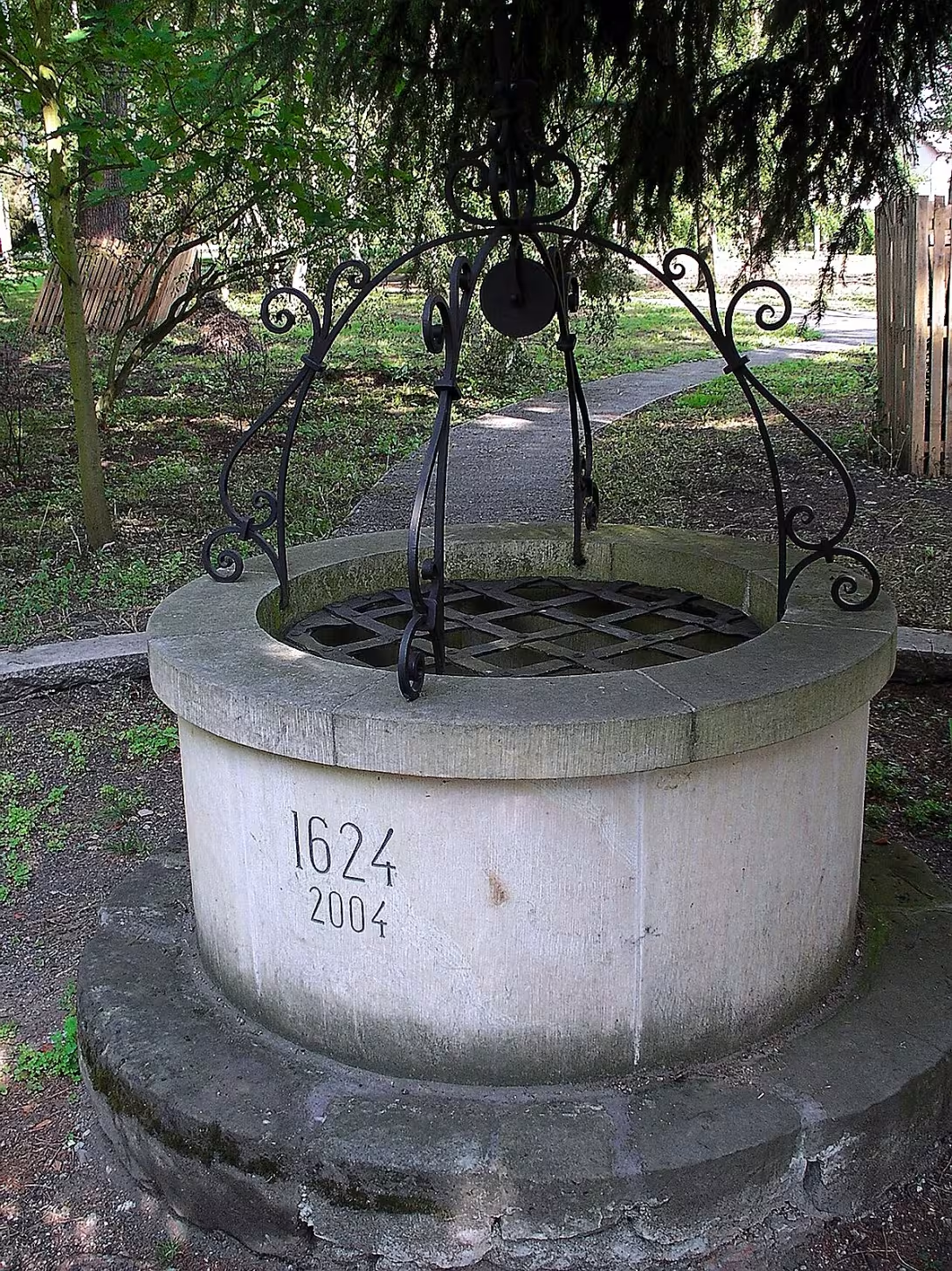
Komenského studna in Poděbrady is a historical monument built in a place of strong iron spring from 1624. This Object in Zámostí bears the name of Jan Amas Komenský, who mentioned the source here in his book On the severe adversity of the Czech Church. The sandbox itself was set up in 1822 and the above-ground part of the building is modern.
The oldest history of the source is the written sources of the 17th century. The discovery of a strong spring of reddish iron water in the past has created a rumor about the blood of the executed Kutnohorsky miners rising to the surface, which attracted pilgrims to the place. The historical context of the time of creation of the pantry dates back to 1822, when the absolutist regime was consolidated in the Habsburg monarchy and in the Czech countries after the wars of Naples, and the national revival grew slowly in Czech society. A smaller spa was gradually formed around the spring. These developed from a wooden building from 1722 to a brick house from 1832 to a larger spa building from 1881, but public interest gradually fell and traffic ceased.
The construction has a depth of three to four meters and a diameter of 150 centimeters. The sandbox originating in 1822 has at the top of the rim, is lined with worked stones and bears the initials A. M. together with the year 1624. In 1942, the well was covered with an decorative grille with a pulley carrier, with the above-ground part of the monument being modern.
The owners and figures associated with the history of the building include the Podebrad township Anna Miller, which in 1822 had the spring provided with sandstone panes, and Jan Amos Komenský. The spa itself had vans and rooms for water heating, but after initial development they ended up for lack of interest.
Among the key events are the year 1624, when Jan Amos Komenský mentioned the source in the book on the severe adversity of the Czech Church. The year 1822, when the townswoman Anna Miller had a sandbox set up, and 1965, when the well was declared a cultural monument.
Today, this monument is strictly protected and is located in the village Poděbrady I, in a region with a rich spa tradition and historical center in Polabi. Visiting this place offers a view of history associated with important personalities of Czech history and the development of the use of natural springs.
Then and now
Drag the slider to compare how the landmark may have looked when it was built with the view today.
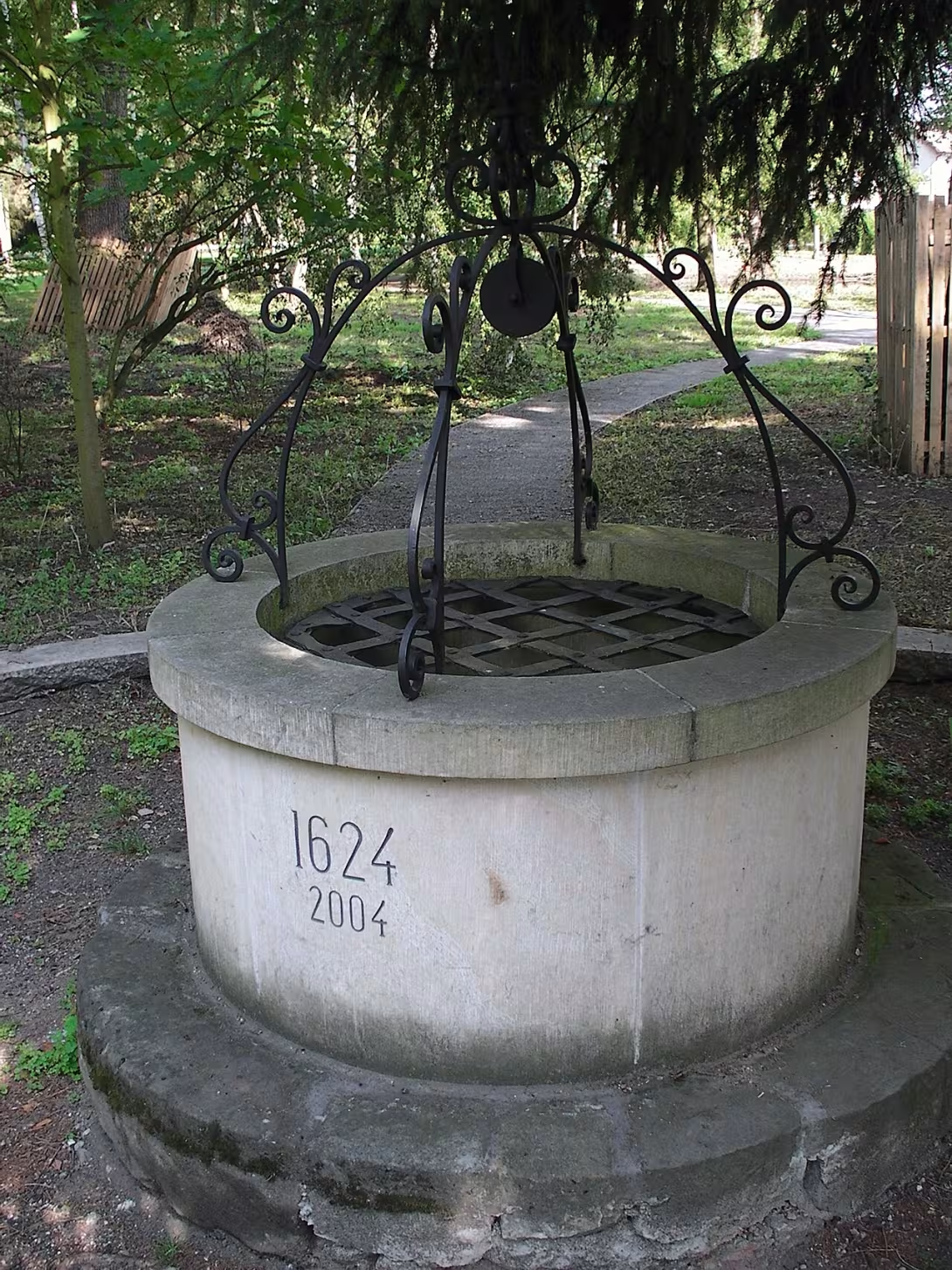
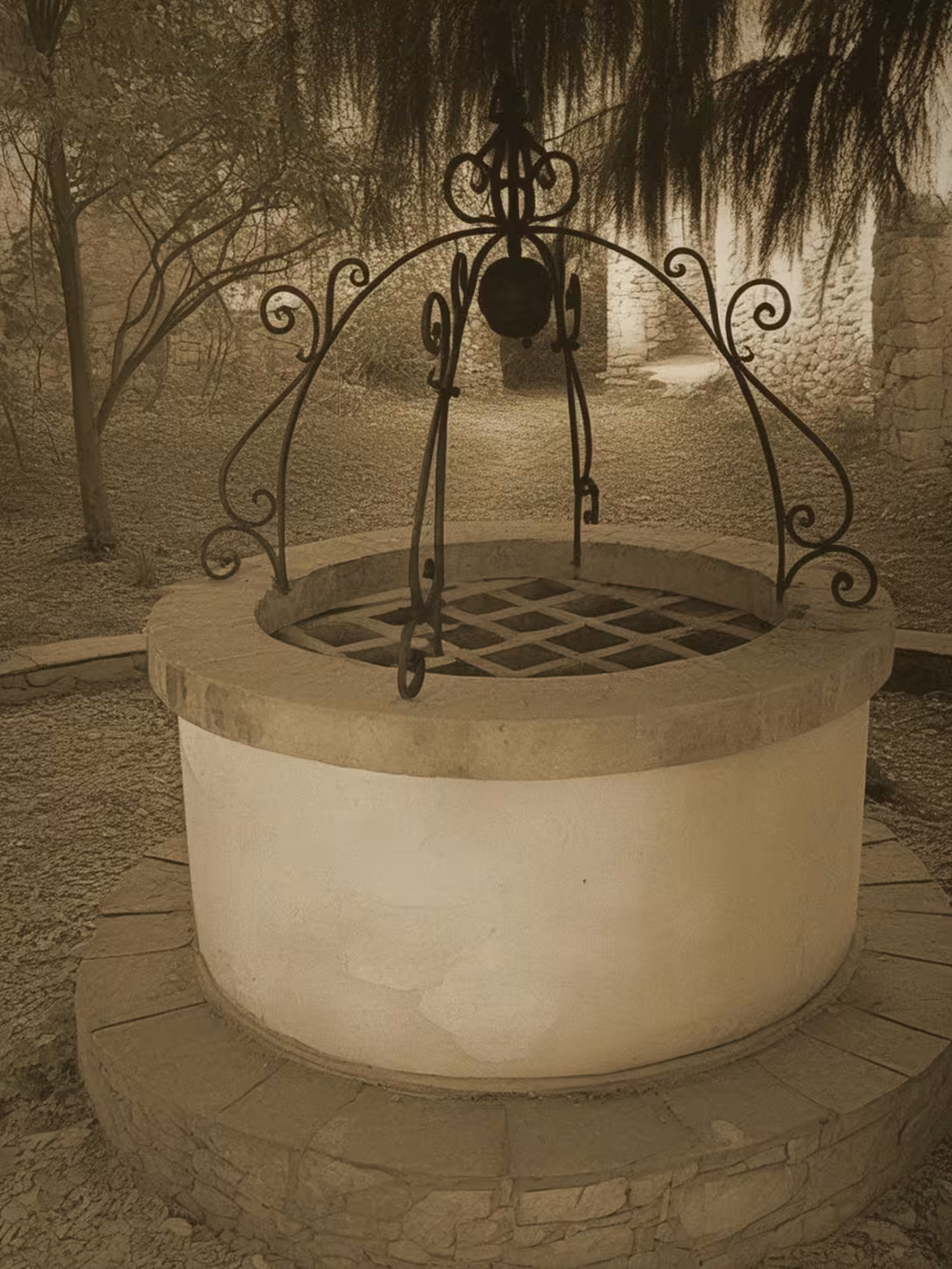
The historical appearance on the left is an AI-generated visualisation and serves as inspiration only.
Historical milestones
- 1624
- Jan Amos Komenský mentioned the important source in his book.
- 1822
- The town girl Anna Miller had the spring provided with sandbox.
- 1965
- The well was declared a cultural monument.
Architectural development
The well has a depth of three to four meters and a diameter of 150 centimeters. The sandstone box from 1822 has an upper edge and is lined with worked stones. In 1942, the well was covered with a decorative grille with a pulley carrier and its above ground part is modern.
Historical events
Jan Amos Komenský mentioned the spring in 1624. In 1822, the spring was provided with a sandstone pantry by Podebrad township Anna Miller. In 1965 the well was registered as a cultural monument.
Points of interest
- The monument was built in a place of strong iron spring from 1624 and bears the name of John Amas Komenský, who mentioned the spring in his book. - The discovery of a strong spring of reddish iron water in the past has created a rumor about the blood of the executed Kutnohorsky miners rising to the surface. - The sandstone box itself was set up in 1822 by Podebrad township Anna Miller and has an upper edge with initials A. M. and the year 1624. - A smaller spa was gradually established around the spring, which evolved from a wooden building from 1722 to a larger spa building from 1881, but the operation eventually ceased for lack of interest. - In 1942, the well was covered with an decorative grid with a pulley carrier and was declared a cultural monument in 1965.
Guide
Show guide text
This text was created by artificial intelligence and has not been editorially reviewed. It may contain inaccuracies.
Welcome to this special place. Right now you're standing in front of a historic well that you'll find in our beautiful spa towns on the Elbe. Take the outside world out of your head for a moment and let the story carry you back centuries. Look ahead. You see a structure that at first glance captures its peaceful atmosphere and a strong connection to our history. The above-ground part of this well is modern, but it hides within itself stories deeply reaching into Czech history.
Let's look at how this place was created and what its historical context was. You're standing in places where there's a strong iron spring in the ground. Even in the year our famous thinker and teacher Jan Amos Komenský mentioned this underground treasure. He wrote about it in his important book, which dealt with the severe adversity of the Czech Church. The people at that time knew very well that this water was something special. More than two hundred years later, in precisely eighteen hundred twenty-two years ago, a resident township Anna Miller took care of this place. At her expense she had the spring provided with an honest sandbox. In this stone were carved her initials and the year that you can see there today. It is fascinating to imagine how many generations of people have come here for water and how many human destinies have intersected with this spring.
Now pay attention to the very form of the construction. The architects of this work may have remained unknown in the historical records, but their work left a permanent mark. Take a closer look at the sandbox, which was left by the already mentioned Anna Miller. Note the meticulous work with the stone that resists the tooth of time for generations. The above-ground part, which complements the whole monument, was created in modern history and underlines the respect that local people have for this spring. The whole monument is officially protected as a cultural monument, continuously since nineteen hundred and sixty-five.
Now let's dig deeper into the stories and personalities that are firmly connected to this place. The first great figure is Jan Amos Komenský. The inscription in his book in 16 hundred and twenty-four shows that the spring here was known far and wide in the moved times of the po-white mountains. Komenský paid attention to natural phenomena and in his texts he was able to connect the spiritual world with the real environment of the then country. The second key female figure is already mentioned Anna Miller. Its work in the nineteenth century saved a spring for future generations and gave it a solid material form that we can look at today. It gave us a tangible reminder of the times when people had only discovered the strength and composition of the waters here.
This place is also associated with one great mystery and interesting thing that has caused a great deal of excitement in the past. When people first discovered a strong spring of red iron water in the past, in the region it produced huge emotions and a very strong reputation. The water was a strong blood-like color. A story began to spread among the simple people that the blood of the executed Kutnohorsky miners came from the depths of the earth to the surface. You can live to see how much fear and fascination this red water must have awakened in people. Today, of course, we know that this colour is due to the high iron content in mineral water, but this old reputation still gives the place a very mysterious and unforgettable atmosphere.
Our stopping together today is slowly coming to an end. I hope the talk of the Comenius well has been interesting for you and that you have rested at this iron spring. When you go on another journey, remember to explore the surrounding beauty of Poděbrad, which carry so many similar stories. Thank you for your attention, I wish you a wonderful rest of the day and see you next to the sights of our picturesque region.
Tips for visitors
The Komenského studna tour in Poděbrady is recommended for morning hours, when sunlight best highlights the details of this historical building and surrounding public spaces. The site is freely available, so you can view it in peace and without rush anytime during the day.
You can use a passenger car or local public transport to transport to the place, and you can easily find a specific connection in the respective timetables for Poděbrady. The surrounding area of the sights attracts walks, therefore we recommend to wear comfortable shoes suitable for longer walking along the city pavement.
To get the best pictures of this iron well, it is worth choosing a position from a mild ceiling that captures its historical character. The best lighting conditions for photography occur early in the morning or late in the afternoon, when soft sunlight gives photographs natural depth.
Children will appreciate enough space to move in the fresh air while exploring attractions in the wider surroundings.
The town of Poděbrady is located in the immediate vicinity of the monument with a rich spa tradition and a picturesque historical centre in the fertile region of Polabi. This surrounding environment directly encourages peaceful walks, exploring spa architecture and sucking up the local atmosphere.
Frequently asked questions
Can the monument be visited?
This is a structure in a public space that can usually be seen from outside free of charge. We have not verified that this particular one is freely accessible.
Where is the monument?
Location: Poděbrady I. The map on this page shows the exact spot.
Why is the monument protected?
It is listed in the Central List of Cultural Monuments of the Czech Republic as a cultural monument (register no. 1000150242).
Businesses nearby
Do you run a restaurant, accommodation, shop, museum, rental, wellness or other visitor service near this monument? Show yourself directly to the people heading to it — this is how they will see you in the app and on the web:
Nearby
Město Poděbrady s lázeňskou tradicí a historickým centrem v Polabí.
Accommodation nearby
Trips and activities nearby
Guided tours, tickets and activities nearby from GetYourGuide
Affiliate link: if you buy from the partner, we may receive a commission. The price for you does not change.
Search tours and activities →Themed route
Thematic cruise route around the Komenské well and Podebrad Spa
1. Podebrady Spa Area - Type: Spa Complex - Why is it worth a visit: This historic spa area is known for its long tradition and the use of mineral springs for medical purposes. Visit the spa where you can enjoy relaxing experiences and get to know the history of Poděbrady waters.
2. Historic Centre Poděbrad - Type: City area - Why is it worth a visit: Go to the historic city centre, where there are a number of architecturally interesting buildings and streets. This place offers a view of the rich past of Poděbrad and is ideal for moments of relaxation or exploring local gastronomic experiences.
3.Komenského studna - Type: Memorial - Why is it worth visiting: The main destination of the route is Komenského studna, a monument linked to the life and work of Jan Amos Komensky. This well symbolizes its activities in Poděbrady and offers insight into the history of the local population.
4. Poděbrady Garden - Type: Park - Why is it worth a visit: This park is an ideal place to relax and walk after the trip. It offers beautiful landscapes, a quiet atmosphere and suitable conditions for rest at the end of the route.
This route offers a combination of historical and relaxation experiences in one place, which allows full apreciation of the spa and cultural heritage of Poděbrad.
Seasonal recommendations
The sun begins to warm, but the morning air is usually cold, so a light windbreaker and solid shoes are suitable for the moment when you set out to admire the exterior of this historical work. The ideal time for stopping and visual inspection from the outside is in the morning, when soft spring rays ideally illuminate the details of the monument and there are not many people in the surroundings.
Summer brings lush leafy vegetation, which provides a pleasant shade, but may sometimes partially cover the view of historical details from the outside. Sunshine is usually very bright, therefore it is the best time to visit early morning or late evening when temperature falls and the sun creates beautiful side shading for photography.
Autumn turns adjacent trees into a colorful mosaic of yellow and red leaves, which gives the exterior of the monument a melancholy and very photogenic character. Common fog and low clouds create a specific atmosphere that is underlined by wet air and fallen leaves on the ground. For these moments in the open air, a warm waterproof coat and tight shoes are best suited to withstand moisture; The best time of day is noon, when the fog at least partially retreats and the daylight allows you to see the exterior in all its beauty.
Winter covers the entire area in silence, sometimes amplified by a snow blanket, which turns the surrounding public space into a purely white scenery. Early dimming and long nights mean that for the outdoor view of the memorial you must use the short daylight around noon when visibility is best. Do not forget to wear warm winter clothes, hat, gloves and warm shoes with anti-slip soles as the outdoor standing at this spring in cold weather requires good heat preparation.
Visualizations and artistic views


The visualisations are generated by artificial intelligence and serve as inspiration.
Photos from the area
Real photos taken near the monument

Zdroj a licence jsou uvedeny u každého snímku.
Tips from visitors
No tips yet. Be the first!
Log in and add your tip.
Sources and literature
Photos: Michal Louč / CC BY-SA 3.0 — Wikimedia Commons. The author and licence also appear when you hover over the image.
Faktickým podkladem tohoto textu byl článek na Wikipedii, jehož autory jsou přispěvatelé Wikipedie. Článek je dostupný pod licencí CC BY-SA 4.0.
Location on the map
Příběhy a pověsti
Legendy, pověsti a příběhy spjaté s touto památkou

Fotografie návštěvníků
Zatím žádné fotografie. Buďte první, kdo přidá fotografii z návštěvy!
Log in a přidejte svou fotografii nebo hodnoťte.
Za ověřenou návštěvu v aplikaci získáte víc bodů — poznáme podle GPS, že jste na místě.
Reviews and comments