






mariánský sloup na náměstí v Poděbradech Marian column
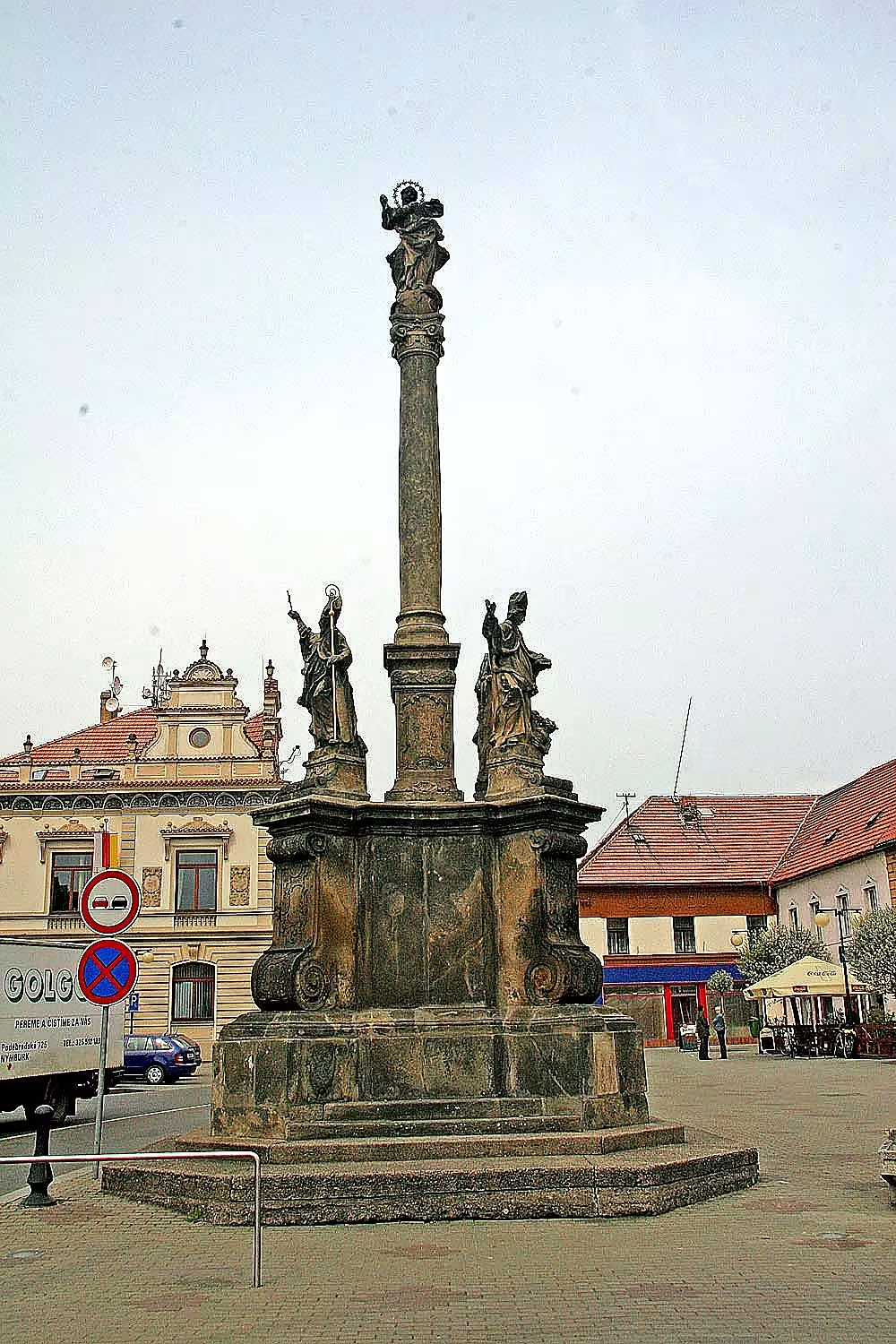
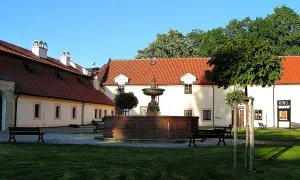
The Marian column on Jiří Square in Poděbrady is a sandstone rock sculpture from 1765. Since 1965 it has been protected as a cultural monument of the Czech Republic. The building is an important element of the historical centre and shows baroque piety. The dominant feature of the work is the statue of the Immaculate Virgin, which is supplemented by four saints on the pedestal.
Efforts to build a new sculpture on the Potebradian line appeared as early as the early 1930s. The city council then decided to replace the decrepit statue of the Virgin Mary. However, the implementation initially prevented lack of finance and disagreements regarding the design of art. The first model was created by the Podebrad sculptor and carver Václav Bergman. However, Dean Antonín Gottfried Mollinari was not satisfied with him, so another proposal was created, which was written by the carver from Kostelka over the Black Forest. The construction took place only in 1762- 1765 in response to the plague epidemic, when the inhabitants of the city collected the necessary funds through the collection. Historical sources suggest that the local sculptor Josef Bergmann may have been the author. However, due to the outstanding urban books, the creator of the final form is not sure.
The sculpture is carved from sandstone and is characterized by a richly divided base with rococo ornaments. On the plinth there are statues of St. Wenceslas, St. Vojtěch, St. Florian and St. Prokop. The middle part consists of a prismatic figure, which passes into a slender column, ending with a Corinthian head with a statue of the Virgin Mary. The original composition of the statues of the saints changed over time; until 1837 there was a statue of St. Gothard in the place of St. Wenceslas.
The town of Podebrady is the owner of the monument. During its existence, the work went through several repairs, the first larger of which took place in 1837. In the 19th century, the sculpture was so damaged by the rain flow that it threatened to collapse. The extensive reconstruction took place in 1896 under the guidance of academic sculptor A. Horáka. At that time, an iron fence designed by sculptor Bohuslav Schnirch was installed around the column, but was later removed. In the past, there was a procession to the column at the holidays of all four depicted saints.
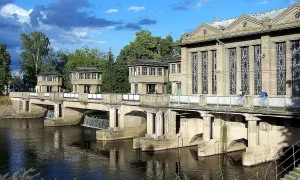
Today the Marian column is an integral part of Jiří Square and a reminder of the historical development of the city during the period of the reign of Marie Theresa. Visitors of Poděbrad can admire this monument near the castle and the spa colonnade. The sculpture represents a valuable proof of the artistic craft of the 18th century and offers the opportunity to see the history of religious expressions in the Czech countries.
Historical milestones
- 1765
- Completion of construction and location of sculptures in the square.
- 1837
- The first major repair and replacement of the statue of St. Gothard for St. Wenceslas.
- 1896
- Repair by academic sculptor A. Horák and installation of iron fence.
- 1965
- Declaration of sculptures for a cultural monument.
Architectural development
The sculpture is carved out of sandstone and carries distinctive rococo ornamental elements. The original composition of the statues of the saints was changed in 1837 when the statue of St. Gothard was replaced by the statue of St. Wenceslas. The construction includes a prism character passing into a slender column with a Corinthian head.
Historical events
1762-1765: Construction of a pillar in response to a plague epidemic. 1837: First major repair and change in the casting of statues of saints. 1896: Extensive reconstruction by academic sculptor A. Horák.
Owners
City of Podebrady
Points of interest
- The sandstone rock sculpture was built between 1762 and 1765 in response to a plague epidemic. - Since 1965 this work has been protected as a cultural monument of the Czech Republic. - Until 1837, the statue of St. Wenceslas stood in place of the statue of St. Gothard. - In the nineteenth century, the sculpture was so damaged because the water was leaking that it was about to collapse. - An iron fence was previously installed around the column, designed by sculptor Bohuslav Schnirch.
Guide
Show guide text
This text was created by artificial intelligence and has not been editorially reviewed. It may contain inaccuracies.
Welcome to the heart of Podebrad, right on George Square. You're standing in front of one of the most important and beautiful symbols in this city. In front of your eyes, there is a Marian pillar that dominates this entire space with its presence. Before we take a deeper tour, just look at him as a whole for a moment. Feel the beauty of a sandstone work that carries all the elegance and richness of Rococo style. This sculpture is not just an ordinary decoration of the square, it is a living story that has been standing here for hundreds of years.
Now that you have realised its meaning, let's go back together in time and find out why this monumental work is even here. Imagine a period around the mid-eighteenth century. It was a time of great concern and uncertainty. The city then faced a terrible plague epidemic that threatened the lives of many people. The people of the time sought protection and hope in celestial powers. Just as a token of deep gratitude for the fact that the city and its inhabitants survived this test, it was decided to create this sculpture. The whole building was built between 1762 and 1765. It was a process that required not only artistic talent, but also the great faith and determination of the city to honor the protectors from disease.
Now let's move on to the architecture itself and pay attention to the details you have right in front of you. Your eyes should first aim up. The dominance of the whole, which is held at the highest, is the statue of the Immaculate Virgin Mary. It is she who is the center of the whole religion and rules the whole sandstone piece. Her character rules the whole sculpture and heads for heaven.
Now, however, lower your view and pay attention to what is on a richly decorated pedestal. This is where the most detailed part of the work takes place. On this pedestal there are statues of four important figures which complement the overall importance of the monument. Notice the details carved into the sandstone. Here you will see the statue of St. Wenceslas, followed by the figure of St. Vojtěv. Furthermore, your attention may shift to the figure of St. Florian and finally to the figure of St. Prokop. Each of these statues is part of a complex rococo complex where organic shapes and rich ornament intersect in harmony.
The work of prominent personalities is behind this magnificent work. The architecture and overall design of the sculpture is associated with names such as Josef Bergmann and Václav Bergman. These men helped give this gratitude matter and form. In the history of this place there are also other names that have been involved in what the monument looks like today. For example, Antonín Gottfried Mollinari or Bohuslav Schnirch are names that are closely related to this place.
If you look at the sculpture itself, you may notice that it had to be repaired several times after centuries to make it still look so beautiful. History tells us of important repairs that took place in the nineteenth century and at the end of that century. In 1896 the academic sculptor A. Horák took care of the maintenance of this sandstone work. It was he who made an important repair and also installed an iron fin that you can see around the monument to ensure its protection.
Now I have one interesting thing for you that may surprise you and make you wonder how our perception of history changes. If you were standing here in 1837, you wouldn't see the same figure as you're seeing right now. At that time, there was a statue of St. Gothard. During the first major repair in 1837, this statue was exchanged for St. Wenceslas. It is fascinating proof that even such a fixed monument is undergoing changes and adapting to new times and needs.
It is also important to mention how valuable this work is to all of us. Since 1965, this sculpture has been officially declared and protected as a cultural monument. This means that every detail you see is carefully guarded for future generations, so that they, in a few hundred years, can stand here like you, and feel the same respect and wonder.
I hope this brief insight into the history of the Marian pole has enriched you. You stand before a work that is a combination of art, faith and deep gratitude for life. Please do not hesitate to see the details of sandstone statues for a while and then you will continue to explore the beauty of Poděbrad and their beautiful square. I wish you a nice walk and enjoy every moment you spend in this historic environment. Goodbye.
Tips for visitors
The best time to visit is in the morning or in the evening, when the square is quieter and the sun pleasantly illuminates the details of the sandstone sculpture. So you avoid the lunchtime's greatest excitement and the lunchtime's direct light that creates sharp shadows.
The place is easily accessible by foot from the train and bus station. If you arrive by car, use public parking near the city centre; Check the current parking possibilities and traffic connections in map applications or search engines.
For a tour of the square, wear comfortable shoes and a headgear during the summer months. If you are planning a longer stay, do not forget the water bottle that can be refilled in local businesses.
The best images of the sculptures can be taken from a slight distance from the pedestal, allowing the entire composition, including the statues of saints. Ideal light for highlighting rococo details is during the golden watch.
In the immediate vicinity you can visit Podebrady Castle, walk around the spa colonnade or relax near the Elbe River. For families with children the square is the ideal starting point for a walk, the space is safe and offers plenty of places to relax.
Businesses nearby
Do you run a restaurant, accommodation, shop, museum, rental, wellness or other visitor service near this monument? Show yourself directly to the people heading to it — this is how they will see you in the app and on the web:
Nearby
Zámek Poděbrady, lázeňská kolonáda, řeka Labe.
Accommodation nearby
Trips and activities nearby
Guided tours, tickets and activities nearby from GetYourGuide
Affiliate link: if you buy from the partner, we may receive a commission. The price for you does not change.
Search tours and activities →Themed route
Thematic cruise route Poděbrady
1. Marian Column in the Square
Type: Monument, statue
Why is it worth a visit: The Marian Column is one of the most famous monuments in Poděbrady. The statue of St. John Nepomuk and Madonna with Jesus on top symbolizes local spiritual traditions and history.
2. Podebrada Castle
Type: Historical castle, culture
Why is worth a visit: The castle is not only a beautiful architectural monument, but also a host place for various cultural events. Its parks and gardens are the ideal place to relax after visiting the column.
3. Spa Colonnade
Type: Architectural element, history
Why is it worth a visit: Colonnade is an important part of Podebrad Spa and represents elegant Baroque architecture. It is a suitable place for short rest and photos.
4. River Elbe
Type: Natural element, landscape
Why is it worth a visit: A visit to the river offers a view of a pleasant landscape line and an opportunity for short walks along the banks. The Elbe is an important element of the local ecosystem and tourist attraction.
This route offers a combination of history, culture and nature in one of the most rare places in the Czech Republic.
Seasonal recommendations
Spring: In spring, the square wakes up with nature. The trees are beginning to bloom around the column and the air is fresh. The light is soft and rough in this period, which is ideal for observing tiny features of the statue. I recommend arriving early in the morning, when it is still quiet and the heat gradually rises. Dress well, because morning cold can still smell.
Summer: In the summer months there is a very lively mood and the sun shines the strongest. The day is long, but there are many more people around the square because of visitors. For the best experience and avoiding crowds I recommend visiting in the early morning. Don't forget light summer clothes and sun protection because the area around the sights can be very warm.
Autumn: Autumn brings golden colors and a calmer mood to Poděbrad. The morning mist adds mystery to the place and the low sun highlights the shadows on the stone work. It's good to have a warmer jacket with you because it gets cold in the afternoon. The ideal time for a tour is around noon, when the colors of the surroundings most excel.
Winter: The mood around the pillar is quiet and calm. If snow falls, the monument looks very festive and the white color contrasts beautifully with the stone. During this period the days are short, so plan to visit during the time of the greatest daylight. The need is very warm clothes, including hat and gloves, because it can be quite cold in the open area.
Visualizations and artistic views

The visualisations are generated by artificial intelligence and serve as inspiration.
Photos from the area
Real photos taken near the monument


Zdroj a licence jsou uvedeny u každého snímku.
Tips from visitors
No tips yet. Be the first!
Log in and add your tip.
Sources and literature
Photos: neuveden / CC BY 2.5 — Wikimedia Commons. The author and licence also appear when you hover over the image.
Faktickým podkladem tohoto textu byl článek na Wikipedii, jehož autory jsou přispěvatelé Wikipedie. Článek je dostupný pod licencí CC BY-SA 4.0.
Location on the map
Příběhy a pověsti
Legendy, pověsti a příběhy spjaté s touto památkou

Fotografie návštěvníků
Zatím žádné fotografie. Buďte první, kdo přidá fotografii z návštěvy!
Log in a přidejte svou fotografii nebo hodnoťte.
Za ověřenou návštěvu v aplikaci získáte víc bodů — poznáme podle GPS, že jste na místě.
Reviews and comments