



Kostel Božského srdce Páně (Nový Bohumín) Church
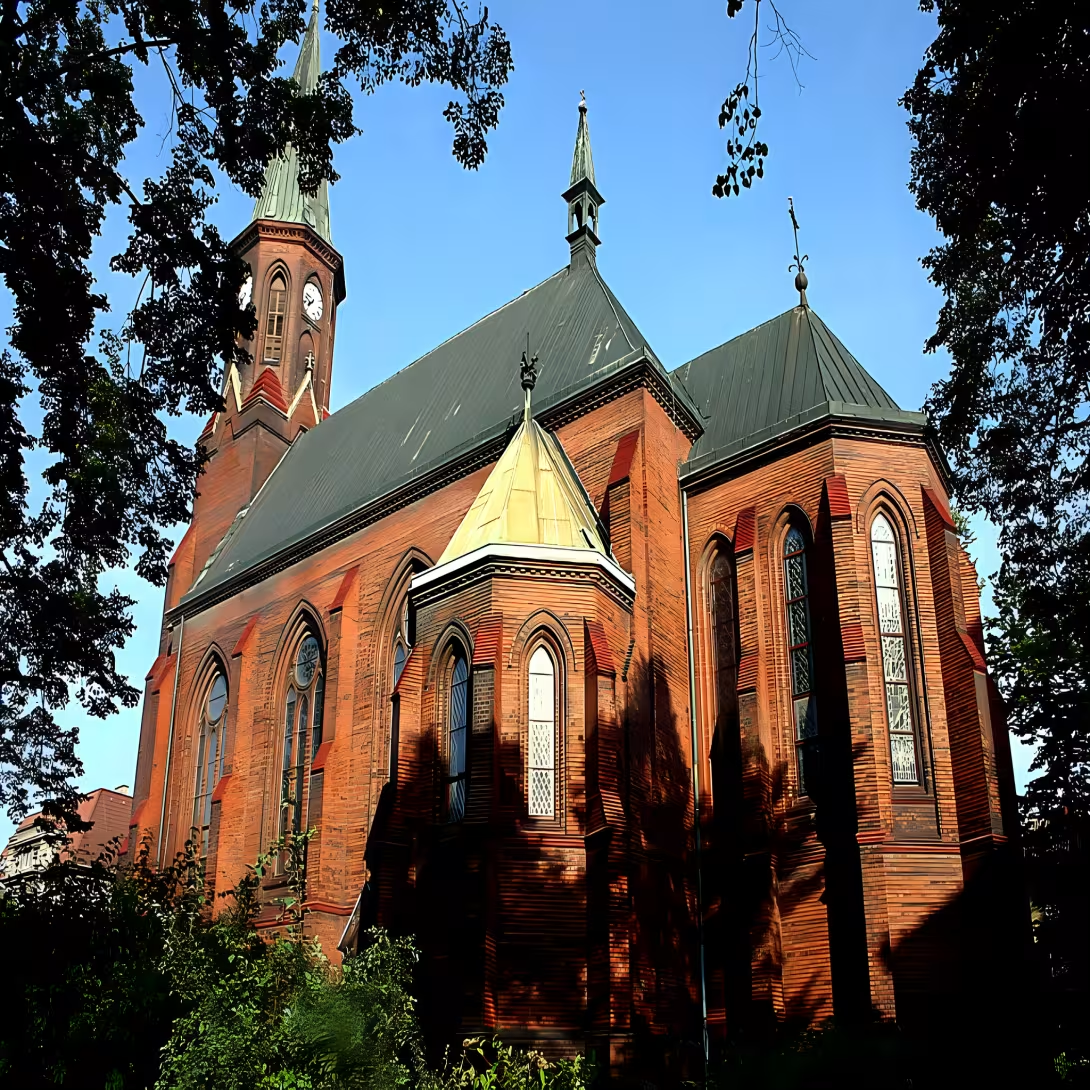
The Church of the Sacred Heart of Jesus in Nový Bohumín is a notable Roman Catholic monument near today's town hall, once a German-language gymnasium. Built from 1892 to 1896, it features backsteingotik style with red brickwork. The church was constructed to serve an increasing number of faithful, reflecting both religious devotion and community effort.
The idea for a Roman Catholic church near Bohumín station emerged in 1877. Local council approval came on December 26, 1889. The foundation stone was blessed on September 12, 1892, with construction concluding by autumn 1894. It was consecrated without a bishop on November 24, 1895, and formally dedicated by Bishop Georg Kopp on June 7, 1896.
Architecturally, the church exemplifies backsteingotik style. Initially designed by Josef Berger, plans were revised at Bishop Georg Kopp's request by Richard Völkel. Constructed with red bricks likely from Count Karl V. Lichnovský's brickworks in Krzyżanowice, financial challenges during construction were mitigated by significant donations. A cross on the church tower contains documents related to its construction and consecration.
The founding committee included Bohumín station chief Karl Wacha as president, along with clergy Anton Ignatz Kaschitzka and Eduard Georg Linzer. Other members were Ernest Appel, Joseph von Portenschlag, Augustin Tschusch, Adolf Wawra, and teacher Karl Postuwka. Financial backing came from various sources: Bishop Georg Kopp donated 30,000 zlotys; the Výhradně privilegierter c. k. Nordbahn contributed 5,000 zlotys; members of the Catholic Association for Church Construction gave 2,000 zlotys; Albert Hahn donated 1,200 zlotys; companies involved in mineral oil refining provided 400 zlatých; and Olomouc Archbishop Theodor Kohn contributed 50 zlatých. Count Heinrich Larisch-Mönnich generously offered the building site.
Throughout its history, the church has been central to community gatherings and religious services. Initially, Sunday services were conducted in German and Polish, with Czech services starting in 1921 due to an increase in Czech-speaking faithful. The church's capacity soon proved insufficient, prompting expansion discussions fifty years after completion.
Today, the Church of the Sacred Heart of Jesus remains a significant landmark within Nový Bohumín. Its historical and architectural importance makes it a worthwhile visit for those interested in late 19th-century religious architecture and community history. Visitors can appreciate its aesthetic and role as a testament to the cultural and spiritual life of the region during a period of change.
Then and now
Drag the slider to compare how the landmark may have looked when it was built with the view today.
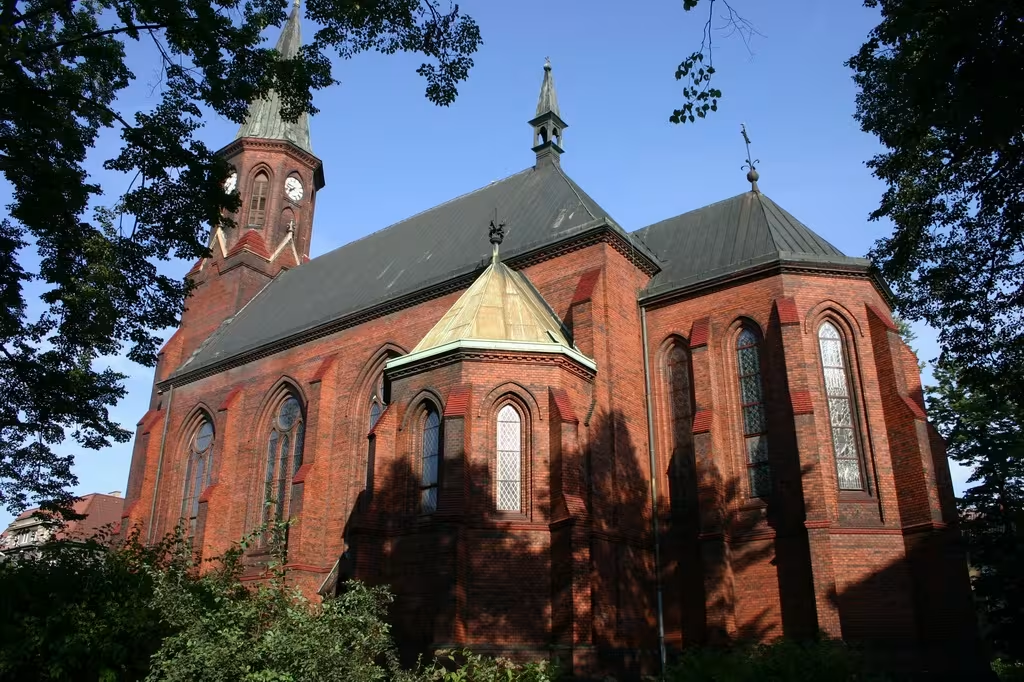
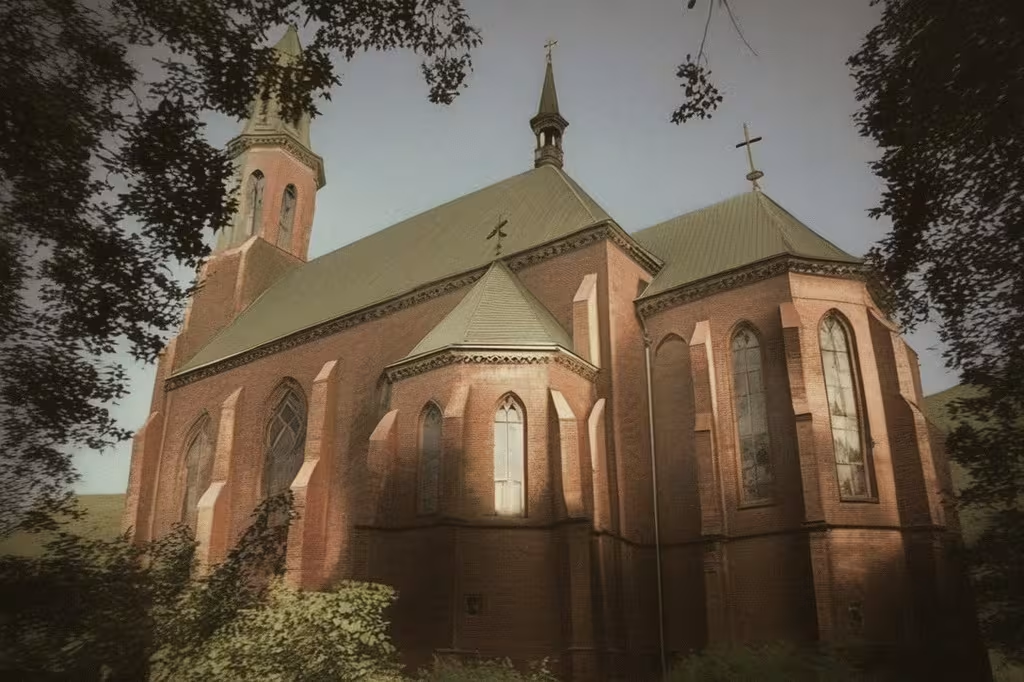
The historical appearance on the left is an AI-generated visualisation and serves as inspiration only.
Historical milestones
- 1892
- The foundation stone blessing took place.
- 1894
- Construction of the church was completed.
- 1895
- The church was consecrated without a bishop's presence.
- 1896
- Formal dedication by Bishop Georg Kopp.
Architectural development
Designed initially by Josef Berger in the backsteingotik style, the plans were revised by Richard Völkel at the request of Bishop Georg Kopp. The church was built using red bricks likely sourced from Count Karl V. Lichnovský's brickworks. Construction faced financial challenges but was supported by significant donations.
Historical events
The idea for a Roman Catholic church near Bohumín station began in 1877, with official approval from the local council on December 26, 1889.
The foundation stone was blessed on September 12, 1892, and construction concluded by autumn of 1894.
The church was consecrated without a bishop's presence on November 24, 1895, and formally dedicated by Bishop Georg Kopp on June 7, 1896.
Points of interest
- The Church of the Sacred Heart of Jesus features a unique architectural style known as backsteingotik, which is characterized by its use of red brickwork and Gothic elements—a blend uncommon in many other regions.
- During its construction period from 1892 to 1896, the church faced financial challenges that were overcome through significant donations, including an impressive contribution of 30,000 zlotys from Bishop Georg Kopp, highlighting the strong community support for its establishment.
- The cross atop the church tower is not just a decorative element but also serves as a historical capsule, containing documents related to the construction and consecration of the church, preserving its history in a tangible form.
- In an interesting twist of architectural history, the original design by Josef Berger was revised at the request of Bishop Georg Kopp, leading to the involvement of architect Richard Völkel. This change underscores the influence religious authorities had on the artistic direction during that era.
- The founding committee's composition reflects the multicultural and multiethnic nature of Nový Bohumín at the time, with members including prominent figures like Bohumín station chief Karl Wacha and clergy Anton Ignatz Kaschitzka, indicating a collaborative effort across different sectors of society.
Guide
This guide is narrated by a synthetic voice generated by artificial intelligence.
Show guide text
This text was created by artificial intelligence and has not been editorially reviewed. It may contain inaccuracies.
The construction of a Roman Catholic church near Bohumín railway station was considered as early as 1877. The municipal council approved the official proposal on December 26, 1889, and in June 1891 the Catholic Association for Church Construction was established. Its chairman became the station master Karl Wacha. Among others, the Bohumín parish priest Anton Ignatz Kaschitzka sat on the board.
The plans were drawn up by local builder Josef Berger. However, the Prince-Bishop of Wrocław Georg Kopp requested minor modifications and entrusted them to cathedral architect Richard Völkel. The modified plans were approved in May 1892 at Jánský Vrch in Javorník, the summer residence of the Wrocław bishops. The budget was estimated at roughly 45 thousand gold, but the final costs eventually reached almost 56 thousand.
The community and local faithful were not able to cover such an amount, despite holding collections. Without generous donations, the church would probably never have been built. The bishop Kopp himself donated the most, a full 30 thousand gold. The Northern Railway of Emperor Ferdinand contributed 5 thousand, the owner of the copper factory Albert Hahn 1200 gold, and the archbishop of Olomouc Theodor Kohn fifty. The land was provided free of charge by Count Heinrich Larisch-Mönnich. The cornerstone was blessed on September 12, 1892.
The church is built in neo-Gothic style from red unplastered bricks. Most likely, these were delivered from his brickyard in Prussian Krzyżanowice by Prince Charles V Lichnovsky. Construction proceeded slowly and was completed in the autumn of 1894. In the cross ball on the tower, documents about the creation and construction of the church and contemporary metal and paper money were placed. The furnishing of the interior was acquired gradually over the next several years.
The blessing took place on November 24, 1895. The bishop Georg Kopp solemnly consecrated the church on June 7, 1896. In the same year, regular Sunday services in German and Polish began, while Czech services only began in 1921. The priest was initially brought by carriage from present-day Starý Bohumín. This continued until the establishment of a sub-parish in 1898. Since 1900, the local church has been the seat of an independent parish.
However, the number of faithful continued to grow and the church ceased to be sufficient. Just fifty years after its existence, thoughts turned to reconstruction. A study submitted in August 1946 proposed an expansion with two side aisles. The church would then accommodate 564 seated and 956 standing people.
Frequently asked questions
Can the monument be visited?
Religious buildings are usually open mainly during services; at other times a visit is normally arranged with the parish or the operator. We have not verified specific times.
Where is the monument?
Location: Nový Bohumín, Moravskoslezský kraj. The map on this page shows the exact spot.
Why is the monument protected?
It is listed in the Central List of Cultural Monuments of the Czech Republic as a cultural monument (register no. 51945/8-4077).
Businesses nearby
Do you run a restaurant, accommodation, shop, museum, rental, wellness or other visitor service near this monument? Show yourself directly to the people heading to it — this is how they will see you in the app and on the web:
Events nearby
Zdroj akcí: otevřená data měst a obcí ČR (Národní katalog otevřených dat) a kalendář akcí Národního památkového ústavu.
Nearby
Located near Nový Bohumín's town hall, the church is part of a historically significant architectural complex. The area features other notable structures from the late 19th century.
Accommodation nearby
Themed route
Tematická výletní trasa: Historický komplex Nový Bohumín
1. Kostel Božského srdce Páně (Nový Bohumín)
Typ: Kostel
Proč stojí za návštěvu: Tento kostel, nacházející se v okamžité blízkosti radnice Nového Bohumína, je klíčovou součástí historicky významné architektonické komplexity. Postavený na konci 19. století, představuje nádherný příklad gotického obrození a nabízí poutníkům nejen duchovní útočiště, ale také krásnou architekturu s bohatou historií.
2. Radnice Nový Bohumín
Typ: Historická budova
Proč stojí za návštěvu: Radnice je nejen administrativním centrem obce, ale také významnou architektonickou památkou. Její elegantní design a historie odrážejí bohatou minulost Nového Bohumína jako důležitého průmyslového centra. Návštěvníci mohou ocenit její architektonické detaily a zaujmout se historií, která je s tímto místem spojena.
3. Historický náměstí Nový Bohumín
Typ: Náměstí
Proč stojí za návštěvu: Nacházející se v centru města, historické náměstí je živoucím svědkem minulosti Nového Bohumína. Je to místo setkávání a zábavy pro obyvatele i turisty. Náměstí nabízí pohled na další historické budovy a je ideálním místem k procházce, relaxaci nebo prohlídce místního trhu.
Tato trasa vás provede skrze srdce Nového Bohumína, nabízející pohled na jeho bohatou historii a architektonické dědictví.
Seasonal recommendations
Spring: Visiting the Church of the Sacred Heart of Jesus in Nový Bohumín during spring offers a rejuvenating experience as nature awakens around this historic site. The blooming flowers and fresh greenery create a picturesque setting, enhancing the church's serene beauty. With mild temperatures, it’s an ideal time for leisurely exploration without the summer crowds. Visitors should wear comfortable layers to accommodate fluctuating weather conditions. Arriving in the late morning is recommended to enjoy the soft light filtering through the stained glass windows while avoiding early bird photographers.
Summer: The summer months at the Church of the Sacred Heart of Jesus are marked by vibrant sunlight and longer days, perfect for capturing the church's architectural details and lush surroundings. This period sees an increase in visitors due to its appeal during peak tourist season. To make the most of your visit, consider arriving early in the morning or later in the afternoon when it is less crowded. Dressing in light, breathable clothing will help you stay comfortable under the warm sun, and don’t forget sunscreen to protect against UV rays.
Autumn: Autumn brings a stunning transformation to the Church of the Sacred Heart of Jesus with its rich palette of reds, oranges, and yellows. The crisp air and cooler temperatures make it an ideal time for photography enthusiasts looking to capture the church amidst the fall foliage. This season often sees fewer visitors compared to summer, providing a more tranquil atmosphere. Wearing layers is advisable as temperatures can vary throughout the day, and carrying a light jacket or sweater will ensure comfort during your visit.
Winter: The winter months offer a unique charm at the Church of the Sacred Heart of Jesus, with its historic architecture set against a backdrop of snow-covered landscapes. This period provides an ethereal atmosphere, especially when illuminated by soft lighting that accentuates the church's features. Dress warmly in layers to combat the cold, and consider bringing gloves and a hat for added comfort during your visit. Arriving early can help you avoid any disruptions caused by inclement weather.
Visualizations and artistic views


The visualisations are generated by artificial intelligence and serve as inspiration.
Photos from the area
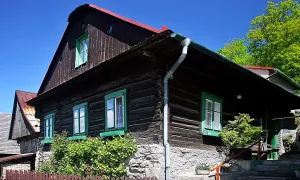
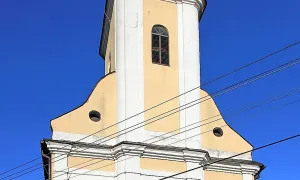
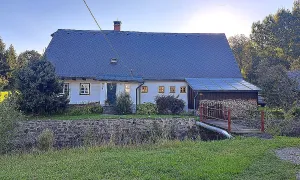
Real photos taken near the monument


Zdroj a licence jsou uvedeny u každého snímku.
Tips from visitors
No tips yet. Be the first!
Log in and add your tip.
Sources and literature
Photos: fotograf pro webovou stránku www.mesto-bohumin.cz / CC BY-SA 3.0, rozlišení zvýšeno umělou inteligencí — Wikimedia Commons. The author and licence also appear when you hover over the image.
Faktickým podkladem tohoto textu byl článek na Wikipedii, jehož autory jsou přispěvatelé Wikipedie. Článek je dostupný pod licencí CC BY-SA 4.0.
Location on the map


Příběhy a pověsti
Legendy, pověsti a příběhy spjaté s touto památkou
Příběh: Kostel Božského srdce Páně (Nový Bohumín)
Bylo to v pondělí ráno, kdy Martin Hartmann zjistil, že jeho svět téměř roztáhl návratem domů do Nového Bohumína — místy, kde úsvit se pletl s vonným smaragd…
Číst příběh
Pověst: Kostel Božského srdce Páně (Nový Bohumín)
Podle místní pověsti se vše rozhodlo jedné zimní noci roku 1891, kdy do Bohumína dorazil posel z Vratislavi s odmítavou odpovědí biskupské kanceláře. Katolic…
Číst příběhFotografie návštěvníků
Zatím žádné fotografie. Buďte první, kdo přidá fotografii z návštěvy!
Log in a přidejte svou fotografii nebo hodnoťte.
Za ověřenou návštěvu v aplikaci získáte víc bodů — poznáme podle GPS, že jste na místě.
Reviews and comments