



Lávka přes nádraží Bohumín
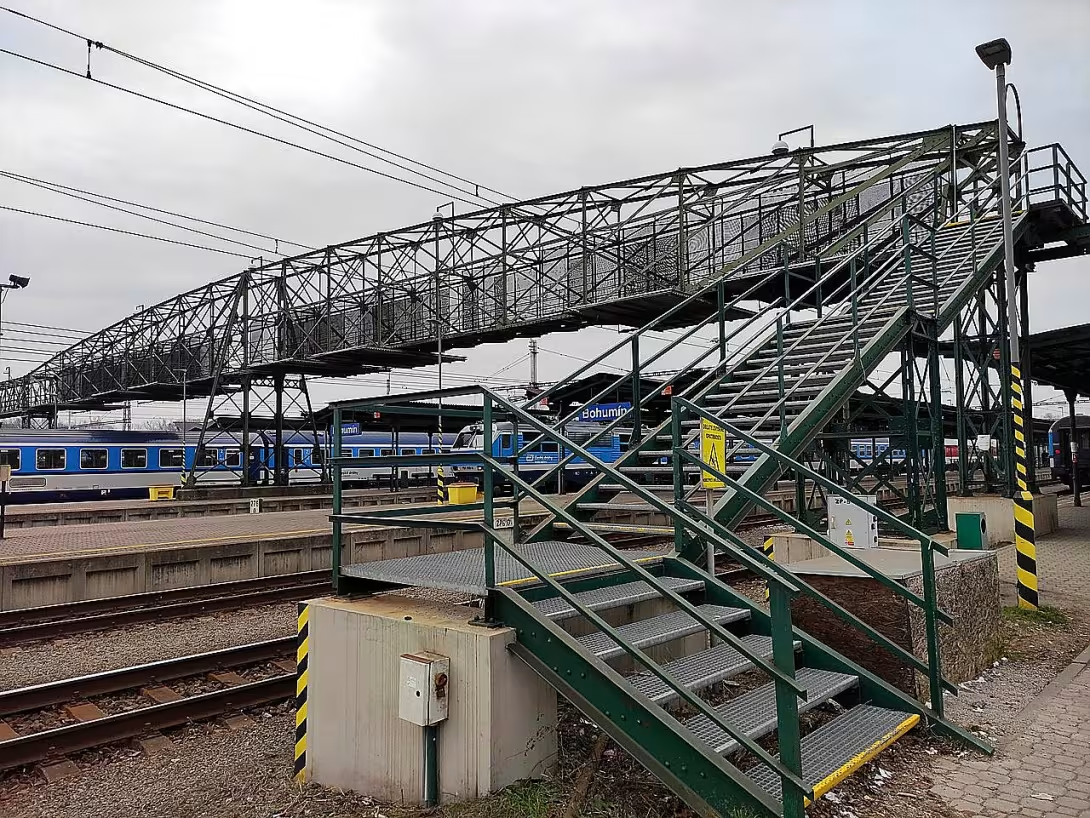
The footbridge in Nový Bohumín is a technical monument that crosses the railway station. This construction, the oldest part of which dates back to 1870, represents an important evidence of the development of the railway network in the 19th century. Since May 27, 2009, the building has been protected historically.
The history of the bridge is closely linked to the development of railway transport in the 19th century. The first part of the arched riveted riveting beams was built in 1870 in close proximity to the monument protected shipping building of the Liechtenstein Railway Station. From 1901 to 1902 the construction was extended by another section with straight belt beams, which led behind the customs building to Lidice Street. The original purpose of the bridge was to connect the railway area to the chemical factory.
The construction consists of three construction units with a total length of 170 metres, which do not include staircases. Architectural footbridge aesthetically complements the railway station building. A significant change was made to the construction in 2004, when a customs building located in the centre of the railway yard was brought down. They then connected the two original parts with a new middle part, creating the current transit unit.
The maintenance and repair of this technical monument is currently provided by the company BM service, a.s. Lavka is freely accessible to the public and serves as a pedestrian communication over the railway station.
For visitors, this building offers a partial view of the city and is a suitable place for watching the train traffic. Visiting the bridge allows you to see the history of technical construction and offers an unconventional view of the railway node in Bohumín.
Then and now
Drag the slider to compare how the landmark may have looked when it was built with the view today.
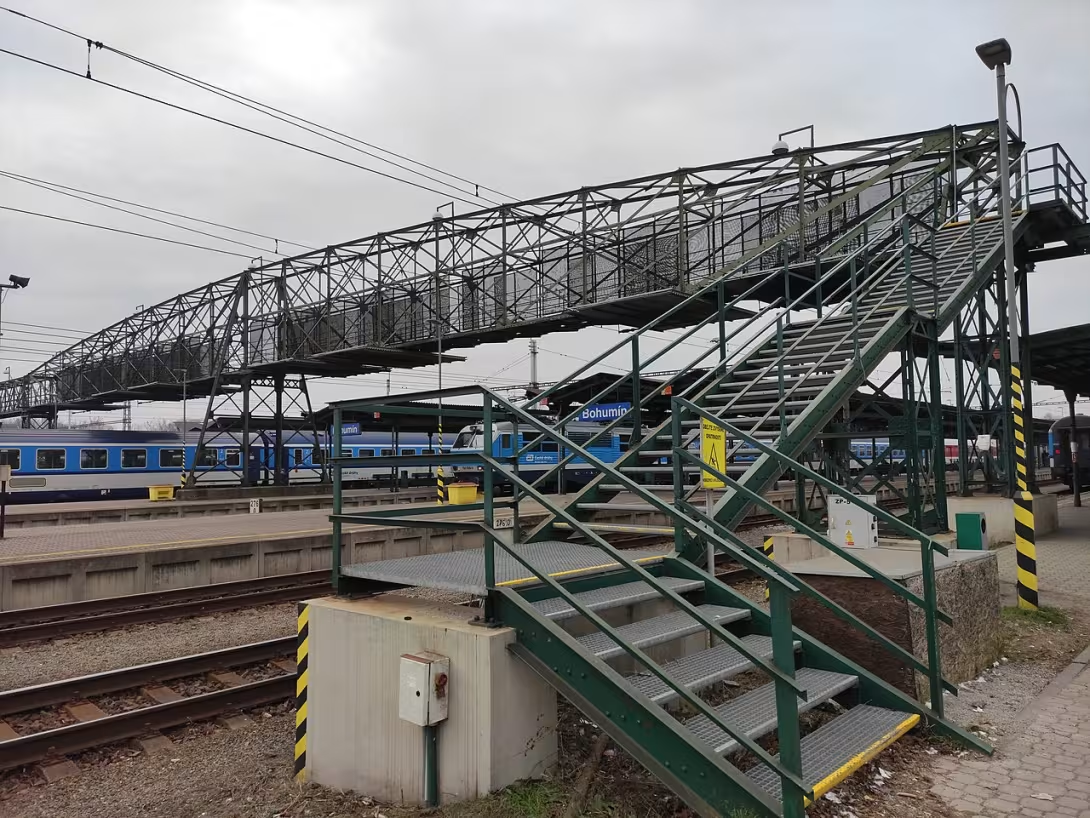
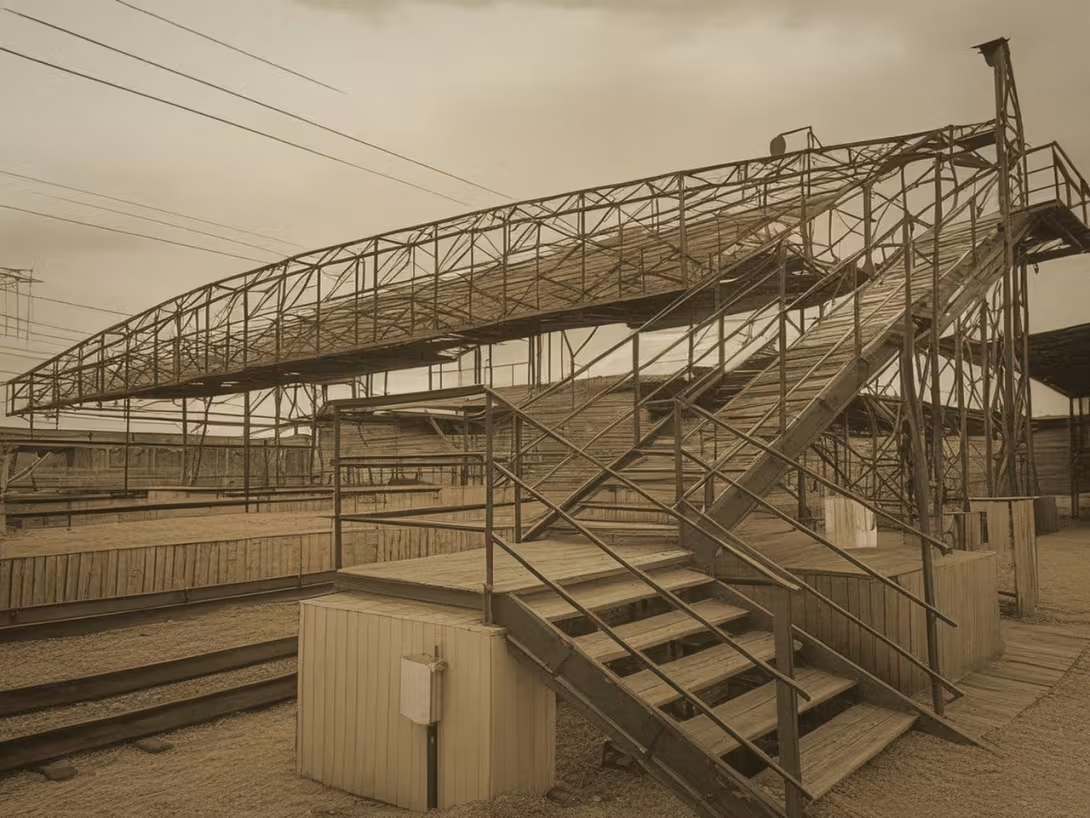
The historical appearance on the left is an AI-generated visualisation and serves as inspiration only.
Historical milestones
- 1870
- The formation of the first part of the bridge
- 1901
- Extension of the footbridge behind the customs building
- 1902
- Completion of bridge extension
- 2004
- Handling of the customs building and connecting both parts of the gangway
Architectural development
The bridge is freely accessible. It offers a partial view of the city and a view of the train traffic on the railway line.
Points of interest
- Steel bridge is a technical monument, the oldest part of which dates back to 1870. Since May 27, 2009, the building has been protected historically. - The original purpose of the construction was to connect the railway station with the chemical factory. - The construction consists of three units with a total length of 170 metres, which does not include staircases. - In 2004, a customs building was brought down and both original parts were connected by a new middle part. - The building offers a partial view of the city and is a suitable place to observe the train traffic.
Guide
Show guide text
This text was created by artificial intelligence and has not been editorially reviewed. It may contain inaccuracies.
Welcome, you are facing a unique steel bridge that connects the station area with the surrounding parts of Nový Bohumín. In front of you is a long, smooth structure without any stairs which is rolling along the tracks and offers a view of the historic railway station building. The bridge is divided into 170 metres and divided into three continuous sections, the oldest of which dates back to 1870. Note how steel beams are elegantly unloaded over the railway area and how their structure intersects with the architecture of the railway station, creating a harmonious whole, which is part of the daily excitement and peaceful moments of the observer.
Let's move on to the historical context of this work. The first part of the bridge, which is located directly at the shipping station, was built in 1870. At that time, rail transport developed rapidly and the need to connect the station space with the industrial facilities in the area was urgent. This is exactly how this first steel structure was created with arched riveted lattice beams, which still shows the technical fitness of the time. Two centuries later, between 1901 and 1902, the footbridge was extended behind the customs building, which stood in the middle of the track. This extension allowed for a smoother passage of pawns and workers between the station and other parts of the city. In 2004, there was a fundamental change when the customs building was removed and both parts of the footbridge were connected to one continuous structure, creating today's form that you can observe.
Now pay attention to architectural details that are visible on the footbridge. The steel structure consists of three main units, each of which bears the characteristics of its time. The oldest section, built in 1870, boasts arch beams, which are connected by rivets - in such a way the joining of steel parts, which at that time was considered a top technology. These beams create a solid and light frame that allows you to transfer loads without adding additional support elements. The second part, created at the beginning of the 20th century, extends this structure and maintains a uniform appearance, adapting to the needs of the extended passage. The third section, connected after the removal of the customs building in 2004, completes the overall length and maintains the continuity of the whole work. The whole bridge is without stairs, which makes it easier for all visitors, including persons with reduced mobility.
Although we have not been able to identify the names of architects involved in the design and construction, we can appreciate their technical skills and aesthetics, which is reflected in every detail of this construction. Similarly, there are no specific historical figures that are closely related to the footbridge, but the footbridge itself is witnessing many generations of people who have walked it - from railway officials to workers from the local chemical factory for which it was originally built.
The interesting thing that can attract any observer is that this steel footbridge is a technical monument, the oldest part of which dates back to 1870 and has been officially protected as a monument since 27 May 2009. The original purpose of the construction was to connect the railway station with the chemical factory, which reveals a close link between industry and rail transport in the region. Thanks to its design and historical importance, the footbridge became not only a practical means of transport, but also a symbol of technical progress and industrial tradition of the city.
When you look around the entire length of the bridge, you will notice that its steel beams are slightly rising and falling, which creates a gentle rhythm that complements the noise of passing trains. You can also perceive this rhythm when walking on a bridge - your steps are mixed with light vibrations of the structure, which makes you feel like you are part of a living historical organism. This kind of interaction between man and construction underlines the importance of the footbridge as a meeting point between the past and the present.
In conclusion, I invite you to continue along this steel trail and discover all that lies in its vicinity. Take a look at the station area, look at the excavation building, which stands as a guardian of history, and get carried away by the atmosphere of the place where people, machines and time meet. The bridge through the railway station in Bohumín is not only a bridge over the tracks, it is a bridge between the epoch that invites you to explore further and to take away not only the visual impression but also the feeling of connection with the rich history of the region. Thank you for listening to this guide, and I wish you a pleasant and inspiring stay in New Bohemia.
Tips for visitors
The best time to visit is during the day when there is enough natural light to observe the structural details of the steel bridge. Due to its position above the track, the bridge is accessible continuously.
For photographers, the footbridge is an ideal place to capture industrial architecture. The best light for riveted trench beams is in the morning or afternoon when the sun highlights the texture of steel.
Frequently asked questions
Can the monument be visited?
We have not verified whether this monument is accessible. Please ask the owner or operator, or the local municipal office.
Where is the monument?
Location: Nový Bohumín. The map on this page shows the exact spot.
Why is the monument protected?
It is listed in the Central List of Cultural Monuments of the Czech Republic as a cultural monument (register no. 1000162034_0002). It is protected as part of a larger listed ensemble.
Businesses nearby
Do you run a restaurant, accommodation, shop, museum, rental, wellness or other visitor service near this monument? Show yourself directly to the people heading to it — this is how they will see you in the app and on the web:
Events nearby


Zdroj akcí: otevřená data měst a obcí ČR (Národní katalog otevřených dat) a kalendář akcí Národního památkového ústavu.
Nearby
Nádraží Bohumín
Accommodation nearby
Themed route
1. Railway station Bohumín (building) Type: Architecture. Why: It serves as an entry point and a place with a history of transport.
Lávka přes nádraží Bohumín Type: Transition. Why: The main destination of a trip that connects both sides of the tracks.
3. Bohumín Station (platform) Type: Transport space. Why: A place where the movement of trains can be observed.
Seasonal recommendations
Flowers and trees begin to bloom, which increases the beauty of this historic place. The sun illuminates the footbridge in warm colours, creating a pleasant atmosphere for walks. We recommend visiting the bridge at noon, when the light is the most beautiful and the crowds are less. Dress appropriately according to temperature - mild clothing will suffice.
Summer: In the summer season the footbridge through the station Bohumín takes on life when many people try to enjoy warm weather. The sun illuminates the whole structure in full, increasing its historical beauty. We recommend visiting the bridge early in the morning or late in the afternoon to avoid the hottest time of day and crowds. Don't forget to wear protective sun clothes and plenty of water.
Autumn: In autumn months, the bridge across Bohumín Station becomes a place with melancholy beauty. Leaves falling into the air and the sun illuminating colored leaves create an atmosphere of calm. Visit the bridge at noon when the light is the most beautiful, but there will be fewer people. Dress warmer, because temperatures are dropping.
The light illuminates the footbridge in cool colours, which increases its historical attraction. Visit the bridge early in the morning or late in the afternoon for the best lighting conditions and fewer people. Remember to wear warm clothes and protective shoes because winter weather can be very cold.
Visualizations and artistic views


The visualisations are generated by artificial intelligence and serve as inspiration.
Photos from the area
Real photos taken near the monument

Zdroj a licence jsou uvedeny u každého snímku.
Tips from visitors
No tips yet. Be the first!
Log in and add your tip.
Sources and literature
Photos: Fry72, Karel Frydrýšek / CC BY-SA 4.0 — Wikimedia Commons. The author and licence also appear when you hover over the image.
Faktickým podkladem tohoto textu byl článek na Wikipedii, jehož autory jsou přispěvatelé Wikipedie. Článek je dostupný pod licencí CC BY-SA 4.0.
Location on the map


Příběhy a pověsti
Legendy, pověsti a příběhy spjaté s touto památkou

Fotografie návštěvníků
Zatím žádné fotografie. Buďte první, kdo přidá fotografii z návštěvy!
Log in a přidejte svou fotografii nebo hodnoťte.
Za ověřenou návštěvu v aplikaci získáte víc bodů — poznáme podle GPS, že jste na místě.
Reviews and comments