



Park Petra Bezruče (Nový Bohumín) Park
Petr Bezruče Park in Nový Bohumín is the measure of Bohumín's largest city park. It is located in the Moravian-Silesian region in the lowland of the Ostrava Pane, specifically in Upper Silesia. By its size and approximately a thousand and five hundred trees serve the city as its green lungs.
The beginnings of the park date back to 1886, when the Silesian regional captain, the Austrian count Jindřich Larisch-Mönnich II., bought the Bohemian estate. In his part, he founded a pheasant, who was placed in a swampy shunchel forest. The pheasant was created because the count was engaged in hunting, and also as a green belt surrounding the industrial objects of the growing Bohumín. When the City Council decided to build a monument to Austrian emperor Franz Joseph I, Larisch-Mönnnich donated a large part of his pheasant to the city. This part was subsequently modified and in 1907 an English park was established. The ceremonial laying of the base stone has become an important event, and the stone remains in its place until today at the entrance of the park near the streets of Jan Palach and Štefaniková.
In the newly founded park they built a wooden garden restaurant and a wooden pavilion. The Bronze Monument to the Emperor was festively revealed on December 2, 1908 approximately where the monument of the song Peter Bezruč is today. With the arrival of Czechoslovakia, the monarch's monument was removed. In 1921, the town of Bohumín bought the remaining part of the original pheasant from Larisch-Mönnich and started its gradual reconstruction. During World War II, the garden restaurant burned down. After the war, there was a little zoonness with taxes, deer, goats, peacocks and pheasants, but they disappeared in 1958, along with the remaining bird voters.
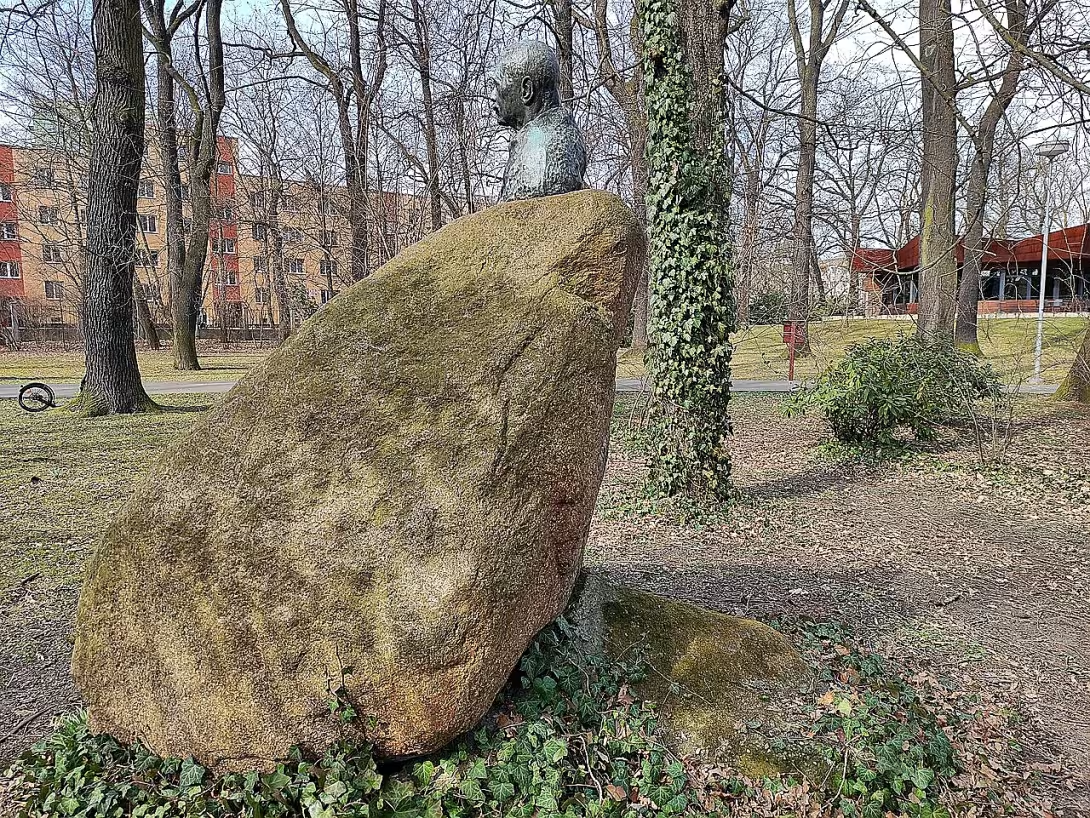
On the 15th of September 1947, the park was renamed after the Czech poet Petr Bezručová (1867- 1958), to whom on the occasion of his eightieth year he was discovered in the park by his boutique built on a vicious boulder of granite. Gradually the park underwent modernization: in 1964 a modern summer cinema was established, in 1974 a new pavilion was built on the site of the original and in 1984 a coffee shop with an asterisk plan took place instead of an older incinerator restaurant. After the velvet revolution, sports grounds and the fun area of Hobbypark for children developed here. In 2005, a natural amphitheatre with a rediscovered summer cinema and restaurant was added.
Today the park is open year-round to the public and becomes a place of cultural, sporting and social events. In addition to domestic and foreign trees, you can find here a educational trail focused on the observation of trees and shrubs, a cycle path, an inline path and a monument to the victims of both world wars.
Then and now
Drag the slider to compare how the landmark may have looked when it was built with the view today.
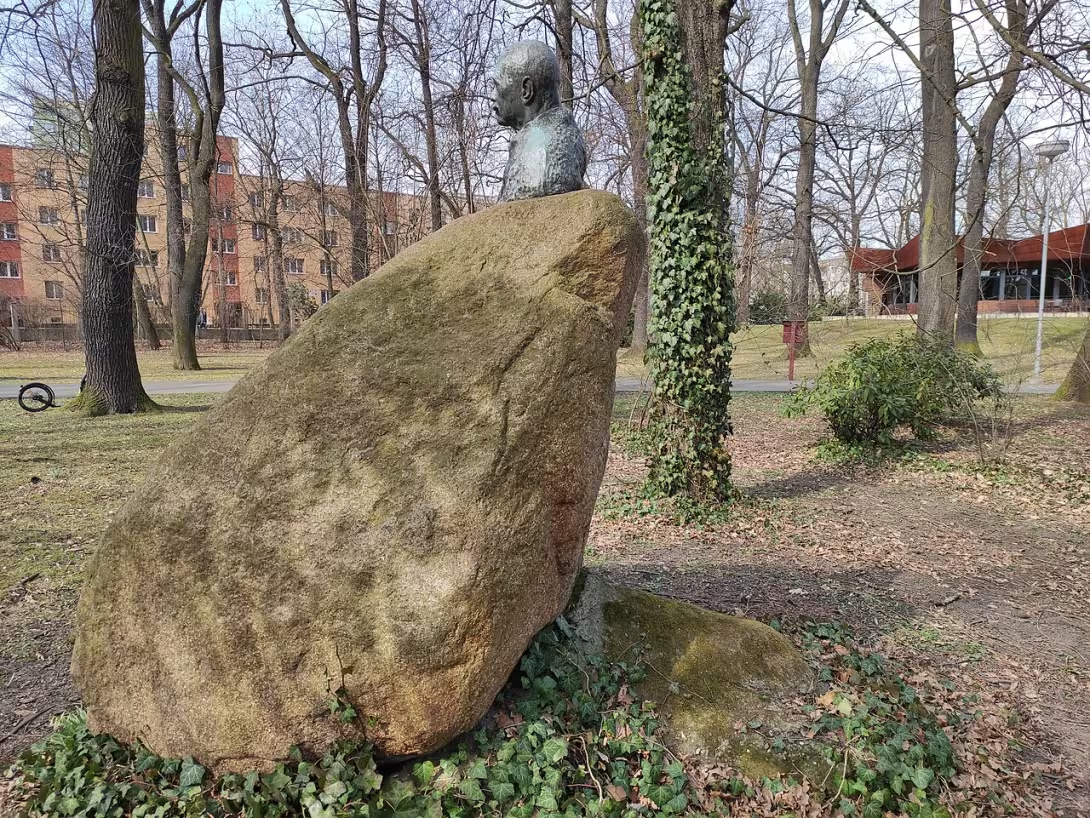

The historical appearance on the left is an AI-generated visualisation and serves as inspiration only.
Historical milestones
- 1886
- The purchase of the Bohemian estate by Count Larisch-Mönnich and the founding of a pheasant.
- 1907
- Establishment of the park and laying of the base stone.
- 1908
- Exposing the monument of emperor Franz Joseph I.
- 1947
- Naming the park after Peter Bezruč and exposing his bust.
- 2005
- Establishment of a natural amphitheater and restoration of summer cinema.
Architectural development
The park was created as a modified part of a pheasant with an English park style in 1907. In 1908, a wooden pavilion and a restaurant were built which were later destroyed by fire. In the 1950s, there was a mini-zoo that went down until 1958. A new pavilion was built in the 1970s and a cafe was built in the 1980s. Today the park is modern equipped with elements such as amphitheatre, educational trail and sports grounds.
Historical events
- 1907
- The ceremonial laying of the base stone of the park, which was originally designated as an English park.
- 1908
- Exposing the monument of emperor Franz Joseph I., which was later destroyed.
- 1947
- The park was named after Czech poet Petr Bezruča on the occasion of his 80th birthday.
- 2005
- Establishment of a natural amphitheater and restoration of summer cinema.
Owners
- 1886-1921
- from 1921
Points of interest
- Petr Bezruče Park is the largest city park in Bohumín and is located in the Moravian-Silesian region in the Upper Silesia region.
- Its beginnings date back to 1886, when it was founded as a pheasant by Count Henry Larisch-Mönnich II for hunting and protecting greenery around industrial objects.
- In 1907 the English park was founded after the gift of part of the pheasant to the town for the construction of the monument to Emperor Franz Joseph I., whose cornerstone is still at the entrance of the park.
- There was a wooden garden restaurant and pavilion in the park, which was destroyed or cancelled after World War II.
- In 1947, the park was named after a poet named Peter Bezruča, whose bust was discovered on a vicious boulder of granite.
Guide
This guide is narrated by a synthetic voice generated by artificial intelligence.
Show guide text
This text was created by artificial intelligence and has not been editorially reviewed. It may contain inaccuracies.
Park Petra Bezruče, also called Bohumínský park, is the largest city park in Bohumín. It is located in the New Bohumín area and consists of approximately fifteen hundred trees, both native and foreign species. Due to its size and importance, the local people call it the green lungs of Bohumín.
Its origins date back to eighteen eighty-six. At that time, the Silesian territorial governor, Austrian Count Henry Larisch-Mönnich the Second, purchased the Bohumín estate. In a part of the swampy Šunychelský forest, he established a pheasant farm. The count loved hunting, and the pheasant farm also created a belt of greenery around Bohumín's industrial facilities.
When the city council of Bohumín at that time decided to build a monument to Emperor Francis Joseph the First, the count donated part of the pheasant farm to the city. They then converted it into an English-style park. The cornerstone was ceremonially laid in nineteen oh seven and it still lies at the park entrance where Ulice Jana Palacha and Štefánikova streets meet. A wooden garden restaurant and a wooden pavilion were built in the park. The bronze monument to the emperor was unveiled on December second, nineteen oh eight, roughly where the monument to Petra Bezruče stands today. After the creation of Czechoslovakia, the emperor's monument was destroyed.
In nineteen twenty-one, the city purchased the rest of the pheasant farm from the Larisch-Mönnich family and gradually renovated it. During the Second World War, the garden restaurant burned down. After the war, a small zoo with fallow deer, roe deer, goats, peacocks, and pheasants was created in part of the park. It closed in nineteen fifty-eight and only bird aviaries remained, which later disappeared as well.
The park received its present name on September fifteenth, nineteen forty-seven. On the occasion of poet Petra Bezruče's eightieth birthday, a bust of him was unveiled here, erected on a glacial boulder made of granite.
In the following decades, the park underwent a new transformation. In nineteen sixty-four, a modern summer cinema was built here, in nineteen seventy-four a new pavilion replaced the old one, and in nineteen eighty-four a café with a star-shaped floor plan was constructed where the burned restaurant used to be. After the Velvet Revolution, sports facilities and an entertainment area with a children's playground called Hobbypark were added. In two thousand five, a natural amphitheater with a renovated summer cinema and restaurant was built.
Today, the park serves cultural, sports, and social events. An educational trail focused on the local trees and shrubs runs through it, as well as a cycle path and a path for roller skates. A monument to the victims of the First and Second World Wars also stands here.
Frequently asked questions
Can the monument be visited?
Parks and gardens are often open to the public, but some have opening hours or are part of a closed site. We have not verified the entry conditions.
What are the opening hours and admission?
We have not verified the opening hours or admission. Current information is published by the operator.
Where is the monument?
Location: Nový Bohumín, Moravskoslezský kraj. The map on this page shows the exact spot.
For kids
Imagine going back 119 years and finding yourself in the beautiful city of New Bohumin. The city was still young then, but it already had its secret - the secret of the largest city park in the whole city.
At that time, there were forests and fields around the city where humans and animals lived. It looked like a game where he was different every day. People used to meet on the market, selling amazing goods like fruit trees and flowers. The city was full of life and energy.
Businesses nearby
Do you run a restaurant, accommodation, shop, museum, rental, wellness or other visitor service near this monument? Show yourself directly to the people heading to it — this is how they will see you in the app and on the web:
Events nearby
Zdroj akcí: otevřená data měst a obcí ČR (Národní katalog otevřených dat) a kalendář akcí Národního památkového ústavu.
Nearby
It is located in the lowland of Ostrava in the Moravian-Silesian Region and in Upper Silesia.
Accommodation nearby
Themed route
Thematic cruise route to sights and natural beauties of New Bohumín
1. Petr Bezruče Park * Type: * Green park with cultural and historical value * Why is it worth visiting: * Unique complex with rich vegetation, monument to victims of world wars and a educational path. The park is an ideal place for a quiet walk and a knowledge of the local nature.
2. Memorial to the victims of World War I and II * Type: * Memory site * Why is it worth visiting: * Symbolic site reminiscent of the victims of the two world conflicts that took place in the region. It is located right in the park of Peter Bezruče, which makes it easily accessible.
3. Educational path through the park of Petr Bezruče * Type: * Information trail * Why is it worth visiting: * Brings interesting information about the forest and shrub wealth of the park, including its historical significance. Suitable for families and nature lovers.
4. Ostrava pelvis * Type: * Geographic department * Why is it worth visiting: * The characteristic lowland of Upper Silesia, in which is located the Park of Peter Bezruč. Walk around the park offers the opportunity to know the specific landscape of the region and its natural conditions.
Seasonal recommendations
Spring Spring in the park of Petr Bezruče brings a revival of nature, where the primordial plants flourish and forest crops turn into green carpet. The sun illuminates the trees with a fine, scattered light that falls between the branches and creates silver shadows on the sidewalks. The air is moist and full of the fragrance of flowers, especially spring plants such as birdseed and nettle. The atmosphere is calm, but it is constantly changing - the morning can be cold while the afternoon heats up. The park offers ideal conditions for walks where you can look forward to a variety of fauna such as birds or even rarer types of butterflies. It is appropriate to dress light but yet warmer layers, because the morning frost still occurs. The best time to visit is in the afternoon, when it is warmer and the crowds are not yet disturbing the peace. Avoid weekends when the park becomes a popular target for families.
Summer The summer in the Petr Bezruče park is a period when nature flourishes in full strength and the park offers a refreshing escape from urban heat. The sun shines intensively here, but the trees provide enough shade, especially near old lips and oak trees. The air is warm but wet, and there are often sounds of birds and rustling leaves. The atmosphere is lively but calm, ideal for picnics or rest on benches. In the main summer season the park becomes a popular place, which is why it is advisable to come early in the morning when silence and seating places are still available. Dress light, airy clothes and don't forget sunscreen. Water from fountains or artificial ponds may be refreshing, but be careful in children. Avoid dark hours when the park is most crowded.
Autumn Petra Bezruče Autumn Park is a magical place where leaves turn into fire and colors from gold to dark red. The sun shines low above the horizon, creating long shadows and golden reflections on the earth. The air is cold, and the smell of leaves and mushrooms often floats in it. The atmosphere is calm, but it's also a little mysterious, as if time is slowly stabilizing. The park offers beautiful views, especially when walking around the edges, where forest trees turn into shiny, colorful mosaics. It is convenient to wear warmer clothes but easy to undress or add. The best time to visit is early morning or late afternoon, when there are fewer crowds and the light is the most beautiful. Watch out for wet leaves that may be slippery, and for the mouths that occur in the park - some may be poisonous.
Winter Petra Bezruče Winter Park offers peace and quiet, which is rare at this time of year. The sun shines weak, but its rays reflect off the snow and form fine, silvery reflections on the sidewalks and tree branches. The air is cold and clean, often a frosty wind that brings a sense of peace and rest. The atmosphere is quiet, but also mysterious, as if time had stopped. The park is less visited in winter, allowing quiet walks without crowds. It is advisable to wear warm, layered clothes so that they can react easily to temperature changes. The best time to visit is in the afternoon when the light is the most pleasant and snow sheets supply the park with magic. Be careful of the ice on the sidewalks and don't forget the warm gloves. In advent time the park can be lit with lights, which adds to the spell, but the opening time is shorter.
Visualizations and artistic views


The visualisations are generated by artificial intelligence and serve as inspiration.
Photos from the area
Real photos taken near the monument


Zdroj a licence jsou uvedeny u každého snímku.
Atmosphere of the place
This atmospheric visualisation of the place and period was generated by artificial intelligence. It is not real footage of the location.
Tips from visitors
No tips yet. Be the first!
Log in and add your tip.
Sources and literature
Photos: Fry72, Karel Frydrýšek / CC BY-SA 4.0 — Wikimedia Commons. The author and licence also appear when you hover over the image.
Faktickým podkladem tohoto textu byl článek na Wikipedii, jehož autory jsou přispěvatelé Wikipedie. Článek je dostupný pod licencí CC BY-SA 4.0.
Location on the map

Příběhy a pověsti
Legendy, pověsti a příběhy spjaté s touto památkou
Fotografie návštěvníků
Zatím žádné fotografie. Buďte první, kdo přidá fotografii z návštěvy!
Log in a přidejte svou fotografii nebo hodnoťte.
Za ověřenou návštěvu v aplikaci získáte víc bodů — poznáme podle GPS, že jste na místě.
Reviews and comments