






Kostel Nanebevzetí Panny Marie (Chorušice) Church
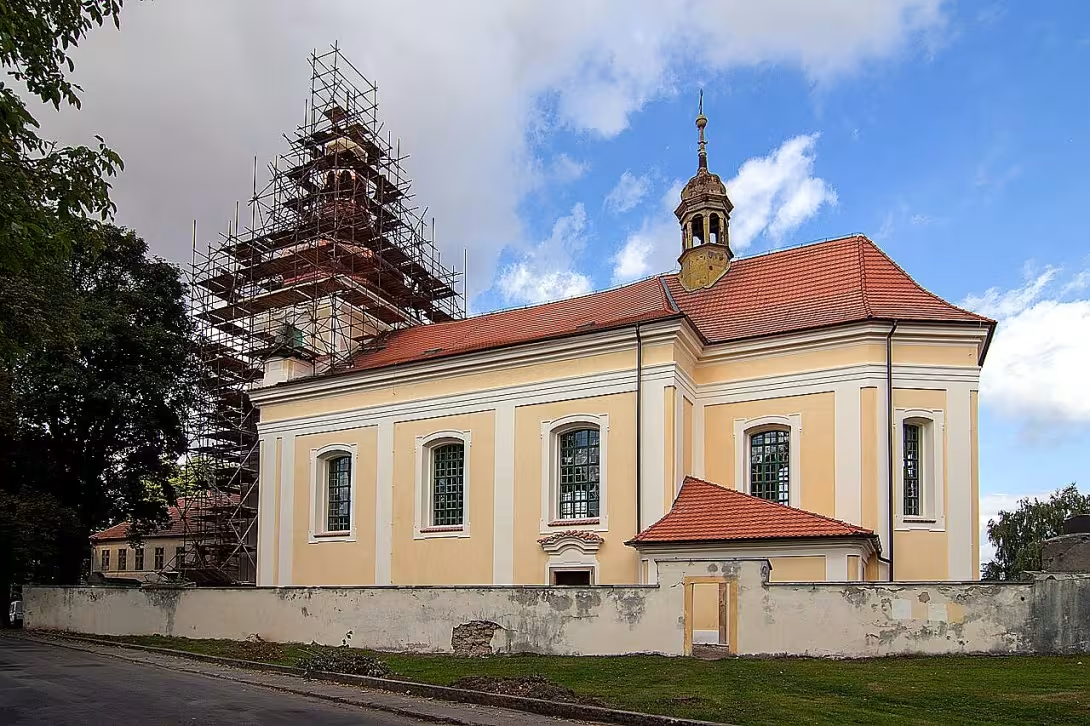
The Church of the Assumption of the Virgin Mary in Chorushic is a remarkable Baroque church, which serves both as a parish and pilgrimage place. This architectural gem is located in the village Chorušice within the Central Bohemia region, which was built between 1714 and 1716 to replace the old damaged Gothic sanctuary. It has been recognised as cultural importance, protected as a cultural monument since 1966.
The church dates back to the beginning of the 18th century when Bohemia was part of the Habsburg monarchy. This period recorded significant cultural and architectural developments influenced by baroque art. The era witnessed the flourishing religious structures throughout Europe as part of the movement against the Reformation. The Church of the Assumption of the Virgin Mary in Chorusice stands as proof of this vibrant period and replaces the former Gothic sanctuary, which was embarrassed.
The church is architecturally characterized by its Baroque style, which is evident in its one-ship rectangular layout with polygonal presbytery covered by sacrament. The western facade offers a distinctive tower decorated with pilasters and a richly decorated entrance portal. Over the years, the church has undergone several renovations - namely in 1777, 1852 and between 1875 and 1876 - to maintain its structural integrity and aesthetic attraction.
The interior of the church is equally impressive, housing a number of artistic elements that reflect baroque sensitivity. The main altar, dated 1693, is equipped with Pieta from 1539, believed to be a copy of Messina Pietà. Two early Baroque side altars dedicated to St. John Nepomuk and Crucifixion also improve the spiritual atmosphere of the church. The other remarkable interior elements are two pompous Baroque altars - St. Barbara and the Holy Family - from the first quarter of the 18th century, with decorative reinforcements and classical predators. The pulpit from the same period is decorated with a statue of Christ as the Lord on his canopy. Wooden Baroque candlesticks from the beginning of the 18th century, alongside the choir stands and organ dating back to this time, contribute to rich interior decoration church.
The characteristic feature of the church is its set of bells cast in 1416 and 1560. It was melted during the First World War, adding a layer of historical scheming on site. These bells are located in the main tower, which stands as one of the church architectural peaks.
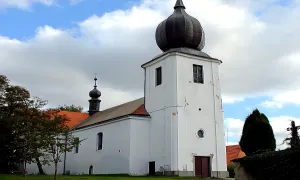
The surrounding church further increases its cultural importance. The Baroque octagonal bell tower is located in a cemetery nearby, with round corners and presses framing its structure. In addition, a rectory built in 1716 complements the church with a rectangular, two-storey design, characterized by lisens and rectangular windows.
In recent history, the church faced challenges when it suffered damage caused by the storm in 2009, encouraging the restoration of efforts to preserve this cultural monument for future generations. Today, the Church of the Assumption of the Virgin Mary remains an important place for religious devotion and historical awards. Its well preserved Baroque architecture and rich interior art make it a useful visit for anyone interested in discovering the cultural heritage of Chorushic.
Visitors of this remarkable church can immerse themselves in its historical significance, architectural beauty and spiritual environment. The Church of the Assumption of the Virgin Mary stands as proof of the artistic and religious zeal of its time and invites all those who want to experience a piece of the baroque heritage of Bohemia.
Then and now
Drag the slider to compare how the landmark may have looked when it was built with the view today.
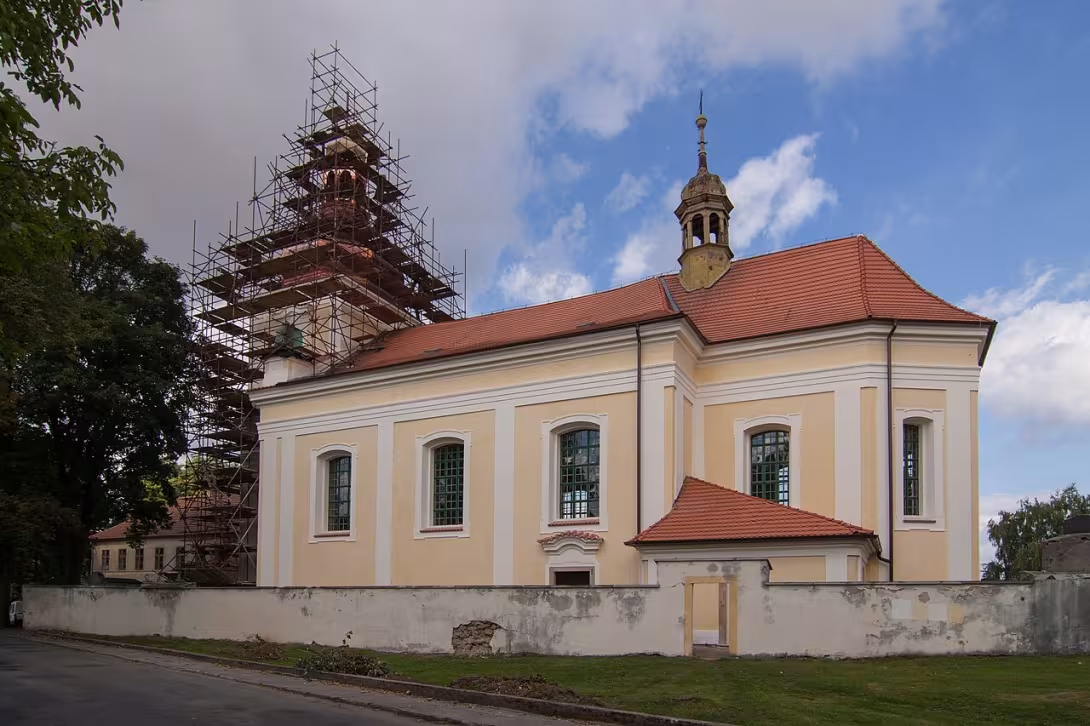
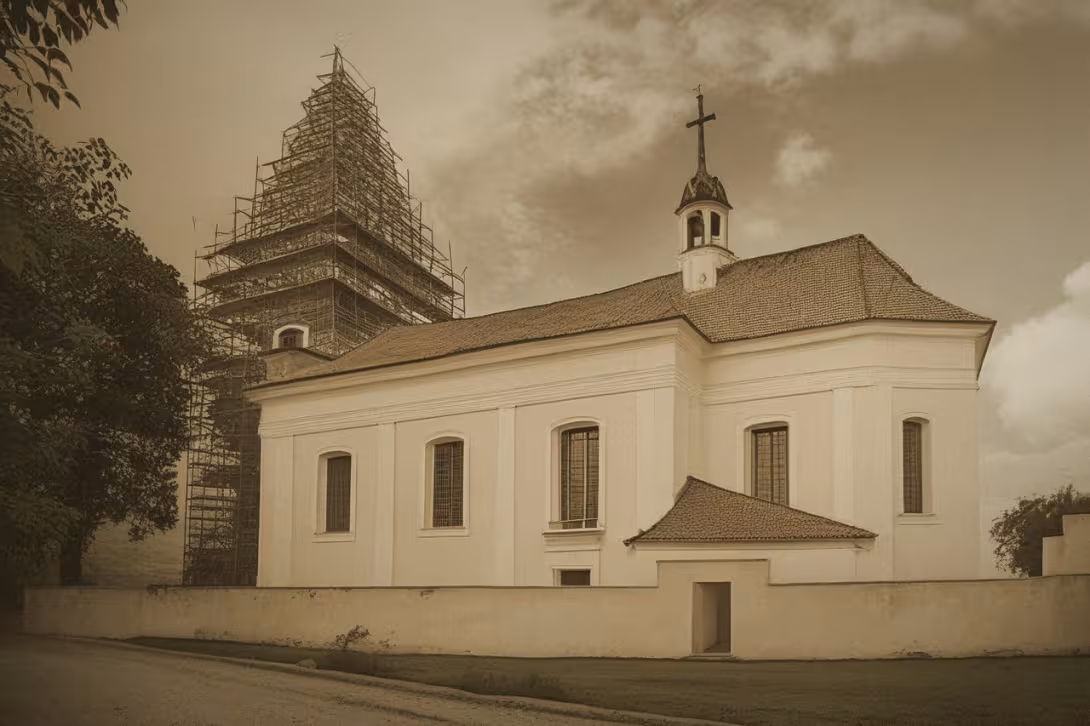
The historical appearance on the left is an AI-generated visualisation and serves as inspiration only.
Historical milestones
- 1714
- Construction of the present Baroque church has begun.
- 1716
- Completion of the Baroque church.
- 1777
- the church has undergone renovation.
- 1852
- Further renovations have been carried out.
- 1875
- Another restoration took place.
- 1876
- The completion of the renovation phase started in 1875.
- 1966
- the church was marked as a cultural monument.
- 2009
- the church suffered damage because of the storm.
Architectural development
The church was built in the early 18th century as a substitute for an old Gothic sanctuary in 1777, 1852 and 1875-1876. The Baroque style is visible in its architectural details such as pilasters, lunettes and richly decorated altars.
Historical events
The original Gothic sanctuary was replaced by the current Baroque structure between 1714 and 1716.
In 2009, the church suffered damage as a result of the storm, causing reconstruction efforts.
Points of interest
- Church of the Assumption of the Virgin Mary in Chorusice offers a set of bells with one cast up to 1416, illustrating the long-lasting religious and cultural importance of this site. - During the First World War, one of the original bells melted the church, which added the historical layer to its current narrative and reflected the wider impact of global conflicts on local heritage. - The main altar is Pieta from 1539, which is considered a copy of the famous Messina Pietà, which emphasizes the influence of Italian Renaissance art on Baroque religious iconography in Bohemia. - Despite the fact that it was built in the early 18th century, the church's interior includes artistic elements such as two protuberant altars and decorative pulleys that reflect both baroque and classical styles, showing a mixture of architectural trends in time. - In the cemetery there is a Baroque octagonal bell tower, which complements the design of the church and highlights a coherent historical and cultural landscape.
Guide
This guide is narrated by a synthetic voice generated by artificial intelligence.
Show guide text
This text was created by artificial intelligence and has not been editorially reviewed. It may contain inaccuracies.
Welcome to the Church of the Assumption of the Virgin Mary in Khorusice, a remarkable baroque jewel nestled in this picturesque village. As you stand here, take a moment to absorb the quiet atmosphere surrounding this historic place. XZ0 The elegant ZX facade greets you with its harmonious blend of architectural grace and historical depth.
Imagine a step back to the early 18th century, when construction began in 1714 to what would become a key place for both worship and pilgrimage. This baroque masterpiece replaced an old, degraded gothic sanctuary, embodying not only spiritual renewal, but also architectural evolution. By 1716, the church stood complete, ready to serve its community with renewed vitality.
As you look at the structure, notice the one-ship rectangular arrangement that leads your eyes to a significant polygonal presbytery. Flanking this area are sacraments, everyone tells stories about countless services and sacred moments. The Western facade will be impressed by its thrilling presence, decorated with pilasters, which speaks to the baroque taste for detail and grandeur.
Over the years, this church has seen several stages of renovation, starting in 1777 and continuing until 1876. Each period brought improvements while maintaining the essence of its original design, ensuring that it remains a beacon of faith and history.
While particular architects remain unknown, the legacy of those who contributed to this sacred place is undeniable. The bells in the church add another layer of intrigue; One bell dates back to 1416, echoing centuries of history before reaching its ears today. During the First World War, one original bell melted - a sharp reminder of how global events can affect even the most famous and rare places.
Now that you're standing here, let yourself be dragged into the stories this church is hiding. Every stone and branch carries echoes of the past that call for further examination. The Church of the Assumption of the Virgin Mary in Chorusice is not just a building; It is living proof of faith, resilience and community.
As you continue your journey through Chorušice, let this church inspire you with its rich history and lasting beauty. Thank you for your visit and we hope you will carry the spirit of this place with you when you discover other miracles in the Central Bohemia region.
Businesses nearby
Do you run a restaurant, accommodation, shop, museum, rental, wellness or other visitor service near this monument? Show yourself directly to the people heading to it — this is how they will see you in the app and on the web:
Nearby
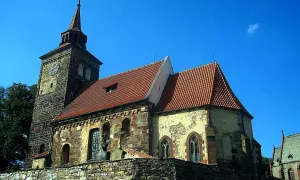
the church is surrounded by a cemetery with a baroque octagonal bell tower. Near stands a rectory built in 1716, characterized by its rectangular, two-story structure.
Accommodation nearby
Themed route
Thematic walking tour: Chorušice
1. Kostel Nanebevzetí Panny Marie (Chorušice) - Church Start your journey in the heart of Chorushic with the Church of the Assumption of the Virgin Mary. This architectural jewel is proof of the rich religious history and cultural heritage of the region. Its calm atmosphere invites visitors to explore its complex designs and spiritual atmosphere.
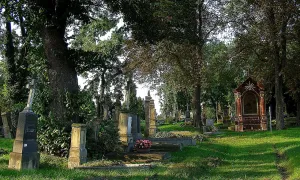
2. Chorušice Cemetery - cemetery A short walk from the church, the cemetery offers more than just resting places for the deceased, it is a historic place with its own charm. The highlight here is a baroque octagonal bell, located above it, provides an impressive view of the surrounding landscape and adds to the architectural diversity of the area.
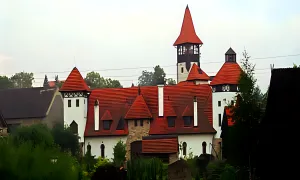
3. Parsonage (1716) - Historical building Only stone dumping from the cemetery stands the rectory built in 1716. This rectangular, two-story structure is not just an example of architecture from the beginning of the 18th century, but also offers views of everyday life and the social role of the clergy during this era. His proximity to the church and cemetery makes him a suitable companion piece of these historical monuments.
This thematic tour allows visitors to immerse themselves in local history and architectural beauty, all in a compact area that emphasizes the cultural importance of Chorušice.
Seasonal recommendations
Spring: The Church of the Ascension of the Virgin Mary in Chorushic during spring offers a uniform command to a new place with arrival, where the bushes and trees provided by greenery for historical architecture. The sunny light, which penetrates through a foggy spirit, illuminates the church in its glorious, frequent shades and gives to it an ancient character. The garden around the monument is full of which cetins, which makes them aesthetic pews. The amendments should be set out in the notice of initiation and in the light of the outdoor measures necessary to achieve the objectives of this Agreement. Even if we avoid the crowd, the church can be tall for the beautiful, so they can enter in the morning or by day can help a quiet experience.
Summer: Summer recalculating live diesel around the Church of the Assumption of the Virgin Mary, chy is the last full tourists and corner. The sunny days amplify the minuscuity of the church facades and the standing provided by trees with existing attacks for relaxation in these hours. The wet summer can be intense, so the vstavas should be light on the suit and the introduction with a sun-bound edge. The best data on the basis of this Decision shall be valid or applicable on the date on which the conditions for entry into the Union should be laid down. In addition, a quantity of drinking water may be used to increase the warm summer temperature.
Autumn: In autumn, the Church of the Assumption of the Virgin Mary is surrounded by colorful leaves that have a dramatic contrast to its ancient appearance. AMENDMENT TO THE WORLD AND LONG COMPLAINTS IN THE MELANCHOLIC ATMOSPHERES, which gives rise to emotional resonance of essentials. The temperatures are generally peaceful, so the outsides should be dressed in an excessive siege for daily change. Autumn is an ideal kas for the vstavu, because the mass of the sweat declines, allowing for a liquid interlacing church and the surrounding area is in moderate operation.
Winter: The Winter Amount of the Church of the Assumption of the Virgin Mary offers a contribution which is a positive contribution or a positive interpretation. As a result of the fact that some of these activities are aimed only at own resources, it is necessary to assume that a maximum value will be reached to its own state. The vstavy should be put into service with warm clothes, gloves and a bended prota for solving problems. Days are shorter, so it is advisable to induce early in the morning so that a large amount of energy can be made available to open shit and celebrate the liquid winter character of the monument.
Visualizations and artistic views


The visualisations are generated by artificial intelligence and serve as inspiration.
Photos from the area
Real photos taken near the monument


Zdroj a licence jsou uvedeny u každého snímku.
Tips from visitors
No tips yet. Be the first!
Log in and add your tip.
Sources and literature
Fotografie: Oskera Miroslav / CC BY-SA 3.0 — Wikimedia Commons. The author and licence also appear when you hover over the image.
Faktickým podkladem tohoto textu byl článek na Wikipedii, jehož autory jsou přispěvatelé Wikipedie. Článek je dostupný pod licencí CC BY-SA 4.0.
Location on the map

Příběhy a pověsti
Legendy, pověsti a příběhy spjaté s touto památkou

Fotografie návštěvníků
Zatím žádné fotografie. Buďte první, kdo přidá fotografii z návštěvy!
Přihlaste se a přidejte svou fotografii nebo hodnoťte.
Za ověřenou návštěvu v aplikaci získáte víc bodů — poznáme podle GPS, že jste na místě.
Reviews and comments