






Kostel Nanebevzetí Panny Marie (Modřany) Church
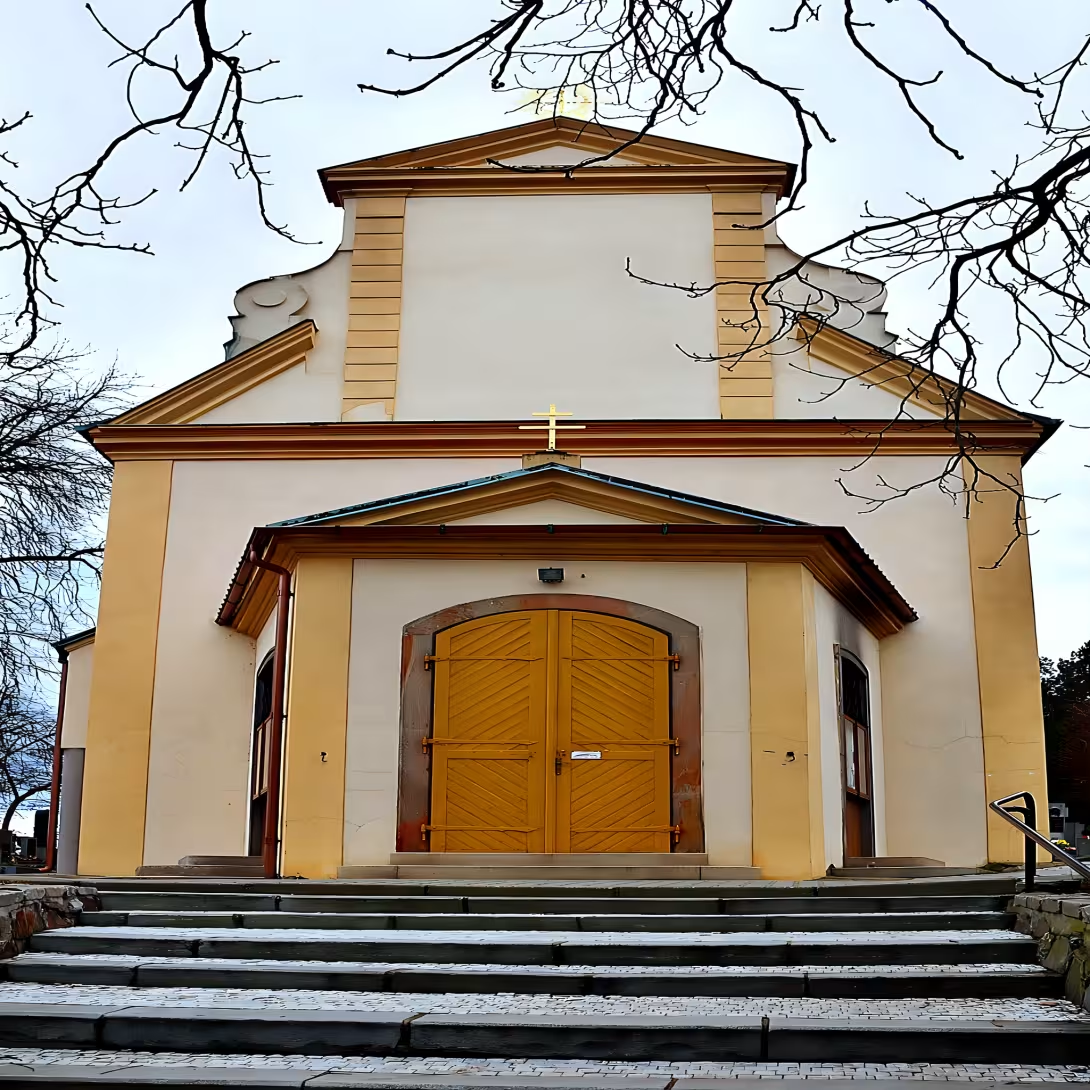
The Church of the Assumption of the Virgin Mary dominates a small design in Prague's Modřany, where it surrounds the cemetery and in its environment there is a building of the local rectory. It is a temple with one of the most dramatic history among Prague parish churches.
The exact time of construction is not known. The oldest historical mention of the Modřany dates back to 1178, when Prince Soběslav II donated the Výšehrad Capitule to two blue estates - sails and vineyards. It is likely that the chapter subsequently built a temple. In the first centuries, the church appears only indirectly in the writings - in 1329 Vojtěch signed on the list as plebán in Modřany. The first direct mention of the building was preserved from 1380 from the visit of the Roman Archyahn, and in 1384 Modřany appeared in the list of parish churches belonging to the Roman Archdeacon.
The Hussite Revolution and the Thirty Years' War brought the temple to the worst of times. In 1420, when the Hussites went to the Arsenal monastery, they robbed Modřany and burned the church. After the Battle of the White Mountain, it was partially restored, but stayed long without a vicar. During the Thirty Years' War, he was struck by another disaster - in 1631, the Saxons plundered the Bislav Monastery and the agricultural villages that belonged to him, and in 1639, the occupants of the Swedish army, General Banero, who used it as a stockpile of weapons and military equipment, settled in the Mod Church.
The decisive transformation brought about in 1648, when after the Westphalia peace was closed, the reconstruction of the weapons were seized by tankers. They authorized and extended the construction to take today's form. In 1754, for the leadership of Abbot Adam Aysl, it was newly established from the ground up and repaired by the bell tower, which until then was in ruins. Another test was a fire from 1802, which destroyed not only the church but also the rectory with the school. The new rectory was established in 1809 and the blue parish was officially restored until September 13, 1855. The repairs from 1881 to 1883 brought a stone cross in front of the temple and the restoration of the cemetery wall broken by fire.
The organ accompanies the temple of long history - the first were built in the church in 1690, in 1893 it was created by a new organist Josef Vanický from Třebechovice near Hradec Králové. In the range of 1947-1949, a circle with modern organs came to the building. The most recent part is the cross road from 2015, which consists of fourteen granite peace crosses from sculptor Miroslav Beščka from Dobrovich. Each of them carries a relief representing one of the stations from Christ's condemnation to the grave. The crosses were sanctified on 18 October 2015.
Then and now
Drag the slider to compare how the landmark may have looked when it was built with the view today.
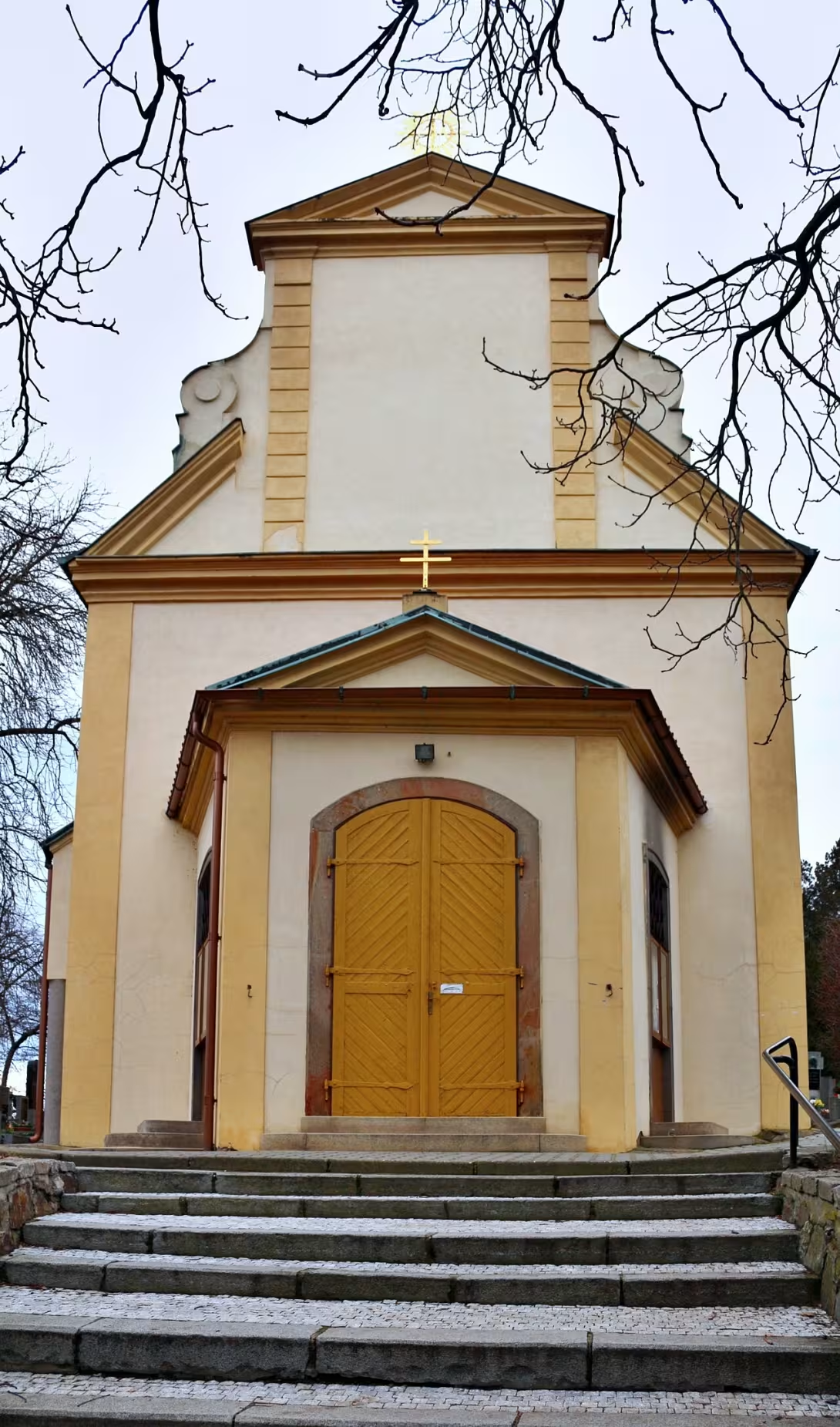

The historical appearance on the left is an AI-generated visualisation and serves as inspiration only.
Historical milestones
- 1178
- Donating property to the Vysehrad chapter, probably the beginning of the church.
- 1329
- The first indirect mention of a blue pleban that suggests the existence of a church.
- 1384
- The first direct confirmation of the existence of the church in the Blue Mountains in the list of parish churches.
- 1420
- Burning the Hussite Church.
- 1648
- Repair and extension of church after Westphalia peace.
- 1690
- The Baroque style of the church.
- 1754
- Rebuilding the church from the foundation and repairing the bell tower.
- 1809
- Construction of a new rectory.
- 1855
- Restoration of the blue parish.
- 1949
- Finishing the construction of a circle with new organas.
- 2015
- Opening the crossroads with granite peace crosses.
Architectural development
The church has a Romanesque core that was rebuilt around the middle of the 14th century. After the fire in 1642, the baroque was modified in 1690, extended to the east and west and equipped with a flat ceiling. In the 19th century there were other modifications, including construction of a stone cross in front of the church and restoration of the cemetery wall. In 1947-1949 a circle with new organs was added.
Historical events
- 1178
- Soběslav II. donated to Vysehrad's capital the Blue River and the vineyard, suggesting the possible formation of the church at this time.
- 1420
- The church was burned by the Hussites in their campaign for the Arsenal monastery.
- 1648
- After the Westphalia peace, the church was repaired and expanded by the weapons tankers, thus gaining its present Baroque form.
Points of interest
- The Church of the Assumption of the Virgin Mary in Modřany has some of the most dramatic history among Prague parish churches, full of wars, fires and occupation.
- The first written mention of the Modřany dates back to 1178, when Prince Spoleslav II donated the Vysehrad capital to the local property, which suggests that the church could have been created here at the time.
- During the Hussite Wars, the church was burned down in 1420 by the Hussites in their campaign for the Arsenal monastery.
- During the Thirty Years' War, the church served as a weapons warehouse for General Banero's Swedish army in 1639.
- In 1754 the church was completely rebuilt from the foundations under the leadership of Abbot Adam Aysl, including the repair of the bell tower, which had previously been in ruins.
Guide
This guide is narrated by a synthetic voice generated by artificial intelligence.
Show guide text
This text was created by artificial intelligence and has not been editorially reviewed. It may contain inaccuracies.
Welcome to Blue. Stop for a second and take a deep breath. Right now, you're standing in front of the Church of the Assumption of the Virgin Mary, which stands before you on a small hill. Note how the monument is located close to the Blue Cemetery, which gives the whole place a special, respectful and peaceful character. It's a space where everyday life meets eternity and history speaks to us through the silence of the surroundings. Look at the building in front of you and feel its atmosphere. Although today it may seem to be just part of the landscape, this place hides stories that go deep into the Middle Ages.
Let's go back in time together, far beyond our imagination. To understand why this church is even standing here, we need to move to the 12th century. Imagine the Blue Land almost a thousand years ago. The first written mention of this site dates back to 1178. It was this year that Prince Spoleslav the Second donated the property of Vysehrad chapter. It is very probably at this time that there was built the first sacral space, probably a small chapel. In this way, the Vysehrad chapter anchored its presence in the Modráns and with its possessions came the need for spiritual refuge for the locals.
If you look at the church, you might wonder if it could actually be this old. History helps us. Although the first direct confirmation of the existence of the church in the list of parish temples comes only in 1384, there are older traces. As early as 1329, a direct reference to the Blue Plebán appears in the documents. This clearly suggests that the church had to exist here and serve the community before it was officially listed. Imagine those generations of people coming here looking for comfort, hope, or celebrating their happiest moments while the world was changing around them.
But the history of this place was not just about peace and prayer. The Blue Church has some of the most dramatic fates among all Prague parish temples. It is a place that has been tried by fire, wars and occupation. The darkest chapter came in 1420. At the time of Hussite storms, when the Czech countries shook with deep religious and social conflicts, the church was burned by Hussites. Try to imagine for a moment the chaos, the bursting of flames and the feeling of despair when the roof collapsed and the walls blackened in the smoke. However, like Modřany itself, the church managed to survive. This ability to rise again from the ashes is deeply rooted in this place.
Now pay attention to the appearance of the building you see before you. What you see today is no longer the medieval temple, but the result of the subsequent adjustments. Notice the general aesthetics and lines of the building. The present form of the church is baroque and dates back to the seventeenth century. The Baroque brought dynamism, emotion and desire for representativeness to architecture. After long periods of instability and war disasters, the time for recovery has come. The key moment was 1648, when after the closure of the Westphalia peace, which ended the devastating Thirty Years' War, the reconstruction and expansion of the church began. People wanted to rebuild a place to express their faith and hope for a better future.
Even more marked changes came in 1690, when the next Baroque adjustment took place. Now, if you look at the facade and the overall composition of the building, feel this very spirit of the seventeenth century. Even though we don't know the names of the particular architects who worked on the construction site, their work speaks for them. The Baroque style here serves as a symbol of victory over previous disasters. The church became dominant, expressing stability and endurance in its form.
It's fascinating to think of how many layers of time this building carries. Under baroque plaster and shapes, the memory of the twelfth century is hidden, traces of the Hussite fire and the efforts of the people of the 30-year war. This church is not just a building of stone and mortar, it's a living archive of blue history. Every element you see is witnessed by changes in Prague and its surroundings.
The interesting thing that can go through your mind is the constant fighting of this place. While some monuments in the centre of Prague were protected by their importance or power of their patrons, the Blue Church had to fight for its survival in the field, which was prone to attacks and disasters. He's kind of a silent warrior with a blue-collar. Maybe it's the secret of this place that, despite all the destruction and occupation, it still stands and performs its function.
Now I beg you to look around slowly. Feel the contrast between the nobility of the Baroque church and the humility of the cemetery surrounding it. It is a space that calls for reflection on the fleeting of time and at the same time on the power of human will to rebuild. Look up at the roof line, see how the building is profiled against the sky, and try to imagine what the sounds here sounded like centuries ago - whether it was just a silent whisper of prayers, or a cry of war troops.
This concludes our short journey through time at the Church of the Assumption of the Virgin Mary. I hope you have felt the depth of this place and that its dramatic history has helped you better understand the spirit of the Blue Sea. Now the space is fully entrusted to you. You can walk around the church, see the details of its baroque appearance or just quietly observe the surroundings. Let yourself be guided by your curiosity and explore everything you find interesting in this historic space.
Thank you for spending some time with us at this monument. We wish you a pleasant continuation in discovering the beauty and secrets of the capital city of Prague. Goodbye.
Tips for visitors
The best time to visit the Church of the Assumption of the Virgin Mary in the Blue Sea is during the morning hours when there is peace and pleasant light. The ideal is to visit it before noon when the sun is mild and creates pleasant shadows for shooting the interior. If you want to experience the atmosphere of worship, you can attend Sunday Mass, which is held regularly. In the summer months it is also advisable to avoid hot afternoon hours when the church can be hot and uncomfortable for visitors.
The church is available by car, parking is possible in nearby parking lots in Modřany. It is recommended to use public transport, such as bus or tram connections, which stop nearby. Accurate connection and up-to-date timetables are good to check in the traffic search engine. If you arrive by car, you can use the parking lot at the Modřansky cemetery, which is close to the church.
When visiting the church, wear comfortable clothes and shoes as it is a historic building with stoneware ground. It may be cold in the interior, so bring a light sweater or coat. It is also important to take a small towel or cloth for possible dirt on stone floors. If you are planning to take pictures, bring a flashlight or a mobile light, because some parts of the church may be shady.
Photography in church is allowed, but it is appropriate to follow certain rules. The best places for photography are the main altar, Gothic windows and historic frescoes on the walls. The best light for shooting is in the morning or at sunset when the light is softer and creates pleasant shadows. In the interior it is advisable to avoid flashing lightning to avoid damaging historical paintings. The exterior of the church is also beautiful, especially in sunny weather.
In the vicinity of the church, it is worth visiting the Blue Cemetery, which is part of the complex and has a rich history. Another interesting thing is the Fara in Modřany, which was restored after the fire in 1802 and serves as a seat of the clergy. If you have more time, you can visit other places around the Blue Mountains, which are within 30 minutes of the church. These sites offer other historical and cultural experiences to complete your visit to the Church of the Assumption of the Virgin Mary.
For families with children a visit to the church is an interesting opportunity to explore history and architecture. Children can be intrigued by the Gothic elements of the church, such as pointed arches or statues on the facade. In the vicinity of the church it is possible to see the Modranská cemetery, where there are tombs of important figures from the history of the village. It may also be interesting for children to explore the surrounding parks and green areas available in the Modřany. It is also recommended to visit the local library or cultural centre where events are often held for children.
Frequently asked questions
Is Kostel Nanebevzetí Panny Marie (Modřany) open to the public?
Yes, the church is open to the public all year round. The opening hours are 9:00 to 5:00.
How do I get to the place by car / public transport?
The church is easily accessible by bus from the centre of Prague or Modřán. The nearest is a bus stop outside the church.
How much is the entrance fee and is it paid on the spot?
The church entrance is free, but it is possible to contribute to the collection.
Is the tour suitable for children and seniors?
Yes, it is advisable to visit the church with children or seniors. The tour is quiet and undemanding.
How long does the tour take?
The church tour takes approximately 30 minutes.
What are the opening times and booking is required?
The opening hours are 9:00 to 5:00. Reservation is not required, but we recommend contacting the church in advance for possible exceptions.
What's interesting in the immediate vicinity?
There is a river Berounka in the vicinity and a local park Modřanský grove. We recommend visiting these locations in nice weather.
For kids
Imagine going back to the past and becoming part of Prague's history. I find myself in the picturesque village of Modřany, where stands the Church of the Assumption of the Virgin Mary. It's a beautiful Gothic church from 1300.
Where could you live? People like me lived here at the time - peasants who worked in the fields and raised cattle. The church was their sanctuary where they prayed and confided their problems to God. They were good people who tried to live in harmony with nature.
Businesses nearby
Do you run a restaurant, accommodation, shop, museum, rental, wellness or other visitor service near this monument? Show yourself directly to the people heading to it — this is how they will see you in the app and on the web:
Events nearby

Zdroj akcí: otevřená data měst a obcí ČR (Národní katalog otevřených dat) a kalendář akcí Národního památkového ústavu.
Nearby
- The cemetery is part of the church area and has historical significance for the village.
- The parish building was restored after the fire in 1802 and serves as a seat of the spiritual administrator.
- A monastery that had been connected to Modřany in the past and whose tankers had made modifications to the church.
Accommodation nearby
Trips and activities nearby
Guided tours, tickets and activities nearby from GetYourGuide
Affiliate link: if you buy from the partner, we may receive a commission. The price for you does not change.
Search tours and activities →Themed route
I propose a thematic cruise route focused on the historic heart of Blue.
1.Kostel Nanebevzetí Panny Marie (Modřany) - Type: church - Why is it worth a visit: This main objective is the spiritual and historical centre of the whole site. You can admire the sacral architecture and calm atmosphere of the old Blue Mountains.
2. Blue Cemetery - Type: cemetery - Why is it worth a visit: The cemetery is located close to the church and has great historical significance for the whole village. It offers a quiet place to reflect and commemorate local history.
3. Fara in the Blue Mountains - Type: parish building - Why is it worth a visit: The parish building is also close to the church. Its present form was restored after the fire in a thousand and eighteen hundred and two and still serves as a seat of the spiritual administrator.
4. Weaponry Monastery - Type: monastery - Why is it worth a visit: It is located approximately five kilometres from the main destination and will present you with an important historical monument to the wider surroundings.
Seasonal recommendations
Spring visit to the Blue Church of the Assumption of the Virgin Mary brings awakening nature around Vltava, when the surrounding greenery begins to bloom and the morning mist above the river gives the place a distinctive charm. Sun rays penetrate the fresh air and pleasantly irradiate historical masonry. In this period you will not meet many tourists, which guarantees a calm atmosphere for contemplation. We recommend to wear fixed shoes because of possible spring rain and layered clothing, because temperatures can fluctuate rapidly during the day. The best time for a tour is in the morning, when the sun stands ideally for taking photos of the exterior.
Summer moons attract walks along the bank of the river, from where it leads a pleasant path to this sacral monument. The surrounding trees provide a welcome shade and the atmosphere is alive thanks to tourists using cycling trails. The lighting of the monument is the most striking in the late afternoon, when the golden light of the setting sun highlights the details of the building. In the main summer season, it is more lively in the area on weekends, so it is best to choose early morning hours to avoid afternoon heat. Don't forget to bring your headgear, a bottle of drinks and light breathtaking clothes.
Autumn time covers the blue church in melancholy mood, creating decaying leaves and tones from yellow to dark red. The light is often silenced, often permeated by a fine mist, giving the memory a mysterious and peaceful touch. Tourism is falling apart at this time, so you can enjoy a visit in complete privacy. The practical board includes the choice of waterproof shoes and warm autumn coat, as a cooler wind may blow from the river. The ideal time for visiting is around noon, when daylight reaches its maximum.
The winter season turns the church's surroundings into a peaceful landscape, and if the snow attacks, the whole scenery gets a fabulous touch. The lighting is very specific due to early dimming and the low angle of the sun, which is leaning into the facade early this afternoon. In advent time there is a deep calm, ideal for internal silence. The tour requires a winter coat, a hat, gloves and firm non-slip shoes because the roads can freeze. The best way is to plan a visit around noon, when the outside is warmer and daylight is strongest.
Visualizations and artistic views


The visualisations are generated by artificial intelligence and serve as inspiration.
Photos from the area
Real photos taken near the monument


Zdroj a licence jsou uvedeny u každého snímku.
Tips from visitors
No tips yet. Be the first!
Log in and add your tip.
Sources and literature
Photos: VitVit / CC BY-SA 4.0, rozlišení zvýšeno umělou inteligencí — Wikimedia Commons. The author and licence also appear when you hover over the image.
Faktickým podkladem tohoto textu byl článek na Wikipedii, jehož autory jsou přispěvatelé Wikipedie. Článek je dostupný pod licencí CC BY-SA 4.0.
Location on the map

Příběhy a pověsti
Legendy, pověsti a příběhy spjaté s touto památkou
Fotografie návštěvníků
Zatím žádné fotografie. Buďte první, kdo přidá fotografii z návštěvy!
Log in a přidejte svou fotografii nebo hodnoťte.
Za ověřenou návštěvu v aplikaci získáte víc bodů — poznáme podle GPS, že jste na místě.
Reviews and comments