



kostel Povýšení svatého Kříže (Fryštát) Church
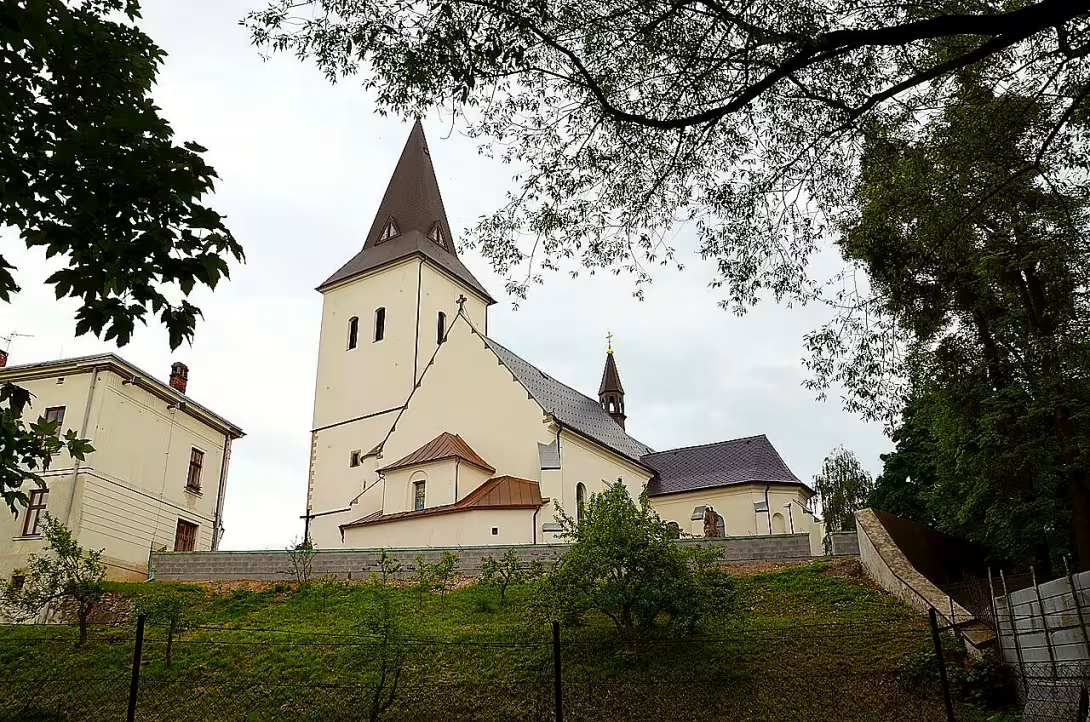
The Church of the Exaltation of the Holy Cross in Fryštát is the oldest architectural monument in the Karviná region and one of the earliest in both Karviná and Těšín. Built in 1288 during Měšek I.'s reign, it was part of the Fryštát Castle complex. This church is notable for its historical significance and architectural evolution from a Gothic structure to later Renaissance and Baroque modifications. It has been protected as a cultural monument since 1958.
The origins of this church date back to the late 13th century when Bohemia, under the Přemyslid dynasty, was part of the Holy Roman Empire. The initial construction in 1288 coincided with the establishment of Fryštát Castle by Měšek I., a member of the Piast dynasty. Although specific details about its early history are sparse, it is known that the church served as an integral component of the castle complex. By 1376, Prince Přemysl I. Těšínský expanded the church with altars dedicated to the Body of Christ and Saint John the Evangelist, indicating its growing religious significance.
Architecturally, the Church of the Exaltation of the Holy Cross began as a Gothic structure characterized by its single-nave design based on a Latin cross plan. Over time, it underwent significant stylistic transformations, incorporating Renaissance and Baroque elements. A pivotal moment in its architectural history occurred in 1511 when a major fire damaged Fryštát, including the church. This led to extensive reconstruction efforts between 1515 and 1530, during which a stone tower replaced an earlier wooden one. The interior also saw changes, transitioning from truss vaulting to groin vaulting.
Throughout its history, the church has been associated with notable figures such as Měšek I. and Přemysl I. Těšínský. These individuals played crucial roles in its development and expansion. In 1611, construction began on a chapel dedicated to Saint John Nepomucene, completed by 1617, further enhancing the church's architectural complexity.
Today, the Church of the Exaltation of the Holy Cross remains an important cultural and historical site. It is part of a larger ensemble with Fryštát Castle and features gardens dating back to 1804. Visitors can explore its rich history and appreciate its architectural evolution from Gothic origins to Renaissance and Baroque influences. The church's significance as a cultural monument makes it a worthwhile destination for those interested in the architectural heritage of the region.
The Church of the Exaltation of the Holy Cross offers a unique glimpse into the historical and architectural tapestry of Fryštát. Its enduring legacy invites visitors to explore its storied past and appreciate its place within the broader context of Silesian history.
Then and now
Drag the slider to compare how the landmark may have looked when it was built with the view today.
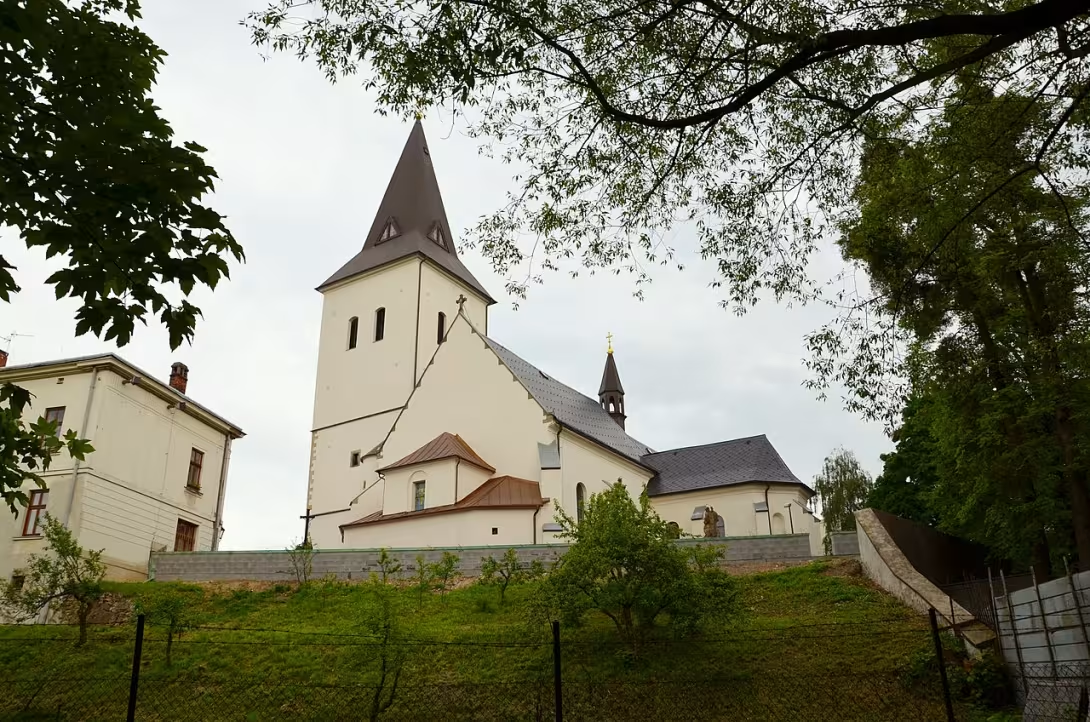

The historical appearance on the left is an AI-generated visualisation and serves as inspiration only.
Historical milestones
- 1288
- The church was built as part of the Fryštát Castle complex.
- 1376
- Expansion of the church with altars dedicated to the Holy Body of Christ and St. John the Evangelist.
- 1511
- A major fire caused damage to Fryštát, including the church.
- 1515
- Begun reconstruction of the church after the fire.
- 1530
- Completion of reconstruction with a stone tower replacing the wooden one.
- 1611
- Start of construction for the chapel of St. John Nepomucene.
- 1617
- Completion of the chapel of St. John Nepomucene.
- 1958
- The church is protected as a cultural monument.
Architectural development
The original Gothic structure was later modified with Renaissance and Baroque elements. A significant fire in 1511 led to the construction of a new stone tower, replacing an earlier wooden one. The church's interior underwent changes, including the transition from truss to groin vaulting.
Historical events
In 1376, Prince Přemysl I. Těšínský expanded the church with an altar dedicated to the Body of Christ and Saint John the Evangelist.
A significant fire in Fryštát in 1511 caused damage to the church, leading to a major reconstruction including the addition of a stone tower between 1515-1530.
Points of interest
- Although the Church of the Exaltation of the Holy Cross was constructed in 1288 during Měšek I.'s reign, one lesser-known fact is that its architectural evolution reflects the turbulent history of Fryštát, having survived a significant fire in 1511 which necessitated extensive reconstruction efforts. - An intriguing aspect of the church's history involves its association with Prince Přemysl I. Těšínský, who not only expanded the church but also initiated the construction of altars dedicated to the Body of Christ and Saint John the Evangelist in 1376, highlighting its growing religious importance during his rule. - Despite being a prominent historical site, an unexpected feature is that the original wooden tower was replaced by a stone one between 1515 and 1530, showcasing how architectural needs evolved alongside stylistic changes from Gothic to Renaissance and Baroque influences. - The church's connection to Fryštát Castle adds another layer of curiosity; it was part of this larger complex since its inception in the late 13th century, serving as a spiritual hub within the castle’s defensive walls. - A lesser-known legend involves the chapel dedicated to Saint John Nepomucene, whose construction began in 1611 and concluded in 1617. This addition not only enhanced the church's architectural complexity but also reflects the cultural and religious shifts of early 17th-century Fryštát.
Guide
This guide is narrated by a synthetic voice generated by artificial intelligence.
Show guide text
This text was created by artificial intelligence and has not been editorially reviewed. It may contain inaccuracies.
Welcome to the historic Church of the Exaltation of the Holy Cross in Fryštát, a remarkable testament to architectural endurance and cultural history. As you stand here, take a moment to absorb the serene atmosphere surrounding this venerable structure, its presence commanding yet inviting exploration.
The origins of this church trace back to 1288 during the reign of Měšek I., a time when Fryštát was part of the Piast dynasty's realm. Initially constructed as part of the Fryštát Castle complex, it was originally known as the Church of Our Lady. Its creation marked an important chapter in the region’s history, serving both spiritual and community needs.
As you gaze upon its facade, notice how the church has evolved through various stylistic transformations. Originally Gothic, it underwent significant changes over the centuries. The most dramatic change came after a major fire in 1511 that ravaged Fryštát, including this very church. This event necessitated extensive reconstruction efforts, which began in 1515 and were completed by 1530 with the addition of a stone tower replacing its former wooden predecessor.
Let’s delve into some key figures associated with this site. Měšek I., whose reign saw the church's initial construction, played a pivotal role in establishing Fryštát as a significant cultural center. Later on, Přemysl I. Těšínský contributed to its prominence by enhancing the surrounding area.
One intriguing aspect of this church is its resilience and adaptability through turbulent times—surviving fires, wars, and architectural trends while maintaining its spiritual essence. This endurance reflects not just in its structure but also in its role within the community over centuries.
As we conclude our brief tour, I invite you to continue exploring the surrounding area of Fryštát. Each corner holds stories waiting to be discovered. Thank you for joining me today, and may your journey through history here leave a lasting impression.
Frequently asked questions
Can the monument be visited?
Religious buildings are usually open mainly during services; at other times a visit is normally arranged with the parish or the operator. We have not verified specific times.
Where is the monument?
Location: Pivovarská 11/1A, Fryštát, Karviná, Moravskoslezský kraj. The map on this page shows the exact spot.
Why is the monument protected?
It is listed in the Central List of Cultural Monuments of the Czech Republic as a cultural monument (register no. 27023/8-765).
Businesses nearby
Do you run a restaurant, accommodation, shop, museum, rental, wellness or other visitor service near this monument? Show yourself directly to the people heading to it — this is how they will see you in the app and on the web:
Nearby
Nearby the church is Fryštát Castle, forming an integral historical ensemble. The area also includes gardens dating back to 1804 and was historically significant as a seat of the Silesian ruling dynasty.
Accommodation nearby
Themed route
Thematic Walking Tour: Fryštát and the Church of the Exaltation of the Holy Cross
1. Church of the Exaltation of the Holy Cross (Fryštát)
- Type: Historical Church
- Why Visit: Begin your journey at this stunning Baroque church, a masterpiece designed by architect Kilian Ignaz Dientzenhofer in the early 18th century. The church's elegant architecture and rich history make it an essential visit for anyone interested in religious art and Silesian heritage.
2. Fryštát Castle
- Type: Historical Castle
- Why Visit: Located just a short walk from the church, Fryštát Castle is an integral part of the historical ensemble that once served as the seat of the Silesian Piast dynasty. Explore its grand architecture and learn about its role in shaping regional history.
3. Gardens (1804)
- Type: Historical Gardens
- Why Visit: The gardens, dating back to 1804, offer a serene escape with beautifully designed landscapes that reflect the historical significance of Fryštát as a noble residence. Stroll through these lush green spaces for a peaceful conclusion to your tour.
This thematic route offers an immersive experience into the rich history and cultural heritage of Fryštát, highlighting its architectural marvels and historical importance.
Seasonal recommendations
Spring: Visiting the Church of the Exaltation of the Holy Cross in Fryštát during spring offers a unique experience as nature awakens around this historic site. The church is bathed in soft, golden sunlight that enhances its architectural details, creating an inviting atmosphere for exploration. Springtime brings blooming flowers and lush greenery to the surrounding landscape, providing a picturesque backdrop. Visitors should consider wearing comfortable shoes suitable for walking on potentially uneven paths as they explore the area's natural beauty. While crowds are generally moderate in spring, arriving early can ensure a more peaceful visit.
Summer: Summer is an ideal time to experience the Church of the Exaltation of the Holy Cross when the days are long and warm, allowing ample daylight to appreciate its intricate design. The surrounding parklands are vibrant with life, offering opportunities for picnics or leisurely strolls after exploring the church. Due to the peak tourist season, visitors should plan their visit early in the morning to avoid larger crowds. Comfortable clothing, a hat, and sunscreen are recommended to stay cool under the summer sun.
Autumn: Autumn transforms Fryštát into a tapestry of warm colors as leaves change from green to shades of orange, red, and yellow, creating an enchanting atmosphere around the Church of the Exaltation of the Holy Cross. The cooler temperatures make it pleasant for walking through the historic site, with fewer crowds compared to summer months. Visitors should dress in layers to accommodate fluctuating temperatures throughout the day. This season is perfect for capturing stunning photographs against the backdrop of fall foliage.
Winter: In winter, the Church of the Exaltation of the Holy Cross takes on a serene and mystical quality as snow blankets the surrounding landscape, offering a quiet and contemplative atmosphere. The church's architecture stands out beautifully against the white backdrop, creating an almost magical setting. While fewer tourists visit during this season, it provides a unique opportunity for those who appreciate the quiet beauty of historic sites in wintertime.
Visualizations and artistic views


The visualisations are generated by artificial intelligence and serve as inspiration.
Photos from the area
Real photos taken near the monument

Zdroj a licence jsou uvedeny u každého snímku.
Tips from visitors
No tips yet. Be the first!
Log in and add your tip.
Sources and literature
Photos: Jáně2 / CC BY-SA 3.0 — Wikimedia Commons. The author and licence also appear when you hover over the image.
Faktickým podkladem tohoto textu byl článek na Wikipedii, jehož autory jsou přispěvatelé Wikipedie. Článek je dostupný pod licencí CC BY-SA 4.0.
Location on the map
Příběhy a pověsti
Legendy, pověsti a příběhy spjaté s touto památkou
Fotografie návštěvníků
Zatím žádné fotografie. Buďte první, kdo přidá fotografii z návštěvy!
Log in a přidejte svou fotografii nebo hodnoťte.
Za ověřenou návštěvu v aplikaci získáte víc bodů — poznáme podle GPS, že jste na místě.
Reviews and comments