






Kostel Povýšení svatého Kříže v Jihlavě Church
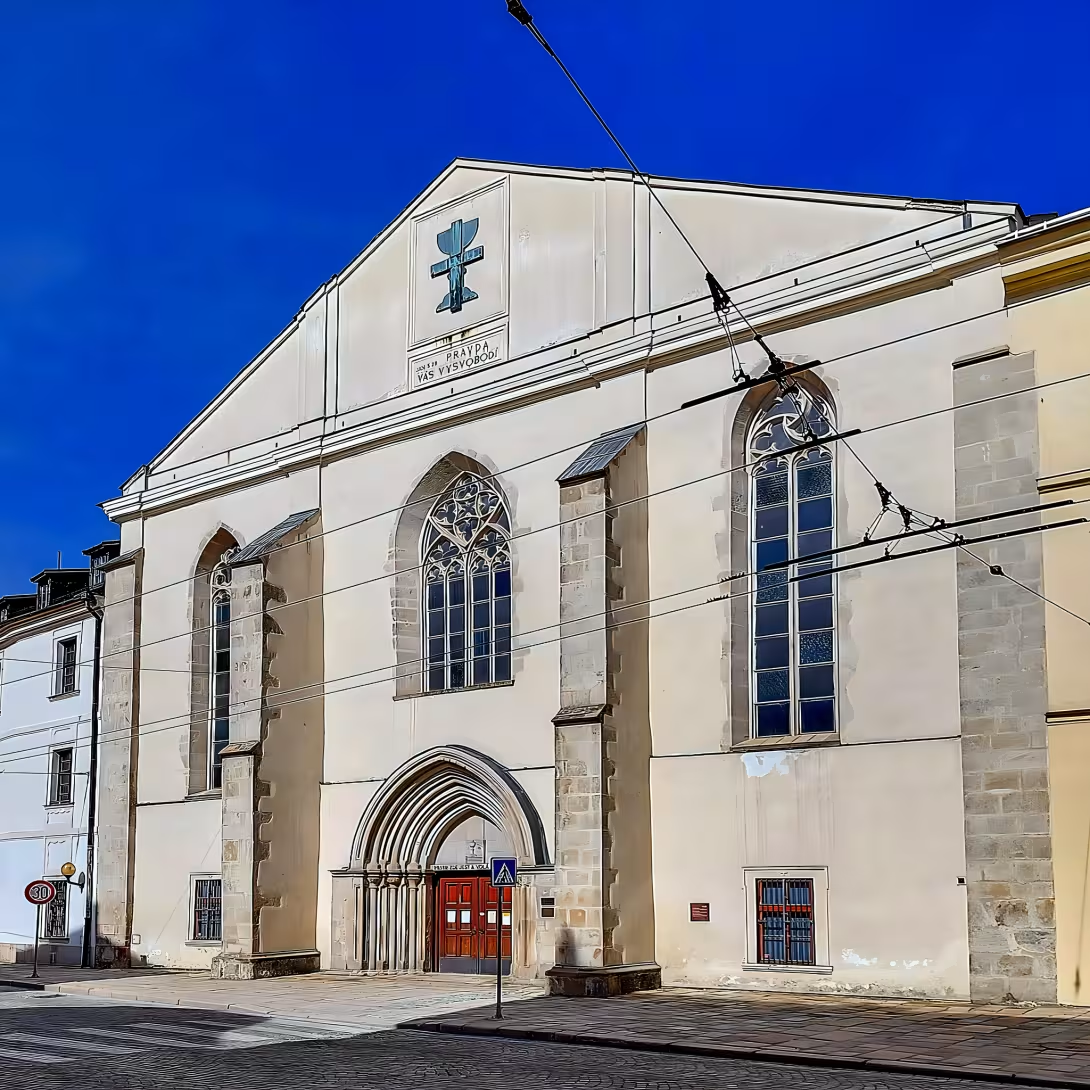
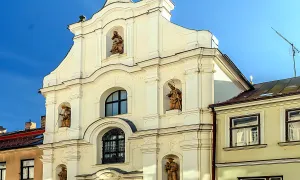
The Church of the Elevation of the Holy Cross in Jihlava is a remarkable monument and one of the earliest purely Gothic structures of Bohemia. Located in Jihlava in Vysočina region, it was originally part of the Dominican monastery and served in various roles for centuries. Its architectural style reflects North French influences and underlines its historical importance and timely adoption of Gothic elements.
The origin of the church is connected with the establishment of the new upper town Jihlava in the middle of the 13th century. Built together with two other important churches - the parish church of St. James and the minority monastery church of the Assumption of the Virgin Mary - it is traditionally connected with 1247, when the Dominican Order allegedly settled in Jihlava. The presence of Dominicans was for the first time safely documented in the 1257 Charter.
Architecturally, its design has decomposed into three main phases. Around 1261 presbytery and clogging walls were completed, indicating the first stage and the same sanctification of the church, evidenced by papal indulgences for visitors. The second phase occurred around 1285 with a vault in the shaft and new windows. The final construction effort took place in the 14th century, including the addition of pillars and cross vaults.
Throughout its history, the church experienced several changes in ownership and dramatic events. Originally owned by the Dominican Order until their dissolution in 1784 was later used as a military barracks after the imperial decree of Joseph II. In 1947 she began to serve as a church for the Czechoslovak Hussite Church after being rented to them.
the church witnessed significant events, including fires that caused considerable damage. The significant fire in 1353 led to further building phases and another remarkable fire on May 29, 1513, allegedly caused by the Dominicans in frying pancakes, caused the destruction of most of the monastery and church, so the bell tower was not repaired.
Today, the Church of the nobility of the Holy Cross stands as proof of the rich history and architectural heritage of Jihlava. It is accessible to visitors who want to explore its Gothic architecture and learn about its historical importance. The church offers insight into the early Gothic style and reflects the economic prosperity of Bohemia at the end of the 13th and the beginning of the 14th century, when Jihlava flourished as a capital thanks to silver mining.
Visiting this monument provides an opportunity to appreciate its architectural beauty and historical importance. It serves as a reminder of the cultural and religious influences made up of Jihlava over the centuries, making it a valuable destination for people interested in history and architecture.
Then and now
Drag the slider to compare how the landmark may have looked when it was built with the view today.
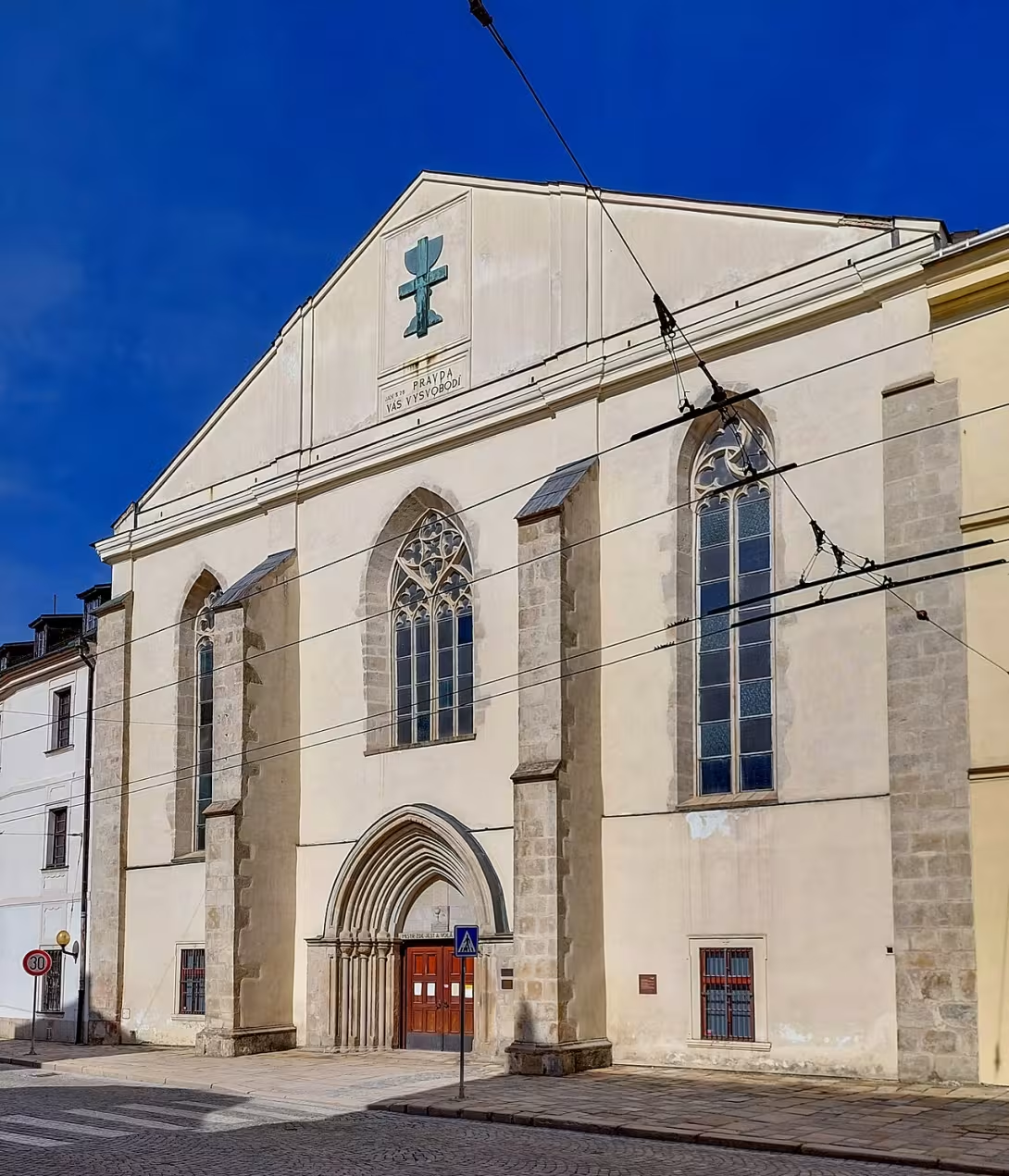

The historical appearance on the left is an AI-generated visualisation and serves as inspiration only.
Historical milestones
- 1261
- the church was sanctified, as the papal indulgences show.
- 1353
- Fire damaged church, requires further construction.
Architectural development
The construction of the Holy Cross Church was divided into three main phases. The first phase included construction of the presbytery and the sealing wall, with the sanctification taking place in 1261. The second phase around 1285 experienced the completion of the vault in the shaft. The final construction effort took place in the 14th century, including the addition of pillars and cross vaults.
Historical events
the church was sanctified in 1261, as evidenced by papal indulgences issued for visitors.
A significant fire in 1353 damaged the church, which led to further building phases.
Owners
Originally owned by the Dominican Order until its dissolution in 1784; subsequently used by the army and later rented to the Czechoslovak Hussite Church since 1947.
Points of interest
- The Church of the Elevation of the Holy Cross is one of the earliest purely Gothic structures of Bohemia, showing the North French influences that were unusual in local architecture at that time.
- A strange legend surrounds on May 29, 1513 the fire allegedly caused by Dominicans who fried pancakes and ruined oil, which led to the considerable destruction of the monastery and church.
- the church underwent several changes of ownership, in particular to become military barracks following the imperial decree of Josef II in 1784, reflecting its adaptability by changing the political landscape.
- During their construction phase, papal indulgences were granted to visitors, suggesting early religious significance and attracting pilgrims during his sanctification around 1261.
- The church was part of a trio of large churches built parallel to the parish church of St. James and the Minorite monastery church, highlighting the architectural boom Jihlava in the mid-13th century.
Guide
This guide is narrated by a synthetic voice generated by artificial intelligence.
Show guide text
This text was created by artificial intelligence and has not been editorially reviewed. It may contain inaccuracies.
Welcome to the Church of the Ascension of the Holy Cross in Jihlava, remarkable testimony of early Gothic architecture and lasting influence of the Dominican Order. As you stand here, take a moment to absorb the peaceful presence of this historical structure. His elegant form rises against the panorama, inviting you to his storied past.
The origin of this church dates back to 1261, when it was sanctified, as the papal indulgences suggest - proof of its early meaning. This sacred place is one of the first purely Gothic buildings in Bohemia, reflecting architectural styles that were unusual in local designs at the time, strongly influenced by northern France. Originally part of the monastery associated with Jihlava Dominican, this church witnessed centuries of history and transformation.
As you look at his architecture, notice how he embodies early Gothic style. The structural elements of the church are typical of this era, e.g. pointed arches and ribbed arches, which were innovative for their time in the Czech Republic. These architectural data highlight not only the influence of northern France, but also a significant departure from previous styles prevailing in the region.
The history of this place is marked by resistance, especially in 1353, suffered damage as a result of fire, which requires further construction and renewal. This event was part of its long journey through time, adaptation and duration for centuries.
A strange legend adds intrigue to its past: on May 29, 1513, a fire allegedly caused by the Dominican pans - a story that captured imagination for generations. Such stories contribute to the rich tapestry of history surrounding this church and encourage visitors to think about the lives and events that have emerged here.
As you continue your research, let yourself be drawn into the atmosphere of this historic place. The Church of the Holy Cross is more than a mere structure; It is a story intertwined with time, which offers views of cultural and architectural evolution in Bohemia.
We invite you to dig deeper into his history, explore his surroundings, and maybe uncover new stories that come your own way. Thank you for visiting this remarkable place where the past meets the present in a constantly evolving dialogue on stone and spirit.
Frequently asked questions
Can the monument be visited?
Religious buildings are usually open mainly during services; at other times a visit is normally arranged with the parish or the operator. We have not verified specific times.
Where is the monument?
Location: Křížová 112/4, Jihlava, Kraj Vysočina. The map on this page shows the exact spot.
Why is the monument protected?
It is listed in the Central List of Cultural Monuments of the Czech Republic as a cultural monument (register no. 41137/7-4877). It is protected as part of a larger listed ensemble.
Businesses nearby
Do you run a restaurant, accommodation, shop, museum, rental, wellness or other visitor service near this monument? Show yourself directly to the people heading to it — this is how they will see you in the app and on the web:
Nearby
the church is in Jihlava and is surrounded by other historical buildings and monuments. The city itself is rich in medieval architecture and history.
Accommodation nearby
Trips and activities nearby
Guided tours, tickets and activities nearby from GetYourGuide
Affiliate link: if you buy from the partner, we may receive a commission. The price for you does not change.
Search tours and activities →Themed route
Thematic cruise route: Kostel Povýšení svatého Kříže v Jihlavě
1. Church of the Holy Cross - * Type: * Historical landmark - * Why is it worth visiting: * This baroque church, built in the 18th century, is one of the most famous sacral buildings in Jihlava. Its rich interior and historical value to be designed for the inalienable for anyone who cares about events and architecture.
2. The Square of the Republic - * Type: * Town Square - * Why is it worth a visit: * Located directly led by the Church of the Ascension of the Holy Cross and connections as a central building in the surrounding area. The square has ordered historic buildings and is an ideal place for resting after a challenging church.
3. South Town Hall - * Type: * Historical administrative project - * Why is it worth visiting: * This Renaissance building is one of the oldest and most famous in the area. They eat history dates back to the 16th century, which is by doing a fascinating system for own resources with the history of the city.
4. Church of St. James - * Type: * Historical church - * Why is it worth visiting: * This Gothic church is another production goods and historic monument in the city. It is an architecture and location in the Republic adjacent to aesthetics and cultural events.
5. Winter Waterworks - * Type: * Historical industrial complex - * Why is it worth a visit: * This compulsory monument area was a positive kit of a small fleet. Today it is open to the public and offers interesting conditions on the history of the Prague era of the confectionery factory.
This route offers a comprehensive use of the cultural and historical life of the city of Jihlava, the adjacent amount of this area in the blisters due to easy navigation.
Seasonal recommendations
Spring: Kostel Povýšení svatého Kříže v Jihlavě encourages to ensure that the green steel landscape is lined with light rays. This both is ideal for the far-sighted historical monuments without a great crowd of tourists. Due to the moderate temperature, it is recommended that the field will awaken, the meridian trip can be taken early in the morning for the best photos with a bright illuminated interior of the skeleton. JARO is also the time in which the surrounding meadows are surrounded by queuing trunks and curries that are transferred to the sponsoring costs.
Summer: In summer Kostel Povýšení svatého Kříže v Jihlavě is surrounded by lively and full color nature, which is entitled to special services. The sunny days can be a little warm in the church because it is advisable to equip yourself with light clothes and protective sunglasses. Imported is a contribution to a difficult volume to help avoid any crowd, especially in the main summer period. The surrounding green spaces are a promising ideal place to put down and relax after the experience of the cube.
Autumn: Autumn of recalculating a one-way atmosphere into the Holy Cross Church, when golden and red-coloured tree leaves are projected on its historic facade. This hugging is less expensive in temperature, which allows a comfortable profile without excessive heat stress. Clothes should be slightly warm, with lines supplied with pocket or flat in the line of cold midday. Autumn is also an ideal time for a photograph looking for a dramatic and colorful landscape that shows that it is a church.
Winter: Winter start-up to the Church of the Holy Cross in the Czech Cold but Reinforced Device, which passes through historical architecture until the worlds were new and new. This season it is important to take over warm suits, leather jackets, gloves and hat to show this new item. Winter offers a liquid resource to explore the church without an upcoming crowd of tourists, and the actual heat is amplified.
Visualizations and artistic views


The visualisations are generated by artificial intelligence and serve as inspiration.
Photos from the area
Real photos taken near the monument


Zdroj a licence jsou uvedeny u každého snímku.
Tips from visitors
No tips yet. Be the first!
Log in and add your tip.
Sources and literature
Photos: Zaerikk / CC BY-SA 4.0, rozlišení zvýšeno umělou inteligencí — Wikimedia Commons. The author and licence also appear when you hover over the image.
Faktickým podkladem tohoto textu byl článek na Wikipedii, jehož autory jsou přispěvatelé Wikipedie. Článek je dostupný pod licencí CC BY-SA 4.0.
Location on the map


Příběhy a pověsti
Legendy, pověsti a příběhy spjaté s touto památkou

Fotografie návštěvníků
Zatím žádné fotografie. Buďte první, kdo přidá fotografii z návštěvy!
Log in a přidejte svou fotografii nebo hodnoťte.
Za ověřenou návštěvu v aplikaci získáte víc bodů — poznáme podle GPS, že jste na místě.
Reviews and comments