






Kostel Stětí svatého Jana Křtitele v Dolních Chabrech Church
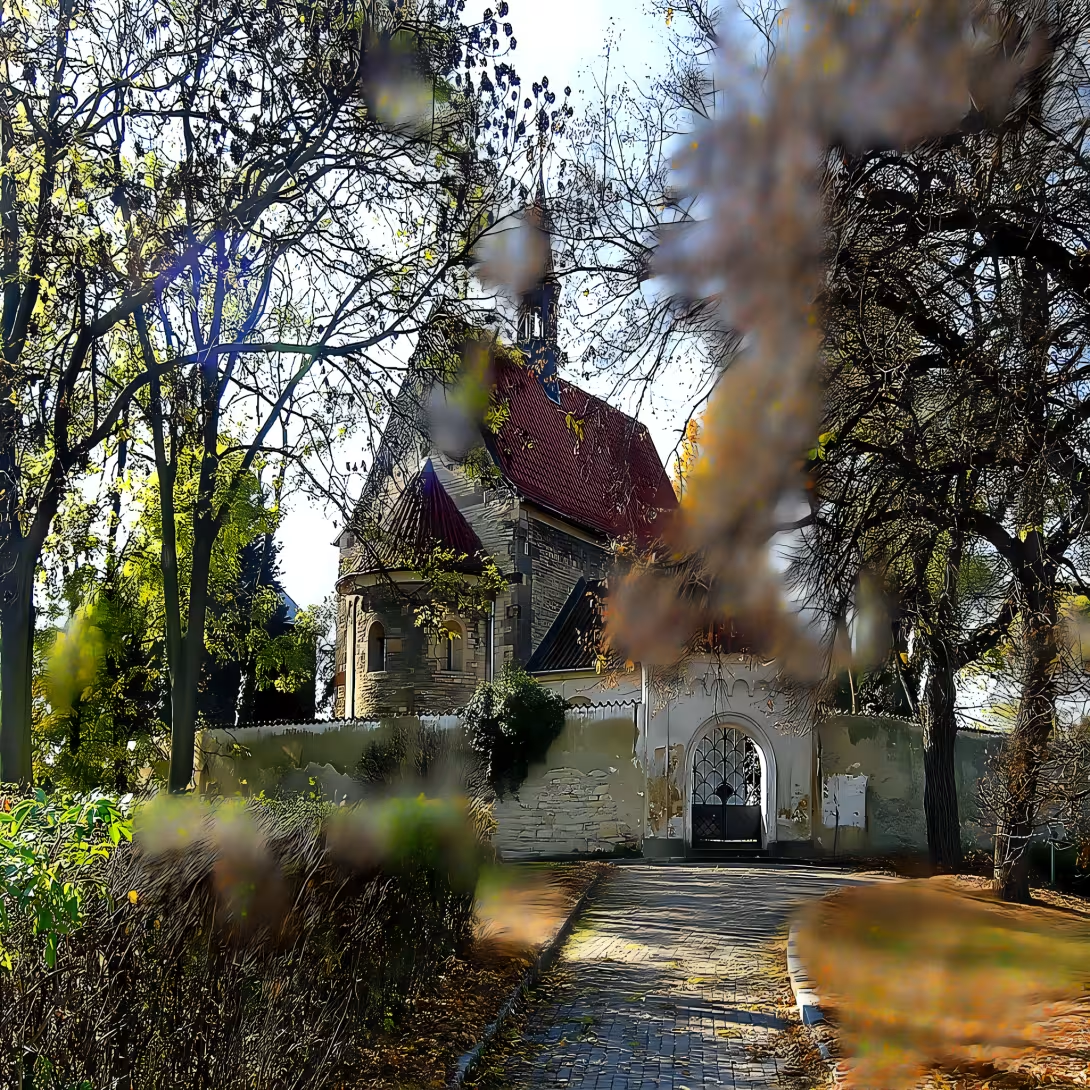
The Church of Behead of St. John the Baptist in Dolní Chabry is a Romanesque family church located on the Bílenecke Square in Prague- Dolní Chabry. This historical monument has been behind its continuous sacred use since the beginning of the 11th century and has a rectangular arrangement with apps, Romanesque frescos, and the foundations of an earlier shrine beneath it. Its importance is rooted in architectural style and rich history.
This site is important for religious purposes at least since the beginning of the 11th century, called it a place of continuous sacred use for several centuries. Archaeological research carried out between 1973 and 1974 revealed that this site contained four different sacred structures. The first was a small chapel made of limestone blocks from the early 11th century. The second building was a longitudinal church with half-circle apps built by the Ashlar masonry in the style of Opus Spicatum. The third was a large rotunda Romanesque built half the 12th century ago, remarkable for its size and decorative tiles showing various motifs.
Architecturally, the current form of the church dates back to the end of the 12th century, characterized by its androgenic masonry structure. It has a rectangular ship with an apsid on the east side, a small sacristy attached to the north wall near the apsid and a slender tower rising from the gallows roof. The interior is decorated with rare frescoes of Romanesque discovered in 1905, including the depiction of Christ and apostles from approximately 1230-40, as well as the oldest Marian cycle in the Czech Republic dating back to 1250-60.
During its history, the church experienced significant events that shaped its current state. In 1352, plebany was established in the church, which marked important developments in its church administration. The Hussite wars of the 15th century caused considerable damage, including burning of the roof, which required a later reconstruction of the Gothic style and enlargement of the roof structure. The 1439 Mason brand found on the ground further illustrates these reconstruction efforts.
Today, the church faces challenges requiring extensive reconstruction due to structural issues and degradation of its foundations. Despite these concerns, it remains a place of historical and cultural interest. The church is accessible to visitors who are drawn by their unique architectural elements and art treasures, including fresco Romanesque and decorative tiles. Efforts continue to ensure the financing of the necessary repairs conducted by local heritage organisations.
A visit to the church of the execution of St. John the Baptist offers a view of medieval religious architecture and art, so it is worth a destination for interested people in history and cultural heritage. His permanent legacy as a place of worship for centuries contributes to his charm, which today invites visitors to explore and award.
Then and now
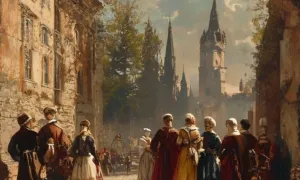
Drag the slider to compare how the landmark may have looked when it was built with the view today.
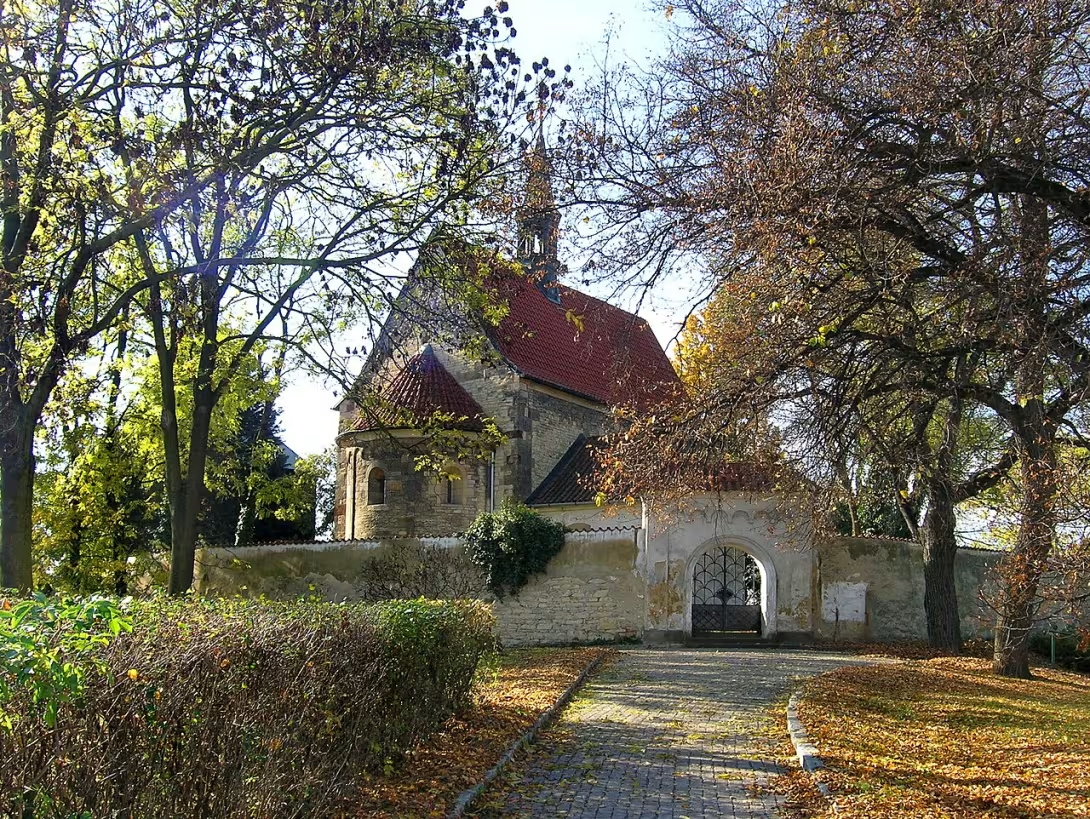
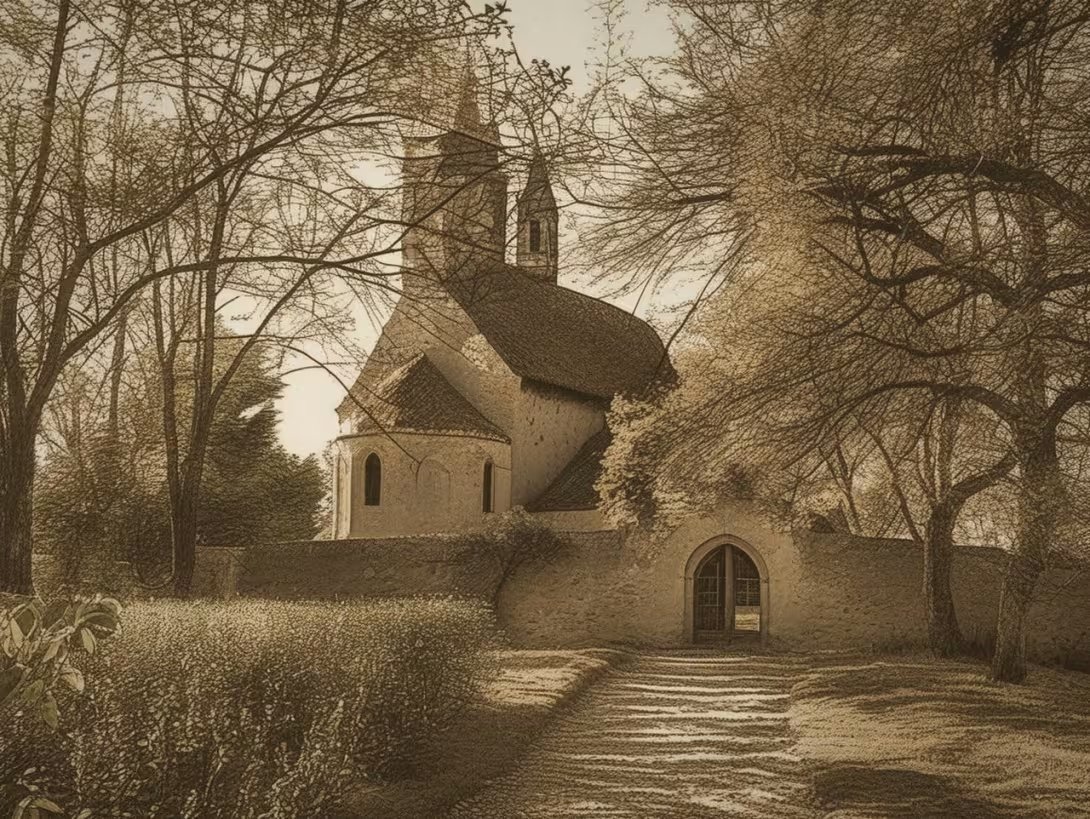
The historical appearance on the left is an AI-generated visualisation and serves as inspiration only.
Historical milestones
- 1352
- The church was founded with plebans.
- 1439
- A masonry mark of A.D.1439 was found on the property of the church.
Architectural development
The church was built in the late 12th century using ashlar masonry and has undergone several transformations. It has a rectangular ship with an apsid and a small sacristy. The frescoes of Romanesque discovered in 1905 emphasize its artistic significance. Post-Hussite War, it was restored in late Gothic style.
Historical events
In 1352, plebans were founded in the church.
the church suffered damage during hussite wars in the 15th century.
Points of interest
- The church of St. John the Baptist in Dolní Chabry is remarkable that it hosted four different sacred structures over its long history, each reflecting different architectural styles and periods.
- Among the unique features of the church are some of the oldest Marian bicycle frescoes in Bohemia, which range up to 1250-60, which offer a rare view of medieval religious art and iconography.
- An important historical event was the establishment of plebana in the church in 1352, which marked a significant development in its church administration in the Middle Ages.
- the resilience of the church is evidenced by its survival through hussite wars in the 15th century, which caused extensive damage, but also led to the restoration of the gothic style, which since then have become part of its architectural history.
- The 1439 Mason brand provides a tangible connection to the restaurant effort after destruction during Hussite wars, highlighting the craftsmanship and work involved in preserving this historic monument.
Guide
This guide is narrated by a synthetic voice generated by artificial intelligence.
Show guide text
This text was created by artificial intelligence and has not been editorially reviewed. It may contain inaccuracies.
On a small hilltop at Bílenecké náměstí in Dolní Chabry stands a Romanesque church dedicated to the Beheading of Saint John the Baptist. It is a rectangular building with a semicircular apse. Beneath it lies a much older history.
Archaeological excavations between 1973 and 1974 revealed that the present-day church is already the fourth sanctuary at this site. The oldest structure was probably a wooden burial chapel from the early eleventh century. Small lime-stone walls with remnants of burnt wood were all that remained of it. Next came an elongated church with an apse built from rough stone, constructed using a dry-stone technique. The third building was a rotunda dating from before the middle of the twelfth century. With a diameter of 12.6 metres, it is the second largest known Romanesque rotunda in Bohemia, after the rotunda of Saint Vitus at Prague Castle. Its floor was covered with relief tiles of about twenty different types. A typical motif shows the prophet Daniel in the lion's den or trees of life with birds. One tile bears a portrait of a ruler with an inscription interpreted as the name of King Nebuchadnezzar from the story of Daniel.
The present church was built in the third quarter of the twelfth century using ashlar masonry. It has dimensions of approximately eight by thirteen metres. A slender bell tower rises from the gable roof, and a small square sacristy adjoins from the north. In 1905, rare paintings were discovered in the apse. Christ in a mandorla with a procession of apostles dates from between 1230 and 1240. Two decades later came the oldest surviving wall-painted Marian cycle in Bohemia. Above the entrance is a Renaissance painting of a dish with the severed head of John the Baptist.
During the Hussite wars, the church burnt down. It was then repaired in the late Gothic style and the roof was raised. A stonemason's mark with the date 1439 has been preserved in the attic. During the Thirty Years' War, the local parish ceased to exist. Since then, the church has belonged to the parish of Saint Václav on Prosek. In the Baroque period, a gallery was added, and after 1729, also a painted illusionistic altar of the Virgin Mary. Next to the church stands a wooden bell tower. Its oldest bell dates from 1695.
At the beginning of the twenty-first century, the church requires extensive renovation because the masonry has been structurally damaged. The roof timbers were repaired at the end of 2010. The exposed foundations of the older structures were deteriorating, so the underground area was refilled with gravel in 2014. What remains visible is only the Romanesque base of an arcade column.
Tips for visitors
The best time to visit St. John the Baptist's Church in Dolní Chabry is at the end of spring or early autumn when the weather is pleasant, and the surrounding greenery increase the peaceful atmosphere of this Italian church Romanesque. A visit during these months will allow you to enjoy a comfortable survey without crowds that might be present during the top tourist season.
For the most up- to-date information on how to get there, consider searching for an online transport option.
When planning your visit, it's a good idea to make comfortable walking shoes as you want to explore the area around the church and the Whitenecke Square. Also consider using the camera or smartphone to photograph, especially if you are interested in capturing architectural details of this historic site.
For lovers of photography, the best places are probably from the front of the church, where his Romanesque architecture can be fully appreciated against the background of the surrounding landscape. Natural light during golden hours - shortly after sunrise or before sunset - can add beautiful lights to your photos, highlighting texture and building details.
When it comes to nearby attractions within a 30-minute radius, visitors can explore other historical sites or walk easily in the surrounding areas of Prague- Dolní Chabry. Although there are no specific recommendations available, the proximity of Prague offers many cultural and recreational opportunities for those who want to extend their visit.
Frequently asked questions
Can the monument be visited?
Religious buildings are usually open mainly during services; at other times a visit is normally arranged with the parish or the operator. We have not verified specific times. According to the heritage register restoration is under way, so access may be restricted.
Where is the monument?
Location: Bílenecké nám., Dolní Chabry, Praha, Hlavní město Praha. The map on this page shows the exact spot.
Why is the monument protected?
It is listed in the Central List of Cultural Monuments of the Czech Republic as a cultural monument (register no. 44388/1-1698).
Businesses nearby
Do you run a restaurant, accommodation, shop, museum, rental, wellness or other visitor service near this monument? Show yourself directly to the people heading to it — this is how they will see you in the app and on the web:
Events nearby


Zdroj akcí: otevřená data měst a obcí ČR (Národní katalog otevřených dat) a kalendář akcí Národního památkového ústavu.
Nearby
PHARMAZobrazit interaktivní přenos okolí - Restaurace, ubytová, početné a další město v okrehu 15 km.
Data: přispěvatelé OpenStreetMap, okreh 15 km.
Historické památky
- menhir Zkamenělý louha (0.9 km)
- Kobyliská střílnice (2.4 km)
- Památník trolejbusové dopravy na Hanspaulce (6.3 km)
- Prvotní rožlasové vysilážní (6.6 km)
- Emil Zátopek (6.7 km)
- Kolovratský palác ve Valdštejnské (6.9 km - Valdštejnská 150 / 4)
- Vojenský historický ústav Praha (6.9 km - U Památníka 1600 / 2)
- Dém U Kohouta (7.1 km)
PŘÍLOHA
- Pizzerie Giovanni (3.2 km - Střílničná)
- U Jeníka (4.5 km - Tupolevova 608)
- Pizza Dolce (4.6 km)
- Pizzeria Cerreto (5.7 km)
- Yi Xiang Ge (5.7 km)
- Švejk restaurant U Brázdů (5.8 km - U Svobodarny 18)
- Šnyt (5.8 km - Kovářská 16)
- McDonald 's (7.8 km - Vodičkova 736 / 15)
PŘÍLOHA
- Astra (4.3 km)
- Plus Prague (4.5 km)
- Plaza Prague Hotel (4.7 km)
- CaroL (5.8 km)
- Arlington (5.8 km)
- Hotel AXA (6, 6 km - Na Poříčí 40)
- Old Town Jewel Apartments (6.8 km - Elišky Krásnohorské 10 / 2)
- Siesta (7.2 km)
Poujčovny a sport
- Cyklo Adam (4.8 km - Internacionální 1231 / 8)
- JUN (5.6 km - Haškova 629 / 7)
- VELOX Sport (5.8 km)
- VM- SPORT (5.9 km)
- U Tyrše (6.4 km - Jaselská 464 / 38)
- Florbal expert (6.5 km)
- Harfa Sport (6.8 km)
- Cykloservis Richard Eger (6.9 km)
Garantica Turistika a příroda
- Ládví (2.1 km)
- Vyhlídka Emy Destinové (4.5 km)
- Odjezdová tabule Nádraží Vysočany (5.9 km - Sokolovská 202 / 314)
- Informní a regulační centrum (6.9 km - Maiselova 38 / 15)
- Masarykova vyhlídka (7.3 km)
- Pražský hrad (7.3 km)
- Gabrielka (7.9 km)
- Petřínka (8.0 km)
Accommodation nearby
Trips and activities nearby
Guided tours, tickets and activities nearby from GetYourGuide
Affiliate link: if you buy from the partner, we may receive a commission. The price for you does not change.
Search tours and activities →Themed route
Thematic cruise route: Kostel Stětí svatého Jana Křtitele v Dolních Chabrech
1. Church of the State of St. John the Baptist - * Type: * Historical church - * Why is it worth a visit: * This baroque church, built in the 18th century, is a singular monument with rich history and architectural features. It is possible to acquire beautiful frescoes and divided sculptures that go to other areas of the law.
2. Church tank - * Type: * Historical area - * Why is it worth visiting: * The square is a quiet place where you can drive to the garden area of the skeleton. It is an ideal place to relax and another historical context in which the church is located.
3. Local pamples in the surroundings - * Type: * Historical buildings - * Why is it worth a visit: * Although specific buildings are not speciakans, the area to which the church is rich in historical houses and dazs. These structures represent the architectural excavation of the region and offer insight into the past of the Lower Chabra.
4. Walk on the streets of Lower Chabra - * Type: * Local space - * Why is it worth visiting: * Walking the streets of the village allows you to feel the atmosphere of this life and get acquainted with local culture. It is an opportunity to explore other historical details and smoke a quiet space around the main monument.
This route offers combined products that are intended for use, historical discoveries and relaxation products, making Dolní Chabry an ideal system for own resources that affect local regions.
Seasonal recommendations
Spring: The Church of the State of St. John Křetel in the Lower Chabry in the spring offers a national assessment of investments in gardens and trees that are located after a cold state. The sun ray celebrates the church of the world, which is more beautiful for photography and relaxation on outdoor platforms. Incentive undertakings should be able to obtain State aid in order to obtain public service aid in order to be aware that such aid is compatible with the internal market. Short gloves and light round is ideal for this season.
Summer: Summer recalculates large, sunny days idealized for visiting the Church in the Lower Chabres. Intense halos the visual use of church architecture and green pebble tracks is not, but can also mean more tourist crowds. They arrive early or late in the afternoon to enjoy the peace and avoid the peak hour. The wall units should have a prohibited brunette bran on their own, short glove and enough water to enjoy their day without rejection.
Autumn: Autumn of the exact warm, bright coloured light, which is a church in the Lower Chabry, while the leaves around it have to live colors. This season offers a one-way atmosphere with mild temperatures and pink or orange downtime in an area that is ideal for photography. They will enjoy the middle hours of the day, the cods are peaceful and the temperatures are pleasant. A dark suit that can be excluded from activities that are not intended for use.
Winter: The winter value of the Church in the Lower Chabres encourages a calm atmosphere with media of beautiful and beautiful snowy landscapes that pass magic to church products. Significant is that cold and other things that may be investigated are considered significant. The opening time is early in the day, because the opening time may be less than the lower temperature. It is persistent to wear a warm suit, hat and gloves to avoid shame and use it with a winter permit without discomfort.
Visualizations and artistic views


The visualisations are generated by artificial intelligence and serve as inspiration.
Photos from the area
Real photos taken near the monument


Zdroj a licence jsou uvedeny u každého snímku.
Tips from visitors
No tips yet. Be the first!
Log in and add your tip.
Sources and literature
Photos: Czech Wikipedia user Packa / CC BY-SA 3.0, rozlišení zvýšeno umělou inteligencí — Wikimedia Commons. The author and licence also appear when you hover over the image.
Faktickým podkladem tohoto textu byl článek na Wikipedii, jehož autory jsou přispěvatelé Wikipedie. Článek je dostupný pod licencí CC BY-SA 4.0.
Location on the map
Příběhy a pověsti
Legendy, pověsti a příběhy spjaté s touto památkou
Příběh: Kostel Stětí svatého Jana Křtitele v Dolních Chabrech
Bylo to v pondělí ráno, kdy Václav zjistil, že se jeho život rozpadá. Zemřela mu matka a ani tisíc modliteb nebyly schopny uzdravit svou duchovní únavu. S hm…
Číst příběh
Pověst: Kostel Stětí svatého Jana Křtitele v Dolních Chabrech
Podle místní pověsti se návrší, na němž dnes stojí chaberský kostel, těšilo úctě dávno předtím, než někdo přiložil ruku k prvnímu kameni. Staří obyvatelé Dol…
Číst příběhFotografie návštěvníků
Zatím žádné fotografie. Buďte první, kdo přidá fotografii z návštěvy!
Log in a přidejte svou fotografii nebo hodnoťte.
Za ověřenou návštěvu v aplikaci získáte víc bodů — poznáme podle GPS, že jste na místě.
Reviews and comments