






Kostel sv. Lazara Church
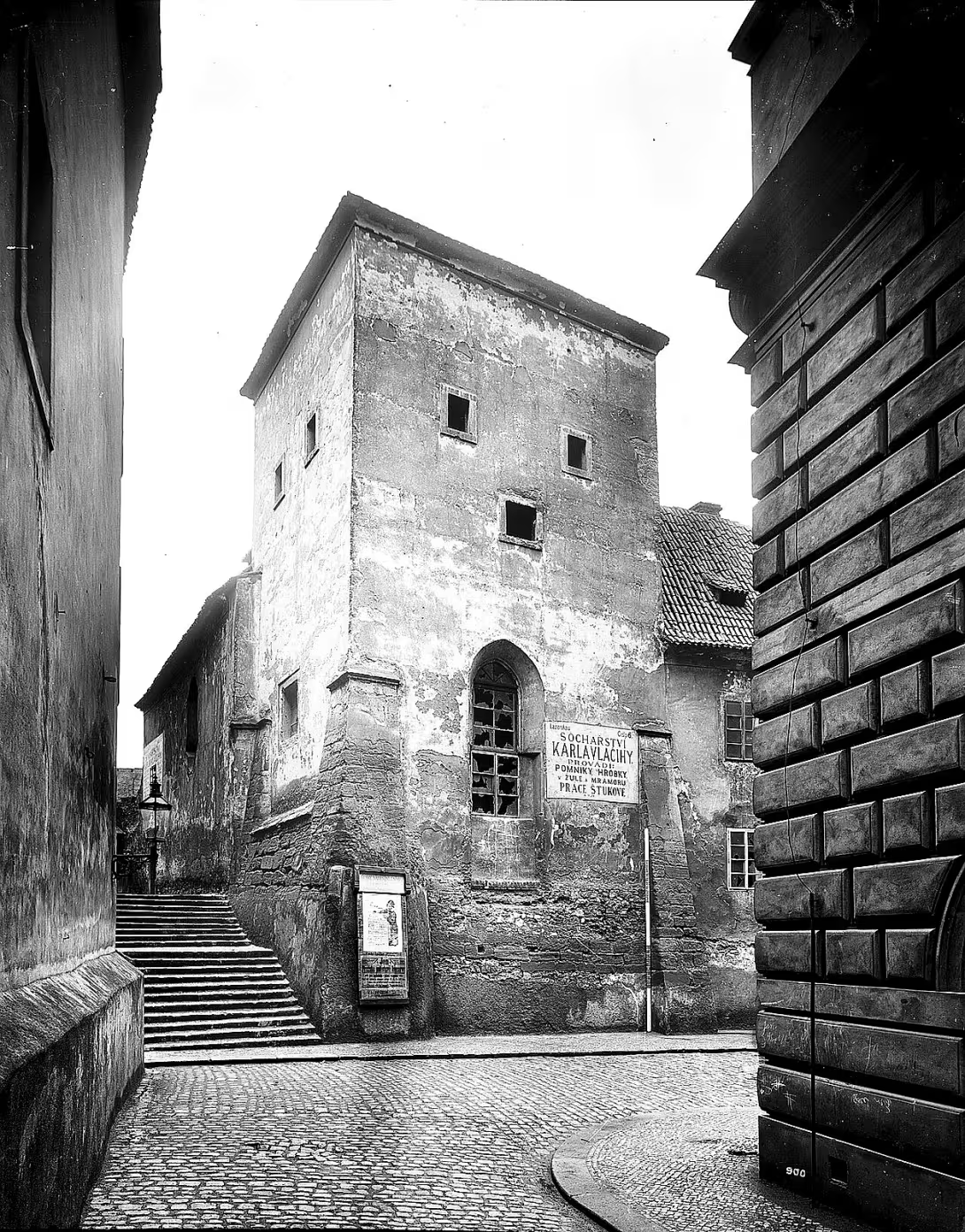
Objekt se nedochoval — na místě dnes nestojí. Následující text popisuje jeho historii, ne současnou návštěvu.
St. Lazarus Church was a hospital church located in Prague 2. Although it no longer exists, its name lives on in the name of Lazarská Street, one of the main transfer hubs in Prague. This church was first mentioned in writing in 1280 and its history dates back to the end of the 12th century, when it is assumed that it was built outside the castles due to the risk of infection. It was a hospital church surrounded by a cemetery, managed by a hospital fraternity and canons of the order of God's line on Zderaze.
The history of St. Lazarus church is closely linked to the history of Prague and Bohemia. In the 12th-14th century he was associated with graves for the victims of plague and famine, which was often common at this time due to the risk of spreading diseases. The church became a spiritual centre for local residents and craftsmen. In the 15th-17th century, after Hussite wars, he stopped working as a hospital and was taken over by the New Town Guild of Butchers. This period also meant changes in religious life, when the church served as a parable. In 1641, a congregation was established at the church to the glory of the Virgin Mary, led by the Jesuit Rector Martin Bouda.
The architecture of the church of St. Lazarus was characteristic of the early Gothic with a high prism ship and a quadratic presbytery with an arched vault. In the 15th century, there were changes that referred to the craft industry - for example, a clamp with their character. The Tympanon of the entrance portal, which was preserved in the Lapidarium of the National Museum, is an important monument to the artistic representation of this time.
The ownership and administration of the church have undergone several changes. After his first written testimony in 1280, he was under the administration of the hospital fraternity, assisted by kings Václav II., Jan Lucemburský and Karel IV. with various privileges. After Hussite wars, he went under the patronage of the butchers' guild and later the Jesuit college, which in 1641 acquired him into its patronage. In 1791, the church was repurchased by new-born butchers.
The Church of St. Lazarus has been through many events that have influenced his fate. The most significant of them was its abolition and closure in 1788 by order of Josef II. This led to it being subsequently converted into a workshop and warehouse. In 1900- 1901, the church was finally demolished because of the planned construction of the building of the imperial-royal criminal court, despite the protests of historical societies.
Today, the church of St. Lazarus no longer exists, but its history and architectural significance are still remembered through photographs and engravings. The name Lazarská Street serves as a monument to this church, which was an important place for many generations of Pražansky. Visit this site to remember the rich history and architectural values that once stood here.
Then and now
Drag the slider to compare how the landmark may have looked when it was built with the view today.
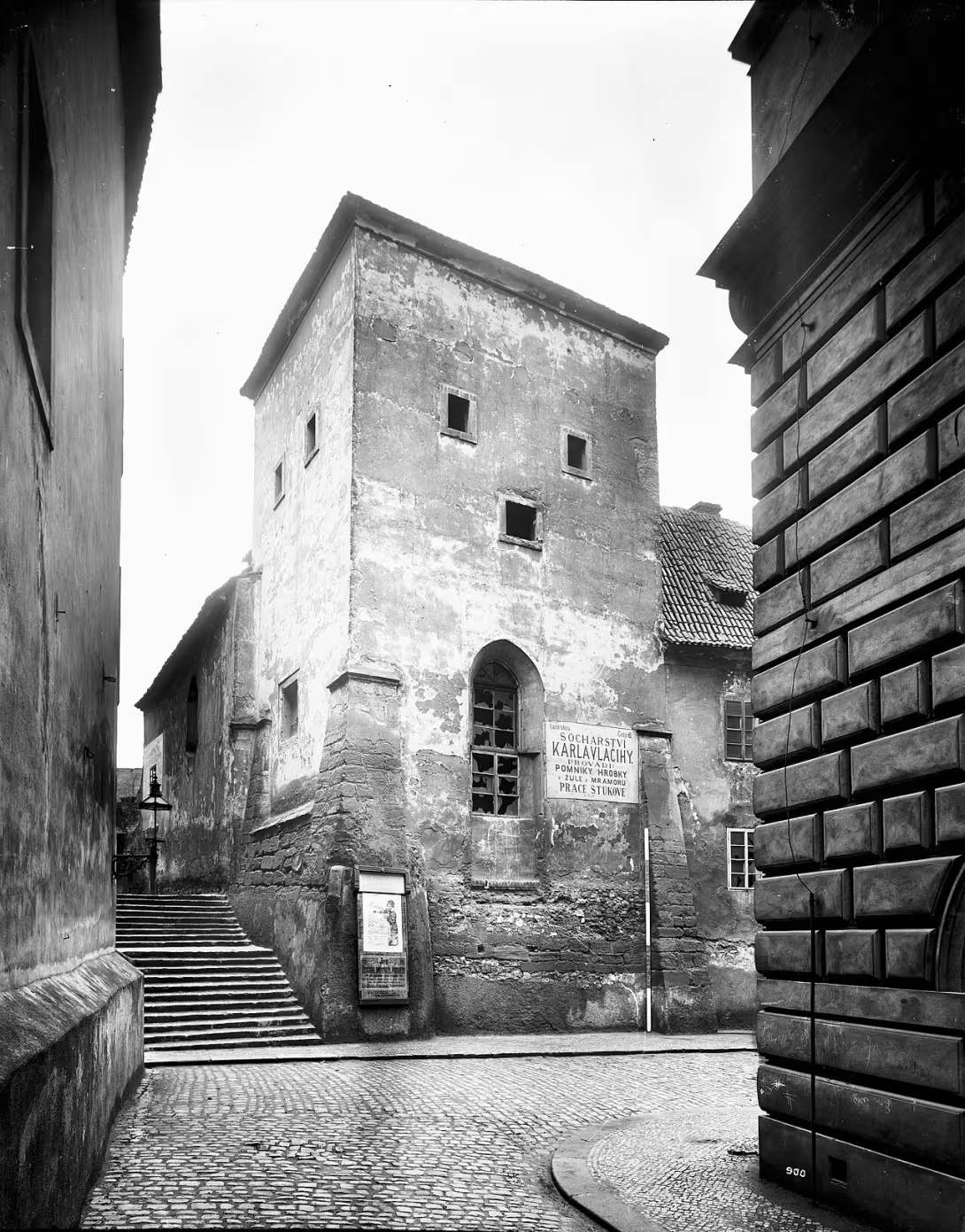
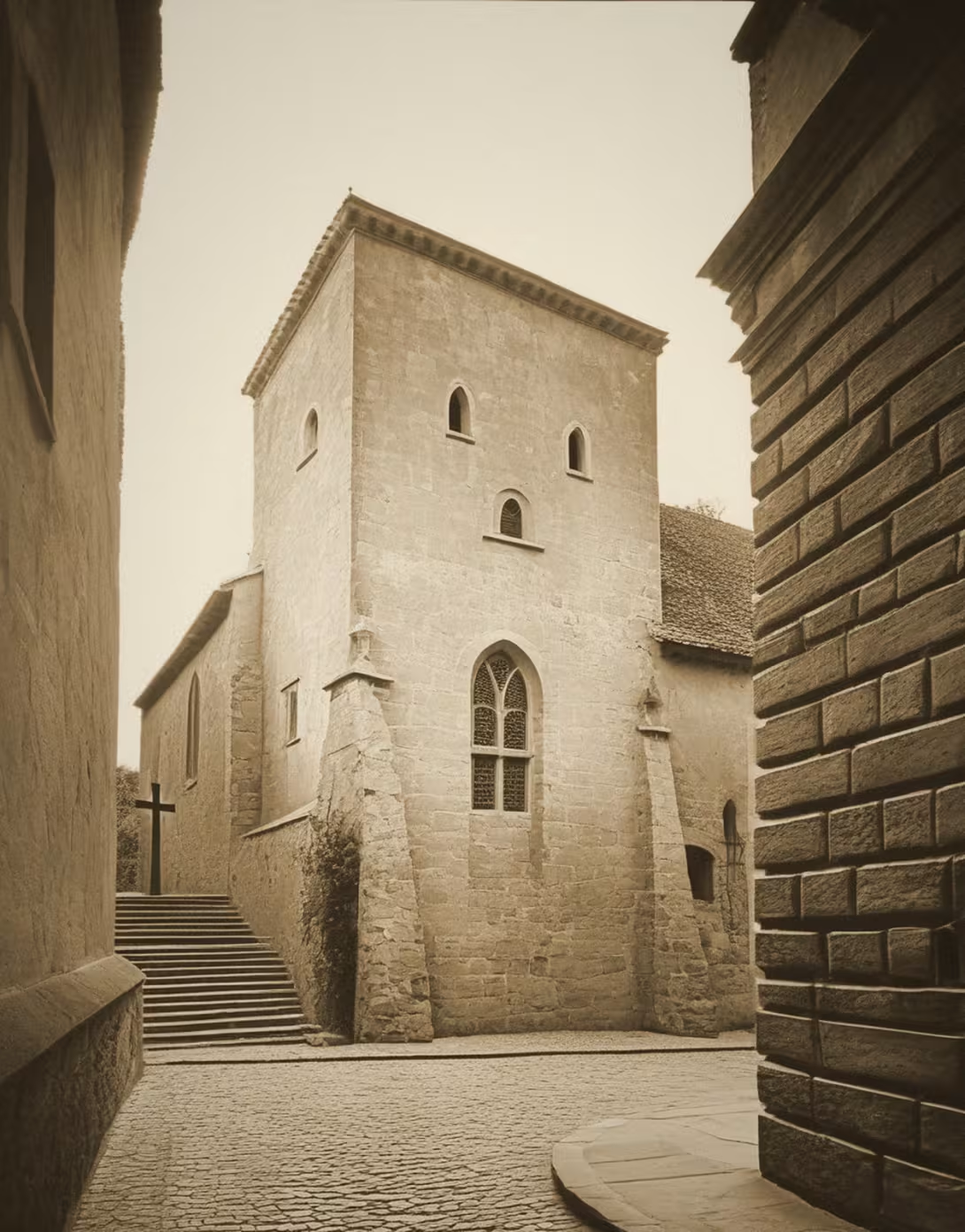
The historical appearance on the left is an AI-generated visualisation and serves as inspiration only.
Historical milestones
- 1280
- First written mention of the church.
- 1900-1901
- The demolishing of the church to build a building for the imperial-royal criminal court.
Architectural development
Kostel sv. Lazara began as a simple early Gothic church with a prism boat and a quadratic presbytery, which was encapsulated by the vault in the 15th century. In the 18th century he had five altars, including the main altar of St. Lazarus and others with different patrons.
Historical events
- 1280
- First written mention of the church.
- 1788
- The church was abolished and closed by order of Josef II.
- 1900-1901
- The demolishing of the church to build a building for the imperial-royal criminal court.
Owners
- 1280
- 15th Century
- 1641
- 1791
Points of interest
- The church of St. Lazarus was first mentioned in writing in 1280 and its history dates back to the end of the 12th century. - It was a hospital church surrounded by a cemetery, managed by a hospital fraternity and canons of the order of God on Zderaze. - In the 15th - 17th century it was taken over by the New Town Guild of Butchers, who served the likeness here and in 1641 founded the congregation to the glory of the Virgin Mary. - The architecture of the church was characteristic of an early Gothic with a high prism ship and a quadratic presbytery with an arched cross vault, with a clamp with a sign of a guild of craftsmen. - The church was abolished and closed in 1788 by order of Josef II., subsequently converted into a workshop and warehouse, and finally demolished in 1900- 1901.
Guide
This guide is narrated by a synthetic voice generated by artificial intelligence.
Show guide text
This text was created by artificial intelligence and has not been editorially reviewed. It may contain inaccuracies.
Welcome! You are standing in front of the historic church of St. Lazarus, which stands in the heart of New Town. Look up and notice its Gothic shape. The church is surrounded by historic houses and streets that still keep the atmosphere of medieval Prague.
Let's move on to the past and find out when and how the church was created. The first written mention of the church dates back to 1280, but its history dates back to the end of the 12th century. It was a hospital church that served as a spiritual center for locals and craftsmen. The church was linked to graves for the victims of plague and famine, which is why it was such an important place for the local community.
Now pay attention to the architecture of the church. The French boat and quadratic presbytery are typical of early Gothic style. Look at the facade and notice its simplicity. The church was built at the end of the 12th century, but it has undergone many modifications and reconstructions over the centuries.
There were important events at the church and they were linked to many historical figures. Václav II., Jan Lucemburský and Karel IV. were just some of the many rulers who visited the church. Martin Bouda, a Jesuit who worked in a church in the 17th century, became an important figure in its history.
Note that the church was linked to graves for the victims of plague and famine. This is interesting, because the church was not only a religious center, but also a place where memories of tragic events were kept. Kostel sv. Lazara was the first church in Prague that was connected to the graves for the victims of the plague.
Let's go back to the present. Although the church of St. Lazarus was demolished in 1900- 1901 because of the construction of the building of the imperial-royal criminal court, its history and importance remain intact. Kostel sv. Lazara is a symbol of the history and tradition of Prague and stands here as a reminder of the past.
Allow me to invite you to further explore this historic monument. Kostel sv. Lazara is just one of the many interesting places in Prague waiting for you. Our way into the past is to have more surprises and discoveries.
For kids
Hi! Do you hear that quiet wind noise? It's like you're warming up a long way back! Today I'm talking about a mystical place that stands at the solitude on Lazarská Street in Prague. But not just like this - it was once the church of St. Lazarus!
Remember when you first heard of craftsmen like carpenters and goldsmiths? Well, in the 15th century, someone brought a big key to this church. The key opened the door for the butchers' guilds! What if they thought the butchers would have their own church here? Well, that's what happened!
Businesses nearby
Do you run a restaurant, accommodation, shop, museum, rental, wellness or other visitor service near this monument? Show yourself directly to the people heading to it — this is how they will see you in the app and on the web:
Visualizations and artistic views


The visualisations are generated by artificial intelligence and serve as inspiration.
Atmosphere of the place
This atmospheric visualisation of the place and period was generated by artificial intelligence. It is not real footage of the location.
Tips from visitors
No tips yet. Be the first!
Log in and add your tip.
Sources and literature
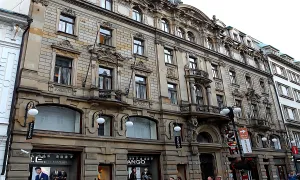
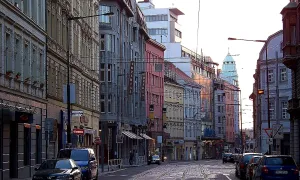
Photos: Jindřich Eckert / Public domain — Wikimedia Commons. The author and licence also appear when you hover over the image.
Faktickým podkladem tohoto textu byl článek na Wikipedii, jehož autory jsou přispěvatelé Wikipedie. Článek je dostupný pod licencí CC BY-SA 4.0.
More monuments – Nové Město
Show all in the municipality


Příběhy a pověsti
Legendy, pověsti a příběhy spjaté s touto památkou
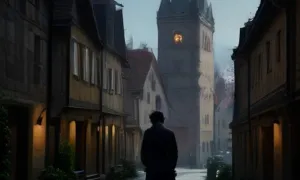
Příběh: Kostel sv. Lazara
Bylo to v pondělí ráno, kdy Jakub zjistil, že jeho duše je plná temnoty, nesoucí břemeno hříchů, které nemohl vyvrátit, a přestože se pokusil modlit se za od…
Číst příběh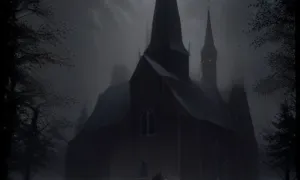
Pověst: Kostel sv. Lazara
Traduje se, že v dobách, kdy Praha ještě dýchala vůní smolných pochodní a úzkými uličkami Nového Města se táhl dým z řeznických krámů, byl kostelík sv. Lazar…
Číst příběhFotografie návštěvníků
Zatím žádné fotografie. Buďte první, kdo přidá fotografii z návštěvy!
Log in a přidejte svou fotografii nebo hodnoťte.
Za ověřenou návštěvu v aplikaci získáte víc bodů — poznáme podle GPS, že jste na místě.
Reviews and comments