



Kostel svaté Alžběty (Třeboň II) Church
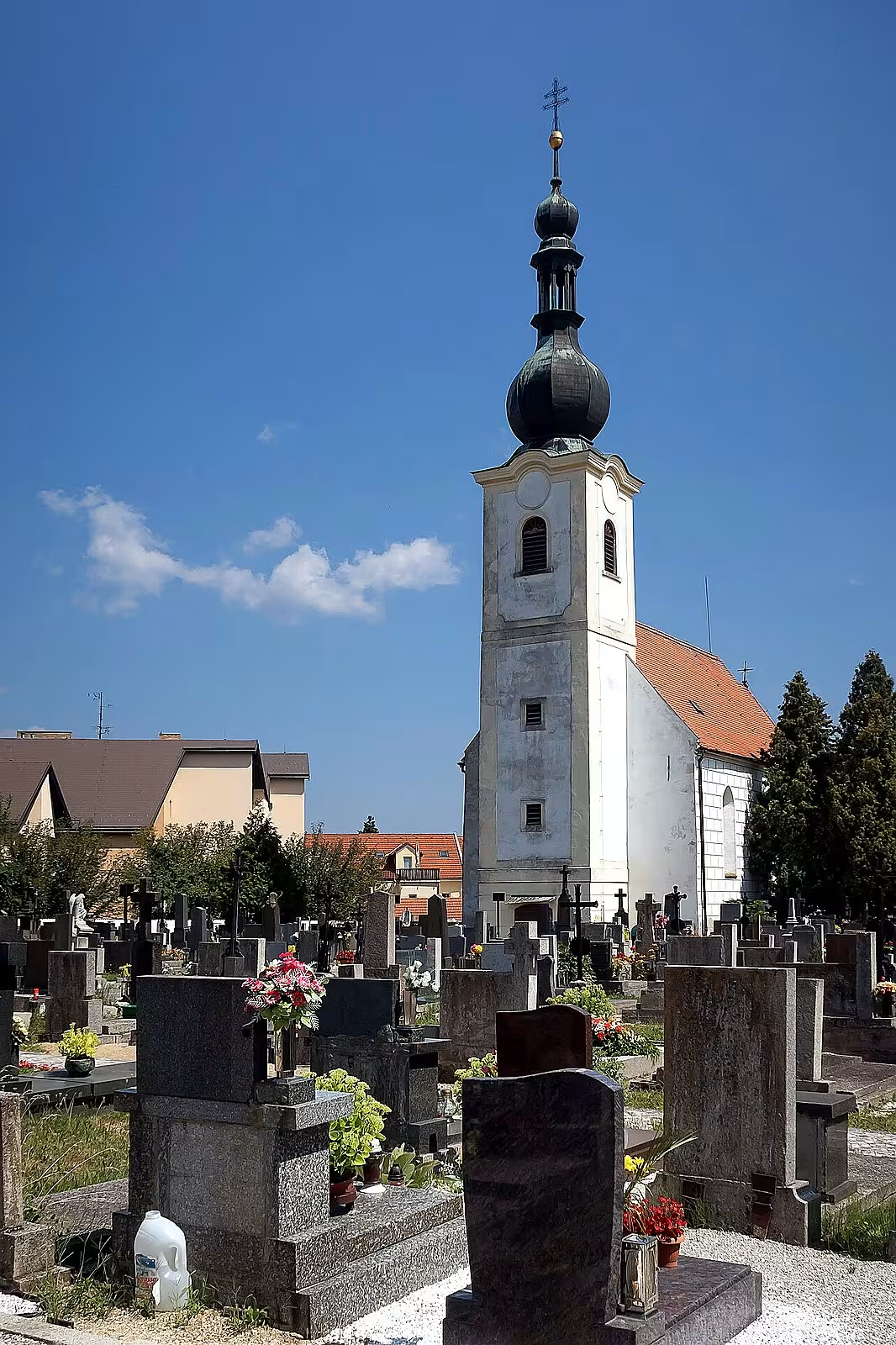
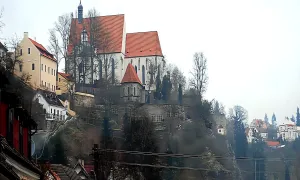
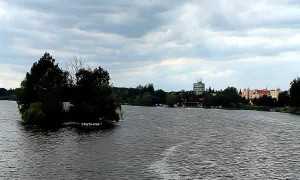
St. Elizabeth's Church is located in the south part of Trebon II, near the Hliník estate. It is a cemetery and a filial temple administered by the Roman Catholic parish Trebon. It was founded in the second half of the 16th century with the name of the mighty Rožberg master Wilhelm of Rožmberk, who had it built as a replacement for the older Gothic church of the same initiation which was abolished. The original temple stood at the site of the present island in the pond World, which they were creating at the time. The new church was built in Renaissance style and with only one ship. The ceremony took place on 26 July 1576 with the blessing of Pope Gregory XIII.
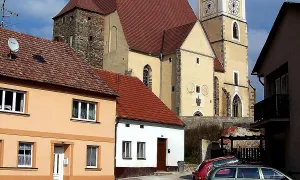
The construction carries interesting traces of its time and history. The conclusion and presbytery of the temple hide significant late Gothic elements, especially in the solution of windows, while plaster is typically Renaissance. The Sanctuary and the double pit of the main tower are performed in Baroque style. In the church there is a baroque main altar with the painting "Dying of the Lord" by Peter van Roy from 1666. The other equipment includes two baroque altars moved here in the second half of the 18th century - the altar of St. John Nepomuk of the main dean's church and the altar of St. Barbara of the repealed church of the holy name. From 1654, the bell dedicated to the patron saint of the temple and Saint Barbara was brought from the abolished Gothic church of St. Barbara. Since he escaped attention during the world wars, unlike other Třeboň bells, he is one of the oldest bells in the city in 2018.
The temple has become the site of an important historical episode. Two years after the Battle of White Mountain, peace was negotiated at the church between the Belarusian winners, represented by General Baltasar Marradas and Vich, and the English crew of Trebon. The crew has earned free passage and decent treatment. In more recent history, the church was the only temple in the Czech-Budějovice diocese in 2009, where the so-called Trident Mass was held regularly, always in the first time in the month.
The adjacent Třeboňská town cemetery is one of the most interesting places of the location. It is located near the church and contains the tombs and graves of important people in Třebon, among them abbot and dean. The Baroque buildings are scattered in its vicinity - a niche chapel with polychrome stone statue of the Virgin Mary, a cross with Jesus and the Virgin Mary with inscriptions, a Renaissance house of the former Krčín Administrator and a baroque court. House no. 80, built in 1709 by Schwarzenberg President Karl Siebert Hoffbauer of Lilienstein, has baroque sun clock. In the street of Liberty, there is a baroque torture of God with a statue, which has since 2022 a colourful picture of the Virgin Mary of Medjugoria. A great iron cross with the crucified from 1842 was preserved nearby.
Visiting the church and the surrounding cemetery leads to a meeting with the complex building history of the place and the distinctive atmosphere of the place associated with the Třeboň spiritual and public life.
Then and now
Drag the slider to compare how the landmark may have looked when it was built with the view today.
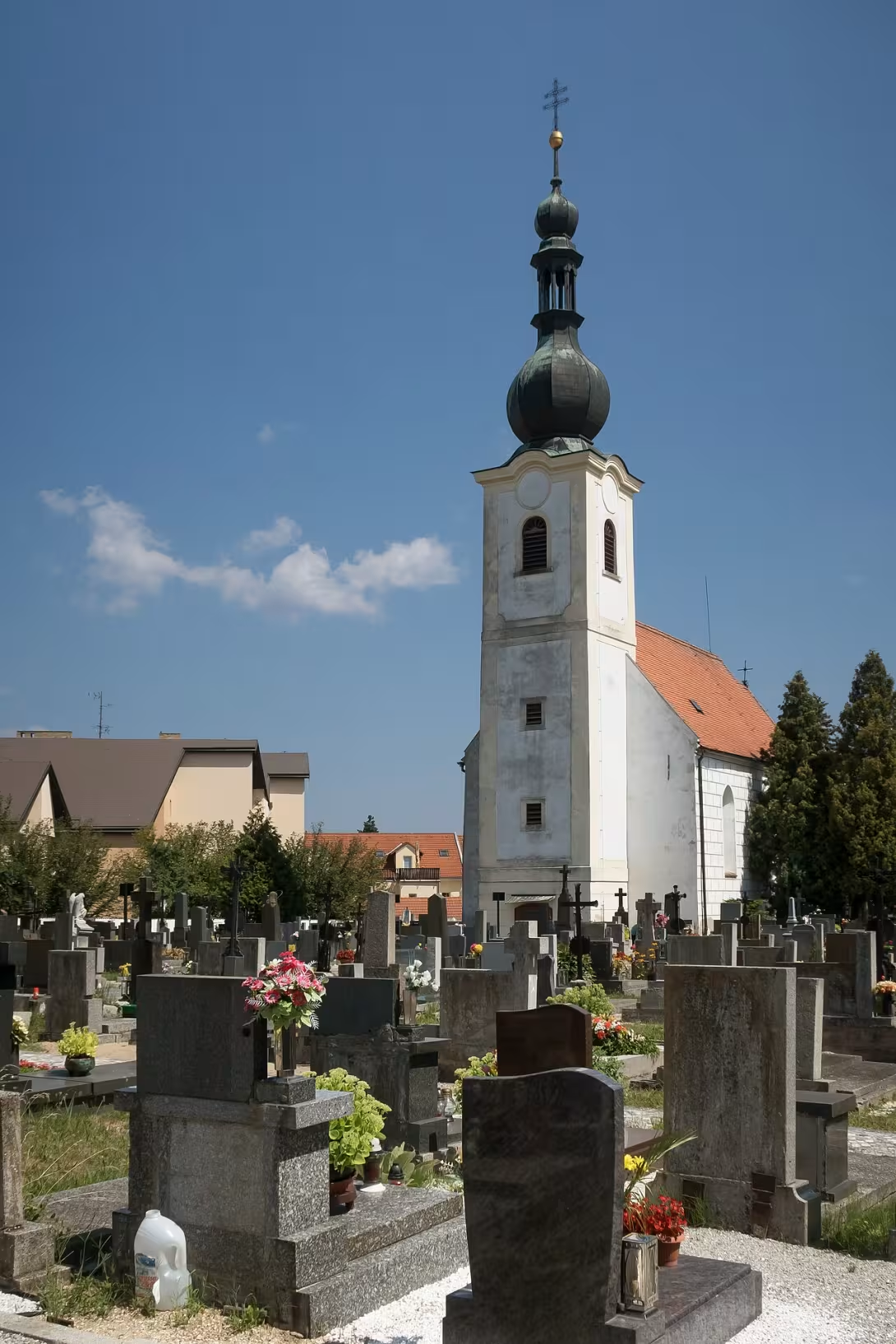
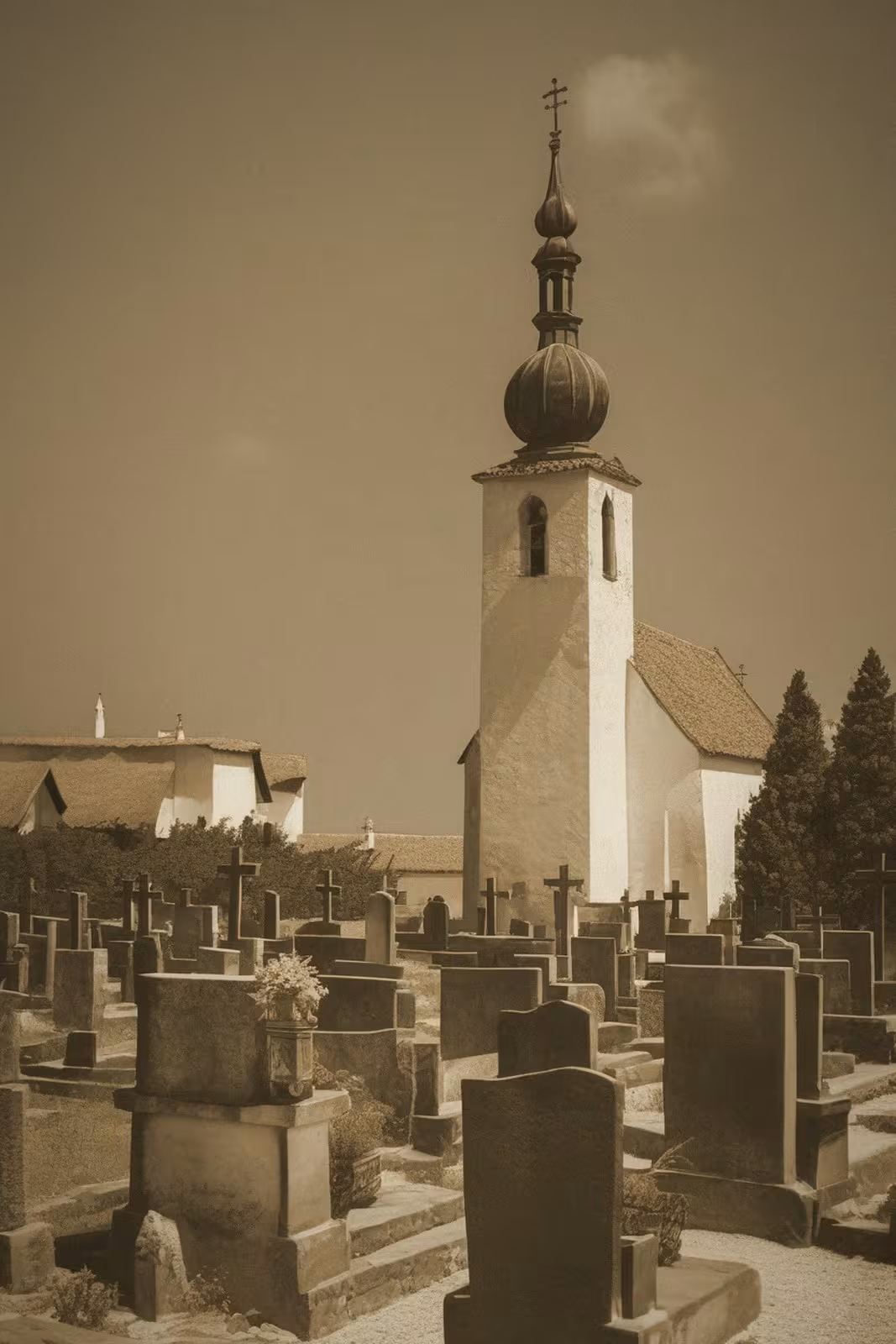
The historical appearance on the left is an AI-generated visualisation and serves as inspiration only.
Historical milestones
- 1576
- The ceremonial consecration of the church on Saint Anne's Day with the blessing of Pope Gregory XIII.
- 1654
- The creation of the bell dedicated to St. Barbara, which is today the oldest bell in Trebon.
- 1666
- The creation of the main Baroque altar with the image of the Lord's Dying by Peter van Roy.
Architectural development
The church is a renaissance single-storey building, which, however, carries at the end and presbytery significant late Gothic elements. The Sanctuary and the double pit of the main tower are performed in Baroque style. The interior enriches Baroque altars transferred from other Třeboň churches.
Historical events
In 1576, the church was ceremonially consecrated on the day of St. Anne's feast. Two years after the Battle of White Mountain at the church, peace was negotiated between the winners and the English crew of the town of Trebon. In 2009, the so-called Trident Mass was held regularly in the church.
Points of interest
- The church was built by Vilém z Rožmberka as a replacement for an older Gothic temple. - The ceremony was held on July 26, 1576 with the blessing of Pope Gregory XIII. - In the church there is a Baroque main altar with the painting "Dying of the Lord" by Peter van Roy from 1666. - From 1654 comes the bell, which belongs to the oldest bells in the city because it escaped attention during world wars. - Two years after the Battle of White Mountain, peace was negotiated at the church between the Belarusian winners and the English crew of the town of Trebon.
Guide
This guide is narrated by a synthetic voice generated by artificial intelligence.
Show guide text
This text was created by artificial intelligence and has not been editorially reviewed. It may contain inaccuracies.
The Church of Saint Elizabeth is a cemetery and subsidiary church in Třeboň. It stands in the southern part of Třeboň II, not far from the Hliník residential area, and is managed by the Roman Catholic parish of Třeboň.
It was built by the Rožmberk ruler William of Rožmberk as a single-nave Renaissance structure. It replaced an older Gothic church with the same dedication, which had to give way to a new pond. This pond was being built at the time under the name Nevděk and today we know it as the Svět pond. The place where the original church stood is now an island. The new church was solemnly consecrated on July twenty-sixth, fifteen seventy-six, on the feast day of Saint Anne, the mother of the Virgin Mary, with the blessing of Pope Gregory the Thirteenth.
Two years after the Battle of White Mountain, peace was negotiated at the church. On one side stood the victors of White Mountain, represented by General Baltasar Marradas. On the other side was the English garrison of Třeboň. They handed over the city to him in peace and order in exchange for a free departure and decent treatment.
In two thousand nine, it was the only church in the České Budějovice diocese where the so-called Tridentine Mass was regularly celebrated, always on the first Sunday of the month.
The building combines several architectural styles. The choir and presbytery have pronounced late Gothic elements, including windows, but the plaster finish is typically Renaissance. The sanctus bell canopy and the double dome of the main tower are Baroque.
The main Baroque altar bears a painting of the Death of Our Lord by Peter van Roy from sixteen sixty-six. Two other Baroque altars were brought here in the second half of the eighteenth century. The altar of Saint John of Nepomuk comes from the main deanery church, the altar of Saint Barbara from a demolished Church of Saint Barbara.
From the Gothic Church of Saint Barbara near Chlum u Třeboně and Majdalená also comes a bell from sixteen fifty-four. It is dedicated to the patroness of the church and Saint Barbara. During the world wars, it escaped the requisitioning that affected other church bells in Třeboň. Therefore, in two thousand eighteen, it was the oldest bell in the city.
At the church lies the Třeboň municipal cemetery. Notable personalities of the city are buried here, among them Třeboň abbots and deans. In May two thousand seventeen, Dean Hugo Josef Pitel was buried here. Noteworthy is the monument to the native of Třeboň, writer František Heřmánek, with a statue of the poet at the main entrance. A second entrance at the church is formed by a Baroque gate with a wicket for pedestrians. Beside it is a niche chapel with a painted Baroque stone statue of the Virgin Mary.
Tips for visitors
The best time to visit the church of Saint Elizabeth in Trebon is autumn or spring when there are beautiful sunny days and mild temperatures. In these months you also avoid overfilling tourists in the summer.
When visiting the church, bring comfortable shoes because the surroundings are partially unbalanced. It is also important to have an umbrella and a protective drink, especially in summer.
Photography of St. Elizabeth's Church offers the best possibilities of the afternoon when the sun is on top. Remember also to try a visit in the morning light for unique dazzling effects.
In the vicinity of the church is the town cemetery of St. Elizabeth, which is an interesting historical location. Visit the Hliník or pond World for beautiful views and relaxation in the outdoor environment.
Frequently asked questions
Can the monument be visited?
Religious buildings are usually open mainly during services; at other times a visit is normally arranged with the parish or the operator. We have not verified specific times.
Where is the monument?
Location: Třeboň II, Jihočeský kraj. The map on this page shows the exact spot.
Why is the monument protected?
It is listed in the Central List of Cultural Monuments of the Czech Republic as a cultural monument (register no. 45146/3-2346).
For kids
Imagine going back 456 years until Trebon was a small town full of life and energy. It was a different time, but there was still everything we needed to make the city beautiful and interesting.
The church of St. Elizabeth in Trebon II was built in 1570. That was a long time ago! But when we get there, we can remind ourselves of the time when it all started. It was a time when people believed in faith and wanted to build beautiful churches so that they could pray and live in harmony with God.
Businesses nearby
Do you run a restaurant, accommodation, shop, museum, rental, wellness or other visitor service near this monument? Show yourself directly to the people heading to it — this is how they will see you in the app and on the web:
Events nearby

Zdroj akcí: otevřená data měst a obcí ČR (Národní katalog otevřených dat) a kalendář akcí Národního památkového ústavu.
Nearby
The town cemetery of Saint Elizabeth, the settlement of Hliník, the pond World, the baroque cross in the street of Svoboda and the Renaissance house of Krčín Administrator.
Accommodation nearby
Trips and activities nearby
Guided tours, tickets and activities nearby from GetYourGuide
Affiliate link: if you buy from the partner, we may receive a commission. The price for you does not change.
Search tours and activities →Themed route
Thematic cruise route around St. Elizabeth's church in Trebon II
1. Kostel svaté Alžběty (Třeboň II) - Church We will begin with our main goal, the Church of Saint Elizabeth, which is one of the most significant sacral structures in Trebon. Its historical architecture and rich interior decoration make this church an ideal place to know the spiritual and cultural heritage of the area.
2. St. Elizabeth's City Cemetery - Cemetery Shortly from the church there is a city cemetery where you can see beautiful funeral monuments and monuments. By exploring this place you will get an insight into the history of the inhabitants of Trebon and their traditions.
3. Baroque Cross in Freedom Street - Memorial After visiting the cemetery we will look at the baroque cross located in the street of Svoboda. This monument is a reminder of historical events and local traditions that still affect life in the city.
4. Renaissance House Krčín Administrator - Historical object We will then visit the Renaissance house of Krčín's administrator, which is an example of architectural art from the Renaissance. His history and appearance are a testament to the rich past of Třebon.
5. Hliník settlement - Local interest To conclude our route we will look at the Hliník settlement, where you can observe the modern urban solution and its integration with the historical environment of Trebon. Here you can also enjoy a quiet moment and look around.
This route offers you a comprehensive view of the cultural, historical and modern aspect of Trebon II.
Seasonal recommendations
Spring: St. Elizabeth's Church in Třeboň II offers unforgettable visitors the impression of blooming nature in spring. The surrounding green meadows and trees are opened in their most beautiful shade, creating a harmonious contrast to the historical architectural work. The atmosphere is full of sunlight and blooming paths that increase the attractiveness of the visit. It is recommended to visit in the early afternoon when nature is in its full bloom, but the crowds are still limited. Dress up suitable for mild weather and do not forget the protective sunglasses.
Summer: In summer, St. Elizabeth's church emerges from a flourishing neighborhood full of life. The atmosphere is full of warmth and friendly peace, but in the main summer season more visitors can appear. It is recommended to visit early morning or late afternoon to avoid heat and crowds. Don't forget the sun protection and adequate supply of drinking water.
Autumn: In the autumn months, St. Elizabeth's Church offers a cozy visit, where the surroundings turn into diverse shades of yellow and orange leaves. The atmosphere is calm and quiet, which allows an intimate tour without fear of overcrowding. This time of year is ideal for photographers who enjoy beautiful lighting conditions and a lovely landscape. It is recommended to visit in the meantime to be able to fully appreciate the peace and beauty of the surroundings. Put on a layered suit because the weather can be variable.
Winter: During winter, St. Elizabeth's Church becomes a place of quiet refuge in a cold environment. If there is snow in the sky, the architectural gem will turn into a magnificent winter scene that attracts lovers of peaceful surveillance. The atmosphere is quiet and peaceful, which allows a tour without fear of children's groups or crowds. Do not forget warm clothes and protective equipment for cold weather to enjoy a visit without discomfort.
Visualizations and artistic views


The visualisations are generated by artificial intelligence and serve as inspiration.
Photos from the area
Real photos taken near the monument

Zdroj a licence jsou uvedeny u každého snímku.
Atmosphere of the place
This atmospheric visualisation of the place and period was generated by artificial intelligence. It is not real footage of the location.
Tips from visitors
No tips yet. Be the first!
Log in and add your tip.
Sources and literature
Photos: Michielverbeek / CC BY-SA 4.0 — Wikimedia Commons. The author and licence also appear when you hover over the image.
Faktickým podkladem tohoto textu byl článek na Wikipedii, jehož autory jsou přispěvatelé Wikipedie. Článek je dostupný pod licencí CC BY-SA 4.0.
Location on the map

Příběhy a pověsti
Legendy, pověsti a příběhy spjaté s touto památkou
Fotografie návštěvníků
Zatím žádné fotografie. Buďte první, kdo přidá fotografii z návštěvy!
Log in a přidejte svou fotografii nebo hodnoťte.
Za ověřenou návštěvu v aplikaci získáte víc bodů — poznáme podle GPS, že jste na místě.
Reviews and comments