



Kostel svatého Bartoloměje (Frymburk) Church
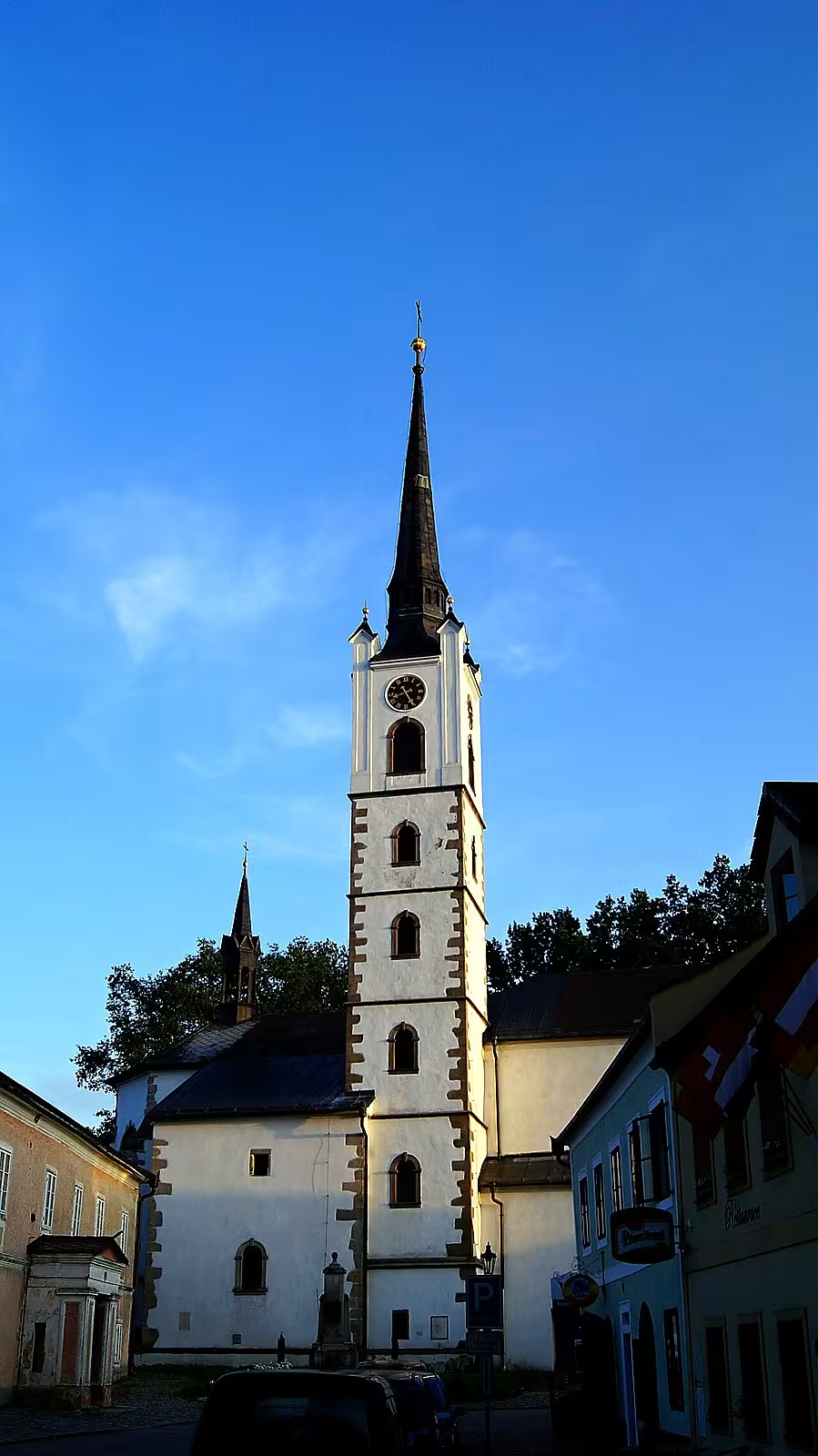
The presence of a religious place in Frymburk is expected to be around 1277, when the will of Vitka z Krumlov includes the local pleban Přebyslav. 28 years later, in 1305, Jindřech of Rožmberk formally donated the church to the premonstrates of the nearby monastery Schlägl in the Austrian Drkolná. This donation meant a fundamental turn in the fate of the building: the Order guarded its patronage over the Frymburg parish for four hundred years, until 1946.
From the period of early and peak Gothic, no above-ground buildings have been preserved. The very late Gothic eastern part, dating back to 1550 by year carved on one of the backrest, represents the core of the building we see today. It contains a pressor with a mains arch, a seat cushion and a sandbox, with a three-story extension. It hides a skeleton in the underground, on the first floor of the sacristy and on the floor of the treasury or oratorij.
The Thirty Years' War did not leave any direct marks on the building, but the ensuing Swedish looting took a massive hit. From 1649 to 1652 the whole ship of the church was increased and also covered. This important construction operation is reminiscent of the marble memorial relief that was preserved on the ship above the north entrance. From the same time comes the main altar from Jan Korath, a craftsman who also worked for the monastery church in Schläglu and the temple of St. Vitus in Český Krumlov.
The Baroque and Rococo period enriched the interior with two other side altars - one dedicated St. Linhart and the other Christ the Perpetrator. In the same epoch there was a singing circle and an organ was installed that survived until now.
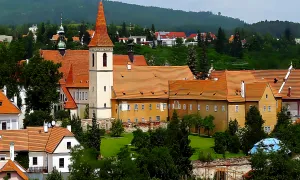
In 1866, the Frymburk hit massive fires. Although only the roofs were burned and the crosses falling from the tower broke through the gothic vault of the presbytery and burned the altars, the subsequent reconstruction rapidly changed the appearance of the building. The church won an extremely low cross and a newly built high pointy tower that became a modern element of its time.
The last chapter in construction development started in the 1990s general reconstruction under the leadership of P. Michal Tkač. The project was attended by foreign donors - in particular the Renovabis Foundation, the Premonstratský monastery Schlägl, Kirche in Not Foundation and private donors from originally German Rychnova.
Today, the church is located at the crossroads of the traditional roads connecting the Upper Plání, Montenegro in Pošumaví, Český Krumlov and Svetlík. From the southeast, there's a route from the High Brod to Loučovice and Lipno. The construction is an important architectural element, which forms an essential part of the panorama of the village and landscape of Šumava and Lake Lipen. A visitor who comes here meets a layer of nearly 800 years of history, embodied in stone walls and shapes that guarded their identity through all twists. / p >
Then and now
Drag the slider to compare how the landmark may have looked when it was built with the view today.
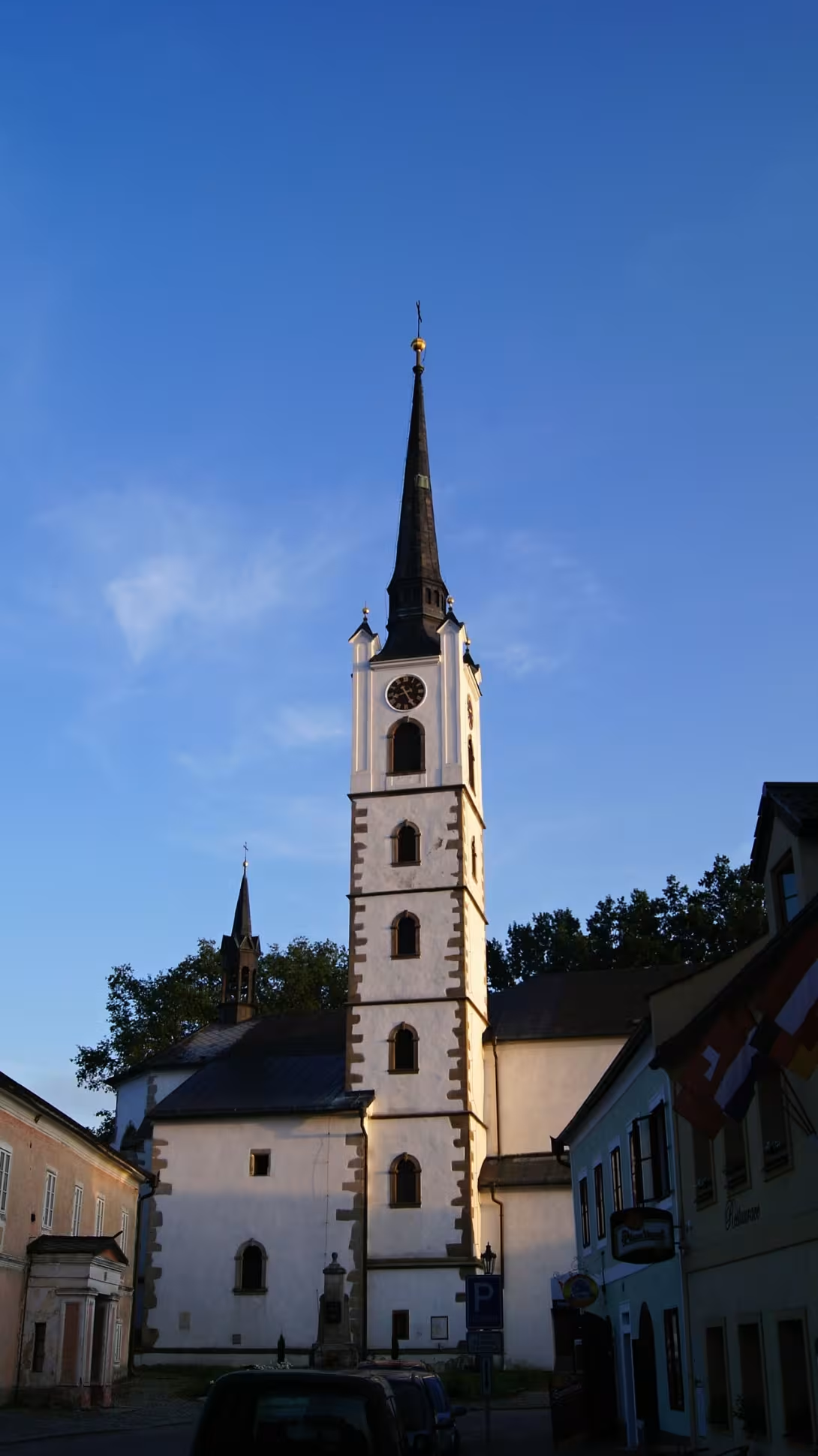
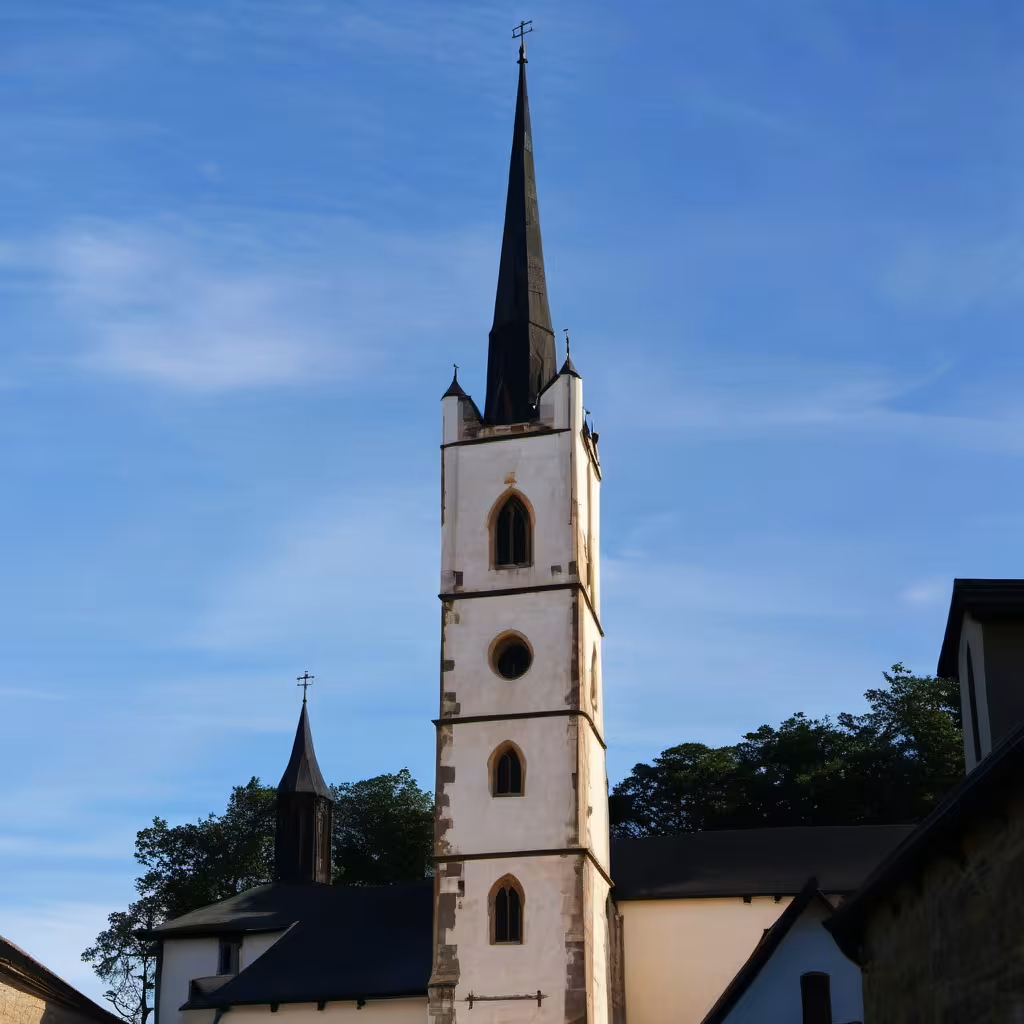
The historical appearance on the left is an AI-generated visualisation and serves as inspiration only.
Historical milestones
- 1277
- First written mention of the church in the will of Vitka of Krumlov.
- 1305
- Donating the church to the premonstrats of Schlägl Henry of Rožmberk.
- 1649
- The beginning of the increase and embalming of the church ship after the Swedish looting.
- 1866
- The fire of the town that damaged the cross, the cross on the tower and the vault of the presbytery.
Architectural development
The early Gothic structures did not preserve the above-ground parts, but the very late Gothic eastern part with pressor and mains arch was preserved. After the fire in 1866 the church was restored with extremely low roof and high pointed tower. General reconstruction took place in the late 1990s.
Historical events
In 1277, the church is first documented in the will of Vítek from Krumlov. In 1649-1652 the ship of the church was increased and sealed after the Swedish looting. In 1866, the fire caused damage to the roofs and vaults of the presbytery.
Owners
In 1305, the church of Jindřich of Rožmberk donated to the premonstrates of Schlägl, who kept it in patronage until 1946.
Points of interest
- The presence of a place of worship is supposed to be around 1277. In 1305 the church was donated by Henry of Rožmberk to the premonstrats of the Austrian monastery Schlägl. - The core of the building is a very late Gothic eastern part dated 1550. Includes a pressor with a mains arch and a three-story extension. - Between 1649 and 1652, the church's ship was increased and enshrouded after the Swedish looting. - After the fire in 1866, the church acquired an extremely low cross and a newly built high pointed tower. - In the period of Baroque and Rococo interior enriched side altars, singing circle and organ.
Guide
This guide is narrated by a synthetic voice generated by artificial intelligence.
Show guide text
This text was created by artificial intelligence and has not been editorially reviewed. It may contain inaccuracies.
The Church of Saint Bartholomew is a striking landmark of Frymburk. A chapel or church surely stood here already before the year 1277. At that time, in the will of Vítek of Krumlov, the Frymburk parish priest Přebyslav appears as a witness. In 1305, after the extinction of the Krumlov branch of the Vítek family, Jindřích of Rožmberk donated the church to the Premonstratensians from the nearby Austrian monastery Schlägl. They held the patronage rights over the Frymburk parish until 1946.
From the early or high Gothic structure, probably nothing above ground has been preserved. The oldest preserved part is a very late Gothic eastern section. It consists of a presbytery with a net vault and a three-story annex. In its basement is an ossuary, in the raised ground floor a sacristy, and on the floor above a treasury or oratory. On one of the buttresses is the date 1550.
During the Thirty Years' War, the church was plundered by the Swedes. Between 1649 and 1652, the nave was heightened and vaulted. This is commemorated by a marble memorial relief above the northern entrance. From the same period comes the main altar by Jan Woration, who also worked on the altars of the monastery church in Schlägl and the Church of Saint Vitus in Český Krumlov. During the Baroque and Rococo periods, side altars of Saint Leonard and the Suffering Christ were added. A gallery for singers and an organ were also created, which have been preserved to this day.
In 1866, a fire swept through the town. On the church, only the roof trusses burned. The cross that fell from the top of the tower spire, however, pierced the Gothic vault of the presbytery and damaged the altar paintings. During the subsequent reconstruction, the church received its characteristically very low roof and the then modern high pointed tower that it has to this day. The church underwent a complete reconstruction at the end of the nineteen-nineties.
From the sixties to the end of the nineteen-nineties, a Gothic statue of the Madonna from the third quarter of the fourteenth century stood on the side altar of Saint Leonard. It came from the closed Church of Saint Václav in Rychnůvek. Those displaced from Německé Rychnovo came here to pray to it. Today the statue is in the Cistercian monastery in Vyšší Brod.
The church stands at a crossroads of paths from Horní Plná, Český Krumlov, Světlík, and Vyšší Brod. Across the Vltava from here, a road leads to the border into Austria. From a distance, it significantly shapes the panorama of Frymburk above Lipno Lake.
Tips for visitors
Best time to visit The church of St. Bartholomew in Frymburk is early in the morning or late in the afternoon, when the sunlight beautifully accentuates historical architecture and surrounding square. In these times, you will enjoy a quiet atmosphere without a large crowd of tourists, which you will appreciate when discovering this dominance.
Take with you comfortable shoes suitable for walking on the historic tiles of the town Frymburk as well as the camera. For the best photographic footage, it is worth capturing the monumental silhouette of the building from the turn of the 15th and 16th centuries combined with the surrounding installation, while ideal light is during the golden watch before sunset.
Within 30 minutes of the trip we recommend visiting the picturesque town of Frymburk, near the Lipno dam offering beautiful views and nature, or taking a trip from Upper Plana, Montenegro in Pošumaví and Vyštěš Brod, which are within reach of this location.
For families with children the visit is easy thanks to the location in the centre of the town. Children will take an ancient look at the church already documented in 1277 and you can easily combine the trip with a family walk around the Lipno dam or ice cream on the square in Frymburk.
Frequently asked questions
Can the monument be visited?
Religious buildings are usually open mainly during services; at other times a visit is normally arranged with the parish or the operator. We have not verified specific times.
Where is the monument?
Location: č.p. 27, Frymburk, Jihočeský kraj. The map on this page shows the exact spot.
Why is the monument protected?
It is listed in the Central List of Cultural Monuments of the Czech Republic as a cultural monument (register no. 19893/3-1239).
For kids
About 726 years ago it was built in a place where the Church of St. Bartholomew in Frymburk, a miracle of architecture and history, now stands. It was like an adventure full of secrets and surprises! A Gothic building disappeared in time, but her soul is still here waiting to meet us.
When the church was first built around 1300, it was like a magical forest full of curious stories. People lived there and prayed in silence, surrounded by trees and watched the stars settle in the night sky. It was a meeting place where people could share stories about their adventures and dreams.
Businesses nearby
Do you run a restaurant, accommodation, shop, museum, rental, wellness or other visitor service near this monument? Show yourself directly to the people heading to it — this is how they will see you in the app and on the web:
Nearby
Lipno dam, the town of Frymburk, the road from Upper Plana, Black in Poshumavi and Vyštěří Brod.
Accommodation nearby
Trips and activities nearby
Guided tours, tickets and activities nearby from GetYourGuide
Affiliate link: if you buy from the partner, we may receive a commission. The price for you does not change.
Search tours and activities →Themed route
The proposed cruise route will guide you through the picturesque surroundings of the Lipen dam with a starting point in the historic town.
1. City Frymburk Type: registered office Why it is worth a visit: The picturesque historical square offers alleys with original buildings, cafés and a pleasant atmosphere right on the water shore. It's the perfect starting point for exploring the whole neighborhood.
Kostel svatého Bartoloměje (Frymburk) Type: church Why is it worth a visit: The main destination of the route, the dominance of the village situated on the surface above the water surface, captures its Gothic architecture and valuable indoor equipment. It also provides a unique view of the surrounding landscape.
3. Dam Lipno Type: water work Why is it worth a visit: The extensive water area surrounding Frymburk attracts you to rest on the shore, water sports and long walks with a view of Šumava nature. It offers great conditions for recreation throughout the year.
4. City Black in Poshumavi Type: municipality Why is it worth a visit: The nearby village lying on the banks of the dam is a popular resort to recreation and offers other beautiful views of the water level as well as comfortable access to water.
Seasonal recommendations
Spring moons in Frymburk bring awakening nature around the Lipan water tank, the level of which is mixed with fresh greenery and the first sunlight. The lighting of the church of St. Bartholomew is very fine in this period, ideal for morning and morning photography of Gothic architecture, when the sun is only rising above the horizon. The atmosphere is calm and thoughtful, because the tourist season has not yet fully begun. From the point of view of practical advice you will appreciate smaller crowds of visitors, which allows a peaceful tour of the interior. Due to the variable spring weather and the proximity of the water level, layered clothing and fixed shoes are worth walking on the surrounding shore.
The summer season in Šumava attracts thousands of recruits, which is also reflected in the vicinity of this sacral building, which stands above the square. The sun radiates a white façade and a high tower with sharp light all day long, while the best atmosphere offers late evening hours, when the hot day alternates a pleasant chill from the water and the city is slightly quiet. In the main summer season you have to count on more tourists, which is why it is best time to visit the early morning immediately after opening or late evening. We recommend light breathable clothes, headgear and plenty of fluids, because the square is hot and the shadow is small.
Autumn Frymburk offers a stunning spectacle thanks to the surrounding forests coloured in shades of yellow, red and brown. The low sun creates dramatic side lighting that highlights the stone details of the church and gives the place a melancholy but deep atmosphere. The crowds have already travelled, making autumn the most peaceful period of the year for a deeper perception of the history of the monument. Practical advice leads to warmer clothing, as Lipno's wind weather can be cold, and waterproof shoes. The right time for a visit is around noon, when the sun heats the most and the fog over the water has already dissolved.
Winter time turns Frymburk into a quiet landscape often covered with snow cover, in which the silhouette of the church dominates the entire frozen scenery. Lighting is specific for short days and soon appearing concretes, which in advent time underlines the muted evening lighting of the historical centre. The atmosphere is extremely quiet and spiritual, without the excitement of the summer months. To visit you must choose warm winter clothes, hat, gloves and non-slip shoes due to frozen stairs and paving in the square. The best time is an early afternoon before it gets completely dark and temperatures fall sharply below freezing.
Visualizations and artistic views


The visualisations are generated by artificial intelligence and serve as inspiration.
Photos from the area
Real photos taken near the monument


Zdroj a licence jsou uvedeny u každého snímku.
Atmosphere of the place
This atmospheric visualisation of the place and period was generated by artificial intelligence. It is not real footage of the location.
Tips from visitors
No tips yet. Be the first!
Log in and add your tip.
Sources and literature
Photos: Miminho / CC BY-SA 3.0 — Wikimedia Commons. The author and licence also appear when you hover over the image.
Faktickým podkladem tohoto textu byl článek na Wikipedii, jehož autory jsou přispěvatelé Wikipedie. Článek je dostupný pod licencí CC BY-SA 4.0.
Location on the map




Příběhy a pověsti
Legendy, pověsti a příběhy spjaté s touto památkou
Fotografie návštěvníků
Zatím žádné fotografie. Buďte první, kdo přidá fotografii z návštěvy!
Log in a přidejte svou fotografii nebo hodnoťte.
Za ověřenou návštěvu v aplikaci získáte víc bodů — poznáme podle GPS, že jste na místě.
Reviews and comments