






Kostel svatého Cyrila a Metoděje (Kroměříž) Church
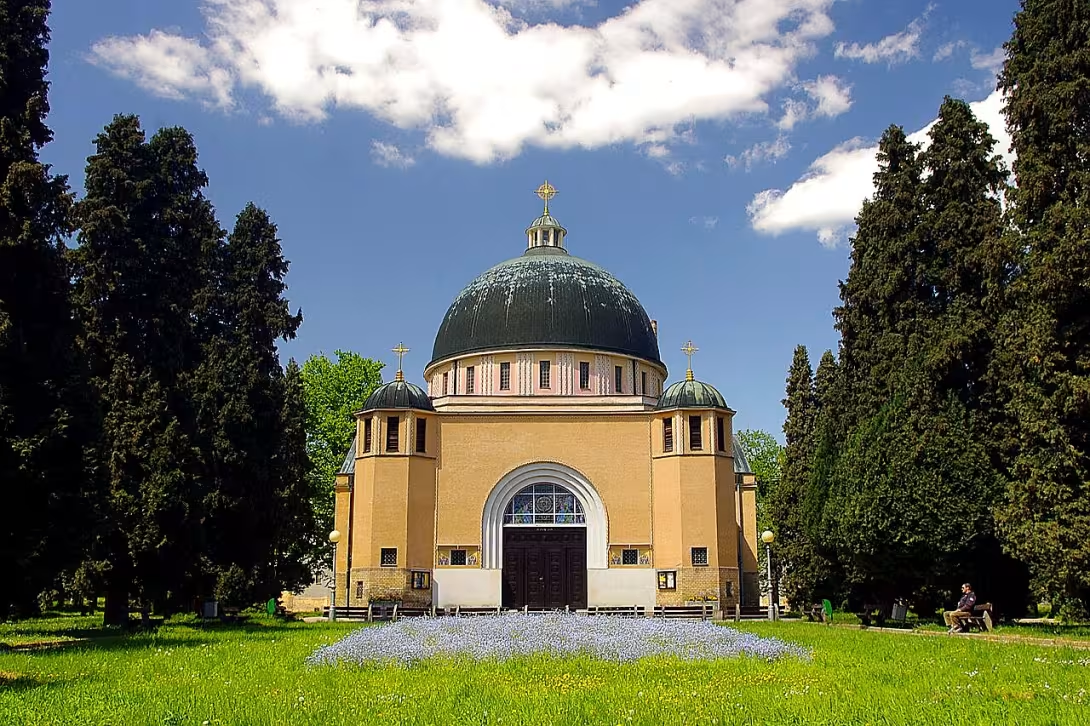
Church of St. Cyril and Methodius in Kroměříži is not a temple in the city centre, but a church located in the central part of the Psychiatric Hospital. Built in Art Nouveau style according to the design of architects Hubert Gessner and Josef Šálk, since 1913 it has been registered as a cultural monument of the Czech Republic with registration number 15643 / 7-6017. He bears his name by consecration to the faithful, Saint Cyril and Methodius.
The origin of the building dates back to 1902, when the Moravian Regional Assembly decided to build a treatment facility for people suffering from mental illness. The actual construction took place between 1904 and 1909. The constitutional church, inwardly referred to as pavilion 28, festively consecrated on July 11, 1909 by the Archbishop of Olomouc František Saleský Bauer, whose Bishop motto was "I want to follow in the footsteps of St. Cyril and Methodius." From the foundation of the church until 1920, the priest Matěj Pavlík was a pastoral, who later came to the position of Bishop of Orthodox Church in Czechoslovakia. Today the Holy Mass with Sunday validity serves the local Roman Catholic parish of St. Morice every Saturday at 4: 30 p.m.
Architecturally, Hubert Gessner followed the work of his teacher, Professor Otto Wagner, who designed a similar temple in the Royal Chapel (Kirche am Steinhof) from 1902 to 1904 in Vienna. The Kromeriz church is also conceived as a symmetrical building in the form of a Palladian headquarters on the ground plan of the Greek cross. The most attention deserves a double reinforced concrete dome 27 meters high with a lantern on top. The roof was originally covered with yellow glazed bags that held wire hooks on the dome. In the popular saying, "You will go under the yellow pit..." a reminder of the construction permanently. The church is architecturally the opposite of a baroque rotunda in a neighbouring, previously founded Flower Garden.
The interior underlines Gessner's manuscript in every detail. The construction consists of 90 seats and 298 standing seats. All elements, from marble to brass to glass, designed by Gessner himself. The semi-circular superstructure of the main entrance and all windows decorate the stained glass. In the left side of the temple ship stands a pulpit of pink, black-annealed marble. On the opposite side there is a wooden statue of the Virgin Mary Lourdes built from the same stone. The skeleton is also contributed by the color stained stained glass depicting the kneeling angels. The main altar passes by the relics of St. Florentine, St. Aurelius and St. Innocence.
The academic painter Jano Köhler formed the entrance of the vanguard Cyril and Methodius to Moravia. The same author designed mosaics with angels worshipping monsters on side walls. These works requested maintenance over time. Kohler's fresco above the altar was restored in 1993 by an academic painter and restorer František Sysel. The mosaics taking up the main entrance were restored in 1999 by the restoration of Jaromír Hanzelka.
The church in the area of the psychiatric hospital is an isolated case where monumental architecture is dedicated not only to believers, but serves as a receding element of mental health care. Visiting the church allows insight into the Art Nouveau thinking of the early twentieth century, when social consciousness and aesthetic ambition intertwined in architecture.
Then and now
Drag the slider to compare how the landmark may have looked when it was built with the view today.
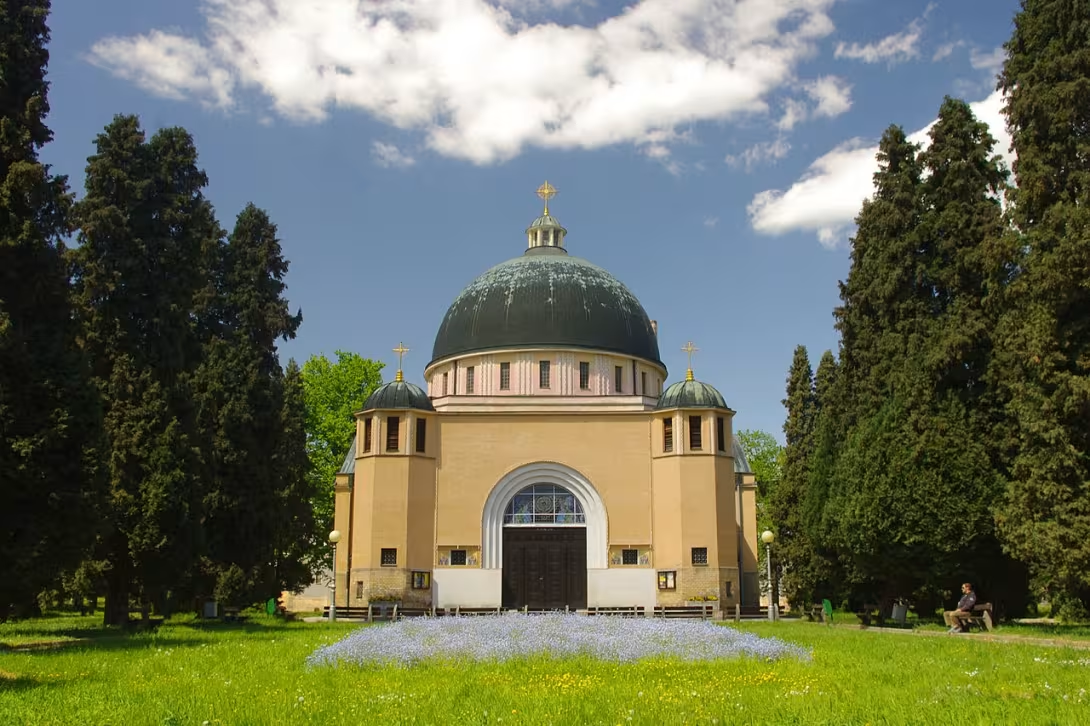

The historical appearance on the left is an AI-generated visualisation and serves as inspiration only.
Historical milestones
- 1904
- The start of building construction.
- 1909
- The ceremony of the church on 11 July.
- 1993
- Restaurant of altar frescoes by academic painter František Syzlo.
- 1999
- Restaurant mosaic at the main entrance Jaromír Hanzelka.
Architectural development
The construction was carried out in Art Nouveau style on the ground plan of the Greek cross. The structure contains a high 27-metre double-iron concrete dome. The interior uses a combination of marble, brass and glass.
Historical events
- 1904-1909
- The construction of the church.
- 1909
- The ceremonial consecration of the church by the Archbishop of Olomouc, Francis Salesky Bauer.
Points of interest
- The church is located in the central part of the area of Psychiatric Hospital and is internally referred to as pavilion 28. - The construction has a double reinforced concrete dome 27 meters high, which was originally covered with yellow glazed bags. - Because of the yellow dome, there was a connection in the folk saying, "You will go under the yellow dome..." - The interior contains a pulpit of pink, black annealed marble and the main altar keeps the relics of Saint Florentine, Saint Aurelius and Saint Innocence. - Architect Hubert Gessner designed all elements of the interior, from marb
Guide
This guide is narrated by a synthetic voice generated by artificial intelligence.
Show guide text
This text was created by artificial intelligence and has not been editorially reviewed. It may contain inaccuracies.
Welcome to a unique and historically important place - St. Cyril and Methodius Church, which stands in the central part of the area of Psychiatric Hospital in Kroměříži. You are standing in front of a beautiful Art Nouveau architecture building, whose elegant lines and harmonious proportions immediately attract your attention. A building with a double iron concrete dome acts as a noble symbol of modern design from the early 20th century.
Look at this impressive construction site that was built between 1904 and 1909. It was created as part of a wider project led by architect Hubert Gessner and Josef Šálk, the church of St. Cyril and Methodius was designed not only as a place of religious service, but also as a space providing sanctuary and spiritual comfort for hospital patients. Its construction began in 1904 and the ceremonial consecration took place on 11 July 1909, which meant its official opening to the public.
Now pay attention to the architecture of this church. Notice the double iron concrete dome that goes up to 27 meters in heaven. Originally covered with yellow glazed bags, this dome added its characteristic identity to the church, making it one of the most significant elements of the local panorama. The interior is fertilized by rich mosaics and frescoes, which were restored in 1993 by academic painter František Syslo and subsequently in 1999 by Jaromír Hanzelka. These artistic elements give the church its unique color character and historical depth.
Key personalities associated with this monument include František Salesky Bauer, Matìj Pavlík and Janon Köhler. These figures played an important role not only in the religious life of the church, but also in social changes in the region. Their stories and efforts to improve conditions for hospital patients are an integral part of the history of this place.
The interesting thing that fascinates the locals is the legendary connection of the church to its yellow dome. People's pronunciations often refer to this distinctive characteristic, which adds a place in the social heart of Kroměříže to St. Cyril's Church and Methodius. This dome has become a symbol of hope and resilience that this local community embodies.
Let's move on to discovery. Let yourself explore the surroundings of the church of St. Cyril and Methodius in order to notice its location in the structure of the hospital and how harmonically it integrates with the natural environment. This place offers many opportunities to understand the rich history that is stored here.
Thank you for your visit to St. Cyril and Methodius. We hope your tour was full of discoveries and inspiration. We urge you to continue to explore this fascinating city of Kroměříže and its rich history. When we meet again in another interesting place!
Tips for visitors
The best time to visit is from approximately May to September, when the weather is favourable for walks on the premises. Since the church is located in the area of a psychiatric hospital, it is important to check in advance the current conditions for the public, as access may be limited or require prior agreement. We recommend avoiding high-end clocks when the space is open to the public so that you can have a quiet tour of the Art Nouveau elements of the building.
Transport availability is ensured both by car and public transport. If you arrive by car, parking is usually dealt with in the immediate vicinity of the complex, however capacity may be limited, especially on weekends. For passengers by public transport Kroměříž is well connected to the railway network; Please check the specific connections and departure times in the current timetable or in the search engine because they can change.
Take comfortable shoes to the premises as you can wander around the church gardens and surroundings. Even if it's a historical monument, the most important thing is to respect the hospital grounds. We recommend that you take drinks and light refreshments with you if you plan to stay longer in the surrounding greenery, and also check if there is a toilet in the area, as in the hospital environment, health records may be restricted to the public.
For photography is ideal morning or late afternoon light, which beautifully highlights Art Nouveau lines and facade details designed by architects Gessner and Cup. The best place for pictures is a view of the church from nearby gardens, where you can capture the contrast between sacral architecture and greenery. Observe the shadows and texture of plaster which are characteristic of this construction from 1904 to 1909.
In the immediate surroundings, just a few minutes' walk, the early Baroque Flower Garden with Baroque rotunda is located. This location is ideal for a short walk after visiting the church, where you can enjoy a quiet atmosphere and historic greenery. It is a great opportunity to combine a visit to the Art Nouveau Monument with a baroque garden experience in one whole.
Frequently asked questions
Is Kostel svatého Cyrila a Metoděje (Kroměříž) open to the public?
Yes, the church is open to visitors during business days. On Sundays and holidays can be opening time differences.
How do I get to the place by car / public transport?
If you use a car, park in the centre of Kroměříže and walk to the hospital by bus or taxi. The public transport has several routes that pass near the hospital.
How much is the entrance fee and is it paid on the spot?
The church entrance is free. If you plan to visit other sights, such as the chateau or museum, you will also receive admission fees.
Is the tour suitable for children and seniors?
Yes, the church offers accessible terrain for children and seniors. It is a quiet place and suitable for walking.
How long does the tour take?
A tour of the church can take from 30 minutes to an hour, depending on how much you want to notice architecture and history.
What are the opening times and booking is required?
Opening hours may vary, usually the church is open from 9: 00 to 17: 00. Reservation is not necessary.
What's interesting in the immediate vicinity?
The surrounding area is Kroměříž chateau, historical center of town and Museum of František Palacký. These places offer rich culture and history.
For kids
Imagine you go back to the past and suddenly you're standing in front of a huge building with a lightning arch that turns off its pointed ridge into the blue sky. There it is! Church of St. Cyril and Methodius in Kroměříži, one of the most beautiful places where things happen in moments!
Businesses nearby
Do you run a restaurant, accommodation, shop, museum, rental, wellness or other visitor service near this monument? Show yourself directly to the people heading to it — this is how they will see you in the app and on the web:
Nearby
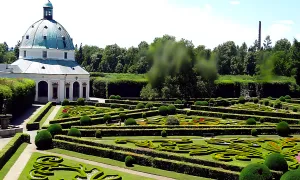
Neighbouring early Baroque Flower Garden with Baroque rotunda.
Accommodation nearby
Trips and activities nearby
Guided tours, tickets and activities nearby from GetYourGuide
Affiliate link: if you buy from the partner, we may receive a commission. The price for you does not change.
Search tours and activities →Themed route
1. Church of St. Cyril and Methodie, sacral monument. This object is the main destination of the trip and represents an important spiritual place. 2. Flower Garden , early Baroque garden area. It offers visitors a quiet environment and the beauty of historical architecture. 3. Baroque rotunda, Baroque architecture. This building within the garden represents a picturesque point for the tour of artistic details.
Seasonal recommendations
Spring brings freshness and fine sun rays to the surrounding church, which highlight the details of the building beautifully. During this period the atmosphere is calm, which allows you to perceive the spiritual dimension of the place without any unnecessary rush. We recommend that you take layered clothes with you because the morning cold can be accompanied by sudden rain. It is ideal to visit the morning when the light is the purest and the movement of people is still moderate.
Summer months bring intense light and nourishing energy, but also higher temperatures and greater pressures on people. In the main summer season there is considerable movement of visitors at the sights, so it is advisable to plan your arrival right after opening to avoid the biggest crowds and heat. Dress lightly and don't forget enough fluids. If you prefer quieter experiences, choose late afternoon hours where the sun boils down and creates interesting shadows.
Autumn visit offers a melancholy atmosphere, complemented by golden leaves and occasional morning fog in the surroundings. Light is soft and gold in this period, which is ideal for observing details. For comfortable movement we recommend to wear practical shoes and warmer clothing because the air is rapidly cooling. The best time for a tour is around noon, when the sky is most stable.
In winter, the church is very noble and quiet, in a rather distant way. Short day and cold weather require robust winter clothes to make the visit pleasant. It is necessary to verify in advance the current opening times, which are shorter at this time than in other periods. It is best to visit the memory on clear days when the freezing air gives the place a magical touch.
Visualizations and artistic views


The visualisations are generated by artificial intelligence and serve as inspiration.
Photos from the area
Real photos taken near the monument


Zdroj a licence jsou uvedeny u každého snímku.
Atmosphere of the place
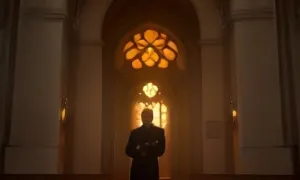
This atmospheric visualisation of the place and period was generated by artificial intelligence. It is not real footage of the location.
Tips from visitors
No tips yet. Be the first!
Log in and add your tip.
Sources and literature
Fotografie: Samuel Mudrík / CC BY-SA 4.0 — Wikimedia Commons. The author and licence also appear when you hover over the image.
Faktickým podkladem tohoto textu byl článek na Wikipedii, jehož autory jsou přispěvatelé Wikipedie. Článek je dostupný pod licencí CC BY-SA 4.0.
Location on the map
Příběhy a pověsti
Legendy, pověsti a příběhy spjaté s touto památkou
Fotografie návštěvníků
Zatím žádné fotografie. Buďte první, kdo přidá fotografii z návštěvy!
Přihlaste se a přidejte svou fotografii nebo hodnoťte.
Za ověřenou návštěvu v aplikaci získáte víc bodů — poznáme podle GPS, že jste na místě.
Reviews and comments