






kostel svatého Haštala Church
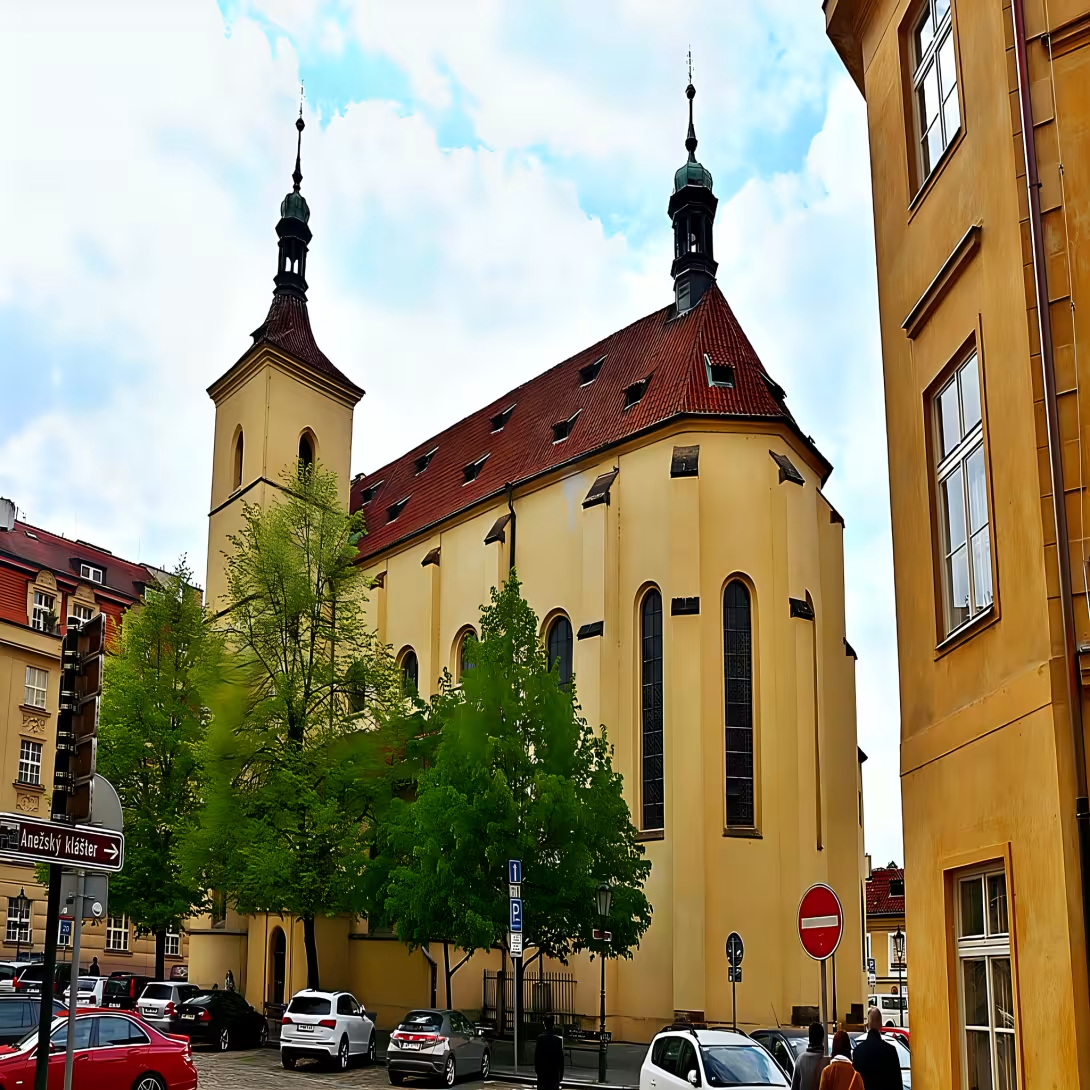
The Church of Saint Haštal, located in Old Town in Prague's historic Old Town, is a unique Gothic structure dedicated to Saint Haštal. It stands out not only with its architectural evolution from the beginning of Romanesque, but also as the only Czech church dedicated to this saint. Its history dates back to the 12th century Basilica of Romanesque with significant development during the 14th century cultural Renaissance under the rule of Charles IV.
From 1375 to 1399 on the site of the earlier church Romanesque documented already in 1234 this original building was one of Prague's main churches Romanesque. It was strategically located along the road from St. Valentine's ford through the Jewish settlements of "the Poříčí." The Gothic transformation began with the construction of the Polygon Corps and parts of the ship that reflected the architectural innovations of the era. A significant change occurred when the plans moved towards creating a double hall during the reign of King Wenceslas IV. This phase included contributions from renowned stonemason Peter Parler, which is evident in the complex corbels of the walls of the church.
Throughout its history, the Church of St. Hashtala witnessed several dramatic changes and events. During the Hussite wars she suffered damage and flooding in 1432 when the altars were reconsecrated in 1436. The parish was controlled by the Utraquists until 1624, after which the Catholic administration took control, managed it from the Týnské church until 1739. A significant fire in 1689 led to extensive efforts to restore the Baroque style, which changed most of its original Gothic design.
Society church is an architectural proof of various styles and periods. Its current form has a stone structure with brick elements on the north pressure side. The main ship, now arched by a baroque barrel, originally had a higher Gothic vault visible in the attic. The Southern ship retains its original Gothic rib safe, while the northern double-edged hall shows inferior ribs and supporting columns decorated with plant motifs. The exterior church presents an irregular four sea arrangement with a tower above the southern boat and sacristy in presbytery.
Today, the Church of St. Hashtala remains an important historical and architectural monument in the Old Town of Prague. The house of the relic of Saint Haštal, including his skull, brought to Prague Charles IV. The rich history and unique dedication of the church make it a convincing place for visitors who are interested in Gothic architecture and Czech religious heritage. Its proximity to other cultural monuments increases its attractiveness as part of a wider survey of medieval Prague.
Then and now
Drag the slider to compare how the landmark may have looked when it was built with the view today.
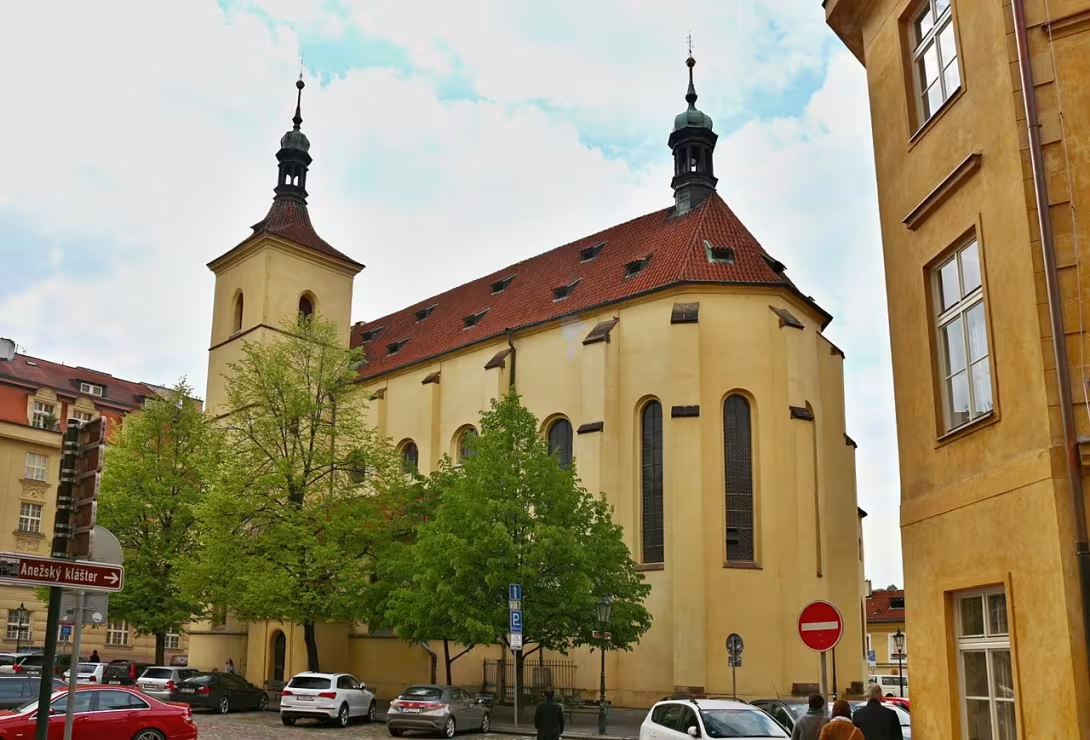
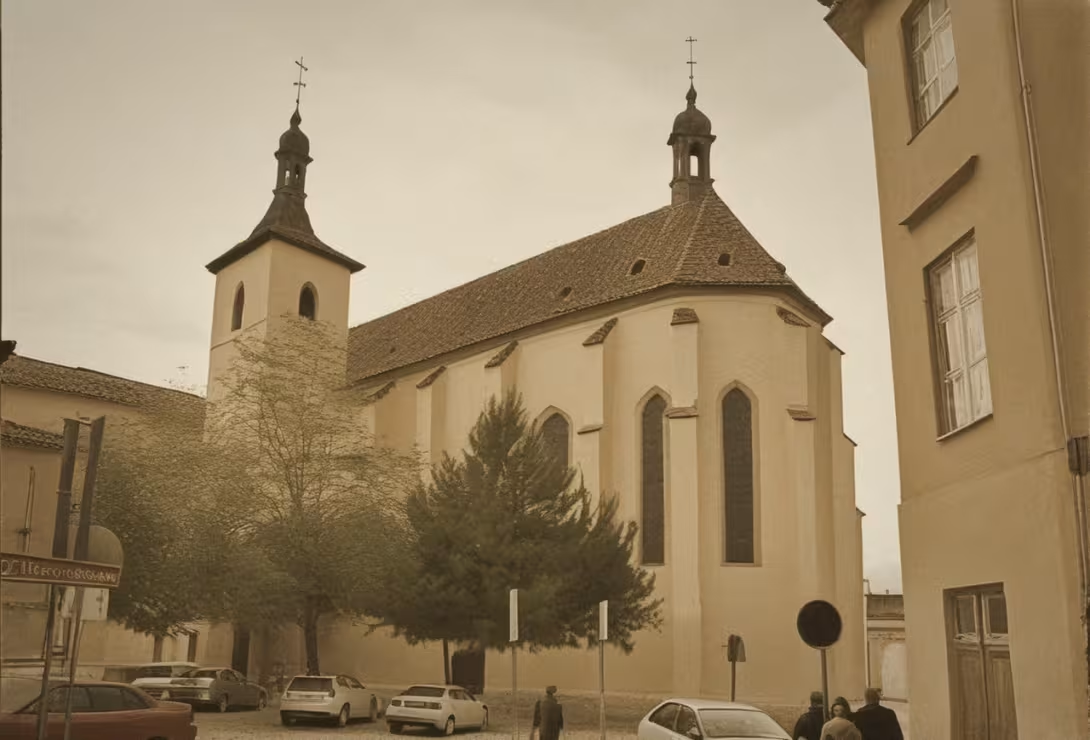
The historical appearance on the left is an AI-generated visualisation and serves as inspiration only.
Historical milestones
- 1234
- First documented mention in the charter of King Wenceslas I.
- 1375
- Finishing the Chapel of All Saints by Jenštejn lords, now part of the sacristy.
Architectural development
the church evolved from the basilica of Romanesque into a Gothic structure in the 14th century. The initial phase involved polygonal corps and parts of the ship, completed in the middle of the century. Later, under the rule of King Wenceslas IV, he introduced himself to a two-storey space hall with a distinctive architectural style. Posthusite Wars restoration and post-1689 fire reconstruction changed its medieval design.
Historical events
1234: The first documented mention when King Václav mentioned it in the charter of the newly founded Franciscan monastery.
1432: Damaged during Hussite wars and floods.
1689: He suffered significant damage in the fire, which led to extensive recovery.
Owners
Initially under the patronage of the Czech queens, the church became a Utraquist until 1624, then a Catholic, administered from the Týnský church until 1739. She returned to the parish in 2009.
Points of interest
- The Church of Saint Haštal is unique as the only church in the Czech Republic dedicated to St. Haštal, a relatively obscure saint whose relics are placed in its walls.
During Hussite wars, this church experienced damage and flooding in 1432. Remarkable is that she managed to re-consecrate her altars only four years later in 1436, which proved the resistance between conflicts.
- The church experienced significant architectural changes during the reign of King Wenceslas IV when the plans moved towards the creation of a double hall. This phase included the work of Peter Parler, whose complex corbels still decorate the walls of the church today.
- After the great fire in 1689, the extensive restoration of the Baroque style transformed much of its original Gothic design. The main ship was arched by the baroque vault of the barrel, which changed its original architectural intention.
- Despite its rich history and architectural evolution, the church's sacred devotion to St. Hastil remains a mystery, as it is little known why this particular saint was chosen for such a significant Prague monument.
Guide
This guide is narrated by a synthetic voice generated by artificial intelligence.
Show guide text
This text was created by artificial intelligence and has not been editorially reviewed. It may contain inaccuracies.
Welcome to the Church of St. Hazel, located in the historical heart of Prague's Old Town. As you stand before this remarkable Gothic structure, take a moment to immerse yourself in his peaceful presence and imagine the centuries she's witnessed. This church is unique among Czech churches, dedicated only to those less famous but interesting Saint Hastal.
Let's dive into his origins. The first documented mention of this sacred place dates back to 1234, referred to in the Charter of King Wenceslas I. Originally here in the 12th century, the basilica was Romanesque. Over time, especially during the prosperous medieval culture of the 14th century, it evolved into the Gothic masterpiece you see today.
As you observe his architecture, notice how the design church reflects his rich history and cultural significance. While particular architects remain unknown, craft work is evident in every detail. The Chapel of All Saints, completed in 1375 by Mr. Jenštejn, is now part of the sacristy - the will to layers of history within these walls.
The Church of Saint Haštal was a silent witness to many key moments and figures throughout history. He is closely associated with Emperor Karel IV, whose influence helped to shape Prague into a vibrant cultural centre during his reign. This connection adds another layer of historical depth to your visit.
Now let us explore an interesting aspect: the church has a relic of St. Hashtala himself - a rare honor that distinguishes it from the only Czech church dedicated to this saint. In addition, its resilience is remarkable; Despite the damage and flooding during the stormy Hussite wars in 1432, she was strong against adversity.
As you continue your research, let the atmosphere cloud you - feel the echoes of prayers and history that spread through these sacred halls. Every corner has a story waiting to be discovered.
Before we finish, I urge you to stay a little longer, maybe wander around his district or enter the church itself if it's open, allowing you to fully immerse yourself in this historic jewel. Thank you for joining me on this journey of time and faith. Let your visit here arouse reflection and curiosity as to how you will continue to explore the streets of Prague.
Tips for visitors
The best time to visit the church of St. Hashtala is at the end of spring or early autumn when the weather is pleasant for walking around the historic Old Town in Prague. These seasons offer comfortable temperatures and fewer crowds compared to the peak of tourist times in summer. In addition, a visit on a weekday can provide a calmer experience that will allow you to appreciate Gothic architecture church without rush and rush.
Transport options are comfortable because the area is well served by public transport. You can reach the Old Town using an extensive tram network or buses.
When visiting the church of St. Hastal, it is recommended to bring comfortable walking shoes, because you may want to explore the surrounding sights such as Týn's church, or pass the charming streets of Staré Město Praha. The camera is also a good idea for capturing stunning medieval architecture and lively atmosphere. Remember to wear layers because temperatures can change all day.
For lovers of photography, early morning or late afternoon light provides the best conditions for capturing complex gothic details church. Side facades churches excellent view points for photos, especially when lighting the soft shades of dawn or twilight. A survey of surrounding areas such as Týn Church may also provide further photographic opportunities with their impressive architecture.
Within a 30-minute walk from the church of St. Hashtal, visitors can explore other cultural monuments such as the Týnské Church and enjoy the medieval environment of Staré Město Praha. This area is rich in history and offers a number of attractions such as Charles Bridge and Prague Chateau for those who want to expand their visit.
For families with children, the historical center of Old Town provides a wonderful experience with picturesque streets and an interesting atmosphere. The church itself may not have specific activities for children, but the surroundings are full of interactive experiences such as exploring old city squares or visiting nearby museums that satisfy the younger audience.
Frequently asked questions
Can the monument be visited?
Religious buildings are usually open mainly during services; at other times a visit is normally arranged with the parish or the operator. We have not verified specific times.
Where is the monument?
Location: Haštalské náměstí, Staré Město, Praha, Hlavní město Praha. The map on this page shows the exact spot.
Why is the monument protected?
It is listed in the Central List of Cultural Monuments of the Czech Republic as a cultural monument (register no. 38184/1-21).
Businesses nearby
Do you run a restaurant, accommodation, shop, museum, rental, wellness or other visitor service near this monument? Show yourself directly to the people heading to it — this is how they will see you in the app and on the web:
Events nearby

Zdroj akcí: otevřená data měst a obcí ČR (Národní katalog otevřených dat) a kalendář akcí Národního památkového ústavu.
Nearby
Located in the historic Old Town in Prague, close to monuments such as Týn's church and surrounded by medieval architecture. The area is rich in cultural heritage within a radius of 5 km.
Accommodation nearby
Trips and activities nearby
Guided tours, tickets and activities nearby from GetYourGuide
Affiliate link: if you buy from the partner, we may receive a commission. The price for you does not change.
Search tours and activities →Themed route
Thematic walking tour: Discovering the Old Town in Prague
1. Church of St. Hashtala (Church of St. Adalbert) - * Type: * Church - * Why Visit: * This charming church is located in the heart of Prague's historic Old Town and offers a peaceful escape from busy urban streets. Its simple but elegant architecture and peaceful atmosphere make it an ideal starting point for exploring a rich cultural tapestry.
2. Tyne Church (Church of the Virgin Mary before Tyne) - * Type: * Church - * Why Visit: * Just a short walk from the Church of St. Hashtala, Týn's church is famous for its stunning Gothic architecture and impressive two towers that control the panorama of Old Town Square. Its historical significance and beautiful interior makes it a must- see milestone.
3. Old Town Square (Old Town Square) - * Type: * Historical Square - * Why Visit: * As you continue your journey, find yourself in the lively heart of the Old Town of Prague in this iconic square. Known for its lively atmosphere and historical monuments, such as astronomical clocks, offers a view to the past of the city while serving as a centre for cultural events.
4. Old New Synagogue (Old Synagogue) - * Type: * Synagogue - * Why Visit: * Located near the Old Town Square, this synagogue is one of the oldest active Jewish houses worship in Europe. Its unique architecture and rich history provide insight into the diverse cultural heritage of Prague.
5. Jewish Quarter (Josefov) - * Type: * Historical Quarter - * Why Visit: * Close your tour by exploring the historic Jewish district, UNESCO World Heritage full of synagogues, museums and charming streetscapes. This area offers a deep connection with Prague's Jewish history and culture, which makes it an essential part of every visit to the Old Town.
This thematic walking tour captures the essence of the Old Town of Prague and combines its religious monuments and historical monuments into a coherent story that celebrates the city's rich cultural heritage.
Seasonal recommendations
Spring: The church of St. Hashtala offers in the spring a single-bed sex, when the green vegetation around the Old Town begins to break and muscle the architectural beauty of the skeleton. Sunshine days can be converted into ordinary colors and facades, meaning that the real contrast to the green background. Due to the reduction in the crowd, this time is ideal for a peaceful visit without obstacles to a few tourists, which allows a lean involvement in history and architecture. The reference shall not be considered to be applicable to a small temperature with the possibility of switching to cold days, and the relevant information should be provided in the contract to the church at an early remote time when the temperature is or part of it.
Summer: In summer cities, Staré Město is published in the busy center of activity with shortness of breath and sunny musculature, which has historical history of details of the bone of St. Hashtala. The atmosphere is full of life, which can be survived for demanding assets that are active in the centre of Prague. However, it is assumed that tourists and long-term conquests will be used, which can be overgrown by popular attractions like this church. In order to ensure that the conditions for granting the aid can be laid down, it passes early in the morning or late in the procedure when the crowd may take place. Wearing a reclining rounded and carrying an umbrella and a dressing against the destin is quiet for your own summer day.
Autumn: The church of St. Hashtala in the autumn store urging a good share in Old Town, where tree leaves are in golden and red shades, giving the historical building a romantic sphere. Shorter days and cool temperatures counting my crowd, which allows you to practice all the way to calm down. Moisture, however, may mean cautious weather, so it is advisable to prepare for rapid changes in temperature and rain. It is not known that it is a warm basket number or that it is a restriction which is intended for a photograph.
Winter: Winter is an example of kostel svatého Haštala as my number full of silence and quiet, when Staré Město is covered by snow or frozen streets, which has produced magical magic. Long new feasts can be ideal for photographic acquisition of buildings and church during periods or periods. Not to mention temperatures characterised by a fixed plan of siege, with a warm leather jacket and protected leg measures. It comes on a day without rain or dreaming for an optimal experience and keep your hands warm with warm gloves.
Visualizations and artistic views


The visualisations are generated by artificial intelligence and serve as inspiration.
Photos from the area
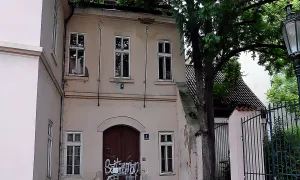
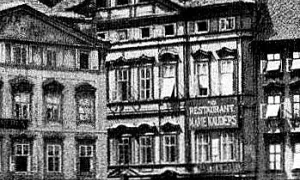
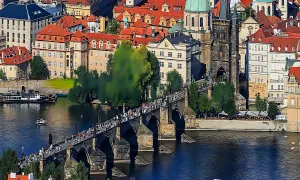
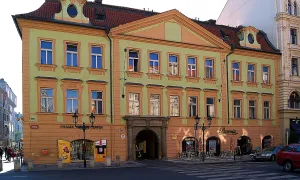
Real photos taken near the monument

Zdroj a licence jsou uvedeny u každého snímku.
Tips from visitors
No tips yet. Be the first!
Log in and add your tip.
Sources and literature
Photos: VitVit / CC BY-SA 4.0, rozlišení zvýšeno umělou inteligencí — Wikimedia Commons. The author and licence also appear when you hover over the image.
Faktickým podkladem tohoto textu byl článek na Wikipedii, jehož autory jsou přispěvatelé Wikipedie. Článek je dostupný pod licencí CC BY-SA 4.0.
Location on the map

Příběhy a pověsti
Legendy, pověsti a příběhy spjaté s touto památkou

Fotografie návštěvníků
Zatím žádné fotografie. Buďte první, kdo přidá fotografii z návštěvy!
Log in a přidejte svou fotografii nebo hodnoťte.
Za ověřenou návštěvu v aplikaci získáte víc bodů — poznáme podle GPS, že jste na místě.
Reviews and comments