



Karlův most (Praha 1) Bridge
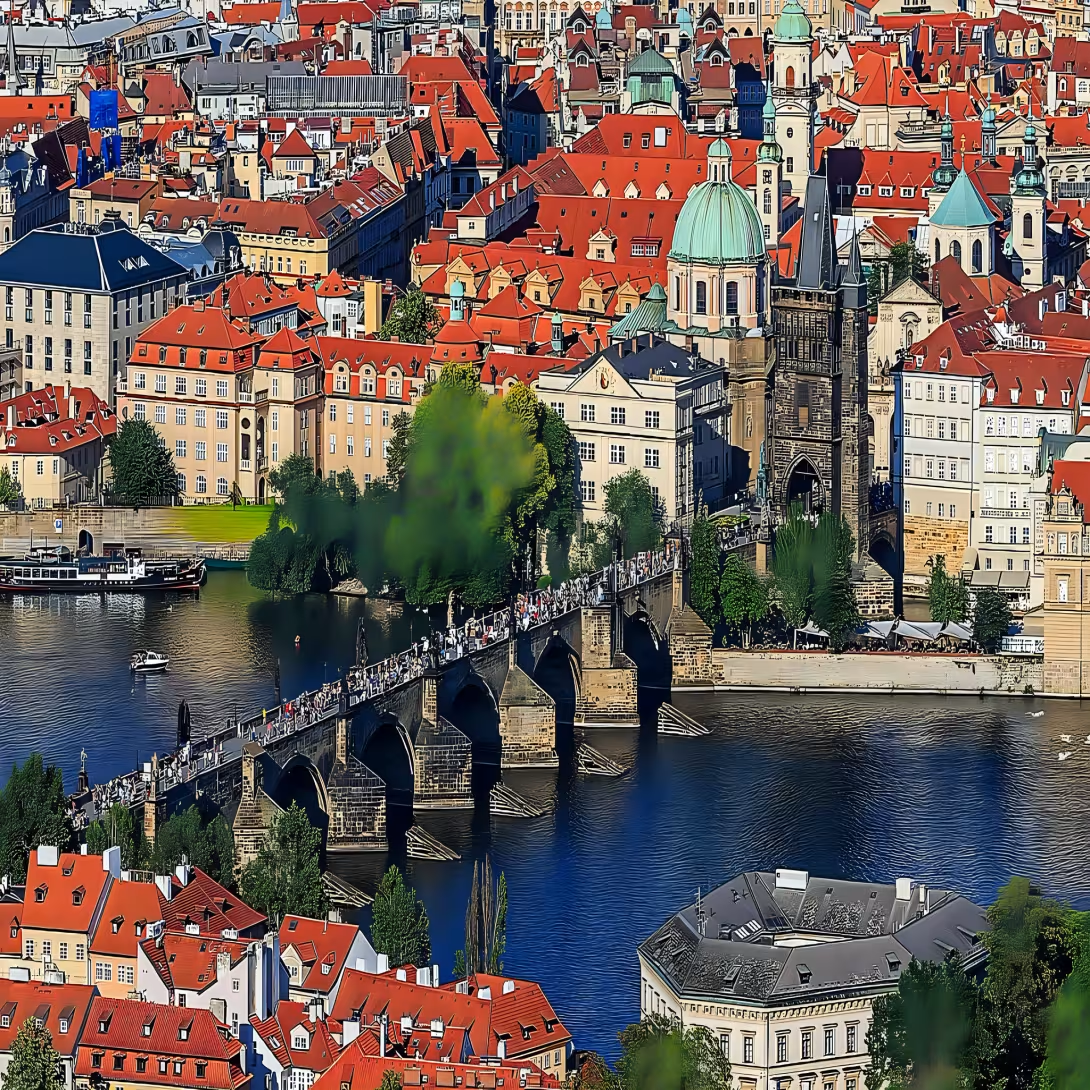
The Charles Bridge connects Staré Město with the Lesser Side and is among the most important buildings of Czech history. It is the oldest standing bridge through Vltava in Prague. It deals with the tragedy of the previous Judith Bridge, which was torn down during the spring melting of the ice in 1342. The new building was intended to provide year-round communication across the river.
The construction of the bridge started in 1357 under the auspices of King Charles IV and continued for more than forty years before it was completed in 1402. During this time it became part of important European trade routes, and thanks to this stone bridge Praha established itself as an important business stop. Originally, the bridges were called "stone" or "Prague." The name "Charles Bridge" lived until about 1870 when it was first used in monograph by Prague publisher, writer and copper engraver Joseph Rudl.
The bridge is 515.76 metres long and 9.40 to 9.50 metres wide. The vehicle is located 13 meters above normal. It consists of sixteen arches with discrepancies from 16.62 meters on the side of the Old Town up to 23.38 meters. The bridge is folded three times and slightly bulging upstream. The fundamentals are laid on stones worked in the shape of millstones, probably supported by oak pilot grids. The dominance of the building consists of three towers: the larger and smaller Malostranská bridge tower on the Lesser Side and the Old Town bridge tower on the side of the Old Town. The Old Town Tower has an unusual location - it does not stand on the extreme support, as is common, but on the first internal pillar.
The decoration of 30 mostly baroque statues and sculptures was developed gradually. The oldest was a statue of Jan Nepomuk, located in 1693 in memory of his overthrow from the bridge. She became a role model for his countless later paintings and began sculpting decoration of the bridge. Most of the other sculptures were added between 1707 and 1714 and financed by various донаторe initiatives. Among the most valuable works are St. Luitgarde Matyas Bernard Braun and many works by Ferdinand Maximilian Brokoff. The harmonious connection of monumental medieval architecture with Baroque decoration creates an unrepeatable whole.
Since the beginning of the twentieth century, the original Baroque statues have gradually been replaced by copies. The floods in 1890 and the deteriorating state of sandstone led to replicas being planted, while the loaded originals are mainly stored in Lapidario at the Prague Exhibition Centre and Gorlice Hall in Vyšehrad. There is a historic royal road along the bridge, which provides a pan-European dimension to the construction.
Then and now
Drag the slider to compare how the landmark may have looked when it was built with the view today.
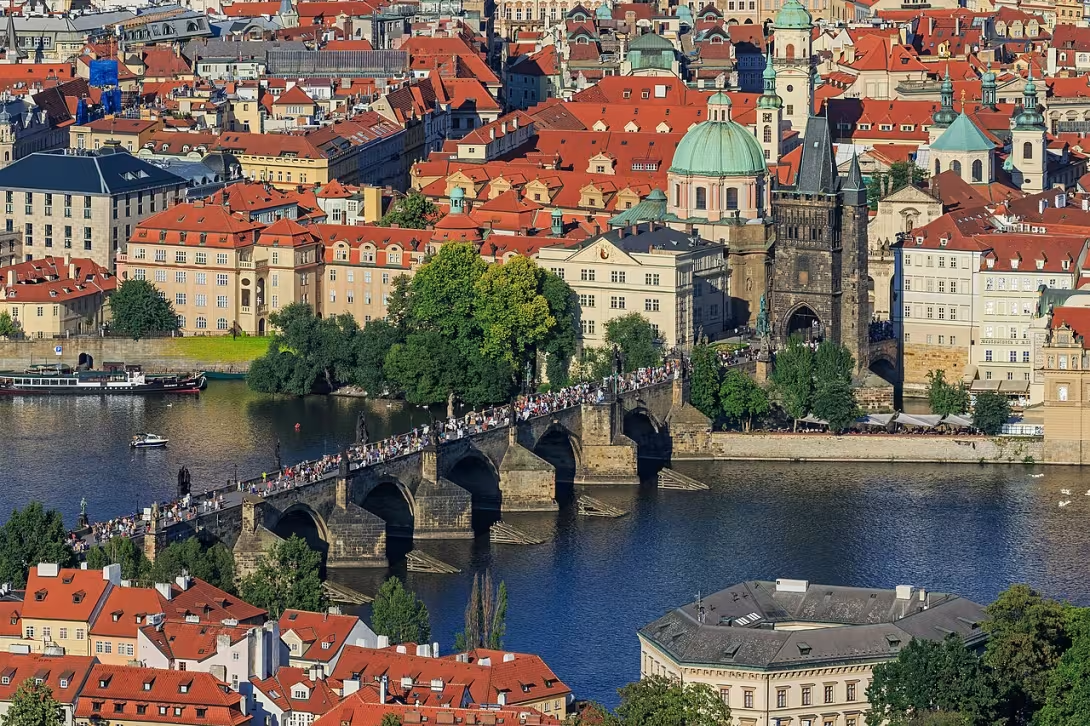

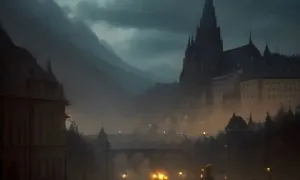
The historical appearance on the left is an AI-generated visualisation and serves as inspiration only.
Historical milestones
- 1357
- Construction of the new bridge started
- 1402
- Construction of the new bridge completed
- 1707-1714
- More sculptures and sculptures were added to the bridge, financed by various donors
Architectural development
The bridge consists of sixteen arcs with a gap between 16,62 m and 23,38 m It's cracked three times and slightly bulging upstream.
Historical events
1342 - Judith bridge torn down
1357 - Construction of the new bridge started
1402 - Construction of the new bridge completed
Owners
Charles Bridge
Prague City Hall
Points of interest
- Charles Bridge is the oldest standing bridge over Vltava in Prague. - The bridge is 515.76 metres long and 9.40 to 9.50 metres wide. - The bridge consists of sixteen arches with discrepancies from 16.62 meters on the side of the Old Town up to 23.38 meters. - The dominance of the building consists of three towers: the larger and smaller Malostranská bridge tower on the Lesser Side and the Old Town bridge tower on the side of the Old Town. - The original Baroque statues are gradually replaced by copies.
Guide
This guide is narrated by a synthetic voice generated by artificial intelligence.
Show guide text
This text was created by artificial intelligence and has not been editorially reviewed. It may contain inaccuracies.
Charles Bridge is the oldest standing bridge across the Vltava River in Prague and the second oldest preserved bridge in the Czech Republic. It connects the Old Town with the Lesser Town and the historic royal route passes over it.
It replaced the older Judith Bridge, which was carried away by ice in the year 1342 during the spring thaw. Construction of the new bridge began in 1357 under the patronage of King Charles the Fourth and was completed in 1402. Thanks in part to it, Prague became an important stop on European trade routes. For a long time it was called only the stone bridge or Prague bridge. The name Charles Bridge became established only around 1870. A Prague publisher and engraver named Joseph Rudl was the first to use it in his book about the bridge and its statues.
The bridge measures over 515 meters and is roughly nine and a half meters wide. The roadway lies 13 meters above the normal water level of the river. It is supported by sixteen arches. The bridge is not completely straight. It is bent three times and slightly convex against the current. The foundations are made of stones cut into the shape of millstones, probably supported by rafts of oak piles. Wooden ice breakers protect the bridge against the current on the upstream side.
On the Lesser Town side stand the larger and smaller Lesser Town Bridge Towers, on the Old Town side the Old Town Bridge Tower. However, this tower does not stand on the corner pier as is customary with bridge towers, but rather on the first inner pillar. The Old Town pier is now built into the cellars of one of the houses.
The sculptural decoration was originally concentrated mainly on the towers. In the place of today's Crucifixion group, there was already a cross during the reign of Charles the Fourth. Around the year 1500, the bridge also had a shrine of God and a statue of Bruncvik, which marked the area of Old Town law.
From the late seventeenth century, thirty mainly Baroque statues and groups were added to the bridge. The first was the statue of Saint John of Nepomuk, commemorating his throwing from the bridge. It became a model for most later depictions of this saint. Most of the other statues were installed between 1707 and 1714. Among the most valuable are Saint Luitgard by Matthias Bernard Braun and a series of works by Ferdinand Maximilian Brokoff.
In the middle of the nineteenth century, some of the Baroque statues were replaced by Classicist works by Joseph and Emanuel Max. After the flood in 1890 and due to aging sandstone, copies have been gradually installed on the bridge since the beginning of the twentieth century. The originals are stored mainly in the Lapidary at the Prague Exhibition Grounds and in the Gorlice Hall at Vyšehrad.
Tips for visitors
The best time to visit Charles Bridge is in the morning or in the evening when the light is ideal for photography.
Remember to bring your camera and batteries so that your photos from the bridge are of quality.
Charles Bridge is an ideal place for families with children because there are many interesting things to see and photograph.
Around the bridge you will find a number of interesting places such as the Old Town Hall and Týn, which are worth visiting.
Frequently asked questions
Can the monument be visited?
This is a structure in a public space that can usually be seen from outside free of charge. We have not verified that this particular one is freely accessible.
Where is the monument?
Location: Staré Město, Praha, Hlavní město Praha. The map on this page shows the exact spot.
Why is the monument protected?
It is listed in the Central List of Cultural Monuments of the Czech Republic as a national cultural monument (register no. 108).
For kids
Imagine going back 669 years until Charles Bridge was still under construction. It was a great time, full of changes and discoveries. At that time, few people lived in Prague, but among them were also many craftsmen who built this bridge.
How did it look here? Where was Karel IV.? He was a great king who wanted to join two parts of the city - Staré Město and the Little Party. And so he said, "If this bridge gets built, it'll be like a... a magic gate between two worlds!" And so it began to build.
Businesses nearby
Do you run a restaurant, accommodation, shop, museum, rental, wellness or other visitor service near this monument? Show yourself directly to the people heading to it — this is how they will see you in the app and on the web:
Natáčelo se zde
- Amadeus (1984) film
- Mission: Impossible (1996) film
- The Fall (2006) film
- Wanted (2008) film
Zdroj: Wikidata (vlastnost „místo natáčení“) · Všechna filmová místa
Z magazínu
Events nearby


Zdroj akcí: otevřená data měst a obcí ČR (Národní katalog otevřených dat) a kalendář akcí Národního památkového ústavu.
Nearby
The surrounding bridge is Staré Město Prague and Malá Strana, which are famous for its historical architecture and cultural heritage.
Accommodation nearby
Trips and activities nearby
Guided tours, tickets and activities nearby from GetYourGuide
Affiliate link: if you buy from the partner, we may receive a commission. The price for you does not change.
Search tours and activities →Themed route
Thematic cruise route from Charles Bridge
1. Charles Bridge (bridge) * Why is it worth a visit: * Charles Bridge is an iconic monument of Prague, connecting Staré Město to the Little Party. Its history dates back to the 14th century and today it is a popular place for walking and photography.
2. Old Town Square (Square) * Why is it worth a visit: * This central square is the heart of Old Town, known for its beautiful architecture and historical buildings. The Gothic church of Týnský and Baroque Town Hall is the most prominent.
3. Church Týn (church) * Why is it worth visiting: * The Church of Týn, located in the middle of Old Town Square, is an example of Gothic architecture. Its important towers and rich interior are an essential part of local culture.
4. Old Town Hall (Town Hall) * Why is it worth a visit: * This Baroque building is home to the Prague City Council and hosts an important exhibition about the history of the Old Town. It's the perfect place to know local government and history.
5. St. Nicholas Church (church) * Why is it worth visiting: * Located near the Old Town Hall, it is the oldest church in Prague. Its Gothic interior and history range back to the 12th century, making it an interesting destination for visitors.
This route will offer a view of the most important monuments of the Old Town and will allow a deep understanding of its history and culture.
Seasonal recommendations
Spring: During the spring, the Charles Bridge is transformed into a vibrant colour spectrum of flowering trees and beds that cover the view of Vltava. The sunny morning brings ideal conditions for walking with a view of the green Staré Město. Visit him in the early afternoon to enjoy a mild temperature and avoid the biggest crowds of tourists. Watch out for sudden weather - the short breath of spring day can bring the first rainfall, so suitable clothes should be moisture resistant.
Summer: The Charles Bridge is full of life and light. When the sun boils to the west, the bridge begins to dazzle with a colorful palette of dangerous lights, creating a unique touch of romance and magic. The best time for a tour is in the morning or in the shadow of late afternoon, when the crowds are relieved. Don't forget to dress in light clothes suitable for warm weather and bring with you a rescue umbrella or sun protector because the Prague summer can suddenly be rainy.
Autumn: In autumn, the Charles Bridge offers a quieter atmosphere with magical shades of leaves and sunlight, which is reflected in the golden waves of Vltava. This time of year is ideal for relaxed late afternoon walks when crowds are relieved. Wear a warm jacket and shoes suitable for colder weather; The sudden wind of rain may be surprising, so remember to bring a rescue umbrella.
Winter: The winter Charles Bridge offers a quiet and peaceful view of the cold waves of the Vltava. A sunny morning is the best time for a tour where you can enjoy a mild temperature before returning cold in the evening. Winter visits can be surprisingly comfortable, but enjoy it with caution and remember to protect yourself against cold.
Visualizations and artistic views


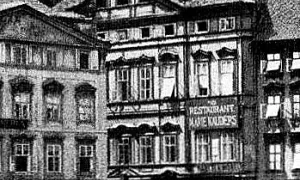
The visualisations are generated by artificial intelligence and serve as inspiration.
Photos from the area
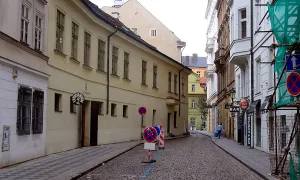
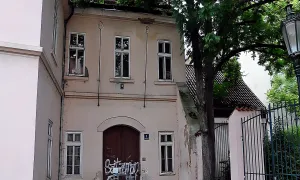
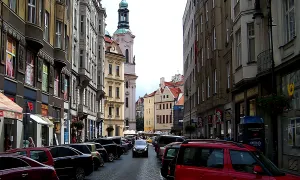
Real photos taken near the monument


Zdroj a licence jsou uvedeny u každého snímku.
Atmosphere of the place
This atmospheric visualisation of the place and period was generated by artificial intelligence. It is not real footage of the location.
Tips from visitors
No tips yet. Be the first!
Log in and add your tip.
Sources and literature
Photos: A.Savin / FAL, rozlišení zvýšeno umělou inteligencí — Wikimedia Commons. The author and licence also appear when you hover over the image.
Faktickým podkladem tohoto textu byl článek na Wikipedii, jehož autory jsou přispěvatelé Wikipedie. Článek je dostupný pod licencí CC BY-SA 4.0.
Location on the map
More monuments – Staré Město
Show all in the municipality

Příběhy a pověsti
Legendy, pověsti a příběhy spjaté s touto památkou
Fotografie návštěvníků
Zatím žádné fotografie. Buďte první, kdo přidá fotografii z návštěvy!
Log in a přidejte svou fotografii nebo hodnoťte.
Za ověřenou návštěvu v aplikaci získáte víc bodů — poznáme podle GPS, že jste na místě.
Reviews and comments