



Kostel svatého Jakuba Většího ve Stříbrné Skalici Church
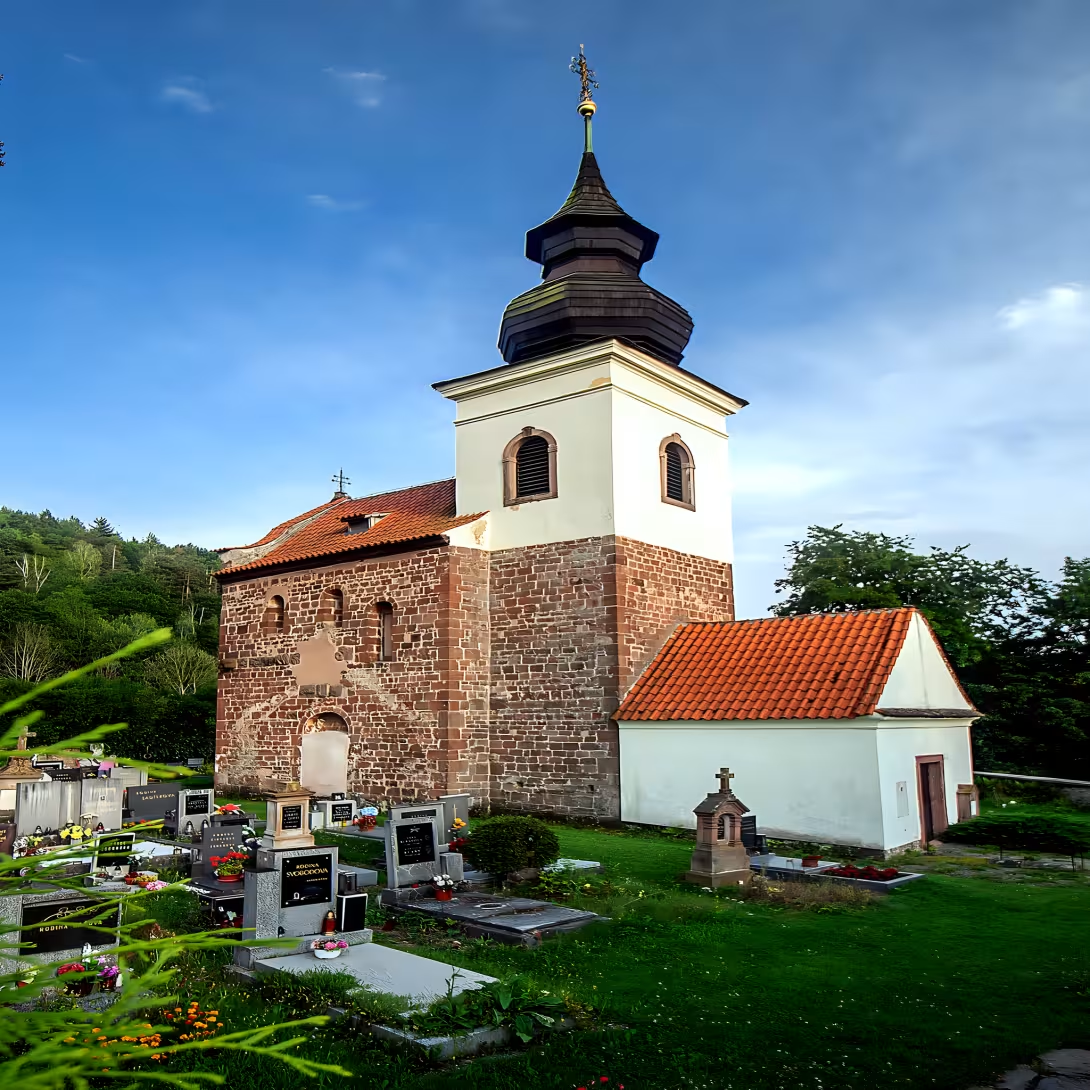
The Romanesque church of St. James the Greater in Stříbrná Skalice is a rare example of a Romanesque church in Bohemia, built in the second half of the 12th century. Located in the village of Stříbrná Skalice, it features well-preserved Romanesque frescoes and stone reliefs from the 12th and 13th centuries. This church is a significant cultural monument and a testament to the region's rich history.
Built around 1150, the church was initially owned by the Benedictine monastery in Sázava. It is believed that the church was built by the order of Abbot Silvester, who was also the patron of the nearby basilica of St. Michael and the Angels in Mnichovice. The church changed hands several times, being owned by the parish of Rovná, the Lords of Šelenberk, and the Prince of Lichtenstein.
The church is a Romanesque building with a tribune and a nave. The original wooden tribune was replaced by a stone one in the 16th century. In the 18th century, the church underwent renovations, which included the addition of a sacristy and a bell tower. The church features well-preserved Romanesque frescoes and stone reliefs, including a small portal in the north wall, which was once the entrance to the emporium. The interior frescoes were created in two periods, with the first ones dating back to the second half of the 12th century.
Over the centuries, the church has undergone several changes. In the 14th century, the patrons were Jan ze Střímelic and Ctibor ze Skalice. Later, the church was owned by the village of Rovná and Skalici, and was even pawned to the Lords of Šelenberk. In 1525, the church was pawned to the Lords of Šelenberk, and after the Thirty Years' War, it was restored. The church served as a place of worship for the local community for centuries.
Today, the church is a significant cultural monument and a testament to the region's rich history. It is a must-visit destination for anyone interested in history, architecture, and art. The church is located in the picturesque village of Stříbrná Skalice, surrounded by rolling hills and forests, making it a perfect destination for a day trip or a longer stay.
Then and now
Drag the slider to compare how the landmark may have looked when it was built with the view today.
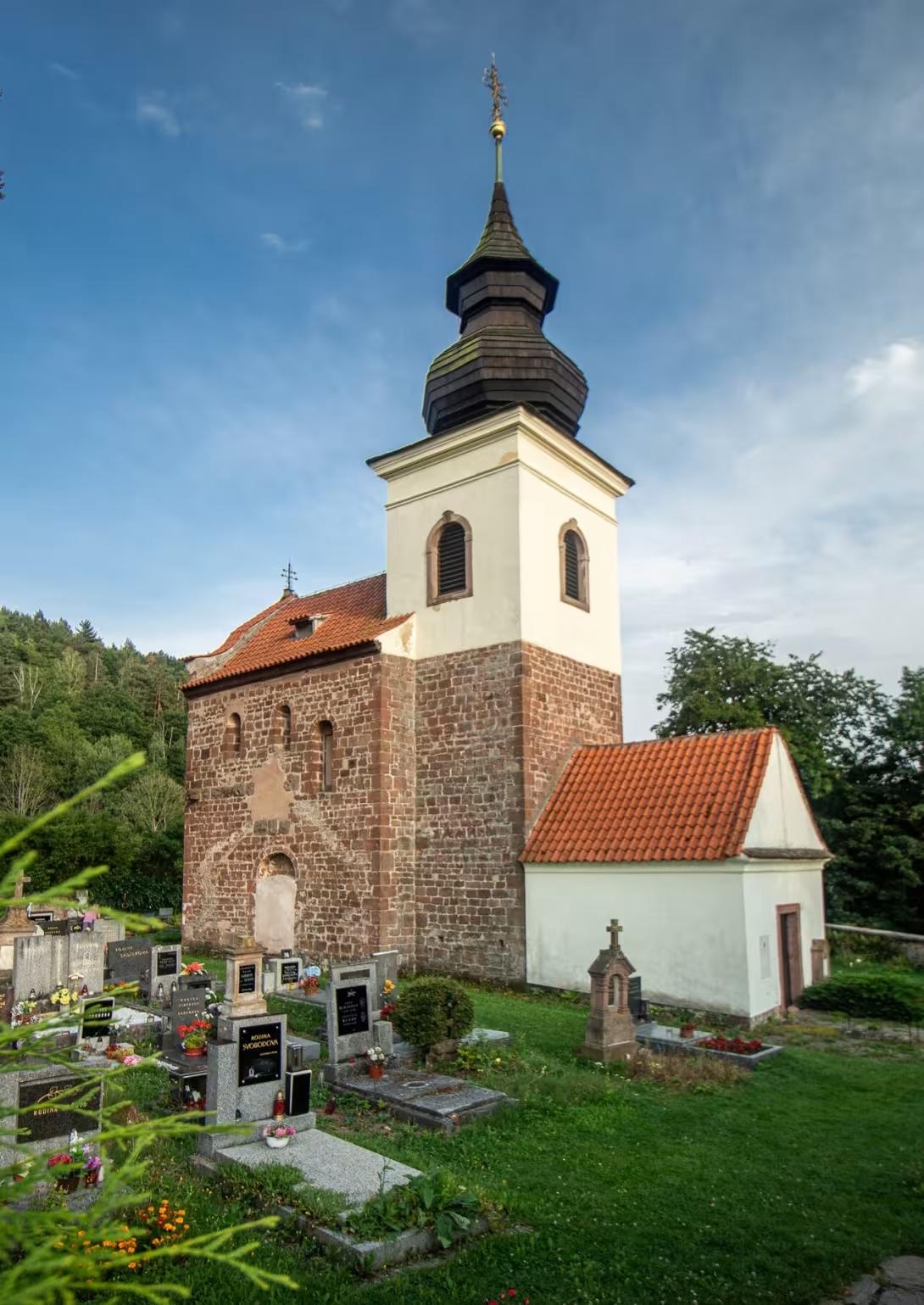
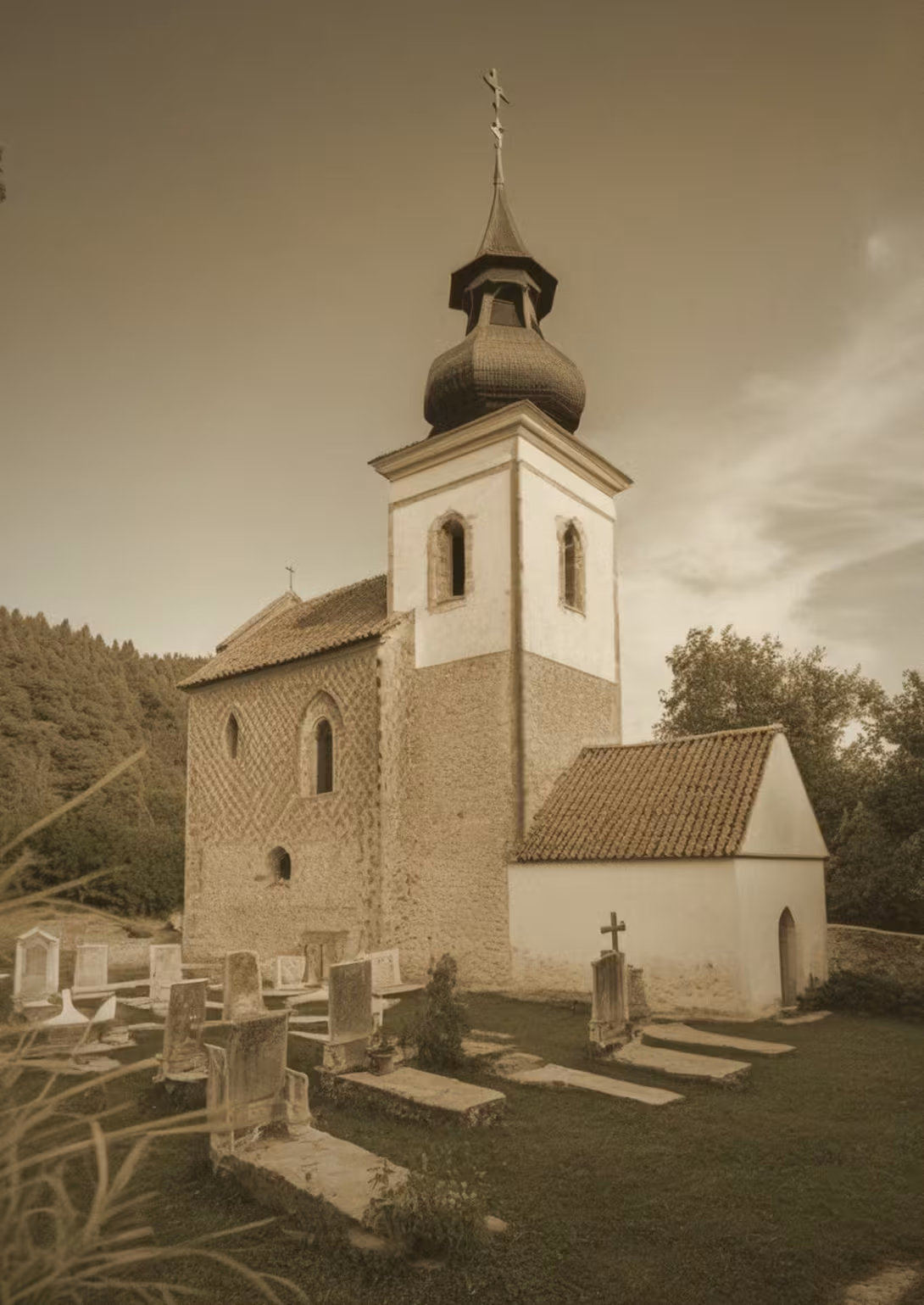
The historical appearance on the left is an AI-generated visualisation and serves as inspiration only.
Historical milestones
- 1150
- The church was built
- 1240
- The church was rebuilt in the late Romanesque style
- 1708
- A sacristy and a bell tower were added
Architectural development
The church was built in the Romanesque style with a tribune and a nave. The original wooden tribune was replaced by a stone one in the 16th century. The church was renovated in the 18th century with the addition of a sacristy and a bell tower.
Historical events
The church was built around 1150
The church was rebuilt in the late Romanesque style around 1240
The church was damaged during the Thirty Years' War and was later restored
Owners
The church was owned by the Benedictine monastery in Sázava, the parish of Rovná, and the Lords of Šelenberk, and later by the Prince of Lichtenstein.
Points of interest
– The church was initially owned by the Benedictine monastery in Sázava, which was a significant religious and cultural center in the region.
– The church features a small portal in the north wall, which was once the entrance to the emporium, a rare architectural feature in Bohemia.
– The interior frescoes were created in two periods, with the first ones dating back to the second half of the 12th century, and were likely painted by local artists.
– The church was owned by the village of Rovná and Skalici, and was even pawned to the Lords of Šelenberk, which is a testament to the complex history of the region.
– The church served as a place of worship for the local community for centuries, and its well-preserved Romanesque frescoes and stone reliefs are a significant cultural monument and a testament to the region's rich history.
Guide
This guide is narrated by a synthetic voice generated by artificial intelligence.
Show guide text
This text was created by artificial intelligence and has not been editorially reviewed. It may contain inaccuracies.
The Church of Saint James the Greater stands in Stříbrná Skalice, in the place of the vanished village of Rovná. It is a Romanesque structure and thanks to its decoration, it belongs among the rarest Romanesque monuments in Bohemia. Romanesque wall paintings from the twelfth and thirteenth centuries have been preserved in it, and on the outer northern wall are stone reliefs with animal motifs.
The origin of the church is only hypothetically connected with Abbot Silvestr from the Benedictine monastery in Sázava, who later became Bishop of Prague. He also contributed to other church buildings in the Central Sázava region. According to the older theory, the church was built around the year eleven fifty, and in the first half of the thirteenth century it was rebuilt in the late Romanesque style. However, a structural and historical survey from nineteen ninety-eight to two thousand and one also suggests that it was built all at once in the first decades of the thirteenth century.
Saint James the Greater is the patron of miners. The choice of this dedication therefore testifies to the fact that mining took place in the surrounding countryside. The cult of Saint James was brought to Bohemia by Benedictine monks from neighbouring lands.
From the fourteenth century, Jan ze Střímelic and Ctibor ze Skalice became the church's patrons. Rovná and Skalice were later pledged to Prokop, cousin of King Václav the Fourth. In the fifteenth century, the church is documented as the parish church for Rovná, Roviny, Kožlí, Ráj and Bič. After the Battle of White Mountain, the village together with the Černý Kostelec estate passed to Prince Karel the First of Liechtenstein. During the period of recatholization, the local priests were expelled, and until seventeen fifteen, Benedictine monks from Sázava served here.
The masonry has a striking red colour. It is given by sandstone from the nearby Nučice. It is a single-nave church with an apse and a prismatic tower in the western façade. The church, apse and two thirds of the tower remained without plaster. The arcaded friezes on the apse and the reliefs on the northern wall were inspired by an Irish Benedictine church in Řezno.
In the sub-vault is a late Romanesque tribune. The original one was wooden and a small portal in the northern wall led to it, today bricked up. It was probably connected by a wooden footbridge to the neighbouring manor house, so the church served both the manor owner and the parish. The original tribune probably burned down in a fire at the manor house, as evidenced by a charred beam above the entrance.
In the sixteenth century, the manor house tribune was rebuilt into a gallery. In the year seventeen hundred and eight, a vestibule, sacristy and spiral staircase to the tower were added. The bell was requisitioned in nineteen sixteen.
The paintings in the nave and in the presbytery were created in two periods. The oldest of them date from the time of the completion of the building.
Tips for visitors
The best time to visit the church is during the spring and summer months when the surrounding landscape is in full bloom.
It's a good idea to bring a camera to capture the beautiful Romanesque architecture and the picturesque surroundings.
The best spots for photography are around the church's exterior, where you can capture the intricate stone carvings and the surrounding landscape.
If you're planning a family visit, consider bringing a picnic lunch to enjoy in the nearby park or forest.
Frequently asked questions
Can the monument be visited?
Religious buildings are usually open mainly during services; at other times a visit is normally arranged with the parish or the operator. We have not verified specific times.
Where is the monument?
Location: Stříbrná Skalice, Středočeský kraj. The map on this page shows the exact spot.
Why is the monument protected?
It is listed in the Central List of Cultural Monuments of the Czech Republic as a cultural monument (register no. 25178/2-857).
Businesses nearby
Do you run a restaurant, accommodation, shop, museum, rental, wellness or other visitor service near this monument? Show yourself directly to the people heading to it — this is how they will see you in the app and on the web:
Nearby
The church is located in the village of Stříbrná Skalice, surrounded by rolling hills and forests.
Accommodation nearby
Trips and activities nearby
Guided tours, tickets and activities nearby from GetYourGuide
Affiliate link: if you buy from the partner, we may receive a commission. The price for you does not change.
Search tours and activities →Themed route
Trasa: Church of St. James the Greater and Surroundings
1. Church of St. James the Greater (main destination): This beautiful church is a dominant feature of the village of Stříbrná Skalice and is worth visiting for its historical significance and architectural interest. It is a gem of Gothic style with rich decoration and an impressive interior. 2. Castle Hill and Ruins of the Castle (1.5 km from the church): Located near the church, it offers beautiful views of the surrounding landscape. The castle ruins are remnants of a medieval castle founded in the 13th century. 3. Linden Alley (0.5 km from the church): This is a short alley of linden trees leading from the church to the village. It's a peaceful and pleasant place for walking and relaxing. 4. Park by the Church (0.2 km from the church): The small park near the church offers a quiet spot for rest and relaxation. It's an ideal place for sitting and observing the surroundings.
Seasonal recommendations
Jar: During the spring season, St. James the Greater Church in Štrbské Pleso is surrounded by blooming trees and flowers, creating a pleasant green atmosphere. It's best to start visiting the church early in the morning to avoid tourist crowds. We also recommend taking photos of the church as the spring sun creates interesting lighting effects.
Letní: During the main summer season, St. James the Greater Church in Štrbské Pleso is very popular, so it's best to get there early to avoid crowds. The church illumination is pleasant in summer and sunlight creates interesting shadows. We recommend bringing an umbrella as rain can occur even in summer.
Podzim: In autumn, St. James the Greater Church in Štrbské Pleso is surrounded by colorful foliage, creating a pleasant atmosphere. It's best to start visiting the church early in the morning to avoid crowds. We also recommend taking photos of the church as the autumn light creates interesting effects.
Zima: In winter, St. James the Greater Church in Štrbské Pleso is pleasantly lit due to good lighting. We recommend bringing warm clothing as the church can be cold.
Visualizations and artistic views


The visualisations are generated by artificial intelligence and serve as inspiration.
Photos from the area
Real photos taken near the monument

Zdroj a licence jsou uvedeny u každého snímku.
Tips from visitors
No tips yet. Be the first!
Log in and add your tip.
Sources and literature
Photos: VitVit / CC BY-SA 4.0, rozlišení zvýšeno umělou inteligencí — Wikimedia Commons. The author and licence also appear when you hover over the image.
Faktickým podkladem tohoto textu byl článek na Wikipedii, jehož autory jsou přispěvatelé Wikipedie. Článek je dostupný pod licencí CC BY-SA 4.0.
Location on the map






Příběhy a pověsti
Legendy, pověsti a příběhy spjaté s touto památkou
Fotografie návštěvníků
Zatím žádné fotografie. Buďte první, kdo přidá fotografii z návštěvy!
Log in a přidejte svou fotografii nebo hodnoťte.
Za ověřenou návštěvu v aplikaci získáte víc bodů — poznáme podle GPS, že jste na místě.
Reviews and comments